Analog vs digital pedals
This label reliably predicts one thing — how much current the pedal draws — and unreliably predicts everything people use it to argue about.
Fret & Fuzz earns a commission when you buy through the links on this page. It costs you nothing and it does not decide what we rank. How we’re funded.
We have not played this gear. Every pick below is chosen from published manufacturer specifications and the arithmetic set out in how we research, which you can re-run yourself.
Analog circuits process the signal as a continuous voltage; digital ones convert it to numbers, compute, and convert back. That label reliably predicts current draw — analog dirt draws single-digit milliamps, digital time effects draw around 100 mA and up. It predicts sound much less reliably, because a good digital emulation of an analog circuit is a solved problem in most categories.
This is the guide where our own premise gets tested, so it is worth being precise about what we can and cannot say. We can quote published current draws and converter specifications. We cannot tell you whether a bucket-brigade delay sounds better than a digital one, because that is a listening judgment and we have not done the listening.
01The reliable difference: current draw
| Pedal | Type | Published draw |
|---|---|---|
| EHX Big Muff Pi | Analog fuzz | About 3 mA |
| Ibanez TS9 | Analog overdrive | 8 mA |
| BOSS SD-1 / DS-1 | Analog gain | 10 mA |
| BOSS BD-2 | Analog overdrive | 20 mA |
| EarthQuaker Plumes | Analog overdrive | 25 mA |
| BOSS RV-6 | Digital reverb | 95 mA |
| BOSS DD-8 | Digital delay | 100 mA |
| TC PolyTune 3 | Digital tuner | 100 mA |
| Strymon Flint | Digital tremolo and reverb | 300 mA minimum |
| Line 6 HX Stomp | Digital multi-effects | 9 V, 3 A supply included |
Two orders of magnitude separate the top and bottom of this table. That is the single most useful thing the analog/digital label tells you.
That gap decides whether your board runs off a $25 daisy chain or needs an isolated supply, and it is the most common reason a board that was silent starts humming. The power arithmetic has the method.
Where the distinction genuinely matters
| # | Product | Best for | Price |
|---|---|---|---|
| 01 | 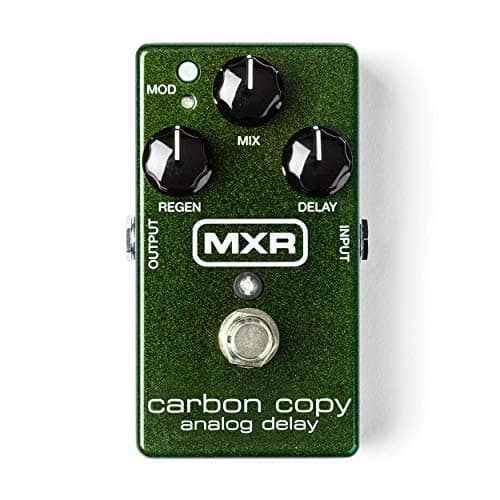 MXR Carbon Copy Analog Delay 600 ms of bucket-brigade delay with repeats that darken progressively. | Analog delay, where the degradation is the point | $159.99 · Check price #ad How we’re funded · price as of October 18, 2026 |
| 02 | 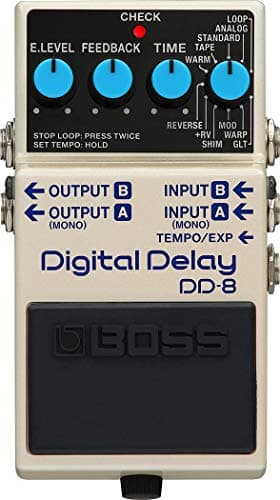 BOSS DD-8 Digital Delay Eleven modes and up to 10 seconds, including an analog-style mode. | Digital delay, where the capability is the point | |
| 03 | 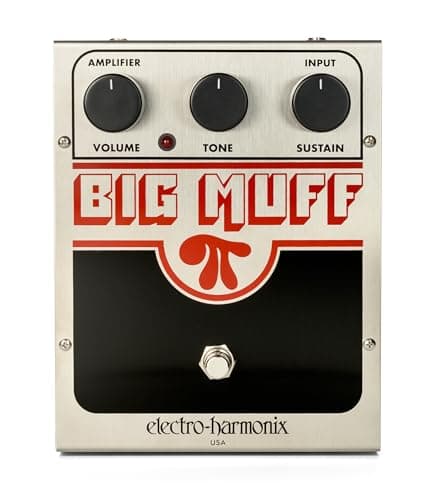 Electro-Harmonix Big Muff Pi About 3 mA at 9 V, and nothing a digital circuit would do better. | Analog gain, where digital has no advantage worth having | $101.60 · Check price #ad How we’re funded · price as of October 18, 2026 |
| 04 | 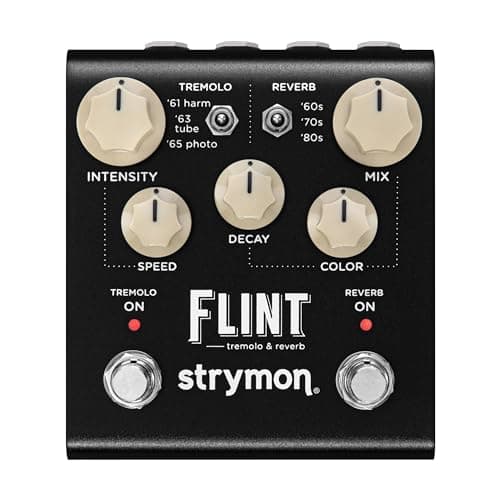 Strymon Flint Tremolo & Reverb 24-bit / 96 kHz conversion, and a 300 mA minimum supply requirement stated plainly. | Digital that publishes what it costs you | $349.00 · Check price #ad How we’re funded · price as of October 18, 2026 |
Rows link to the full write-up further down this page. Prices come from the live price layer only — where there is no live figure the button reads “Check price” rather than showing a remembered number.
03Where analog genuinely does something different
Bucket-brigade delay. The high-frequency loss at each capacitor transfer is not a design choice, it is a property of the mechanism, and it produces the progressive darkening people like. A digital delay can emulate it — the BOSS DD-8 has an Analog mode — and the emulation is a model of the behavior rather than the behavior itself.
Fuzz circuits that depend on impedance interaction. A Fuzz Face's response to your guitar volume knob comes from the pickup loading the input stage. That is an electrical interaction between two analog components and there is nothing for a digital circuit to interact with — its input stage presents a fixed impedance by design.
Anything where the circuit's imperfection is the effect. Germanium transistors drifting with temperature, a starved power supply sputtering, a transformer saturating. These are behaviors you would have to deliberately model rather than get for free.
04Where digital wins outright
- Delay time. Memory is cheap. An analog delay tops out around 600 ms; a digital one runs to seconds.
- Multiple algorithms in one box. Eleven delay modes in a DD-8, eight reverb modes in an RV-6. An analog pedal does one thing.
- Tap tempo and tempo sync. Requires a clock and computation.
- Presets. Requires memory.
- Consistency. A digital circuit does the same thing at every temperature and across every unit.
- Pitch shifting and reverb. Both are computationally intensive and neither has a practical analog implementation at pedal scale.
MXR Carbon Copy Analog Delay
Analog delay, where the degradation is the point
The number600 ms maximum. Dunlop publishes no current draw for it.
A bucket-brigade device passes the signal through a long chain of capacitor stages, losing a little high-frequency content at each transfer. Feed the output back for repeats and each pass compounds that loss.
The result is repeats that sit further behind the dry signal each time, which is genuinely useful — a darkened repeat stays out of the way in a busy arrangement where a clean one competes.
The trade is a hard ceiling on delay time and no tap tempo. This is a slapback and short-repeat pedal and it does not pretend otherwise.
| Maximum delay | 600 ms |
|---|---|
| Controls | Delay, Mix, Regen, plus a modulation footswitch |
| Modulation | Two internal trim pots set modulation width and rate |
| Signal path | All-analog bucket-brigade delay |
| Bypass | True bypass |
| Power | 9 V battery, Dunlop ECB003 adapter, or a DC Brick / Iso-Brick supply |
| Current draw | Not published by Dunlop |
| What it does not do | 600 ms is the ceiling — there is no tap tempo, no presets, and no way to get a long ambient wash out of it. Repeats darken by design and cannot be made bright. |
Specs from MXR Carbon Copy product page. We have not used this unit.
#ad How we’re funded · price as of October 18, 2026
BOSS DD-8 Digital Delay
Digital delay, where the capability is the point
The number100 mA — roughly thirty times an analog fuzz.
A digital delay converts the signal, stores it in memory and converts it back. Memory is cheap, so delay time is effectively unlimited and multiple algorithms can share one pedal.
It includes an Analog mode that emulates bucket-brigade degradation, which is the clearest illustration that the analog/digital label describes the mechanism rather than the result.
The cost is current: 100 mA against single-digit milliamps for analog dirt. That is the reliable prediction the label makes.
| Modes | 11 — Analog, Standard, Tape, Warm, Reverse, +RV, Shimmer, Mod, Warp, GLT, plus Loop |
|---|---|
| Maximum delay | Up to 10 seconds, with tap tempo |
| Controls | Mode, Time, Feedback, E.Level, Carryover switch, pedal switch |
| Current draw | 100 mA |
| Battery life | Approx. 3.5 hours on alkaline |
| I/O | True stereo in and out, with three selectable output modes |
| Weight | 440 g including battery |
| What it does not do | No adaptor included. At 100 mA it is not a pedal you daisy-chain casually, and the 3.5-hour battery figure means battery power is a backup, not a plan. |
Specs from BOSS DD-8 specifications. We have not used this unit.
Electro-Harmonix Big Muff Pi
Analog gain, where digital has no advantage worth having
The numberAbout 3 mA at 9 V.
Gain pedals are essentially all analog and there is no meaningful pressure for that to change. Clipping a waveform is what analog components do naturally; doing it digitally means converting, computing, and converting back, for no benefit.
Four transistor stages drawing about 3 mA. You could run a dozen of these on a supply that struggles with two digital reverbs.
The exceptions are multi-effects units and modelers, where the distortion is one part of a larger simulation.
| Controls | Volume, Tone, Sustain |
|---|---|
| Current draw | Approximately 3 mA at 9 V DC |
| Power | 9 V battery or a 9 V DC center-negative supply |
| Circuit | Four-transistor design with two cascaded clipping stages between a boost stage and a recovery stage |
| What it does not do | The tone stack has a fixed mid scoop with no way to defeat it, and there is no gain-cleanup behavior — rolling your guitar volume down mostly just gets quieter, not cleaner. |
Specs from Electro-Harmonix Big Muff Pi manual (PDF). We have not used this unit.
#ad How we’re funded · price as of October 18, 2026
Strymon Flint Tremolo & Reverb
Digital that publishes what it costs you
The number9 V DC, minimum 300 mA. 1 M ohm in, 100 ohm out.
Strymon publishes the converter resolution and the minimum current requirement, which is exactly the information you need and which most makers do not provide.
300 mA is more than many isolated supplies deliver on a single output — a Voodoo Lab Pedal Power 2 PLUS tops out at 250 mA. That is a purchasing constraint, published in advance.
Selectable true or buffered bypass, which is a digital pedal offering the analog-pedal choice rather than forcing one.
| Effects | Three tremolo voicings and three reverb voicings in one enclosure |
|---|---|
| Power requirement | 9 V DC center-negative, minimum 300 mA (supply not included) |
| Input impedance | 1 M ohm |
| Output impedance | 100 ohm |
| Converters | 24-bit / 96 kHz A/D and D/A |
| Bypass | Selectable relay true bypass or buffered bypass |
| Size | 4.5" deep x 4" wide x 2.4" tall (11.43 x 10.16 x 6.1 cm) |
| What it does not do | No power supply in the box, and the 300 mA minimum means most cheap bricks cannot run it. There is no delay in here and no way to reorder the tremolo and reverb. |
Specs from Strymon Flint product page. We have not used this unit.
#ad How we’re funded · price as of October 18, 2026
05The specification worth reading on a digital pedal
Converter resolution and sample rate. Strymon publishes 24-bit / 96 kHz on the Flint. Most makers publish nothing, which tells you something about how much they expect the number to be checked.
The other one is bypass. A digital pedal has to do something with your signal when it is off: buffered bypass passes it through the analog input stage, true bypass routes around the circuit entirely, and some pedals leave the signal converted even when bypassed. The Flint offers selectable relay true bypass or buffered bypass, which is the choice you want to have.
06What we will not claim
That analog sounds warmer. That digital sounds sterile. That a listener could identify which is which in a blind test. Those are listening judgments, they require controlled comparison, and we have not done it. What we have is published specifications and the physics of the mechanisms, and that is the extent of what this page asserts. How we research is the full statement of where that line sits.
Frequently asked questions
+ Are analog pedals better than digital ones?
+ Why do digital pedals use more power?
+ Is a digital delay as good as an analog one?
+ Do digital pedals affect my tone when bypassed?
Sources
Related on Fret & Fuzz
Best delay pedals
Maximum delay time and current draw settle most of this category. Four delays on their published figures.
Best Delay pick: BOSS DD-8 Digital Delay
Pedalboard power requirements explained
Two sums decide your power supply, and almost everyone only does the first. A worked example with real published figures.
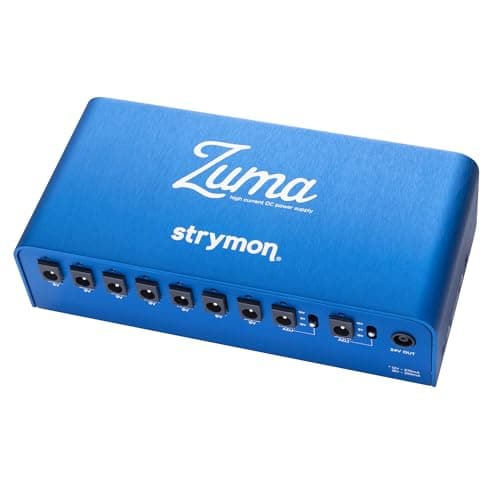
Top pick: Strymon Zuma
#ad How we’re funded · price as of October 18, 2026
Guitar pedal types explained
Five families defined by what they do to the waveform, and the map that turns a hundred-brand problem into five decisions.
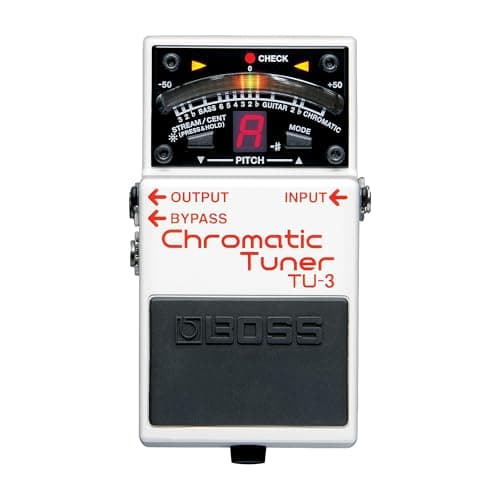
Top pick: BOSS TU-3 Chromatic Tuner
Best fuzz pedals
Input impedance predicts your fuzz experience better than any adjective. Five fuzzes compared on the published figures.
Best Fuzz pick: Electro-Harmonix Big Muff Pi
#ad How we’re funded · price as of October 18, 2026