Best overdrive pedals
Sorted by circuit family, because two pedals from the same family sound more like each other than either sounds like anything else.
Fret & Fuzz earns a commission when you buy through the links on this page. It costs you nothing and it does not decide what we rank. How we’re funded.
We have not played this gear. Every pick below is chosen from published manufacturer specifications and the arithmetic set out in how we research, which you can re-run yourself.
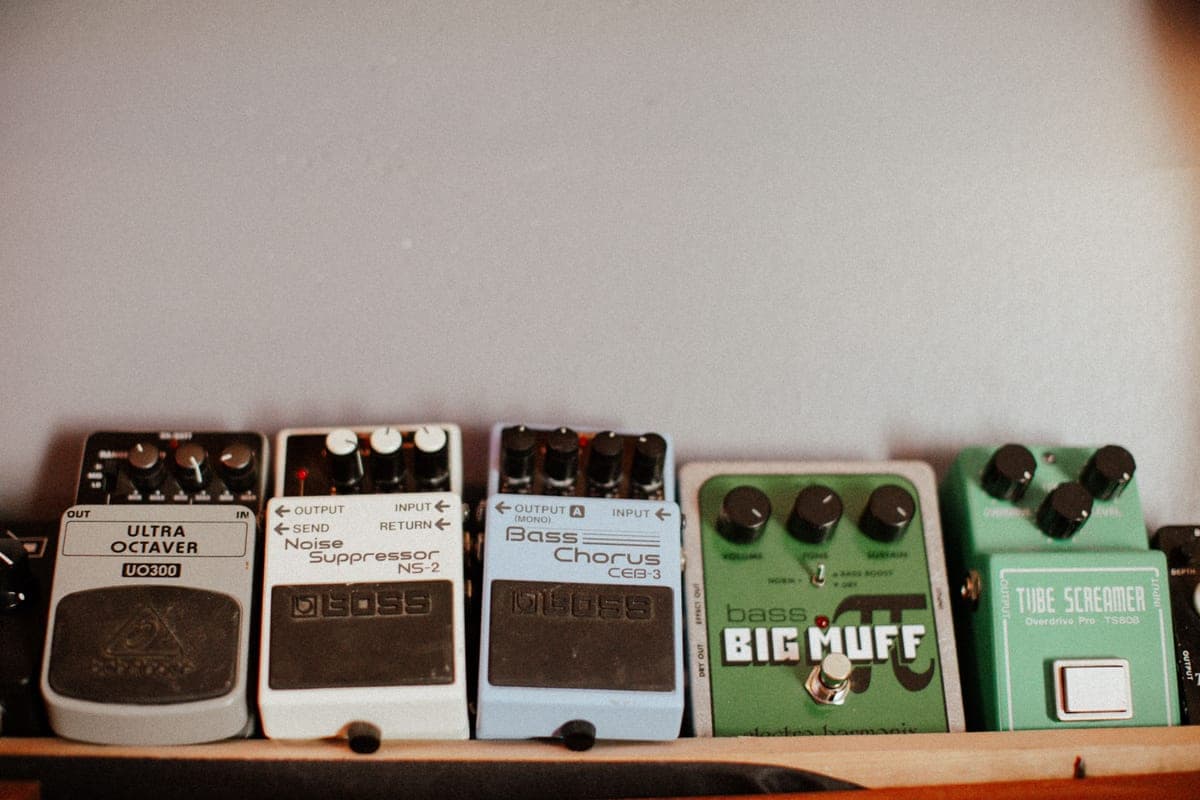
Pick by circuit family, not by review. If your amp already breaks up, a mid-humped Tube Screamer-style pedal pushes it; if your amp stays clean, you need a pedal with its own voice, because a transparent drive has nothing to be transparent about. That single question eliminates most of the market before you compare anything.
There are more overdrive pedals on sale than any other kind and almost all of them are variations on four circuits. Sorted by family the choice is manageable; sorted by brand it is not.
Best overdrive pedals
| # | Product | Best for | Price |
|---|---|---|---|
| 01 | 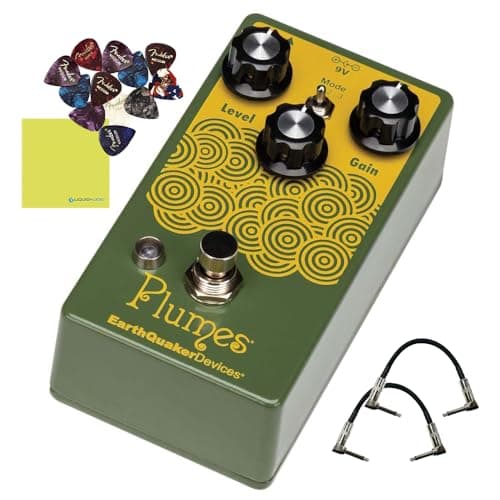 EarthQuaker Devices Plumes Three switchable clipping modes including a no-clipping boost, with the highest published input impedance here. | One pedal covering three circuits | |
| 02 | 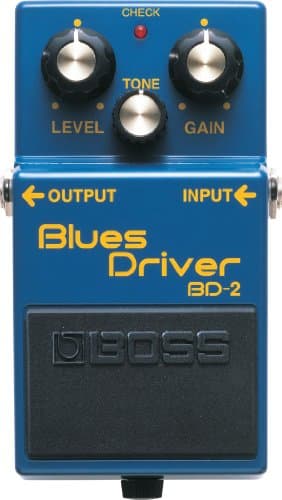 BOSS BD-2 Blues Driver Discrete gain stages rather than an op-amp feedback loop, so it stays flat through the mids. | A drive that leaves the amp's voice alone | $109.99 · Check price #ad How we’re funded · price as of October 17, 2026 |
| 03 | 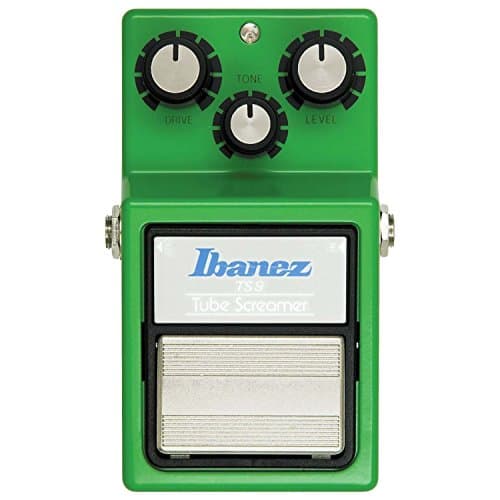 Ibanez TS9 Tube Screamer The mid hump is the point — it feeds a cranked amp exactly the frequencies its power section reacts to. | Pushing an amp that is already breaking up | $99.99 · Check price #ad How we’re funded · price as of October 17, 2026 |
| 04 | 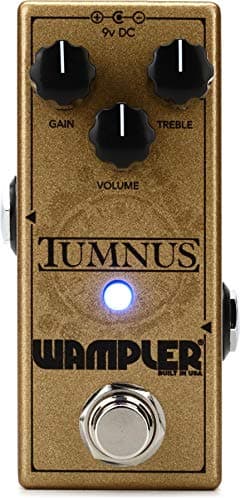 Wampler Tumnus A clean signal path in parallel with the clipping path, so it reads as more amp rather than more pedal. | Adding presence without changing the amp | $149.38 · Check price #ad How we’re funded · price as of October 17, 2026 |
| 05 | 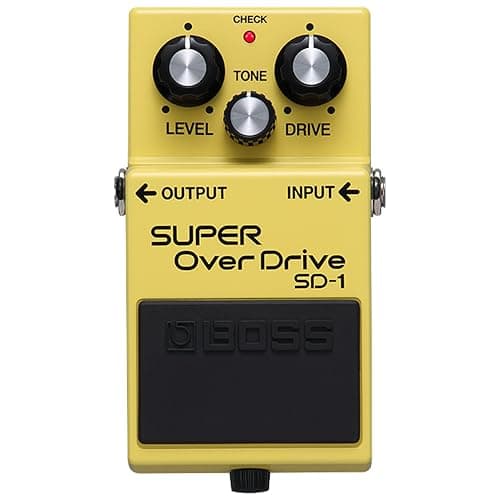 BOSS SD-1 Super Overdrive BOSS's asymmetrical clipping circuit, published at 10 mA, with a 60-90 hour battery life. | Asymmetric clipping at the lowest price here | $69.99 · Check price #ad How we’re funded · price as of October 17, 2026 |
| ! | 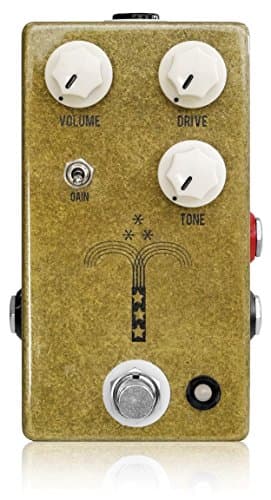 JHS Pedals Morning Glory V4 Genuinely low-gain and genuinely transparent — which means on a clean amp there is very little there. Skip this one — see why below | A transparent drive, if your amp is already doing the work | $199.00 · Check price #ad How we’re funded · price as of October 17, 2026 |
Rows link to the full write-up further down this page. Prices come from the live price layer only — where there is no live figure the button reads “Check price” rather than showing a remembered number.
02The four families and what separates them
| Family | Clipping | Frequency response | Best in front of |
|---|---|---|---|
| Tube Screamer | Symmetrical, diodes in the op-amp feedback loop | Bass cut, pronounced mid hump | An amp already breaking up |
| Blues Driver | Discrete gain stages | Flatter, open top end | An amp with a clean tone you like |
| Klon type | Clipped path mixed with a parallel clean path | Treble-forward, adds without replacing | Anything — it is the most amp-agnostic |
| Asymmetric / hard clip | Asymmetrical or hard clipping to ground | More of the pedal's own character | A clean amp that needs a voice |
Published clipping descriptions come from the manufacturers' own documentation where they state one — BOSS describes the SD-1's asymmetrical circuit, EarthQuaker publishes all three Plumes modes.
03Input impedance: the spec nobody reads
The Plumes publishes 10 M ohm; a BOSS compact publishes 1 M ohm. Both are high enough that your guitar's pickups are not loaded, which is why neither pedal changes your tone when bypassed in the way a vintage fuzz does.
It matters in one specific case: if you run a fuzz, what sits in front of it decides how it behaves. A buffered overdrive before a Fuzz Face-style circuit removes the pickup interaction that makes the fuzz clean up. This is the most common cause of fuzz disappointment and it is entirely a placement problem — see pedal order.
EarthQuaker Devices Plumes
One pedal covering three circuits
The number10 M ohm in, 100 ohm out, 25 mA draw — all published by EarthQuaker.
EarthQuaker publishes what the three-way toggle actually does, which is unusual and useful: mode 1 is symmetrical LED clipping, mode 2 is no clipping at all, mode 3 is asymmetrical silicon diode clipping. Those are three different circuits, not three EQ presets.
Mode 2 is the one that changes what the pedal is for. With the diodes out of circuit you have a clean boost with a tone control, which means one pedal covers both the 'push my amp harder' job and the 'make my own dirt' job.
The 10 M ohm input impedance is the highest figure on this page by a wide margin, which means nothing in front of it gets loaded down. The relay-based Flexi-Switch does momentary and latching from one footswitch — hold it for a phrase, tap it for a section.
| Controls | Level, Gain, Tone (bass left, midrange center, treble right), 3-way clipping toggle |
|---|---|
| Clipping modes | Mode 1 symmetrical LED clipping, which EarthQuaker describes as more crunch and compression; mode 2 no clipping, a wide-open op-amp clean boost; mode 3 asymmetrical silicon diode clipping, described as more transparency with a looser feel |
| Circuit | EarthQuaker states it uses JFET op-amps rather than the traditional 4558 IC, with the 9 V supply internally converted to +/- 9 V for more headroom |
| Current draw | 25 mA |
| Input impedance | 10 M ohm |
| Output impedance | 100 ohm |
| Bypass | Flexi-Switch relay-based true bypass, momentary or latching |
| Size | 4.75 x 2.50 x 2.25 in (121 x 64 x 57 mm) with knobs |
| Power | 9 V DC, 2.1 mm center-negative barrel |
| What it does not do | No power supply included and no battery compartment. Mode 2 is a clean boost, not a second drive voicing — if you expected three flavors of dirt, one of them is not dirt. |
Specs from EarthQuaker Devices Plumes product page. We have not used this unit.
BOSS BD-2 Blues Driver
A drive that leaves the amp's voice alone
The number1 M ohm in, 1 k ohm out, 20 mA. Buffered bypass.
The Blues Driver is the drive you buy when you like your amp and want it dirtier rather than different. Because the gain comes from discrete stages rather than diodes clipping inside an op-amp's feedback loop, the frequency response stays flatter and the top end stays open.
The practical consequence is that it cleans up further on your guitar's volume knob than a Tube Screamer does, and that it is a worse lead boost — there is no mid hump to push a solo forward.
It is a BOSS compact, so it is buffered, it publishes its numbers, and the switch will outlive the guitar. 20 mA means it costs nothing to power.
| Controls | Gain, Tone, Level, pedal switch |
|---|---|
| Input impedance | 1 M ohm |
| Output impedance | 1 k ohm |
| Current draw | 20 mA |
| Power | 9 V battery (6F22 / 6LR61) or PSA-series adaptor |
| Size / weight | 73 x 129 x 59 mm, 360 g |
| What it does not do | No adaptor in the box, no true bypass, and no mid control. The BD-2 is deliberately flat through the mids — if you want a mid hump to push a solo, this is the wrong pedal. |
Specs from BOSS BD-2 specifications. We have not used this unit.
#ad How we’re funded · price as of October 17, 2026
Ibanez TS9 Tube Screamer
Pushing an amp that is already breaking up
The number8 mA at 9 V. Ibanez does not publish impedance figures.
The TS9's tone stack cuts bass and pushes the mids, and the diodes clip symmetrically inside the op-amp's feedback loop, which compresses the signal more than a hard-clipping circuit does. Together that produces a narrower, more focused signal.
In front of a cranked valve amp that is exactly right — you are feeding the power section a compressed, mid-forward signal and it responds. In front of a clean solid-state amp with nothing to push, the same characteristics read as thin and honky.
That single distinction explains most Tube Screamer arguments. It is not a good or bad pedal in the abstract; it is a pedal designed to do one job to an amp that is already working.
| Controls | Drive, Tone, Level |
|---|---|
| Current draw | 8 mA at 9 V |
| Power | One 9 V battery (006P) or a 9 V DC center-negative adapter |
| Jack layout | Input on the right side, output on the left |
| Impedance | Not published by Ibanez |
| What it does not do | No power supply in the box, no true bypass (the TS9 is buffered), and no bass control — the tone stack is a single treble-tilt knob over a fixed mid hump. |
Specs from Ibanez TS9 product page. We have not used this unit.
#ad How we’re funded · price as of October 17, 2026
Wampler Tumnus
Adding presence without changing the amp
The number20 mA at 9 V. Buffered bypass. No battery connection at all.
Klon-style circuits mix a clean, unclipped copy of your signal back in alongside the clipped one, and the Gain control changes the ratio. At low gain you are mostly hearing a treble-forward clean boost; at high gain the clipped path dominates.
That topology is why these pedals get described as transparent. They are not — the treble lift is real and deliberate — but what they add sits alongside your amp's sound instead of replacing it.
Three controls, no battery option, and a footprint small enough to fit where a full-size pedal will not. Klon clones covers the family and why the original is not a sensible purchase.
| Controls | Level, Gain, Treble |
|---|---|
| Current draw | 20 mA at 9 V |
| Power | 9 V DC jack only — no battery connection |
| Bypass | 3PDT buffered bypass |
| Size | 1.5 x 3.5 x 1.5 in (38.1 x 88.9 x 38.1 mm), excluding knobs |
| What it does not do | One tone control, not a full EQ, and no battery option. It cannot make a dark amp bright on its own — it lifts treble and mids around what is already there. |
Specs from Wampler Tumnus product page. We have not used this unit.
#ad How we’re funded · price as of October 17, 2026
BOSS SD-1 Super Overdrive
Asymmetric clipping at the lowest price here
The number10 mA — half the BD-2's draw and the lowest of any BOSS pedal in this roundup.
The SD-1 clips asymmetrically, which means the positive and negative halves of the waveform are treated differently and the result contains even-order harmonics the symmetrical circuits do not produce. Whether you hear that as warmth is subjective; that the circuit differs is not.
It shares the Tube Screamer's basic layout and mid-forward character while being noticeably less compressed. As a stacking pedal in front of another drive it is one of the more useful cheap pedals ever made.
BOSS publishes 60 hours of carbon-zinc battery life and 90 hours of alkaline, which is a real number rather than a marketing one and reflects that 10 mA draw.
| Controls | Drive, Tone, Level, pedal switch |
|---|---|
| Clipping | BOSS describes an asymmetrical clipping circuit |
| Input impedance | 1 M ohm |
| Output impedance | 1 k ohm |
| Current draw | 10 mA |
| Battery life | Approx. 60 h carbon-zinc, approx. 90 h alkaline |
| Size / weight | 73 x 129 x 59 mm, 360 g |
| What it does not do | No adaptor included and no true bypass. It is not a transparent overdrive — the mid hump is the whole point, so it will not sit invisibly under a clean amp. |
Specs from BOSS SD-1 specifications. We have not used this unit.
#ad How we’re funded · price as of October 17, 2026
JHS Pedals Morning Glory V4
A transparent drive, if your amp is already doing the work
We are not picking this one for most readers, and it is a well-regarded pedal. The Morning Glory is a low-gain, low-coloration overdrive with a Bright toggle, and in front of a valve amp already on the edge of breakup it does exactly what it is meant to.
The problem is who buys it. Transparency means the pedal does not impose an EQ curve or much compression, so it needs something underneath it to be transparent about. Into a clean solid-state practice amp there is almost nothing happening, and the usual reaction is to conclude the pedal is broken or overrated.
If your amp stays clean at your playing volume, buy something with its own voice — the Plumes or the TS9 above — and come back to a transparent drive when you own an amp that breaks up. JHS publishes no electrical figures for it, so you also cannot plan a power budget around it without measuring.
| Controls | Volume, Drive, Tone, Bright toggle |
|---|---|
| Power | 9 V DC center-negative |
| Electrical data | No current-draw or impedance figure is published for this pedal, so none is stated here. |
| What it does not do | No power supply included. It is a low-gain transparent drive — it will not produce distortion on its own, and on a clean solid-state amp there is very little there. |
Specs from JHS Morning Glory V4 product page. We have not used this unit.
04Stacking two drives
Two overdrives in series is a real technique and it works in one direction more than the other. A lower-gain, mid-humped pedal into a higher-gain one gives you a tighter, more focused lead sound. The reverse tends to produce mush, because you are asking the second pedal to clip a signal that has already been compressed and mid-boosted.
- SD-1 into a dirty amp channel — the classic tightening move, and the reason the SD-1 has outlived most of its contemporaries.
- Tumnus into a Tube Screamer — the clean blend restores some of the low end the TS removes.
- Plumes in mode 2 into anything — with the diodes out of circuit, it is a boost, so it pushes rather than clips.
- Two high-gain pedals in series — almost always worse than either alone. If this is what you want, the answer is an amp with a gain channel.
05What we did not include and why
No boutique pedals over about $250. Not because they are bad, but because at that price the interesting question is what an amp upgrade would do instead, and that is a different page.
No Klon Centaur original. It is the reference for a whole family and it trades at prices that make a recommendation meaningless. Klon clones is the practical version of that page. If you play a Stratocaster, the shortlist changes again — best overdrive for a Strat judges the same pedals on input impedance and midrange behavior instead. And if your shortlist is three pedals from one maker rather than three circuit families, BOSS overdrive compared puts the BD-2, SD-1 and OD-3 side by side on what BOSS publishes. For the one pedal here that switches between clipping circuits, our Plumes review covers what each position does. Our OCD review covers the one that switches between voicings instead.
Frequently asked questions
+ What is the best overdrive pedal for a clean amp?
+ What is a transparent overdrive?
+ Can I use two overdrive pedals at once?
+ Do overdrive pedals work with solid state amps?
Sources
Related on Fret & Fuzz

Fulltone OCD review
Not a transparent drive, whatever the label says. A 1 M ohm input on the v2, and a serial number that tells you which voicing you are buying.
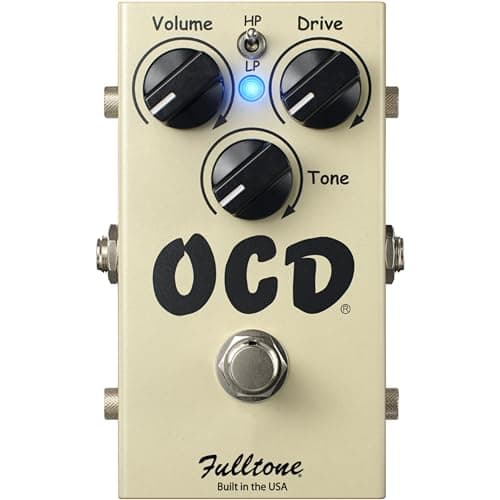
Top pick: Fulltone OCD Obsessive Compulsive Drive
EarthQuaker Devices Plumes review
Three clipping modes the maker actually documents, a 10 M ohm input, and a relay bypass that fails silent without power.
Top pick: EarthQuaker Devices Plumes

Best guitar pedals for blues
The one genre where the best pedal is the one you stop noticing. Five picks judged on how much dynamic range survives.
Best for Blues pick: BOSS BD-2 Blues Driver
#ad How we’re funded · price as of October 17, 2026
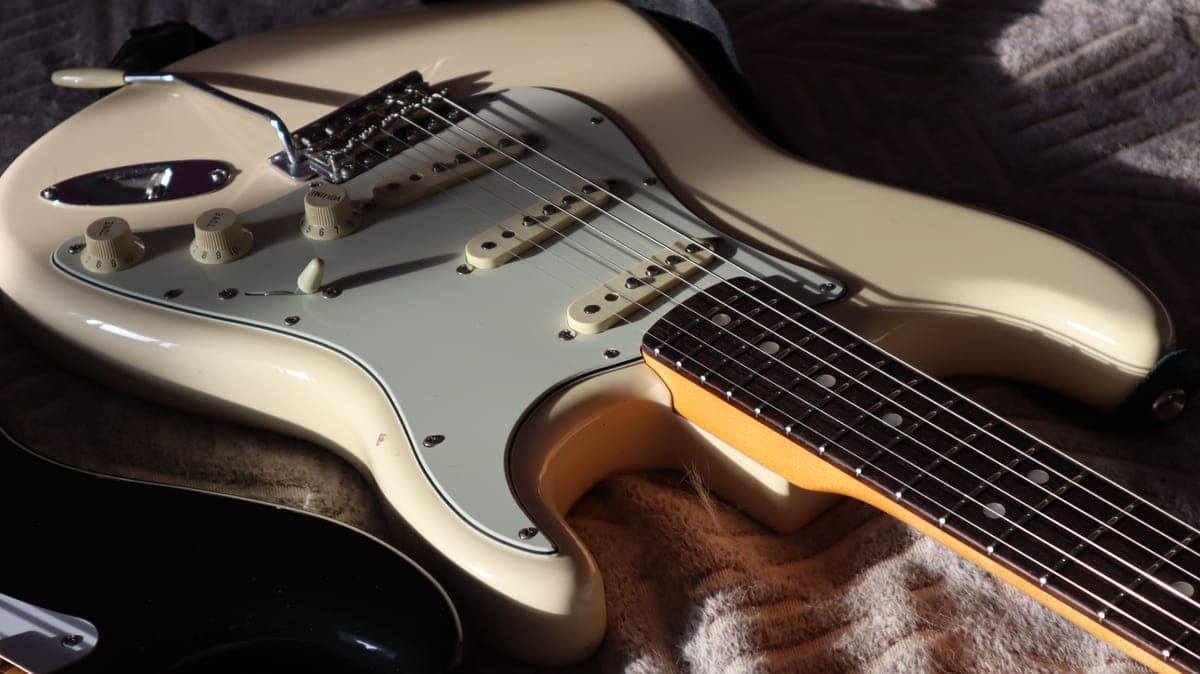
Best overdrive pedals for a Stratocaster
Single coils are brighter, lower output and short of mids. That rules some famous overdrives in and others straight out.
Best Overdrive for Single Coils pick: Ibanez TS9 Tube Screamer
#ad How we’re funded · price as of October 17, 2026

BOSS overdrive compared: BD-2 vs SD-1 vs OD-3
Three circuits, not three price points. What BOSS publishes for each, and which one your amp actually wants.
Best BOSS Overdrive pick: BOSS BD-2 Blues Driver
#ad How we’re funded · price as of October 17, 2026
Fulltone OCD vs BOSS Blues Driver
A modifier against a source. One roughens an amp you like; the other supplies the whole tone on a clean one.
Top pick: BOSS BD-2 Blues Driver
#ad How we’re funded · price as of October 17, 2026
Tube Screamer vs Blues Driver
Mid hump versus flat response, with both spec sheets side by side and a straight answer about which your amp wants.
Top pick: BOSS BD-2 Blues Driver
#ad How we’re funded · price as of October 17, 2026
Klon clones: the circuit, and what to buy instead
The parallel clean path is the whole trick. Here is what it does, why the originals cost what they do, and which versions to buy.
Best Klon-Style Drive pick: Wampler Tumnus
#ad How we’re funded · price as of October 17, 2026
Overdrive vs boost
A boost has three different results depending on what follows it. Work out which case you are in before you buy one.
Top pick: EarthQuaker Devices Plumes
Overdrive vs distortion vs fuzz
How hard, how symmetrically, and with what EQ around it. The real distinctions, and why the box labels are unreliable.
Top pick: BOSS BD-2 Blues Driver
#ad How we’re funded · price as of October 17, 2026