Best fuzz pedals
Fuzz is the one category where a published number — input impedance — predicts your experience better than any description of the sound does.
Fret & Fuzz earns a commission when you buy through the links on this page. It costs you nothing and it does not decide what we rank. How we’re funded.
We have not played this gear. Every pick below is chosen from published manufacturer specifications and the arithmetic set out in how we research, which you can re-run yourself.
Buy a Big Muff first. It has enough input impedance to behave predictably wherever you put it in a chain, it draws about 3 mA, and its sustain is the thing most people mean when they say fuzz. Buy a Fuzz Face second, once you can put it first in the chain with nothing buffered in front of it — that placement is not optional and it is the single most common reason fuzz disappoints.
Fuzz is the category where the usual review vocabulary fails hardest. 'Warm', 'gnarly' and 'velcro' describe a listening impression and predict nothing about how the pedal will behave on your board. Input impedance does.
Best fuzz pedals
| # | Product | Best for | Price |
|---|---|---|---|
| 01 | 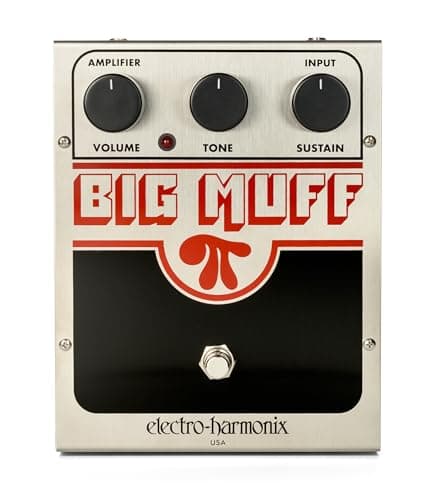 Electro-Harmonix Big Muff Pi Enormous sustain, a fixed mid scoop, and enough input impedance that placement is not a puzzle. | The fuzz that behaves predictably anywhere in a chain | $100.96 · Check price #ad How we’re funded · price as of October 17, 2026 |
| 02 | 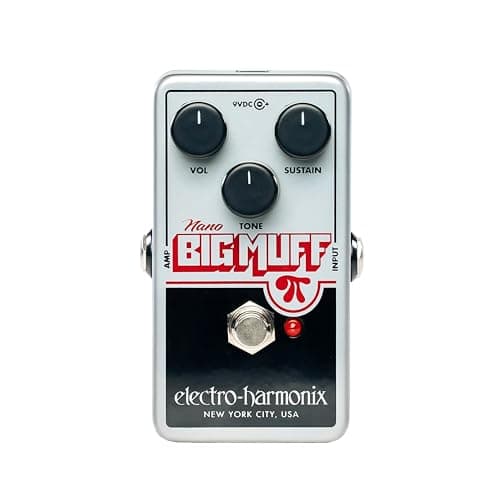 Electro-Harmonix Nano Big Muff Pi The standard Muff circuit in the smallest EHX enclosure, with the impedance figure published. | The same circuit where board space is the constraint | $87.10 · Check price #ad How we’re funded · price as of October 17, 2026 |
| 03 | 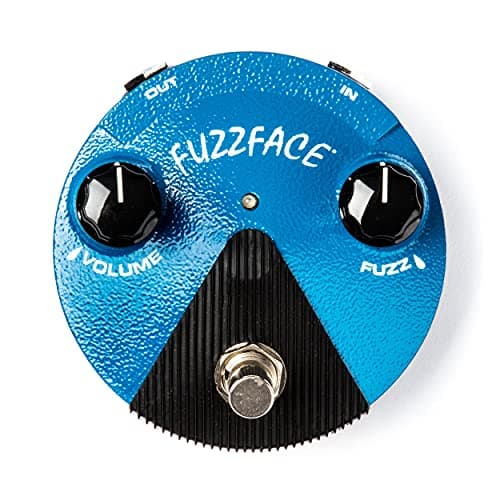 Dunlop Fuzz Face Mini Silicon Two transistors and a deliberate dependence on what your pickup is doing. | Fuzz that responds to your volume knob | $159.99 · Check price #ad How we’re funded · price as of October 17, 2026 |
| 04 | 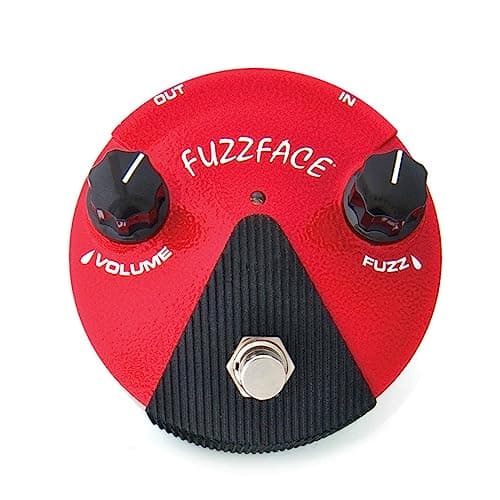 Dunlop Fuzz Face Mini Germanium Warmer and softer-edged than silicon, and genuinely temperature-dependent. | The vintage voice, with the vintage inconvenience | |
| ! | 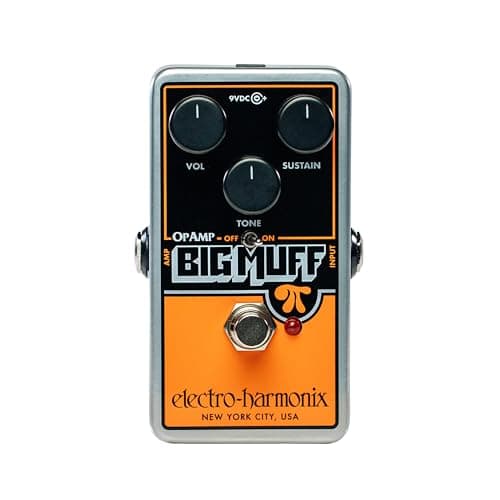 Electro-Harmonix Op-Amp Big Muff Pi The lowest published input impedance in the family, and the most placement-sensitive of the Muffs. Skip this one — see why below | A specific record's sound, not a first fuzz | $96.20 · Check price #ad How we’re funded · price as of October 17, 2026 |
Rows link to the full write-up further down this page. Prices come from the live price layer only — where there is no live figure the button reads “Check price” rather than showing a remembered number.
02Published input impedance, and why it decides everything
| Pedal | Published input impedance | Placement sensitivity |
|---|---|---|
| EHX Nano Big Muff | 130 k ohm | Moderate — a buffer in front changes it slightly |
| EHX Op-Amp Big Muff | 55 k ohm | High — the most sensitive of the family |
| EarthQuaker Plumes (for contrast) | 10 M ohm | None — nothing in front gets loaded |
| BOSS compact pedals (for contrast) | 1 M ohm | None |
| Dunlop Fuzz Face Mini | Not published | Very high — the circuit is designed around pickup interaction |
Dunlop does not publish an impedance figure for the Fuzz Face Mini. Its sensitivity to placement is a property of the two-transistor topology rather than a number we can quote.
A guitar pickup is a high-impedance source. Classic fuzz circuits present a low input impedance, which means the pickup and the pedal load each other — and the amount of that loading changes as you turn your guitar volume down. That interaction is what people mean when they say a fuzz 'cleans up'.
A buffer in front breaks it. Buffers exist to present a high impedance to your guitar and a low impedance to whatever follows, which is exactly what you want everywhere except here. After a buffer, the fuzz sees a fixed low-impedance source no matter what your volume knob is doing.
Electro-Harmonix Big Muff Pi
The fuzz that behaves predictably anywhere in a chain
The numberAbout 3 mA at 9 V — you can run four of these off a cheap daisy chain.
Four transistor stages: a boost stage, two cascaded clipping stages, and a recovery stage, with a passive tone stack between them. The two cascaded clipping stages are why the sustain does not decay the way an overdrive's does.
It is the fuzz to buy first because it works where you put it. At 130 k ohm on the Nano version's input it is not as placement-sensitive as a Fuzz Face, so a buffered tuner in front does not ruin it.
The fixed mid scoop is the limitation and it is not adjustable. Alone it sounds enormous; in a band it can vanish. An EQ after it is the fix, and it is a cheaper fix than a second fuzz.
| Controls | Volume, Tone, Sustain |
|---|---|
| Current draw | Approximately 3 mA at 9 V DC |
| Power | 9 V battery or a 9 V DC center-negative supply |
| Circuit | Four-transistor design with two cascaded clipping stages between a boost stage and a recovery stage |
| What it does not do | The tone stack has a fixed mid scoop with no way to defeat it, and there is no gain-cleanup behavior — rolling your guitar volume down mostly just gets quieter, not cleaner. |
Specs from Electro-Harmonix Big Muff Pi manual (PDF). We have not used this unit.
#ad How we’re funded · price as of October 17, 2026
Electro-Harmonix Nano Big Muff Pi
The same circuit where board space is the constraint
The number130 k ohm input impedance, about 3 mA at 9 V.
EHX publishes 130 k ohm at the input. That is low by modern standards — a BOSS compact is 1 M ohm and an EarthQuaker Plumes is 10 M ohm — and it is why a Muff placed directly after a passive volume pedal or a long cable run can sound different from the same pedal further down the chain.
In practice the effect is a slight loss of top end and a small change in how the pedal responds to your guitar volume. It is not the dramatic change a Fuzz Face shows, but it is real and it is measurable, which is why the figure is worth knowing.
Same three controls, same circuit, roughly a third of the footprint.
| Controls | Volume, Tone, Sustain |
|---|---|
| Input impedance | 130 k ohm |
| Current draw | Approximately 3 mA at 9 V DC |
| Power | 9 V battery or a 9 V DC center-negative supply |
| Format | Nano enclosure — the same circuit in the smallest EHX housing |
| What it does not do | The 130 k ohm input impedance is low by modern standards, which is why a Big Muff placed straight after a passive volume pedal or a long cable run can sound different from the same pedal further down the chain. |
Specs from Electro-Harmonix Nano Big Muff Pi product page. We have not used this unit.
#ad How we’re funded · price as of October 17, 2026
Dunlop Fuzz Face Mini Silicon
Fuzz that responds to your volume knob
The Fuzz Face's defining behavior is that rolling your guitar volume back cleans it up — not just quieter, genuinely cleaner. That happens because you are changing the impedance the circuit sees, not merely the level.
Silicon transistors (BC108 in this version) are brighter, more aggressive and far more consistent than germanium. If you gig, this is the version to own.
It must be first in the chain, with nothing buffered in front of it. That includes most tuners. If you cannot arrange that, buy a Muff instead — the pedal will not do what you bought it for.
| Controls | Volume, Fuzz |
|---|---|
| Transistors | Silicon (BC108) — brighter and more aggressive than the germanium version |
| Power | 9 V battery or a 9 V DC supply; Dunlop notes the Mini adds a DC jack the original lacked |
| Electrical data | No current-draw or impedance figure is published for this pedal, so none is stated here. |
| What it does not do | A Fuzz Face wants to see your guitar pickup directly. Put a buffered tuner or a wah in front of it and the interaction that makes it clean up on the volume knob is gone. |
Specs from Dunlop Fuzz Face Mini range page. We have not used this unit.
#ad How we’re funded · price as of October 17, 2026
Dunlop Fuzz Face Mini Germanium
The vintage voice, with the vintage inconvenience
Germanium transistors drift with temperature. A cold rehearsal room and a hot stage are different operating points, and the pedal sounds different in each. That is not a defect; it is a property of the material and it is why silicon versions exist.
The trade is a softer, warmer clipping character that a lot of players prefer for cleaning up on the volume knob.
Same placement rules as the silicon version, only less forgiving. First in the chain, nothing buffered ahead of it.
| Controls | Volume, Fuzz |
|---|---|
| Transistors | Germanium (NKT275) — warmer and softer-edged than the silicon version |
| Power | 9 V battery or a 9 V DC supply |
| Electrical data | No current-draw or impedance figure is published for this pedal, so none is stated here. |
| What it does not do | Germanium transistors drift with temperature — a cold stage and a hot one are genuinely different pedals. Same buffer sensitivity as the silicon version, only more so. |
Specs from Dunlop Fuzz Face Mini range page. We have not used this unit.
Electro-Harmonix Op-Amp Big Muff Pi
A specific record's sound, not a first fuzz
We are not picking this as a first fuzz. EHX publishes 55 k ohm at the input and about 5 mA of draw, and the circuit uses op-amp clipping instead of the four-transistor topology. It is harder, flatter and more compressed than the standard Muff.
The 55 k ohm figure is the lowest in the family, which makes it the most sensitive to what precedes it. On a board with a buffered tuner in front, the pedal you hear is not the pedal in the demos.
As a second Muff, chasing a particular late-1970s sound, it is exactly right. As the only fuzz you own, it is the hardest one to live with.
| Controls | Volume, Tone, Sustain, Tone Bypass switch |
|---|---|
| Input impedance | 55 k ohm |
| Current draw | Approximately 5 mA at 9 V DC |
| Circuit | Op-amp clipping rather than the four-transistor topology of the standard Big Muff |
| What it does not do | The 55 k ohm input impedance is the lowest of the Muff family, so what sits in front of it matters more than usual. There is no germanium warmth here — this is the harder, more compressed version of the sound. |
Specs from Electro-Harmonix Op-Amp Big Muff Pi product page. We have not used this unit.
03Which of your pedals are buffered
- Every BOSS compact is buffered, including the TU-3 tuner and every drive pedal in the line.
- Most pedal tuners are buffered, because a buffer is useful for a tuner's own signal detection. A Korg Pitchblack is true bypass and is the usual answer if you need one that is not.
- Wahs load the signal when engaged, which is a related but different problem.
- Most modern boutique pedals offer true bypass, often via a relay — the Plumes' Flexi-Switch is relay-based true bypass.
- Every isolated power supply is irrelevant to this. Buffering is a signal question, not a power question.
04Setting a fuzz so it works in a band
Two adjustments do most of the work. First, less Fuzz than sounds good alone — fuzz circuits compress heavily and the difference between 70% and 100% is mostly noise floor. Second, an EQ after the pedal to put back some of the mids the tone stack scooped out, because a mid-scooped fuzz occupies no space in a mix.
The MXR 10 Band EQ is the usual tool for that, with the caveat that it runs on 18 V rather than 9 V. A BOSS GE-7 is the cheaper 9 V option with less resolution.
05What we left out
Octave fuzzes, gated fuzzes and modern boutique variants. They are legitimate and they are second or third fuzz purchases — the question this page answers is which fuzz to own if you own one. The all-time classics covers the historical context. For the genre that leans hardest on the Muff's cascaded clipping, best fuzz for doom is the shortlist. If a wah is going on the same board, its placement and its bypass type both change how these pedals behave — best wah pedals works through the order problem.
Frequently asked questions
+ Why does my fuzz sound bad on my pedalboard but fine straight into the amp?
+ Which fuzz should I buy first?
+ Germanium or silicon Fuzz Face?
+ Can I put a fuzz after an overdrive?
Sources
Related on Fret & Fuzz

Best fuzz pedals for doom and stoner rock
Sustain is a topology question, not a gain question. Cascaded clipping is why a chord hangs for bars instead of beats.
Best Fuzz for Doom pick: Electro-Harmonix Green Russian Big Muff
Best wah pedals
Inductor, bypass and treadle length are what separate wahs — plus the fuzz problem that decides the purchase.
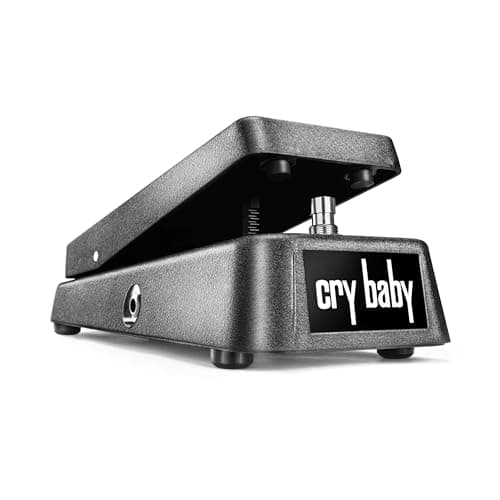
Best Wah pick: Dunlop Cry Baby Standard Wah GCB95
#ad How we’re funded · price as of October 17, 2026
Big Muff vs Fuzz Face
Sustain versus response, four transistors versus two, and the buffer problem that decides whether a Fuzz Face works on your board.
Top pick: Electro-Harmonix Big Muff Pi
#ad How we’re funded · price as of October 17, 2026
Big Muff versions compared
Four versions, four different circuits. Published impedance and current draw for each, and which one to buy.
Top pick: Electro-Harmonix Big Muff Pi
#ad How we’re funded · price as of October 17, 2026
Pedal order: what changes and what does not
Two placements are load-bearing and the rest are preference. Which is which, and the impedance figures behind the first one.
Top pick: Dunlop Fuzz Face Mini Silicon
#ad How we’re funded · price as of October 17, 2026
Best guitar pedals for shoegaze
Fuzz, modulation and reverb in the order that decides the sound — with the input-impedance figures that explain why fuzz goes first.
Best for Shoegaze pick: Electro-Harmonix Big Muff Pi
#ad How we’re funded · price as of October 17, 2026