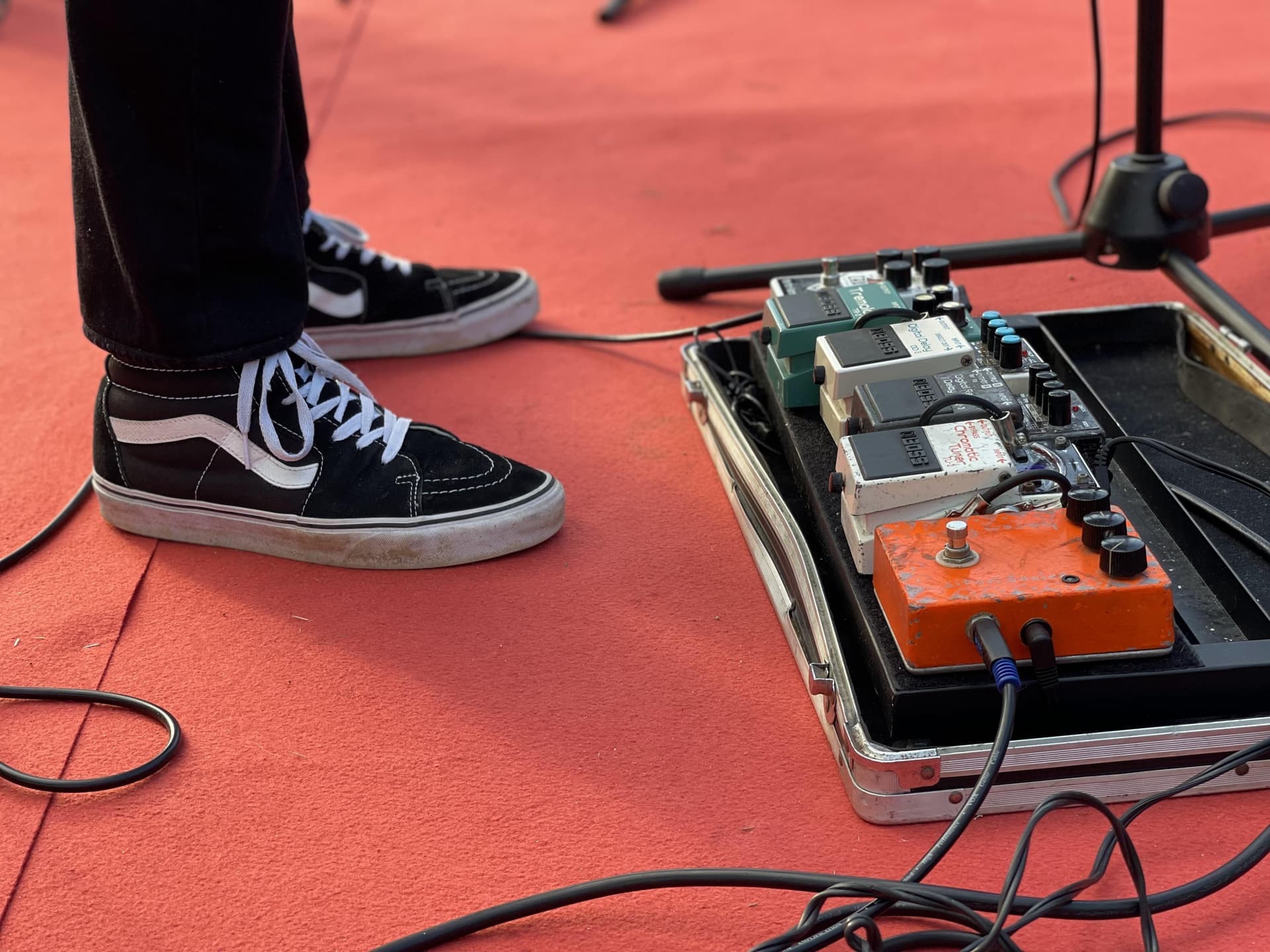
Best tuner pedals
The only pedal that makes you sound better every single time you use it — and the one whose spec sheet is easiest to read.
Fret & Fuzz earns a commission when you buy through the links on this page. It costs you nothing and it does not decide what we rank. How we’re funded.
We have not played this gear. Every pick below is chosen from published manufacturer specifications and the arithmetic set out in how we research, which you can re-run yourself.
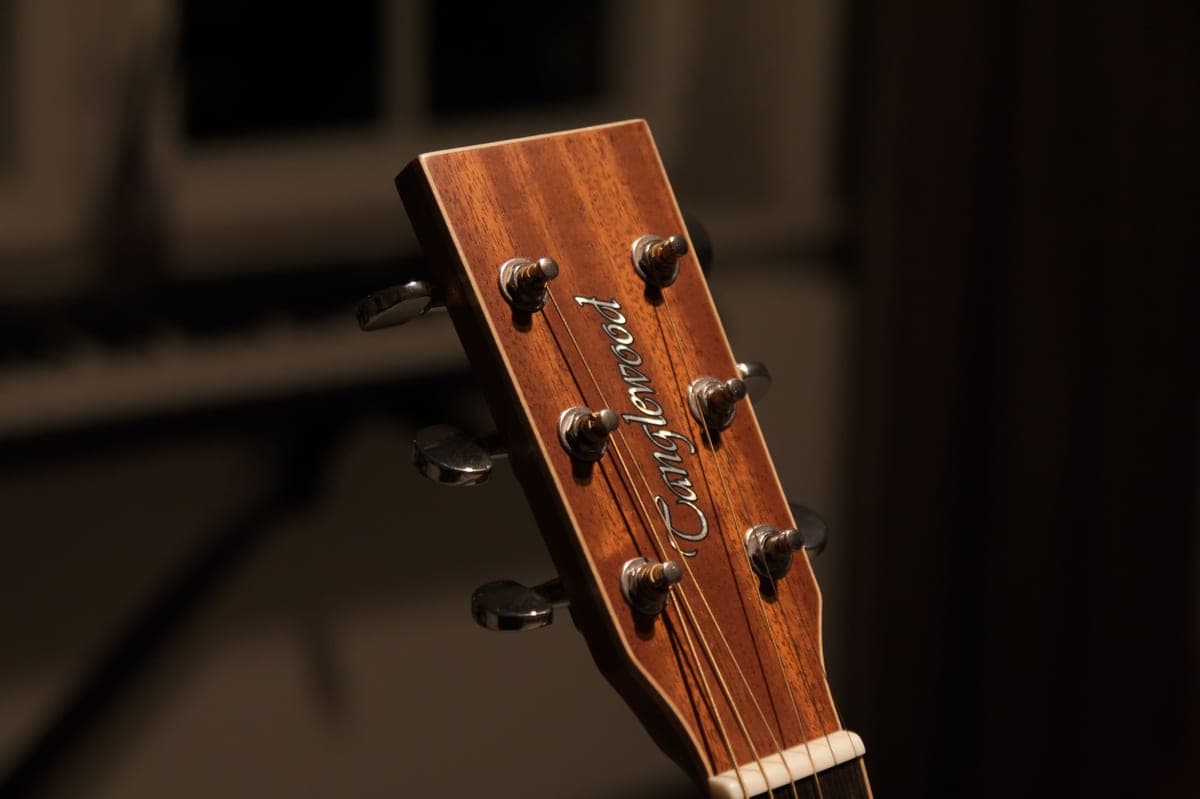
Buy a BOSS TU-3 unless you have a specific reason not to: +/- 1 cent accuracy, 20 mA, buffered bypass and a DC OUT that powers other pedals. Choose a PolyTune 3 instead if you want strobe accuracy for setting intonation — +/- 0.02 cent — and can spare 100 mA. Choose a true-bypass tuner like the Korg Pitchblack if you run a vintage-style fuzz that needs to see your pickup.
A tuner is the easiest pedal in this hub to shop for because the specification says almost everything. Accuracy, bypass type and current draw are all published, and between them they decide which tuner is right for your board.
Best tuner pedals
| # | Product | Best for | Price |
|---|---|---|---|
| 01 | No photo TC Electronic PolyTune 3 +/- 0.02 cent in strobe mode, plus a mode that reads all six strings at once. | Strobe accuracy and polyphonic checking | |
| 02 | 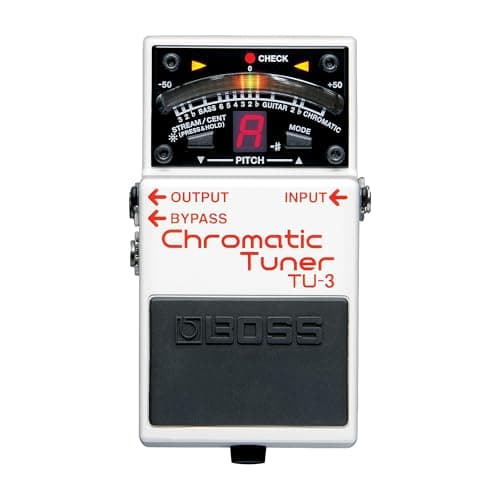 BOSS TU-3 Chromatic Tuner +/- 1 cent, buffered bypass, and a DC OUT jack that will run a small board. | The standard, and the one that powers other pedals | |
| 03 | No photo Korg Pitchblack Chromatic Tuner +/- 1 cent accuracy with true bypass, so a Fuzz Face after it still sees your pickup. | True bypass, when you run a vintage fuzz |
Rows link to the full write-up further down this page. Prices come from the live price layer only — where there is no live figure the button reads “Check price” rather than showing a remembered number.
02Accuracy, and how much you need
| Tuner | Published accuracy | Enough for |
|---|---|---|
| BOSS TU-3 | +/- 1 cent | Stage tuning, rehearsal, recording rhythm parts |
| Korg Pitchblack | +/- 1 cent | The same |
| TC PolyTune 3 (chromatic) | 0.5 cent | Anything above, plus careful studio work |
| TC PolyTune 3 (strobe) | +/- 0.02 cent | Setting intonation at the bridge |
A cent is 1/100th of a semitone. Most players cannot reliably hear a 2-3 cent error on a single note; it becomes audible in intervals and sustained chords.
The practical dividing line is intonation. Setting a guitar's intonation means comparing the open string against the twelfth-fret harmonic and the fretted note, and at +/- 1 cent the tuner's own tolerance is a meaningful fraction of the adjustment you are making. For that job you want strobe accuracy.
03The buffer decision
A tuner is almost always first in the chain, which makes its bypass type the most consequential on the board. A buffer presents a high impedance to your guitar and a low impedance to everything after it, which preserves top end over a long cable run.
That is helpful for almost every pedal and harmful for exactly one kind: vintage-style fuzz. A Fuzz Face-style circuit depends on being loaded by your pickup, and a buffer in front removes that interaction. If you run one, either use a true-bypass tuner or put the fuzz in front of the tuner. Big Muff vs Fuzz Face covers the mechanism.
TC Electronic PolyTune 3
Strobe accuracy and polyphonic checking
The number100 mA — five times a BOSS TU-3 in normal mode. Check this against your supply.
TC publishes +/- 0.02 cent accuracy in strobe mode and 0.5 cent in chromatic mode. Strobe accuracy is what you need for setting intonation; 0.5 cent is comfortably better than a typical stage tuner.
Polyphonic mode reads all six strings simultaneously so you can see at a glance which one has drifted, then switches to a single-string display automatically when you play one note. In a live context that saves real time.
The BONAFIDE buffer is published at 1 M ohm input, 100 ohm output and better than 112 dB signal to noise, and it can be switched out. The 100 mA current draw is the number to watch — it is the largest of any tuner here by a wide margin.
| Strobe accuracy | +/- 0.02 cent |
|---|---|
| Chromatic accuracy | 0.5 cent |
| Modes | Polyphonic (all six strings at once), chromatic and strobe, switching automatically |
| Buffer | BONAFIDE buffer, 1 M ohm input, 100 ohm output, >112 dB signal to noise |
| Current draw | 100 mA |
| Display | 109-LED display with an ambient light sensor |
| What it does not do | 100 mA is a lot for a tuner — five times a TU-3 in normal mode. The buffer can be switched out, but if you leave it in it is always in your signal path. |
Specs from TC Electronic PolyTune 3 product page. We have not used this unit.
BOSS TU-3 Chromatic Tuner
The standard, and the one that powers other pedals
The number20 mA normally, 80 mA in High Brightness mode.
BOSS publishes a C0 to C8 range, +/- 1 cent accuracy, and modes for chromatic, guitar and bass including flat tunings down to three semitones. One cent is enough for stage tuning and not enough for intonation work.
The DC OUT jack is the underrated feature: it will power a small number of other pedals from the same supply, which on a three-pedal board can remove the need for a brick entirely.
The High Brightness mode quadruples the current draw from 20 mA to 80 mA. On a tight supply that is a real decision, and nothing on the front panel warns you about it.
| Tuning range | C0 (16.35 Hz) to C8 (4,186 Hz) |
|---|---|
| Accuracy | +/- 1 cent |
| Modes | Chromatic, Chromatic flat x2, Guitar, Guitar flat x2, Bass, Bass flat x3 |
| Bypass | Buffered bypass |
| Current draw | 20 mA; 80 mA with High Brightness mode on |
| Jacks | Output, Bypass, DC IN, DC OUT (powers other pedals) |
| Weight | 390 g including battery |
| What it does not do | +/- 1 cent is fine for a stage tuner and not enough for setting intonation — that is strobe territory. Turning on High Brightness quadruples the current draw, which matters on a shared supply. |
Specs from BOSS TU-3 specifications. We have not used this unit.
Korg Pitchblack Chromatic Tuner
True bypass, when you run a vintage fuzz
Most pedal tuners are buffered, and a buffer in front of a vintage-style fuzz removes the pickup interaction that makes the fuzz clean up on your volume knob. A true-bypass tuner solves that without moving the fuzz.
Korg publishes +/- 1 cent accuracy and four display meter styles including a strobe-style readout. It also has a DC output for powering other pedals.
True bypass is not automatically better. If your cable run is long and nothing else on the board buffers, you may want the buffer — this is a trade, not an upgrade.
| Accuracy | +/- 1 cent |
|---|---|
| Display modes | Four meter styles including a strobe-style display |
| Bypass | True bypass |
| Power | 9 V battery or a 9 V DC supply; DC output for powering other pedals |
| What it does not do | No polyphonic mode. True bypass means no buffer, which is a feature if your chain already has one and a problem if it does not. |
Specs from Korg Pitchblack product page. We have not used this unit.
04The current draw nobody checks
A tuner feels like it should be the cheapest pedal on a board to power. Two of the three here are: the TU-3 draws 20 mA in normal mode. The PolyTune 3 draws 100 mA — the same as a BOSS DD-8 digital delay, for a tuner.
That is not a criticism of the PolyTune; a 109-LED display with an ambient light sensor costs current. It is a number to plan around, particularly on a supply with 100 mA outputs. The power arithmetic guide has the method.
05Pedal tuner or clip-on
A pedal tuner mutes your output. That is the actual reason to own one — you can tune between songs without the room hearing it, and you can kill your signal instantly if something goes wrong. A clip-on tuner cannot do either.
A clip-on is cheaper, works on an acoustic and needs no power. If you never play live, it is genuinely sufficient. If you do, the mute function is worth the pedal on its own. TU-3 vs PolyTune 3 puts the two most-shortlisted tuners side by side on the specs that do matter. And if you are not sure a pedal tuner is the right purchase at all, pedal tuner vs clip-on is the prior question — the accuracy figure is identical, so the money buys the mute rather than precision.
Frequently asked questions
+ What is the best tuner pedal?
+ How accurate does a guitar tuner need to be?
+ Should my tuner be true bypass or buffered?
+ Does a tuner pedal affect my tone?
Sources
Related on Fret & Fuzz
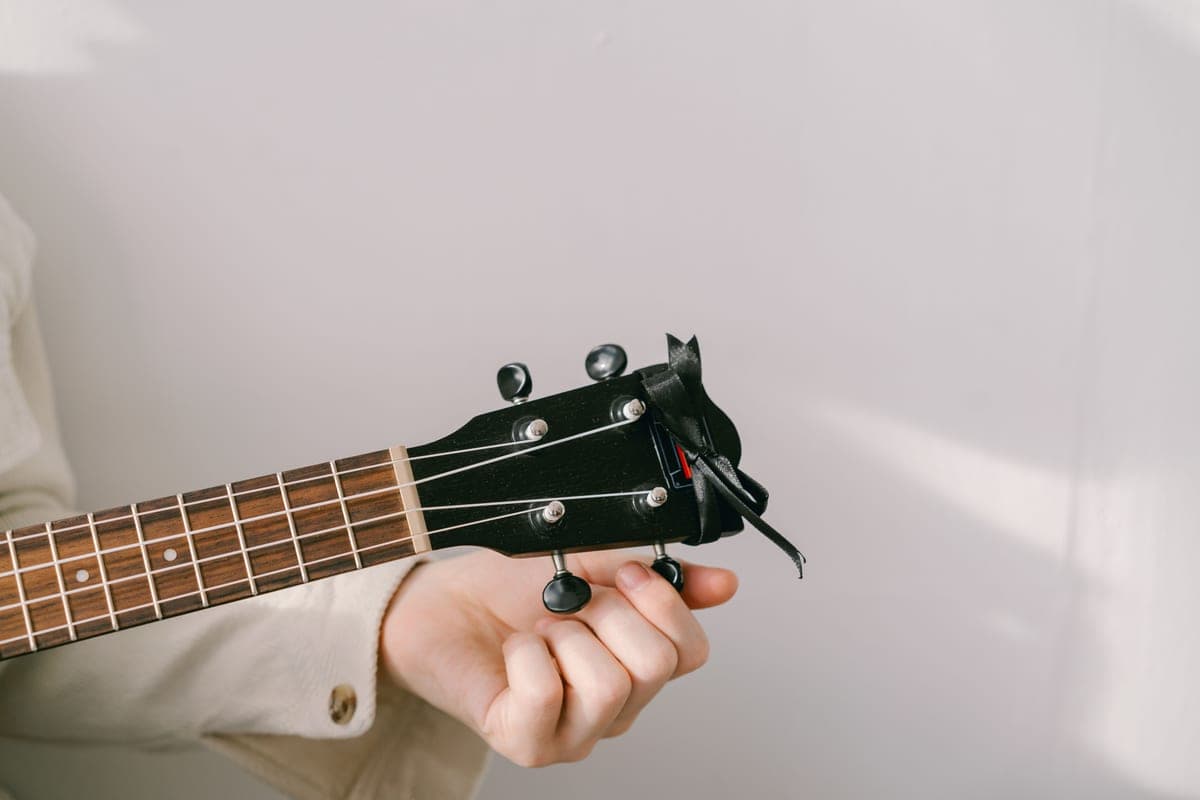
Pedal tuner vs clip-on tuner
BOSS publishes the same +/- 1 cent for both. So what does the pedal actually buy you, and when is it worth it?
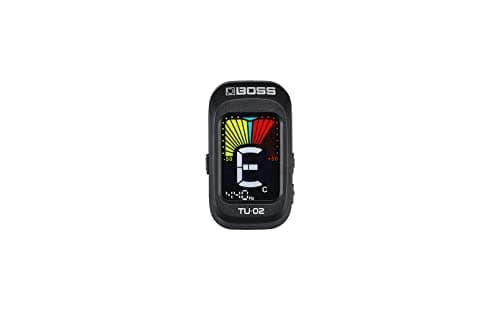
Top pick: BOSS TU-02 Clip-On Tuner
#ad How we’re funded · price as of October 18, 2026
BOSS TU-3 vs TC Electronic PolyTune 3
20 mA against 100 mA, and a buffer you can switch out against one you cannot. Neither difference is the accuracy figure.
Top pick: BOSS TU-3 Chromatic Tuner
Best noise gate pedals
Which signal the gate listens to is the entire specification. Three gates compared, and the wiring that makes one of them work.
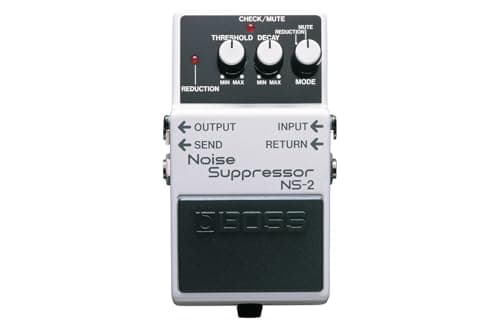
Best Noise Gate pick: BOSS NS-2 Noise Suppressor
#ad How we’re funded · price as of October 18, 2026
Big Muff vs Fuzz Face
Sustain versus response, four transistors versus two, and the buffer problem that decides whether a Fuzz Face works on your board.
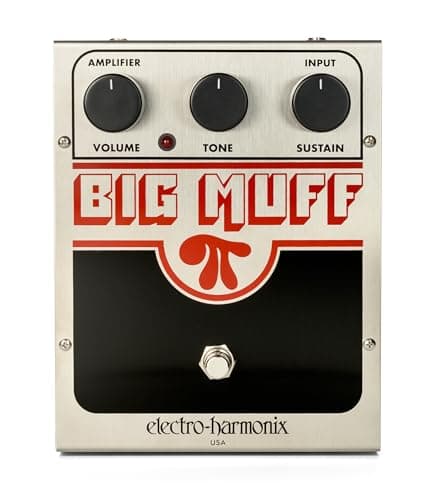
Top pick: Electro-Harmonix Big Muff Pi
#ad How we’re funded · price as of October 18, 2026
Pedal order: what changes and what does not
Two placements are load-bearing and the rest are preference. Which is which, and the impedance figures behind the first one.
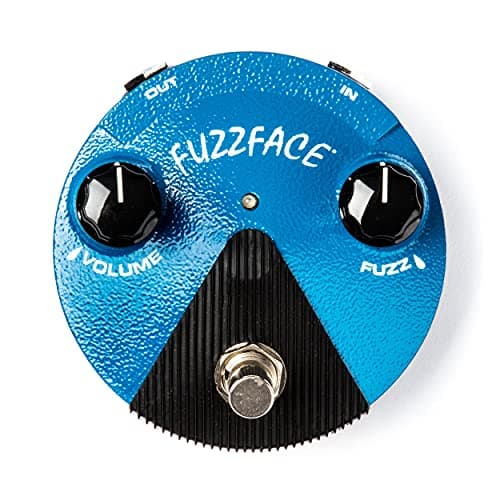
Top pick: Dunlop Fuzz Face Mini Silicon
#ad How we’re funded · price as of October 18, 2026
Best guitar pedals
One shortlist per job, chosen from published circuit and power specs. Every list names something we would not buy, and says why.