Pedal order: what changes and what does not
The conventional order is not a rule. But two of its positions are load-bearing and the rest are preference.
Fret & Fuzz earns a commission when you buy through the links on this page. It costs you nothing and it does not decide what we rank. How we’re funded.
We have not played this gear. Every pick below is chosen from published manufacturer specifications and the arithmetic set out in how we research, which you can re-run yourself.
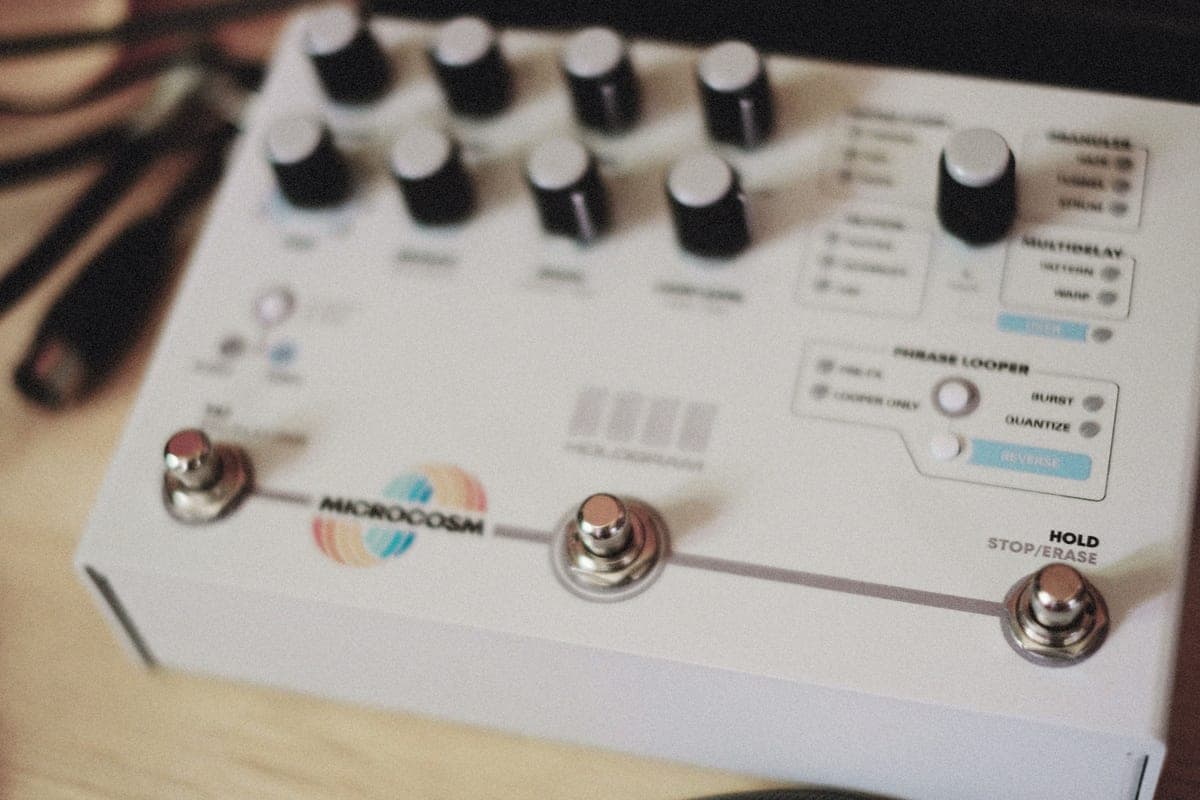
Yes, pedal order changes the sound, and two placements matter far more than the rest. Fuzz goes first because classic fuzz circuits are designed to be loaded by your pickup, and a buffer in front removes that. Time-based effects go last, or in the amp's effects loop, because distorting a delay repeat turns discrete echoes into mush. Everything else is preference, and a defensible one.
The conventional order gets presented as a rule and it is really a default with two hard constraints inside it. Knowing which parts are which lets you deviate deliberately instead of guessing.
01The conventional order, and what each position is for
| Position | Pedal type | Why here | Negotiable? |
|---|---|---|---|
| 1 | Tuner | Sees the unprocessed signal; mute kills everything downstream | Yes, if a fuzz needs to be first |
| 2 | Fuzz | Must be loaded by the pickup, not by a buffer | No — this is the hard one |
| 3 | Wah / filter | Responds to the raw signal's dynamics | Yes |
| 4 | Compressor | Evens out the level going into the drives | Yes — after the drives is a real alternative |
| 5 | Overdrive / distortion | Clipping stages, lower gain into higher gain | Order within this group matters |
| 6 | EQ | Shapes what the drives produced | Yes — before the drives is also useful |
| 7 | Modulation | Modulates the distorted signal | Yes |
| 8 | Delay | Repeats the finished sound | Constrained — must be after distortion |
| 9 | Reverb | Puts the finished sound in a space | Constrained — same reason |
| 10 | Looper | Captures everything | Yes — first if you want to solo over a dry loop |
The two pedals whose position is not negotiable
| # | Product | Best for | Price |
|---|---|---|---|
| 01 | 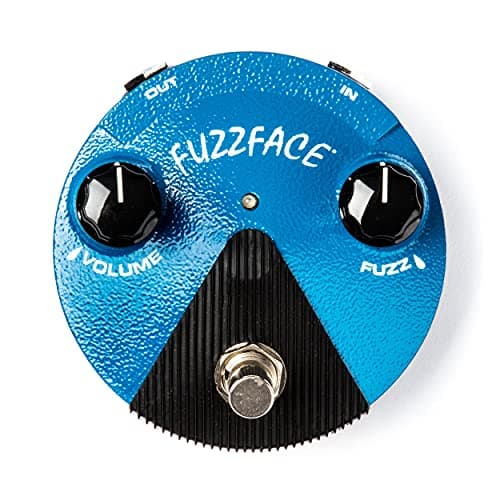 Dunlop Fuzz Face Mini Silicon The circuit is designed to be loaded by your pickup. A buffer in front removes the behavior you paid for. | First in the chain, before anything buffered | $159.99 · Check price #ad How we’re funded · price as of October 17, 2026 |
| 02 | 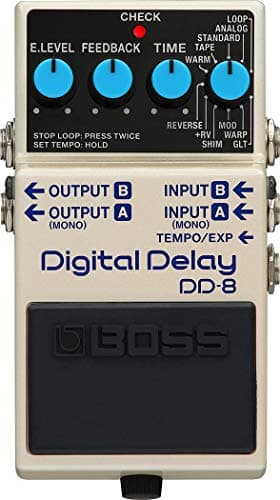 BOSS DD-8 Digital Delay A delay in front of a distorting amp gets distorted, and distorted repeats pile into mush. | Last in the chain, or in the amp's effects loop | |
| 03 | 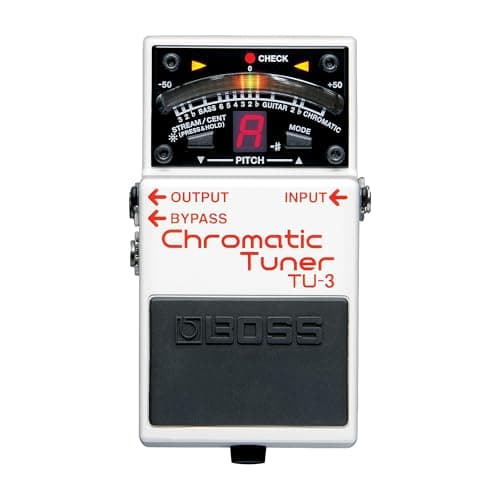 BOSS TU-3 Chromatic Tuner Buffered bypass, which is good for the whole board and bad for exactly one kind of pedal. | First, unless you run a vintage fuzz |
Rows link to the full write-up further down this page. Prices come from the live price layer only — where there is no live figure the button reads “Check price” rather than showing a remembered number.
03Why fuzz first is not negotiable
A guitar pickup is a high-impedance source with an inductance and a resonant peak. What loads it changes where that peak sits and how much of it survives. A vintage-style fuzz loads it heavily and deliberately, and the amount of loading changes as you turn the guitar volume down — which is why the pedal cleans up rather than simply getting quieter.
A buffer presents a high impedance to the guitar and a low impedance to whatever follows. That is exactly what you want everywhere except in front of a fuzz, because it makes the source impedance constant regardless of your volume knob. The interaction disappears.
Published figures make the scale of this concrete. EHX publishes 130 k ohm at the Nano Big Muff's input and 55 k ohm at the Op-Amp version's — both low, and both a load your pickup will feel. A BOSS compact is 1 M ohm; an EarthQuaker Plumes is 10 M ohm. Big Muff vs Fuzz Face covers the consequences.
04Why time effects go last
A delay produces discrete copies of your note. Distortion compresses and saturates whatever it is given. Run the delay first and the distortion treats each repeat as a new note to clip, so the repeats stop decaying naturally and pile into an undifferentiated wash.
Run the distortion first and the delay repeats an already-distorted note, which is what recordings sound like. The same logic applies to reverb, more strongly — a reverb tail through a distortion circuit becomes noise.
Dunlop Fuzz Face Mini Silicon
First in the chain, before anything buffered
This is the one placement that is genuinely not a preference. A Fuzz Face-style circuit presents a low input impedance and its operating point depends on the pickup loading it — which is why rolling your guitar volume back cleans it up rather than just making it quieter.
Put anything buffered in front and the fuzz sees a fixed low-impedance source. It still makes fuzz; it stops responding to your volume knob.
Buffered pedals include every BOSS compact and most pedal tuners, including the BOSS TU-3. If your tuner has to be first, use a true-bypass one such as the Korg Pitchblack.
| Controls | Volume, Fuzz |
|---|---|
| Transistors | Silicon (BC108) — brighter and more aggressive than the germanium version |
| Power | 9 V battery or a 9 V DC supply; Dunlop notes the Mini adds a DC jack the original lacked |
| Electrical data | No current-draw or impedance figure is published for this pedal, so none is stated here. |
| What it does not do | A Fuzz Face wants to see your guitar pickup directly. Put a buffered tuner or a wah in front of it and the interaction that makes it clean up on the volume knob is gone. |
Specs from Dunlop Fuzz Face Mini range page. We have not used this unit.
#ad How we’re funded · price as of October 17, 2026
BOSS DD-8 Digital Delay
Last in the chain, or in the amp's effects loop
The number100 mA, true stereo I/O, up to 10 seconds.
The second load-bearing placement. Your delay produces discrete copies of the note; if those copies then pass through a distorting stage, each one gets compressed and saturated and they stop being discrete.
In an amp with an effects loop, the delay goes there — after the preamp does its distorting, before the power amp. In an amp without one, get your distortion from pedals and put the delay after them.
The Carryover switch matters here: it lets repeats ring out after you bypass the pedal rather than cutting them off, which is what you want when the delay is doing its job at the end of the chain.
| Modes | 11 — Analog, Standard, Tape, Warm, Reverse, +RV, Shimmer, Mod, Warp, GLT, plus Loop |
|---|---|
| Maximum delay | Up to 10 seconds, with tap tempo |
| Controls | Mode, Time, Feedback, E.Level, Carryover switch, pedal switch |
| Current draw | 100 mA |
| Battery life | Approx. 3.5 hours on alkaline |
| I/O | True stereo in and out, with three selectable output modes |
| Weight | 440 g including battery |
| What it does not do | No adaptor included. At 100 mA it is not a pedal you daisy-chain casually, and the 3.5-hour battery figure means battery power is a backup, not a plan. |
Specs from BOSS DD-8 specifications. We have not used this unit.
BOSS TU-3 Chromatic Tuner
First, unless you run a vintage fuzz
The number20 mA normally, 80 mA in High Brightness mode.
A tuner goes first so it sees your unprocessed signal and so its mute function kills everything. On most boards a buffered tuner at the front is actively helpful — it drives the capacitance of the rest of the chain and preserves top end.
The exception is the one above. If you run a vintage-style fuzz, the buffered tuner in front of it is the thing preventing the fuzz from working properly.
Two clean solutions: a true-bypass tuner, or the fuzz placed before the tuner. Both work; the first is tidier.
| Tuning range | C0 (16.35 Hz) to C8 (4,186 Hz) |
|---|---|
| Accuracy | +/- 1 cent |
| Modes | Chromatic, Chromatic flat x2, Guitar, Guitar flat x2, Bass, Bass flat x3 |
| Bypass | Buffered bypass |
| Current draw | 20 mA; 80 mA with High Brightness mode on |
| Jacks | Output, Bypass, DC IN, DC OUT (powers other pedals) |
| Weight | 390 g including battery |
| What it does not do | +/- 1 cent is fine for a stage tuner and not enough for setting intonation — that is strobe territory. Turning on High Brightness quadruples the current draw, which matters on a shared supply. |
Specs from BOSS TU-3 specifications. We have not used this unit.
05The deviations worth trying
- Compressor after the drives instead of before. Evens out the distorted signal rather than the input. Noisier, and useful for a very consistent rhythm sound.
- EQ before the drives. Changes what the circuit is clipping rather than what you hear afterwards. This is how you tighten a loose high-gain sound — see best pedals for metal.
- Phaser after the delay. Modulates the repeats as well as the dry note, which turns a plain echo into something moving.
- Looper first, before the drives. Records a dry loop so you can change your sound while it plays back.
- Reverb before distortion. A real and specific effect — dense, chaotic, and nothing like normal reverb. Not a default.
06The effects loop question
If your amp has an effects loop and you get your distortion from the amp's gain channel, the loop is where time effects belong. It sits after the preamp has done its distorting and before the power amp, which is exactly the position you want.
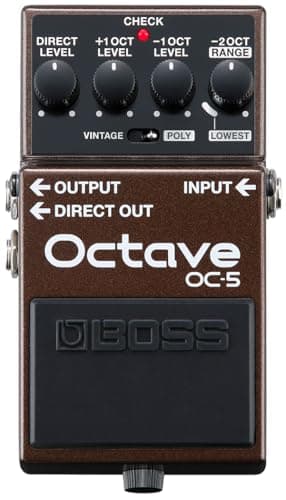
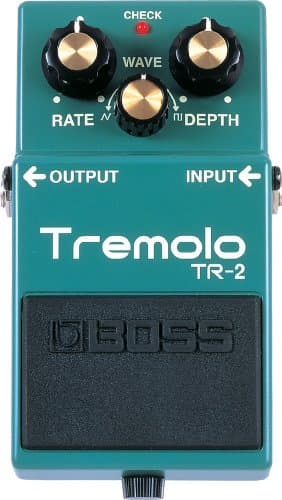
If your distortion comes from pedals and the amp stays clean, the loop is unnecessary — the whole chain in front of the amp is already in the right order. This is the reason a pedal-platform setup does not need a loop and an amp-distortion setup does. Pedal gain vs amp gain covers the wider difference. One placement in that chain has a mechanical reason behind it worth knowing: tremolo goes after your drives, because a distortion compresses away exactly the volume variation a tremolo just created. Best tremolo pedals covers that interaction. Pitch tracking has the opposite requirement and the same logic: an octave pedal wants to see a clean signal, because distortion adds harmonics that make the fundamental harder to find. Best octave pedals covers why it goes in front of your drives.
Frequently asked questions
+ Does pedal order matter?
+ What order do pedals go on a pedalboard?
+ Should the wah go before or after distortion?
+ Where does a noise gate go?
+ Does the tuner have to be first?
Sources
Related on Fret & Fuzz
Best octave pedals
Chord tracking and a dry blend decide this category. Three picks on published specs, plus the harmonizer people buy by mistake.
Best Octave Pedal pick: BOSS OC-5 Octave
#ad How we’re funded · price as of October 17, 2026
Best tremolo pedals
Waveshape is the specification that separates tremolo pedals. Three compared, plus the one already inside your multi-effects unit.
Best Tremolo pick: BOSS TR-2 Tremolo
Big Muff vs Fuzz Face
Sustain versus response, four transistors versus two, and the buffer problem that decides whether a Fuzz Face works on your board.
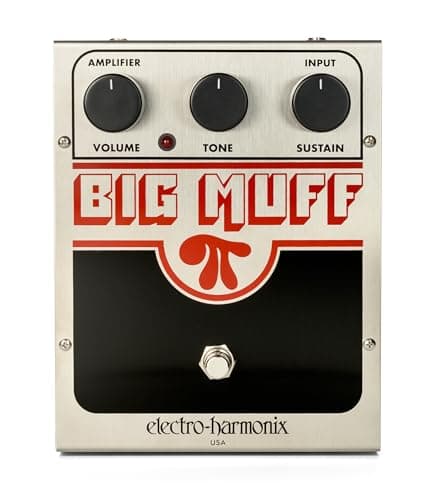
Top pick: Electro-Harmonix Big Muff Pi
#ad How we’re funded · price as of October 17, 2026
Best noise gate pedals
Which signal the gate listens to is the entire specification. Three gates compared, and the wiring that makes one of them work.
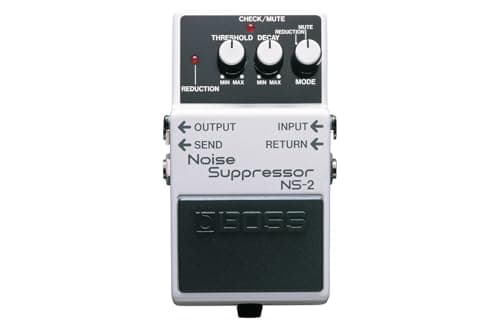
Best Noise Gate pick: BOSS NS-2 Noise Suppressor
#ad How we’re funded · price as of October 17, 2026
Best compressor pedals
Blend is the control that decides whether a compressor squashes or supports. Three compressors compared on what they do and do not have.
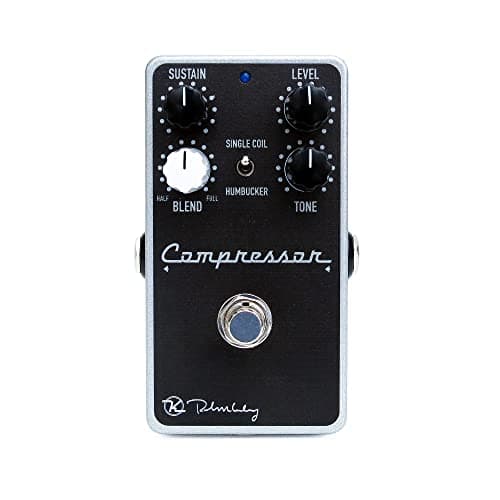
Best Compressor pick: Keeley Compressor Plus
#ad How we’re funded · price as of October 17, 2026
Delay vs reverb
Countable repeats or a cloud of reflections. Which to buy first, in what order to run them, and what each costs to power.
Top pick: BOSS DD-8 Digital Delay
Pedal gain vs amp gain
One clipping point or several with filtering between them. Why that structural difference only shows at high gain.
Top pick: EVH 5150 Iconic Series 15W 1x10 combo
#ad How we’re funded · price as of October 17, 2026