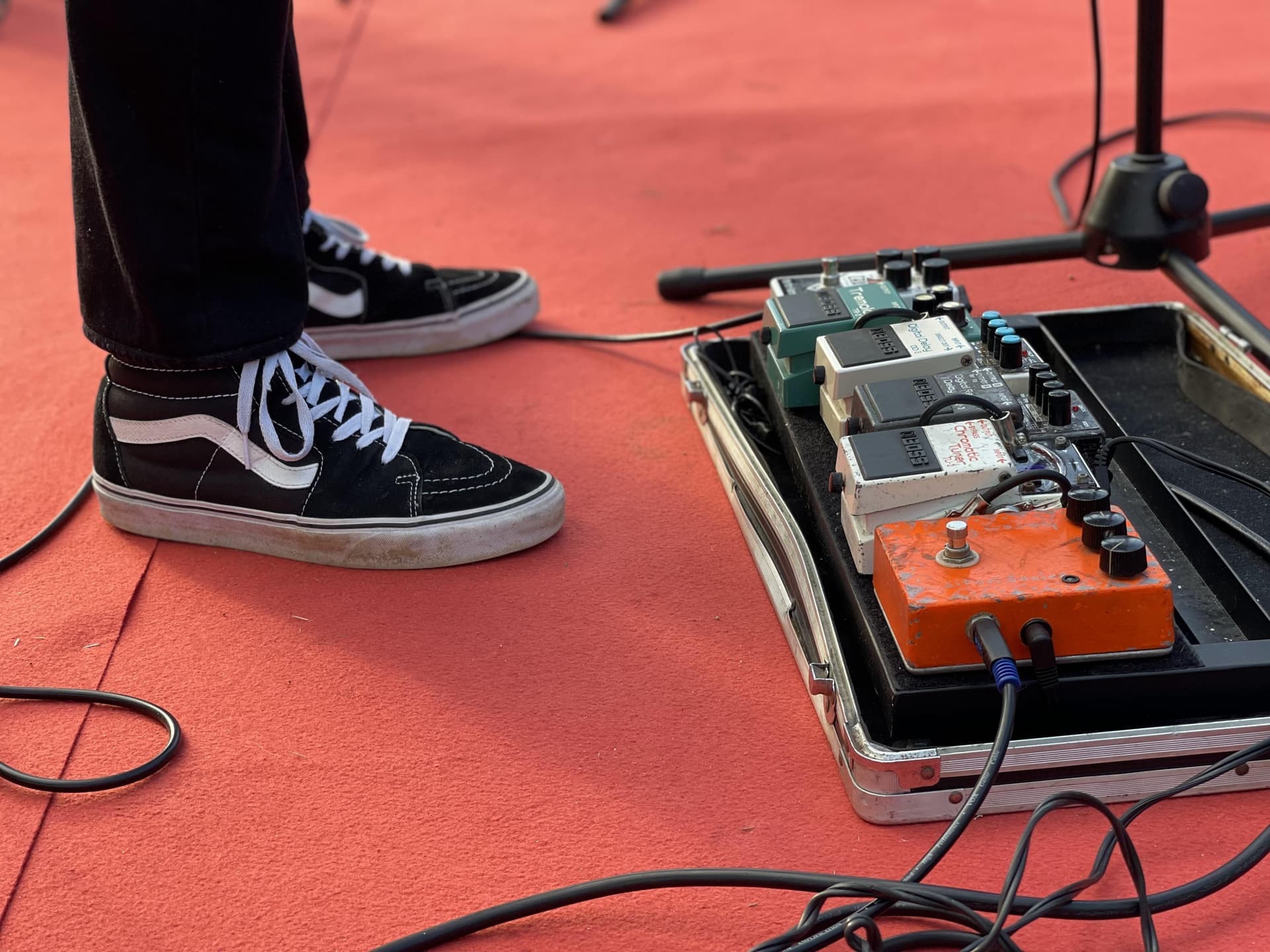
Best pedal platform amps
If your pedals make the distortion, the amp's job changes completely — and the specification you want stops being gain and starts being headroom.
Fret & Fuzz earns a commission when you buy through the links on this page. It costs you nothing and it does not decide what we rank. How we’re funded.
We have not played this gear. Every pick below is chosen from published manufacturer specifications and the arithmetic set out in how we research, which you can re-run yourself.
A pedal platform amp needs clean headroom and as little character of its own as possible. That inverts the usual amp-shopping priorities: gain channels, distinctive voicings and low wattage all work against you. It is also why solid-state amps are genuinely competitive here — they stay linear until they clip, which is exactly what a platform should do.
The term gets used loosely. A pedal platform is an amp whose job is to reproduce what your pedals send it, loudly and without editorializing. Every specification follows from that.
Best amps for pedals
| # | Product | Best for | Price |
|---|---|---|---|
| 01 | 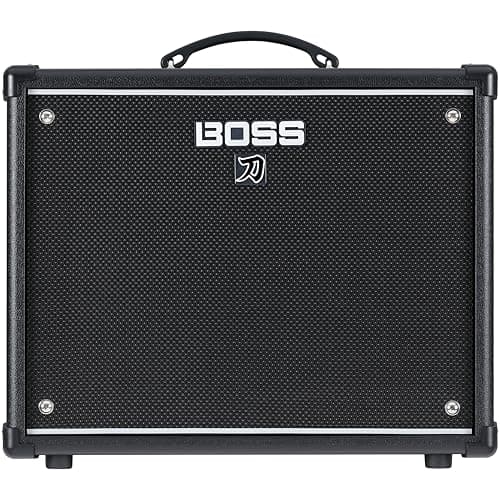 BOSS KATANA-50 GEN 3 50 W of solid-state headroom, a Power Amp In jack, and an Acoustic character that is effectively a flat clean channel. | The best pedal platform per dollar | |
| 02 | 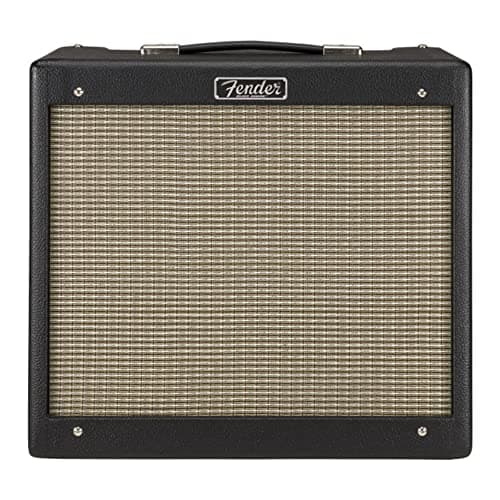 Fender Blues Junior IV 15 W of EL84 into a 12-inch Celestion — clean enough at moderate volume, and it does color what you feed it. | A valve platform that adds its own compression | $789.99 · Check price #ad How we’re funded · price as of October 18, 2026 |
| 03 | No photo VOX AC10C1 10 W of EL84 with a master volume, so the preamp can work without the power section being flat out. | A small-room platform with a master volume | |
| 04 | 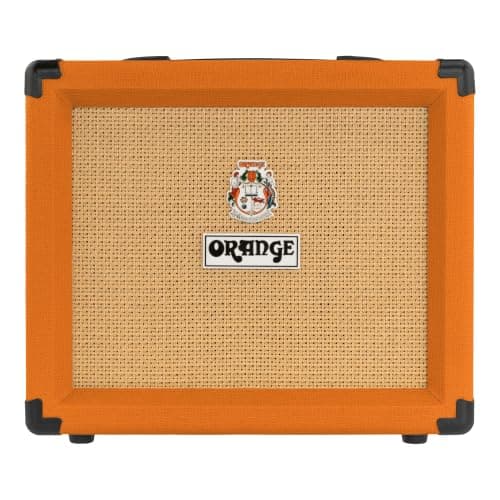 Orange Crush 20RT 20 W solid state with a clean channel, a tuner and a speaker-emulated headphone output. | A budget platform with a CabSim output | $229.00 · Check price #ad How we’re funded · price as of October 18, 2026 |
| ! | No photo Marshall DSL20CR A two-channel gain amp whose strength is its own distortion, which is the opposite requirement. Skip this one — see why below | Not a pedal platform, and often bought as one |
Rows link to the full write-up further down this page. Prices come from the live price layer only — where there is no live figure the button reads “Check price” rather than showing a remembered number.
02What a platform actually needs
| Requirement | Why | What to look for |
|---|---|---|
| Clean headroom | The amp must not distort before your pedals do | Higher wattage, or 6L6 valves, or solid state |
| Flat-ish response | The amp should not impose a voicing on your pedals | A simple clean channel, few tone controls |
| Effects loop | Time-based pedals go after the preamp | Present on the DSL20CR and the Katana-100; absent on several |
| Power amp input | Bypasses the preamp entirely for modelers | The Katana-50 has one |
| Efficient speaker | More clean volume for the same watts | A 12-inch speaker over a 10 or an 8 |
| Power reduction | Lets you use the amp in a small room | Katana Power Control; DSL half-power switch |
03Why solid state is not a compromise here
A valve power section compresses as it approaches its limit — the sag and bloom people value in a cranked amp. A pedal platform specifically does not want that, because the compression is happening after your pedals and it flattens whatever dynamics they preserved.
A solid-state power section stays linear until it clips, and it clips unpleasantly, so you simply do not go there. Within its range it reproduces the input faithfully. For an amp whose job is faithful reproduction, that is the correct behavior and it costs a fraction as much.
This is the strongest single argument in the whole tube vs solid state debate and it is specific to this use case.
BOSS KATANA-50 GEN 3
The best pedal platform per dollar
The number50 W rated output, 12-inch speaker, 47 W power consumption, 1 M ohm input.
Solid-state power is genuinely the right technology for a pedal platform. It stays clean until it clips hard, which means it does not add its own compression to whatever your pedals are doing, and 50 W of it into a 12-inch speaker is more usable clean volume than 15 W of valve power.
The Power Amp In jack is the feature that matters most here. It bypasses the preamp entirely, so a modeler or a preamp pedal goes straight to the power section without passing through the amp's own voicing. BOSS also publishes the input impedance for this generation — INPUT at -10 dBu into 1 M ohm — which is the figure that tells you a buffered pedal chain in front of it is unloaded.
Acoustic is one of the six amp characters and is in practice the flattest clean voice on the amp, which is what a pedal platform wants. The con is the same one this model has always had: no effects loop on the 50, so time-based pedals sit in front of the preamp. The KATANA-100 GEN 3 has Send and Return jacks if you need them.
| Rated power output | 50 W |
|---|---|
| Speaker | 30 cm (12") x 1 |
| Amp characters | Six — Acoustic, Clean, Pushed, Crunch, Lead and Brown — each with one selectable variation, which BOSS counts as 12 tones |
| Effects | Five simultaneous sections — Booster, Mod, FX, Delay and Reverb — with three variations each |
| Power Control | Standby, 0.5 W, Half and Max |
| Input impedance | INPUT -10 dBu (1 M ohm); AUX IN -10 dBu (20 k ohm) |
| Connectors | Input, Power Amp In, Stereo Phones, CTL CH1/CH2 SOLO (TRS), Exp Pedal (TRS), Aux In, USB-C and a Bluetooth adaptor slot |
| Power consumption | 47 W |
| Size / weight | 470 x 238 x 398 mm, 11.6 kg (25 lb 10 oz) |
| What it does not do | No effects loop and no line or Rec Out — the KATANA-100 GEN 3 has both, and on the 50 the only way off the amp is the Stereo Phones jack or USB-C. Nothing but the manual and a power cord is in the box: the FS-5L, FS-6 and FS-7 footswitches, the expression pedals and the BT-DUAL Bluetooth adaptor are all sold separately. |
Specs from BOSS KATANA-50 GEN 3 specifications. We have not used this unit.
Fender Blues Junior IV
A valve platform that adds its own compression
The number15 W, 2 x EL84, 12-inch Celestion A-Type.
A valve platform is a different proposition from a solid-state one: the power section compresses as it approaches its limit, so your pedals are feeding something that responds rather than something that stays linear.
That is either the point or the problem. If you want your pedals to sound exactly like themselves, a valve amp near its limit will not oblige. If you want the amp to add sag and compression, it is exactly right.
15 W of EL84 has less clean headroom than the wattage suggests — EL84s break up early, which is why they sound the way they do. At band volume this amp is not staying clean.
| Power | 15 W, all-tube |
|---|---|
| Speaker | 12" Celestion A-Type |
| Preamp tubes | 3 x 12AX7 |
| Power tubes | 2 x EL84 |
| Controls | Volume, Treble, Bass, Middle, Reverb, Master, FAT switch |
| Weight | 31.5 lb |
| Footswitch | One-button footswitch for the FAT mid boost, included |
| What it does not do | No effects loop and no channel switching — the FAT switch is a mid boost, not a second channel. 15 W of EL84 is loud enough to be a problem in a small room and it has no attenuator. |
Specs from Fender Blues Junior IV product page. We have not used this unit.
#ad How we’re funded · price as of October 18, 2026
VOX AC10C1
A small-room platform with a master volume
The number10 W RMS, 10-inch Celestion VX10, 2 x EL84.
The master volume is what makes this usable as a platform in a small room. You can set the preamp where you want it and control the output separately, rather than choosing between quiet-and-clean or loud-and-driven.
10 W with a 10-inch speaker gives less low-end weight than a 12, which changes how bass-heavy pedals sit. A Big Muff into a 10 is a different sound from a Big Muff into a 12.
No effects loop, so time-based pedals go in front of the amp and will be affected by any preamp breakup.
| Power | 10 W RMS, all-tube |
|---|---|
| Speaker | 1 x 10" Celestion VX10 |
| Tubes | 2 x 12AX7 preamp, 2 x EL84 power |
| Controls | Gain, Volume, Bass, Treble, Reverb |
| Connections | One normal input, one external speaker jack |
| Size / weight | 520 x 210 x 410 mm, 12.3 kg (27.1 lb) |
| What it does not do | No effects loop, no channel switching, no attenuator. 10 W of EL84 with a master volume is still a loud amp before the power section does anything interesting. |
Specs from VOX AC10 Custom product page. We have not used this unit.
Orange Crush 20RT
A budget platform with a CabSim output
The clean channel has a single Volume control and no EQ, which sounds like a limitation and is arguably correct for a platform — there is very little for the amp to impose on your pedals.
The CabSim-loaded headphone output makes it usable for silent practice with the same pedalboard in front, which is a genuine convenience.
20 W into an 8-inch speaker is a bedroom and small-rehearsal proposition. No effects loop and no aux input.
| Power | 20 W, solid state |
|---|---|
| Speaker | 8" |
| Channels | Two — clean and dirty, with a shared four-band tone stack on the dirty channel |
| Extras | Built-in reverb, built-in chromatic tuner, CabSim-loaded headphone output |
| What it does not do | No effects loop and no aux input on the 20RT. The clean channel has a single Volume control — there is no EQ on it at all. |
Specs from Orange Crush 20RT product page. We have not used this unit.
#ad How we’re funded · price as of October 18, 2026
Marshall DSL20CR
Not a pedal platform, and often bought as one
We are not picking this as a pedal platform. The DSL20CR is a good amp and its virtue is the Ultra Gain channel — an EL34 preamp doing its own distorting.
A platform wants the opposite: headroom, a flat response, and no character of its own to fight your pedals. Running a DSL on its clean channel with the master up is possible, but you are paying for a gain channel you are not using and 20 W of EL34 does not stay clean at band volume.
It does have a proper effects loop, which is the one platform-relevant advantage over the Blues Junior. If you want valve gain and pedals, it is a fine compromise — just not the best tool for pedals alone.
| Power | 20 W, with a half-power (10 W) setting |
|---|---|
| Speaker | 12" Celestion Seventy-80 |
| Preamp tubes | 3 x ECC83 |
| Power tubes | 2 x EL34 |
| Channels | Two — Classic Gain and Ultra Gain — with per-channel gain and volume |
| Extras | Digital reverb, effects loop, Resonance control |
| Weight | 35.2 lb |
| What it does not do | The half-power switch takes it to 10 W, not to bedroom volume — this is not a power scaler. The reverb is digital and there is only one reverb level per channel. |
Specs from Marshall DSL20CR product page. We have not used this unit.
04How much clean headroom you need
Enough that the amp is not breaking up at your playing volume. That is the whole test. With a live drummer, roughly 30 W of solid state or 30 W-plus of 6L6 valve power into a 12-inch speaker is comfortable; 15 W of EL84 is not, because EL84s break up early by design.
If your amp is already distorting when your pedals are off, everything your pedals do is being added to that distortion rather than being the distortion. That is a valid sound and it is not a platform.
05Which pedals change the requirement
- A transparent drive needs an amp that already sounds good, because it adds very little of its own. Best overdrive pedals covers why.
- A high-gain distortion needs headroom above all else — anything the amp adds is compounding an already-compressed signal.
- A fuzz wants a speaker that can handle low end without flapping, which argues for a 12 over a 10.
- Digital time effects want an effects loop, or a clean amp so there is nothing to distort them.
- A modeler wants a Power Amp In jack so the amp's preamp is out of the path entirely — the multi-effects roundup covers which units do amp and cab modeling and what each one needs for power.
Frequently asked questions
+ What is a pedal platform amp?
+ Is a solid state amp good for pedals?
+ Do I need an effects loop for a pedal platform?
+ How many watts for a pedal platform?
Sources
Related on Fret & Fuzz
Tube vs solid state amps
Reframed as a question about where the distortion happens, this argument has a clear answer for any given player.
Top pick: BOSS KATANA-50 GEN 3
Best overdrive pedals
Six overdrives sorted by circuit family, with the published clipping topology and impedance figures that separate them.
Best Overdrive pick: EarthQuaker Devices Plumes
Pedal gain vs amp gain
One clipping point or several with filtering between them. Why that structural difference only shows at high gain.
Top pick: EVH 5150 Iconic Series 15W 1x10 combo
#ad How we’re funded · price as of October 18, 2026
Pedals vs multi-effects
Power, interface and failure mode decide this, not tone. Including the 3 A requirement no pedalboard brick can meet.
Top pick: Line 6 HX Stomp
#ad How we’re funded · price as of October 18, 2026