Distortion clips hard and consistently and does not much care what is in front of it. Fuzz clips harder still and cares enormously: classic fuzz circuits have low input impedance and are designed to load your guitar's pickup directly. Put a buffered pedal in front of a Fuzz Face and you lose the interaction that makes it clean up on the volume knob. That single fact explains most fuzz disappointment.
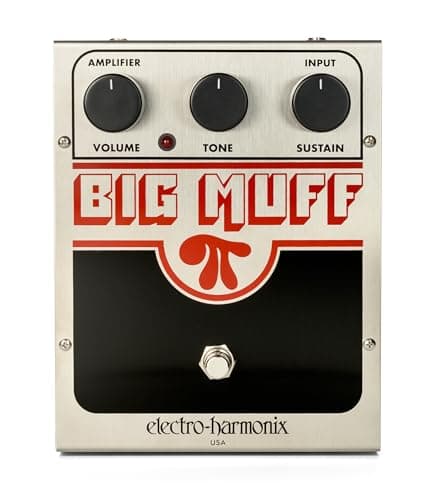
Electro-Harmonix publishes the numbers that make this concrete. The Nano Big Muff presents 130 k ohm at its input; the Op-Amp version presents 55 k ohm. Compare that with the 1 M ohm input of a BOSS compact or the 10 M ohm of an EarthQuaker Plumes and you can see why the Muff is the pedal that changes character depending on where you put it.
01The three fuzz families
Big Muff type. Four transistor stages, two of them cascaded clipping stages, with a fixed mid-scooped tone stack you cannot defeat on the standard model. Enormous sustain, and it disappears in a band mix if you leave the tone control where it sounds best alone. The versions guide is about which one you want, because they are genuinely different circuits and not just different boxes.
Fuzz Face type. Two transistors, germanium or silicon, and the interaction with your pickup is the instrument. Germanium is warmer and drifts with temperature; silicon is brighter and more consistent. Either way it wants to be first in the chain, straight after the guitar. Big Muff vs Fuzz Face sets the two families against each other properly.
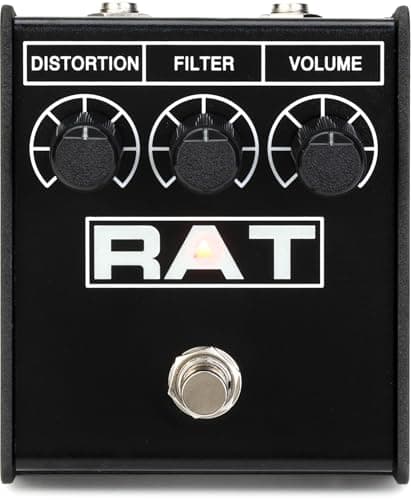
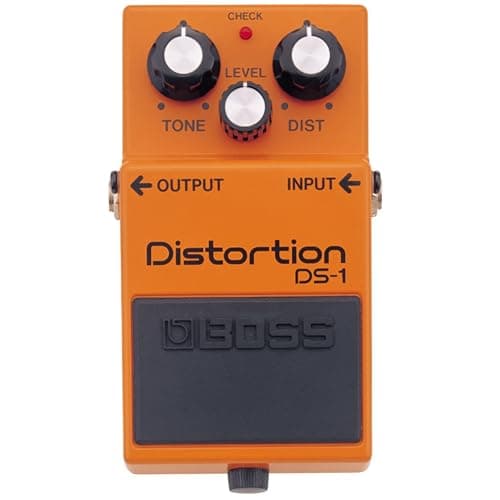
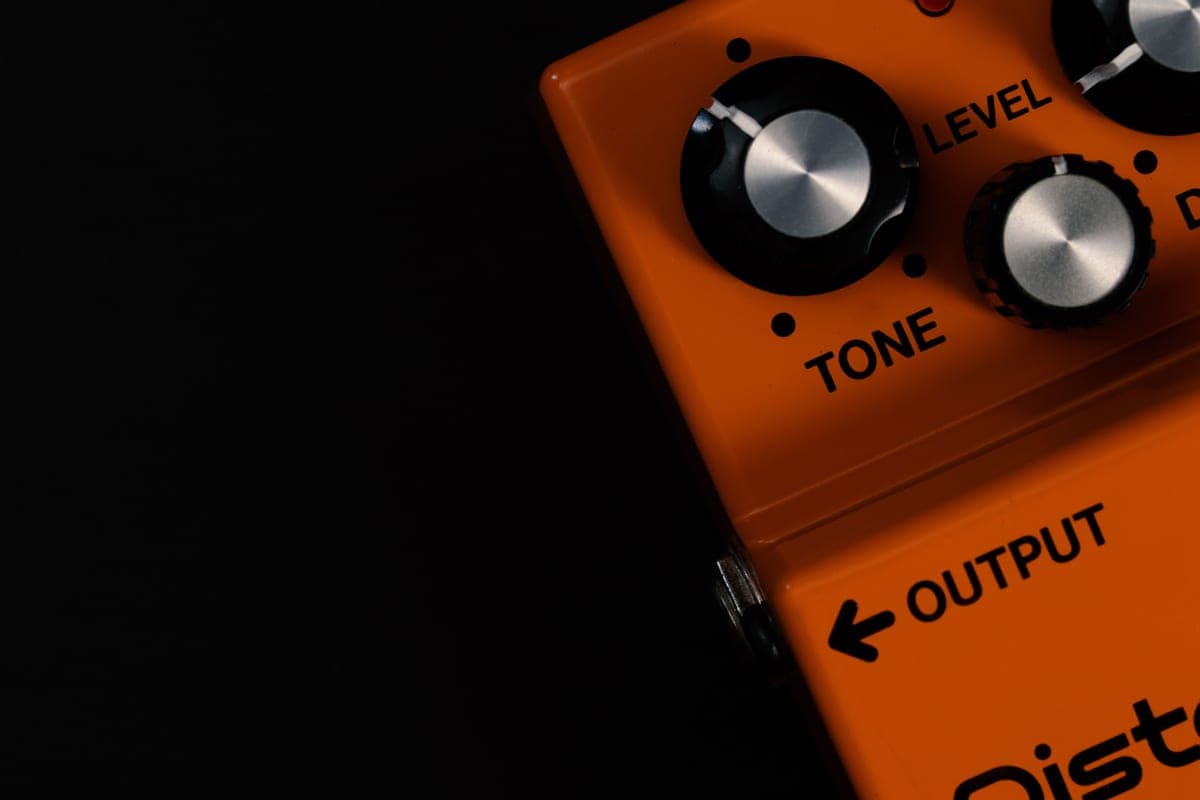
Hard-clipping distortion. The BOSS DS-1 and the Pro Co RAT are the reference points. Diodes clip to ground, the result is tighter and more predictable than fuzz, and the input impedance is high enough that placement is not a puzzle. The RAT's Filter control runs backwards from a normal tone knob, which confuses everyone exactly once.
02Where these pedals go in the chain
Fuzz first, before anything buffered — including most tuners. Distortion after any fuzz and before your time-based effects. If you run a buffered tuner and a fuzz on the same board, the tuner's buffer is what is stopping the fuzz from cleaning up, and the answer is either a true-bypass tuner or moving the fuzz in front of it. Pedal order covers the whole chain.
03What people get wrong here
The most common mistake is buying a second distortion pedal to fix a problem that is actually a mid-scoop problem. A DS-1 into an already-scooped amp disappears under a band; the fix is EQ, not another pedal. The second most common is expecting fuzz to behave like distortion — it will not, and the ways it will not are the reasons to own one.
Start with the fuzz roundup or the distortion roundup depending on which sound you are after, and read overdrive vs distortion vs fuzz first if you are not sure which of the three you want. If you have narrowed it to the two pedals most people end up choosing between, Big Muff vs DS-1 covers cascaded clipping against a single hard-clipping stage — and the mid scoop they both have, for different reasons. Best fuzz for doom takes the same topology argument into the genre built on it, and DS-1 vs Metal Zone settles the in-brand comparison — one tone knob against a sweepable parametric mid. DS-1 vs MXR Distortion+ sets it against a two-knob classic with no tone control at all, and DS-1 vs RAT is the other half of that argument across brands: both clip hard, and the deciding difference is that the RAT's Filter removes treble while the DS-1's Tone knob removes mids.