Should you upgrade the pedal or the amp?
The most consequential spending decision in guitar gear, and it comes down to one question you can answer in five minutes with the pedals switched off.
Fret & Fuzz earns a commission when you buy through the links on this page. It costs you nothing and it does not decide what we rank. How we’re funded.
We have not played this gear. Every pick below is chosen from published manufacturer specifications and the arithmetic set out in how we research, which you can re-run yourself.
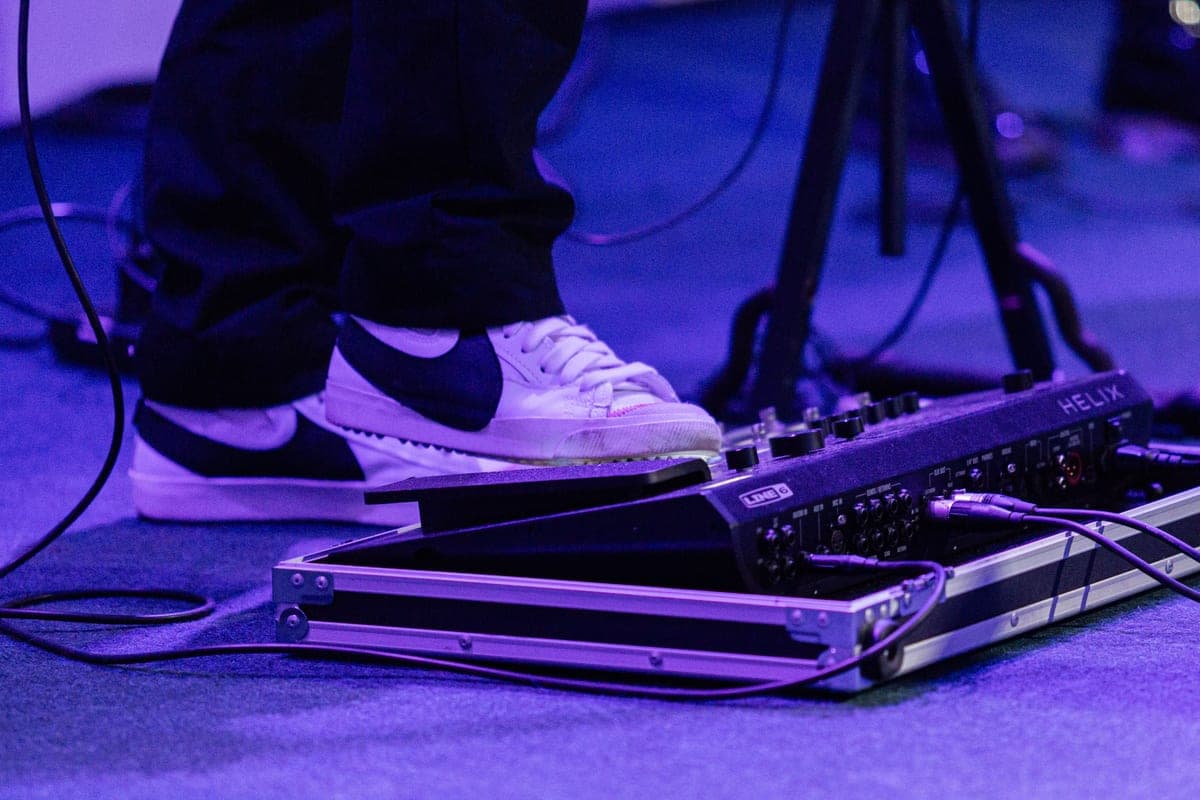
Turn every pedal off and play your amp clean at the volume you actually play at. If you like what you hear, buy pedals — they are far better value per dollar and they will do what you want. If you do not, buy the amp, because no pedal fixes a platform you do not enjoy. Almost everybody asking this question already knows the answer and wants permission.
This is the single most consequential decision in guitar spending and it gets made backwards constantly, because pedals are cheaper individually and easier to buy on impulse. Four mid-priced pedals cost more than a genuinely good amp.
01The test, in detail
- Bypass everything. Guitar straight into the amp, one cable.
- Set the amp for a clean tone at the volume you actually use — not at bedroom volume if you play in a band, and not at band volume if you play at home.
- Play for five minutes. Chords, single notes, quiet and loud.
- Ask one question: do you like this? Not is it acceptable, not could it be better — do you like it.
- If yes, the amp is not your problem. Every pedal you add will be adding to something you enjoy.
- If no, no pedal fixes this. Pedals operate on the signal the amp then amplifies. If the amplification is the problem, changing the input does not help.
02Why a pedal cannot fix an amp
A pedal changes the signal going into the amp. The amp then applies its own EQ, its own gain structure, its own power-section behavior and its own speaker. Everything the amp does happens after everything the pedal does.
So if the amp's problem is a harsh top end, a boxy midrange, no headroom at your playing volume, or a speaker too small to reproduce what you are playing, no pedal placed before it can undo any of that. An EQ pedal can compensate for a frequency imbalance to a degree, and that is genuinely the closest a pedal comes — but it is compensation, not a fix.
Where the money goes in each case
| # | Product | Best for | Price |
|---|---|---|---|
| 01 | 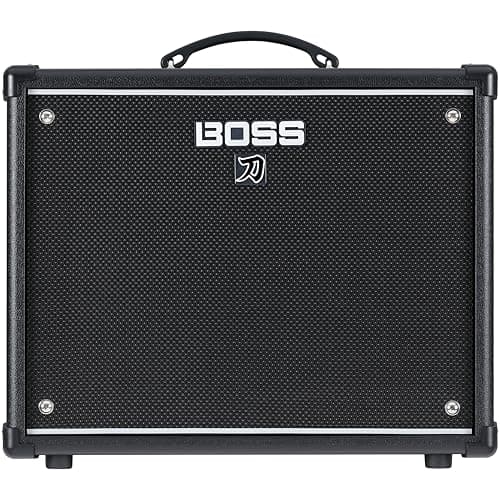 BOSS KATANA-50 GEN 3 50 W into a 12-inch speaker with a Power Control down to 0.5 W, so it works at home and at rehearsal. | The amp case, at the lowest cost | |
| 02 | 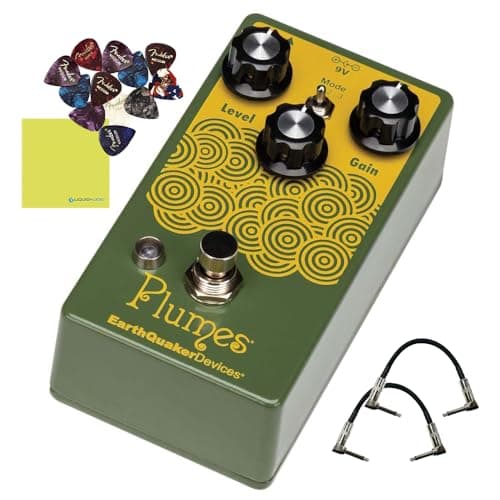 EarthQuaker Devices Plumes Three switchable clipping modes including a clean boost, with everything published. | The pedal case, with the widest coverage per slot | |
| 03 | No photo Two Notes Torpedo Captor X A reactive load box that lets a good amp run cranked into a quiet or silent output. | The third case: the amp is right but the volume is not | |
| ! | 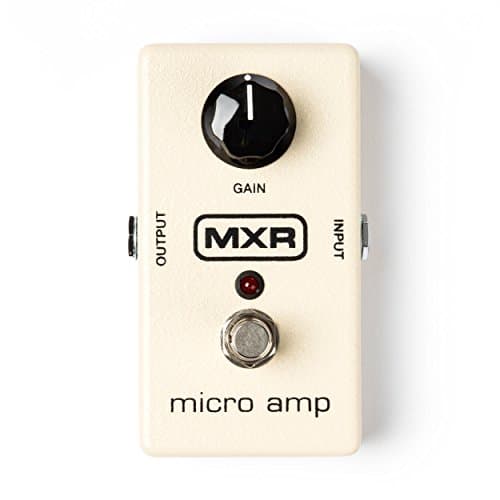 MXR Micro Amp A clean boost bought to fix a tone problem it cannot fix. Skip this one — see why below | The purchase that does not resolve the question | $105.99 · Check price #ad How we’re funded · price as of October 18, 2026 |
Rows link to the full write-up further down this page. Prices come from the live price layer only — where there is no live figure the button reads “Check price” rather than showing a remembered number.
04What each purchase actually buys
| Problem | Amp or pedal | Why |
|---|---|---|
| Clean tone is thin or harsh | Amp | The amp is producing it; nothing before it can remove it |
| No headroom — breaks up before you want it to | Amp | This is a power and speaker limitation |
| Too loud for the room at a usable setting | Neither — an attenuator or a master volume | See the attenuator arithmetic |
| Want a specific dirt texture | Pedal | This is exactly what gain pedals are for |
| Want reverb or delay the amp lacks | Pedal | A capability the amp does not have |
| Solos do not cut through | Pedal — an EQ-shaped boost | A frequency problem, not an amp problem |
| Sounds fine at home, bad at rehearsal | Amp | Almost always a headroom or speaker limitation |
| Sounds fine alone, vanishes in a band | Pedal or EQ | Usually a mid scoop you can correct |
BOSS KATANA-50 GEN 3
The amp case, at the lowest cost
The number50 W, 12-inch speaker, Power Control to 0.5 W, Power Amp In, 11.6 kg.
If the answer is that the amp is the problem, this is the cheapest credible fix. 50 W into a 12-inch speaker is enough clean headroom for a band, the Power Control's 0.5 W position makes it usable at home, and the Power Amp In jack means it also works as a platform for a modeler later.
It costs about what two mid-priced boutique pedals cost, and it changes more than either of them will.
The cons: no effects loop on the 50, no line or Rec Out and no XLR, so getting to a desk means a microphone or USB-C. If you need a loop and a line out, the KATANA-100 GEN 3 has both.
| Rated power output | 50 W |
|---|---|
| Speaker | 30 cm (12") x 1 |
| Amp characters | Six — Acoustic, Clean, Pushed, Crunch, Lead and Brown — each with one selectable variation, which BOSS counts as 12 tones |
| Effects | Five simultaneous sections — Booster, Mod, FX, Delay and Reverb — with three variations each |
| Power Control | Standby, 0.5 W, Half and Max |
| Input impedance | INPUT -10 dBu (1 M ohm); AUX IN -10 dBu (20 k ohm) |
| Connectors | Input, Power Amp In, Stereo Phones, CTL CH1/CH2 SOLO (TRS), Exp Pedal (TRS), Aux In, USB-C and a Bluetooth adaptor slot |
| Power consumption | 47 W |
| Size / weight | 470 x 238 x 398 mm, 11.6 kg (25 lb 10 oz) |
| What it does not do | No effects loop and no line or Rec Out — the KATANA-100 GEN 3 has both, and on the 50 the only way off the amp is the Stereo Phones jack or USB-C. Nothing but the manual and a power cord is in the box: the FS-5L, FS-6 and FS-7 footswitches, the expression pedals and the BT-DUAL Bluetooth adaptor are all sold separately. |
Specs from BOSS KATANA-50 GEN 3 specifications. We have not used this unit.
EarthQuaker Devices Plumes
The pedal case, with the widest coverage per slot
The number10 M ohm in, 100 ohm out, 25 mA, relay true bypass.
If the amp is fine and you are chasing a specific texture, pedals are far better value per dollar and this one covers the most ground per board slot.
Three modes: symmetrical LED clipping, no clipping at all, and asymmetrical silicon clipping. That is a drive, a boost and a second drive in one enclosure.
The 10 M ohm input impedance means nothing in front of it gets loaded, so it is an easy pedal to place anywhere in a chain.
| Controls | Level, Gain, Tone (bass left, midrange center, treble right), 3-way clipping toggle |
|---|---|
| Clipping modes | Mode 1 symmetrical LED clipping, which EarthQuaker describes as more crunch and compression; mode 2 no clipping, a wide-open op-amp clean boost; mode 3 asymmetrical silicon diode clipping, described as more transparency with a looser feel |
| Circuit | EarthQuaker states it uses JFET op-amps rather than the traditional 4558 IC, with the 9 V supply internally converted to +/- 9 V for more headroom |
| Current draw | 25 mA |
| Input impedance | 10 M ohm |
| Output impedance | 100 ohm |
| Bypass | Flexi-Switch relay-based true bypass, momentary or latching |
| Size | 4.75 x 2.50 x 2.25 in (121 x 64 x 57 mm) with knobs |
| Power | 9 V DC, 2.1 mm center-negative barrel |
| What it does not do | No power supply included and no battery compartment. Mode 2 is a clean boost, not a second drive voicing — if you expected three flavors of dirt, one of them is not dirt. |
Specs from EarthQuaker Devices Plumes product page. We have not used this unit.
Two Notes Torpedo Captor X
The third case: the amp is right but the volume is not
The number100 W RMS max, 8 ohm nominal, 0 / -20 / -38 dB, stereo XLR DI.
There is a case people miss entirely: the amp is genuinely good and the problem is that it only sounds good at a volume you cannot use. That is not a pedal problem and not an amp problem.
A reactive load box lets the power section work while the speaker gets far less, or nothing at all with a DI to headphones or an interface.
It costs about as much as a mid-priced amp, which is the honest caveat. But replacing a good amp with a quieter, worse one is a more expensive mistake.
| Function | Reactive load box, attenuator, speaker simulator and DI in one unit |
|---|---|
| Load impedance | Fixed 8 ohm nominal (a 16 ohm version is sold separately) |
| Power handling | 100 W RMS maximum |
| Attenuation | Selectable 0 dB, -20 dB and -38 dB on the speaker output |
| Outputs | Speaker out, stereo XLR DI, headphone out, plus USB and Bluetooth for editing |
| What it does not do | The attenuation is stepped, not continuous — three positions, not a knob. 100 W is the ceiling, so a 100 W head run flat out is at the limit rather than comfortably inside it. |
Specs from Two Notes Torpedo Captor X product page. We have not used this unit.
MXR Micro Amp
The purchase that does not resolve the question
We are not picking this one, and it stands for a whole category of purchase: the pedal bought to fix a rig-level problem.
A boost adds flat gain. If your amp's clean tone is thin, a boost gives you more of a thin tone. If your amp has no headroom, a boost pushes it further past its limit. Neither is what the buyer wanted.
It is a good pedal for the narrow jobs it is designed for — see overdrive vs boost. It is not a substitute for answering the question on this page.
| Controls | Single Gain control |
|---|---|
| Function | Clean gain boost with no tone shaping |
| Power | 9 V battery, Dunlop ECB003 adapter, or a DC Brick / Iso-Brick supply |
| Electrical data | No current-draw or impedance figure is published for this pedal, so none is stated here. |
| What it does not do | No EQ of any kind and no power supply included. A clean boost cannot fix a thin tone; it makes whatever follows it work harder. |
Specs from MXR Micro Amp product page. We have not used this unit.
05The cost comparison nobody does
Four mid-priced pedals cost more than a BOSS KATANA-50 GEN 3, which publishes 50 W into a 12-inch speaker, six amp characters, five effects sections, a Power Control that steps down to 0.5 W and a USB-C port. That is not an argument for buying a Katana specifically. It is an argument for noticing what a pedalboard costs when you total it.
A board of six pedals plus a power supply plus patch cables plus the board itself is a substantial sum, assembled a piece at a time so it never feels like one. If the amp underneath it is the limiting factor, that money is buying refinement on a foundation that cannot support it.
06The case for pedals
Once the amp is right, pedals are the better purchase by a wide margin. They are cheaper individually, they hold their value, they are portable, they can be sold if you do not get on with them, and each one adds a capability rather than replacing one.
And an amp you like is a permanent asset. It will outlast several rounds of pedals, and everything you buy afterwards is being heard through something you enjoy. That is the whole argument for fixing the platform first.
Frequently asked questions
+ Should I upgrade my amp or buy more pedals?
+ Can pedals make a cheap amp sound good?
+ How much should I spend on an amp versus pedals?
+ My amp sounds fine at home but bad at rehearsal. What is wrong?
Sources
Related on Fret & Fuzz
Best pedal platform amps
Headroom, not gain. Why solid state is genuinely competitive here, and which amps have the jacks that matter.
Best Pedal Platform pick: BOSS KATANA-50 GEN 3
Tube vs solid state amps
Reframed as a question about where the distortion happens, this argument has a clear answer for any given player.
Top pick: BOSS KATANA-50 GEN 3
Pedal gain vs amp gain
One clipping point or several with filtering between them. Why that structural difference only shows at high gain.
Top pick: EVH 5150 Iconic Series 15W 1x10 combo
#ad How we’re funded · price as of October 18, 2026
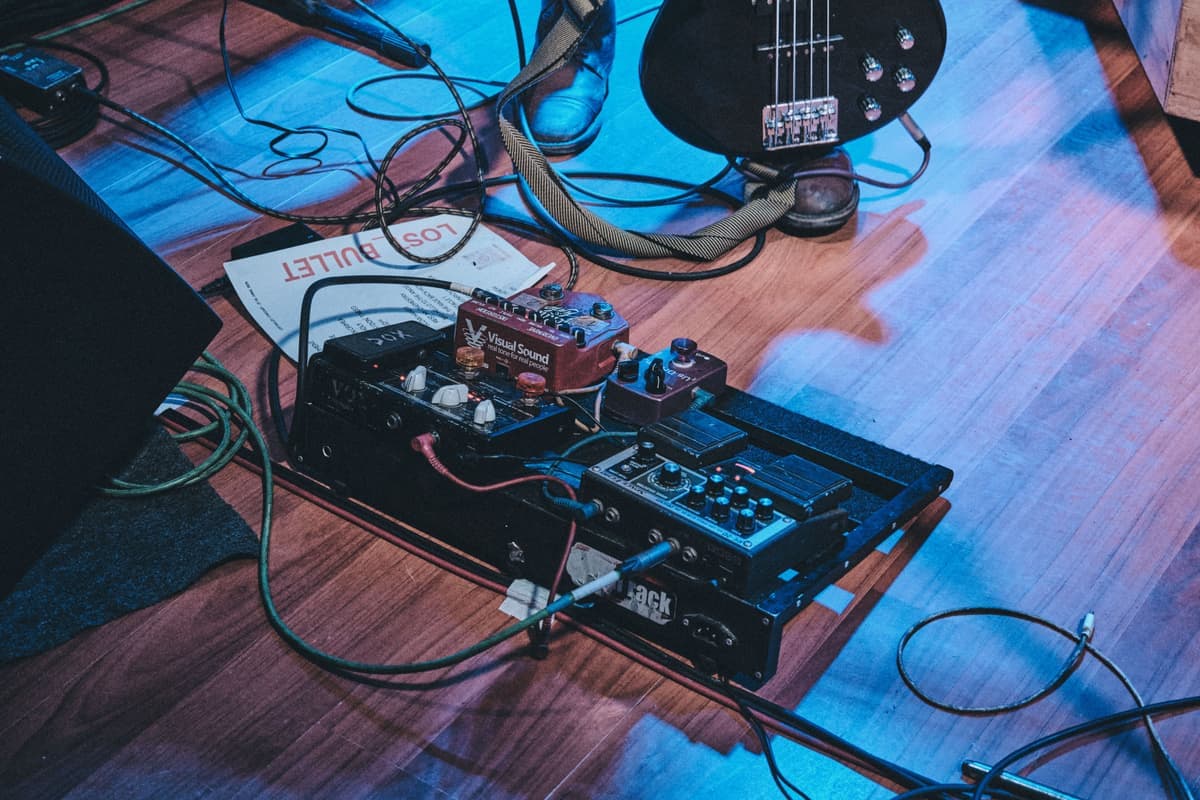
Best guitar pedals
One shortlist per job, chosen from published circuit and power specs. Every list names something we would not buy, and says why.
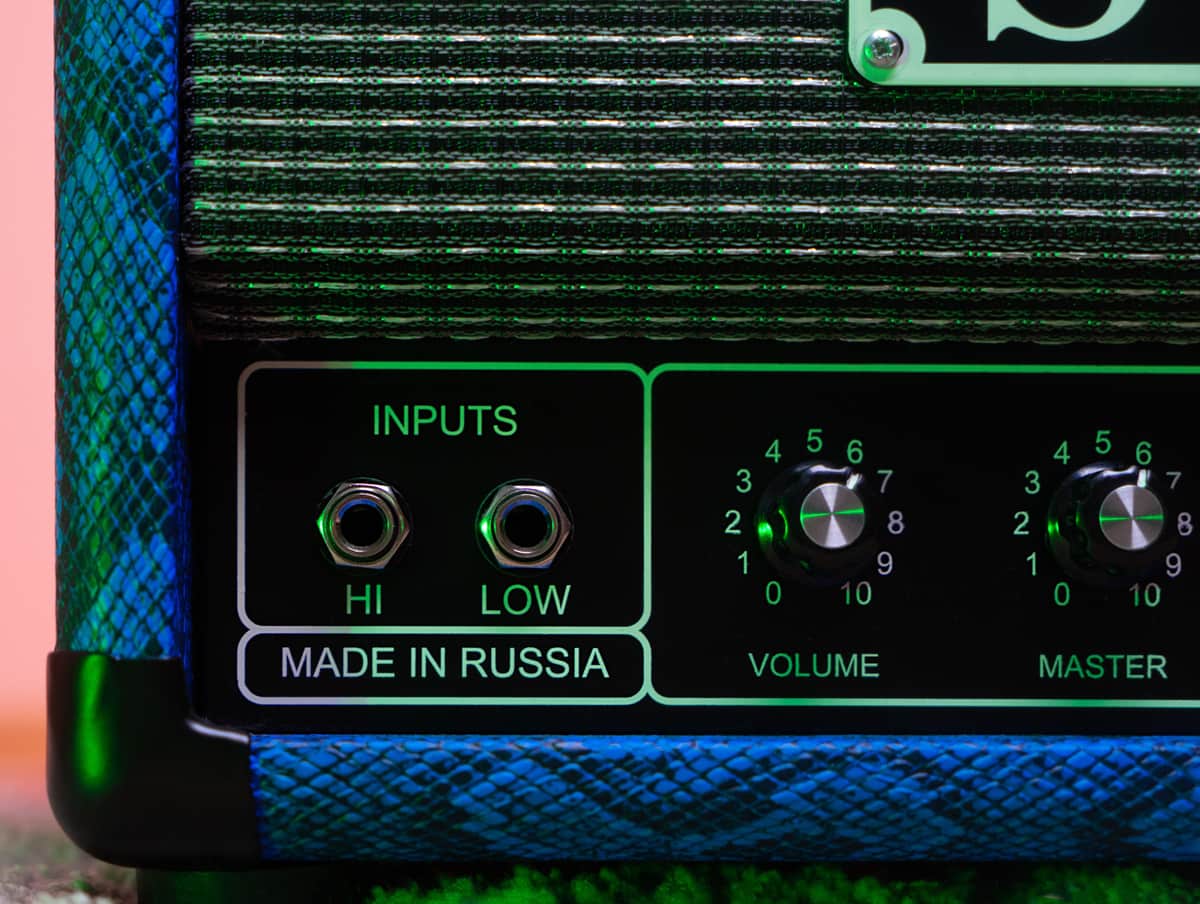
Attenuator vs master volume
Halving power costs 3 dB. That one fact explains why a low-wattage amp is not a quiet amp, with the full table.
Top pick: Two Notes Torpedo Captor X