Overdrive vs distortion vs fuzz
Three words for the same basic operation performed with increasing violence. The distinctions are real, and the labels on the boxes are not always.
Fret & Fuzz earns a commission when you buy through the links on this page. It costs you nothing and it does not decide what we rank. How we’re funded.
We have not played this gear. Every pick below is chosen from published manufacturer specifications and the arithmetic set out in how we research, which you can re-run yourself.
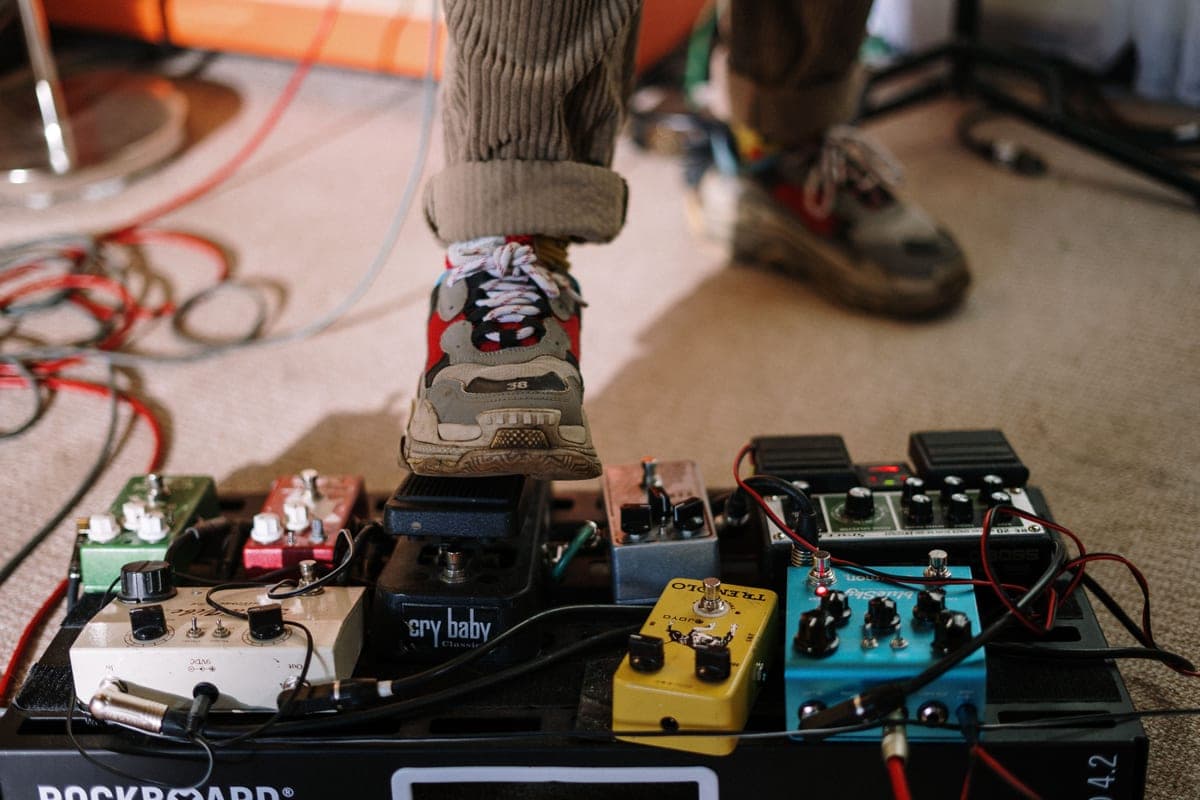
All three clip the waveform; they differ in how hard, how symmetrically, and what EQ is applied around the clipping. Overdrive clips softly and progressively, so it responds to picking dynamics. Distortion clips hard and consistently, so it sounds the same however you play. Fuzz clips hardest — usually by saturating transistors rather than by clipping with diodes — which drives the waveform toward a square wave.
The labels on the boxes are unreliable. The Fulltone OCD is sold as an overdrive and behaves like a distortion past halfway. Use the behavior, not the name.
01What clipping actually is
A guitar signal is a wave. Amplify it beyond what a circuit can pass and the peaks get flattened, because there is nowhere further for them to go. A flattened peak is no longer a sine wave, and the difference between the original and the flattened version is new harmonic content — that content is what you hear as distortion.
How abruptly the flattening happens, and whether it happens equally to the positive and negative halves of the wave, determines the harmonic profile. Gradual, symmetrical flattening produces mostly odd harmonics and sounds smooth. Abrupt flattening produces a lot of high-order content and sounds harsh. Asymmetrical flattening produces even harmonics as well, which is the technical basis for descriptions like warm.
02The three families, side by side
| Overdrive | Distortion | Fuzz | |
|---|---|---|---|
| Clipping | Soft, gradual | Hard, to ground | Extreme — transistors driven to saturation |
| Resulting waveform | Rounded peaks | Flat-topped | Approaching a square wave |
| Response to picking | High — cleans up when you play softly | Low — consistent | Varies by circuit; Fuzz Face is very responsive |
| Response to guitar volume | Cleans up substantially | Gets quieter | Fuzz Face cleans up; Big Muff mostly gets quieter |
| Typical use | Pushing an amp, adding grit | Rhythm playing, consistent tone | Sustained lead, wall-of-sound textures |
| Placement sensitivity | Low | Low | High — classic circuits need to see your pickup |
| Published draw examples | TS9 8 mA, BD-2 20 mA | DS-1 10 mA | Big Muff about 3 mA |
One of each, to hear the difference
| # | Product | Best for | Price |
|---|---|---|---|
| 01 | 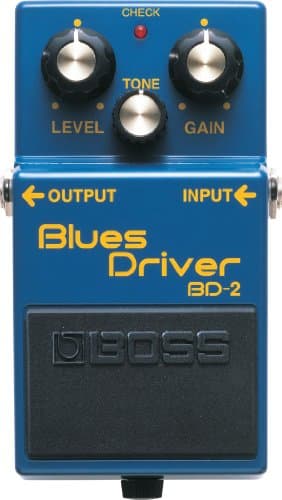 BOSS BD-2 Blues Driver Discrete gain stages, a flat mid response and a top end that stays open. | Overdrive — soft clipping that leaves the amp audible | $109.99 · Check price #ad How we’re funded · price as of October 17, 2026 |
| 02 | 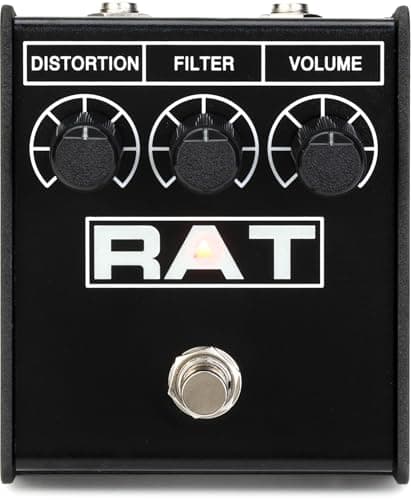 Pro Co RAT 2 Diodes clip to ground, and the Filter control decides how much top end survives. | Distortion — hard clipping with a filter, not a tone boost | $86.00 · Check price #ad How we’re funded · price as of October 17, 2026 |
| 03 | 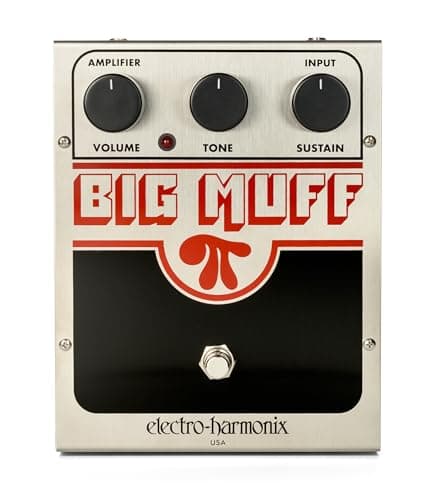 Electro-Harmonix Big Muff Pi Four transistor stages with two cascaded clipping stages and a fixed mid scoop. | Fuzz — cascaded clipping and near-infinite sustain | $100.96 · Check price #ad How we’re funded · price as of October 17, 2026 |
Rows link to the full write-up further down this page. Prices come from the live price layer only — where there is no live figure the button reads “Check price” rather than showing a remembered number.
04Why the labels are unreliable
There is no standard. Manufacturers name a pedal by what it sounds like to them, or by what it will sell as. Three consequences worth knowing:
- The Fulltone OCD is sold as an overdrive and produces a distortion-level result past about halfway on the Drive control.
- The Pro Co RAT is sold as a distortion and is more articulate and dynamic than the word suggests — closer to an aggressive overdrive at low settings.
- The Big Muff is called a fuzz, a distortion and a sustainer on its own packaging over the years, and all three are defensible.
- Boost pedals clip nothing at all and are frequently shelved with the gain pedals because that is where people look for them.
05Which one you actually want
- Your amp already breaks up and you want more of it. Overdrive, and probably a mid-humped one. See best overdrive pedals.
- Your amp stays clean and you want a consistent dirty rhythm sound. Distortion. See best distortion pedals.
- You want sustain that does not decay, or a textural wall. Fuzz. See best fuzz pedals.
- You want a solo to cut through without changing the tone much. Not a gain pedal at all — an EQ-shaped boost. See overdrive vs boost.
- You want high gain for metal. A distortion pedal gets close; cascaded preamp gain gets there. See best amps for metal.
BOSS BD-2 Blues Driver
Overdrive — soft clipping that leaves the amp audible
The number1 M ohm in, 1 k ohm out, 20 mA — published by BOSS.
Overdrive clips gently and progressively, so quiet notes stay relatively clean and hard-picked notes distort more. That dynamic response is the family's defining behavior and it is why an overdrive cleans up on your guitar volume knob.
The BD-2 gets its gain from discrete stages rather than from diodes inside an op-amp feedback loop, which keeps the mids flat and the top end open.
It will not produce a heavy distorted tone on its own. That is a different family.
| Controls | Gain, Tone, Level, pedal switch |
|---|---|
| Input impedance | 1 M ohm |
| Output impedance | 1 k ohm |
| Current draw | 20 mA |
| Power | 9 V battery (6F22 / 6LR61) or PSA-series adaptor |
| Size / weight | 73 x 129 x 59 mm, 360 g |
| What it does not do | No adaptor in the box, no true bypass, and no mid control. The BD-2 is deliberately flat through the mids — if you want a mid hump to push a solo, this is the wrong pedal. |
Specs from BOSS BD-2 specifications. We have not used this unit.
#ad How we’re funded · price as of October 17, 2026
Pro Co RAT 2
Distortion — hard clipping with a filter, not a tone boost
Distortion clips hard and to ground, which flattens the waveform abruptly and generates a lot of high-order harmonic content. The result is consistent and compressed — the same at any picking strength, which is why it suits rhythm playing.
The RAT's Filter is a low-pass filter, so turning it up removes treble. That is the correct control for a circuit generating this much harmonic content, and it confuses everyone once.
It sits between an overdrive and a fuzz in character, which is why it turns up in genres that agree on nothing else.
| Controls | Distortion, Filter, Volume |
|---|---|
| Filter control | Runs backwards from a normal tone knob — turning it up removes treble |
| Power | 9 V battery or a 9 V DC supply (adapter sold separately) |
| Enclosure | Steel, with the battery compartment accessible without tools |
| Electrical data | No current-draw or impedance figure is published for this pedal, so none is stated here. |
| What it does not do | No power supply included. There is no clean-boost side to it — at low Distortion the RAT is still a distortion, and the Filter control confuses everyone exactly once. |
Specs from Pro Co RAT 2 product page. We have not used this unit.
#ad How we’re funded · price as of October 17, 2026
Electro-Harmonix Big Muff Pi
Fuzz — cascaded clipping and near-infinite sustain
The numberAbout 3 mA at 9 V. The Nano version publishes a 130 k ohm input impedance.
Fuzz clips hardest, most often by driving transistors into saturation rather than by clipping with diodes. The waveform ends up close to a square wave, which is why fuzz sounds so different from distortion rather than just more extreme.
The Big Muff cascades two clipping stages, which is where the sustain comes from — the note is being re-clipped as it decays, so it stops decaying audibly.
Classic fuzz circuits present a low input impedance and depend on being loaded by your pickup, which is why placement matters more here than anywhere else on a board.
| Controls | Volume, Tone, Sustain |
|---|---|
| Current draw | Approximately 3 mA at 9 V DC |
| Power | 9 V battery or a 9 V DC center-negative supply |
| Circuit | Four-transistor design with two cascaded clipping stages between a boost stage and a recovery stage |
| What it does not do | The tone stack has a fixed mid scoop with no way to defeat it, and there is no gain-cleanup behavior — rolling your guitar volume down mostly just gets quieter, not cleaner. |
Specs from Electro-Harmonix Big Muff Pi manual (PDF). We have not used this unit.
#ad How we’re funded · price as of October 17, 2026
06Stacking across families
Lower gain into higher gain works; the reverse usually does not. An overdrive in front of a distortion tightens and focuses it. A distortion in front of an overdrive gives the overdrive an already-compressed signal to work with and mostly just adds level.
Fuzz is the exception and it is about placement rather than gain staging: a fuzz wants to be first, before anything buffered, because its behavior depends on being loaded by your pickup. Everything in pedal order follows from that. DS-1 vs Metal Zone compares a pedal with no mid control against one with a sweepable parametric mid, which is the same problem with and without a solution.
Frequently asked questions
+ What is the difference between overdrive and distortion?
+ Is fuzz just extreme distortion?
+ Which should I buy first?
+ Can I use overdrive and distortion together?
Sources
Related on Fret & Fuzz
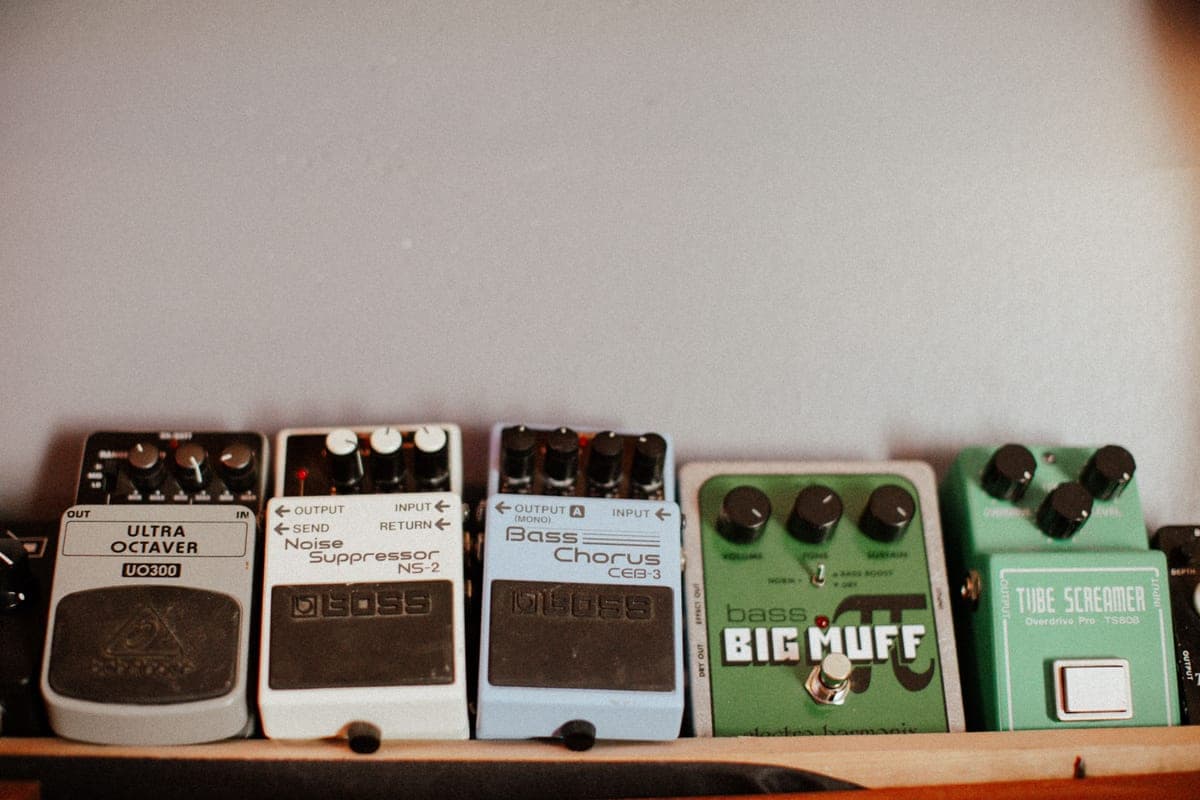
Best overdrive pedals
Six overdrives sorted by circuit family, with the published clipping topology and impedance figures that separate them.
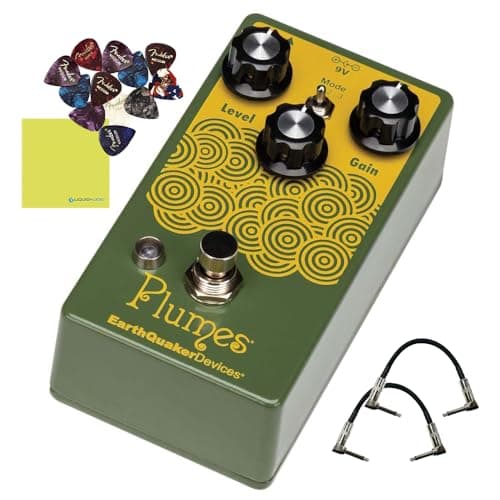
Best Overdrive pick: EarthQuaker Devices Plumes
Best distortion pedals
Hard clipping is predictable; the tone control is where these pedals differ. Four distortions compared, plus one that is mislabelled.
Best Distortion pick: Pro Co RAT 2
#ad How we’re funded · price as of October 17, 2026
Best fuzz pedals
Input impedance predicts your fuzz experience better than any adjective. Five fuzzes compared on the published figures.
Best Fuzz pick: Electro-Harmonix Big Muff Pi
#ad How we’re funded · price as of October 17, 2026
Guitar pedal types explained
Five families defined by what they do to the waveform, and the map that turns a hundred-brand problem into five decisions.
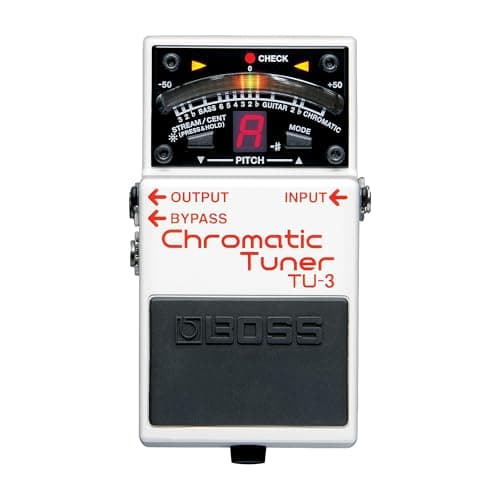
Top pick: BOSS TU-3 Chromatic Tuner
Fulltone OCD vs Pro Co RAT
Two pedals that are both further into distortion than their labels admit, and the backwards tone control that confuses everyone once.
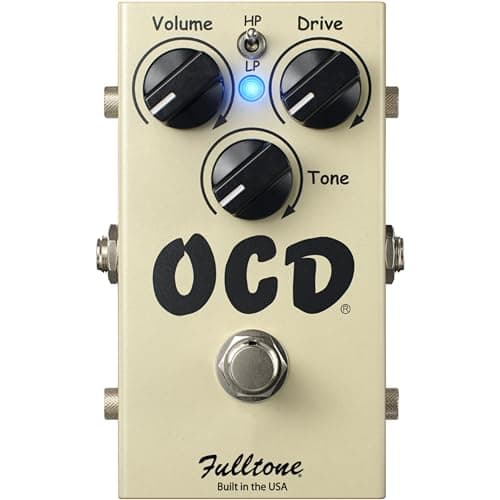
Top pick: Fulltone OCD Obsessive Compulsive Drive