Best guitar amps
Four published figures settle most of this, and wattage is the one most likely to mislead you.
Fret & Fuzz earns a commission when you buy through the links on this page. It costs you nothing and it does not decide what we rank. How we’re funded.
We have not played this gear. Every pick below is chosen from published manufacturer specifications and the arithmetic set out in how we research, which you can re-run yourself.
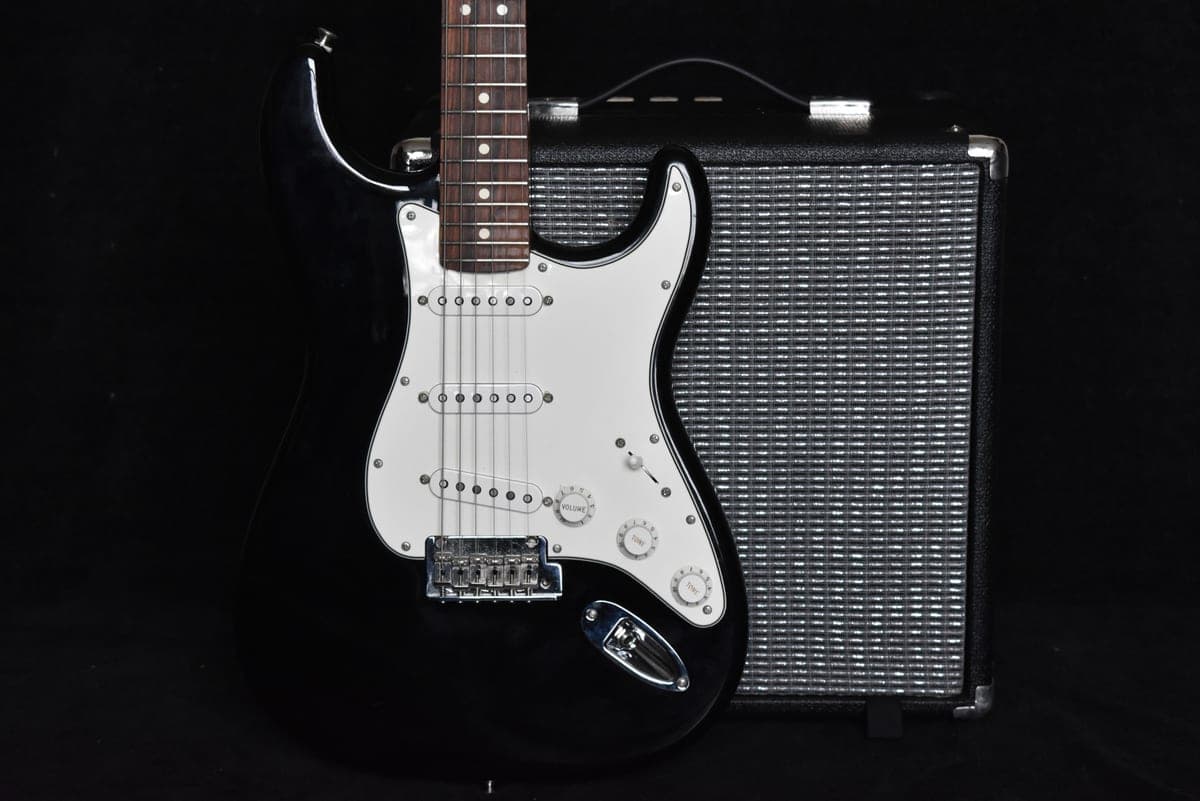
Four published figures decide an amp: wattage, speaker size and model, tube complement, and whether there is a power-reduction option. Wattage is the one most likely to mislead — doubling power buys about 3 dB, so a 100 W amp is not twice as loud as a 50 W one. The speaker moves the air, and it changes the sound more than most people expect.
Before comparing amps, decide one thing: do you want the amp to make the distortion, or the pedals? That single question eliminates most of the market, and it is covered properly in tube vs solid state.
Best guitar amps
| # | Product | Best for | Price |
|---|---|---|---|
| 01 | 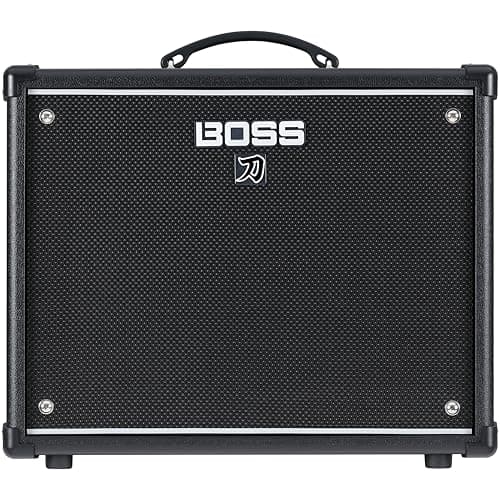 BOSS KATANA-50 GEN 3 50 W into a 12-inch speaker with six amp characters, five effects sections and a four-position Power Control. | The most capability per dollar, by a distance | |
| 02 | 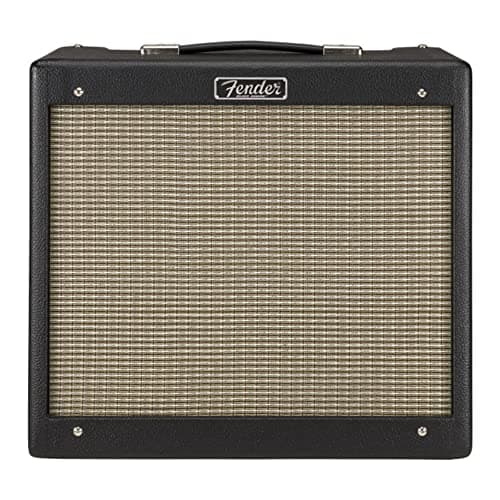 Fender Blues Junior IV 15 W of EL84 through a 12-inch Celestion — the classic small-club valve combo. | A real valve amp at a sensible size | $789.99 · Check price #ad How we’re funded · price as of October 18, 2026 |
| 03 | No photo Marshall DSL20CR 20 W of EL34 with a half-power setting, a real effects loop and per-channel gain and volume. | Two channels of valve gain with an effects loop | |
| 04 | No photo VOX AC10C1 10 W of EL84 through a 10-inch Celestion, with the Top Boost-style tone circuit. | The Vox chime at the lowest wattage that still fills a room | |
| ! | 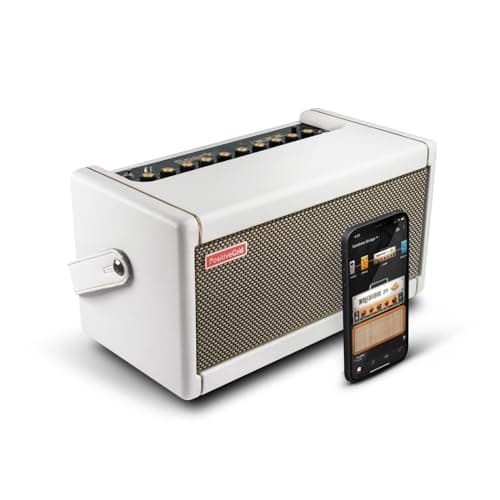 Positive Grid Spark 40 An excellent desk amp with two 4-inch speakers, which is the wrong tool for a rehearsal room. Skip this one — see why below | Not a stage amp, and frequently bought as one |
Rows link to the full write-up further down this page. Prices come from the live price layer only — where there is no live figure the button reads “Check price” rather than showing a remembered number.
02Published specifications, side by side
| Amp | Power | Speaker | Tubes | Power reduction | Weight |
|---|---|---|---|---|---|
| BOSS KATANA-50 GEN 3 | 50 W solid state | 12" | None | Power Control: Standby / 0.5 W / Half / Max | 11.6 kg |
| Fender Blues Junior IV | 15 W valve | 12" Celestion A-Type | 3 x 12AX7, 2 x EL84 | None | 31.5 lb |
| Marshall DSL20CR | 20 W valve | 12" Celestion Seventy-80 | 3 x ECC83, 2 x EL34 | Half power (10 W) | 35.2 lb |
| VOX AC10C1 | 10 W valve | 10" Celestion VX10 | 2 x 12AX7, 2 x EL84 | Master volume only | 12.3 kg |
| Positive Grid Spark 40 | 40 W class D | 2 x 4" | None | n/a | 5.2 kg |
Every figure is the manufacturer's published specification.
03The wattage arithmetic
Perceived loudness scales roughly with the logarithm of power. Doubling the power adds about 3 dB, which is a noticeable but modest change — nothing like twice as loud. Going from 20 W to 100 W is a factor of five, or about 7 dB.
What that means practically: a 100 W amp is not five times as loud as a 20 W one, and dropping from 100 W to 50 W will not make an amp quiet enough for a bedroom. Speaker efficiency, measured in dB at one watt at one meter, varies by several dB between models and can matter more than the amplifier's rating. Attenuator vs master volume works through what to do about it.
BOSS KATANA-50 GEN 3
The most capability per dollar, by a distance
The number50 W rated output, 47 W power consumption, 11.6 kg. All published by BOSS.
BOSS publishes 50 W into a single 12-inch speaker, six amp characters — Acoustic, Clean, Pushed, Crunch, Lead and Brown — each with one selectable variation, which BOSS counts as 12 tones, and five simultaneous effects sections with three variations each. The Power Control switch is a four-position output-stage control: Standby, 0.5 W, Half and Max.
The connectivity is what makes it more than a practice amp: a Power Amp In jack that bypasses the preamp, a Stereo Phones jack, an expression pedal jack, a CTL CH1/CH2 SOLO jack, Aux In, USB-C and a slot for BOSS's Bluetooth adaptor. You can run a modeler into its power amp and switch it with a footswitch.
The cons are specific to this generation. There is no effects loop and no line or Rec Out — the only ways off the amp are the Stereo Phones jack and USB-C, so a sound engineer gets nothing without a microphone. No XLR and no IR loading. And the footswitch, the expression pedal and the Bluetooth adaptor are all sold separately; the box holds the amp, a manual and a power cord.
| Rated power output | 50 W |
|---|---|
| Speaker | 30 cm (12") x 1 |
| Amp characters | Six — Acoustic, Clean, Pushed, Crunch, Lead and Brown — each with one selectable variation, which BOSS counts as 12 tones |
| Effects | Five simultaneous sections — Booster, Mod, FX, Delay and Reverb — with three variations each |
| Power Control | Standby, 0.5 W, Half and Max |
| Input impedance | INPUT -10 dBu (1 M ohm); AUX IN -10 dBu (20 k ohm) |
| Connectors | Input, Power Amp In, Stereo Phones, CTL CH1/CH2 SOLO (TRS), Exp Pedal (TRS), Aux In, USB-C and a Bluetooth adaptor slot |
| Power consumption | 47 W |
| Size / weight | 470 x 238 x 398 mm, 11.6 kg (25 lb 10 oz) |
| What it does not do | No effects loop and no line or Rec Out — the KATANA-100 GEN 3 has both, and on the 50 the only way off the amp is the Stereo Phones jack or USB-C. Nothing but the manual and a power cord is in the box: the FS-5L, FS-6 and FS-7 footswitches, the expression pedals and the BT-DUAL Bluetooth adaptor are all sold separately. |
Specs from BOSS KATANA-50 GEN 3 specifications. We have not used this unit.
Fender Blues Junior IV
A real valve amp at a sensible size
The number15 W, 3 x 12AX7 and 2 x EL84, 12-inch Celestion A-Type, 31.5 lb.
Fender publishes 15 W, three 12AX7 preamp tubes, two EL84 power tubes and a 12-inch Celestion A-Type speaker. That is a proper valve power section driving a proper speaker, which is what the money is for.
The FAT switch is a mid boost with an included one-button footswitch, not a second channel. There is no channel switching and no effects loop.
15 W of EL84 is loud. Loud enough to be genuinely difficult in a small room, and there is no power reduction — which is why the attenuator page exists.
| Power | 15 W, all-tube |
|---|---|
| Speaker | 12" Celestion A-Type |
| Preamp tubes | 3 x 12AX7 |
| Power tubes | 2 x EL84 |
| Controls | Volume, Treble, Bass, Middle, Reverb, Master, FAT switch |
| Weight | 31.5 lb |
| Footswitch | One-button footswitch for the FAT mid boost, included |
| What it does not do | No effects loop and no channel switching — the FAT switch is a mid boost, not a second channel. 15 W of EL84 is loud enough to be a problem in a small room and it has no attenuator. |
Specs from Fender Blues Junior IV product page. We have not used this unit.
#ad How we’re funded · price as of October 18, 2026
Marshall DSL20CR
Two channels of valve gain with an effects loop
The number20 W with a 10 W setting, 3 x ECC83, 2 x EL34, 12-inch Celestion Seventy-80, 35.2 lb.
Marshall publishes 20 W with a half-power setting, three ECC83 preamp tubes and two EL34 power tubes into a 12-inch Celestion Seventy-80. EL34s are the British mid-forward voice and they are the reason to choose this over an EL84 or 6L6 amp.
Two channels — Classic Gain and Ultra Gain — with independent gain and volume, plus a Resonance control and a genuine effects loop. That loop is the practical advantage over the Blues Junior: time-based effects have somewhere to go.
The half-power switch takes it to 10 W, which is about 3 dB. That is a real reduction and it is not bedroom volume. The reverb is digital and there is one level per channel.
| Power | 20 W, with a half-power (10 W) setting |
|---|---|
| Speaker | 12" Celestion Seventy-80 |
| Preamp tubes | 3 x ECC83 |
| Power tubes | 2 x EL34 |
| Channels | Two — Classic Gain and Ultra Gain — with per-channel gain and volume |
| Extras | Digital reverb, effects loop, Resonance control |
| Weight | 35.2 lb |
| What it does not do | The half-power switch takes it to 10 W, not to bedroom volume — this is not a power scaler. The reverb is digital and there is only one reverb level per channel. |
Specs from Marshall DSL20CR product page. We have not used this unit.
VOX AC10C1
The Vox chime at the lowest wattage that still fills a room
The number10 W RMS, 2 x 12AX7 and 2 x EL84, 10-inch Celestion VX10, 12.3 kg.
Vox publishes 10 W RMS, two 12AX7s and two EL84s into a 10-inch Celestion VX10, with Gain, Volume, Bass, Treble and Reverb.
The master volume is the practical feature. It lets you drive the preamp without the power section at full output, which is how you get any of this amp's character at a manageable level.
No effects loop, no channel switching, and no attenuator. The 10-inch speaker is a genuinely different instrument from a 12 — tighter, less low-end weight, more upper-mid presence.
| Power | 10 W RMS, all-tube |
|---|---|
| Speaker | 1 x 10" Celestion VX10 |
| Tubes | 2 x 12AX7 preamp, 2 x EL84 power |
| Controls | Gain, Volume, Bass, Treble, Reverb |
| Connections | One normal input, one external speaker jack |
| Size / weight | 520 x 210 x 410 mm, 12.3 kg (27.1 lb) |
| What it does not do | No effects loop, no channel switching, no attenuator. 10 W of EL84 with a master volume is still a loud amp before the power section does anything interesting. |
Specs from VOX AC10 Custom product page. We have not used this unit.
Positive Grid Spark 40
Not a stage amp, and frequently bought as one
We are not picking this as a general-purpose amp. Positive Grid publishes 40 W class D into two 4-inch speakers, 33 amp models, 43 effects, Bluetooth audio and a USB recording interface. For practicing at a desk it is genuinely very good.
The specification that decides it is the speakers. Two 4-inch drivers cannot move the air a 12-inch does, and no amount of wattage changes that — a class-D 40 W into 4-inch cones is not comparable to 15 W of valve power into a 12.
Buy it as a practice and songwriting tool, which is what it is designed to be. If it needs to compete with a drummer, buy something in this list with a 12-inch speaker.
| Power | 40 W class D |
|---|---|
| Speakers | 2 x 4" custom designed |
| Amp models | 33 |
| Effects | 43 — noise gate, compressor, distortion, modulation/EQ, delay, reverb |
| Connectivity | 1/4" guitar input, 1/8" aux in, 1/8" headphone, Bluetooth audio, USB recording interface |
| Size / weight | 350 x 180 x 190 mm, 5.2 kg |
| What it does not do | No effects loop and no external speaker output. The 4" drivers cannot move air the way a 12" can — this is a desk and sofa amp, not a rehearsal-room one. |
Specs from Positive Grid Spark 40 product page. We have not used this unit.
04The tube complement, briefly
- EL84 — Vox and the Fender Blues Junior. Breaks up earlier, brighter, chimier. Less clean headroom for a given wattage.
- EL34 — the Marshall DSL20CR and most British amps. Mid-forward, aggressive when pushed.
- 6L6 — most American amps and the EVH Iconic. More clean headroom, scooped and tight.
- 12AX7 / ECC83 — the same tube under two names, used in the preamp of nearly everything here. Count is a rough proxy for gain stages.
05What we did not include
Nothing above about $1,500, because at that level the interesting comparison is against a good amp plus an attenuator or a load box, and that is a different page.
No 100 W heads. For anyone not already gigging large rooms, 100 W is headroom you will never use and weight you will always carry. Combo vs head and cab covers when that changes. And if the amp is going on a desk next to a computer, practice amp vs audio interface covers the route that skips the speaker entirely. And if it is going in a car to a venue, the criteria change again — best gigging amps judges the same category on headroom, effects loop, PA output and weight. The winner here also has a page of its own: our Katana-50 Gen 3 review.
Frequently asked questions
+ What is the best guitar amp for most players?
+ How many watts do I need?
+ Does speaker size matter more than wattage?
+ Is a modeling amp good enough for gigs?
Sources
Related on Fret & Fuzz
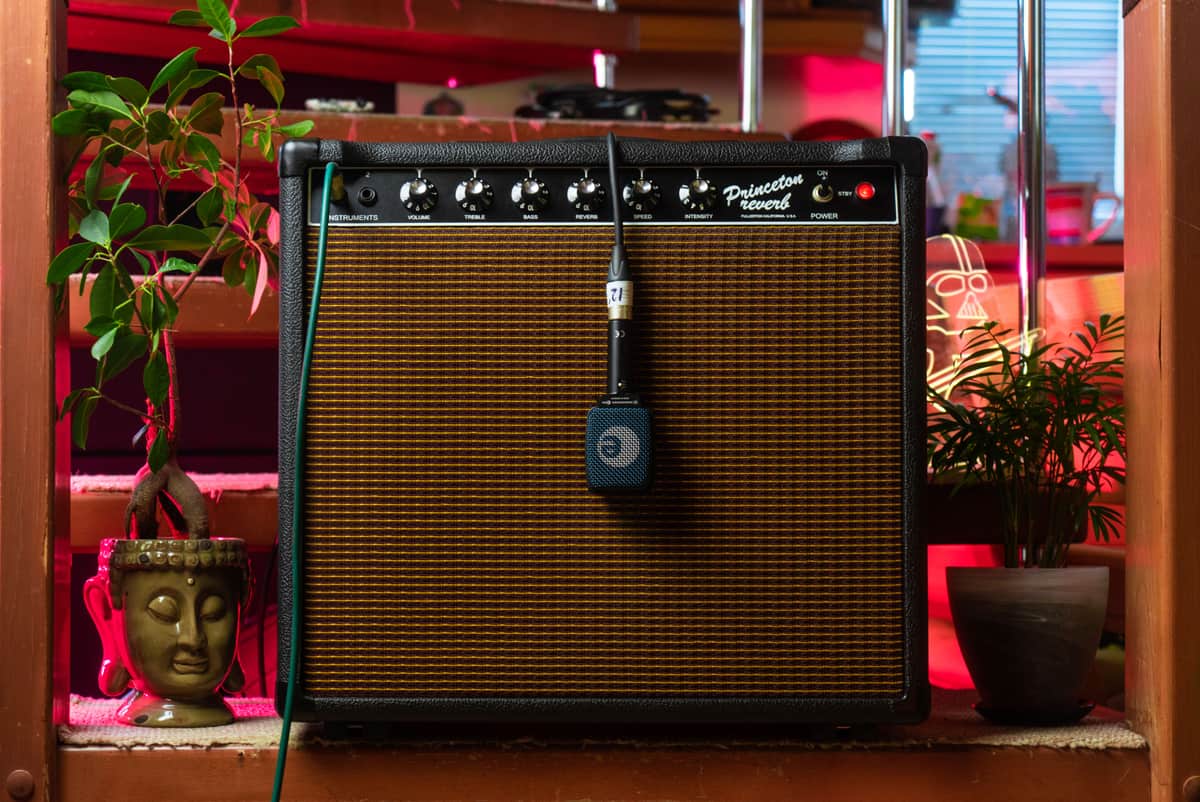
BOSS Katana-50 Gen 3 review
A published 0.5 W position and a 12-inch speaker, against no effects loop and no line out at all.
Top pick: BOSS KATANA-50 GEN 3
Best gigging amps
Headroom, an effects loop, a way out to the PA and a weight you will still accept at 1 a.m. Five picks, plus the amp not to gig with.
Best Gigging Amp pick: BOSS KATANA-100 GEN 3
#ad How we’re funded · price as of October 18, 2026
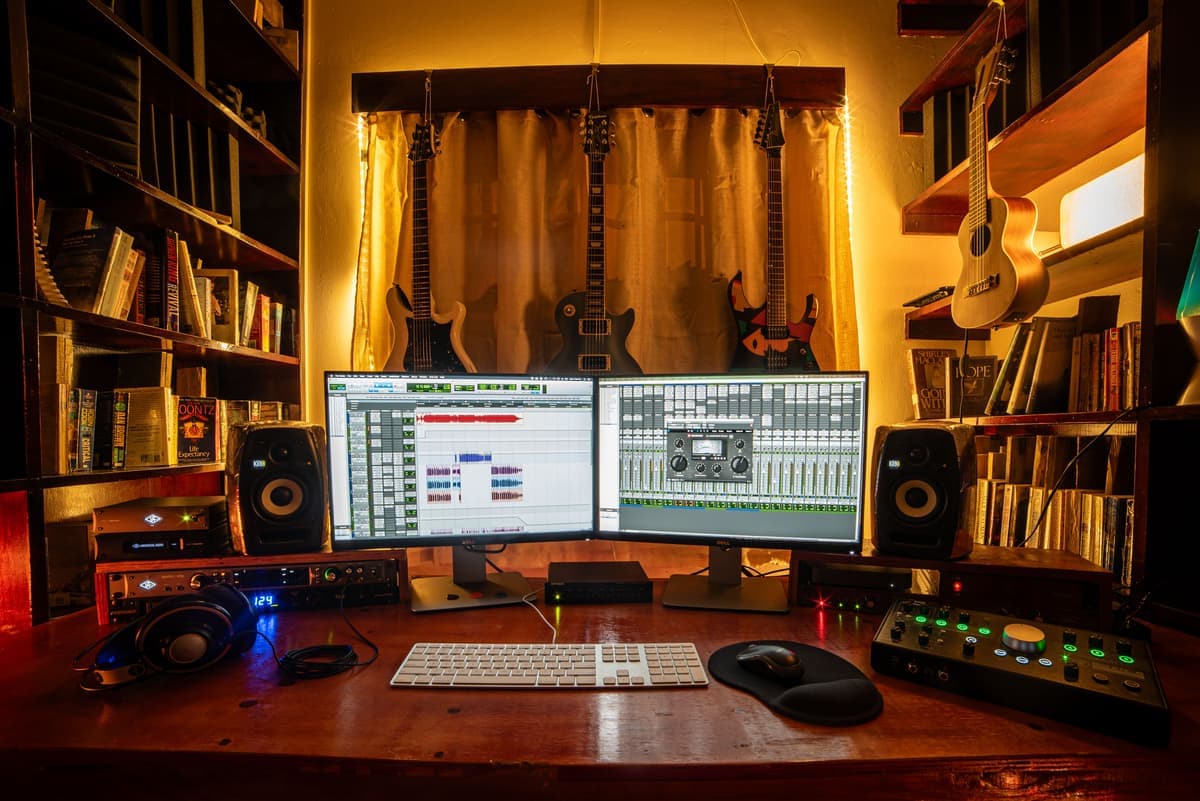
Practice amp vs audio interface
Sound in the room against sound in headphones. What each route publishes, and the one box that does both.
Top pick: Positive Grid Spark 40
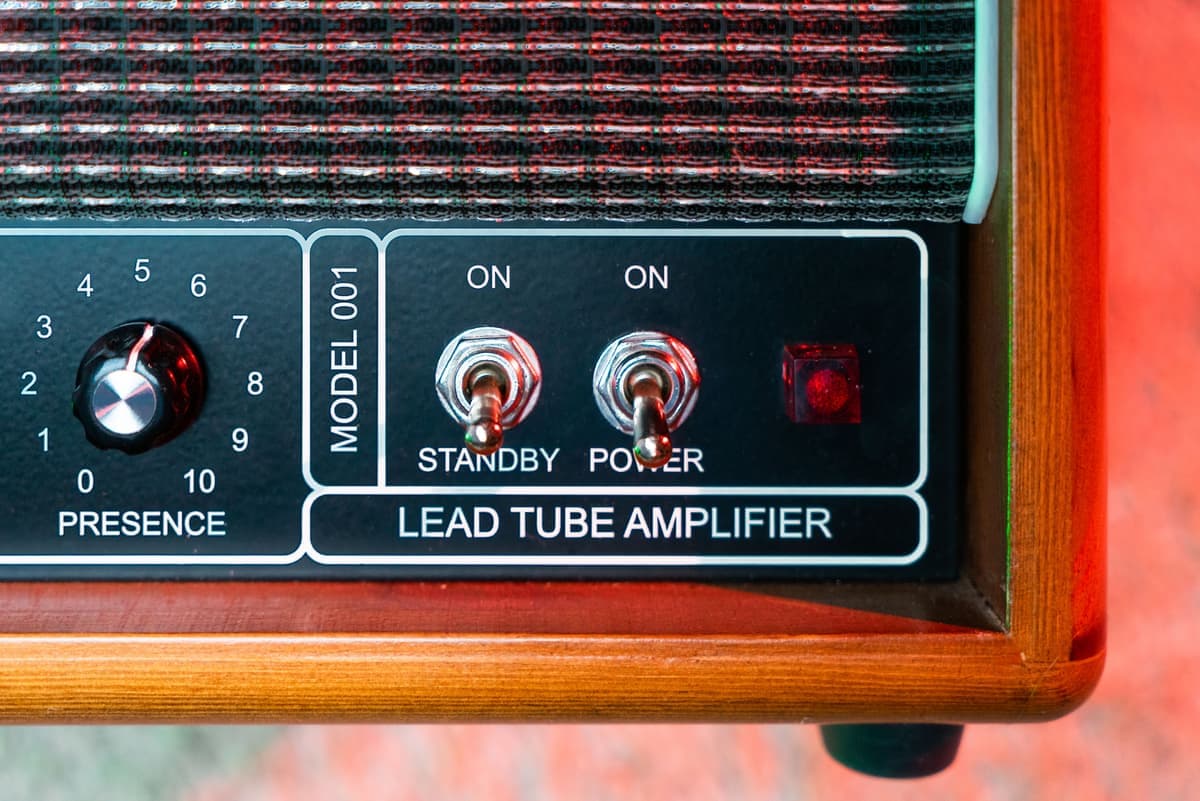
Tube vs solid state amps
Reframed as a question about where the distortion happens, this argument has a clear answer for any given player.
Top pick: BOSS KATANA-50 GEN 3
Best pedal platform amps
Headroom, not gain. Why solid state is genuinely competitive here, and which amps have the jacks that matter.
Best Pedal Platform pick: BOSS KATANA-50 GEN 3
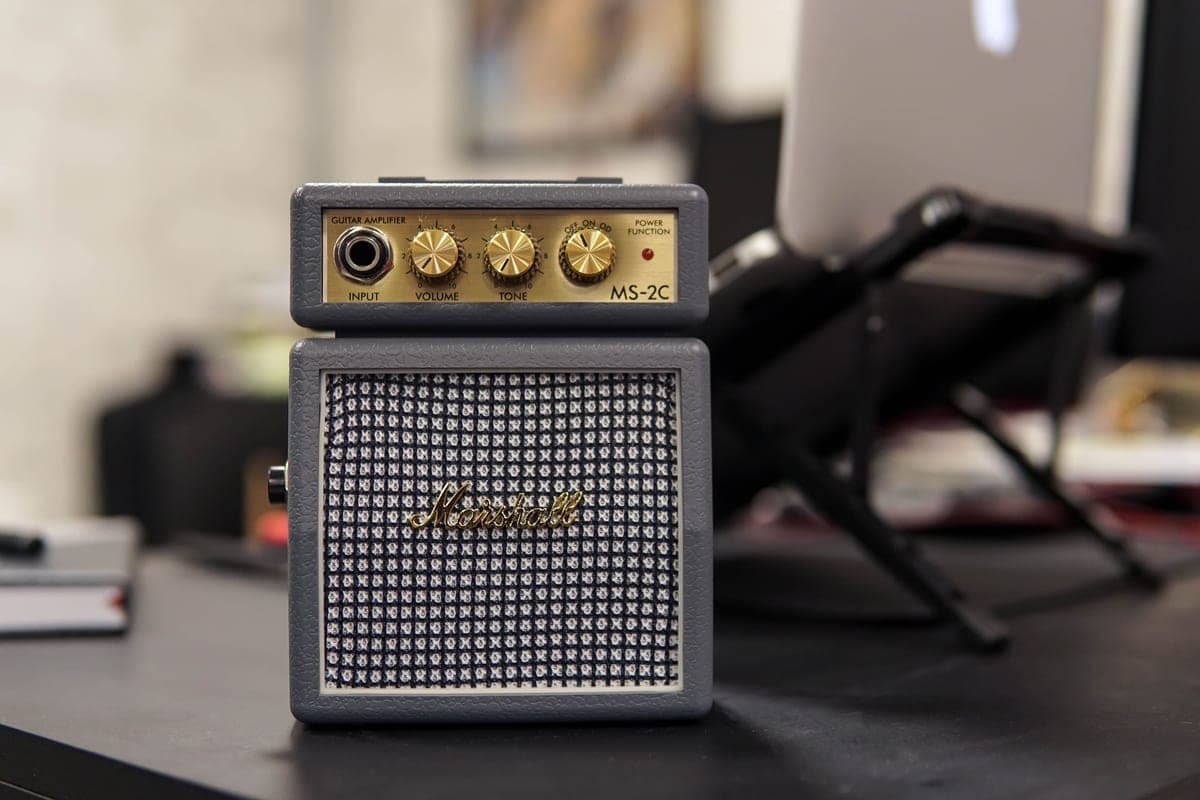
Best practice amps
Speaker size sets the ceiling and the headphone output decides the rest. Four practice amps on published specs.
Best Practice Amp pick: Positive Grid Spark 40
Should you upgrade the pedal or the amp?
One five-minute test with the pedals switched off decides it. Plus the cost comparison nobody totals up.
Top pick: BOSS KATANA-50 GEN 3