Tube vs solid state amps
This argument is usually about authenticity. The useful version is about where in your signal chain you want the distortion to happen.
Fret & Fuzz earns a commission when you buy through the links on this page. It costs you nothing and it does not decide what we rank. How we’re funded.
We have not played this gear. Every pick below is chosen from published manufacturer specifications and the arithmetic set out in how we research, which you can re-run yourself.
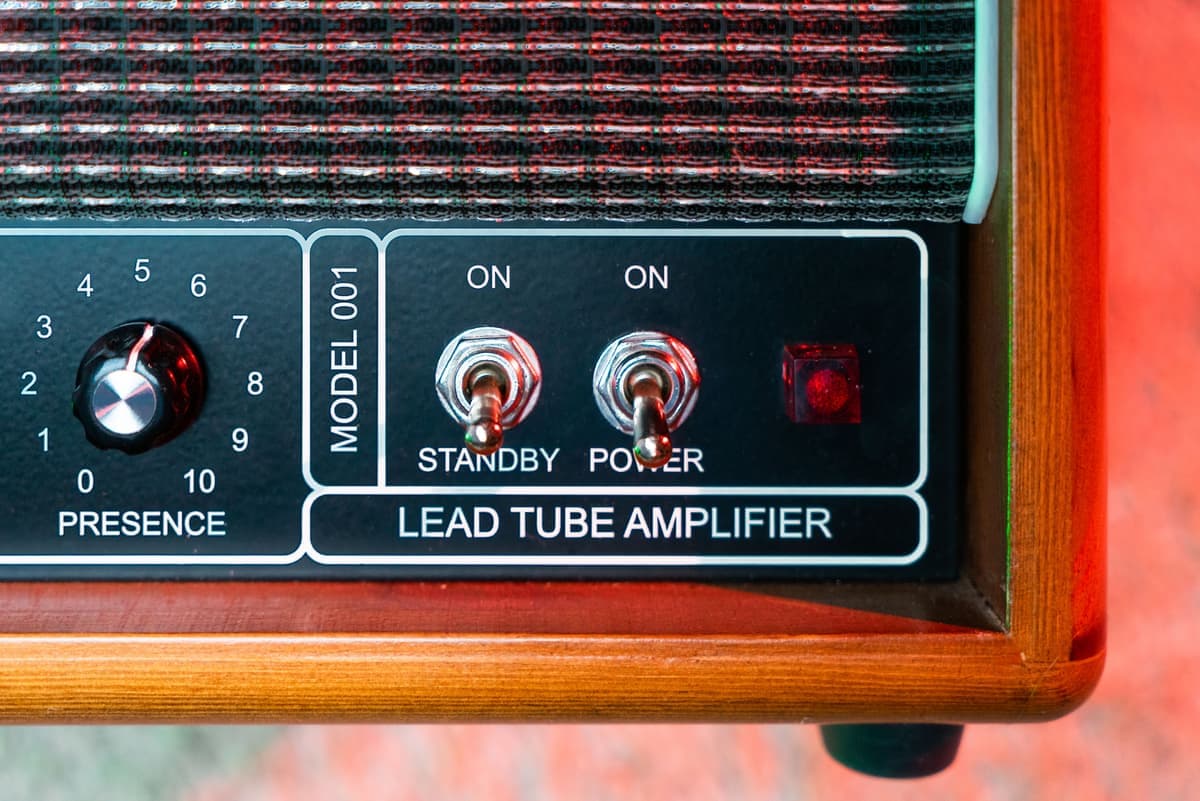
Ask whether you want the amp or the pedals to make the distortion. If the pedals, a solid-state amp is arguably the better platform — it stays linear until it clips, so it does not add compression on top of what your pedals did, and it costs and weighs far less. If the amp, you want a valve power section you can actually push, and now wattage and master volume matter enormously.
The technology argument in the abstract is unresolvable and mostly not useful. Reframed as a question about where the distortion happens, it has a clear answer for any given player.
01What valves actually do differently
Three things, all of them at or near the amp's output limit, and none of them at low volume.
- Soft clipping. A valve stage transitions gradually into distortion rather than abruptly, which produces a different harmonic profile from a hard-clipping solid-state stage.
- Power supply sag. Under heavy load the supply voltage drops momentarily, so a hard-picked note compresses and then blooms as the supply recovers. This is dynamic and responds to playing.
- Output transformer interaction. The transformer's behavior changes with frequency and load, which is part of why the same amp sounds different into different speakers.
All three happen when the power section is working hard. At bedroom volume with the master down, a valve amp's power section is loafing and doing very little of this — which is why a quiet valve amp frequently disappoints.
One of each, and what each is for
| # | Product | Best for | Price |
|---|---|---|---|
| 01 | 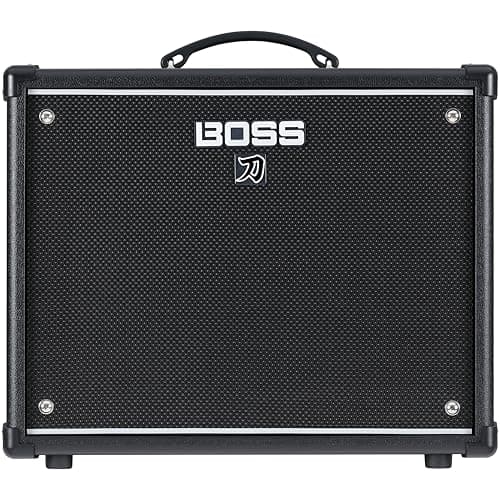 BOSS KATANA-50 GEN 3 Solid-state power stays linear until it clips, which is exactly what a platform should do. | When the pedals make the distortion | |
| 02 | 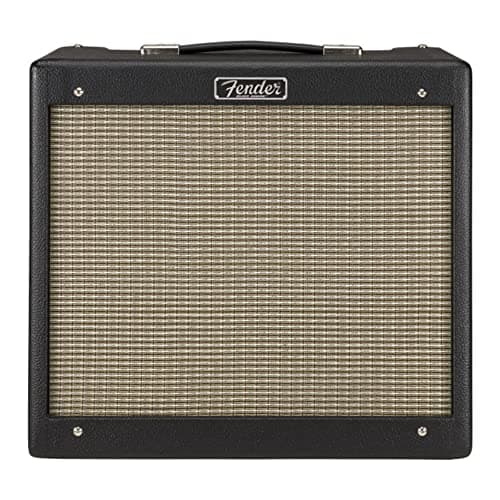 Fender Blues Junior IV 15 W of EL84 that compresses and blooms as the power section is pushed. | When the amp makes the distortion | $789.99 · Check price #ad How we’re funded · price as of October 17, 2026 |
| 03 | No photo Marshall DSL20CR Two valve gain channels, so the distortion comes from the preamp rather than the power section. | Valve preamp gain without needing full power |
Rows link to the full write-up further down this page. Prices come from the live price layer only — where there is no live figure the button reads “Check price” rather than showing a remembered number.
03The practical comparison
| Valve | Solid state | |
|---|---|---|
| Behavior near the limit | Compresses, sags, blooms | Stays linear, then clips hard |
| Behavior well below the limit | Broadly similar to solid state | The same |
| Weight | Heavy — 12-16 kg for a small combo | Light — 11.6 kg for a 50 W 12-inch combo |
| Maintenance | Valves wear out and need replacing | None |
| Reliability on the road | More to go wrong | More robust |
| Cost for a given clean volume | Higher | Substantially lower |
| Clean headroom per watt | Lower with EL84, higher with 6L6 | High and predictable |
| Good pedal platform | Yes, at moderate volume | Yes, arguably better |
BOSS KATANA-50 GEN 3
When the pedals make the distortion
The number50 W, 12-inch speaker, Power Control to 0.5 W, Power Amp In, 11.6 kg, 47 W consumption.
If your distortion comes from pedals, you want the amp to reproduce them faithfully and loudly. A solid-state power section does that: it stays linear across its range and then clips hard, so you simply stay inside the range.
50 W into a 12-inch speaker at 11.6 kg, with a Power Amp In for modelers and a four-position Power Control — Standby, 0.5 W, Half and Max — for home volume. There is no maintenance, no bias, no valves to replace, and no warm-up.
The cons: no effects loop and no line out on the 50, so pedals go in front and a desk needs a microphone. And what solid-state power does not do is compress and sag as it approaches its limit — that absence is the feature here and the deficiency in the other use case.
| Rated power output | 50 W |
|---|---|
| Speaker | 30 cm (12") x 1 |
| Amp characters | Six — Acoustic, Clean, Pushed, Crunch, Lead and Brown — each with one selectable variation, which BOSS counts as 12 tones |
| Effects | Five simultaneous sections — Booster, Mod, FX, Delay and Reverb — with three variations each |
| Power Control | Standby, 0.5 W, Half and Max |
| Input impedance | INPUT -10 dBu (1 M ohm); AUX IN -10 dBu (20 k ohm) |
| Connectors | Input, Power Amp In, Stereo Phones, CTL CH1/CH2 SOLO (TRS), Exp Pedal (TRS), Aux In, USB-C and a Bluetooth adaptor slot |
| Power consumption | 47 W |
| Size / weight | 470 x 238 x 398 mm, 11.6 kg (25 lb 10 oz) |
| What it does not do | No effects loop and no line or Rec Out — the KATANA-100 GEN 3 has both, and on the 50 the only way off the amp is the Stereo Phones jack or USB-C. Nothing but the manual and a power cord is in the box: the FS-5L, FS-6 and FS-7 footswitches, the expression pedals and the BT-DUAL Bluetooth adaptor are all sold separately. |
Specs from BOSS KATANA-50 GEN 3 specifications. We have not used this unit.
Fender Blues Junior IV
When the amp makes the distortion
The number15 W, 2 x EL84, 3 x 12AX7, 12-inch Celestion A-Type, 31.5 lb.
A valve power section behaves differently as it approaches its limit: the power supply sags under load, the output compresses, and the harmonic content shifts. That behavior is dynamic — it changes with how hard you play — and it is the thing valve amps are actually bought for.
You only get it near the amp's output limit, which is why 15 W of EL84 is loud, and why there is an entire product category devoted to attenuating it.
31.5 lb, valves to replace eventually, and a warm-up period. Those are the costs and they are real.
| Power | 15 W, all-tube |
|---|---|
| Speaker | 12" Celestion A-Type |
| Preamp tubes | 3 x 12AX7 |
| Power tubes | 2 x EL84 |
| Controls | Volume, Treble, Bass, Middle, Reverb, Master, FAT switch |
| Weight | 31.5 lb |
| Footswitch | One-button footswitch for the FAT mid boost, included |
| What it does not do | No effects loop and no channel switching — the FAT switch is a mid boost, not a second channel. 15 W of EL84 is loud enough to be a problem in a small room and it has no attenuator. |
Specs from Fender Blues Junior IV product page. We have not used this unit.
#ad How we’re funded · price as of October 17, 2026
Marshall DSL20CR
Valve preamp gain without needing full power
The number20 W with a 10 W setting, 2 x EL34, 3 x ECC83, effects loop.
Most valve amps with a gain channel are distorting in the preamp, not the power section, and that distortion is available at any volume. This is the practical middle ground and it is what most people mean when they say they want a valve amp.
Two channels with independent gain and volume plus a real effects loop, into a 12-inch Celestion Seventy-80.
Preamp distortion into a clean power section is closer to what a distortion pedal does than to what a cranked amp does. That is not a criticism — it is the reason this amp is usable at home in a way the Blues Junior is not.
| Power | 20 W, with a half-power (10 W) setting |
|---|---|
| Speaker | 12" Celestion Seventy-80 |
| Preamp tubes | 3 x ECC83 |
| Power tubes | 2 x EL34 |
| Channels | Two — Classic Gain and Ultra Gain — with per-channel gain and volume |
| Extras | Digital reverb, effects loop, Resonance control |
| Weight | 35.2 lb |
| What it does not do | The half-power switch takes it to 10 W, not to bedroom volume — this is not a power scaler. The reverb is digital and there is only one reverb level per channel. |
Specs from Marshall DSL20CR product page. We have not used this unit.
04Where modeling fits
Modern modeling amps are solid state with software simulating valve behavior, and the simulation includes the sag and compression that a plain solid-state power amp does not produce. A BOSS Katana's amp characters are doing this, and so is every unit in pedals vs multi-effects.
That closes most of the gap for recorded and direct applications. What it does not simulate is the interaction between a real valve power section and a real speaker in a real room — because that interaction is happening after the modeling, in the amp's own power stage and cabinet. Where that interaction is absent altogether — headphones and a DAW — the comparison changes shape completely, and practice amp vs audio interface is the page for it.
05Who should buy which
- All your distortion comes from pedals — solid state. It is the better platform and it costs less. See pedal platform amps.
- You play at volume and want the power section to work — valve, and budget for enough wattage to be heard rather than the least you can get away with.
- You play at home and want valve character — valve preamp gain, or a valve amp plus an attenuator. A low-wattage valve amp on its own does not solve this.
- You gig frequently and carry your own gear — solid state, on weight and reliability alone.
- You record direct — modeling, which removes the room from the equation entirely.
Frequently asked questions
+ Do tube amps really sound better?
+ Is a solid state amp good for pedals?
+ Are modeling amps as good as tube amps?
+ How often do amp tubes need replacing?
Sources
Related on Fret & Fuzz
Practice amp vs audio interface
Sound in the room against sound in headphones. What each route publishes, and the one box that does both.
Top pick: Positive Grid Spark 40

Best pedal platform amps
Headroom, not gain. Why solid state is genuinely competitive here, and which amps have the jacks that matter.
Best Pedal Platform pick: BOSS KATANA-50 GEN 3
Best tube amps under $1,000
A real valve power section and a decent speaker. What this price does not buy is a way to use it at home.
Best Tube Amp Under $1,000 pick: Marshall DSL20CR
Attenuator vs master volume
Halving power costs 3 dB. That one fact explains why a low-wattage amp is not a quiet amp, with the full table.
Top pick: Two Notes Torpedo Captor X
Pedal gain vs amp gain
One clipping point or several with filtering between them. Why that structural difference only shows at high gain.
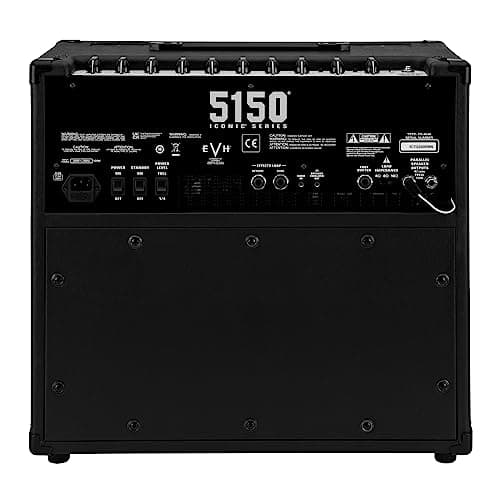
Top pick: EVH 5150 Iconic Series 15W 1x10 combo
#ad How we’re funded · price as of October 17, 2026
Should you upgrade the pedal or the amp?
One five-minute test with the pedals switched off decides it. Plus the cost comparison nobody totals up.
Top pick: BOSS KATANA-50 GEN 3