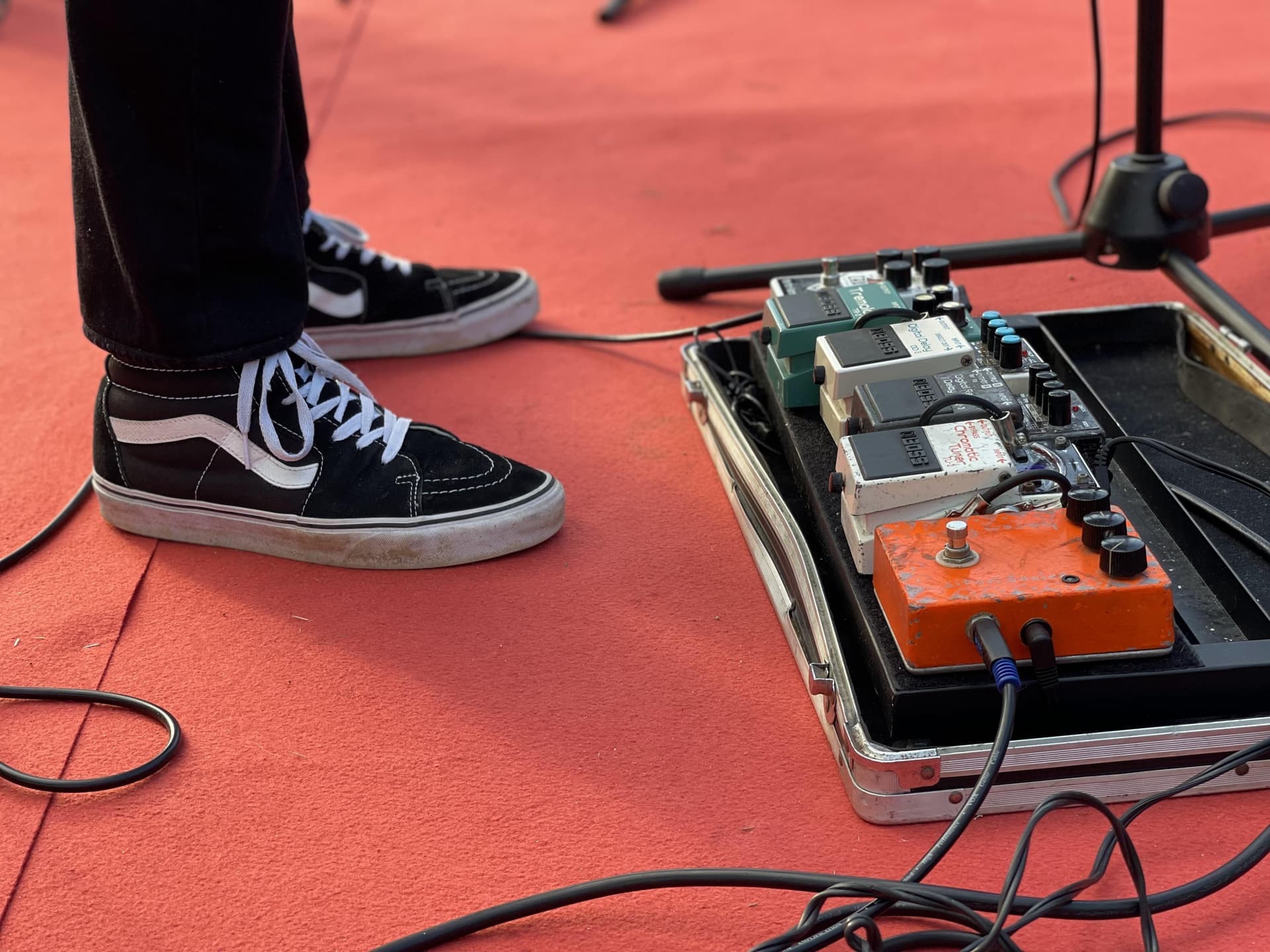
Best pedalboard power supplies
Compare these on the rating of their highest single output, not on their total current. That is the number that fails you.
Fret & Fuzz earns a commission when you buy through the links on this page. It costs you nothing and it does not decide what we rank. How we’re funded.
We have not played this gear. Every pick below is chosen from published manufacturer specifications and the arithmetic set out in how we research, which you can re-run yourself.
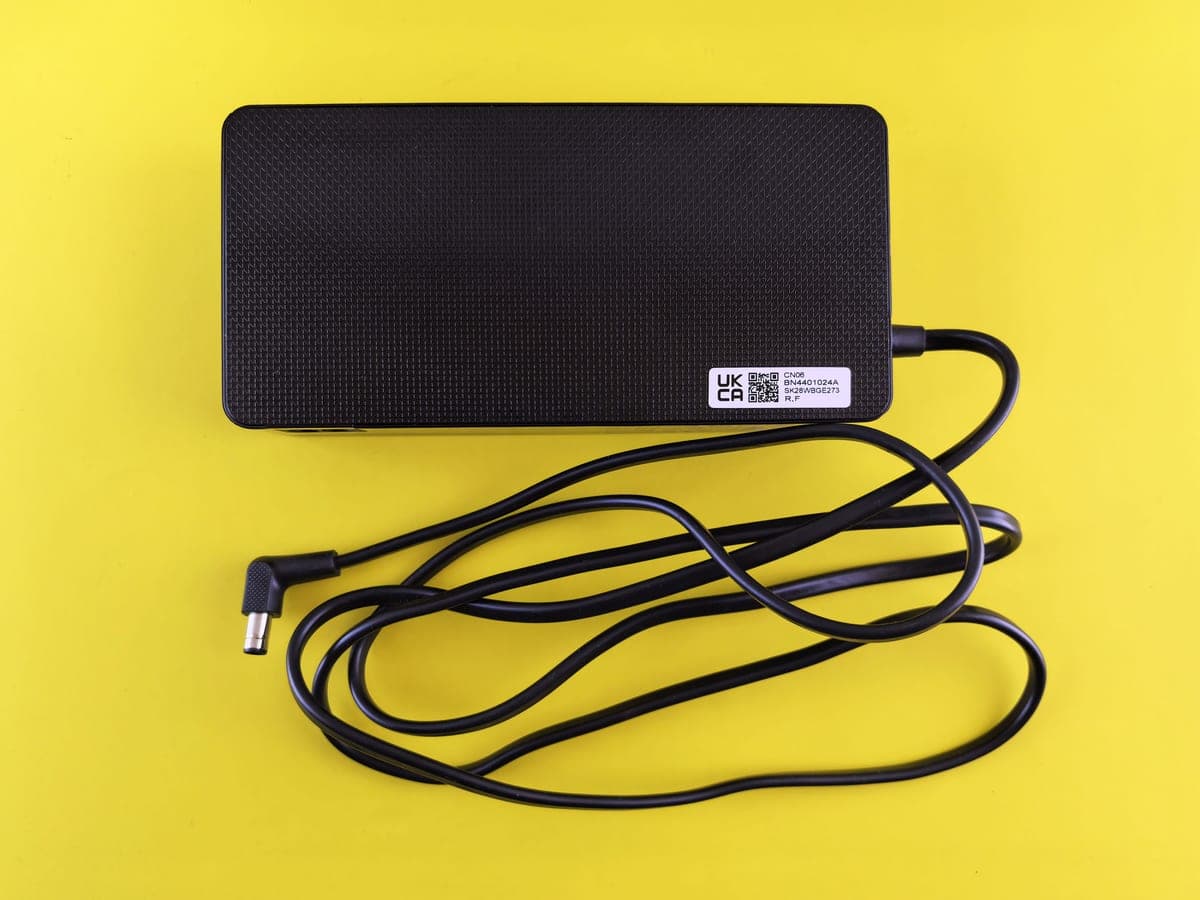
Compare power supplies on the rating of their highest single output, not on total current. Your hungriest pedal has to fit inside one output — a Strymon pedal asking a published 300 mA minimum will not run from a 250 mA output regardless of how much total current the supply has. Uniform output ratings, like the Strymon Zuma's 500 mA on all nine, remove the planning problem entirely.
Total current is the number on the box. Per-output current is the number that decides whether your board works. The power arithmetic guide has the full method with a worked example.
Best pedalboard power supplies
| # | Product | Best for | Price |
|---|---|---|---|
| 01 | 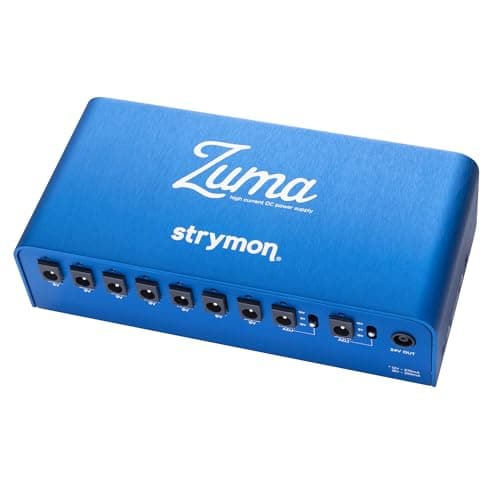 Strymon Zuma 500 mA on every one of nine isolated outputs, so pedal assignment stops being a planning exercise. | The supply you buy once | $279.00 · Check price #ad How we’re funded · price as of October 18, 2026 |
| 02 | 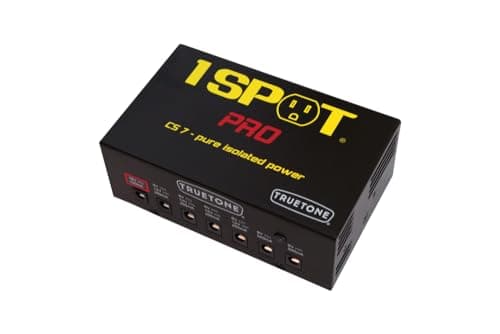 Truetone 1 SPOT Pro CS7 Two 500 mA outputs for the digital pedals, four 200 mA for everything else. | A planned board at a lower price | $169.99 · Check price #ad How we’re funded · price as of October 18, 2026 |
| 03 | 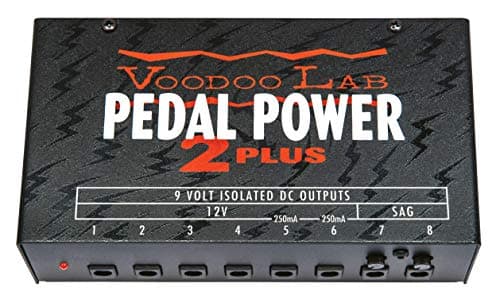 Voodoo Lab Pedal Power 2 PLUS Eight isolated sections including two with a voltage-starving SAG control. | A fuzz player who wants the sag feature | $199.99 · Check price #ad How we’re funded · price as of October 18, 2026 |
| 04 | 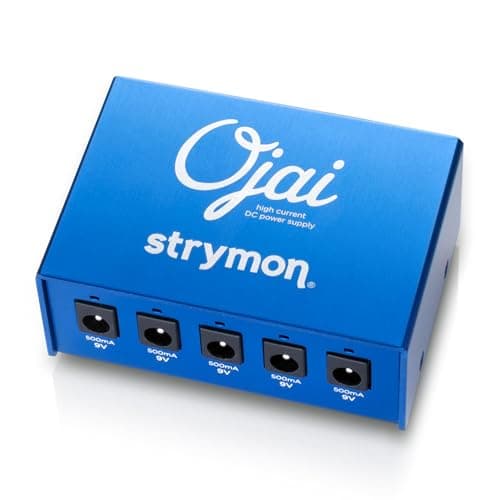 Strymon Ojai Five isolated 500 mA outputs in a housing sized to mount under a compact board. | A small board, or expanding an existing supply | $169.00 · Check price #ad How we’re funded · price as of October 18, 2026 |
| ! | 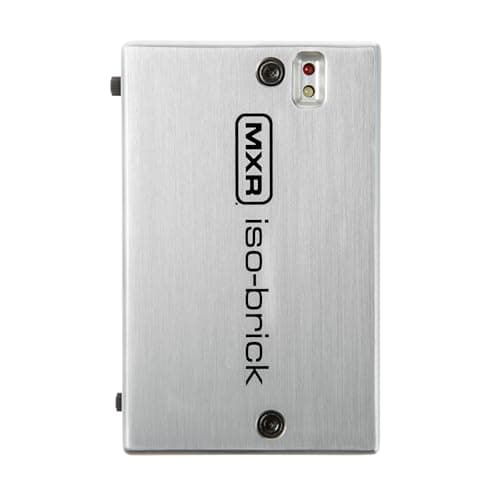 MXR Iso-Brick Power Supply Ten outputs at six different ratings, which means every board change is a planning exercise. Skip this one — see why below | Not the simplest choice, despite the output count | $179.99 · Check price #ad How we’re funded · price as of October 18, 2026 |
Rows link to the full write-up further down this page. Prices come from the live price layer only — where there is no live figure the button reads “Check price” rather than showing a remembered number.
02Published ratings, side by side
| Supply | Outputs | Highest single output | Other voltages | Isolation |
|---|---|---|---|---|
| Strymon Zuma | 9 | 500 mA (all outputs) | 2 switchable to 12 V / 375 mA or 18 V / 250 mA | Individual transformer per channel |
| Truetone 1 SPOT Pro CS7 | 7 | 500 mA (outputs 6-7) | Outputs 2-5 switch to 12 V | Each output independently isolated |
| Voodoo Lab Pedal Power 2 PLUS | 8 | 250 mA (outputs 5-6) | 9/12 V standard; 18/24 V via doubler cables | 8 isolated sections |
| Strymon Ojai | 5 | 500 mA (all outputs) | None on the standard model | Fully isolated |
| MXR Iso-Brick | 10 | 450 mA | 18 V x2, variable 6-15 V x2 | 10 isolated outputs |
Every figure here is the manufacturer's published rating. Where a supply publishes no total-current figure, we have not supplied one.
03What isolation actually buys you
Each isolated output has its own transformer winding, so there is no shared conductive path between the grounds of two pedals through the power supply. That matters because your pedals are also connected to each other by patch cables, which carry a ground.
Two ground paths between the same two pedals is a loop, and a loop is an antenna. That is where mains hum comes from. Isolation removes the second path. Isolated vs daisy chain covers when you actually need it and when a daisy chain is fine.
Strymon Zuma
The supply you buy once
The number9 x 500 mA at 9 V, 48 W total, two outputs switchable to 12 V (375 mA) or 18 V (250 mA).
Strymon publishes nine fully isolated outputs, each with its own transformer, each at 500 mA, with a 48 W total and worldwide mains input. Two of the nine switch to 12 V or 18 V.
Uniform ratings are worth more than they sound. On a mixed-rating brick, every board change means re-checking which pedal can go where. Here nothing can be assigned wrongly.
It has no courtesy AC outlets and no sag feature, and it will not run a Line 6 HX Stomp, which wants 3 A. Nothing in this class will.
| Outputs | 9, fully isolated, one custom transformer per channel |
|---|---|
| Current per output | 500 mA at 9 V DC on every output |
| Selectable outputs | 2 outputs switch to 12 V (375 mA) or 18 V (250 mA) |
| Total power | 48 W maximum |
| Mains input | 100-240 V, worldwide |
| Size / weight | 6.8 x 3.3 x 1.8 in (173 x 84 x 46 mm), 680 g |
| What it does not do | It does not include the courtesy outlets or the sag feature some rivals have, and 500 mA per output still will not run an HX Stomp, which asks for 3 A. |
Specs from Strymon Zuma product page. We have not used this unit.
#ad How we’re funded · price as of October 18, 2026
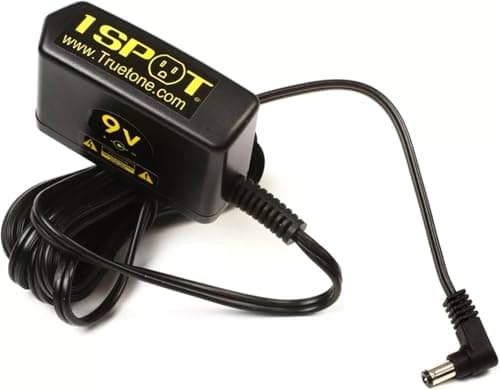
Truetone 1 SPOT Pro CS7
A planned board at a lower price
The numberOutput 1: 9 V / 100 mA. Outputs 2-5: 9 or 12 V / 200 mA. Outputs 6-7: 9 V / 500 mA.
Truetone publishes every output rating individually, which makes planning straightforward: the two 500 mA outputs take your digital delay and reverb, the 200 mA outputs take drives and utility pedals, and the 100 mA output takes the tuner.
Worldwide 100-240 V mains input, 140 x 86 x 50 mm, 592 g. It fits under most boards.
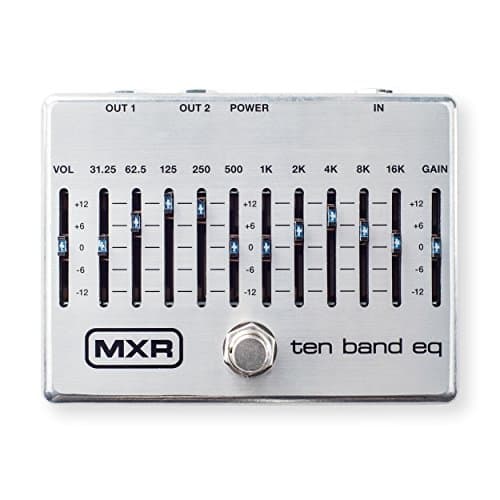
No 18 V output at all. If you own an MXR 10 Band EQ, this supply does not cover it and you will need a separate solution.
| Outputs | 7, independently isolated and filtered |
|---|---|
| Output 1 | 9 V DC, 100 mA |
| Outputs 2-5 | 9 / 12 V DC switchable, 200 mA each |
| Outputs 6-7 | 9 V DC, 500 mA each |
| Mains input | 100-240 V AC, worldwide |
| Size / weight | 5.5 x 3.37 x 2 in (140 x 86 x 50 mm), 592 g |
| What it does not do | No 18 V output, so an MXR 10 Band EQ or anything else that needs 18 V is not covered. Output 1 is only 100 mA — that one is for a tuner or an analog dirt pedal, not a digital reverb. |
Specs from Truetone 1 SPOT Pro CS7 product page. We have not used this unit.
#ad How we’re funded · price as of October 18, 2026
Voodoo Lab Pedal Power 2 PLUS
A fuzz player who wants the sag feature
The number4 x 9/12 V 100 mA, 2 x 9/12 V 250 mA, 2 x 9 V 100 mA with SAG. 907 g.
Voodoo Lab publishes eight isolated sections and the SAG feature on two of them, which reduces the supply voltage to produce the sputtering, compressed sound of a dying battery in a fuzz circuit.
That is a real capability nothing else here offers, and if you play vintage-style fuzz it may be the deciding factor.
The 250 mA ceiling is the limitation and it is significant in 2026: a Strymon pedal asking 300 mA minimum needs a doubler cable, which consumes two outputs. It is also a fixed-region mains unit rather than a worldwide one.
| Outputs | 8 isolated sections |
|---|---|
| Outputs 1-4 | 9 / 12 V, 100 mA each |
| Outputs 5-6 | 9 / 12 V, 250 mA each |
| Outputs 7-8 | 9 V, 100 mA each, with a SAG control for starved-voltage sounds |
| Higher voltages | 18 V and 24 V via optional doubler cables |
| Mains input | 120 V 50/60 Hz (North American model) |
| Size / weight | 6 x 3.4 x 1.8 in (152 x 86 x 44 mm), 907 g |
| What it does not do | The highest single output is 250 mA, so a Strymon pedal that wants 300 mA minimum will not run from one output — you need the doubler cable or a different supply. It is also a fixed-region mains unit, not a worldwide one. |
Specs from Voodoo Lab Pedal Power 2 PLUS product page. We have not used this unit.
#ad How we’re funded · price as of October 18, 2026
Strymon Ojai
A small board, or expanding an existing supply
Five outputs at 500 mA each, fully isolated, in a low-profile enclosure. For a five-pedal board that includes a digital delay, this is exactly sized.
It also chains from a Zuma, which makes it the natural way to add outputs to a board that has outgrown its supply without replacing the supply.
No switchable 12 V or 18 V outputs on the standard version — that is the R30 variant. Five outputs is a small board's worth, so plan for the next two pedals before you buy.
| Outputs | 5, fully isolated |
|---|---|
| Current per output | 500 mA at 9 V DC |
| Expandable | Chains from a Zuma or its own 24 V supply to add outputs to an existing board |
| Format | Low-profile enclosure sized to mount under a pedalboard |
| What it does not do | No switchable 12 V or 18 V outputs on the standard Ojai — that is the R30 variant. Five outputs is a small board's worth, not a big board's. |
Specs from Strymon Ojai product page. We have not used this unit.
#ad How we’re funded · price as of October 18, 2026
MXR Iso-Brick Power Supply
Not the simplest choice, despite the output count
We are not picking this one, and it is a capable supply. Dunlop publishes ten isolated outputs: two 9 V / 100 mA, two 9 V / 300 mA, two 9 V / 450 mA, two 18 V / 250 mA and two variable 6-15 V.
That range covers more voltage cases than anything else here, including the 18 V pedals the Truetone cannot handle. If you own an MXR 10 Band EQ, this is a real advantage.
The cost is that no two output pairs are interchangeable. Every time you change the board you re-plan the assignments, and the two 100 mA outputs are nearly useless on a modern board. If you do not specifically need the 18 V or variable outputs, a supply with uniform ratings is less work forever.
| Outputs | 10 isolated outputs |
|---|---|
| Mixed ratings | Two 9 V / 100 mA, two 9 V / 300 mA, two 9 V / 450 mA, two 18 V / 250 mA, and two variable 6-15 V outputs |
| Format | Under-board brick with a detachable IEC cable |
| Electrical data | Per-output ratings are published; total draw is not |
| What it does not do | The outputs are not interchangeable — you have to plan which pedal goes on which output. The two 100 mA outputs run out of headroom fast on a modern board. |
Specs from MXR Iso-Brick product page. We have not used this unit.
04Mounting and cable length
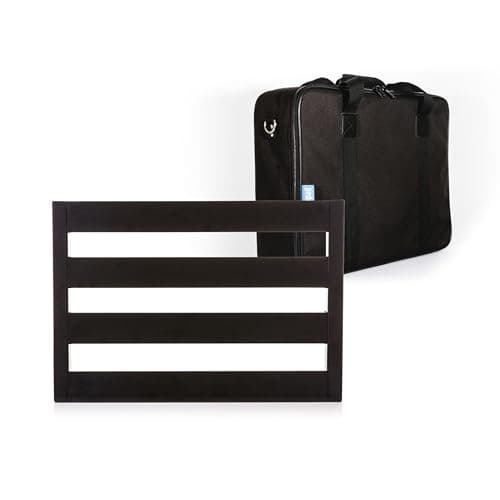
A supply mounted under the board is out of the way and keeps DC cables short, which matters because a long DC run is another antenna. A Pedaltrain Classic JR has room underneath; a Pedaltrain Nano+ has essentially none. Check the frame before you buy the brick — the pedalboard roundup covers which boards have under-board space.
Keep DC cables away from patch cables where you can, and cross them at right angles where you cannot. This costs nothing and removes a real source of induced noise.
05What none of these will do
Run a Line 6 HX Stomp. It ships with a 9 V DC 3 A supply, which is six times the highest single output here. That unit needs its own supply and there is no brick in this class that changes that. The other requirement to check against this table is voltage rather than current — 9V vs 18V pedals covers which pedals need 18 V and which of these supplies provide it.
Frequently asked questions
+ What is the best pedalboard power supply?
+ Do I need an isolated power supply?
+ How many outputs do I need?
+ Is total mA or per-output mA more important?
Sources
Related on Fret & Fuzz
9V vs 18V pedals
Voltage sets the clipping ceiling, not the volume. Which pedals want 18 V, which supplies deliver it, and the mistake that kills a pedal.
Top pick: MXR 10 Band EQ
#ad How we’re funded · price as of October 18, 2026
Pedalboard power requirements explained
Two sums decide your power supply, and almost everyone only does the first. A worked example with real published figures.
Top pick: Strymon Zuma
#ad How we’re funded · price as of October 18, 2026
Isolated power supply vs daisy chain
Two topologies, two failure modes. The mechanism behind the hum, and the point at which a daisy chain stops being enough.
Top pick: Truetone 1 SPOT
#ad How we’re funded · price as of October 18, 2026
Best pedalboard power supplies under $100
Cheap supplies buy current, not isolation. Which board that is fine for, and which board it is not.
Best Power Under $100 pick: Truetone 1 SPOT
#ad How we’re funded · price as of October 18, 2026
Best pedalboards
Size and under-board space are the only two decisions that matter. Three boards on their published dimensions.
Best Pedalboard pick: Pedaltrain Classic JR pedalboard
#ad How we’re funded · price as of October 18, 2026