Best guitar pedals for shoegaze
This is the one genre where pedal order is not a preference. Get the fuzz placement wrong and the whole thing collapses into noise.
Fret & Fuzz earns a commission when you buy through the links on this page. It costs you nothing and it does not decide what we rank. How we’re funded.
We have not played this gear. Every pick below is chosen from published manufacturer specifications and the arithmetic set out in how we research, which you can re-run yourself.
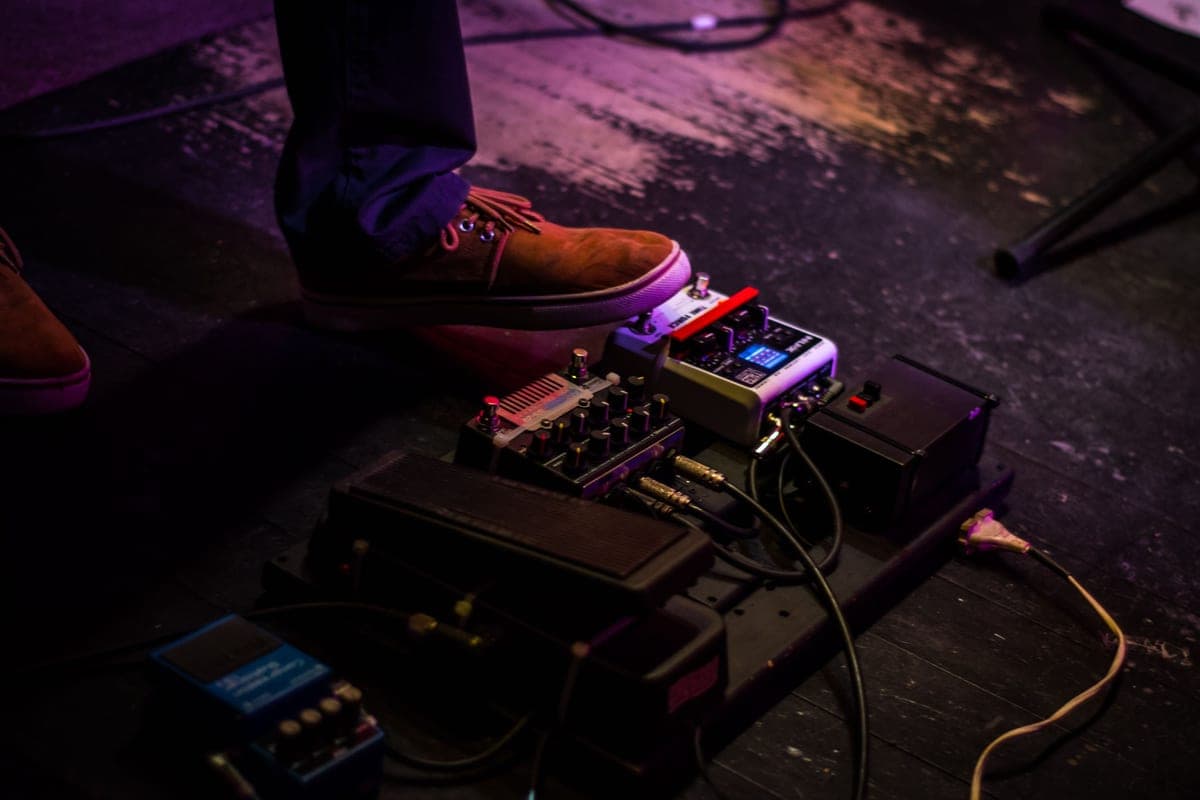
Fuzz first in the chain, straight after the guitar, then modulation, then reverb last with the mix higher than feels reasonable. The fuzz placement is not preference — classic fuzz circuits have low input impedance and are designed to load your pickup directly. A buffered pedal in front of one changes how it responds, and in this genre that response is most of the sound.
Electro-Harmonix publishes the numbers that make this concrete: 130 k ohm input impedance on the Nano Big Muff, 55 k ohm on the Op-Amp version. Compare that to the 1 M ohm input of a BOSS compact and it is obvious why the Muff is the pedal whose character changes depending on what precedes it.
Best pedals for shoegaze
| # | Product | Best for | Price |
|---|---|---|---|
| 01 | 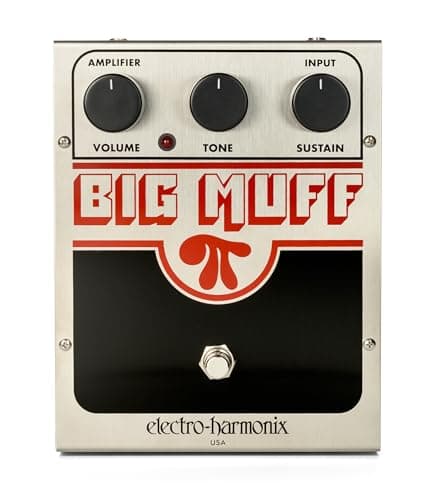 Electro-Harmonix Big Muff Pi Two cascaded clipping stages and effectively infinite sustain — the sound the genre is built on. | The foundational fuzz | $100.96 · Check price #ad How we’re funded · price as of October 17, 2026 |
| 02 | 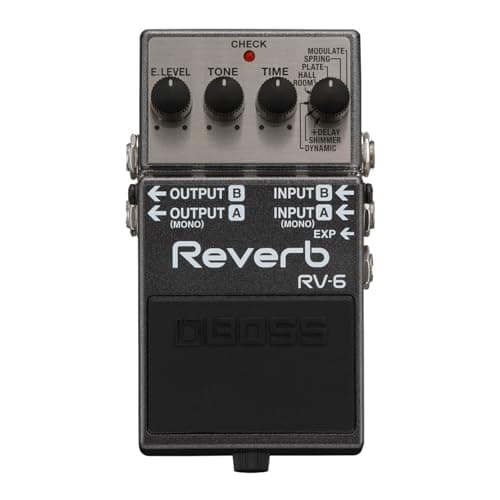 BOSS RV-6 Reverb Shimmer and Modulate modes are the two that matter here, and it has both plus six more. | The reverb that does the heavy lifting | |
| 03 | No photo Electro-Harmonix Small Clone Analog Chorus A bucket-brigade chorus with a depth switch instead of a knob — deliberately limited, and the right amount. | Analog modulation that sits behind the fuzz | |
| 04 | 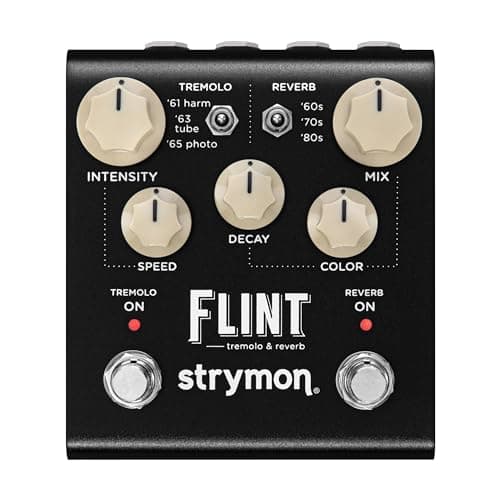 Strymon Flint Tremolo & Reverb Three tremolo voicings and three reverb voicings, with selectable true or buffered bypass. | Tremolo and reverb in one slot, if the board is full | $349.00 · Check price #ad How we’re funded · price as of October 17, 2026 |
| ! | 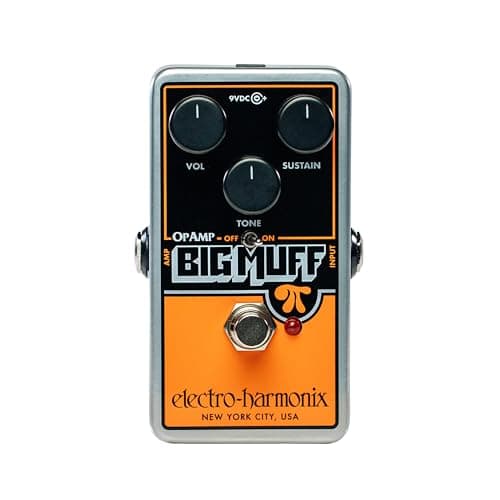 Electro-Harmonix Op-Amp Big Muff Pi A genuinely different circuit, but the wrong first fuzz for this style. Skip this one — see why below | A second Muff, if you already have one | $96.20 · Check price #ad How we’re funded · price as of October 17, 2026 |
Rows link to the full write-up further down this page. Prices come from the live price layer only — where there is no live figure the button reads “Check price” rather than showing a remembered number.
02The three-layer structure
Almost every sound in this genre is the same three layers stacked in the same order, and understanding that is worth more than any individual pedal recommendation.
- Sustain. A fuzz that does not decay quickly. This is what everything else operates on — a short note gives the reverb nothing to work with.
- Movement. Chorus, tremolo or a slow phaser, placed after the fuzz so it modulates the saturated tone rather than the clean one.
- Space. Reverb, last, with a wet mix well past where it would sit in any other style. Shimmer and modulated reverb are the two modes that do most of the work.
03Why the fuzz has to be first
A vintage-style fuzz presents a low input impedance and expects to see your pickup's own impedance on the other side. That interaction is what makes the pedal clean up when you roll your guitar volume back — you are changing the load the circuit sees, not just the level.
Put a buffered pedal in front — most BOSS compacts, most pedal tuners including the TU-3, most wahs when engaged — and the fuzz now sees a fixed low-impedance source instead. It still makes fuzz. It stops responding. If your fuzz sounds harsh and one-dimensional and will not clean up, this is almost always why, and the pedal order guide has the fix.
04Reverb settings that actually differ
| Mode | What it does | Why it matters here |
|---|---|---|
| Hall | Long, dense, obviously a large space | The default wall — but it can swamp the note attack |
| Plate | Smooth and dense with a faster onset | Keeps more of the pick attack than Hall |
| Shimmer | Adds a pitch-shifted octave into the tail | The specific sound most people are chasing |
| Modulate | Detunes the reverb tail | Movement without a separate modulation pedal |
| Dynamic | Ducks while you play, blooms in the gaps | Lets you use far more reverb without losing clarity |
All five are modes on a single BOSS RV-6. Buying five reverb pedals is not the move.
Electro-Harmonix Big Muff Pi
The foundational fuzz
The numberAbout 3 mA at 9 V. You can run four of these off almost anything.
The Big Muff's four-transistor topology produces sustain that does not decay the way an overdrive's does, and that sustained, saturated note is what everything else in a shoegaze chain operates on. Reverb and modulation need something to work with; a short, dry note gives them nothing.
The fixed mid scoop, which is a liability in most other contexts, is an asset here — it leaves room for the vocal and the other guitar, and the genre's records are full of it.
It draws almost nothing. On a board where the reverb is drawing 95 mA, that matters.
| Controls | Volume, Tone, Sustain |
|---|---|
| Current draw | Approximately 3 mA at 9 V DC |
| Power | 9 V battery or a 9 V DC center-negative supply |
| Circuit | Four-transistor design with two cascaded clipping stages between a boost stage and a recovery stage |
| What it does not do | The tone stack has a fixed mid scoop with no way to defeat it, and there is no gain-cleanup behavior — rolling your guitar volume down mostly just gets quieter, not cleaner. |
Specs from Electro-Harmonix Big Muff Pi manual (PDF). We have not used this unit.
#ad How we’re funded · price as of October 17, 2026
BOSS RV-6 Reverb
The reverb that does the heavy lifting
The number95 mA — plan the power supply around this pedal, not around the fuzz.
Shimmer adds a pitch-shifted octave into the reverb tail, which is the specific effect behind most of the 'wall' sounds people are chasing. Modulate detunes the tail. Both are on the RV-6 alongside Hall, Plate, Room, Spring, +Delay and Dynamic.
The expression pedal jack is worth planning for: sweeping reverb level with a foot during a section is the single most useful live control in this style, and there is no way to do it from the front panel.
Stereo out matters more than usual here. Two amps or a stereo DI turns a wide reverb into a genuinely wide one, and the RV-6 has true stereo I/O.
| Modes | 8 — Hall, Plate, Room, Spring, Modulate, +Delay, Shimmer, Dynamic |
|---|---|
| Controls | E.Level, Tone, Time, Mode, pedal switch |
| Current draw | 95 mA |
| Battery life | Approx. 3 hours on alkaline |
| I/O | Input A (mono) and B, Output A (mono) and B, expression jack |
| Weight | 450 g including battery |
| What it does not do | No adaptor included. 95 mA rules out a daisy chain shared with other digital pedals, and there is no way to save a setting — every mode change is a knob move. |
Specs from BOSS RV-6 specifications. We have not used this unit.
Electro-Harmonix Small Clone Analog Chorus
Analog modulation that sits behind the fuzz
Chorus after fuzz is the classic order for this sound: the fuzz creates the sustained tone, the chorus detunes a copy of it, and the result smears without adding more gain.
The Small Clone is analog, mono, and has a Rate knob plus a two-position Depth switch. That is all. The absence of a mix control means it is always doing a fixed amount, which is why it is easy to use and why it will not do a subtle chorus.
If you want stereo spread or a subtler setting, the modulation roundup covers the alternatives.
| Controls | Rate knob, Depth switch |
|---|---|
| Circuit | Analog bucket-brigade chorus |
| Power | 9 V battery or a 9 V DC center-negative supply |
| Electrical data | No current-draw or impedance figure is published for this pedal, so none is stated here. |
| What it does not do | A two-position depth switch instead of a knob, and no mix control. Mono only — there is no stereo spread to be had. |
Specs from Electro-Harmonix Small Clone product page. We have not used this unit.
Strymon Flint Tremolo & Reverb
Tremolo and reverb in one slot, if the board is full
The number9 V DC, minimum 300 mA. Most cheap bricks cannot run this pedal.
Tremolo is the underrated half of this genre's sound — a slow, deep tremolo under a saturated chord does something reverb cannot. The Flint puts three tremolo circuits and three reverb circuits in one enclosure with 24-bit/96 kHz conversion, a 1 M ohm input and a 100 ohm output.
The 300 mA minimum is the catch and it is published plainly. A Voodoo Lab Pedal Power 2 PLUS tops out at 250 mA per output, so this pedal needs a doubler cable there, or a supply like a Strymon Zuma that gives 500 mA on every output.
You cannot reorder the tremolo and reverb inside the box, which is the one flexibility you give up by combining them.
| Effects | Three tremolo voicings and three reverb voicings in one enclosure |
|---|---|
| Power requirement | 9 V DC center-negative, minimum 300 mA (supply not included) |
| Input impedance | 1 M ohm |
| Output impedance | 100 ohm |
| Converters | 24-bit / 96 kHz A/D and D/A |
| Bypass | Selectable relay true bypass or buffered bypass |
| Size | 4.5" deep x 4" wide x 2.4" tall (11.43 x 10.16 x 6.1 cm) |
| What it does not do | No power supply in the box, and the 300 mA minimum means most cheap bricks cannot run it. There is no delay in here and no way to reorder the tremolo and reverb. |
Specs from Strymon Flint product page. We have not used this unit.
#ad How we’re funded · price as of October 17, 2026
Electro-Harmonix Op-Amp Big Muff Pi
A second Muff, if you already have one
We are not picking this as a first fuzz. The Op-Amp Big Muff is a real variant, not a repackage — EHX publishes a 55 k ohm input impedance against the standard Muff's 130 k, and op-amp clipping rather than the four-transistor topology. It is harder, more compressed and more aggressive.
That is a specific sound with a specific history and it is not the broad, soft-edged wall most people mean by shoegaze. Buying it first usually produces a tone that is more abrasive than intended.
The 55 k ohm input is also the lowest in the Muff family, which makes it the most sensitive of all of them to what sits in front of it. As a second Muff for a particular record's sound, it is excellent. As your only one, it is a harder pedal to live with.
| Controls | Volume, Tone, Sustain, Tone Bypass switch |
|---|---|
| Input impedance | 55 k ohm |
| Current draw | Approximately 5 mA at 9 V DC |
| Circuit | Op-amp clipping rather than the four-transistor topology of the standard Big Muff |
| What it does not do | The 55 k ohm input impedance is the lowest of the Muff family, so what sits in front of it matters more than usual. There is no germanium warmth here — this is the harder, more compressed version of the sound. |
Specs from Electro-Harmonix Op-Amp Big Muff Pi product page. We have not used this unit.
05The power budget for this board
Add it up: Big Muff about 3 mA, Small Clone unpublished but small, RV-6 95 mA, Flint 300 mA minimum. The two analog pedals cost you almost nothing and the two digital ones dominate the total. Add 30% headroom and you are looking for a supply with at least one 500 mA output — which rules out several of the cheaper isolated bricks. The power arithmetic shows the full calculation.
Frequently asked questions
+ What pedals do I need for a shoegaze sound?
+ Should the reverb go before or after the fuzz?
+ Why does my fuzz sound harsh and refuse to clean up?
+ Do I need two amps for this?
Sources
Related on Fret & Fuzz
Best fuzz pedals
Input impedance predicts your fuzz experience better than any adjective. Five fuzzes compared on the published figures.
Best Fuzz pick: Electro-Harmonix Big Muff Pi
#ad How we’re funded · price as of October 17, 2026

Best reverb pedals
Check your amp first. If you do need a reverb pedal, one multi-mode unit covers every type — here is what the modes actually differ on.
Best Reverb pick: BOSS RV-6 Reverb
Pedal order: what changes and what does not
Two placements are load-bearing and the rest are preference. Which is which, and the impedance figures behind the first one.
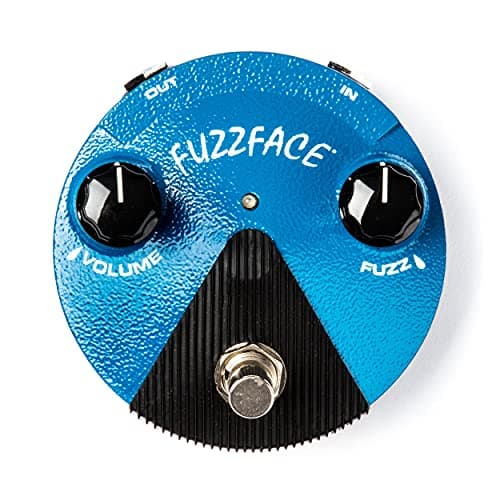
Top pick: Dunlop Fuzz Face Mini Silicon
#ad How we’re funded · price as of October 17, 2026

Best pedal platform amps
Headroom, not gain. Why solid state is genuinely competitive here, and which amps have the jacks that matter.
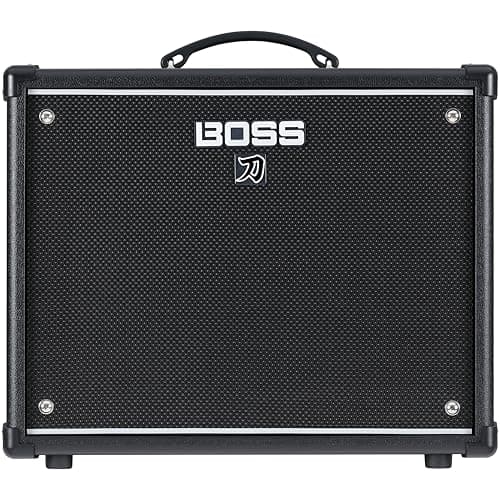
Best Pedal Platform pick: BOSS KATANA-50 GEN 3