Best modulation pedals
Chorus, phaser, flanger and tremolo get shelved together and share almost nothing mechanically. Knowing which one you want is most of the decision.
Fret & Fuzz earns a commission when you buy through the links on this page. It costs you nothing and it does not decide what we rank. How we’re funded.
We have not played this gear. Every pick below is chosen from published manufacturer specifications and the arithmetic set out in how we research, which you can re-run yourself.
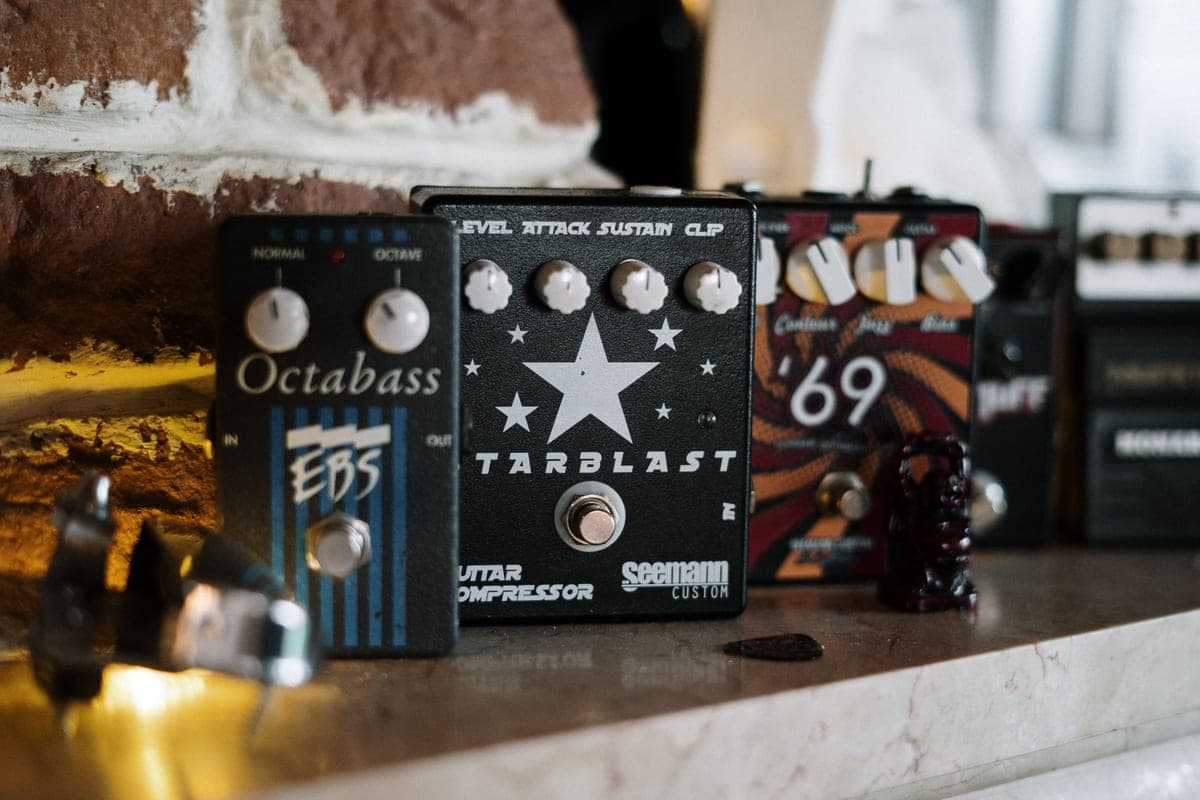
Chorus detunes a short-delayed copy and mixes it back, which thickens the note. A phaser sweeps notches through the frequency response. A flanger does what a chorus does with a much shorter delay plus feedback, producing a metallic sweep. A tremolo just modulates volume. Four mechanisms, four different results, and picking the mechanism is most of the decision.
Modulation is the smallest of the effect categories and the one where the labels least describe the mechanism. Almost every disappointing modulation purchase is somebody buying one of these four expecting another.
Best modulation pedals
| # | Product | Best for | Price |
|---|---|---|---|
| 01 | 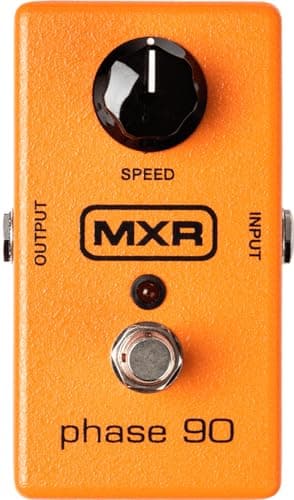 MXR Phase 90 Four all-pass stages sweeping notches through your signal, with one Speed control and nothing else. | The reference phaser, if you accept one knob | $99.99 · Check price #ad How we’re funded · price as of October 18, 2026 |
| 02 | 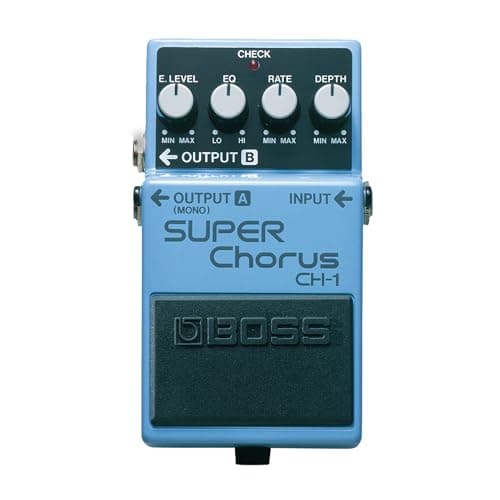 BOSS CH-1 Super Chorus Four controls including an EQ knob, plus a stereo output — more control than most chorus pedals offer. | A bright, clean chorus with stereo out | |
| 03 | No photo Electro-Harmonix Small Clone Analog Chorus A bucket-brigade circuit with a Rate knob and a two-position Depth switch. That is the whole interface. | Analog chorus with almost no controls | |
| 04 | 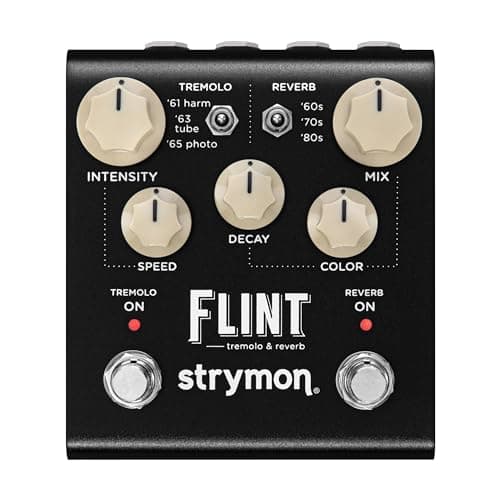 Strymon Flint Tremolo & Reverb Three tremolo voicings alongside three reverbs, with a published 300 mA minimum supply requirement. | Tremolo, which is the underrated one | $349.00 · Check price #ad How we’re funded · price as of October 18, 2026 |
| ! | No photo TC Electronic Flashback 2 Delay A delay with modulation options — which is not the same as a modulation pedal. Skip this one — see why below | Not a modulation pedal, and often bought as one |
Rows link to the full write-up further down this page. Prices come from the live price layer only — where there is no live figure the button reads “Check price” rather than showing a remembered number.
02The four mechanisms
| Effect | Mechanism | What you hear | Typical use |
|---|---|---|---|
| Chorus | Short delayed copy, pitch-modulated, mixed with the dry | Thickening, a slight detune, width | Clean arpeggios, adding size to a thin tone |
| Flanger | Very short delayed copy with feedback | Metallic sweeping, jet-like | Dramatic effect passages, not usually always-on |
| Phaser | All-pass filter stages creating moving notches | Swooshing without the metallic edge | Funk rhythm, adding motion to sustained chords |
| Tremolo | Amplitude modulation only | Volume pulsing | Surf, slow atmospheric parts, rhythmic feel |
| Vibrato | Pitch modulation with no dry signal mixed in | Genuine pitch wobble | Rare as a dedicated pedal; a chorus without the dry path |
The one worth noting is the chorus/vibrato relationship. A chorus is a vibrato with the dry signal mixed back in. That is the entire difference, and it is why some chorus pedals have a switch that removes the dry path.
MXR Phase 90
The reference phaser, if you accept one knob
A phaser splits your signal, shifts the phase of one copy through a series of all-pass filter stages, and recombines them. Where the copies cancel you get a notch; sweeping the filters sweeps the notches, and that movement is the effect.
The Phase 90 has one knob. There is no depth control and no mix control, which means you cannot dial a subtle phase — you get the Phase 90 amount or you get nothing. For a lot of players that is the appeal.
Dunlop publishes no current draw or impedance figures. Powering it is straightforward regardless: any 9 V supply.
| Controls | One Speed knob |
|---|---|
| Power | 9 V battery, Dunlop ECB003 adapter, or a DC Brick / Iso-Brick supply |
| Electrical data | No current-draw or impedance figure is published for this pedal, so none is stated here. |
| What it does not do | One knob means no depth control and no mix control. If you want a subtle phase you cannot dial it — you get the Phase 90 amount or nothing. |
Specs from MXR Phase 90 product page. We have not used this unit.
#ad How we’re funded · price as of October 18, 2026
BOSS CH-1 Super Chorus
A bright, clean chorus with stereo out
Chorus takes a delayed copy of your signal, detunes it slightly with an LFO, and mixes it back. The delay time is short — a few tens of milliseconds — which is why you hear thickening rather than a distinct repeat.
The CH-1 gives you E.Level, EQ, Rate and Depth. The EQ control is the differentiator: most chorus pedals give you rate and depth and nothing to shape the result.
It is a bright, clearly digital-voiced chorus. If you want the warmer, murkier analog bucket-brigade sound, that is the Small Clone below.
| Controls | E.Level, EQ, Rate, Depth |
|---|---|
| Outputs | Mono and stereo outputs |
| Power | 9 V battery or PSA-series adaptor |
| Electrical data | No current-draw or impedance figure is published for this pedal, so none is stated here. |
| What it does not do | No adaptor included. It is a bright, clearly digital-voiced chorus — if you are chasing a warm analog bucket-brigade sound, this is not that circuit. |
Specs from BOSS CH-1 product page. We have not used this unit.
Electro-Harmonix Small Clone Analog Chorus
Analog chorus with almost no controls
Analog chorus uses the same bucket-brigade delay line an analog delay does, at a much shorter delay time, with an LFO modulating the clock rate. The high-frequency loss inherent to the delay line is why analog chorus sounds warmer and murkier than digital.
Rate knob, Depth switch, mono output. No mix control, which means it is always doing a fixed amount — easy to use, impossible to make subtle.
EHX publishes no electrical figures for it. It runs from a 9 V battery or any standard supply.
| Controls | Rate knob, Depth switch |
|---|---|
| Circuit | Analog bucket-brigade chorus |
| Power | 9 V battery or a 9 V DC center-negative supply |
| Electrical data | No current-draw or impedance figure is published for this pedal, so none is stated here. |
| What it does not do | A two-position depth switch instead of a knob, and no mix control. Mono only — there is no stereo spread to be had. |
Specs from Electro-Harmonix Small Clone product page. We have not used this unit.
Strymon Flint Tremolo & Reverb
Tremolo, which is the underrated one
The number9 V DC, minimum 300 mA — check your supply's highest single output before buying.
Tremolo modulates volume, not pitch or phase. That makes it the simplest modulation mechanically and the one that changes a part's feel most — a slow deep tremolo under a sustained chord does something no chorus can.
The Flint offers three tremolo circuits with different characters plus three reverbs, at 24-bit/96 kHz, with selectable true or buffered bypass.
The 300 mA minimum is published and it is the constraint. Several common isolated supplies top out at 250 mA per output.
| Effects | Three tremolo voicings and three reverb voicings in one enclosure |
|---|---|
| Power requirement | 9 V DC center-negative, minimum 300 mA (supply not included) |
| Input impedance | 1 M ohm |
| Output impedance | 100 ohm |
| Converters | 24-bit / 96 kHz A/D and D/A |
| Bypass | Selectable relay true bypass or buffered bypass |
| Size | 4.5" deep x 4" wide x 2.4" tall (11.43 x 10.16 x 6.1 cm) |
| What it does not do | No power supply in the box, and the 300 mA minimum means most cheap bricks cannot run it. There is no delay in here and no way to reorder the tremolo and reverb. |
Specs from Strymon Flint product page. We have not used this unit.
#ad How we’re funded · price as of October 18, 2026
TC Electronic Flashback 2 Delay
Not a modulation pedal, and often bought as one
We are not picking this one in a modulation roundup. It is a good delay and its modulated delay modes produce a chorus-like thickening, which is why people reach for it here.
The difference is that a modulated delay modulates the repeats. A chorus modulates a copy of the dry signal at a very short delay time and mixes it back at full level. The first adds movement to an echo; the second thickens the note you are playing right now.
If you want the note itself to shimmer, buy a chorus. If you want your delay repeats to move, the Flashback's modulation is exactly right and you do not need a separate pedal. The delay roundup covers it there.
| Controls | Delay, Feedback, Level, delay-type selector, subdivision selector |
|---|---|
| Tap tempo | MASH pressure-sensitive footswitch doubles as tap and as an expression control |
| Presets | TonePrint slots loaded over USB or by holding the guitar to the pickup |
| Power | 9 V DC center-negative |
| Electrical data | No current-draw or impedance figure is published for this pedal, so none is stated here. |
| What it does not do | No power supply included. The TonePrint system needs a phone or a computer to be worth anything — out of the box you get the front-panel modes only. |
Specs from TC Electronic Flashback 2 product page. We have not used this unit.
03Where modulation goes
After your drives, before delay and reverb. Modulating a distorted signal is the conventional order and it is what most records do. Modulating a clean signal and then distorting it produces a very different, more chaotic result — a legitimate effect, not the default.
A phaser after a delay is one exception worth knowing: it modulates the repeats as well as the dry note, which turns a simple echo into something moving. Pedal order covers the reasoning and the exceptions in full.
04How much modulation is too much
More than you can consciously hear, in most cases. Modulation set to the point where it is obviously an effect tends to date a recording and fight with anything else moving in the arrangement. Set to the point where switching it off sounds flat, it does its job invisibly.
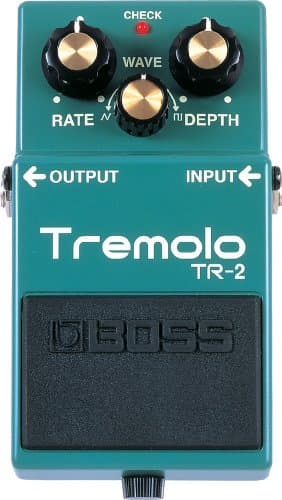
The pedals with no depth or mix control — the Phase 90, the Small Clone — take that decision away from you. That is either a virtue or the reason to buy something else, and it is worth deciding which before you spend. Tremolo is the one member of this group with a page of its own, because waveshape control varies more between tremolo pedals than anything does across the rest of the category — best tremolo pedals is organized around it. The two that get confused before purchase have a page too: chorus vs phaser covers why one adds a detuned voice and the other filters the one you have. For the cheapest route into a real tremolo, our BOSS TR-2 review covers what its three knobs do and do not reach.
Frequently asked questions
+ What is the difference between chorus and phaser?
+ Do I need a chorus pedal?
+ Where does modulation go in the chain?
+ Is tremolo the same as vibrato?
Sources
Related on Fret & Fuzz
Chorus vs phaser
One adds a detuned second voice; the other sweeps notches through the one you have. The control layout gives it away.
Top pick: BOSS CH-1 Super Chorus
BOSS TR-2 review
Three knobs, 25 mA, and a Wave control that sweeps triangle to square. No tap tempo and no published rate range.
Top pick: BOSS TR-2 Tremolo
Best tremolo pedals
Waveshape is the specification that separates tremolo pedals. Three compared, plus the one already inside your multi-effects unit.
Best Tremolo pick: BOSS TR-2 Tremolo

Best delay pedals
Maximum delay time and current draw settle most of this category. Four delays on their published figures.
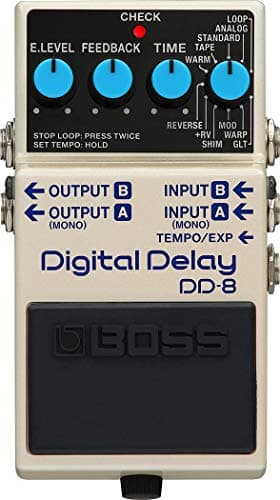
Best Delay pick: BOSS DD-8 Digital Delay

Best reverb pedals
Check your amp first. If you do need a reverb pedal, one multi-mode unit covers every type — here is what the modes actually differ on.
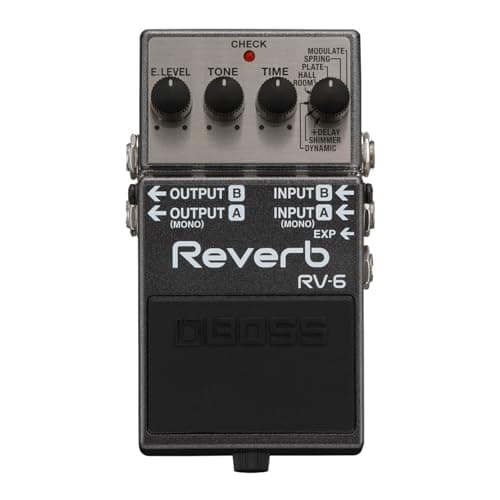
Best Reverb pick: BOSS RV-6 Reverb

Guitar pedal types explained
Five families defined by what they do to the waveform, and the map that turns a hundred-brand problem into five decisions.
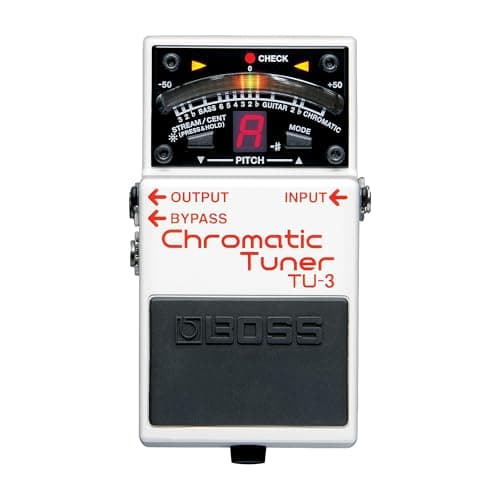
Top pick: BOSS TU-3 Chromatic Tuner
Best guitar pedals for shoegaze
Fuzz, modulation and reverb in the order that decides the sound — with the input-impedance figures that explain why fuzz goes first.
Best for Shoegaze pick: Electro-Harmonix Big Muff Pi
#ad How we’re funded · price as of October 18, 2026