Pedal gain vs amp gain
Both produce distortion. One does it once, the other does it several times with EQ in between, and that is why they do not sound the same at high gain.
Fret & Fuzz earns a commission when you buy through the links on this page. It costs you nothing and it does not decide what we rank. How we’re funded.
We have not played this gear. Every pick below is chosen from published manufacturer specifications and the arithmetic set out in how we research, which you can re-run yourself.
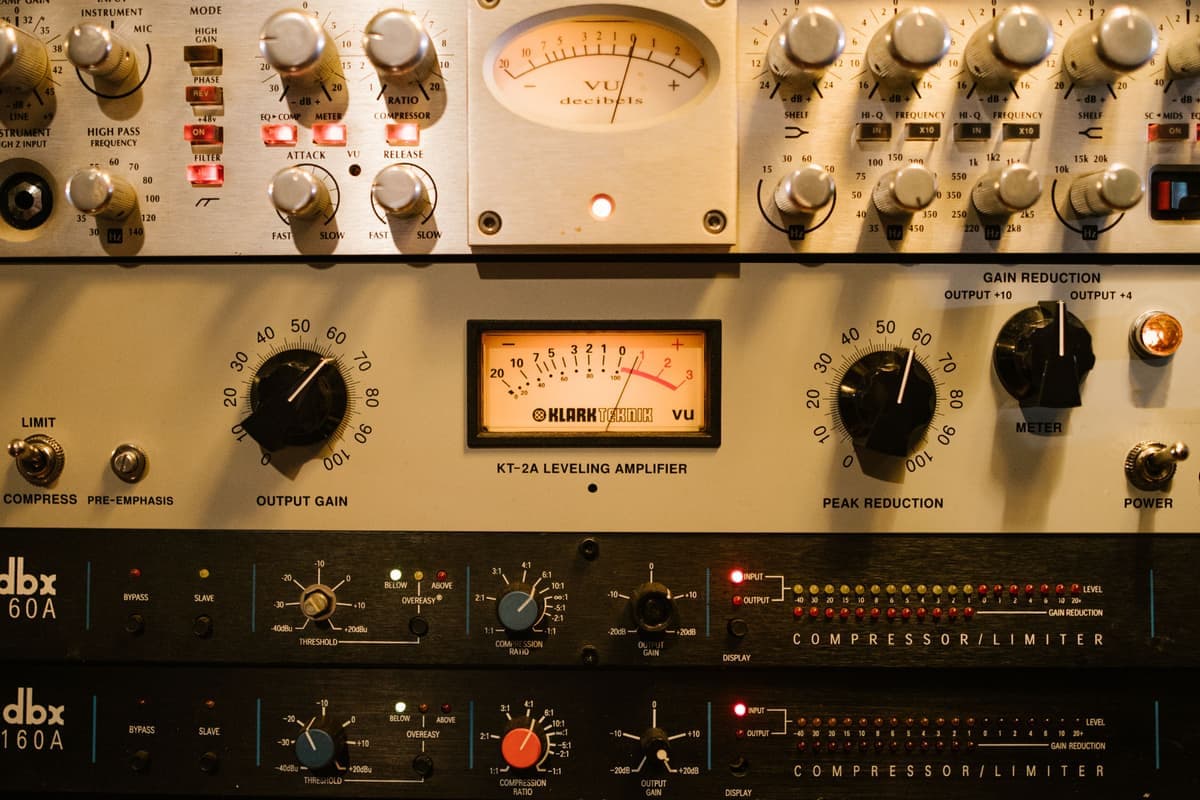
A distortion pedal clips your signal at one point and then hands the result to the amp. An amp's gain channel distorts across several cascaded stages with filtering between them, so the signal is shaped, clipped, shaped again and clipped again. That structural difference is why pedal distortion into a clean amp sounds flatter at high gain, and why it is close to irrelevant at moderate gain.
Neither is better. They are different mechanisms, and knowing which one you are using tells you what to do when it is not working.
01One stage versus several
In a pedal, the signal enters, gets amplified, hits a clipping stage, passes through a tone circuit, and leaves. There is one point at which the waveform is flattened.
In a high-gain amp preamp there are typically three or four valve gain stages in series. Each adds a moderate amount of gain and some distortion, and between them sit filters that shape the frequency response. The signal that reaches stage three has already been distorted twice and filtered twice.
The audible consequence is articulation under dense, fast, low-register playing. Filtering between stages removes low-frequency content before the next stage clips it, which is exactly why a palm-muted chug stays defined rather than turning into mush.
The two routes, and the pedal that bridges them
| # | Product | Best for | Price |
|---|---|---|---|
| 01 | 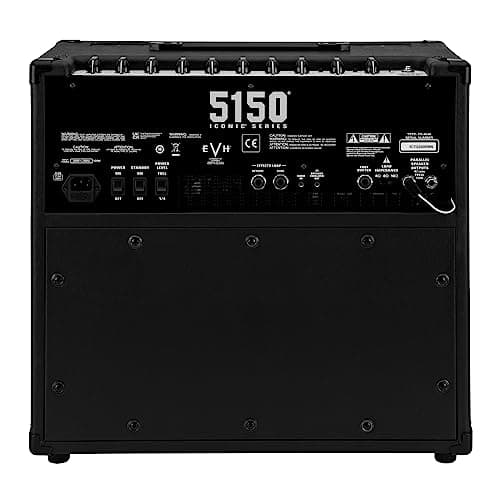 EVH 5150 Iconic Series 15W 1x10 combo Two channels with extra gain voicings, distorting progressively across the preamp. | Amp gain — cascaded preamp stages | $699.99 · Check price #ad How we’re funded · price as of October 17, 2026 |
| 02 | 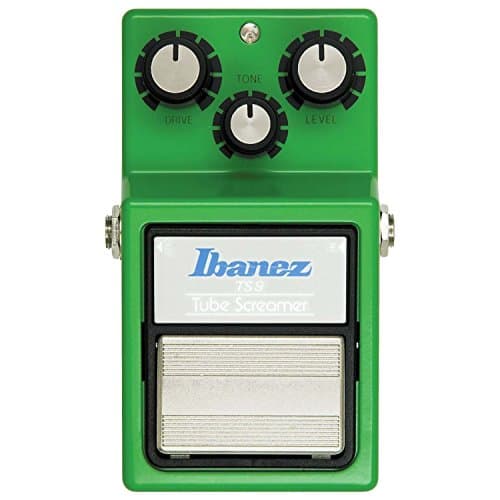 Ibanez TS9 Tube Screamer Cuts bass, boosts mids and compresses, which tightens an amp that is already distorting. | Pedal gain used correctly — shaping what the amp clips | $99.99 · Check price #ad How we’re funded · price as of October 17, 2026 |
| 03 | 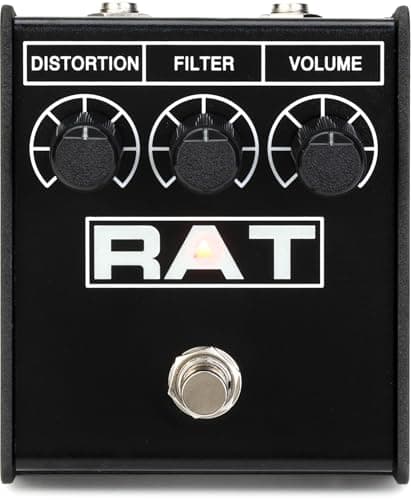 Pro Co RAT 2 Hard clipping to ground with a low-pass filter — one stage, executed well. | Pedal gain as the source, done as well as a pedal does it | $86.00 · Check price #ad How we’re funded · price as of October 17, 2026 |
Rows link to the full write-up further down this page. Prices come from the live price layer only — where there is no live figure the button reads “Check price” rather than showing a remembered number.
03The comparison
| Pedal gain | Amp gain | |
|---|---|---|
| Clipping points | One | Three or four cascaded stages |
| Filtering between stages | None | Yes — this is the key difference |
| Articulation at high gain | Lower — content compounds | Higher — each stage sees a filtered signal |
| Available at low volume | Yes | Yes, if the preamp does the distorting |
| Power-section interaction | Only if the amp is also driven | Yes, when the amp is driven |
| Cost | Low | The price of the amp |
| Portability | Fits in a bag | Does not |
| Best at | Moderate gain, texture, pushing an amp | High gain, tight low end, dense playing |
04Why stacking two pedals rarely helps
It is tempting to reason that if one clipping stage is limiting, two must be better. In practice two pedals in series usually sound worse, because there is no filtering between them — the second pedal clips a signal that is already compressed and already carrying the first pedal's harmonic content.
What does work is one pedal shaping the input of another, or of an amp: a low-gain, mid-humped drive with the gain low and the level high, feeding a high-gain stage. That is EQ and level, not a second clipping stage, and it is the mechanism behind every 'tighten your amp with a Tube Screamer' recommendation.
EVH 5150 Iconic Series 15W 1x10 combo
Amp gain — cascaded preamp stages
The number15 W with a quarter-power switch, 2 x ECC83, 1 x 6L6, effects loop.
Cascaded gain stages are the structural difference. Each stage adds moderate distortion and there is filtering between them, so the signal is shaped, distorted, shaped again and distorted again.
That progressive treatment is why an amp's gain channel stays articulate under fast palm-muted playing where a single pedal clipping stage turns into an undifferentiated buzz.
It also has a speaker-emulated DI with power amp mute, so the preamp is usable silently.
| Power | 15 W, with a quarter-power switch |
|---|---|
| Speaker | 1 x 10" |
| Tubes | 2 x ECC83 preamp, 1 x 6L6 power |
| Channels | Two, each with an extra gain voicing (Overdrive on green, Burn on red) |
| Extras | Effects loop, dual parallel speaker outputs, speaker-emulated DI with power amp mute |
| Weight | 38.2 lb |
| Included | One-button footswitch |
| What it does not do | The 10" speaker is the limiting factor on the low end — this amp sounds materially different through a 4x12. No reverb. |
Specs from EVH 5150 Iconic Series 15W 1x10 combo product page. We have not used this unit.
#ad How we’re funded · price as of October 17, 2026
Ibanez TS9 Tube Screamer
Pedal gain used correctly — shaping what the amp clips
The number8 mA at 9 V. Ibanez publishes no impedance figures.
The most effective use of a drive pedal with a high-gain amp is not to add distortion. It is to change what the amp's gain stages are being asked to clip.
A Tube Screamer with the Drive low and the Level high is functioning as an EQ and a compressor: less bass into the preamp means a tighter distortion, and more mids means more of the frequency range the power section responds to.
That is the whole 'Tube Screamer in front of a cranked amp' technique, and it works because the pedal is not the source of the gain.
| Controls | Drive, Tone, Level |
|---|---|
| Current draw | 8 mA at 9 V |
| Power | One 9 V battery (006P) or a 9 V DC center-negative adapter |
| Jack layout | Input on the right side, output on the left |
| Impedance | Not published by Ibanez |
| What it does not do | No power supply in the box, no true bypass (the TS9 is buffered), and no bass control — the tone stack is a single treble-tilt knob over a fixed mid hump. |
Specs from Ibanez TS9 product page. We have not used this unit.
#ad How we’re funded · price as of October 17, 2026
Pro Co RAT 2
Pedal gain as the source, done as well as a pedal does it
If the distortion has to come from a pedal, the RAT is about as good as a single clipping stage gets: consistent, articulate, and with a filter that lets you control the high-order harmonic content the hard clipping generates.
It will still be one stage. Under fast low-register playing you will hear the difference against a cascaded preamp, and no amount of adjustment closes it.
For rhythm and lead in most contexts, one well-implemented stage is entirely sufficient — this matters most for high-gain, low-register playing.
| Controls | Distortion, Filter, Volume |
|---|---|
| Filter control | Runs backwards from a normal tone knob — turning it up removes treble |
| Power | 9 V battery or a 9 V DC supply (adapter sold separately) |
| Enclosure | Steel, with the battery compartment accessible without tools |
| Electrical data | No current-draw or impedance figure is published for this pedal, so none is stated here. |
| What it does not do | No power supply included. There is no clean-boost side to it — at low Distortion the RAT is still a distortion, and the Filter control confuses everyone exactly once. |
Specs from Pro Co RAT 2 product page. We have not used this unit.
#ad How we’re funded · price as of October 17, 2026
05Where the effects loop comes in
If your gain comes from the amp's preamp, your delay and reverb need to go after that preamp — which is what the effects loop is for. In front of the amp they would be distorted by the preamp, and distorted delay repeats become mush.
If your gain comes from pedals and the amp stays clean, no loop is needed: the whole chain in front of the amp is already in the right order. That is why a pedal-platform setup does not need a loop and an amp-distortion setup does. Pedal order covers the whole chain.
06Which route to take
- Moderate gain, texture, several different dirt sounds — pedals. Cheaper, more flexible, and the structural difference barely shows at these levels.
- High gain, tight low end, fast low-register playing — amp gain. The filtering between stages is doing something a pedal cannot.
- Both — the amp for the core sound, a pedal in front to shape and tighten it. This is what most high-gain rigs actually do.
- Neither is working — check the speaker before buying anything else. See best amps for metal.
Frequently asked questions
+ Is amp distortion better than pedal distortion?
+ Why does my distortion pedal sound thin into a clean amp?
+ Should I use a distortion pedal with a high-gain amp?
+ Can I stack two distortion pedals?
Sources
Related on Fret & Fuzz
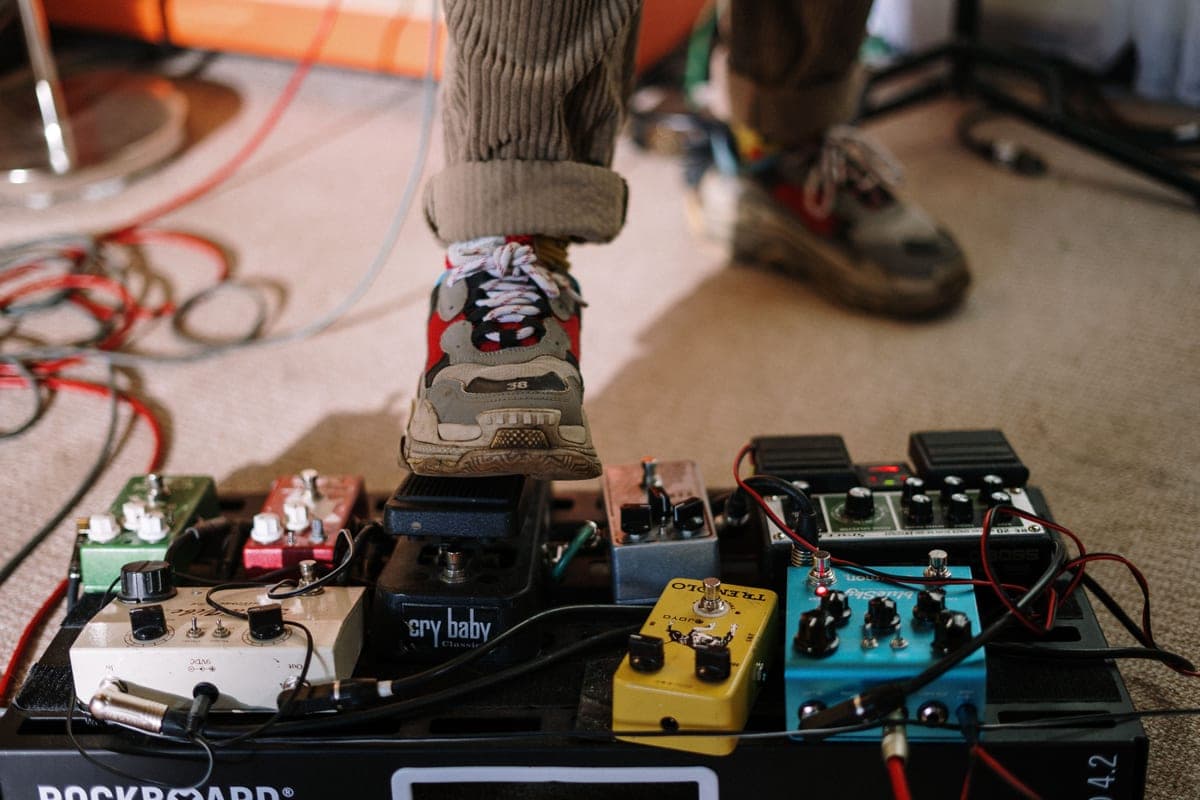
Overdrive vs distortion vs fuzz
How hard, how symmetrically, and with what EQ around it. The real distinctions, and why the box labels are unreliable.
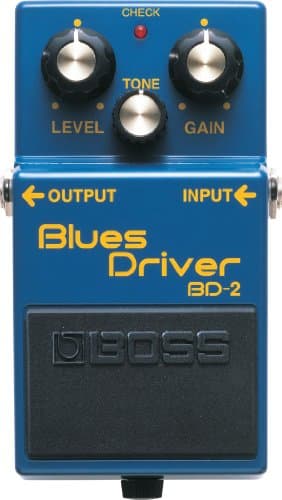
Top pick: BOSS BD-2 Blues Driver
#ad How we’re funded · price as of October 17, 2026
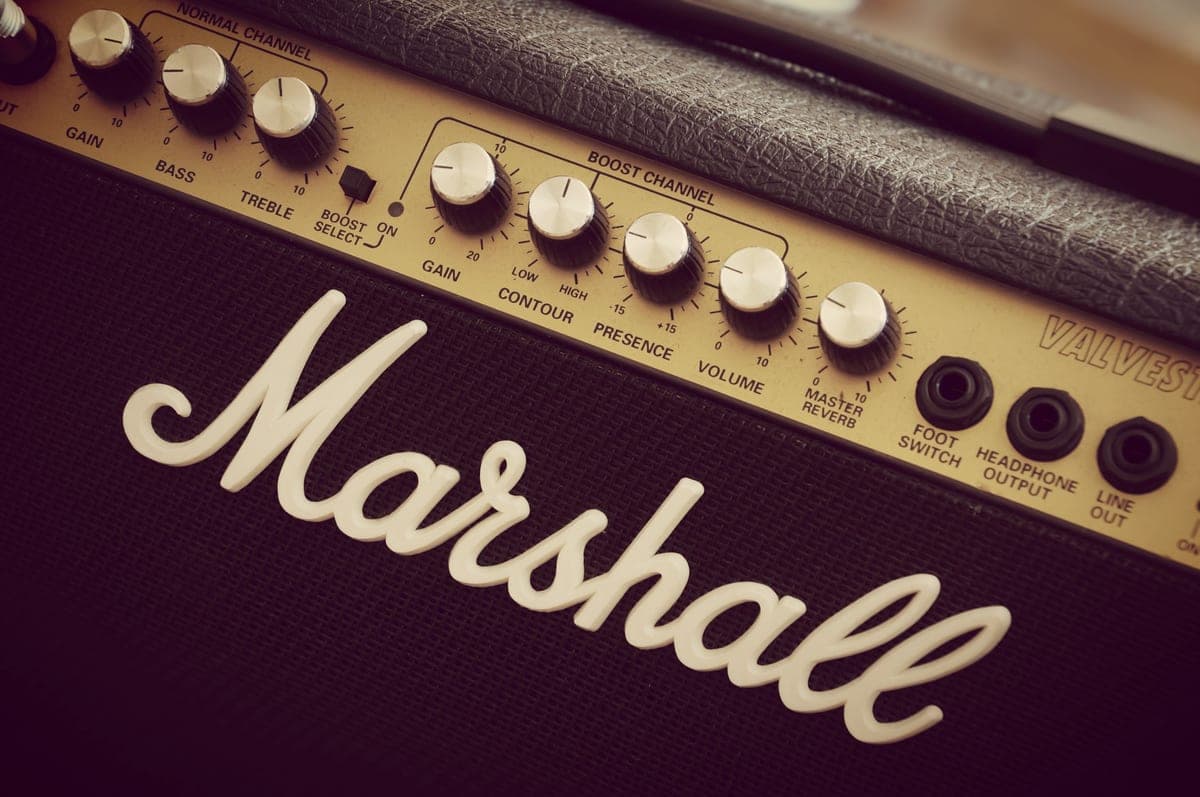
Best amps for metal
Cascaded preamp gain and control below 300 Hz. Why a pedal into a clean amp gets close and not there.
Best Amp for Metal pick: EVH 5150 Iconic Series 15W 1x10 combo
#ad How we’re funded · price as of October 17, 2026
Tube vs solid state amps
Reframed as a question about where the distortion happens, this argument has a clear answer for any given player.
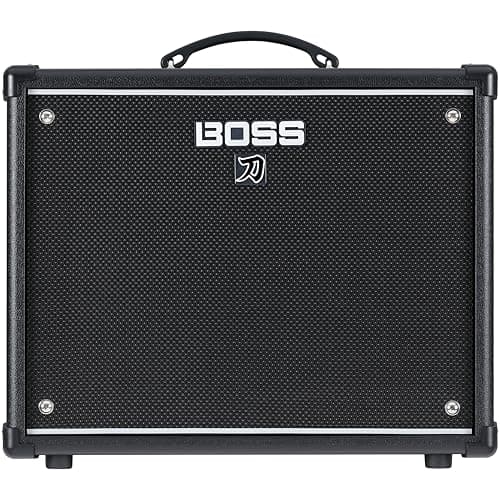
Top pick: BOSS KATANA-50 GEN 3
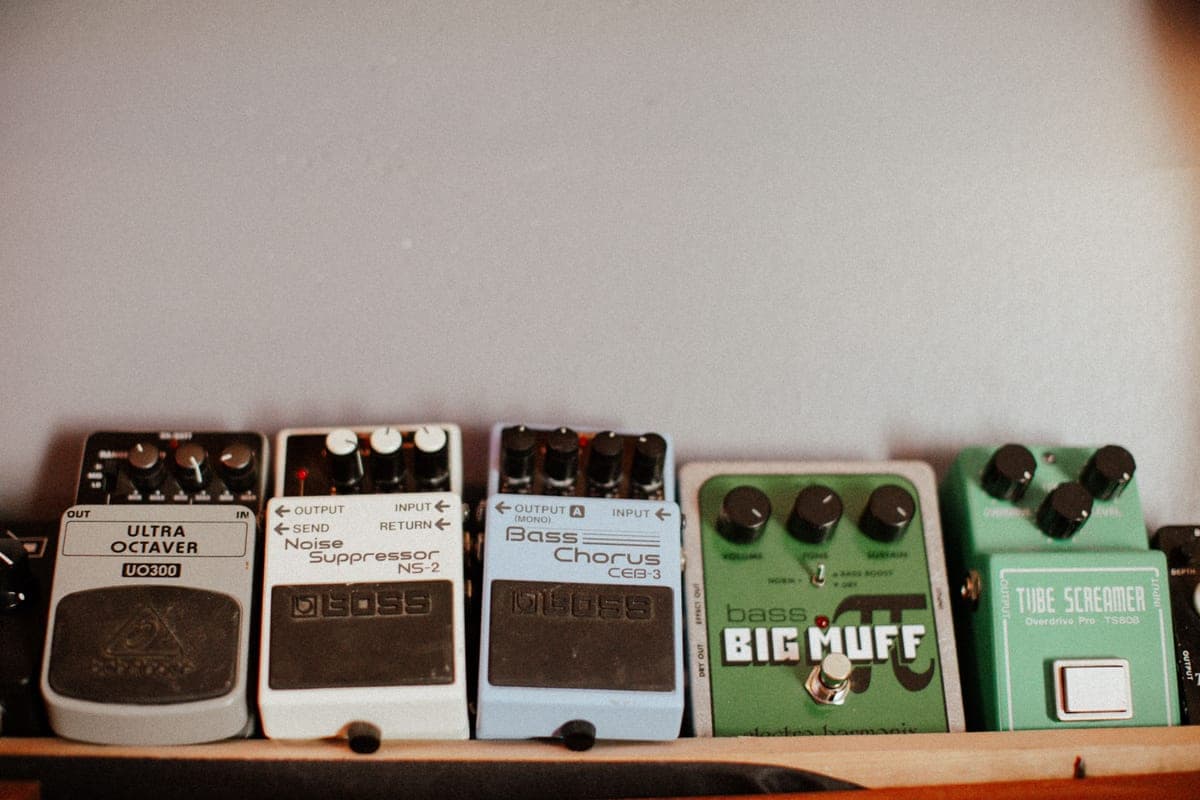
Best overdrive pedals
Six overdrives sorted by circuit family, with the published clipping topology and impedance figures that separate them.
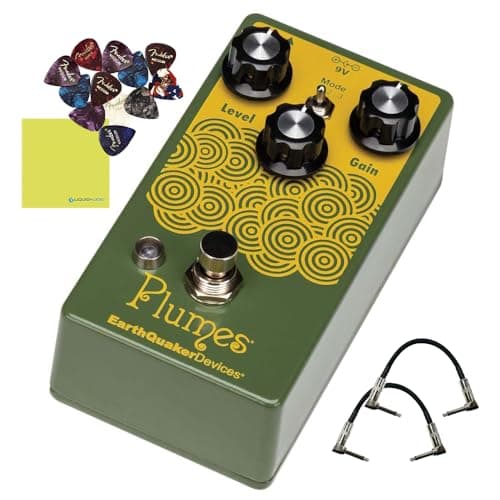
Best Overdrive pick: EarthQuaker Devices Plumes
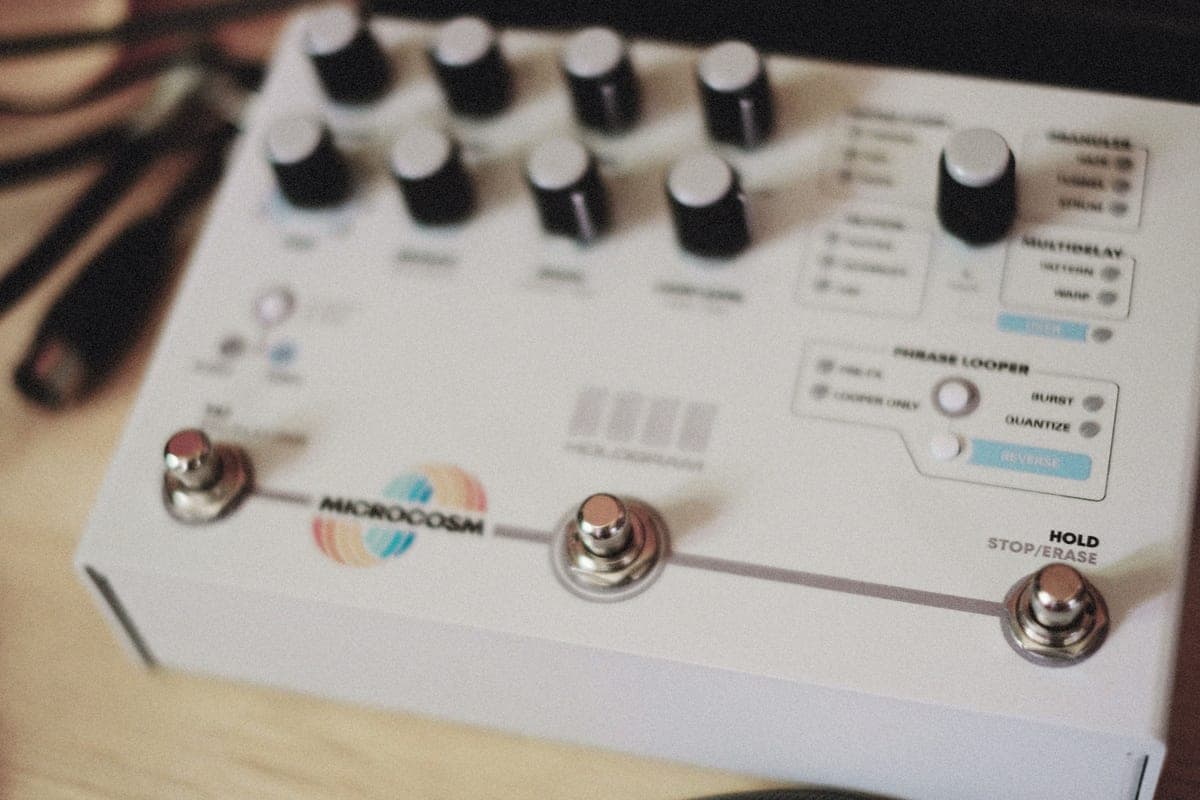
Pedal order: what changes and what does not
Two placements are load-bearing and the rest are preference. Which is which, and the impedance figures behind the first one.
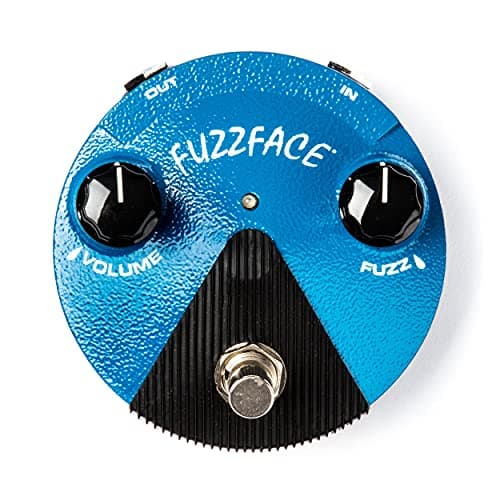
Top pick: Dunlop Fuzz Face Mini Silicon
#ad How we’re funded · price as of October 17, 2026