Best amps for metal
A distortion pedal into a clean amp will get you close and it will not get you there. Here is what the amp has to do that the pedal cannot.
Fret & Fuzz earns a commission when you buy through the links on this page. It costs you nothing and it does not decide what we rank. How we’re funded.
We have not played this gear. Every pick below is chosen from published manufacturer specifications and the arithmetic set out in how we research, which you can re-run yourself.
For metal you want the gain to come from cascaded preamp stages rather than from a single pedal clipping stage, and you want control over the low end below about 300 Hz. A distortion pedal into a clean amp clips at one point and produces a flatter, less articulate result under fast palm-muted playing. That is the difference people hear and cannot fix with more gain.
A noise gate matters as much as the amp — see best pedals for metal, which puts the gate ahead of the distortion pedal for exactly this reason.
Best amps for metal
| # | Product | Best for | Price |
|---|---|---|---|
| 01 | 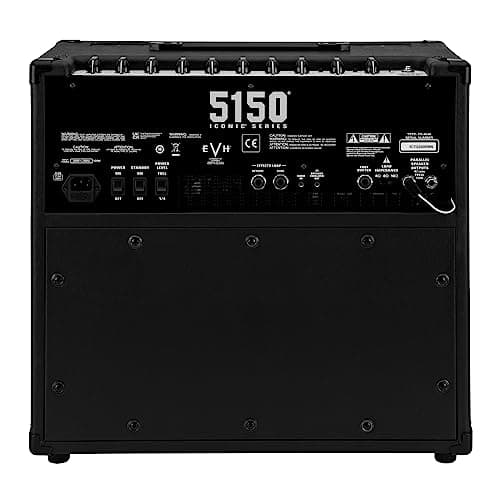 EVH 5150 Iconic Series 15W 1x10 combo Two channels with extra gain voicings, a quarter-power switch and a speaker-emulated DI. | Real high-gain valve preamp structure at the lowest price | $699.99 · Check price #ad How we’re funded · price as of October 17, 2026 |
| 02 | 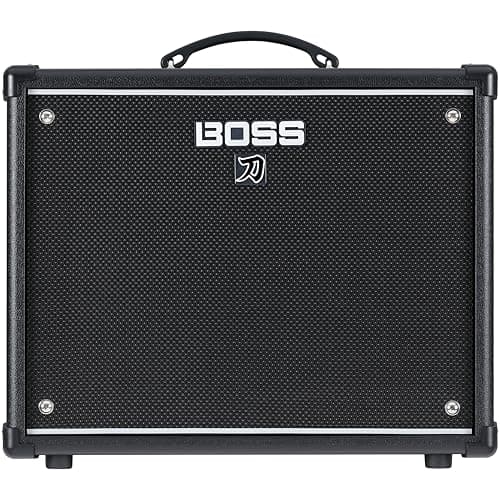 BOSS KATANA-100 GEN 3 100 W with a four-position Power Control, Send and Return jacks and the Brown character. | High gain with an effects loop and real volume | $449.99 · Check price #ad How we’re funded · price as of October 17, 2026 |
| 03 | No photo Marshall DSL20CR Two EL34 channels with independent gain, plus a Resonance control for the low end. | British-voiced gain with a half-power switch | |
| 04 | No photo Blackstar HT-5R MkII 5 W of valve power, two channels, ISF, and a speaker-emulated line output. | Valve gain in a flat, with a usable silent output | |
| ! | 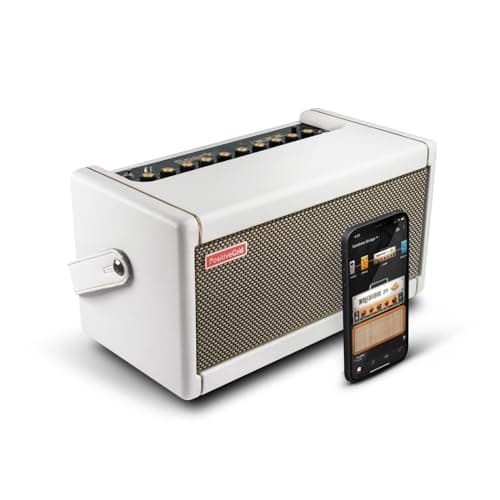 Positive Grid Spark 40 Good high-gain models, played back through two 4-inch speakers. Skip this one — see why below | Not this, and worth saying why explicitly |
Rows link to the full write-up further down this page. Prices come from the live price layer only — where there is no live figure the button reads “Check price” rather than showing a remembered number.
02Why cascaded gain sounds different
A distortion pedal has one clipping stage. Everything above a threshold is flattened at that one point, and the frequency shaping happens around it.
A high-gain valve preamp has several gain stages in series, each adding a moderate amount of distortion, with filtering between them. The signal is shaped, distorted, shaped again and distorted again. That progressive treatment is why the result stays articulate under fast, low-register playing rather than turning into a single undifferentiated buzz.
It is also why stacking two distortion pedals rarely works — two clipping stages with no filtering between them compound rather than refine. Pedal gain vs amp gain has the full comparison.
03The low-end problem
| Symptom | Cause | Fix |
|---|---|---|
| Palm mutes sound loose and flubby | Too much low frequency into the gain stages | Cut lows before the distortion — an EQ in front, or the amp's Resonance control |
| Chords turn to mush | Too much gain, or gain from a single clipping stage | Less gain, or an amp with cascaded preamp stages |
| Disappears in a band mix | Scooped mids | Bring the mids back up — it will sound wrong alone and right with the band |
| Hiss between phrases | High gain amplifying the noise floor | A gate with a send/return loop |
| Thin through a small speaker | The speaker cannot reproduce the low end | A 12-inch speaker, or an external cabinet |
EVH 5150 Iconic Series 15W 1x10 combo
Real high-gain valve preamp structure at the lowest price
The number15 W with a quarter-power switch (about -6 dB), 2 x ECC83, 1 x 6L6, 38.2 lb.
EVH publishes two independent channels each with an additional gain voicing — an Overdrive button on the green channel and a Burn button on the red — plus an effects loop, dual parallel speaker outputs and a speaker-emulated DI with power amp mute.
The gain structure is what matters. Multiple cascaded valve gain stages distort progressively across the preamp, which is why the result stays articulate under fast palm-muted playing in a way a single pedal clipping stage does not.
The 10-inch internal speaker is the limiting factor on low-end weight, and the dual speaker outputs are the answer — through a 4x12 this is a different amp.
| Power | 15 W, with a quarter-power switch |
|---|---|
| Speaker | 1 x 10" |
| Tubes | 2 x ECC83 preamp, 1 x 6L6 power |
| Channels | Two, each with an extra gain voicing (Overdrive on green, Burn on red) |
| Extras | Effects loop, dual parallel speaker outputs, speaker-emulated DI with power amp mute |
| Weight | 38.2 lb |
| Included | One-button footswitch |
| What it does not do | The 10" speaker is the limiting factor on the low end — this amp sounds materially different through a 4x12. No reverb. |
Specs from EVH 5150 Iconic Series 15W 1x10 combo product page. We have not used this unit.
#ad How we’re funded · price as of October 17, 2026
BOSS KATANA-100 GEN 3
High gain with an effects loop and real volume
The number100 W rated, 77 W consumption, effects loop, Line Out, USB-C, 14.8 kg.
The effects loop is the reason to choose the 100 over the 50 for this application, and it survives the generation change: the KATANA-100 GEN 3 publishes Send and Return jacks and the 50 still has none. High-gain playing wants the delay and reverb after the preamp.
Brown is one of the six amp characters and is BOSS's high-gain voicing. Five simultaneous effects sections with three variations each cover the gate, the EQ and the time effects without additional pedals, and there is a Line Out for the desk.
The cons: 100 W is more than a rehearsal room needs, though the Power Control's Standby, 0.5 W, Half and Max positions are why that is not a problem. At 14.8 kg it is heavy, the Line Out is a 1/4-inch jack rather than an XLR, and the GA-FC footswitch that unlocks channel and effects switching is sold separately.
| Rated power output | 100 W |
|---|---|
| Speaker | 30 cm (12") x 1 |
| Amp characters | Six — Acoustic, Clean, Pushed, Crunch, Lead and Brown — each with one selectable variation, which BOSS counts as 12 tones |
| Effects | Five independent sections — Booster, Mod, FX, Delay and Reverb — with three variations each |
| Power Control | Standby, 0.5 W, Half and Max |
| Effects loop | Send and Return jacks, plus a Power Amp In jack |
| Outputs | Line Out, stereo Phones, USB-C to a computer |
| Control jacks | Expression pedal (TRS) and GA-FC / CTL CH1 / CH2 SOLO (TRS) |
| Power consumption | 77 W |
| Weight | 14.8 kg (32 lb 11 oz) |
| What it does not do | No XLR output — the Line Out is a 1/4-inch jack, so a sound engineer needs a DI box to take it. No built-in IR loading. The GA-FC footswitch that unlocks channel and effects switching is sold separately, which is the purchase people forget when they buy this to gig with. |
Specs from BOSS KATANA-100 GEN 3 specifications. We have not used this unit.
#ad How we’re funded · price as of October 17, 2026
Marshall DSL20CR
British-voiced gain with a half-power switch
The number20 W with a 10 W setting, 3 x ECC83, 2 x EL34, 12-inch Celestion Seventy-80.
The Ultra Gain channel is a genuine high-gain valve channel, and the Resonance control specifically shapes low-frequency response in the power stage — which is the frequency range that decides whether a palm mute is tight or flubby.
EL34s are the mid-forward British voice. For a scooped modern metal sound that is not the natural choice; for anything with midrange presence it is exactly right.
The half-power switch is about 3 dB. It is a real reduction and it is not bedroom volume.
| Power | 20 W, with a half-power (10 W) setting |
|---|---|
| Speaker | 12" Celestion Seventy-80 |
| Preamp tubes | 3 x ECC83 |
| Power tubes | 2 x EL34 |
| Channels | Two — Classic Gain and Ultra Gain — with per-channel gain and volume |
| Extras | Digital reverb, effects loop, Resonance control |
| Weight | 35.2 lb |
| What it does not do | The half-power switch takes it to 10 W, not to bedroom volume — this is not a power scaler. The reverb is digital and there is only one reverb level per channel. |
Specs from Marshall DSL20CR product page. We have not used this unit.
Blackstar HT-5R MkII
Valve gain in a flat, with a usable silent output
Blackstar's ISF control sweeps between an American and a British tone character, which on a high-gain amp is a more useful control than a fixed mid knob.
The speaker-emulated line output makes silent practice and direct recording viable through the amp's own preamp, which is what most people playing this music at home actually need.
5 W of valve power is still not quiet at the volume where the power section works, and 5 W into a 12-inch speaker is not going to compete with a drummer.
| Power | 5 W, valve |
|---|---|
| Speaker | 12" |
| Channels | Two, footswitchable, with Blackstar's ISF tone control |
| Extras | Digital reverb, effects loop, USB audio out, speaker-emulated line output |
| What it does not do | 5 W of valve power is still too loud for a small flat at the volume where the power section works. The USB output is a convenience, not a studio interface. |
Specs from Blackstar HT-5R MkII product page. We have not used this unit.
Positive Grid Spark 40
Not this, and worth saying why explicitly
We are not picking this one for metal. The high-gain models in the Spark are perfectly credible and the amp is excellent at what it is designed for.
The specification that decides it is two 4-inch speakers. Metal tone depends heavily on low-frequency weight and on a speaker that stays controlled under a chugging palm mute, and 4-inch drivers cannot do either.
Through headphones the models are fine and this is a genuinely good practice tool. Through its own speakers, for this music, it is the wrong product.
| Power | 40 W class D |
|---|---|
| Speakers | 2 x 4" custom designed |
| Amp models | 33 |
| Effects | 43 — noise gate, compressor, distortion, modulation/EQ, delay, reverb |
| Connectivity | 1/4" guitar input, 1/8" aux in, 1/8" headphone, Bluetooth audio, USB recording interface |
| Size / weight | 350 x 180 x 190 mm, 5.2 kg |
| What it does not do | No effects loop and no external speaker output. The 4" drivers cannot move air the way a 12" can — this is a desk and sofa amp, not a rehearsal-room one. |
Specs from Positive Grid Spark 40 product page. We have not used this unit.
04How much wattage
Less than you think, because a high-gain amp is not relying on power-section distortion. The gain comes from the preamp, so the power section only needs to be loud enough — 15-20 W of valve power or 50 W of solid state through a 12-inch speaker is comfortable with a drummer.
That is the opposite of a vintage-voiced amp, where the power section is producing the character and wattage decides how loud you have to be to get it. Attenuator vs master volume covers the arithmetic.
05The speaker, again
A 4-inch driver cannot reproduce the low frequencies this music lives in. A 10-inch is thin. A 12-inch is the minimum for a credible sound, and a 4x12 is the reason recorded guitars sound the way they do. The EVH 5150 Iconic's dual parallel speaker outputs exist for exactly this reason — see combo vs head and cab.
Frequently asked questions
+ What is the best amp for metal?
+ Can I get a metal tone from a distortion pedal into a clean amp?
+ How many watts do I need for metal?
+ Why does my metal tone sound thin?
Sources
Related on Fret & Fuzz

Best guitar pedals for metal
The gate matters more than the distortion pedal. Picks judged on gate topology, EQ resolution and published current draw.
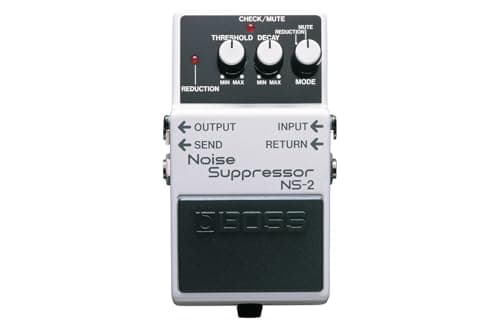
Best for Metal pick: BOSS NS-2 Noise Suppressor
#ad How we’re funded · price as of October 17, 2026
Best distortion pedals
Hard clipping is predictable; the tone control is where these pedals differ. Four distortions compared, plus one that is mislabelled.
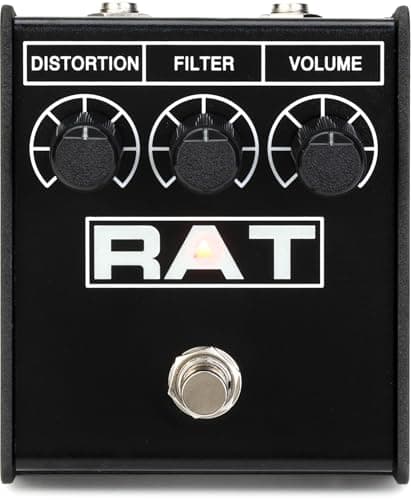
Best Distortion pick: Pro Co RAT 2
#ad How we’re funded · price as of October 17, 2026
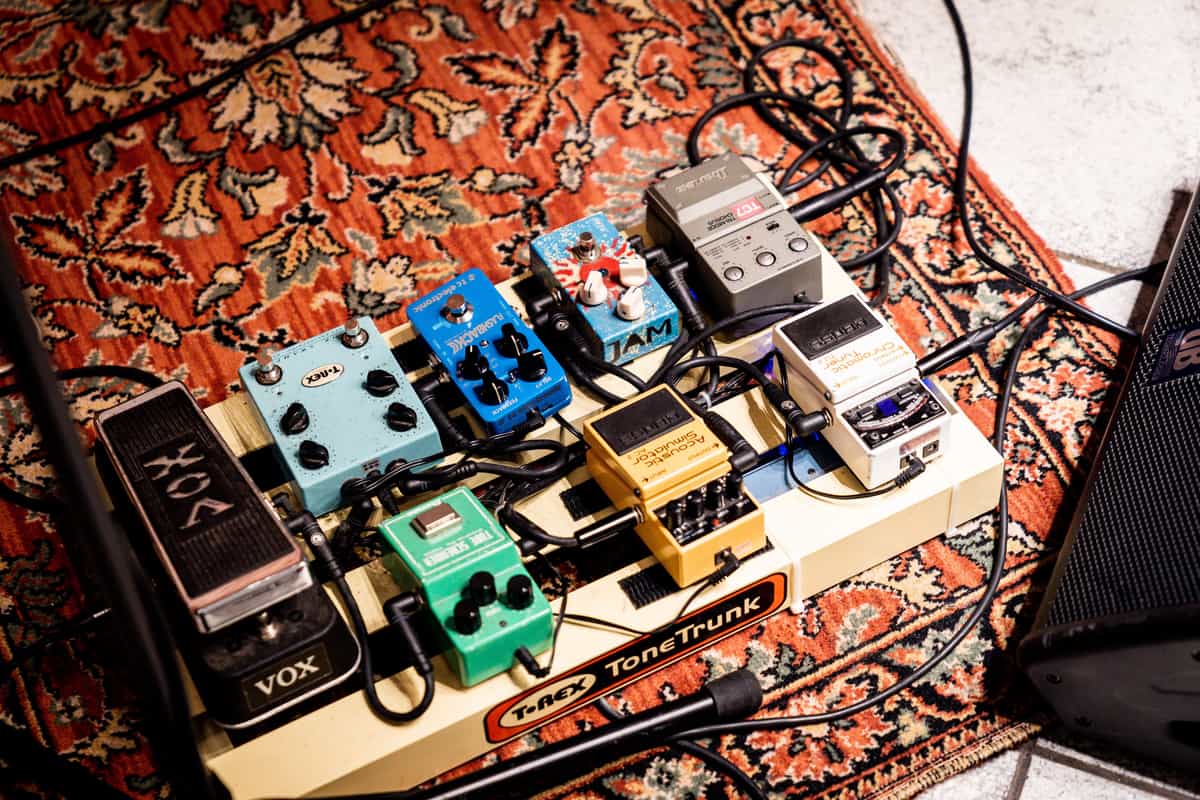
Best noise gate pedals
Which signal the gate listens to is the entire specification. Three gates compared, and the wiring that makes one of them work.
Best Noise Gate pick: BOSS NS-2 Noise Suppressor
#ad How we’re funded · price as of October 17, 2026
Pedal gain vs amp gain
One clipping point or several with filtering between them. Why that structural difference only shows at high gain.
Top pick: EVH 5150 Iconic Series 15W 1x10 combo
#ad How we’re funded · price as of October 17, 2026