What a pitch shifter pedal does
Two different products share this shelf and only one of them can play a harmony line in a key.
Fret & Fuzz earns a commission when you buy through the links on this page. It costs you nothing and it does not decide what we rank. How we’re funded.
We have not played this gear. Every pick below is chosen from published manufacturer specifications and the arithmetic set out in how we research, which you can re-run yourself.
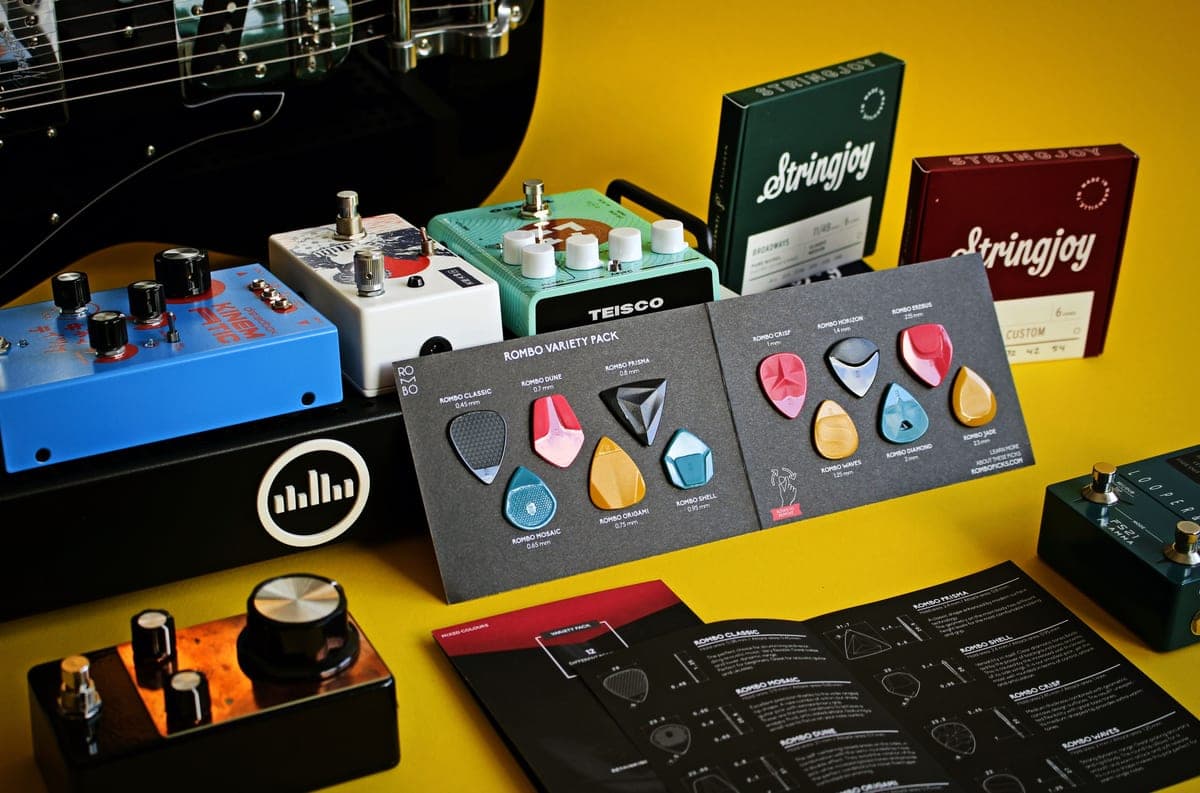
A pitch shifter moves your note by a fixed number of semitones — an octave up, a fifth down — regardless of key. A harmonizer is told the key and produces the correct scale degree, so a 'third above' changes size depending on where you are in the scale. Octaves and fifths need a shifter; melodic harmony lines need a harmonizer.
Both are sold as pitch pedals and the difference decides whether the pedal can do what you bought it for.
01Why a fixed interval is not enough for harmony
In a major scale, the interval from the root to the third is four semitones. From the second degree to its third is three semitones. A pedal shifting by a fixed four semitones plays a correct third from the root and a wrong one from the second degree.
Octaves and fifths escape this because they are the same size everywhere in a diatonic scale — an octave is twelve semitones from any note. That is why octave pedals need no key setting and harmony pedals do.
Which kind you need
| # | Product | Best for | Price |
|---|---|---|---|
| 01 | 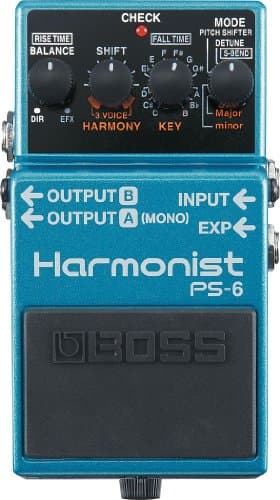 BOSS PS-6 Harmonist Harmony mode follows a key you set, so a third above stays diatonic rather than fixed. | Key-aware harmony lines | $159.98 · Check price #ad How we’re funded · price as of October 18, 2026 |
| 02 | 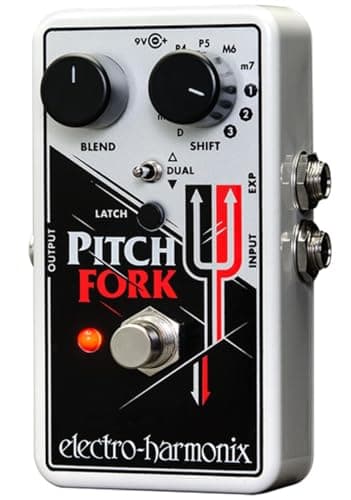 Electro-Harmonix Pitch Fork Polyphonic shifting up to three octaves in either direction, with a blend control. | Fixed-interval shifting across three octaves | |
| ! | 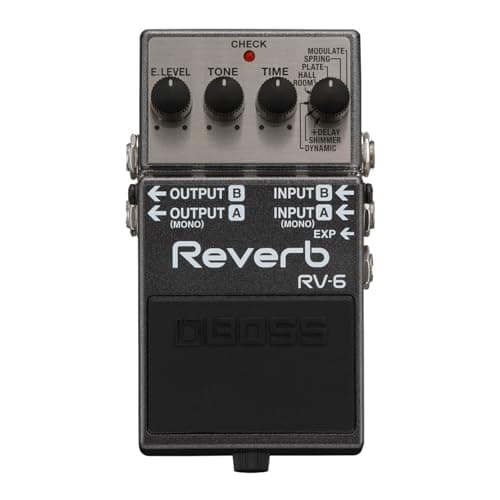 BOSS RV-6 Reverb Shimmer mode is a pitch-shifted octave inside the reverb tail — pitch shifting by another name. Skip this one — see why below | The pitch shifting you may already own |
Rows link to the full write-up further down this page. Prices come from the live price layer only — where there is no live figure the button reads “Check price” rather than showing a remembered number.
03What tracking means and where it fails
A pitch shifter has to work out what note you played before it can transpose it. Detection takes time — at least one cycle of the waveform, and low notes have long cycles.
- Low notes track more slowly than high ones, because the pedal needs a longer window to identify the frequency.
- Fast passages track worse than slow ones, because the note changes before detection finishes.
- Monophonic tracking is more accurate than polyphonic, which is why some pedals offer both and specify which is which.
- A clean signal tracks better than a distorted one, so a pitch shifter usually goes before your drives.
- Every pitch shifter has these limits. A pedal claiming perfect tracking is claiming something the physics does not allow.
BOSS PS-6 Harmonist
Key-aware harmony lines
The number65 mA. Four modes: Harmony, Pitch Shifter, Detune and S-Bend.
The distinction that matters: in Harmony mode this pedal is told the key, and it produces the correct scale degree rather than a fixed interval. A third above in the key of G is sometimes three semitones and sometimes four, and only a key-aware pedal gets that right.
S-Bend is a whole-pedal pitch dive and rise with adjustable times, which is a specific effect rather than a general-purpose one. Detune is a subtle thickening at a few cents.
It has to be told the key, and it will produce wrong notes if the song changes key and you do not. That is the trade for diatonic harmony.
| Modes | Harmony, Pitch Shifter, Detune, S-Bend |
|---|---|
| Controls | Mode, Key/Fall Time, Shift, Balance/Rise Time, pedal switch |
| Current draw | 65 mA |
| I/O | Input, Output A (mono) and B, expression jack, DC IN |
| Size / weight | 73 x 129 x 59 mm, 420 g including battery |
| What it does not do | Harmony mode has to be told the key, and it produces wrong notes if you change key without telling it. No adaptor is included. |
Specs from BOSS PS-6 Harmonist specifications. We have not used this unit.
#ad How we’re funded · price as of October 18, 2026
Electro-Harmonix Pitch Fork
Fixed-interval shifting across three octaves
Fixed-interval shifting is the right tool for octaves and fifths, which are the intervals that are the same in every key and therefore need no key awareness at all.
Polyphonic means it tracks chords rather than only single notes, and the Dual mode shifts in two directions simultaneously.
It cannot play a diatonic harmony line. If you want a third that stays in key, you want a harmonizer instead — this shifts by a fixed number of semitones.
| Range | Polyphonic pitch shifting over a +/- three octave range |
|---|---|
| Shift switch | 11 positions — Detune (17 cents), Minor 2nd, Major 2nd, Major 3rd, Perfect 4th, Perfect 5th, Major 6th, Minor 7th, 1 Octave, 2 Octaves and 3 Octaves |
| Modes | Up, Down and Dual — the last shifting in two directions at once |
| Expression control | The shift amount can be a fixed interval or swept by an expression pedal or control voltage |
| Controls | Blend, Shift, mode toggle, latching or momentary switch |
| Power | 9 V DC center-negative |
| Electrical data | No current-draw or impedance figure is published for this pedal, so none is stated here. |
| What it does not do | No key-aware harmony — it shifts by a fixed interval, so a diatonic harmony line is not what this does. Tracking degrades on fast passages, as it does on every pitch shifter. |
Specs from Electro-Harmonix Pitch Fork product page. We have not used this unit.
BOSS RV-6 Reverb
The pitch shifting you may already own
The number95 mA. Eight modes including Shimmer.
We are not picking this as a pitch shifter, and it belongs on the page because a meaningful share of people shopping for one want a shimmer sound and already own a reverb that does it.
Shimmer adds a pitch-shifted octave into the reverb tail. It is not a pitch shifter you can play melodically, and for ambient octave-up textures it is the whole effect.
If that is what you were after, you have saved a board slot. If you want to play an actual harmony line, you need one of the two pedals above.
| Modes | 8 — Hall, Plate, Room, Spring, Modulate, +Delay, Shimmer, Dynamic |
|---|---|
| Controls | E.Level, Tone, Time, Mode, pedal switch |
| Current draw | 95 mA |
| Battery life | Approx. 3 hours on alkaline |
| I/O | Input A (mono) and B, Output A (mono) and B, expression jack |
| Weight | 450 g including battery |
| What it does not do | No adaptor included. 95 mA rules out a daisy chain shared with other digital pedals, and there is no way to save a setting — every mode change is a knob move. |
Specs from BOSS RV-6 specifications. We have not used this unit.
04Where a pitch shifter goes
Early — after the tuner, before the drives. It needs the cleanest signal it can get for detection, and distorted input makes tracking noticeably worse.
The exception is a shimmer-style ambient effect, which belongs at the end with the reverb. Those are two different uses of the same underlying process. Pedal order covers the chain.
05Do you need one
It is a specialist pedal. An octave-down effect for a heavier riff, an octave-up for a lead texture, or a harmony line for a specific song are all real uses — and none of them is a general-purpose board fixture the way a tuner or a delay is.
If you want the ambient octave-up sound rather than a playable interval, check your reverb first. A shimmer mode does that job and you may already own one. And if what you want is specifically an octave rather than a harmony line, best octave pedals is the shopping page for it — the criteria there are chord tracking and dry blend rather than key awareness.
Frequently asked questions
+ What does a pitch shifter pedal do?
+ What is the difference between a pitch shifter and a harmonizer?
+ Why does my pitch shifter sound glitchy on fast playing?
+ Where does a pitch shifter go in the chain?
Sources
Related on Fret & Fuzz
Best octave pedals
Chord tracking and a dry blend decide this category. Three picks on published specs, plus the harmonizer people buy by mistake.
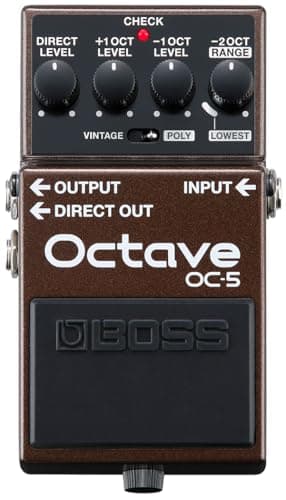
Best Octave Pedal pick: BOSS OC-5 Octave
#ad How we’re funded · price as of October 18, 2026
Best tuner pedals
Published accuracy from +/- 1 cent to +/- 0.02 cent, the buffer trade-off, and the tuner that quietly draws 100 mA.
Best Tuner pick: TC Electronic PolyTune 3

Best reverb pedals
Check your amp first. If you do need a reverb pedal, one multi-mode unit covers every type — here is what the modes actually differ on.
Best Reverb pick: BOSS RV-6 Reverb
Pedal order: what changes and what does not
Two placements are load-bearing and the rest are preference. Which is which, and the impedance figures behind the first one.
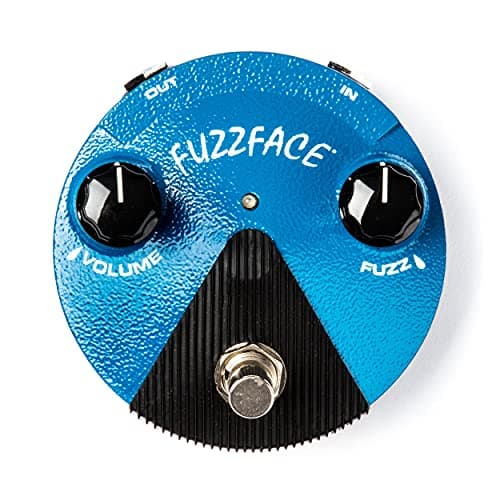
Top pick: Dunlop Fuzz Face Mini Silicon
#ad How we’re funded · price as of October 18, 2026
Guitar pedal types explained
Five families defined by what they do to the waveform, and the map that turns a hundred-brand problem into five decisions.
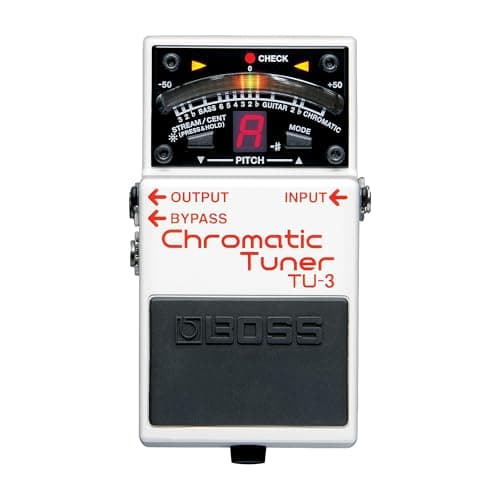
Top pick: BOSS TU-3 Chromatic Tuner