Big Muff vs Fuzz Face
One is a wall you turn on and leave on. The other is an instrument you play with your volume knob. They are not close substitutes.
Fret & Fuzz earns a commission when you buy through the links on this page. It costs you nothing and it does not decide what we rank. How we’re funded.
We have not played this gear. Every pick below is chosen from published manufacturer specifications and the arithmetic set out in how we research, which you can re-run yourself.
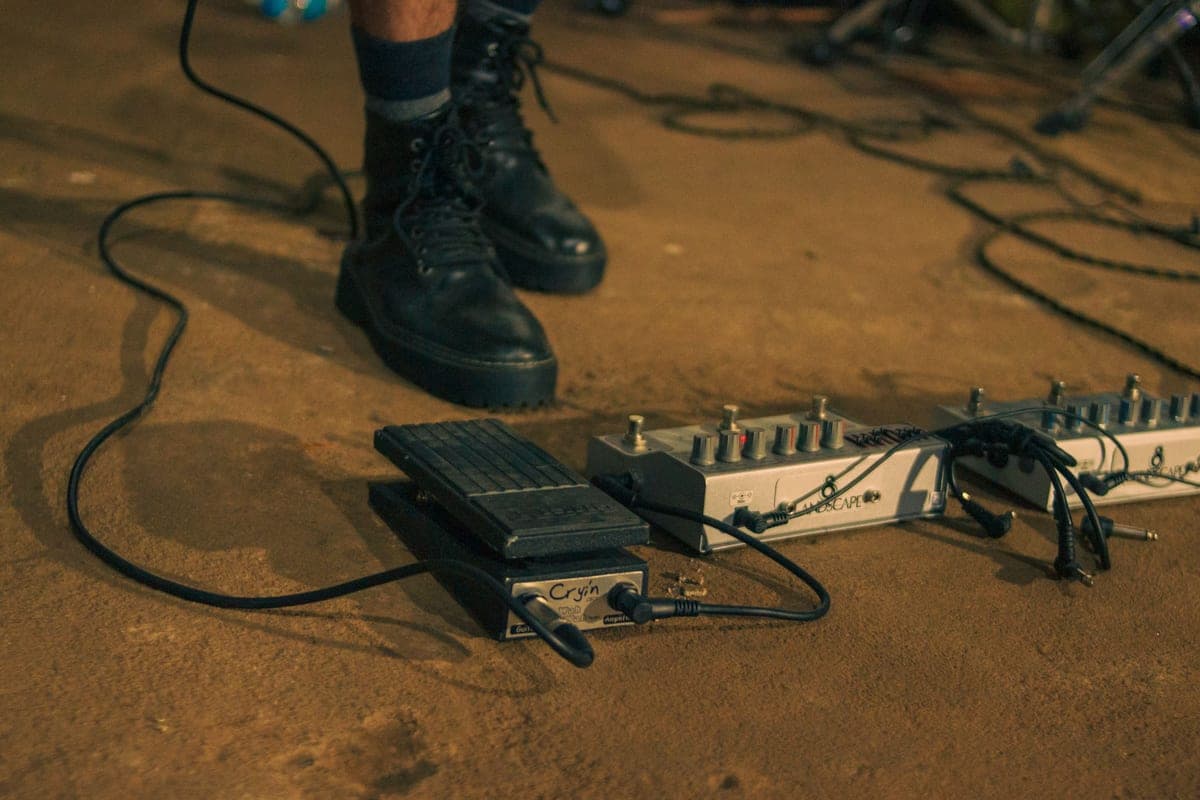
A Big Muff is four transistor stages with two cascaded clipping stages — enormous sustain, a fixed mid scoop, and enough input impedance to behave predictably anywhere in a chain. A Fuzz Face is two transistors whose behavior depends on your pickup loading them, so it cleans up on the guitar volume knob and must be first in the chain with nothing buffered in front. Sustain versus response.
These are the two foundational fuzz topologies and almost every other fuzz is a variation on one of them. Choosing between them is not a matter of taste in the way it is usually presented — it is a question about your board layout and how you play.
Which fuzz your board can accommodate
| # | Product | Best for | Price |
|---|---|---|---|
| 01 | 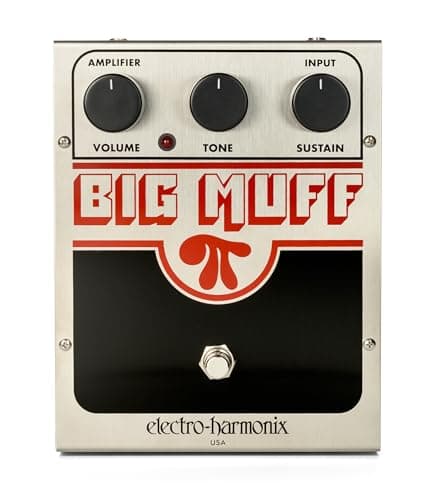 Electro-Harmonix Big Muff Pi Cascaded clipping stages produce sustain that does not decay, and enough input impedance to survive a buffer. | Sustain, and a fuzz that works wherever you put it | $101.60 · Check price #ad How we’re funded · price as of October 18, 2026 |
| 02 | 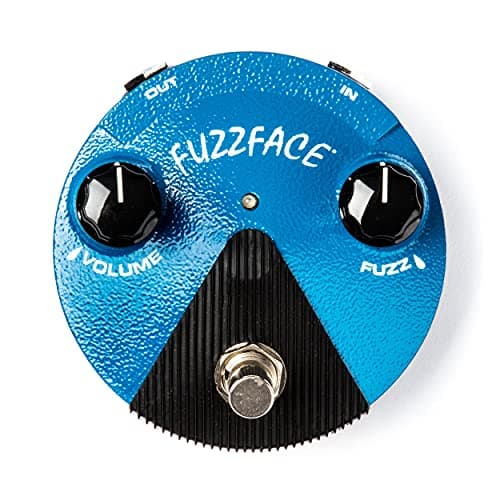 Dunlop Fuzz Face Mini Silicon Two transistors and a deliberate dependence on your pickup — which is also the constraint. | A fuzz you play with your guitar volume knob | $159.99 · Check price #ad How we’re funded · price as of October 18, 2026 |
Rows link to the full write-up further down this page. Prices come from the live price layer only — where there is no live figure the button reads “Check price” rather than showing a remembered number.
02The topologies, side by side
| Big Muff Pi | Fuzz Face | |
|---|---|---|
| Transistor stages | Four — boost, two cascaded clipping, recovery | Two |
| Sustain | Very long; the note barely decays | Moderate; decays more naturally |
| Tone stack | Fixed mid scoop, not defeatable on the standard model | Single tone control on some versions, none on others |
| Cleans up on guitar volume | Not much — mostly just gets quieter | Yes, substantially — the defining behavior |
| Published input impedance | 130 k ohm (Nano version) | Not published |
| Placement sensitivity | Moderate | Very high — must be first, nothing buffered ahead |
| Published current draw | About 3 mA at 9 V | Not published |
03Why the Fuzz Face has to be first
A guitar pickup is a high-impedance source with a resonant peak that shifts depending on what is loading it. A Fuzz Face's input stage loads the pickup deliberately, and turning your guitar volume down changes that loading — which changes the operating point of the transistor and therefore how much it clips.
A buffer presents a constant low impedance to whatever follows it. Put one in front and the fuzz now sees the same source impedance whatever your volume knob does. It still makes fuzz; it stops responding. Every BOSS compact is buffered, and so is a BOSS TU-3 tuner, which is how most people accidentally do this.
Electro-Harmonix Big Muff Pi
Sustain, and a fuzz that works wherever you put it
The numberAbout 3 mA at 9 V; the Nano version's input is published at 130 k ohm.
The Muff is four transistor stages with two of them cascaded clipping stages. The consequence is sustain — a note held under a Muff does not decay the way it does under an overdrive, and that sustained saturated tone is what everything downstream operates on.
It is also far more forgiving about placement. 130 k ohm is low compared to a modern pedal but high enough that a buffered tuner in front does not transform the pedal.
The fixed mid scoop is the trade. There is no tone bypass on the standard model, so you cannot get the mids back without an EQ after it.
| Controls | Volume, Tone, Sustain |
|---|---|
| Current draw | Approximately 3 mA at 9 V DC |
| Power | 9 V battery or a 9 V DC center-negative supply |
| Circuit | Four-transistor design with two cascaded clipping stages between a boost stage and a recovery stage |
| What it does not do | The tone stack has a fixed mid scoop with no way to defeat it, and there is no gain-cleanup behavior — rolling your guitar volume down mostly just gets quieter, not cleaner. |
Specs from Electro-Harmonix Big Muff Pi manual (PDF). We have not used this unit.
#ad How we’re funded · price as of October 18, 2026
Dunlop Fuzz Face Mini Silicon
A fuzz you play with your guitar volume knob
Rolling your guitar volume back on a Fuzz Face does not just reduce level. It changes the impedance the circuit sees, which changes how much it clips. The result is a genuine clean-up, and it is the whole reason the circuit is still made.
That mechanism requires the pedal to see your pickup, which means first in the chain with nothing buffered in front. Not the tuner, not a BOSS pedal, nothing.
Silicon transistors are brighter and more aggressive than germanium and, more usefully, they are consistent across temperature. For anything involving a stage, this is the version.
| Controls | Volume, Fuzz |
|---|---|
| Transistors | Silicon (BC108) — brighter and more aggressive than the germanium version |
| Power | 9 V battery or a 9 V DC supply; Dunlop notes the Mini adds a DC jack the original lacked |
| Electrical data | No current-draw or impedance figure is published for this pedal, so none is stated here. |
| What it does not do | A Fuzz Face wants to see your guitar pickup directly. Put a buffered tuner or a wah in front of it and the interaction that makes it clean up on the volume knob is gone. |
Specs from Dunlop Fuzz Face Mini range page. We have not used this unit.
#ad How we’re funded · price as of October 18, 2026
04Who each one is wrong for
- The Muff is wrong if you want the pedal to respond to your playing dynamics. It compresses too heavily for that and rolling back the volume mostly just gets quieter.
- The Muff is wrong in a dense band mix without an EQ after it. The mid scoop is not adjustable and it will cost you your place in the mix.
- The Fuzz Face is wrong if it cannot go first in the chain. On a board with a buffered tuner at the front, most of what you paid for is gone.
- The Fuzz Face is wrong if you want sustained, saturated chords. Two stages of clipping is not four, and it will not do the wall.
- Both are wrong if what you actually want is a tight, articulate high-gain rhythm sound. That is a distortion pedal or an amp channel.
05Running both
It is a real configuration. Fuzz Face first, straight after the guitar, and the Muff after it — never the other way, because the Muff's buffer-like behavior and lower impedance would compromise the Fuzz Face. Use them separately rather than stacked; two fuzzes at once is noise, not a bigger sound.
If your board has a buffered tuner you cannot move, one clean solution is a true-bypass tuner instead — a Korg Pitchblack is true bypass — so the fuzz still sees the guitar. The tuner roundup covers the trade-off.
Frequently asked questions
+ Which is better, a Big Muff or a Fuzz Face?
+ Can I put a Fuzz Face after a tuner?
+ Does a Big Muff clean up on the volume knob?
+ Why does my Big Muff disappear in a band?
Sources
Related on Fret & Fuzz
Best fuzz pedals
Input impedance predicts your fuzz experience better than any adjective. Five fuzzes compared on the published figures.
Best Fuzz pick: Electro-Harmonix Big Muff Pi
#ad How we’re funded · price as of October 18, 2026
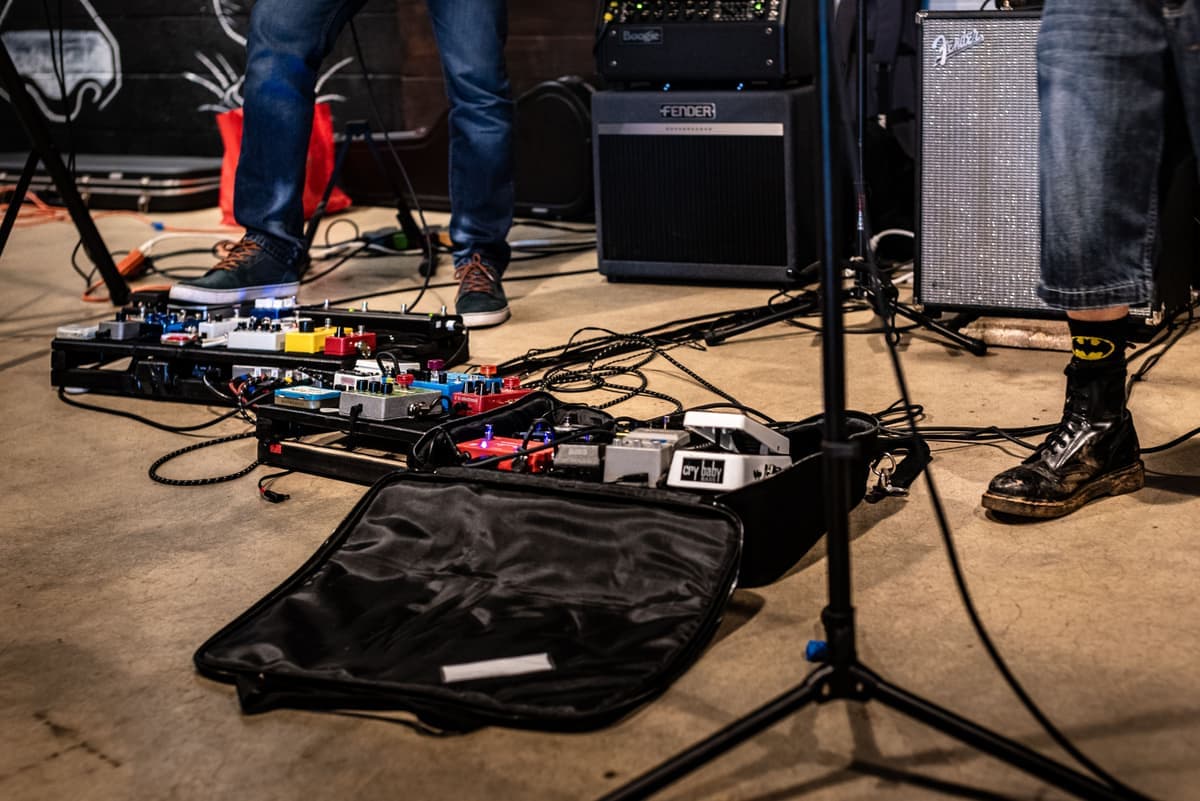
Big Muff versions compared
Four versions, four different circuits. Published impedance and current draw for each, and which one to buy.
Top pick: Electro-Harmonix Big Muff Pi
#ad How we’re funded · price as of October 18, 2026
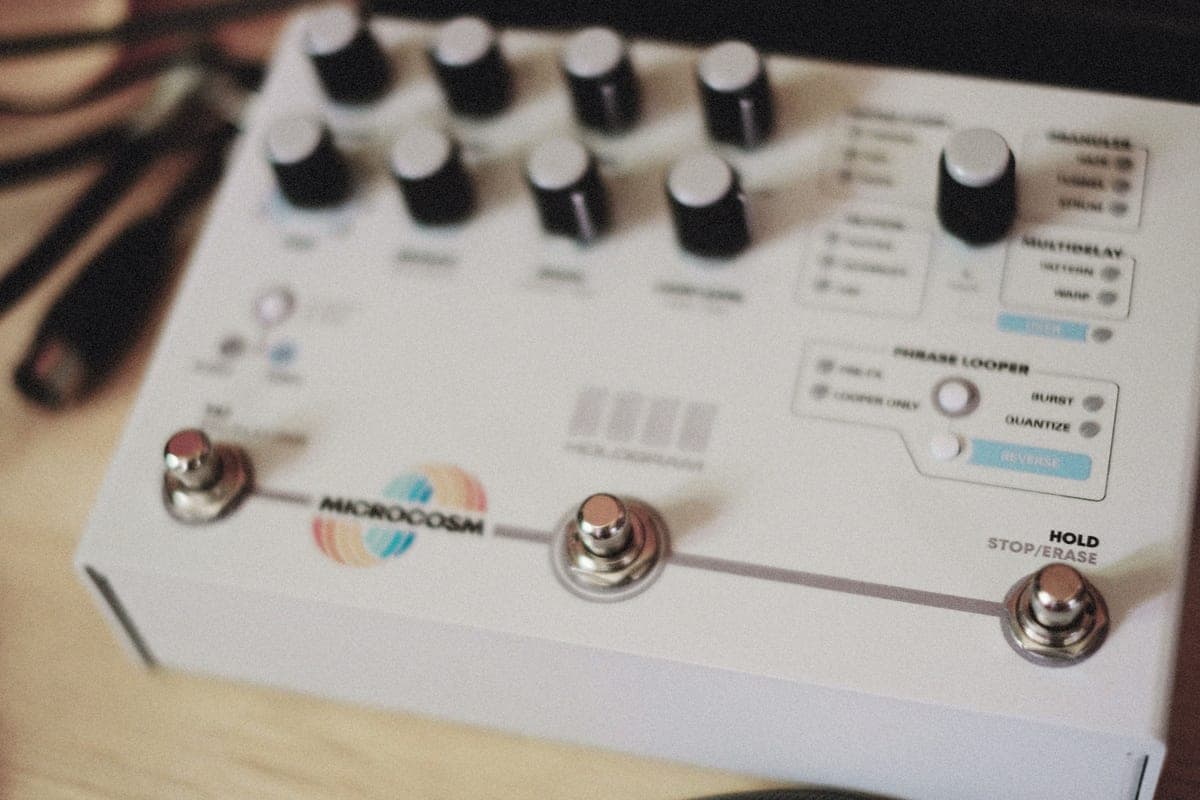
Pedal order: what changes and what does not
Two placements are load-bearing and the rest are preference. Which is which, and the impedance figures behind the first one.
Top pick: Dunlop Fuzz Face Mini Silicon
#ad How we’re funded · price as of October 18, 2026
Best tuner pedals
Published accuracy from +/- 1 cent to +/- 0.02 cent, the buffer trade-off, and the tuner that quietly draws 100 mA.
Best Tuner pick: TC Electronic PolyTune 3