Klon clones: the circuit, and what to buy instead
The original is a collector item. The circuit is not, and the thing that makes it interesting is a design decision you can read about in ten minutes.
Fret & Fuzz earns a commission when you buy through the links on this page. It costs you nothing and it does not decide what we rank. How we’re funded.
We have not played this gear. Every pick below is chosen from published manufacturer specifications and the arithmetic set out in how we research, which you can re-run yourself.
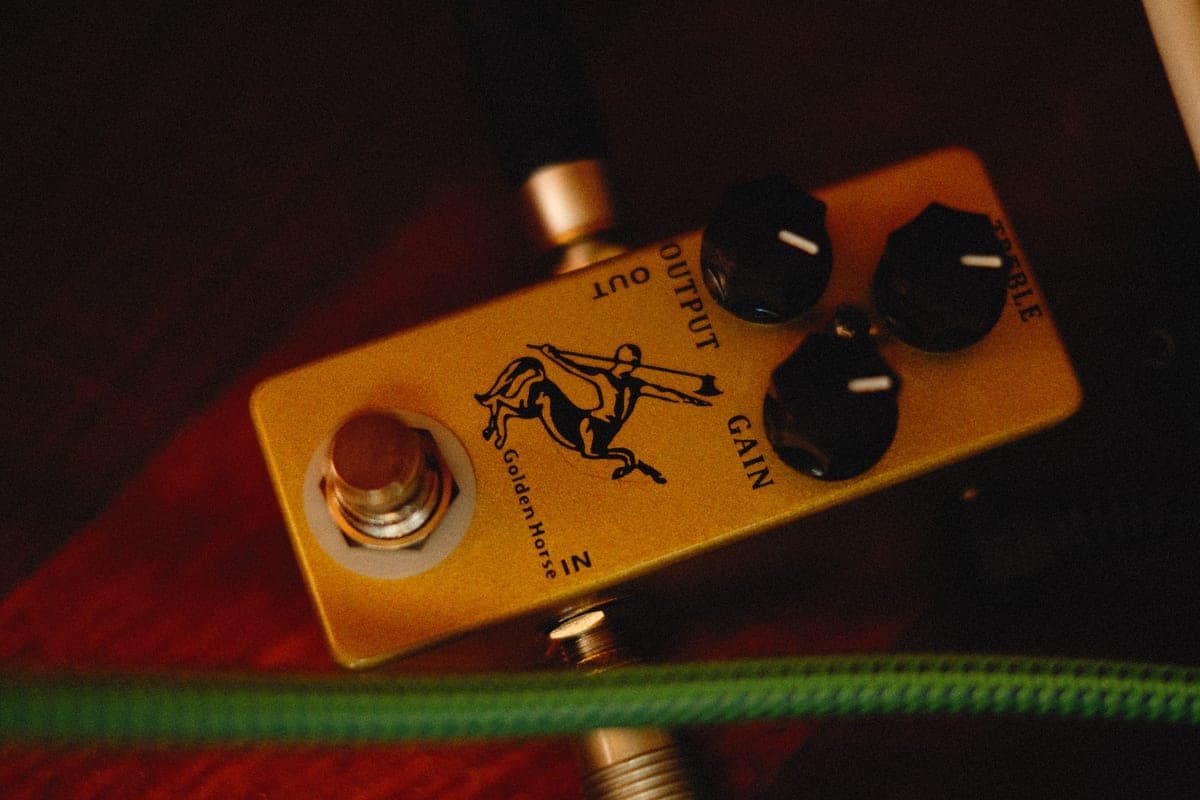
A Klon-style circuit splits your signal, clips one copy, leaves the other clean, and mixes them with the Gain knob — with a treble lift on top. That is the entire trick, and it is why the pedal sounds like more of your amp rather than like a pedal. Original Centaurs trade at collector prices for reasons of scarcity, not components; the circuit is widely and legally available for a small fraction of that.
This page exists because the query is real and the honest answer is not the one the search implies. Almost nobody asking about Klon Centaurs is going to buy one. What they want to know is what the fuss is about and what to buy instead, so that is what this page answers.
Klon-style drives worth buying
| # | Product | Best for | Price |
|---|---|---|---|
| 01 | 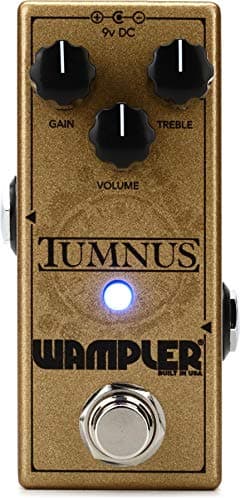 Wampler Tumnus Three controls, buffered bypass, and a footprint that fits where a full-size pedal will not. | The circuit at a sensible size and price | $149.38 · Check price #ad How we’re funded · price as of October 17, 2026 |
| 02 | 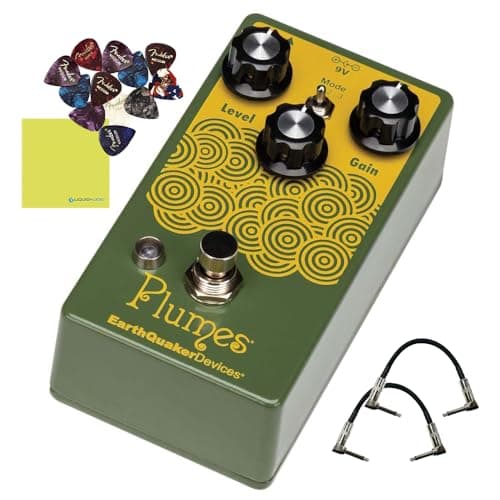 EarthQuaker Devices Plumes Mode 2 removes the clipping entirely, which gets you the clean-boost half of the Klon behavior. | The nearest thing to a Klon that also does other jobs | |
| ! | 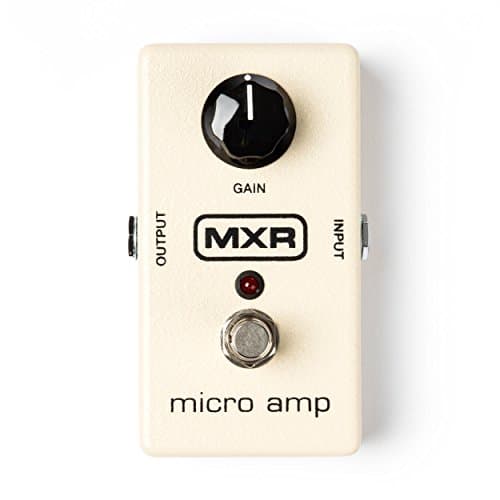 MXR Micro Amp Clean gain with no tone shaping — half the behavior, missing the half people actually want. Skip this one — see why below | Not a Klon substitute, despite the advice you will read | $105.99 · Check price #ad How we’re funded · price as of October 17, 2026 |
Rows link to the full write-up further down this page. Prices come from the live price layer only — where there is no live figure the button reads “Check price” rather than showing a remembered number.
02Why the original costs what it does
Production was small and ended, demand did not, and the pedal acquired a reputation that outran the circuit. Prices reflect scarcity, provenance and the market's willingness to pay for both. None of that is a claim about the components — the parts inside are not exotic and the design is well understood.
There is a longstanding story about the germanium diodes being rare or specially selected. Whatever the truth of it, diode choice affects the clipping character and it is not the structural feature that makes the circuit distinctive. The parallel clean path is.
03What the clean blend actually does
Most drive pedals send all of your signal through the clipping stage. Whatever the circuit does to the waveform, you hear all of it. A parallel clean path changes that: at any Gain setting you are hearing an unclipped copy of your playing mixed with a clipped one.
- Transients survive. The pick attack in the clean path is not compressed, so the note still has a front edge even at high gain.
- Low end survives. The clipping path may roll off bass; the clean path does not, so the result stays full.
- Low gain settings become a boost. With the clipped path turned down, you are left with a clean signal plus a treble lift — a boost with EQ.
- It layers rather than replaces. This is why the word 'transparent' attaches to these pedals, even though the treble lift is a real and deliberate coloration.
Wampler Tumnus
The circuit at a sensible size and price
The number20 mA at 9 V. No battery connection — DC only.
Wampler publishes 20 mA draw, a 3PDT buffered bypass and dimensions of 1.5 x 3.5 x 1.5 inches excluding knobs. That is a mini enclosure holding a Klon-style clean-blend circuit with Level, Gain and Treble.
The Treble control is a single tilt rather than an EQ section. It lifts the top end; it cannot cut a specific frequency. On a bright amp that is a real limitation.
There is no battery option at all, which is worth planning for if you were expecting to run it without a supply.
| Controls | Level, Gain, Treble |
|---|---|
| Current draw | 20 mA at 9 V |
| Power | 9 V DC jack only — no battery connection |
| Bypass | 3PDT buffered bypass |
| Size | 1.5 x 3.5 x 1.5 in (38.1 x 88.9 x 38.1 mm), excluding knobs |
| What it does not do | One tone control, not a full EQ, and no battery option. It cannot make a dark amp bright on its own — it lifts treble and mids around what is already there. |
Specs from Wampler Tumnus product page. We have not used this unit.
#ad How we’re funded · price as of October 17, 2026
EarthQuaker Devices Plumes
The nearest thing to a Klon that also does other jobs
The number10 M ohm in, 100 ohm out, 25 mA. All published.
The Plumes is not a Klon clone and it is worth including here because of what it shares: a mode with no clipping at all. That mode is a clean boost with a tone control, which is functionally what a Klon-style pedal is doing at low gain settings.
What it does not do is the parallel-path blend. A Klon mixes clean and clipped simultaneously; the Plumes switches between clipping options. Different mechanism, overlapping result at the low-gain end.
If you want one pedal covering the boost job and two flavors of drive, this is the better buy. If you specifically want the parallel clean blend, it is not.
| Controls | Level, Gain, Tone (bass left, midrange center, treble right), 3-way clipping toggle |
|---|---|
| Clipping modes | Mode 1 symmetrical LED clipping, which EarthQuaker describes as more crunch and compression; mode 2 no clipping, a wide-open op-amp clean boost; mode 3 asymmetrical silicon diode clipping, described as more transparency with a looser feel |
| Circuit | EarthQuaker states it uses JFET op-amps rather than the traditional 4558 IC, with the 9 V supply internally converted to +/- 9 V for more headroom |
| Current draw | 25 mA |
| Input impedance | 10 M ohm |
| Output impedance | 100 ohm |
| Bypass | Flexi-Switch relay-based true bypass, momentary or latching |
| Size | 4.75 x 2.50 x 2.25 in (121 x 64 x 57 mm) with knobs |
| Power | 9 V DC, 2.1 mm center-negative barrel |
| What it does not do | No power supply included and no battery compartment. Mode 2 is a clean boost, not a second drive voicing — if you expected three flavors of dirt, one of them is not dirt. |
Specs from EarthQuaker Devices Plumes product page. We have not used this unit.
MXR Micro Amp
Not a Klon substitute, despite the advice you will read
We are not picking this as a Klon alternative. The advice to 'just get a clean boost instead' is common and it misses what the circuit does. A Klon-style pedal blends a clean path with a clipped one and lifts the treble; a Micro Amp adds flat gain and nothing else.
So at the low-gain end where a Klon is closest to a boost, the Micro Amp still lacks the treble lift that gives the Klon its presence. And at the high-gain end it does not clip at all.
It is a good clean boost. It is not a cheaper version of this circuit, and buying it expecting one is the most predictable disappointment in this category.
| Controls | Single Gain control |
|---|---|
| Function | Clean gain boost with no tone shaping |
| Power | 9 V battery, Dunlop ECB003 adapter, or a DC Brick / Iso-Brick supply |
| Electrical data | No current-draw or impedance figure is published for this pedal, so none is stated here. |
| What it does not do | No EQ of any kind and no power supply included. A clean boost cannot fix a thin tone; it makes whatever follows it work harder. |
Specs from MXR Micro Amp product page. We have not used this unit.
04How to compare clones without playing them
Three published facts distinguish the versions worth checking before you buy, and none of them requires an opinion: whether the pedal is buffered or true bypass (the original's buffer is part of its reputation), whether there is a battery option, and the current draw. Wampler publishes all three for the Tumnus.
| What to check | Why it matters | Example |
|---|---|---|
| Bypass type | The buffer is part of the original's character, and it changes how a fuzz behaves after it | Tumnus: 3PDT buffered bypass |
| Battery option | Determines whether it can run without a supply at all | Tumnus: DC jack only, no battery connection |
| Current draw | Decides which output on your supply it can share | Tumnus: 20 mA at 9 V |
| Enclosure size | Mini versions fit a full board; full-size ones do not | Tumnus: 1.5 x 3.5 x 1.5 in excluding knobs |
05Where this circuit belongs on a board
Early in the chain, after any fuzz and before your other drives. Because it is buffered and because of the treble lift, putting it in front of a Tube Screamer restores some of the low end the TS is about to remove — a genuinely useful pairing covered in Tube Screamer vs Klon.
Frequently asked questions
+ Why are Klon Centaurs so expensive?
+ Is a Klon clone as good as the original?
+ Is a Klon just a clean boost?
+ Should I buy a Klon clone or a Tube Screamer?
Sources
Related on Fret & Fuzz
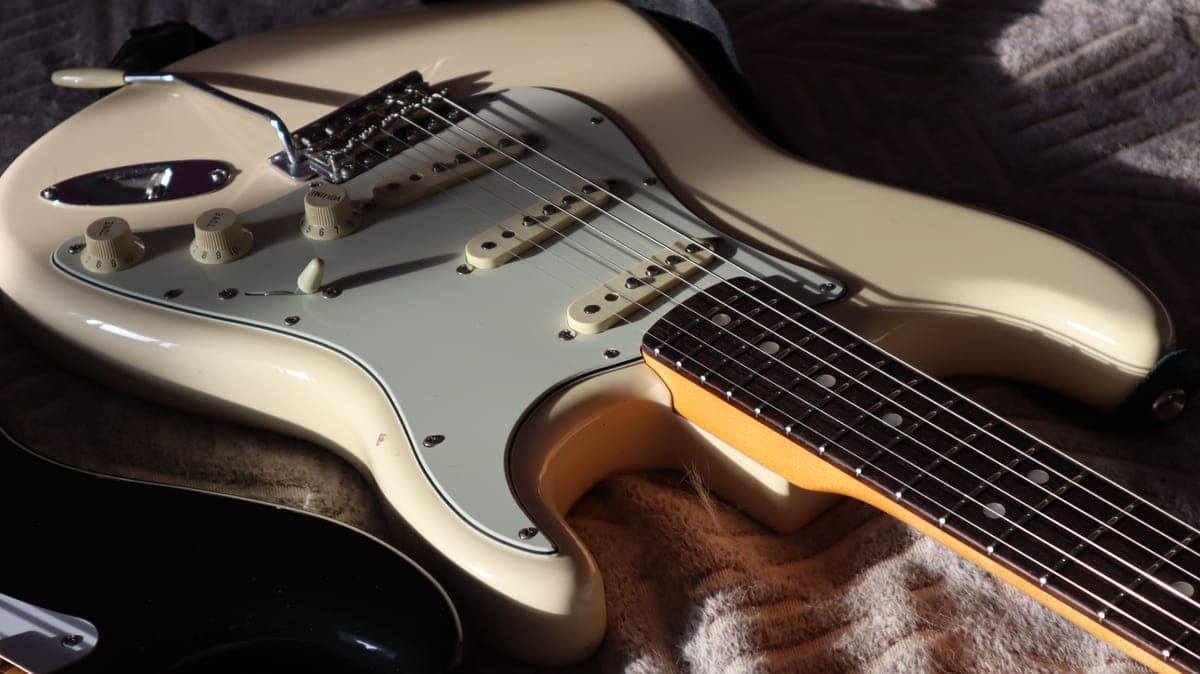
Best overdrive pedals for a Stratocaster
Single coils are brighter, lower output and short of mids. That rules some famous overdrives in and others straight out.
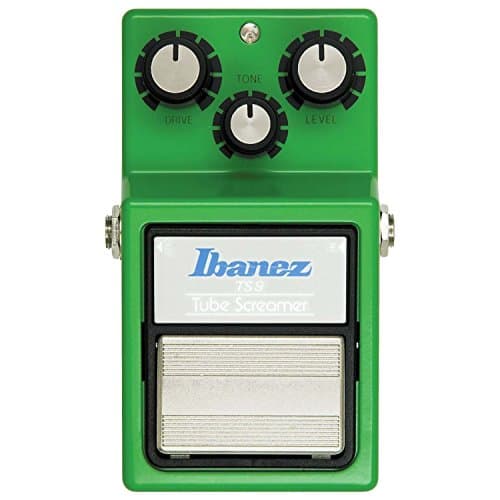
Best Overdrive for Single Coils pick: Ibanez TS9 Tube Screamer
#ad How we’re funded · price as of October 17, 2026
Tube Screamer vs Klon
One clips your whole signal; the other mixes a clean path back in. Everything people argue about follows from that.
Top pick: Ibanez TS9 Tube Screamer
#ad How we’re funded · price as of October 17, 2026
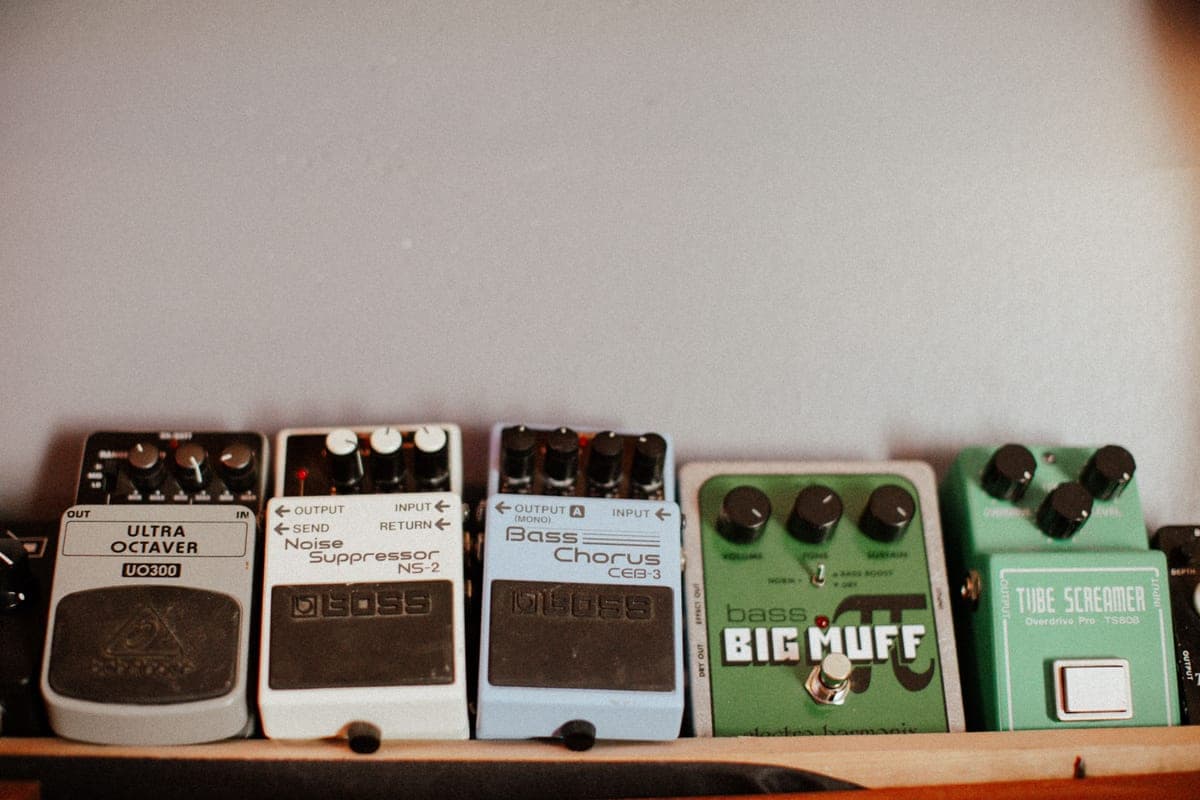
Best overdrive pedals
Six overdrives sorted by circuit family, with the published clipping topology and impedance figures that separate them.
Best Overdrive pick: EarthQuaker Devices Plumes
Overdrive vs boost
A boost has three different results depending on what follows it. Work out which case you are in before you buy one.
Top pick: EarthQuaker Devices Plumes
The best guitar pedals of all time
Seven circuits everything else gets compared to, what each one does to the signal, and which current version is the real thing.
The Canon pick: Ibanez TS9 Tube Screamer
#ad How we’re funded · price as of October 17, 2026