The best guitar pedals of all time
Not a nostalgia list. These are the circuits that other pedals still get compared to, and most of them are still in production at sensible money.
Fret & Fuzz earns a commission when you buy through the links on this page. It costs you nothing and it does not decide what we rank. How we’re funded.
We have not played this gear. Every pick below is chosen from published manufacturer specifications and the arithmetic set out in how we research, which you can re-run yourself.
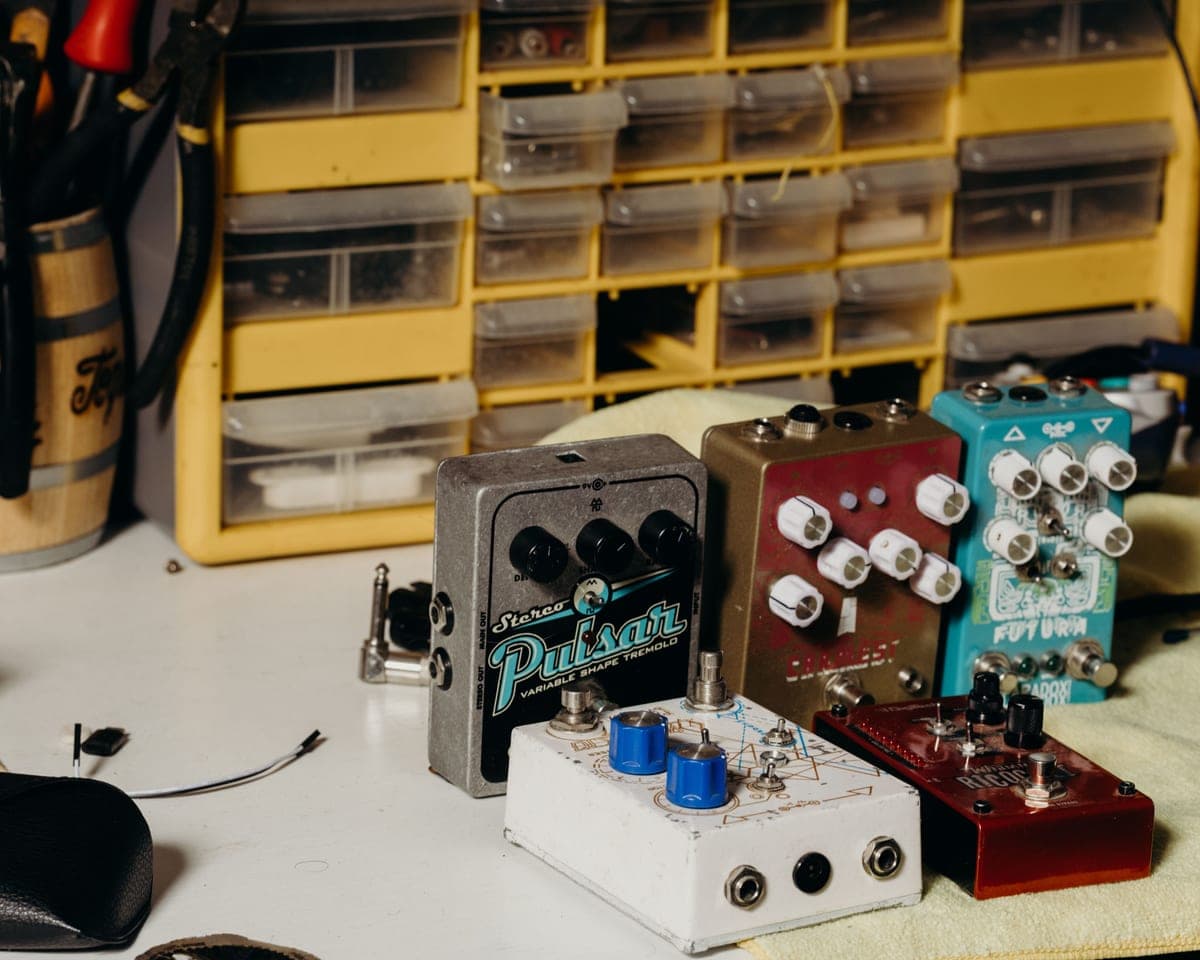
Seven circuits: the Tube Screamer, the Big Muff, the RAT, the Phase 90, the Dyna Comp, the BOSS TU-3 and the Fuzz Face. They earn the label not by age but by being the reference other pedals are described against — when a review says 'Tube Screamer-style' or 'Muff-like', it is these circuits doing the defining.
A canon list is easy to write badly. The failure mode is nostalgia: expensive originals, collector prices, and no useful advice for someone deciding what to buy this month. So the test applied here is simple — a circuit is on this list if current pedals are still described in relation to it, and every entry notes which version you can actually buy.
The circuits that set the standard
| # | Product | Best for | Price |
|---|---|---|---|
| 01 | 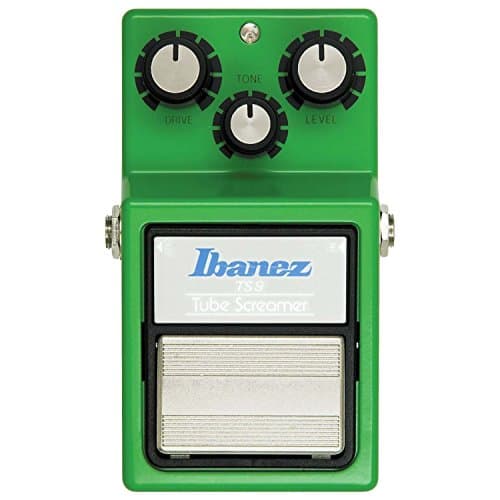 Ibanez TS9 Tube Screamer Symmetrical clipping in the feedback loop, a fixed mid hump and rolled-off bass — the shape every other drive is described against. | The reference overdrive | $99.99 · Check price #ad How we’re funded · price as of October 18, 2026 |
| 02 | 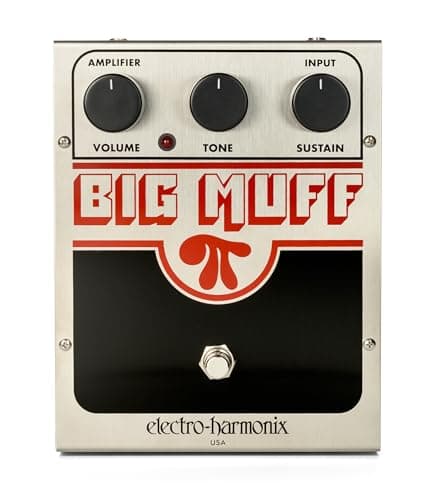 Electro-Harmonix Big Muff Pi Four transistors, two cascaded clipping stages, a mid scoop you cannot defeat and sustain that does not stop. | The reference fuzz | $101.60 · Check price #ad How we’re funded · price as of October 18, 2026 |
| 03 | 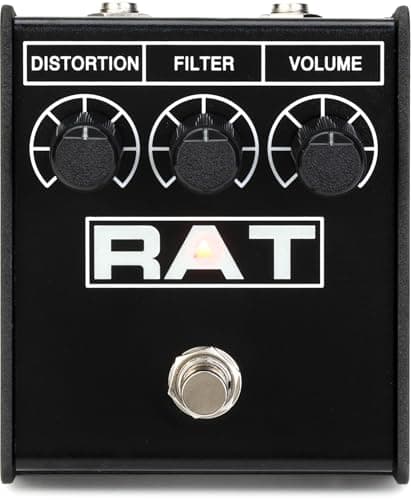 Pro Co RAT 2 Hard clipping to ground with a filter control that runs backwards — and it is the backwards filter that makes it work. | The reference distortion | $86.00 · Check price #ad How we’re funded · price as of October 18, 2026 |
| 04 | 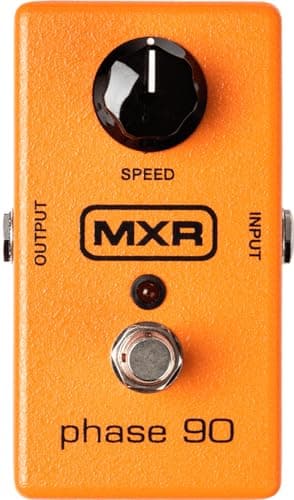 MXR Phase 90 One knob, one job, four notches swept through your signal. The absence of controls is the design. | The reference modulation | $99.99 · Check price #ad How we’re funded · price as of October 18, 2026 |
| 05 | 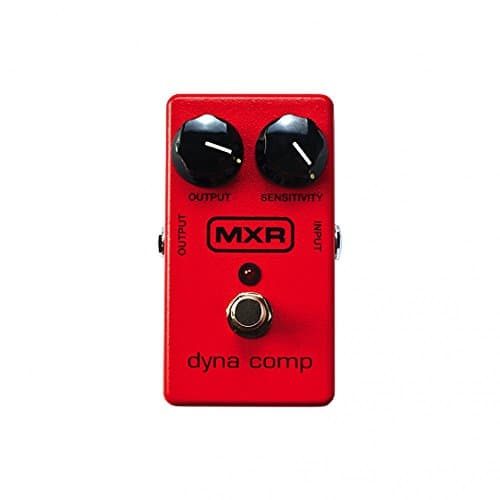 MXR Dyna Comp Compressor Two knobs, an OTA circuit and an audible squash that is either the point or the problem. | The reference compressor | $99.99 · Check price #ad How we’re funded · price as of October 18, 2026 |
| 06 | 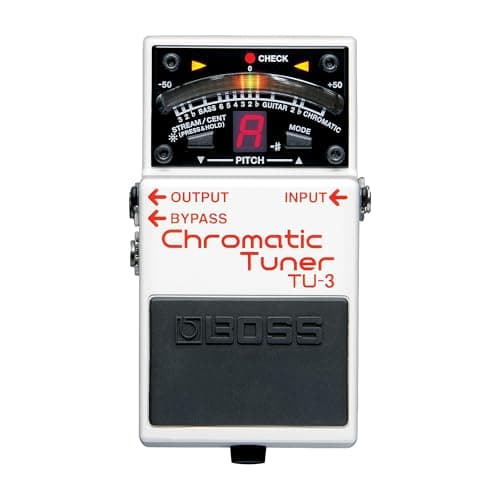 BOSS TU-3 Chromatic Tuner +/- 1 cent, buffered bypass, and a DC OUT that will run a small board. | The reference tuner | |
| ! | 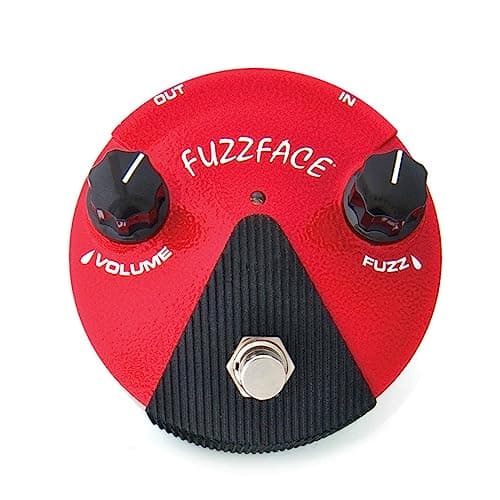 Dunlop Fuzz Face Mini Germanium The circuit that defines interactive fuzz — and the one most likely to disappoint on a modern board. Skip this one — see why below | Historically essential, practically demanding |
Rows link to the full write-up further down this page. Prices come from the live price layer only — where there is no live figure the button reads “Check price” rather than showing a remembered number.
02Why these seven and not others
Each of these established a topology that other makers then varied. That is a stronger claim than popularity. A pedal can sell in enormous numbers without changing anything about how pedals get designed; these seven changed the vocabulary.
| Circuit | What it established | Still in production |
|---|---|---|
| Tube Screamer | Diode clipping in the op-amp feedback loop, with a mid-humped tone stack | Yes — TS9 reissue and the Mini |
| Big Muff Pi | Cascaded transistor clipping stages with a passive scooping tone stack | Yes — in several distinct variants |
| RAT | Hard clipping to ground with a low-pass Filter rather than a tone boost | Yes — RAT 2 |
| Phase 90 | Four-stage all-pass phase shifting with a single speed control | Yes |
| Dyna Comp | OTA compression as an audible effect rather than a corrective one | Yes |
| BOSS TU-3 | The pedal tuner as a standard board fixture, with mute and buffer | Yes |
| Fuzz Face | Two-transistor fuzz whose behavior depends on the pickup loading it | Yes — Mini series with a DC jack |
Ibanez TS9 Tube Screamer
The reference overdrive
The number8 mA at 9 V, published by Ibanez. Impedance figures are not published.
More pedals are described as 'Tube Screamer-style' than as anything else, and the description means something specific: clipping diodes in the op-amp's feedback loop rather than to ground, producing symmetrical soft clipping, with a tone stack that cuts bass and pushes the mids.
That mid hump is why a TS in front of a cranked amp works so well — it feeds the amp exactly the frequencies its power section responds to — and why it sounds thin and honky into a clean solid-state amp with nothing to push.
Ibanez publishes the current draw and the power requirement and does not publish impedance figures. It is buffered, not true bypass, which is worth knowing if you run a fuzz.
| Controls | Drive, Tone, Level |
|---|---|
| Current draw | 8 mA at 9 V |
| Power | One 9 V battery (006P) or a 9 V DC center-negative adapter |
| Jack layout | Input on the right side, output on the left |
| Impedance | Not published by Ibanez |
| What it does not do | No power supply in the box, no true bypass (the TS9 is buffered), and no bass control — the tone stack is a single treble-tilt knob over a fixed mid hump. |
Specs from Ibanez TS9 product page. We have not used this unit.
#ad How we’re funded · price as of October 18, 2026
Electro-Harmonix Big Muff Pi
The reference fuzz
The numberAbout 3 mA at 9 V.
The Big Muff has been in production in one form or another since 1969 and the topology has barely changed: a boost stage, two cascaded clipping stages, and a recovery stage, with a passive tone stack between them that scoops the mids.
It is on records across fifty years and four genres that have nothing else in common. That is unusual for any piece of gear and it is the case for calling it a classic rather than a favorite.
The versions are genuinely different circuits, not different paint. The versions guide covers what changes between the standard, Nano, Op-Amp and Green Russian.
| Controls | Volume, Tone, Sustain |
|---|---|
| Current draw | Approximately 3 mA at 9 V DC |
| Power | 9 V battery or a 9 V DC center-negative supply |
| Circuit | Four-transistor design with two cascaded clipping stages between a boost stage and a recovery stage |
| What it does not do | The tone stack has a fixed mid scoop with no way to defeat it, and there is no gain-cleanup behavior — rolling your guitar volume down mostly just gets quieter, not cleaner. |
Specs from Electro-Harmonix Big Muff Pi manual (PDF). We have not used this unit.
#ad How we’re funded · price as of October 18, 2026
Pro Co RAT 2
The reference distortion
The RAT's Filter knob removes treble as you turn it up, which is the opposite of every other tone control on every other pedal. It confuses everybody once and then becomes the reason people keep the pedal: it is a low-pass filter, so you are choosing how much of the top end survives the clipping rather than boosting what is left.
It sits between an overdrive and a fuzz in character — harder and more compressed than a Tube Screamer, more controlled and more articulate than a Muff. That middle position is why it turns up on records in genres that agree on nothing else.
Pro Co publishes very little electrical data. The battery compartment opens without tools, which is a small thing that says something about when it was designed.
| Controls | Distortion, Filter, Volume |
|---|---|
| Filter control | Runs backwards from a normal tone knob — turning it up removes treble |
| Power | 9 V battery or a 9 V DC supply (adapter sold separately) |
| Enclosure | Steel, with the battery compartment accessible without tools |
| Electrical data | No current-draw or impedance figure is published for this pedal, so none is stated here. |
| What it does not do | No power supply included. There is no clean-boost side to it — at low Distortion the RAT is still a distortion, and the Filter control confuses everyone exactly once. |
Specs from Pro Co RAT 2 product page. We have not used this unit.
#ad How we’re funded · price as of October 18, 2026
MXR Phase 90
The reference modulation
A phaser splits the signal, shifts the phase of one copy through a series of all-pass filter stages, and recombines them. Where the two copies cancel, you get a notch; sweeping the filters sweeps the notches, which is the sound.
The Phase 90 has one Speed knob. No depth, no mix, no stage count. That means you cannot dial a subtle phase — you get the Phase 90 amount, which is a lot, or you get nothing.
Dunlop publishes no current draw or impedance figures for it. Powering it is straightforward regardless: 9 V battery or any standard supply.
| Controls | One Speed knob |
|---|---|
| Power | 9 V battery, Dunlop ECB003 adapter, or a DC Brick / Iso-Brick supply |
| Electrical data | No current-draw or impedance figure is published for this pedal, so none is stated here. |
| What it does not do | One knob means no depth control and no mix control. If you want a subtle phase you cannot dial it — you get the Phase 90 amount or nothing. |
Specs from MXR Phase 90 product page. We have not used this unit.
#ad How we’re funded · price as of October 18, 2026
MXR Dyna Comp Compressor
The reference compressor
The Dyna Comp is built around the CA3080 operational transconductance amplifier, and it compresses in a way you can hear working. There is no blend, no attack, no release and no ratio — Output and Sensitivity, and that is the interface.
For country and funk playing where the compression is part of the sound, that audibility is exactly right. For a player who wants dynamics evened out invisibly, it is the wrong tool and a blend-equipped compressor is the right one.
It also raises the noise floor at high Sensitivity, which nobody publishes a figure for and everybody notices.
| Controls | Output, Sensitivity |
|---|---|
| Circuit | OTA compressor built around the CA3080 chip |
| Power | 9 V battery, Dunlop ECB003 adapter, or a DC Brick / Iso-Brick supply |
| Electrical data | No current-draw or impedance figure is published for this pedal, so none is stated here. |
| What it does not do | No attack, release, ratio or blend controls, and no way to defeat the noise it adds at high Sensitivity. It squashes audibly — that character is why people buy it and why some people cannot use it. |
Specs from MXR Dyna Comp product page. We have not used this unit.
#ad How we’re funded · price as of October 18, 2026
BOSS TU-3 Chromatic Tuner
The reference tuner
The number20 mA normally, 80 mA in High Brightness mode.
BOSS calls it the world's best-selling stage tuner and the specification explains why rather than the marketing: C0 to C8 range, +/- 1 cent accuracy, chromatic plus guitar and bass modes with flat tunings, and a mute function so you can tune silently.
It is buffered, which is a feature on a long cable run and a problem in front of a vintage fuzz. That trade-off is the whole tuner-bypass debate in one sentence.
One cent is a stage tuner's accuracy, not a setup tool's. For intonation you want strobe accuracy — the PolyTune 3 publishes +/- 0.02 cent in strobe mode, at four times the current draw.
| Tuning range | C0 (16.35 Hz) to C8 (4,186 Hz) |
|---|---|
| Accuracy | +/- 1 cent |
| Modes | Chromatic, Chromatic flat x2, Guitar, Guitar flat x2, Bass, Bass flat x3 |
| Bypass | Buffered bypass |
| Current draw | 20 mA; 80 mA with High Brightness mode on |
| Jacks | Output, Bypass, DC IN, DC OUT (powers other pedals) |
| Weight | 390 g including battery |
| What it does not do | +/- 1 cent is fine for a stage tuner and not enough for setting intonation — that is strobe territory. Turning on High Brightness quadruples the current draw, which matters on a shared supply. |
Specs from BOSS TU-3 specifications. We have not used this unit.
Dunlop Fuzz Face Mini Germanium
Historically essential, practically demanding
We are not picking this one as a purchase for most readers, and it belongs on the list anyway. The Fuzz Face is two transistors and almost nothing else, and the way it responds to your guitar's volume knob is the reason people still build variations of it sixty years later.
The catch is everything around it. Germanium transistors drift with temperature — a cold stage and a hot one are genuinely different pedals. It wants to be first in the chain with nothing buffered in front. It does not like sharing a power supply with digital pedals. On a modern board with a buffered tuner and an isolated brick, most of what makes it special is gone before you plug in.
If you want the historical circuit and you are willing to build the rig around it, nothing else does what it does. If you want a fuzz that behaves predictably on a normal board, buy the Muff.
| Controls | Volume, Fuzz |
|---|---|
| Transistors | Germanium (NKT275) — warmer and softer-edged than the silicon version |
| Power | 9 V battery or a 9 V DC supply |
| Electrical data | No current-draw or impedance figure is published for this pedal, so none is stated here. |
| What it does not do | Germanium transistors drift with temperature — a cold stage and a hot one are genuinely different pedals. Same buffer sensitivity as the silicon version, only more so. |
Specs from Dunlop Fuzz Face Mini range page. We have not used this unit.
03The ones people expect on this list
The Klon Centaur is not here, and it is the most conspicuous absence. It is genuinely influential — the clean-blend topology is copied constantly — but the originals trade at prices that make a buying recommendation meaningless, and what most people actually want is one of the affordable versions. Klon clones is the page for that.
The Uni-Vibe, the Cry Baby wah and the Echoplex are all defensible entries. They were left off because two of them are not pedals in the current sense and the third is a category we have not built out yet. That is an editorial gap, not a judgment.
The BOSS DS-1 narrowly misses. It sold in vast numbers and it is a fine circuit, but its topology is a simplification of ideas the RAT and the Tube Screamer had already established. Popularity is not the same as influence.
04If you are building from this list
You do not want all seven. A tuner, one of the three gain circuits, and one modulation or compression pedal is a complete rig — and the three gain circuits overlap heavily, so pick the one whose behavior you want rather than collecting them. The flagship shortlist is organized around that principle.
Frequently asked questions
+ What is the most influential guitar pedal ever made?
+ Are the reissues the same as the originals?
+ Should I buy a vintage pedal?
Sources
Related on Fret & Fuzz
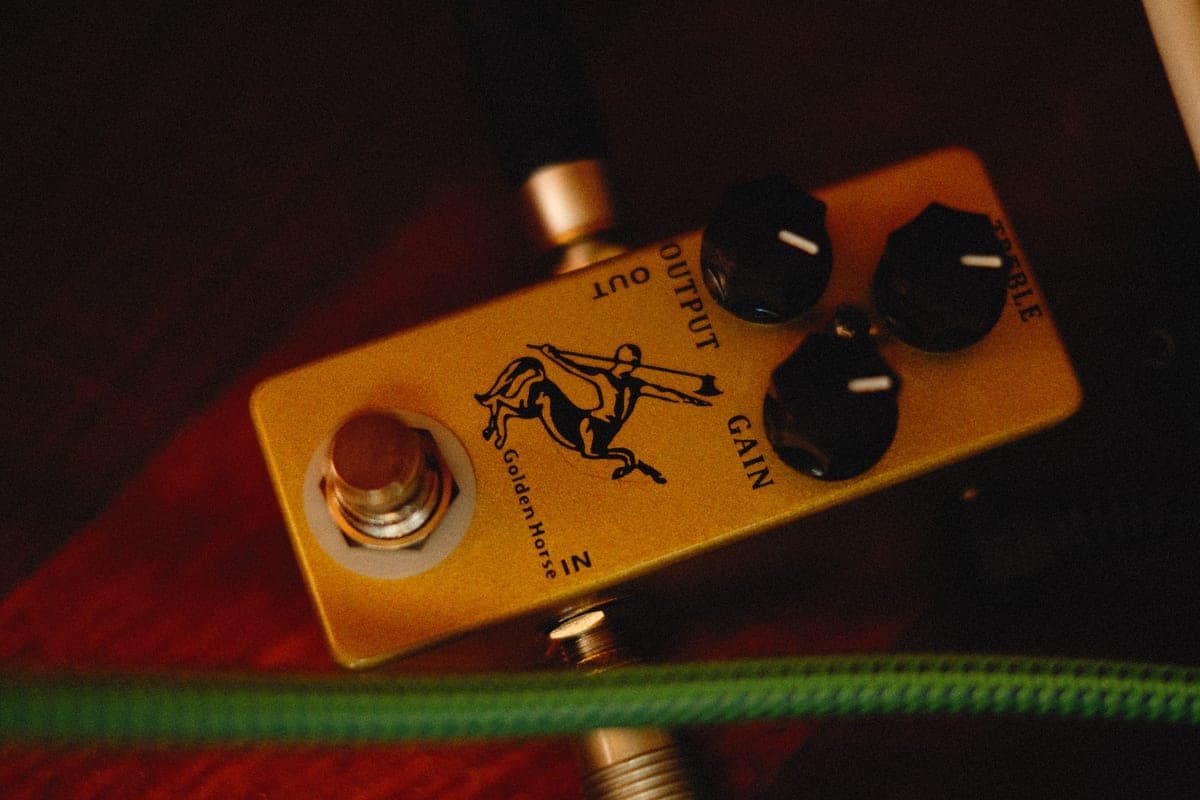
Klon clones: the circuit, and what to buy instead
The parallel clean path is the whole trick. Here is what it does, why the originals cost what they do, and which versions to buy.
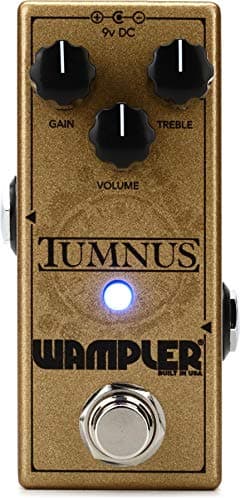
Best Klon-Style Drive pick: Wampler Tumnus
#ad How we’re funded · price as of October 18, 2026
Big Muff versions compared
Four versions, four different circuits. Published impedance and current draw for each, and which one to buy.
Top pick: Electro-Harmonix Big Muff Pi
#ad How we’re funded · price as of October 18, 2026
Tube Screamer models compared
Which Tube Screamer differences are real, which are folklore, and the one that actually changes how you use the pedal.
Top pick: Ibanez TS9 Tube Screamer
#ad How we’re funded · price as of October 18, 2026

Guitar pedal types explained
Five families defined by what they do to the waveform, and the map that turns a hundred-brand problem into five decisions.
Top pick: BOSS TU-3 Chromatic Tuner