Overdrive vs boost
A boost pedal does not have a sound. It has three different results depending on what is after it, and buying one without knowing which you want is how people end up disappointed.
Fret & Fuzz earns a commission when you buy through the links on this page. It costs you nothing and it does not decide what we rank. How we’re funded.
We have not played this gear. Every pick below is chosen from published manufacturer specifications and the arithmetic set out in how we research, which you can re-run yourself.
An overdrive clips your signal and adds harmonic distortion of its own. A boost adds gain without clipping — so what it does depends entirely on what comes after it. Into a clean amp it makes you louder. Into a cranked amp it makes the amp distort harder. Into another drive pedal it pushes that pedal into more compression. Same pedal, three results.
That is why 'what does a boost pedal do' has no single answer and why the pedals get returned. The question to ask before buying is not which boost, but which of the three cases you are in.
01Case 1: boost into a clean amp
Nothing distorts. The amp is running well below its clipping point and you have just handed it a bigger signal, so you get more level. If your amp has plenty of headroom — most solid-state amps, most large valve amps at low volume — this is all a clean boost will ever do.
This is the case where people conclude a boost is a waste of money, and in this configuration they are close to right. What you actually want here is either a drive pedal (so something clips) or an EQ-shaped boost (so you change position in the mix rather than just level).
02Case 2: boost into an amp that is already near breakup
This is where a boost earns its place. The amp is already close to its clipping threshold, and pushing more signal in takes it over. You get more distortion generated by the amp itself, which sounds different from distortion generated by a pedal — pedal gain vs amp gain covers why.
The catch is that it is also louder. Amps distort more when driven harder, and driving them harder makes them louder — there is no way to separate the two without an attenuator or a master volume.
03Case 3: boost into another drive pedal
The second pedal now sees a hotter signal and clips more of it, which increases compression and saturation without adding a second clipping stage's worth of harshness. This is the most controllable of the three cases and the reason a boost sits in front of a drive on so many boards.
Order matters. Boost before drive pushes the drive. Boost after drive raises the level of an already-distorted signal, which is what you want for a solo lift where the tone should not change.
Boosts and low-gain drives worth considering
| # | Product | Best for | Price |
|---|---|---|---|
| 01 | 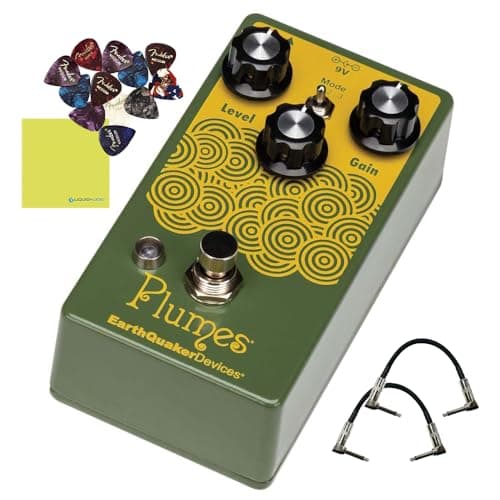 EarthQuaker Devices Plumes Mode 2 takes the clipping diodes out of circuit entirely, so it is a genuine clean boost with a tone control. | A boost and a drive in one slot | |
| 02 | 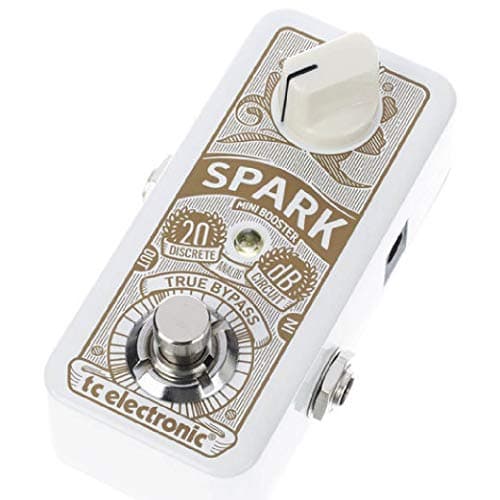 TC Electronic Spark Mini Booster One knob and a footswitch that is momentary when held and latching when tapped. | A momentary boost in the smallest possible box | |
| 03 | 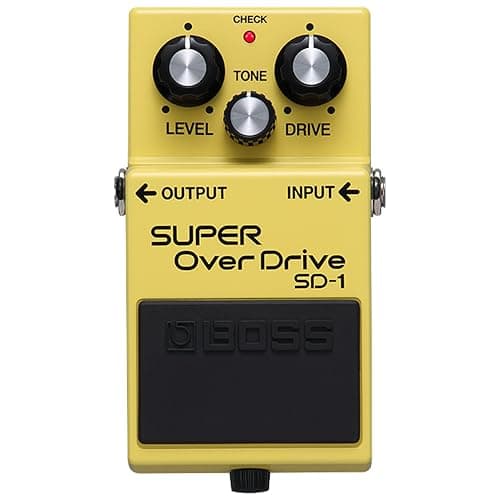 BOSS SD-1 Super Overdrive Mid-forward and only lightly compressed, which is what actually makes a solo cut through. | A low-gain drive used as a boost | $69.99 · Check price #ad How we’re funded · price as of October 17, 2026 |
| ! | 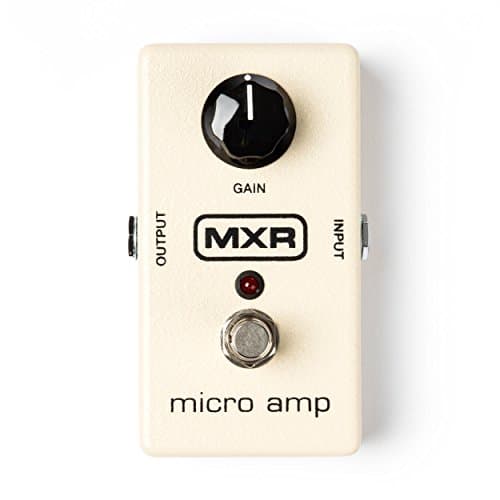 MXR Micro Amp Clean gain, no EQ, one knob — genuinely transparent and genuinely limited. Skip this one — see why below | The pure version of the idea, with the limitation that implies | $105.99 · Check price #ad How we’re funded · price as of October 17, 2026 |
Rows link to the full write-up further down this page. Prices come from the live price layer only — where there is no live figure the button reads “Check price” rather than showing a remembered number.
05Clean boost or EQ-shaped boost
| Goal | What you need | Why |
|---|---|---|
| Be louder for a solo | EQ-shaped boost or low-gain drive | Mids make you audible; flat gain just makes everything louder |
| Push a valve amp into breakup | Clean boost | You want more signal, not a different signal |
| Push a drive pedal harder | Clean boost, before it | Adds saturation without a second clipping stage |
| Drive a long cable run | Clean boost with a buffer | This is a level and impedance problem, not a tone one |
| Fix a thin tone | Not a boost | A boost amplifies what is there, including the thinness |
EarthQuaker Devices Plumes
A boost and a drive in one slot
The number25 mA, 10 M ohm input. Published by EarthQuaker.
Most 'boost or overdrive' decisions are made by people with one free slot on a board. A pedal with a no-clipping mode resolves it: mode 2 is a boost, modes 1 and 3 are two different drives.
The tone control stays active in all three modes, which matters — a flat boost is often not what you want, and being able to shade it is the difference between a useful boost and a volume knob.
The Flexi-Switch momentary mode is genuinely useful for a boost specifically: hold it down for a four-bar lift and let go.
| Controls | Level, Gain, Tone (bass left, midrange center, treble right), 3-way clipping toggle |
|---|---|
| Clipping modes | Mode 1 symmetrical LED clipping, which EarthQuaker describes as more crunch and compression; mode 2 no clipping, a wide-open op-amp clean boost; mode 3 asymmetrical silicon diode clipping, described as more transparency with a looser feel |
| Circuit | EarthQuaker states it uses JFET op-amps rather than the traditional 4558 IC, with the 9 V supply internally converted to +/- 9 V for more headroom |
| Current draw | 25 mA |
| Input impedance | 10 M ohm |
| Output impedance | 100 ohm |
| Bypass | Flexi-Switch relay-based true bypass, momentary or latching |
| Size | 4.75 x 2.50 x 2.25 in (121 x 64 x 57 mm) with knobs |
| Power | 9 V DC, 2.1 mm center-negative barrel |
| What it does not do | No power supply included and no battery compartment. Mode 2 is a clean boost, not a second drive voicing — if you expected three flavors of dirt, one of them is not dirt. |
Specs from EarthQuaker Devices Plumes product page. We have not used this unit.
TC Electronic Spark Mini Booster
A momentary boost in the smallest possible box
The PrimeTime switching is the reason to pick this over any other one-knob boost. Tap it and it stays on; hold it and it releases when you lift your foot. For a boost — an effect you want for a phrase, not a song — that is the right behavior.
One Level control, no tone shaping. That is a real limitation: a flat boost into a clean amp is just volume.
No battery compartment, no supply included, and TC publishes no electrical figures, so you cannot plan a power budget around it without measuring.
| Controls | Single Level control |
|---|---|
| Switching | PrimeTime footswitch — momentary when held, latching when tapped |
| Power | 9 V DC center-negative |
| Electrical data | No current-draw or impedance figure is published for this pedal, so none is stated here. |
| What it does not do | No battery compartment, no power supply included, no tone control. The momentary switch is the feature — if you only ever latch a boost on, a cheaper box does the same job. |
Specs from TC Electronic Spark Mini Booster product page. We have not used this unit.
BOSS SD-1 Super Overdrive
A low-gain drive used as a boost
The number10 mA — the lowest draw of any BOSS pedal in this hub.
The most useful 'boost' for a lead is usually not a clean boost. It is a low-gain, mid-humped drive, because occupying the midrange is how you become audible in a mix rather than merely louder.
The SD-1's asymmetrical clipping is gentler than a Tube Screamer's and its mid emphasis is milder, so at low Drive settings it functions as an EQ-shaped level lift with a little grit.
At 10 mA and a five-year warranty, it is also the cheapest reliable option on this page.
| Controls | Drive, Tone, Level, pedal switch |
|---|---|
| Clipping | BOSS describes an asymmetrical clipping circuit |
| Input impedance | 1 M ohm |
| Output impedance | 1 k ohm |
| Current draw | 10 mA |
| Battery life | Approx. 60 h carbon-zinc, approx. 90 h alkaline |
| Size / weight | 73 x 129 x 59 mm, 360 g |
| What it does not do | No adaptor included and no true bypass. It is not a transparent overdrive — the mid hump is the whole point, so it will not sit invisibly under a clean amp. |
Specs from BOSS SD-1 specifications. We have not used this unit.
#ad How we’re funded · price as of October 17, 2026
MXR Micro Amp
The pure version of the idea, with the limitation that implies
We are not picking this one for most readers. It does what it says with no coloration at all, which sounds like the ideal boost and is usually not what the buyer needed.
Into a clean amp, flat gain is volume. Into a distorting amp, it is more distortion. Neither is 'my solo cuts through now', which is what most people buy a boost for — that requires an EQ change, and this pedal deliberately makes none.
Buy it if you specifically need clean level with zero tonal change: driving a long cable run, hitting a power amp harder, compensating for a quiet pickup. Those are real uses and they are narrower than the pedal's reputation.
| Controls | Single Gain control |
|---|---|
| Function | Clean gain boost with no tone shaping |
| Power | 9 V battery, Dunlop ECB003 adapter, or a DC Brick / Iso-Brick supply |
| Electrical data | No current-draw or impedance figure is published for this pedal, so none is stated here. |
| What it does not do | No EQ of any kind and no power supply included. A clean boost cannot fix a thin tone; it makes whatever follows it work harder. |
Specs from MXR Micro Amp product page. We have not used this unit.
06Where a boost goes in the chain
Before the pedal or amp stage you want it to push. In front of your drives if the goal is more saturation; after them if the goal is more level without more dirt; in the effects loop if the goal is to hit the power amp harder without changing the preamp at all.
One placement to avoid: in front of a vintage-style fuzz. Most boosts are buffered, and a buffer in front of a Fuzz Face-style circuit removes the pickup interaction that makes it work. Pedal order has the full chain.
Frequently asked questions
+ What does a boost pedal do?
+ Do I need a boost pedal if I have an overdrive?
+ Should the boost go before or after the overdrive?
+ Will a boost make my amp sound better?
Sources
Related on Fret & Fuzz
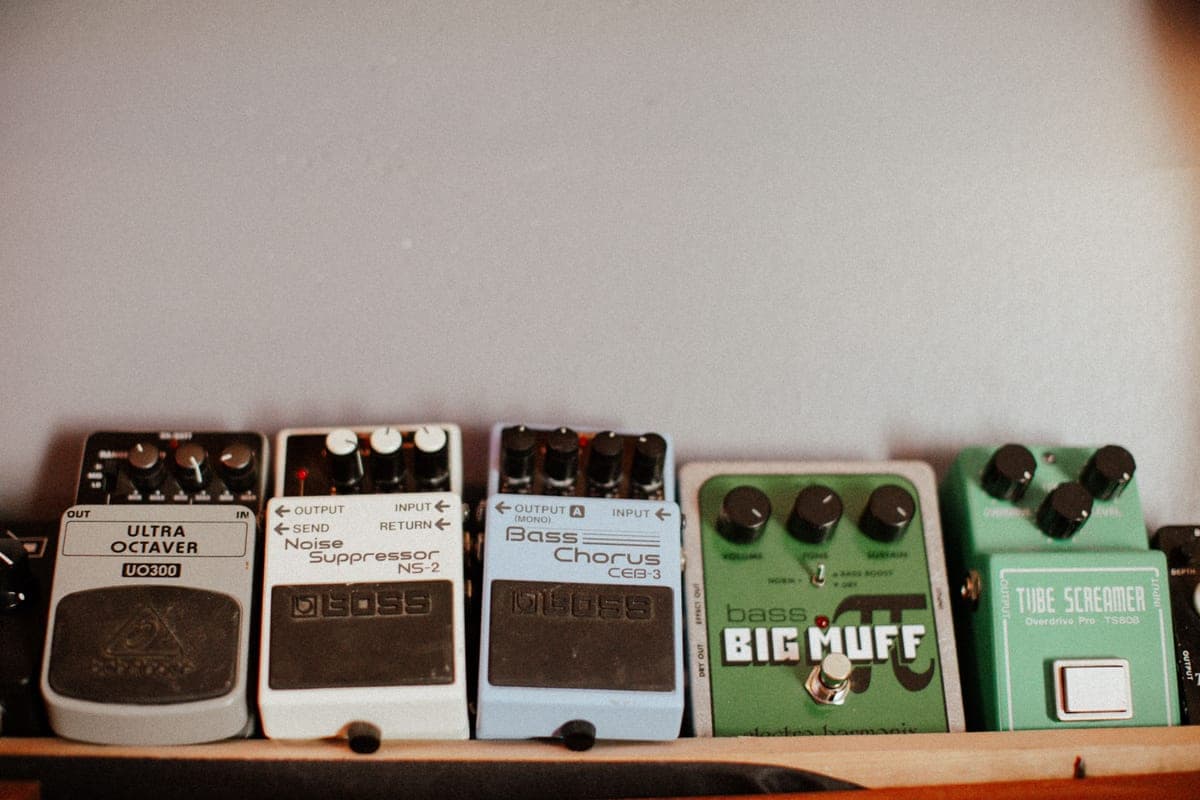
Best overdrive pedals
Six overdrives sorted by circuit family, with the published clipping topology and impedance figures that separate them.
Best Overdrive pick: EarthQuaker Devices Plumes
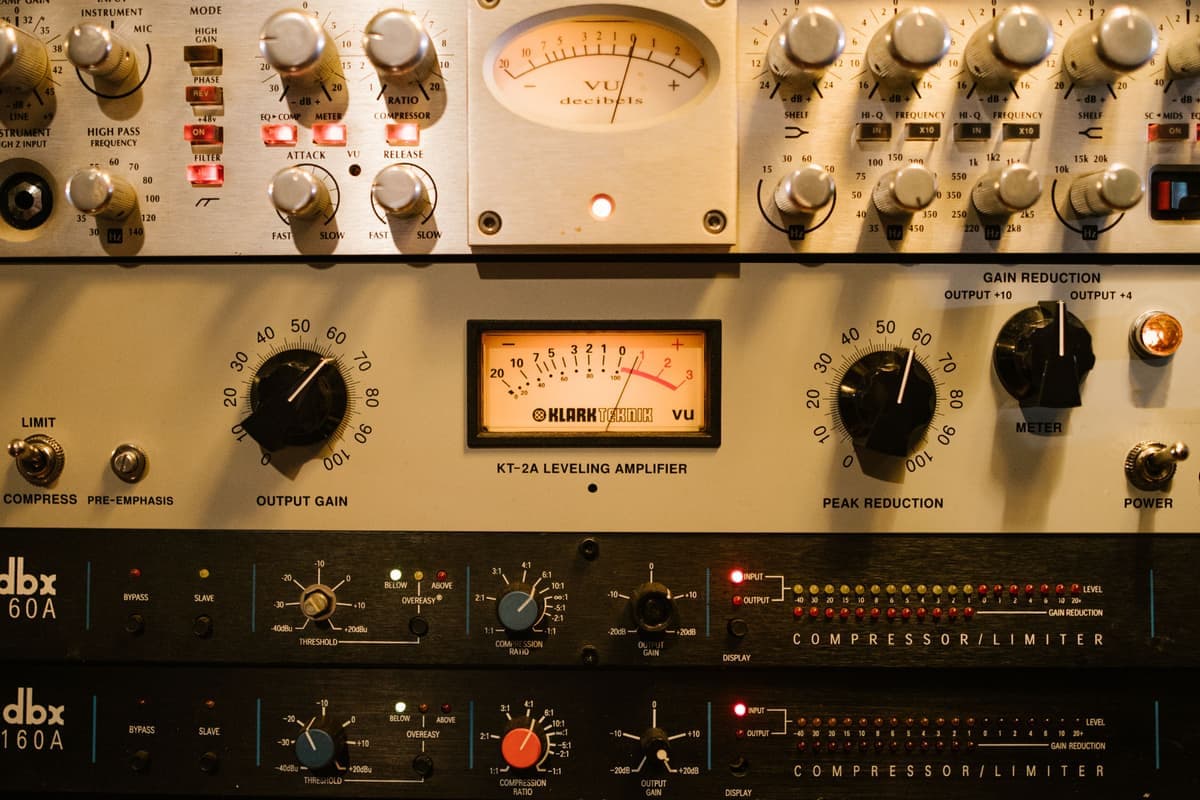
Pedal gain vs amp gain
One clipping point or several with filtering between them. Why that structural difference only shows at high gain.
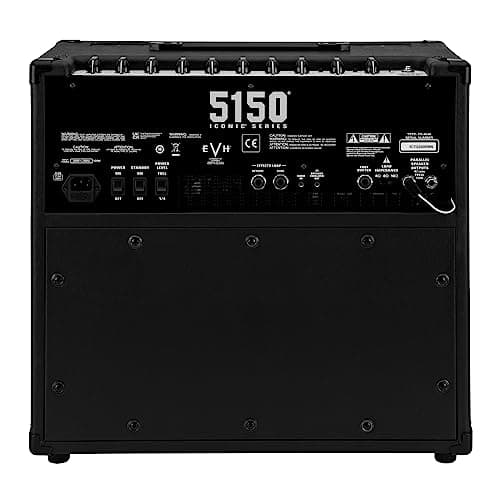
Top pick: EVH 5150 Iconic Series 15W 1x10 combo
#ad How we’re funded · price as of October 17, 2026
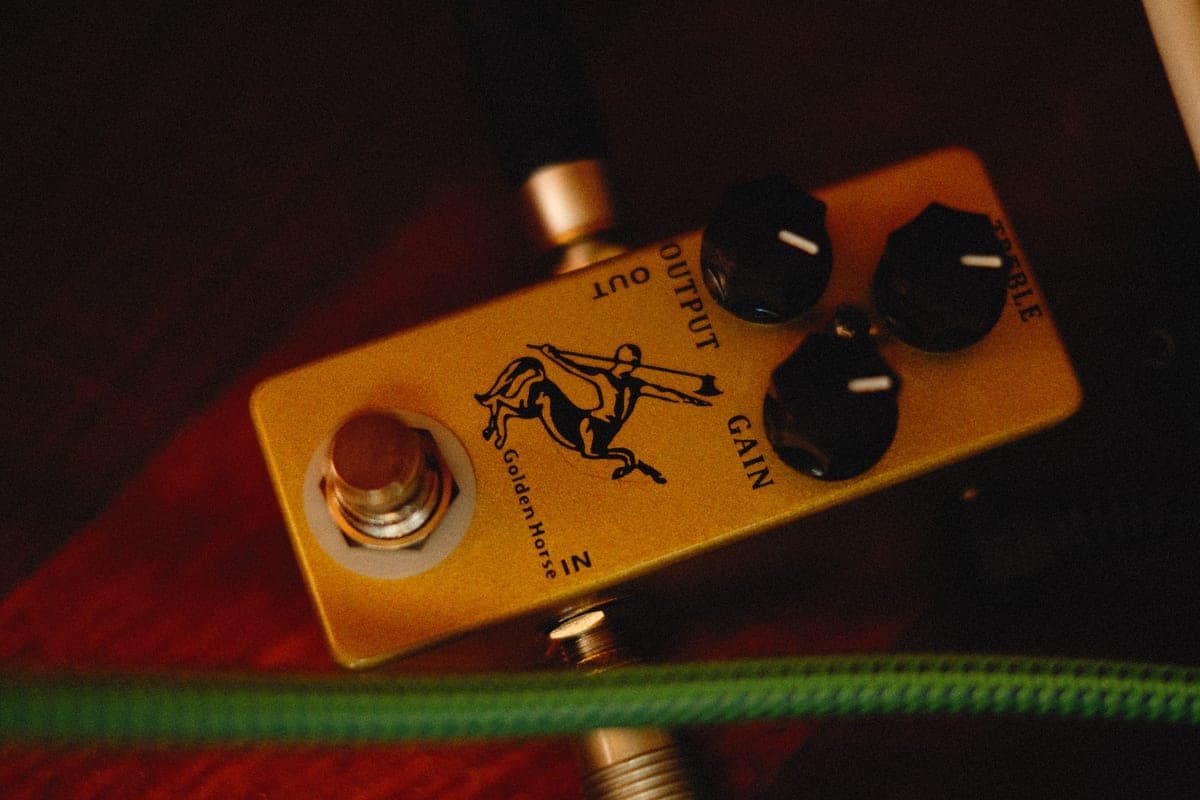
Klon clones: the circuit, and what to buy instead
The parallel clean path is the whole trick. Here is what it does, why the originals cost what they do, and which versions to buy.
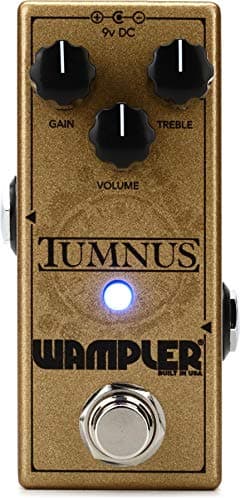
Best Klon-Style Drive pick: Wampler Tumnus
#ad How we’re funded · price as of October 17, 2026
Compressor vs boost
One narrows your dynamic range, the other shifts all of it up. Diagnose the problem first, because the common answer is neither.
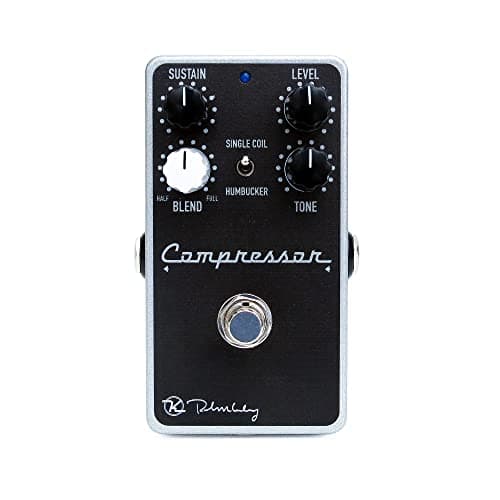
Top pick: Keeley Compressor Plus
#ad How we’re funded · price as of October 17, 2026