Tube Screamer models compared
There are more Tube Screamers than there are meaningful differences between them. Here is which distinctions are real.
Fret & Fuzz earns a commission when you buy through the links on this page. It costs you nothing and it does not decide what we rank. How we’re funded.
We have not played this gear. Every pick below is chosen from published manufacturer specifications and the arithmetic set out in how we research, which you can re-run yourself.
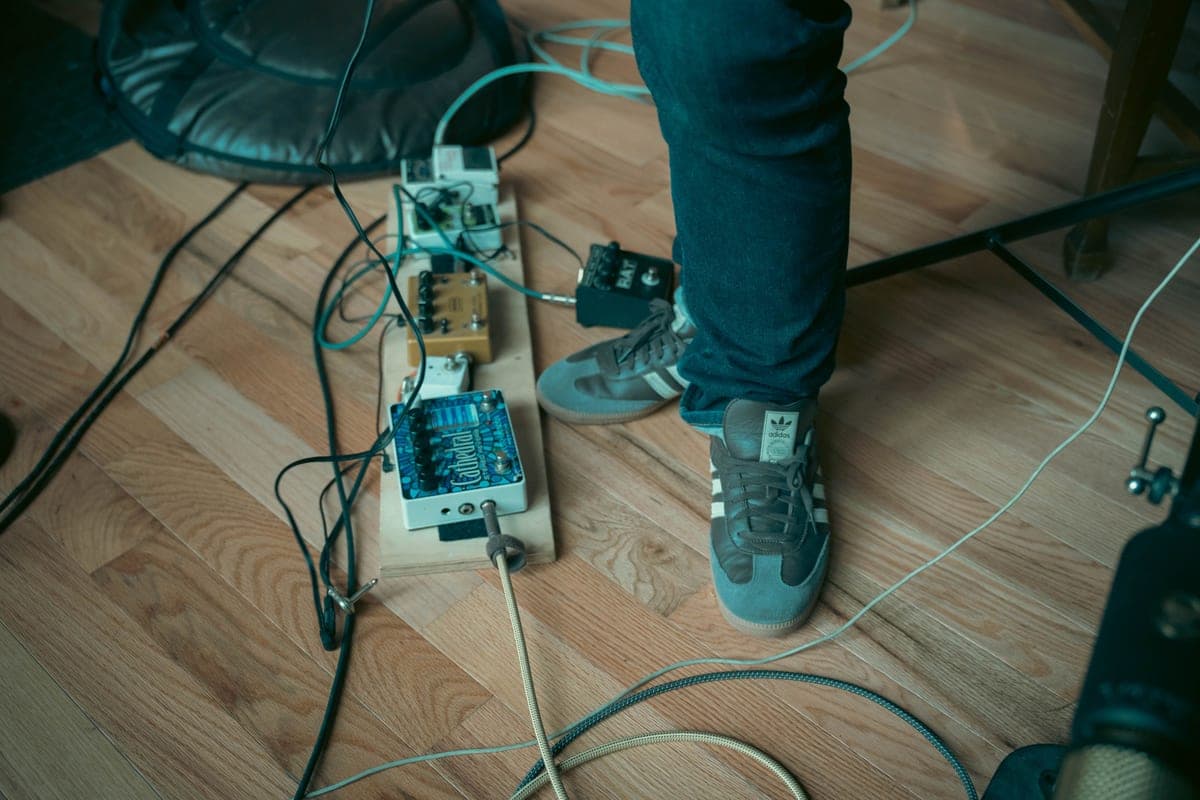
For most players the TS9 reissue is the right Tube Screamer: it is the reference circuit, it is current production, and it costs sensible money. The Mini is the same circuit where board space is tight. The budget copies are close on circuit and cheaper on the hardware you stand on. And if you want the sound rather than the object, a switchable-clipping pedal like the Plumes covers more ground.
There is a large amount of folklore attached to Tube Screamer variants — op-amp part numbers, specific years, particular resistors. Some of it describes real component differences. Very little of it is verifiable from published documentation, and we are not going to repeat claims we cannot source.
Which Tube Screamer to buy
| # | Product | Best for | Price |
|---|---|---|---|
| 01 | 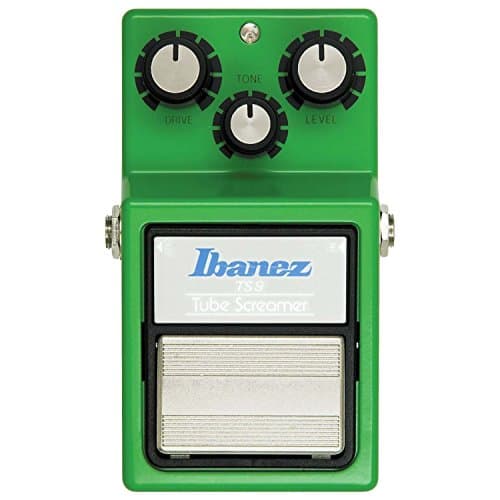 Ibanez TS9 Tube Screamer The reissue of the reference circuit, in the enclosure everything else is described against. | The default answer | $99.99 · Check price #ad How we’re funded · price as of October 17, 2026 |
| 02 | 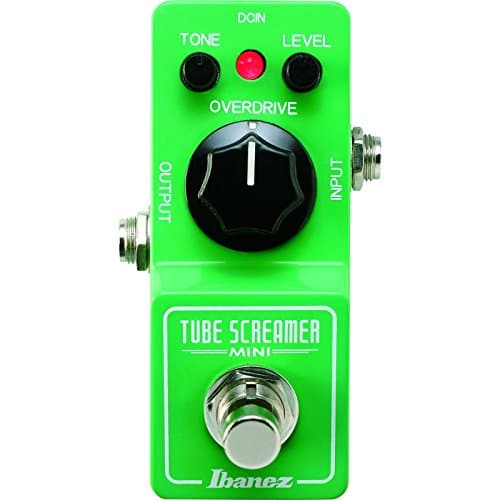 Ibanez Tube Screamer Mini Ibanez states the same op amp as the TS9 reissue, in an enclosure roughly a third of the size. | The same circuit where there is no room | $79.99 · Check price #ad How we’re funded · price as of October 17, 2026 |
| 03 | 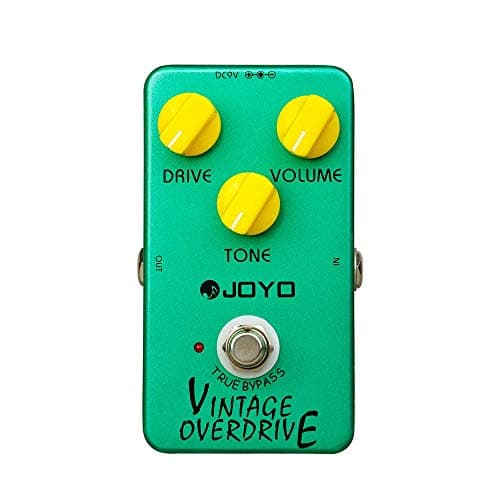 JOYO Vintage Overdrive JF-01 Close enough on the circuit that the difference is in the hardware you touch, not the sound. | The circuit at a fifth of the price | $50.43 · Check price #ad How we’re funded · price as of October 17, 2026 |
| 04 | 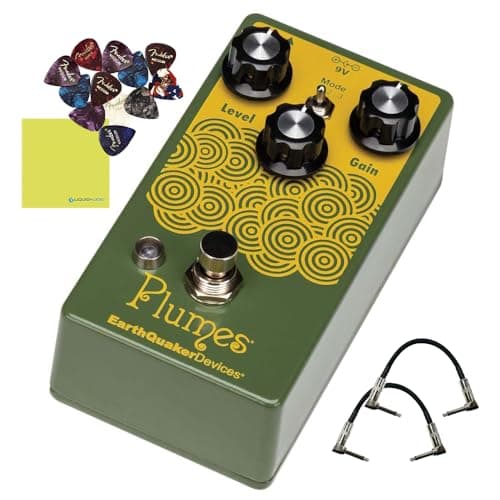 EarthQuaker Devices Plumes The same basic shape with switchable clipping, published specs and a much higher input impedance. | The modern rethink, if you are not committed to the original |
Rows link to the full write-up further down this page. Prices come from the live price layer only — where there is no live figure the button reads “Check price” rather than showing a remembered number.
02What genuinely differs between models
| Difference | Real? | Notes |
|---|---|---|
| Enclosure size and jack placement | Yes | Affects board layout and cable clearance directly |
| Battery option | Yes | The Mini has none; the TS9 takes a 9 V |
| Op amp part number | Documented in some cases | Ibanez identifies the JRC4558D in the Mini and the reissue |
| Bypass type | Yes | The TS family is buffered; some clones are true bypass |
| Clipping diode selection | Real in principle | Rarely published per model, so not something we will assert |
| Component tolerance batch to batch | Real in principle | Not published by anyone and not measurable from here |
Where a row says a difference is not published, that is the reason there is no figure for it on this page.
03The one difference that changes how you use it
Bypass. Every standard Tube Screamer is buffered, which means it is in your signal path when it is off. On a long cable run that is a benefit — a buffer drives capacitance that would otherwise roll off your high end. In front of a Fuzz Face-style circuit it is a problem, because the fuzz needs to see your pickup rather than a low-impedance buffered source.
If you run both a Tube Screamer and a vintage-style fuzz, put the fuzz first, before the TS and before any buffered tuner. Pedal order covers the whole chain and the cases where the default order is wrong.
Ibanez TS9 Tube Screamer
The default answer
The number8 mA at 9 V, published by Ibanez. Impedance figures are not published.
If someone says 'Tube Screamer' without qualification, this is the pedal they mean. Drive, Tone and Level; a 9 V battery or a center-negative adapter; 8 mA of current draw.
It is buffered, not true bypass, which matters if you run a vintage-style fuzz anywhere on the board — the buffer changes how the fuzz behaves.
Ibanez publishes the current draw and the power requirement and does not publish impedance, gain or dimensions. That is worth knowing before you plan a board around it.
| Controls | Drive, Tone, Level |
|---|---|
| Current draw | 8 mA at 9 V |
| Power | One 9 V battery (006P) or a 9 V DC center-negative adapter |
| Jack layout | Input on the right side, output on the left |
| Impedance | Not published by Ibanez |
| What it does not do | No power supply in the box, no true bypass (the TS9 is buffered), and no bass control — the tone stack is a single treble-tilt knob over a fixed mid hump. |
Specs from Ibanez TS9 product page. We have not used this unit.
#ad How we’re funded · price as of October 17, 2026
Ibanez Tube Screamer Mini
The same circuit where there is no room
Ibanez's own material identifies the same JRC4558D op amp as the reissue. Enclosure size, jack placement and the absence of a battery compartment are the differences you will actually notice.
The side-mounted jacks are the real trade-off on a crowded board: a mini pedal saves depth and then spends some of it back on cable clearance. Top-mounted jacks would be better and it does not have them.
No battery option at all. Budget for a supply.
| Controls | Drive, Tone, Level |
|---|---|
| Circuit | Ibanez states the same JRC4558D op amp as the TS9 reissue |
| Power | 9 V DC center-negative adapter only — no battery compartment |
| Format | Mini enclosure |
| What it does not do | No battery option at all, and no power supply included. On a crowded board the top-mounted jacks of the full-size TS9 are easier to cable than the mini's side jacks. |
Specs from Ibanez TS Mini product page. We have not used this unit.
#ad How we’re funded · price as of October 17, 2026
JOYO Vintage Overdrive JF-01
The circuit at a fifth of the price
This is a Tube Screamer-style circuit in a budget enclosure, and the honest position is that the topology is the same and the audible difference in a mix is small.
Where the money was saved is the footswitch, the jacks and the pot shafts — which is precisely what fails on a pedal that gets stood on three nights a week. For a practice room this is close to a free lunch; for a gigging board it is the whole risk.
No published electrical data, so if you are building a power budget you will have to measure it yourself.
| Controls | Volume, Tone, Drive |
|---|---|
| Circuit | Tube Screamer-style overdrive in a compact enclosure |
| Power | 9 V DC center-negative |
| Electrical data | No current-draw or impedance figure is published for this pedal, so none is stated here. |
| What it does not do | No power supply included. Jack and switch hardware is where the money was saved — this is the part of a budget pedal that fails first, and it is worth knowing before you gig one. |
Specs from JOYO Audio product range. We have not used this unit.
#ad How we’re funded · price as of October 17, 2026
EarthQuaker Devices Plumes
The modern rethink, if you are not committed to the original
The number10 M ohm in, 100 ohm out, 25 mA. Relay true bypass.
The Plumes is EarthQuaker's take on that circuit family with the clipping made switchable, and EarthQuaker publishes what each position does. Mode 1's symmetrical LED clipping gives more crunch and compression; mode 3's asymmetrical silicon clipping gives more transparency with a looser feel; mode 2 removes the diodes entirely for a clean boost. Our Plumes review sets those three modes against a Tube Screamer directly.
It publishes everything the Ibanez does not: input and output impedance, current draw, bypass mechanism and dimensions.
If your reason for wanting a Tube Screamer is the sound rather than the object, this is the more capable purchase. If you want the reference circuit, buy the reference circuit.
| Controls | Level, Gain, Tone (bass left, midrange center, treble right), 3-way clipping toggle |
|---|---|
| Clipping modes | Mode 1 symmetrical LED clipping, which EarthQuaker describes as more crunch and compression; mode 2 no clipping, a wide-open op-amp clean boost; mode 3 asymmetrical silicon diode clipping, described as more transparency with a looser feel |
| Circuit | EarthQuaker states it uses JFET op-amps rather than the traditional 4558 IC, with the 9 V supply internally converted to +/- 9 V for more headroom |
| Current draw | 25 mA |
| Input impedance | 10 M ohm |
| Output impedance | 100 ohm |
| Bypass | Flexi-Switch relay-based true bypass, momentary or latching |
| Size | 4.75 x 2.50 x 2.25 in (121 x 64 x 57 mm) with knobs |
| Power | 9 V DC, 2.1 mm center-negative barrel |
| What it does not do | No power supply included and no battery compartment. Mode 2 is a clean boost, not a second drive voicing — if you expected three flavors of dirt, one of them is not dirt. |
Specs from EarthQuaker Devices Plumes product page. We have not used this unit.
04Stacking a Tube Screamer
The most common and most useful configuration is a TS in front of an amp that is already distorting, with the Drive low and the Level high. In that setting you are using it as an EQ and a compressor rather than as a distortion — cutting bass and boosting mids into a power section that responds to exactly that.
- Drive low, Level high — the tightening configuration. This is what most people mean by 'a Tube Screamer in front of a cranked amp'.
- Drive high, Level moderate — the pedal supplies most of the distortion. Works into a clean amp, sounds mid-forward and compressed.
- In front of a high-gain amp channel — tightens a loose low end more effectively than any EQ change on the amp.
- After a Klon-style pedal — the clean blend restores low end before the TS removes it. Covered in Tube Screamer vs Klon.
05Which to buy, decided quickly
- Do you want the reference circuit in a standard enclosure? TS9.
- Is board space the binding constraint? TS Mini, and accept the side jacks.
- Is this a practice-room pedal on a tight budget? A budget copy is genuinely close on circuit.
- Do you want the sound but not the object, plus published specs and a boost mode? Plumes.
- Do you want a drive that does not cut bass at all? You want a different family entirely.
Frequently asked questions
+ What is the difference between a TS9 and a Tube Screamer Mini?
+ Is the Tube Screamer true bypass?
+ Which Tube Screamer is the best one?
+ Are budget Tube Screamer clones any good?
Sources
Related on Fret & Fuzz
EarthQuaker Devices Plumes review
Three clipping modes the maker actually documents, a 10 M ohm input, and a relay bypass that fails silent without power.
Top pick: EarthQuaker Devices Plumes
Tube Screamer vs Klon
One clips your whole signal; the other mixes a clean path back in. Everything people argue about follows from that.
Top pick: Ibanez TS9 Tube Screamer
#ad How we’re funded · price as of October 17, 2026
Tube Screamer vs Blues Driver
Mid hump versus flat response, with both spec sheets side by side and a straight answer about which your amp wants.
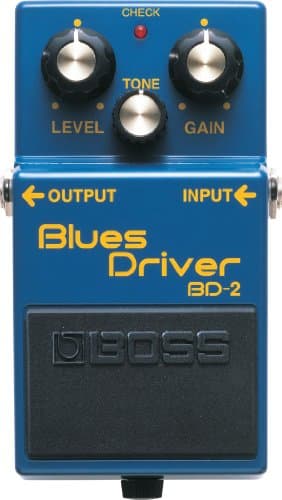
Top pick: BOSS BD-2 Blues Driver
#ad How we’re funded · price as of October 17, 2026
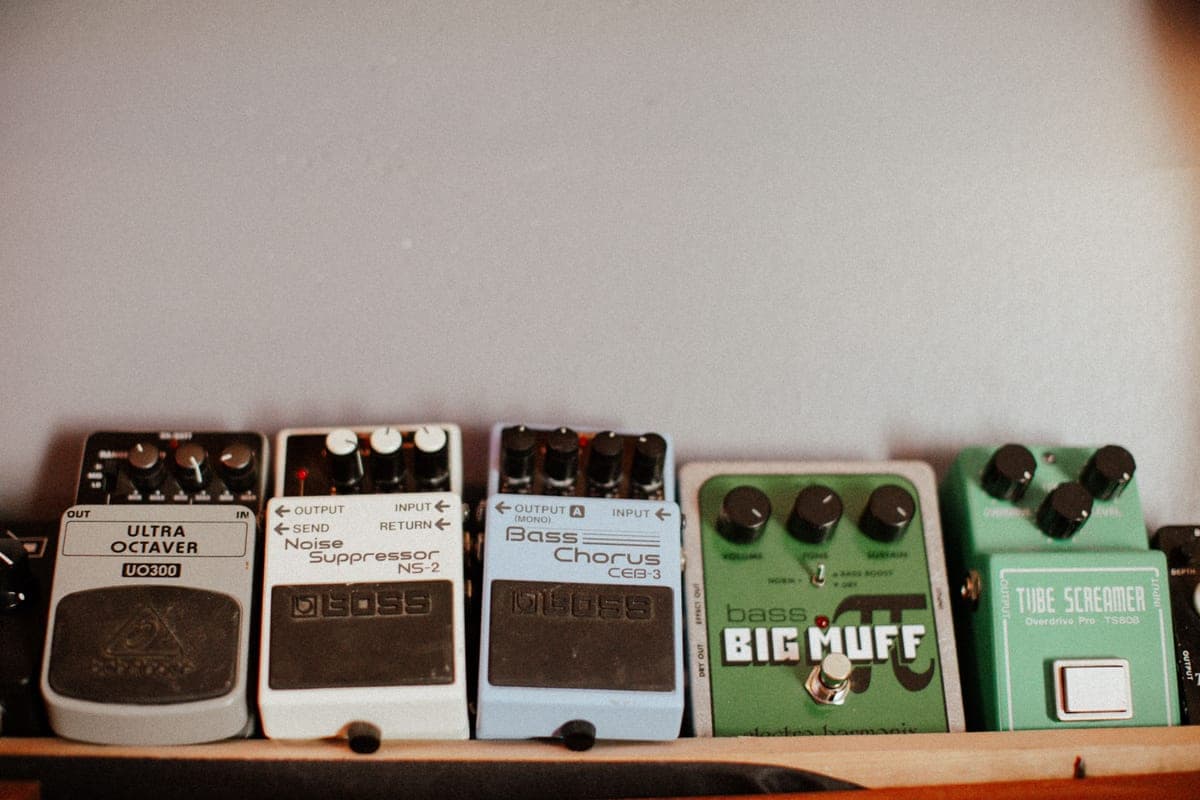
Best overdrive pedals
Six overdrives sorted by circuit family, with the published clipping topology and impedance figures that separate them.
Best Overdrive pick: EarthQuaker Devices Plumes
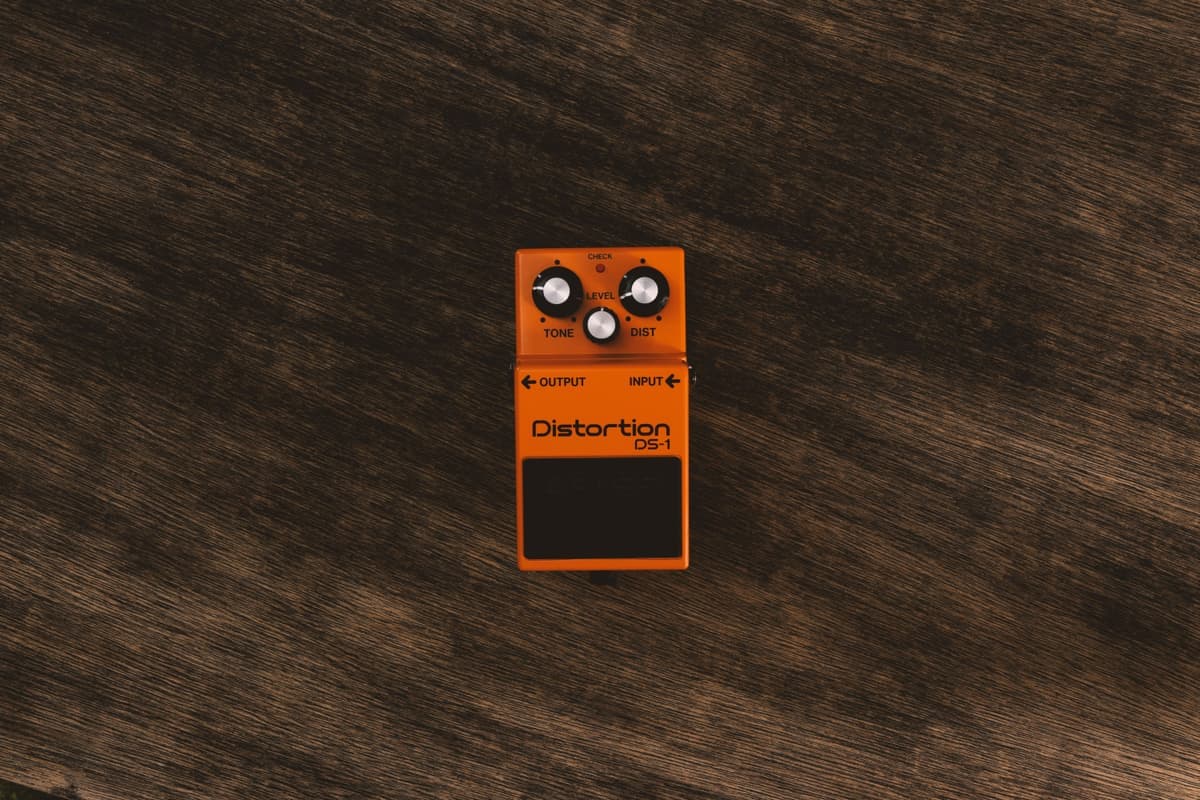
Best guitar pedals under $100
Budget pedals do not save money on the circuit — they save it on the switches and jacks. Here is exactly where, and what that costs you.
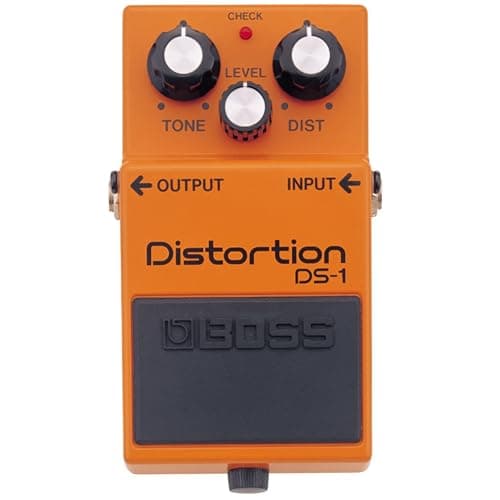
Best Under $100 pick: BOSS DS-1 Distortion