Best pedalboard power supplies under $100
Under $100 buys plenty of current. What it does not reliably buy is isolation, and if you are chasing hum that is the only thing that matters.
Fret & Fuzz earns a commission when you buy through the links on this page. It costs you nothing and it does not decide what we rank. How we’re funded.
We have not played this gear. Every pick below is chosen from published manufacturer specifications and the arithmetic set out in how we research, which you can re-run yourself.
Under $100 buys plenty of current and rarely buys genuine per-channel isolation. If your board is all analog, a Truetone 1 SPOT and a daisy chain is the correct purchase and nothing more expensive will sound better. If your board has a digital delay or reverb and it hums, the fix is isolation, and no supply at this price reliably provides it.
This is a page where the budget answer and the good answer are the same thing for one kind of board and different things for another. Which board you have is the whole question.
Best power supplies under $100
| # | Product | Best for | Price |
|---|---|---|---|
| 01 | 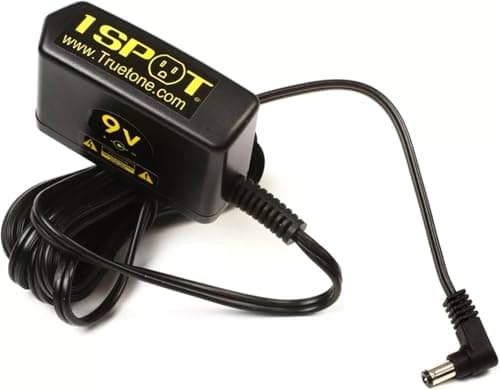 Truetone 1 SPOT 1,700 mA from one output, worldwide mains, and it occupies a single wall socket. | An all-analog board, and it is not close | $27.99 · Check price #ad How we’re funded · price as of October 17, 2026 |
| 02 | 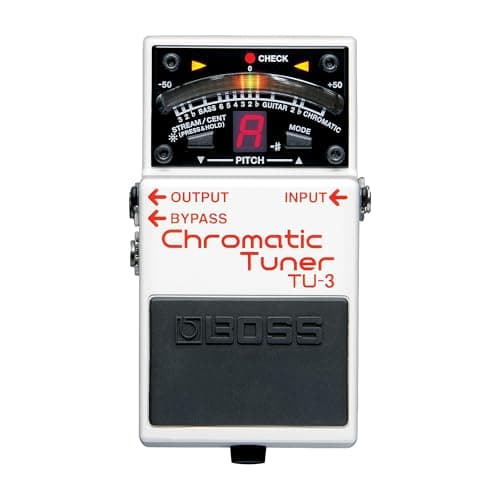 BOSS TU-3 Chromatic Tuner The DC OUT jack will power a small number of other pedals, which can remove the power supply from the budget entirely. | A three-pedal board that needs no brick at all | |
| 03 | 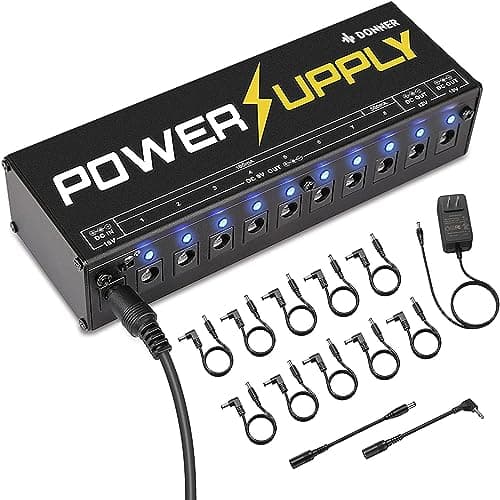 Donner DP-1 Power Supply Ten outputs across 9 V, 12 V and 18 V — filtered, which is not the same as isolated. | Multiple voltages at the lowest price, with a caveat | |
| ! | 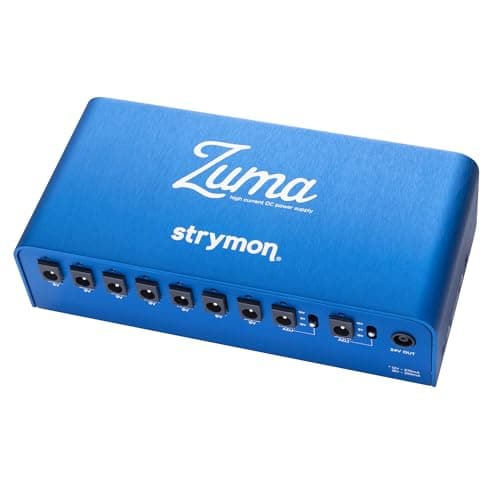 Strymon Zuma Not under $100, and we are not going to pretend a cheap supply is equivalent. Skip this one — see why below | What you are actually saving for | $279.00 · Check price #ad How we’re funded · price as of October 17, 2026 |
Rows link to the full write-up further down this page. Prices come from the live price layer only — where there is no live figure the button reads “Check price” rather than showing a remembered number.
02The one distinction that decides it
| Term | What it means | Fixes hum? |
|---|---|---|
| Regulated | Output voltage stays steady as the load changes | No |
| Filtered | Ripple on the DC rail is smoothed | No |
| Isolated | Each output has its own transformer winding — no shared ground path | Yes |
| Multiple outputs | Says nothing about any of the above | No |
A supply can be regulated, filtered and have ten outputs while every one of them shares a ground. That is the configuration that produces hum, and it is what most budget bricks are.
03When a daisy chain is genuinely fine
All-analog boards. A tuner, two or three drive pedals, a compressor and a fuzz will run silently off a daisy chain, and they will do so for years. Analog circuits draw steady, low current and do not inject switching noise into the ground they share.
The failure mode arrives with digital pedals. A digital delay's internal switching supply puts noise onto its ground, and on a daisy chain that ground is shared with everything else. The hum you hear is not a fault in the delay — it is the topology working as designed.
Truetone 1 SPOT
An all-analog board, and it is not close
The number1,700 mA total. Zero isolation — both halves matter.
For a board of analog dirt, a tuner and a compressor, nothing at this price is better. 1,700 mA is more total current than several isolated bricks costing four times as much, and the right-angle plug does not block the adjacent socket.
100-240 V mains input means it works anywhere, which matters if you ever travel with the board.
Zero isolation. Every pedal on the chain shares a ground. That is fine until a digital pedal joins the board, at which point it is the cause of your hum rather than a victim of it.
| Output | 9 V DC, 1,700 mA from a single non-isolated output |
|---|---|
| Isolation | None — this is a single supply intended for daisy-chaining |
| Mains input | 100-240 V AC, worldwide |
| Format | Single-space wall unit with a right-angle plug |
| What it does not do | No isolation at all. Every pedal on the chain shares a ground, which is exactly the condition that produces hum with a digital pedal in the mix. It is a great first supply and a bad final one. |
Specs from Truetone 1 SPOT product page. We have not used this unit.
#ad How we’re funded · price as of October 17, 2026
BOSS TU-3 Chromatic Tuner
A three-pedal board that needs no brick at all
The number20 mA for the tuner itself, 80 mA in High Brightness mode.
This is a tuner, and it is here because its DC OUT jack is a genuinely useful power solution on a small board. One adapter into the TU-3 powers the tuner and a small number of pedals daisy-chained from its output.
For a three-pedal analog board that is the whole power system: one wall adapter, no brick, no extra cost.
The limits are real. It is not isolated, and the current available downstream is finite — this is a solution for two or three low-draw analog pedals, not for a digital delay.
| Tuning range | C0 (16.35 Hz) to C8 (4,186 Hz) |
|---|---|
| Accuracy | +/- 1 cent |
| Modes | Chromatic, Chromatic flat x2, Guitar, Guitar flat x2, Bass, Bass flat x3 |
| Bypass | Buffered bypass |
| Current draw | 20 mA; 80 mA with High Brightness mode on |
| Jacks | Output, Bypass, DC IN, DC OUT (powers other pedals) |
| Weight | 390 g including battery |
| What it does not do | +/- 1 cent is fine for a stage tuner and not enough for setting intonation — that is strobe territory. Turning on High Brightness quadruples the current draw, which matters on a shared supply. |
Specs from BOSS TU-3 specifications. We have not used this unit.
Donner DP-1 Power Supply
Multiple voltages at the lowest price, with a caveat
If you need 18 V for an MXR 10 Band EQ and you cannot stretch to an isolated brick with an 18 V output, this covers the voltage requirement cheaply.
Donner describes filtered outputs. Filtering smooths ripple on a supply rail; it does not break a shared ground path, so it does not fix a ground loop. Read the description carefully rather than assuming multiple outputs means isolation.
Per-output current ratings are published on the packaging rather than in a full spec sheet, which means planning a board around it involves more guessing than it should.
| Outputs | 10 outputs at 9 V, 12 V and 18 V |
|---|---|
| Isolation | Donner describes filtered outputs; the unit is not fully transformer-isolated per channel |
| Format | Under-board brick |
| Electrical data | Per-output current ratings are published on the packaging rather than a full spec sheet |
| What it does not do | Filtered is not the same as isolated. If your problem is a ground loop between a digital pedal and an analog one, filtering will not fix it. |
Specs from Donner guitar effects range. We have not used this unit.
Strymon Zuma
What you are actually saving for
We are not picking this here because it breaks the budget, and it is on the page because the honest advice for a board with digital pedals is to save rather than to substitute.
Nine isolated outputs at 500 mA each, individual transformers per channel, 48 W total, worldwide mains input. That is a different category of product to everything above and the price reflects it.
If your board is all analog, the 1 SPOT above is genuinely the right answer and this would be money wasted. If your board has a digital delay and it hums, no supply under $100 fixes that properly — isolated vs daisy chain explains why.
| Outputs | 9, fully isolated, one custom transformer per channel |
|---|---|
| Current per output | 500 mA at 9 V DC on every output |
| Selectable outputs | 2 outputs switch to 12 V (375 mA) or 18 V (250 mA) |
| Total power | 48 W maximum |
| Mains input | 100-240 V, worldwide |
| Size / weight | 6.8 x 3.3 x 1.8 in (173 x 84 x 46 mm), 680 g |
| What it does not do | It does not include the courtesy outlets or the sag feature some rivals have, and 500 mA per output still will not run an HX Stomp, which asks for 3 A. |
Specs from Strymon Zuma product page. We have not used this unit.
04The 18 V problem on a budget
An MXR 10 Band EQ runs on 18 V, and it is the single most common pedal to strand a budget power plan. A Truetone CS7 has no 18 V output at all. The cheap options are a dedicated 18 V adapter for that pedal alone, or a multi-voltage budget brick with the isolation caveat above.
Do not attempt to run it at 9 V. It will either not work or work badly, and the reason will not be obvious from the front panel.
05What to spend the saved money on
Patch cables. They are the cheapest item on a board and the most common cause of an intermittent fault, and the failure is much harder to diagnose than a power problem. The patch cable roundup is blunt about which kind fails.
Frequently asked questions
+ Is a cheap pedal power supply safe?
+ Will a cheap isolated power supply stop my hum?
+ Can I daisy chain a digital delay with analog pedals?
+ How many pedals can a 1 SPOT power?
Sources
Related on Fret & Fuzz
Best pedalboard power supplies
Compare on the highest single output, not total current. Five isolated supplies on their published per-output ratings.
Best Power Supply pick: Strymon Zuma
#ad How we’re funded · price as of October 17, 2026
Isolated power supply vs daisy chain
Two topologies, two failure modes. The mechanism behind the hum, and the point at which a daisy chain stops being enough.
Top pick: Truetone 1 SPOT
#ad How we’re funded · price as of October 17, 2026
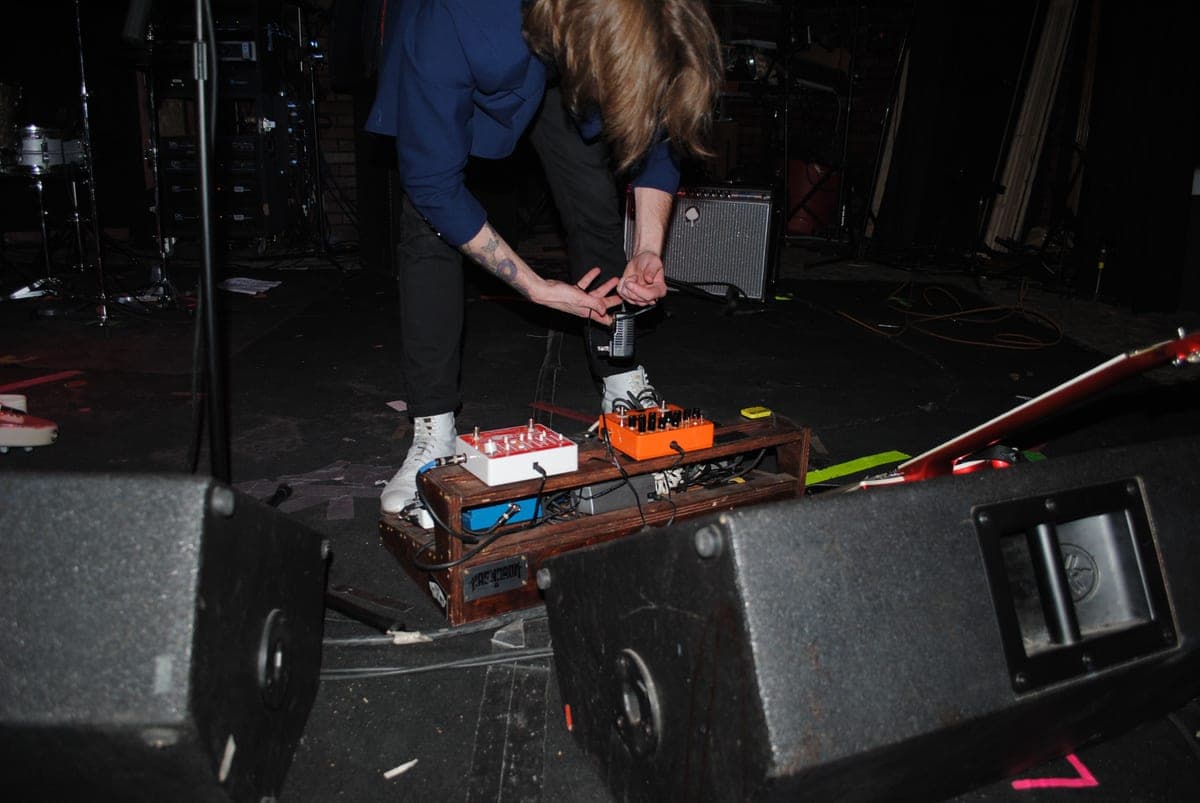
Pedalboard power requirements explained
Two sums decide your power supply, and almost everyone only does the first. A worked example with real published figures.
Top pick: Strymon Zuma
#ad How we’re funded · price as of October 17, 2026
Best guitar pedals under $100
Budget pedals do not save money on the circuit — they save it on the switches and jacks. Here is exactly where, and what that costs you.
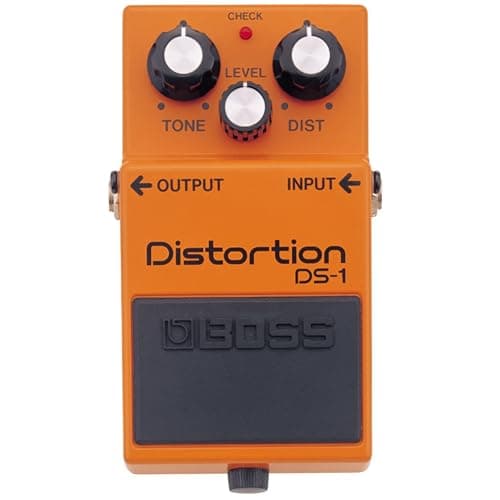
Best Under $100 pick: BOSS DS-1 Distortion