Best multi-effects pedals
Published block counts, model counts and current draw. The last of those decides whether a unit can share your board, and nobody puts it on the box.
Fret & Fuzz earns a commission when you buy through the links on this page. It costs you nothing and it does not decide what we rank. How we’re funded.
We have not played this gear. Every pick below is chosen from published manufacturer specifications and the arithmetic set out in how we research, which you can re-run yourself.
Choose on three published numbers: how many blocks run at once, how many models you get, and how much current the unit draws. The third decides where it can physically live. A Line 6 HX Stomp needs 3 A and a BOSS GX-100 needs 1.2 A, so neither will ever share a pedalboard supply — a NUX MG-30 MKII takes an ordinary 9 V center-negative connector but publishes no draw at all. Nobody prints this on the box and it is the specification most likely to strand your plan.
Multi-effects reviews mostly compare model counts, which is the least useful number on the sheet — every unit here has more amp models than you will use. What separates them is how many things can run at once, whether you can move them around, and what it takes to power the thing.
01The criteria, before any product
These are the specifications that decide the outcome, in the order they actually bite. Everything after this section is an application of them.
| Criterion | Why it decides the purchase | What to look for |
|---|---|---|
| Simultaneous blocks | The ceiling on how complex one sound can be. Model count is irrelevant if only six things run at once | Six is tight; twelve to fifteen is comfortable |
| Fixed or movable routing | Whether you can put a compressor after the drive, or a delay before it | "Movable" or "freely assignable" beats "semi-fixed" |
| Current draw | Decides whether it shares your board's supply or needs its own outlet | Anything above 500 mA needs a dedicated supply |
| Expression pedal | Wah and volume are foot controls or they are not usable | Built-in, or budget for one plus a cable |
| IR loading | Lets you use cabinet captures other people made, which is where most of the realism lives | Slot count and sample resolution |
| Effects loop / send-return | Whether real pedals can sit inside the digital chain | Present on the HX Stomp, GX-100 and MG-30 MKII |
| Balanced outputs | Going straight to a PA without a DI box | XLR, or balanced TRS |
| Screen size | Whether you can edit at a gig or only at a desk | Under 3 inches means laptop editing |
Two of those are worth expanding, because they are the ones that produce returned purchases: power, and the block ceiling.
02The power figure nobody puts on the box
Every unit on this page uses a 9 V DC center-negative connector, which looks exactly like the connector on your drive pedals. That resemblance is the trap. The connector is standard; the current behind it is not.
| Unit | Published power requirement | Can it share a pedalboard supply? |
|---|---|---|
| Line 6 HX Stomp | 9 V DC, DC-3 supply rated 3 A | No — six times the highest single brick output |
| BOSS GX-100 | AC adaptor, 1.2 A | No — and no battery option at all |
| Line 6 POD Go | Supplied DC-3; Line 6 recommends using only that supply | No |
| NUX MG-30 MKII | 9 V DC center negative; no draw figure published | Unknown — measure before you assume |
| BOSS GT-1 (discontinued) | 200 mA, or 4 x AA batteries | Yes, but it is no longer made |
For comparison, the highest single output on a Strymon Zuma is 500 mA and on a Truetone 1 SPOT Pro CS7 it is also 500 mA.
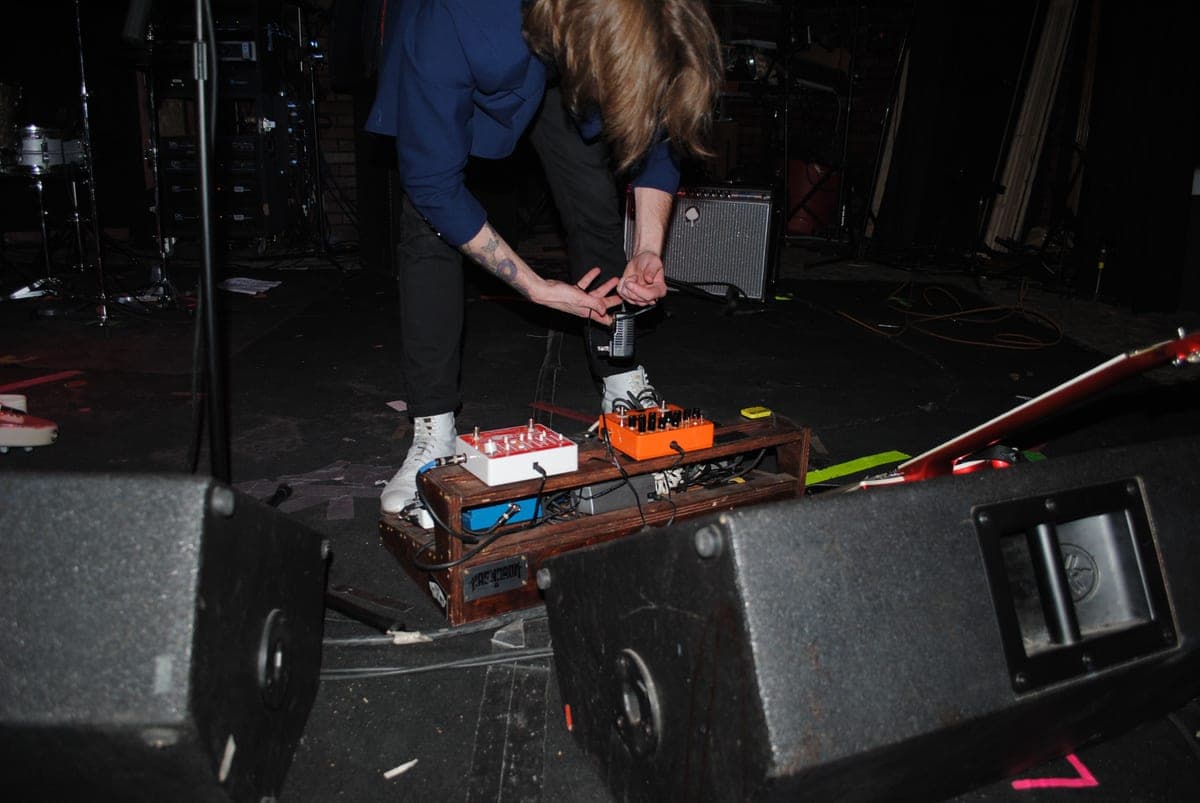
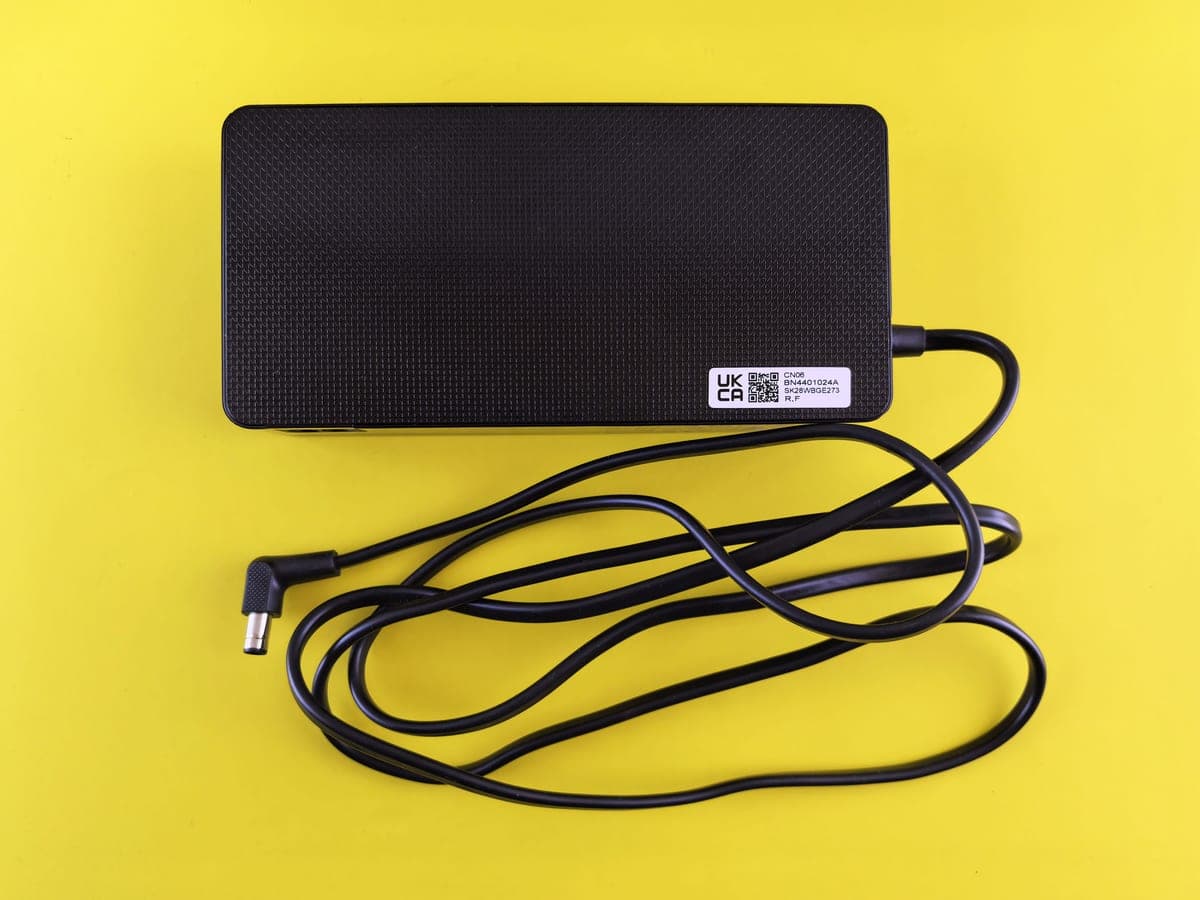
The practical consequence: a board that contains both a multi-effects unit and ordinary pedals needs two supplies, and the underside of the board has to have room for both. That is not a flaw in any of these products — it is a planning step people skip. Pedalboard power requirements works through the arithmetic for the rest of the board.
Best multi-effects pedals
| # | Product | Best for | Price |
|---|---|---|---|
| 01 | 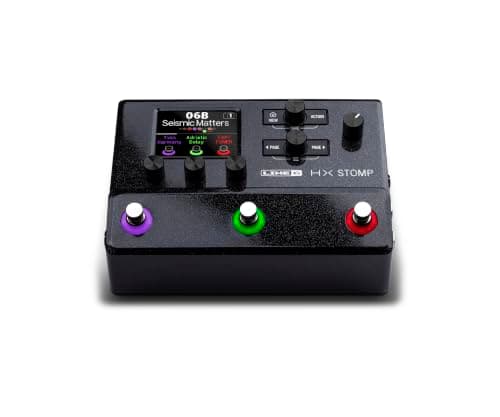 Line 6 HX Stomp Six blocks of the Helix model set in a compact three-switch enclosure with an effects loop. | Adding modeling to a pedalboard you already own | $599.99 · Check price #ad How we’re funded · price as of October 20, 2026 |
| 02 | 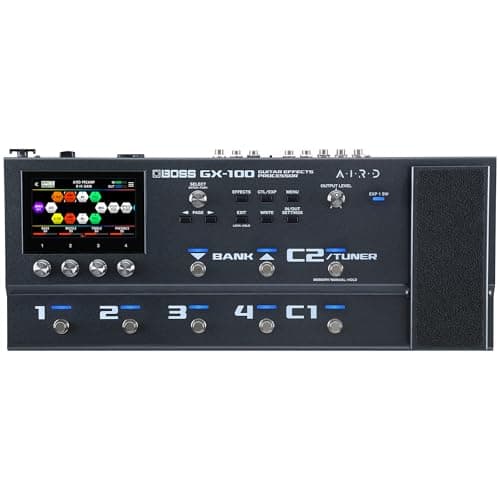 BOSS GX-100 Guitar Effects Processor 170 effect types, fifteen simultaneous, and a touchscreen you can actually edit on. | Wanting the whole rig on one screen | $659.99 · Check price #ad How we’re funded · price as of October 20, 2026 |
| 03 | 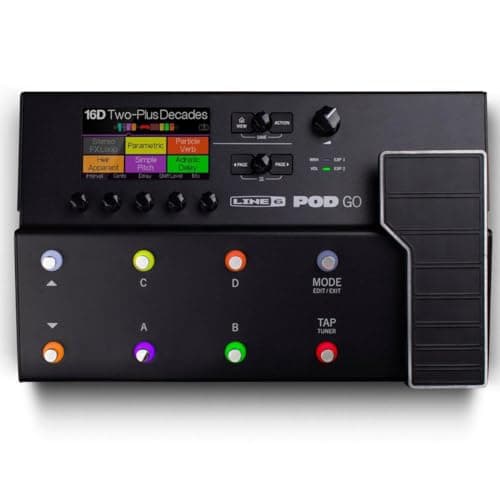 Line 6 POD Go The HX model set with a built-in expression pedal, in a semi-fixed signal path. | One box that replaces the whole rig | $599.99 · Check price #ad How we’re funded · price as of October 20, 2026 |
| 04 | No photo NUX MG-30 MKII Twelve movable signal blocks, a 1024-sample IR loader and balanced outputs, at the bottom of this price bracket. | The most capability per dollar | |
| ! | No photo BOSS GT-1 Guitar Effects Processor The obvious battery-powered budget answer, and BOSS stopped making it. Skip this one — see why below | No longer purchasable — BOSS has discontinued it | Discontinued No longer in production. We do not link a buy option for it. |
Rows link to the full write-up further down this page. Prices come from the live price layer only — where there is no live figure the button reads “Check price” rather than showing a remembered number.
04How to choose, in three questions
- Are you replacing a rig or adding to one? Replacing points at an all-in-one with an expression pedal — the POD Go or the MG-30 MKII. Adding points at the HX Stomp, which is built to sit on a board next to real pedals.
- How much do you need running at once? Six blocks covers amp, cab, drive, delay, reverb and compressor and nothing else. If you want a gate and a modulation on top of that, six is not enough and you want twelve or fifteen.
- Where will it get power? If the answer is "the brick under my board", none of the current units on this page work and you need to re-plan. Every one of them needs its own outlet.
A fourth question decides it for a lot of people and is not about specifications at all: whether you would rather turn a knob or press a footswitch and read a screen. That is a working-style preference, not a quality difference, and pedals vs multi-effects is the honest version of that comparison.
Line 6 HX Stomp
Adding modeling to a pedalboard you already own
The number9 V DC center-negative, but a 3 A supply — six times the highest single output on any pedalboard brick.
This is the unit for the reader this site is written for: someone with a working pedalboard who wants amp and cab modeling, or a couple of high-quality time effects, without replacing what they already have. Three footswitches, stereo I/O, an effects loop, and over 300 amps, cabs and effects from the Helix family with IR loading.
Six simultaneous blocks is the ceiling and it is a real one. An amp, a cab, a drive, a delay, a reverb and a compressor is six, and then you are finished — there is no seventh slot for the thing you thought of afterwards. That constraint is the trade for the size.
The con that catches people out is power. Line 6 ships a DC-3 supply rated at 3 A. A Strymon Zuma gives 500 mA per output and a Truetone CS7 tops out at 500 mA, so no pedalboard brick in production will run one. It needs its own supply, and the underside of your board needs to have room for two. The 2.4-inch screen is also small for editing anything complex — expect to use the computer editor.
| Simultaneous blocks | Up to six simultaneously |
|---|---|
| Models | Over 300 amps, cabs and effects from the Helix family, with IR loading |
| Power | 9 V DC center-negative, DC-3 supply (3 A) included |
| Display / switches | 2.4" color LCD; three capacitive-touch footswitches with LED rings |
| Audio interface | 24-bit / 96 kHz multi-channel USB audio |
| Format | Compact pedalboard unit with stereo I/O and an effects loop |
| What it does not do | It asks for 3 A at 9 V. No standard isolated pedalboard brick output supplies that, so it needs its own supply — this is the mistake people make when they add one to an existing board. |
Specs from Line 6 HX Stomp owner's manual. We have not used this unit.
#ad How we’re funded · price as of October 20, 2026
BOSS GX-100 Guitar Effects Processor
Wanting the whole rig on one screen
The number1.2 A — roughly twenty times a typical analog drive pedal, and more than double an HX Stomp.
BOSS publishes 170 effect types with fifteen running simultaneously, plus divider/mixer, send/return and phrase-loop blocks on top. Against the HX Stomp's six blocks that is a different order of capability, and the 480 x 272 touchscreen is the reason you can use it: this is the one unit here you can genuinely program standing up, without a laptop.
The connector list is the other argument. Stereo output, send/return, headphones, two control jacks, an expression jack, two amp-control jacks, MIDI in and out, USB-B and a Bluetooth adaptor connector. If your rig has other things in it that need to be told what to do, this talks to them.
The cons are size, weight and power. At 460 mm wide and 3.5 kg it is a board rather than a pedal. There is no battery operation at all. And 1.2 A means it will never share a supply with anything — it is a wall socket of its own, which matters when you are working out how many outlets a stage actually has. The power arithmetic is the general method.
| Effects | 170 types |
|---|---|
| Simultaneous effects | 15, plus divider/mixer, send/return and phrase loop |
| Display | 480 x 272 color graphic LCD, touch screen |
| Expression pedal | Built-in EXP1 pedal |
| Connectors | Input, stereo output, send/return, phones, CTL3/4 + EXP2, AMP CTL1/2, MIDI in/out, USB-B, Bluetooth adaptor connector |
| Current draw | 1.2 A (AC adaptor only — no battery option) |
| Size / weight | 460 x 193 x 73 mm (94 mm max height), 3.5 kg |
| What it does not do | 1.2 A is roughly twice what an HX Stomp asks for and more than twenty times a typical analog pedal, so it will never share a pedalboard supply. There is no battery operation at all, and at 3.5 kg it is the heaviest unit here. |
Specs from BOSS GX-100 specifications. We have not used this unit.
#ad How we’re funded · price as of October 20, 2026
Line 6 POD Go
One box that replaces the whole rig
If the goal is to arrive with one thing and plug into a PA or a powered speaker, this is the shape that does it. Line 6's HX amp, cab and effect models with IR loading, and — the part the HX Stomp does not have — a real expression pedal built into the chassis, which covers wah and volume without another purchase or another cable.
The signal path is what Line 6 calls semi-fixed: certain positions in the chain are reserved for certain block types rather than being freely arrangable. For most players that is invisible, because the reserved order is the order you would have chosen. For anyone who wants a genuinely unusual routing, it is a wall.
The cons: no XLR outputs on the standard model, so a live rig going to a front-of-house desk still needs a DI box. Line 6 recommends using only the supplied DC-3 supply, which again means a dedicated outlet rather than a board slot. And a floor unit with an expression pedal is a fixed footprint — you cannot make it smaller by removing what you do not use.
| Format | All-in-one floor unit with a built-in expression pedal |
|---|---|
| Signal chain | Line 6 describes a semi-fixed serial signal path with snapshots |
| Models | HX-family amp, cab and effect models with IR loading |
| Power | External DC-3 supply included; Line 6 recommends using only that supply |
| What it does not do | The semi-fixed chain is a genuine limitation compared to a Helix — you cannot put anything anywhere. No XLR outputs on the standard model. |
Specs from Line 6 POD Go product page. We have not used this unit.
#ad How we’re funded · price as of October 20, 2026
NUX MG-30 MKII
The most capability per dollar
Twelve independent, movable blocks — wah, compressor, gate, EFX, amp, IR, EQ, send/return, modulation, delay, reverb and volume — is more routing freedom than the POD Go offers and twice the block count of an HX Stomp. NUX also publishes 35 amp models plus ten user slots for IMAGE and Native NAM profiles, which is a genuine capability rather than a marketing count: it means the unit can load profiles other people made.
The practical specs are strong for the money. A 4-inch 800 x 400 color screen, a 1024-sample IR loader with 24 third-party slots, balanced quarter-inch TRS outputs, 1.5 kg, and 9 V DC center-negative power — the same connector standard as the rest of your board, which is not true of anything else on this page.
The cons are the omissions. There is no built-in expression pedal; the included NMP-2 LITE is a two-button footswitch, and an expression pedal is a separate purchase. NUX publishes no current-draw figure at all, so even though it takes a standard 9 V connector you cannot plan a shared supply around it without measuring the unit yourself. And a five-footswitch layout is only reachable by adding hardware.
| Amp models | 35 TS/AC-2K amp models, plus 10 user slots for IMAGE and Native NAM A2 profiles |
|---|---|
| Signal blocks | 12 independent, movable blocks (wah, comp, gate, EFX, amp, IR, EQ, S/R, mod, delay, reverb, volume) |
| IR loader | 1024-sample resolution with 24 third-party IR slots |
| Display | 4" 800 x 400 color LCD |
| Footswitches | Expandable to a 5-footswitch layout; NMP-2 LITE dual footswitch included |
| Outputs | Balanced 1/4" TRS outputs |
| Power | 9 V DC, center negative |
| Size / weight | 313 x 166 x 55 mm, 1.5 kg |
| What it does not do | No built-in expression pedal — the included footswitch is two buttons, and an expression pedal is a separate purchase. NUX publishes no current-draw figure, so you cannot plan a shared supply around it without measuring. |
Specs from NUX MG-30 MKII product page. We have not used this unit.
BOSS GT-1 Guitar Effects Processor
No longer purchasable — BOSS has discontinued it
We are not picking this one, and the reason is availability rather than quality. BOSS's own specification page lists the GT-1 as discontinued. Anything you find now is old stock or secondhand, with no warranty path and no guarantee of support.
It is worth saying what it did, because nothing has directly replaced it. Four AA batteries or an adaptor, a published 200 mA draw, 108 effect types, a USB audio interface and an onboard expression pedal, all in a 1.3 kg chassis 305 mm wide. Battery-powered multi-effects at that size and price is a combination that has largely vanished from the market.
If battery operation is a hard requirement for you — busking, or somewhere with no reliable power — that requirement now points at the used market rather than at anything in production. If it was just the low price that appealed, the NUX above is the current answer and it does considerably more.
| Status | BOSS lists the GT-1 as DISCONTINUED — it is no longer in production |
|---|---|
| Effects | 108 types |
| Format | Compact battery-capable multi-effects floor unit with an on-board expression pedal |
| Power | 4 x AA alkaline or an AC adaptor (sold separately); approx. 7 hours on alkaline |
| Current draw | 200 mA |
| Size / weight | 305 x 152 x 56 mm, 1.3 kg |
| What it does not do | It is discontinued, so anything you find is old stock or secondhand and there is no warranty path. The interface is also small and menu-driven — editing is much faster in the computer editor than on the unit. |
Specs from BOSS GT-1 specifications (listed as discontinued). We have not used this unit.
05What none of these will do
- Survive a failure gracefully. If a drive pedal dies mid-set you step on its bypass and carry on. If the multi-effects unit dies you have no guitar sound at all. Carry a cheap drive pedal and a cable as a backup — it costs almost nothing and it is the whole contingency plan.
- Replace a real amp in a room. Modeling into a PA or powered speaker is excellent. Modeling into a guitar amp's front input means you are hearing a modeled amp through a real amp's tone stack, which is rarely what you wanted. Use the effects return, or a full-range speaker.
- Be edited quickly on a small screen. Every unit here except the GX-100 is faster to program on a computer. Budget the setup time honestly, because a half-configured multi-effects unit is worse than the three pedals it replaced.
- Hold their value like pedals do. Individual pedals resell well for years. A digital unit depreciates with its model generation. That is a real cost of ownership and it is worth pricing in.
06Where a multi-effects unit goes in the rig
If it is doing amp and cab modeling, it goes at the end of the chain and out to a PA, a powered speaker or an audio interface — not into the front of a guitar amp. If it is doing effects only and a real amp is making the sound, it goes where those effects would have gone: drives in front of the amp, time effects in the effects loop.
A unit with a send/return loop — the HX Stomp, the GX-100 and the MG-30 MKII all have one — lets you put real pedals inside the digital chain, which is the arrangement most people end up at. Your favorite fuzz stays a real fuzz and everything else is modeled. Pedal order covers the placement rules that still apply to the analog half. Before you add any of these to an existing board, check the supply: powering an HX Stomp covers why a 3 A requirement cannot be met by a brick and what to do instead. The two Line 6 units that sell for the same money are compared directly in HX Stomp vs POD Go, which is a question of board shape rather than sound.
Frequently asked questions
+ What is the best multi-effects pedal?
+ Can I power a multi-effects pedal from my pedalboard supply?
+ Is the BOSS GT-1 still available?
+ How many simultaneous effects do I actually need?
+ Should I plug a multi-effects unit into my amp?
+ Do multi-effects units need an expression pedal?
Sources
Related on Fret & Fuzz
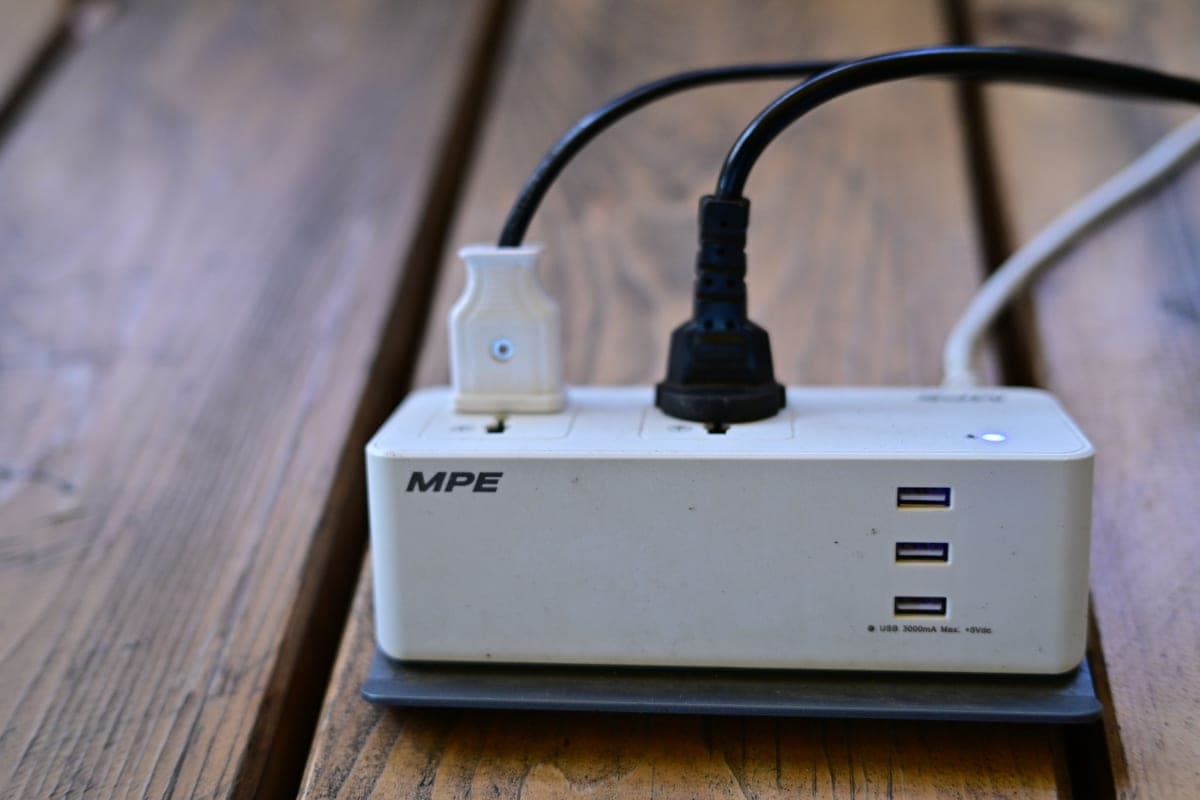
Powering an HX Stomp from a pedalboard supply
Line 6 specifies 3 A. The most generous common brick output is 500 mA. The arithmetic, and what to do instead.
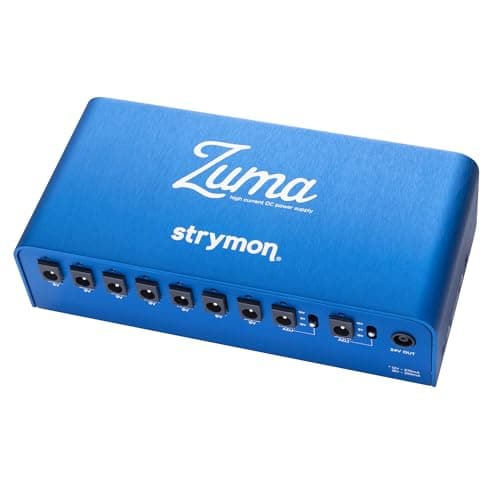
Top pick: Strymon Zuma
#ad How we’re funded · price as of October 20, 2026
Line 6 HX Stomp vs POD Go
Same models, same money. Six freely placed blocks against a finished floor rig with an expression pedal built in.
Top pick: Line 6 HX Stomp
#ad How we’re funded · price as of October 20, 2026
Pedals vs multi-effects
Power, interface and failure mode decide this, not tone. Including the 3 A requirement no pedalboard brick can meet.
Top pick: Line 6 HX Stomp
#ad How we’re funded · price as of October 20, 2026
Pedalboard power requirements explained
Two sums decide your power supply, and almost everyone only does the first. A worked example with real published figures.
Top pick: Strymon Zuma
#ad How we’re funded · price as of October 20, 2026
Best pedalboard power supplies
Compare on the highest single output, not total current. Five isolated supplies on their published per-output ratings.
Best Power Supply pick: Strymon Zuma
#ad How we’re funded · price as of October 20, 2026

Best pedal platform amps
Headroom, not gain. Why solid state is genuinely competitive here, and which amps have the jacks that matter.
Best Pedal Platform pick: BOSS KATANA-50 GEN 3