Combo vs head and cab
For almost everybody who is not already gigging regularly, the combo is the right answer. Here is when it is not.
Fret & Fuzz earns a commission when you buy through the links on this page. It costs you nothing and it does not decide what we rank. How we’re funded.
We have not played this gear. Every pick below is chosen from published manufacturer specifications and the arithmetic set out in how we research, which you can re-run yourself.
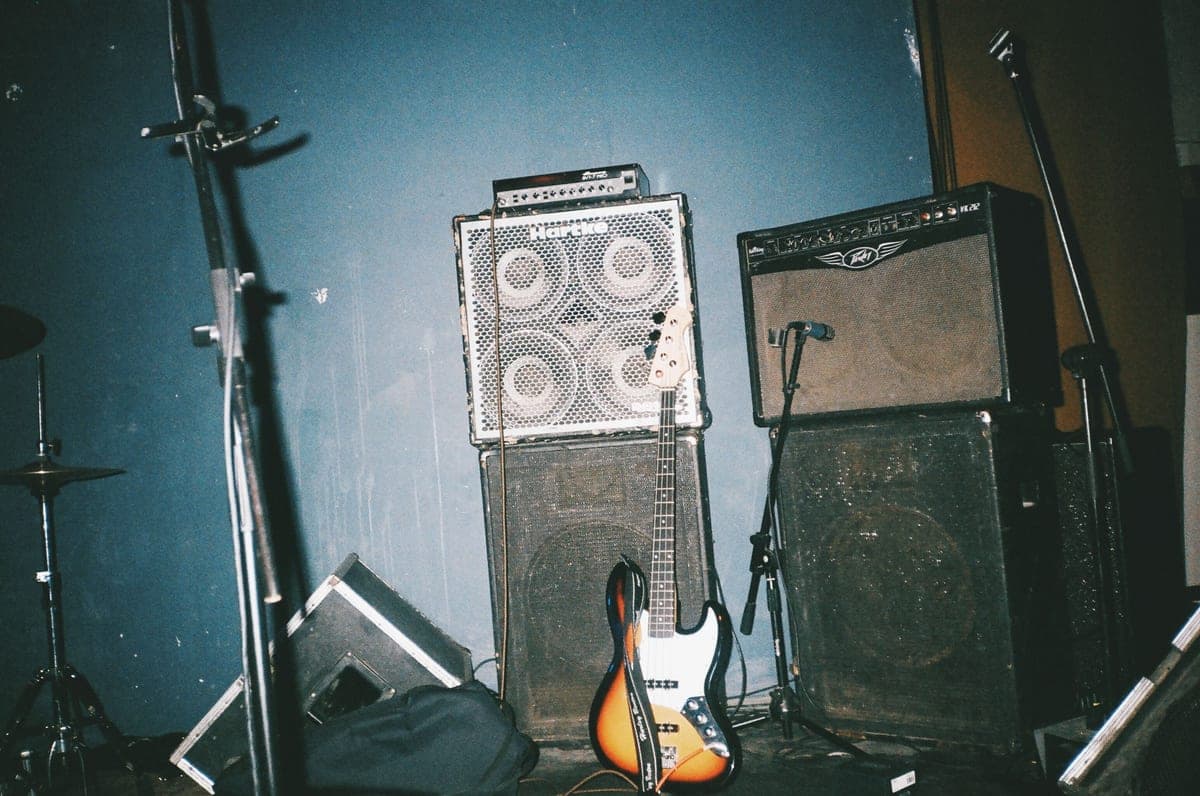
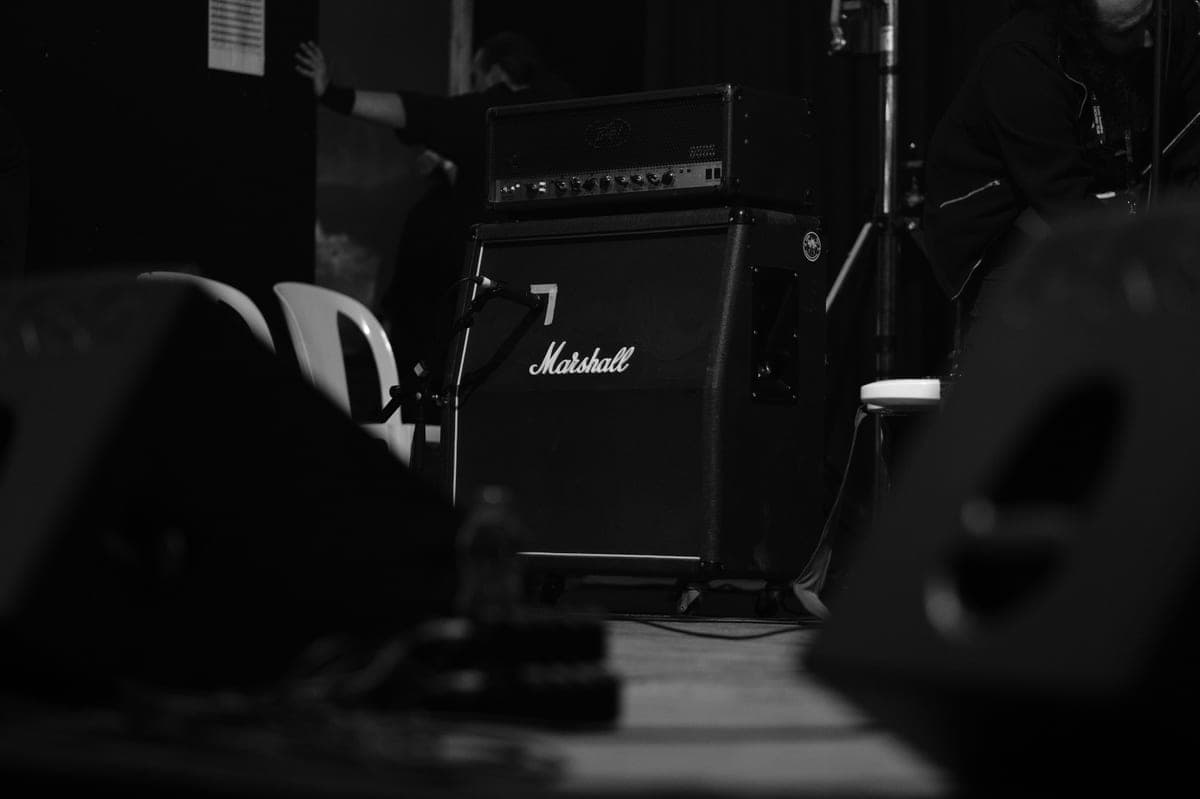
Buy a combo unless you have a specific reason not to. A combo is one box, lighter overall, and the manufacturer chose a speaker that suits the circuit. A head and cabinet is heavier, more expensive and more flexible, and it lets you change the single component that affects the sound most — which is why it wins for anyone whose sound depends on a specific cabinet.
The stack is iconography as much as engineering. There are real reasons to choose one, and image is not among the ones worth paying for.
Combos worth choosing over a stack
| # | Product | Best for | Price |
|---|---|---|---|
| 01 | No photo Marshall DSL20CR 20 W of EL34 in a combo, with the option of driving an external cabinet later. | A combo with a speaker output, so you can do both | |
| 02 | 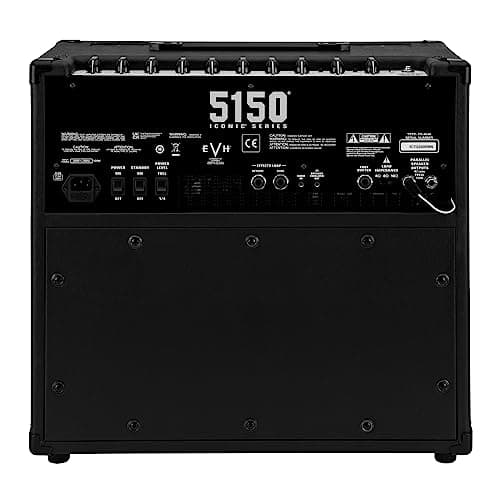 EVH 5150 Iconic Series 15W 1x10 combo Dual parallel speaker outputs and a 10-inch internal speaker that is clearly the limiting factor. | A small combo that changes character through a bigger cab | $699.99 · Check price #ad How we’re funded · price as of October 17, 2026 |
| 03 | 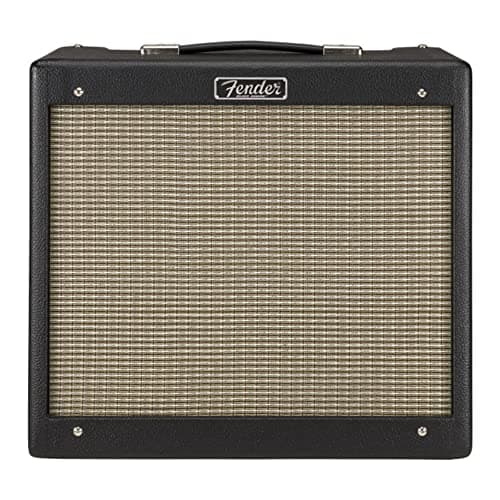 Fender Blues Junior IV A 12-inch Celestion A-Type chosen to suit the circuit — a matched pairing you would have to work to improve. | A combo where the speaker is the point | $789.99 · Check price #ad How we’re funded · price as of October 17, 2026 |
| ! | 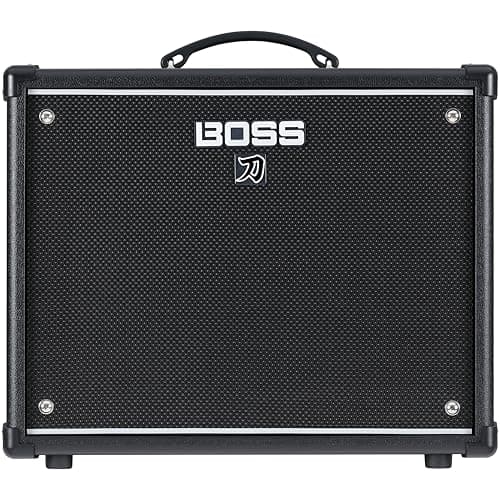 BOSS KATANA-50 GEN 3 A 50 W combo whose Power Amp In jack makes an external head unnecessary rather than possible. Skip this one — see why below | Not a stack candidate, and worth saying why |
Rows link to the full write-up further down this page. Prices come from the live price layer only — where there is no live figure the button reads “Check price” rather than showing a remembered number.
02The comparison
| Combo | Head and cab | |
|---|---|---|
| Boxes to carry | One | Two, and the cab is the heavy one |
| Total weight | Lower | Higher, though split into two lifts |
| Speaker choice | Made for you, usually well | Yours, for better or worse |
| Cost | Lower for equivalent electronics | Higher — you are buying a cabinet |
| Flexibility | Fixed pairing | Any head into any cabinet at the right impedance |
| Stage volume | Speaker aimed at the back of your legs | Cabinet can be raised or angled |
| Resale | Sold as a unit | Two items, each with its own market |
03Why the speaker matters this much
The speaker and cabinet are the last thing in the signal path and the only part that actually produces sound. They impose a frequency response, a distortion character and a dispersion pattern, all of which are substantial.
The EVH 5150 Iconic 15 W is the clearest example on this site. EVH publishes a 10-inch internal speaker and dual parallel speaker outputs. Through the internal 10 it is a small amp with limited low end; through a 4x12 it is not. The electronics did not change.
Marshall DSL20CR
A combo with a speaker output, so you can do both
The number20 W with a 10 W setting, 12-inch Celestion Seventy-80, 35.2 lb.
The useful middle position: a combo you can use as-is, with the ability to add an external cabinet when you want the bigger sound without replacing the amp.
12-inch Celestion Seventy-80 built in, two channels, an effects loop and a half-power switch.
35.2 lb is the heaviest amp we recommend as a combo. Past that, the head-and-cab argument starts winning on ergonomics alone.
| Power | 20 W, with a half-power (10 W) setting |
|---|---|
| Speaker | 12" Celestion Seventy-80 |
| Preamp tubes | 3 x ECC83 |
| Power tubes | 2 x EL34 |
| Channels | Two — Classic Gain and Ultra Gain — with per-channel gain and volume |
| Extras | Digital reverb, effects loop, Resonance control |
| Weight | 35.2 lb |
| What it does not do | The half-power switch takes it to 10 W, not to bedroom volume — this is not a power scaler. The reverb is digital and there is only one reverb level per channel. |
Specs from Marshall DSL20CR product page. We have not used this unit.
EVH 5150 Iconic Series 15W 1x10 combo
A small combo that changes character through a bigger cab
The number15 W with a quarter-power switch, 1 x 10-inch, dual parallel speaker outputs, 38.2 lb.
EVH publishes dual parallel speaker output jacks, which means this combo drives an external cabinet directly. Through a 4x12 it is a materially different amp.
That is the clearest illustration of the whole argument on this page: same electronics, different speaker, substantially different sound. The 10-inch internal driver is the constraint.
It also has a speaker-emulated DI with a power amp mute, so you can record or go direct with the speaker silent.
| Power | 15 W, with a quarter-power switch |
|---|---|
| Speaker | 1 x 10" |
| Tubes | 2 x ECC83 preamp, 1 x 6L6 power |
| Channels | Two, each with an extra gain voicing (Overdrive on green, Burn on red) |
| Extras | Effects loop, dual parallel speaker outputs, speaker-emulated DI with power amp mute |
| Weight | 38.2 lb |
| Included | One-button footswitch |
| What it does not do | The 10" speaker is the limiting factor on the low end — this amp sounds materially different through a 4x12. No reverb. |
Specs from EVH 5150 Iconic Series 15W 1x10 combo product page. We have not used this unit.
#ad How we’re funded · price as of October 17, 2026
Fender Blues Junior IV
A combo where the speaker is the point
The number15 W, 12-inch Celestion A-Type, 31.5 lb.
Fender specified the Celestion A-Type for this amp, and matched pairings are the underrated advantage of a combo — the manufacturer chose a speaker that suits the circuit's frequency response and power.
Building the equivalent from a head and a cabinet means making that choice yourself, and most people making it for the first time make it worse.
No external speaker jack on the standard model, so this combo is a combo. That is a limitation and it is also the point.
| Power | 15 W, all-tube |
|---|---|
| Speaker | 12" Celestion A-Type |
| Preamp tubes | 3 x 12AX7 |
| Power tubes | 2 x EL84 |
| Controls | Volume, Treble, Bass, Middle, Reverb, Master, FAT switch |
| Weight | 31.5 lb |
| Footswitch | One-button footswitch for the FAT mid boost, included |
| What it does not do | No effects loop and no channel switching — the FAT switch is a mid boost, not a second channel. 15 W of EL84 is loud enough to be a problem in a small room and it has no attenuator. |
Specs from Fender Blues Junior IV product page. We have not used this unit.
#ad How we’re funded · price as of October 17, 2026
BOSS KATANA-50 GEN 3
Not a stack candidate, and worth saying why
We are not picking this one for a head-and-cab discussion, and it is here because it inverts the question.
The Power Amp In jack lets a modeler or preamp drive the Katana's power section directly. That is the head-and-cab flexibility — swap the front end, keep the amplification — without the second box.
If your reason for wanting a head and cabinet is flexibility rather than volume, this is a cheaper and lighter route to the same place.
| Rated power output | 50 W |
|---|---|
| Speaker | 30 cm (12") x 1 |
| Amp characters | Six — Acoustic, Clean, Pushed, Crunch, Lead and Brown — each with one selectable variation, which BOSS counts as 12 tones |
| Effects | Five simultaneous sections — Booster, Mod, FX, Delay and Reverb — with three variations each |
| Power Control | Standby, 0.5 W, Half and Max |
| Input impedance | INPUT -10 dBu (1 M ohm); AUX IN -10 dBu (20 k ohm) |
| Connectors | Input, Power Amp In, Stereo Phones, CTL CH1/CH2 SOLO (TRS), Exp Pedal (TRS), Aux In, USB-C and a Bluetooth adaptor slot |
| Power consumption | 47 W |
| Size / weight | 470 x 238 x 398 mm, 11.6 kg (25 lb 10 oz) |
| What it does not do | No effects loop and no line or Rec Out — the KATANA-100 GEN 3 has both, and on the 50 the only way off the amp is the Stereo Phones jack or USB-C. Nothing but the manual and a power cord is in the box: the FS-5L, FS-6 and FS-7 footswitches, the expression pedals and the BT-DUAL Bluetooth adaptor are all sold separately. |
Specs from BOSS KATANA-50 GEN 3 specifications. We have not used this unit.
04The impedance rule
A valve amp must see a load close to its rated output impedance. Running a valve amp with no speaker connected can damage the output transformer; running it into a badly mismatched load stresses it. Solid-state amps are the opposite — they tolerate no load and are damaged by too low a load. If the reason you are weighing a stack is that you have started gigging, best gigging amps covers what a stage actually requires, and it is less wattage and more connectivity than most people expect.
- Check the amp's rated output impedance — usually 4, 8 or 16 ohms, and often selectable.
- Match the cabinet to it. One 8-ohm cabinet into an 8-ohm output.
- Two 8-ohm cabinets in parallel present 4 ohms, not 16. Set the amp accordingly.
- Never run a valve amp without a load connected.
- If the amp has a selector, use it rather than hoping the mismatch is small enough.
05When the head and cab genuinely wins
- You already know which cabinet you want. If a specific speaker is the sound in your head, buy that speaker and a head to drive it.
- You play large rooms. Multiple speakers move more air, and a raised cabinet puts the sound at ear level rather than at your knees.
- Backline is provided. A head in a bag is far easier to carry to a venue that supplies cabinets.
- You want to change speakers. A combo can be re-speakered but it is fiddly; swapping a cabinet is instant.
- Weight per lift matters more than total weight. Two 20 kg items can be easier than one 30 kg item, depending on the stairs.
Frequently asked questions
+ Is a head and cab better than a combo?
+ Can I use a combo amp with an external cabinet?
+ What impedance cabinet do I need?
+ Does the speaker really change the sound that much?
Sources
Related on Fret & Fuzz
Best gigging amps
Headroom, an effects loop, a way out to the PA and a weight you will still accept at 1 a.m. Five picks, plus the amp not to gig with.
Best Gigging Amp pick: BOSS KATANA-100 GEN 3
#ad How we’re funded · price as of October 17, 2026
Best guitar amps
Wattage, speaker, tubes and power reduction — the four published figures that decide an amp, with five amps compared on them.
Best Amp Overall pick: BOSS KATANA-50 GEN 3
Best amp attenuators
Load type, power rating and attenuation steps. Three specs that decide whether an attenuator works for your amp.
Best Attenuator pick: Two Notes Torpedo Captor X
Tube vs solid state amps
Reframed as a question about where the distortion happens, this argument has a clear answer for any given player.
Top pick: BOSS KATANA-50 GEN 3
Best amps for metal
Cascaded preamp gain and control below 300 Hz. Why a pedal into a clean amp gets close and not there.
Best Amp for Metal pick: EVH 5150 Iconic Series 15W 1x10 combo
#ad How we’re funded · price as of October 17, 2026