Reverb types explained
Six settings on one pedal, and most players use one of them. Here is what the other five are for.
Fret & Fuzz earns a commission when you buy through the links on this page. It costs you nothing and it does not decide what we rank. How we’re funded.
We have not played this gear. Every pick below is chosen from published manufacturer specifications and the arithmetic set out in how we research, which you can re-run yourself.
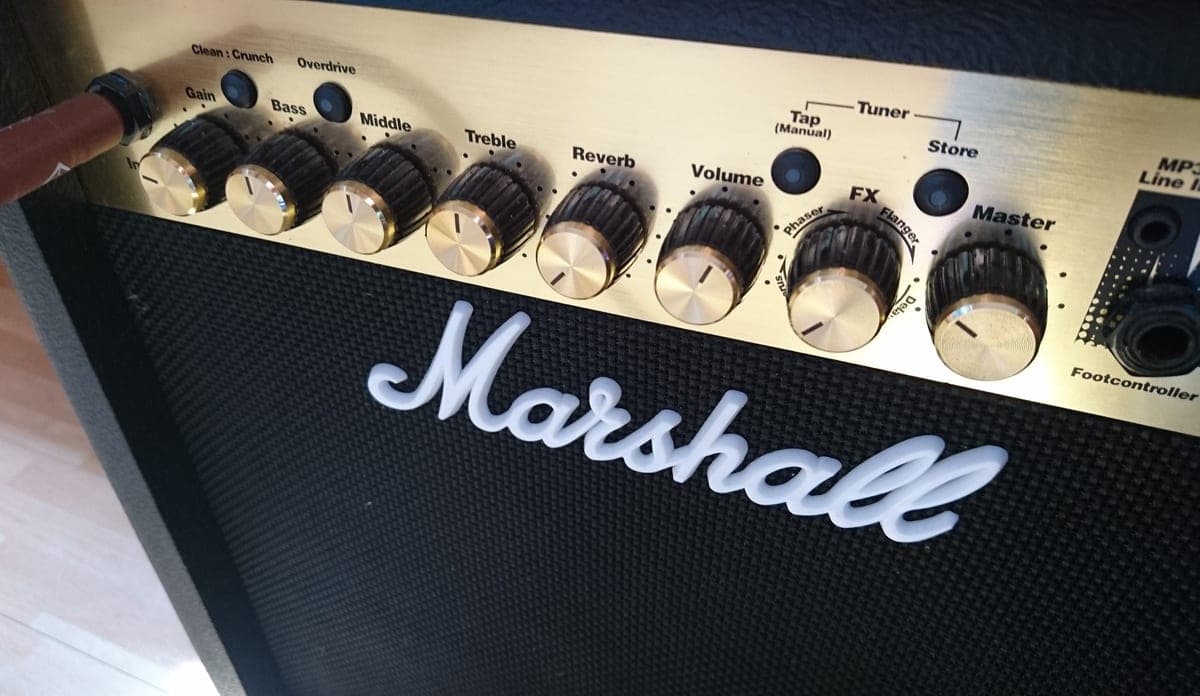
Spring simulates a physical spring tank and is what a Fender amp does — splashy and transient. Room is short and reads as simply not dry. Plate is smooth and dense with a fast onset. Hall is long and obviously a large space. Shimmer is not a real space at all: it adds a pitch-shifted octave into the tail. Choose by what the part needs, not by which sounds most impressive alone.
Almost every multi-mode reverb pedal has all of these, and almost every owner uses one. Knowing what the other five are for is more valuable than owning a second pedal.
01The types
| Type | Simulates | Character | Best for |
|---|---|---|---|
| Spring | A physical spring tank in an amp | Splashy, transient, metallic | Surf, classic guitar tones, anything wanting an amp reverb |
| Room | A small enclosed space | Short and subtle | Making a dry part sound present without drawing attention |
| Plate | A vibrating metal plate | Smooth, dense, fast onset | Lead lines — it keeps the pick attack |
| Hall | A large hall | Long and diffuse | Ambient parts; can swamp fast playing |
| Modulated | Nothing physical — a detuned tail | Movement in the decay | Sustained chords that would otherwise sit still |
| Shimmer | Nothing physical — a pitch-shifted tail | Octave-up content in the decay | The huge ambient sound people mean by 'wall' |
Pedals that cover the types
| # | Product | Best for | Price |
|---|---|---|---|
| 01 | 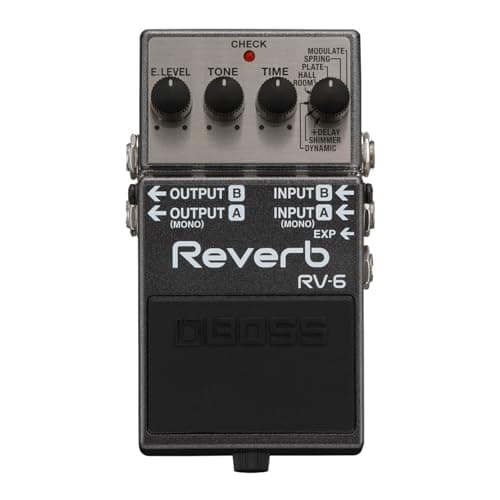 BOSS RV-6 Reverb Eight modes covering spring, plate, room, hall, modulated, shimmer, +delay and dynamic. | Every reverb type in one box | |
| 02 | 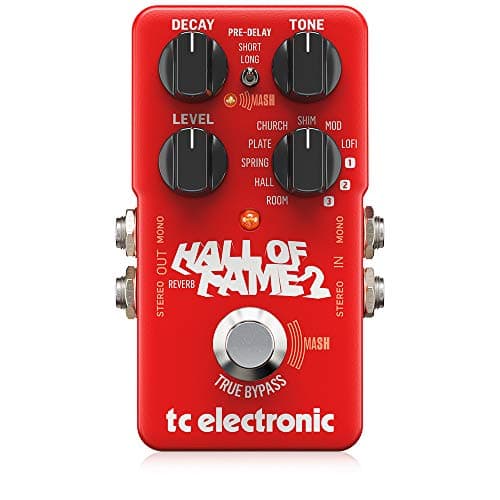 TC Electronic Hall of Fame 2 Reverb A dedicated pre-delay selector, which is the control that makes heavy reverb usable. | Pre-delay on the front panel | $129.00 · Check price #ad How we’re funded · price as of October 18, 2026 |
| 03 | 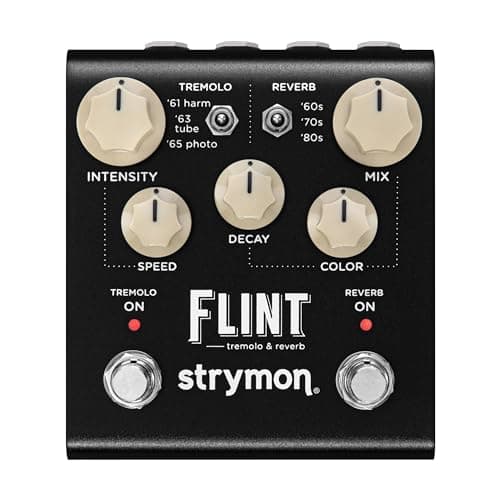 Strymon Flint Tremolo & Reverb Room, plate and spring alongside three tremolo circuits, with selectable bypass. | Three reverb voicings plus tremolo in one slot | $349.00 · Check price #ad How we’re funded · price as of October 18, 2026 |
Rows link to the full write-up further down this page. Prices come from the live price layer only — where there is no live figure the button reads “Check price” rather than showing a remembered number.
03Pre-delay: the control that makes reverb usable
Pre-delay is the gap between the dry signal and the onset of the reverb tail. With none, the tail starts immediately and smears the attack of the note. With 20 to 40 ms, the attack lands clearly first and the reverb arrives behind it.
It is the single most effective setting for using more reverb without losing clarity, and it is the one most pedals do not expose. Where it is unavailable, a dynamic or ducking mode achieves a similar practical result by lowering the reverb while you are playing.
BOSS RV-6 Reverb
Every reverb type in one box
The number95 mA, true stereo I/O, expression pedal input.
BOSS publishes all eight modes, which between them cover the entire practical range of what a guitar reverb is asked to do. There is no reverb type on this page it cannot produce.
Dynamic mode ducks the reverb while you play and lets it bloom in the gaps, which achieves in practice what pre-delay achieves technically: the note's attack stays clear of the tail.
No preset memory, so every mode change is a knob move. Worth knowing if you were planning to switch reverb types mid-set.
| Modes | 8 — Hall, Plate, Room, Spring, Modulate, +Delay, Shimmer, Dynamic |
|---|---|
| Controls | E.Level, Tone, Time, Mode, pedal switch |
| Current draw | 95 mA |
| Battery life | Approx. 3 hours on alkaline |
| I/O | Input A (mono) and B, Output A (mono) and B, expression jack |
| Weight | 450 g including battery |
| What it does not do | No adaptor included. 95 mA rules out a daisy chain shared with other digital pedals, and there is no way to save a setting — every mode change is a knob move. |
Specs from BOSS RV-6 specifications. We have not used this unit.
TC Electronic Hall of Fame 2 Reverb
Pre-delay on the front panel
Pre-delay is the gap between the dry note and the start of the reverb tail. With 20 to 40 ms of it, the attack is clear before the reverb begins, and you can run far more reverb without losing definition.
Most pedals do not expose it. Having it as a front-panel selector rather than buried in an editor is the practical reason to choose this one.
The MASH pressure-sensitive footswitch maps to a parameter of your choice — for reverb usually mix or decay.
| Controls | Decay, Tone, Level, reverb-type selector, pre-delay selector |
|---|---|
| Switching | MASH pressure-sensitive footswitch controls a chosen parameter under foot |
| Presets | TonePrint slot loadable over USB |
| Power | 9 V DC center-negative |
| Electrical data | No current-draw or impedance figure is published for this pedal, so none is stated here. |
| What it does not do | No power supply included. The MASH switch is a genuinely different way to play reverb and it is also the part most people never use — if you only want a set-and-forget hall, you are paying for it anyway. |
Specs from TC Electronic Hall of Fame 2 product page. We have not used this unit.
#ad How we’re funded · price as of October 18, 2026
Strymon Flint Tremolo & Reverb
Three reverb voicings plus tremolo in one slot
The numberMinimum 300 mA at 9 V, 1 M ohm in, 100 ohm out, 24-bit/96 kHz.
Three reverb voicings rather than eight, chosen rather than comprehensive, plus three tremolo circuits in the same enclosure.
Strymon publishes the whole specification including the 300 mA minimum, which is the number that decides whether your supply can run it — a Voodoo Lab Pedal Power 2 PLUS tops out at 250 mA per output.
You cannot reorder the tremolo and reverb inside the box. That is the flexibility you trade for the board slot.
| Effects | Three tremolo voicings and three reverb voicings in one enclosure |
|---|---|
| Power requirement | 9 V DC center-negative, minimum 300 mA (supply not included) |
| Input impedance | 1 M ohm |
| Output impedance | 100 ohm |
| Converters | 24-bit / 96 kHz A/D and D/A |
| Bypass | Selectable relay true bypass or buffered bypass |
| Size | 4.5" deep x 4" wide x 2.4" tall (11.43 x 10.16 x 6.1 cm) |
| What it does not do | No power supply in the box, and the 300 mA minimum means most cheap bricks cannot run it. There is no delay in here and no way to reorder the tremolo and reverb. |
Specs from Strymon Flint product page. We have not used this unit.
#ad How we’re funded · price as of October 18, 2026
04How much is too much
More than you would use alone, if you play alone. Less than you would use alone, if you play in a band. Reverb fills space, and a band has already filled most of it — a setting that sounds beautifully atmospheric on your own can be the thing making the whole mix indistinct.
The practical test: turn it up until you can clearly hear it, then back it off until you can only hear it when you stop playing. That is usually the right amount for a band context and slightly less than you want.
05Where reverb goes
Last in the chain, after delay, or in the amp's effects loop. Reverb before distortion means the distortion clips the reverb tail as well as the note, which produces a dense undifferentiated wash rather than a note in a space. It is a real effect and it is not a default. Pedal order has the reasoning. For a worked example of choosing between fixed modes and a programmable slot, Hall of Fame 2 vs BOSS RV-6 compares the two pedals that present that choice most clearly.
Frequently asked questions
+ What is the difference between spring and hall reverb?
+ What does pre-delay do?
+ What is shimmer reverb?
+ How much reverb should I use in a band?
Sources
Related on Fret & Fuzz
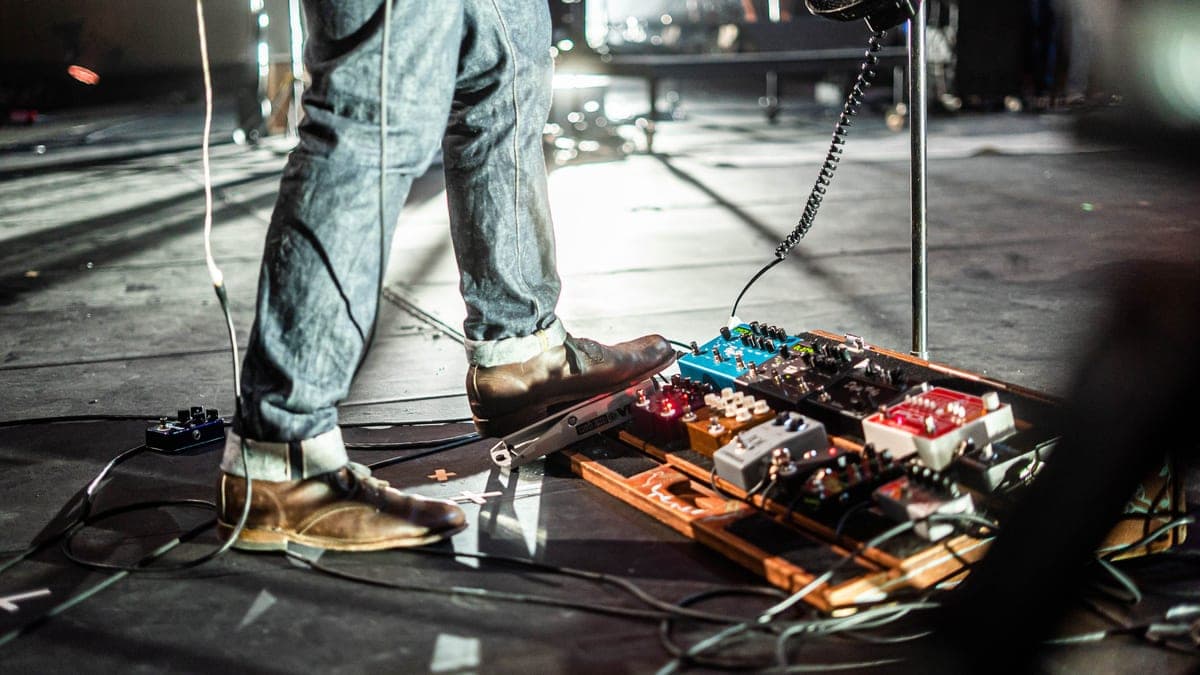
Best reverb pedals
Check your amp first. If you do need a reverb pedal, one multi-mode unit covers every type — here is what the modes actually differ on.
Best Reverb pick: BOSS RV-6 Reverb
TC Electronic Hall of Fame 2 vs BOSS RV-6
Eight fixed modes and a published 95 mA against a loadable slot, a pressure-sensitive switch and no draw figure.
Top pick: BOSS RV-6 Reverb
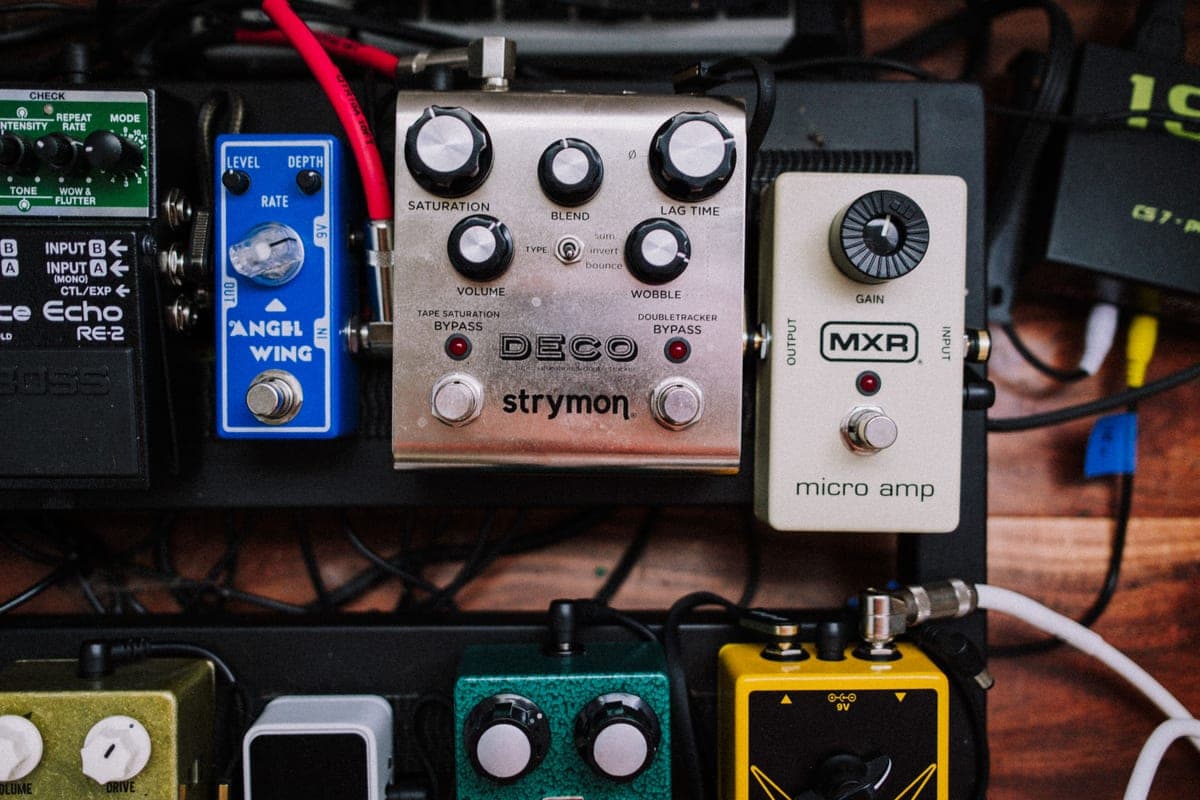
Delay vs reverb
Countable repeats or a cloud of reflections. Which to buy first, in what order to run them, and what each costs to power.
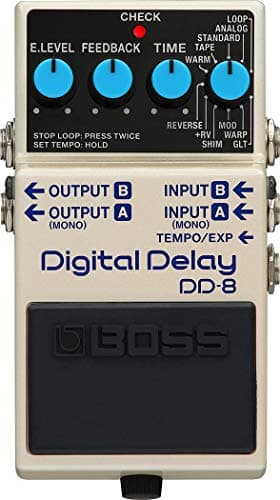
Top pick: BOSS DD-8 Digital Delay
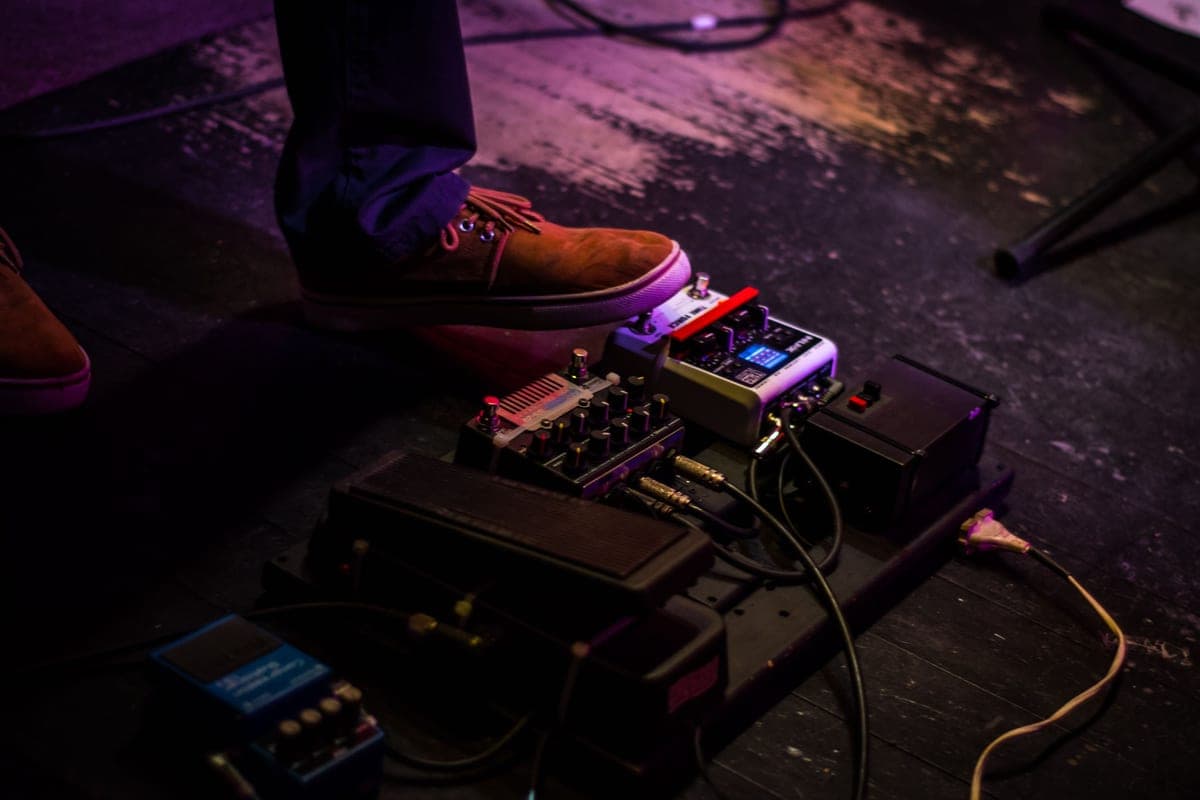
Best guitar pedals for shoegaze
Fuzz, modulation and reverb in the order that decides the sound — with the input-impedance figures that explain why fuzz goes first.
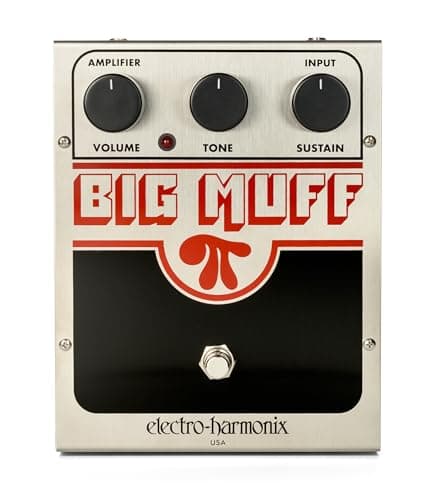
Best for Shoegaze pick: Electro-Harmonix Big Muff Pi
#ad How we’re funded · price as of October 18, 2026
Pedal order: what changes and what does not
Two placements are load-bearing and the rest are preference. Which is which, and the impedance figures behind the first one.
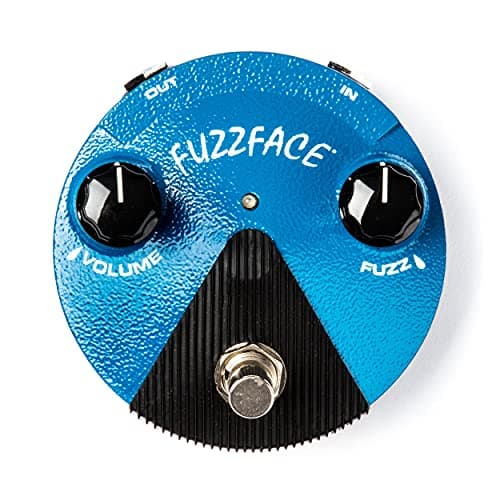
Top pick: Dunlop Fuzz Face Mini Silicon
#ad How we’re funded · price as of October 18, 2026