Fuzz and buffers: why your fuzz sounds wrong
The single most common fuzz complaint has one cause, and it is not the fuzz pedal.
Fret & Fuzz earns a commission when you buy through the links on this page. It costs you nothing and it does not decide what we rank. How we’re funded.
We have not played this gear. Every pick below is chosen from published manufacturer specifications and the arithmetic set out in how we research, which you can re-run yourself.
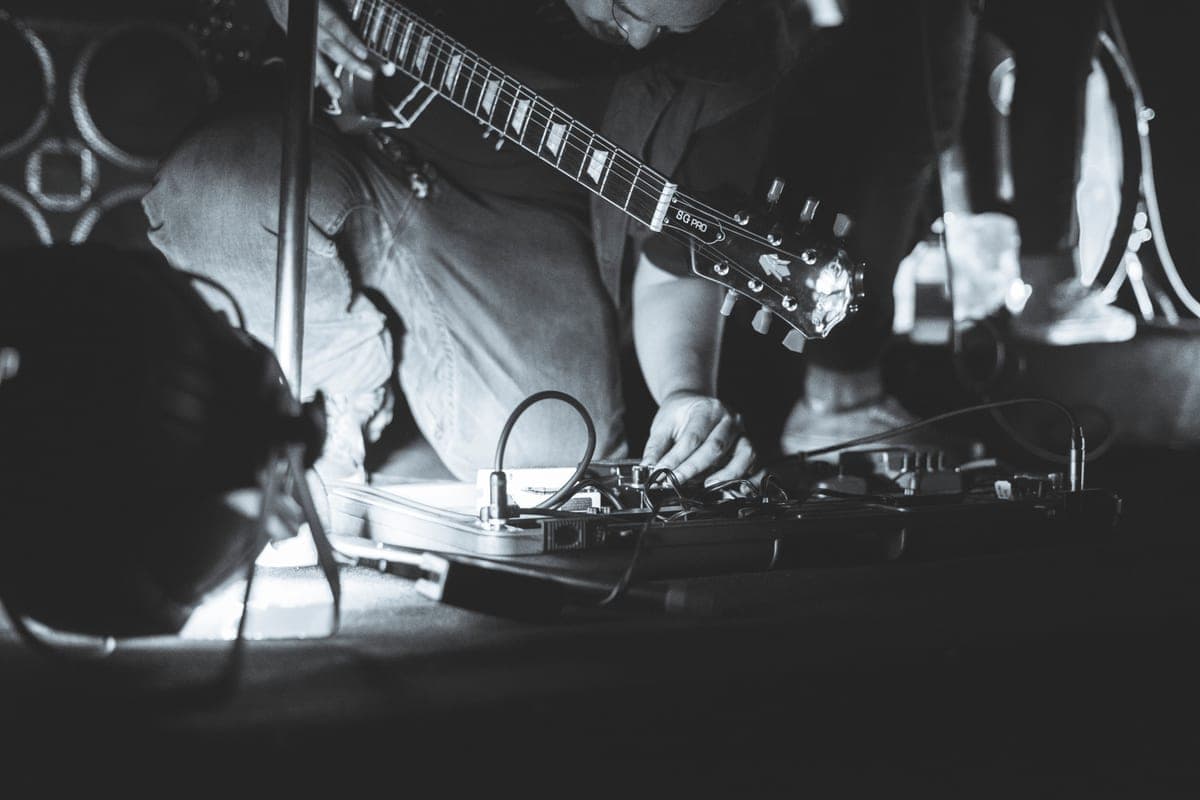
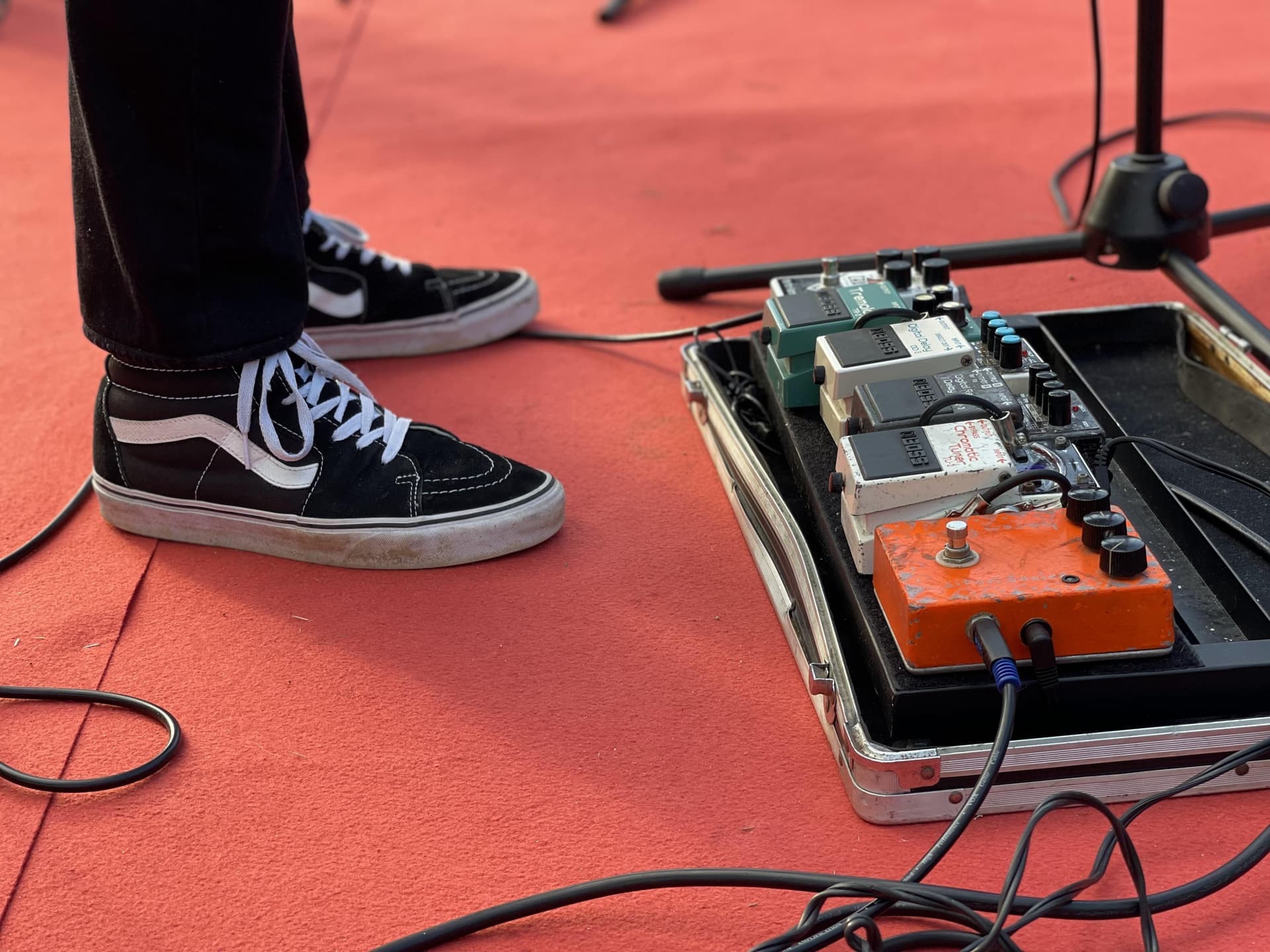
Classic fuzz circuits are designed to be loaded directly by your guitar's pickup, and their behavior changes as you turn the guitar volume down because the loading changes. A buffer presents a fixed low impedance instead, so that interaction disappears. Put the fuzz first in the chain, before anything buffered — including most tuners — and the problem goes away.
This is the single most common complaint about fuzz pedals and it is almost never a fault in the pedal. It is a placement problem with a one-move fix.
01What is actually happening
A guitar pickup is a high-impedance source with an inductance and a resonant peak. What loads it changes where that peak sits and how much of it survives. A vintage-style fuzz loads it heavily and deliberately — the interaction is part of the circuit's design, not a side effect.
Turning your guitar volume down changes the impedance the fuzz sees, which changes the transistor's operating point, which changes how much it clips. That is why the note gets cleaner rather than merely quieter, and it is the behavior people mean when they say a fuzz is dynamic.
A buffer exists to present a high impedance to the guitar and a low impedance to everything downstream. That is exactly what you want everywhere except here, because it makes the source impedance constant no matter what the volume knob is doing.
02Which of your pedals are buffered
| Pedal or category | Bypass | In front of a fuzz? |
|---|---|---|
| Every BOSS compact, including the TU-3 tuner | Buffered | Problem |
| Ibanez TS9 and most Tube Screamer variants | Buffered | Problem |
| Wampler Tumnus | 3PDT buffered bypass | Problem |
| Korg Pitchblack | True bypass | Fine |
| EarthQuaker Plumes | Relay-based true bypass | Fine |
| TC Electronic PolyTune 3 | Switchable BONAFIDE buffer | Fine if the buffer is switched out |
| A wah, when engaged | Loads the signal | Different problem, same symptom |
Bypass type is published by most makers. Where it is not, assume buffered if the pedal has any digital function.
The pedals involved, and the fix
| # | Product | Best for | Price |
|---|---|---|---|
| 01 | No photo Korg Pitchblack Chromatic Tuner True bypass means the tuner is out of the signal path when off, so the fuzz still sees your pickup. | The cleanest fix: a true-bypass tuner | |
| 02 | 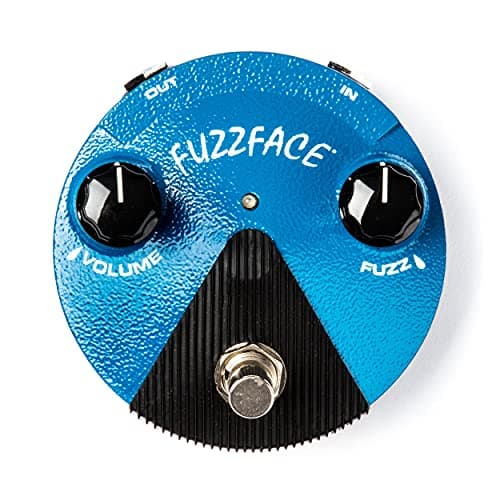 Dunlop Fuzz Face Mini Silicon Two transistors whose operating point depends on what your pickup is doing. | The circuit that cares most | $159.99 · Check price #ad How we’re funded · price as of October 17, 2026 |
| ! | 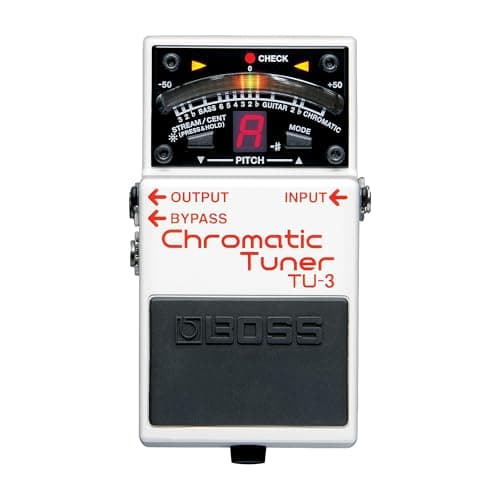 BOSS TU-3 Chromatic Tuner Buffered bypass — excellent for the rest of the board, and the thing standing between your guitar and your fuzz. Skip this one — see why below | The pedal most often causing the problem |
Rows link to the full write-up further down this page. Prices come from the live price layer only — where there is no live figure the button reads “Check price” rather than showing a remembered number.
04The three fixes, in order of preference
- Put the fuzz first. Straight after the guitar, before the tuner and before everything else. This costs nothing and it is right almost every time.
- Use a true-bypass tuner. If you need the tuner first for its mute function, a true-bypass one keeps the chain intact. A Korg Pitchblack is the usual answer.
- Add a buffer after the fuzz instead of before it. You still get the benefit of a buffer for the rest of a long chain, and the fuzz still sees your pickup.
Korg Pitchblack Chromatic Tuner
The cleanest fix: a true-bypass tuner
A tuner is almost always first in the chain, which makes its bypass type the most consequential choice on the board. Most pedal tuners are buffered, and that buffer is what breaks a fuzz.
Korg publishes +/- 1 cent accuracy, four display modes and true bypass, plus a DC output for powering other pedals. Swapping to it is a one-pedal change that keeps your layout intact.
True bypass is not automatically better. If nothing else on your board buffers and your cable run is long, you may miss the buffer elsewhere.
| Accuracy | +/- 1 cent |
|---|---|
| Display modes | Four meter styles including a strobe-style display |
| Bypass | True bypass |
| Power | 9 V battery or a 9 V DC supply; DC output for powering other pedals |
| What it does not do | No polyphonic mode. True bypass means no buffer, which is a feature if your chain already has one and a problem if it does not. |
Specs from Korg Pitchblack product page. We have not used this unit.
Dunlop Fuzz Face Mini Silicon
The circuit that cares most
A Fuzz Face's input stage loads your pickup deliberately, and turning the guitar volume down changes that loading — which changes how much the transistor clips. That is why it cleans up rather than just getting quieter.
Feed it a buffered signal and the source impedance is constant regardless of the volume knob. It still makes fuzz. It stops responding, and the responsiveness is the reason the circuit is still made.
Silicon transistors are brighter and more consistent than germanium. Either way, the placement rule is identical.
| Controls | Volume, Fuzz |
|---|---|
| Transistors | Silicon (BC108) — brighter and more aggressive than the germanium version |
| Power | 9 V battery or a 9 V DC supply; Dunlop notes the Mini adds a DC jack the original lacked |
| Electrical data | No current-draw or impedance figure is published for this pedal, so none is stated here. |
| What it does not do | A Fuzz Face wants to see your guitar pickup directly. Put a buffered tuner or a wah in front of it and the interaction that makes it clean up on the volume knob is gone. |
Specs from Dunlop Fuzz Face Mini range page. We have not used this unit.
#ad How we’re funded · price as of October 17, 2026
BOSS TU-3 Chromatic Tuner
The pedal most often causing the problem
The number20 mA normally, 80 mA in High Brightness mode. Buffered bypass, published by BOSS.
We are not telling you to get rid of this pedal. The TU-3 is the standard stage tuner for good reasons, and its buffer is genuinely useful: it drives the capacitance of a long cable run and preserves top end.
It is also, on a very large number of boards, the specific pedal preventing a fuzz from working. It is first in the chain, it is buffered, and both of those are usually correct.
The fix is not to replace it. Put the fuzz in front of it, or switch to a true-bypass tuner if you need the tuner first for a mute function you use constantly.
| Tuning range | C0 (16.35 Hz) to C8 (4,186 Hz) |
|---|---|
| Accuracy | +/- 1 cent |
| Modes | Chromatic, Chromatic flat x2, Guitar, Guitar flat x2, Bass, Bass flat x3 |
| Bypass | Buffered bypass |
| Current draw | 20 mA; 80 mA with High Brightness mode on |
| Jacks | Output, Bypass, DC IN, DC OUT (powers other pedals) |
| Weight | 390 g including battery |
| What it does not do | +/- 1 cent is fine for a stage tuner and not enough for setting intonation — that is strobe territory. Turning on High Brightness quadruples the current draw, which matters on a shared supply. |
Specs from BOSS TU-3 specifications. We have not used this unit.
05Which fuzzes care, and how much
Fuzz Face-style two-transistor circuits care most — the interaction is the instrument. Big Muffs care less: EHX publishes 130 k ohm at the Nano's input, which is low but not low enough to transform the pedal. The Op-Amp Big Muff publishes 55 k ohm and is the most placement-sensitive of that family.
Modern fuzzes with high-impedance input buffers of their own do not care at all, which is a design decision to make the pedal predictable rather than interactive. That is a legitimate trade and worth knowing before you buy one expecting vintage behavior. Best fuzz pedals covers the family. The other pedal that decides this on your board is the wah in front of it: a Cry Baby Standard is not true bypass and a VOX V847-A is buffered by design. Best wah pedals covers which is which.
Frequently asked questions
+ Why does my fuzz sound bad on my pedalboard?
+ Which tuners are true bypass?
+ Should I remove all the buffers from my board?
+ Does this affect a Big Muff?
Sources
Related on Fret & Fuzz

Best wah pedals
Inductor, bypass and treadle length are what separate wahs — plus the fuzz problem that decides the purchase.
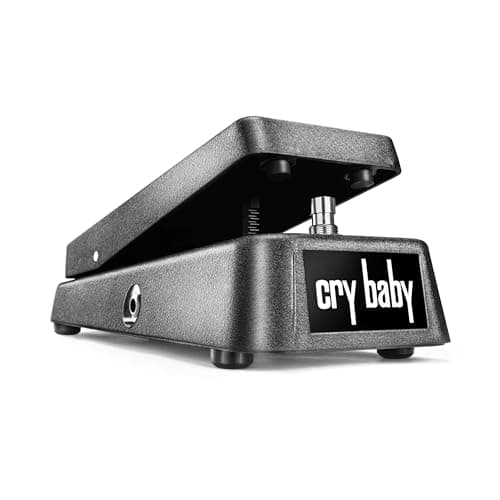
Best Wah pick: Dunlop Cry Baby Standard Wah GCB95
#ad How we’re funded · price as of October 17, 2026
Best fuzz pedals
Input impedance predicts your fuzz experience better than any adjective. Five fuzzes compared on the published figures.
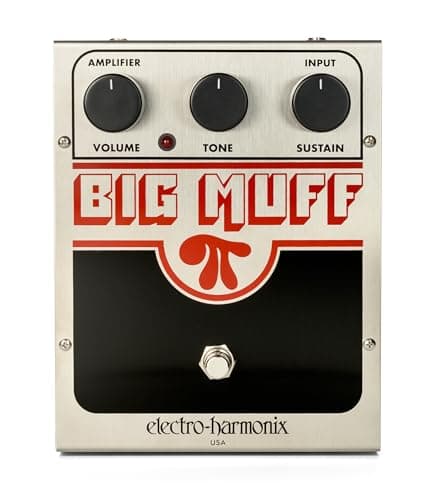
Best Fuzz pick: Electro-Harmonix Big Muff Pi
#ad How we’re funded · price as of October 17, 2026
Big Muff vs Fuzz Face
Sustain versus response, four transistors versus two, and the buffer problem that decides whether a Fuzz Face works on your board.
Top pick: Electro-Harmonix Big Muff Pi
#ad How we’re funded · price as of October 17, 2026
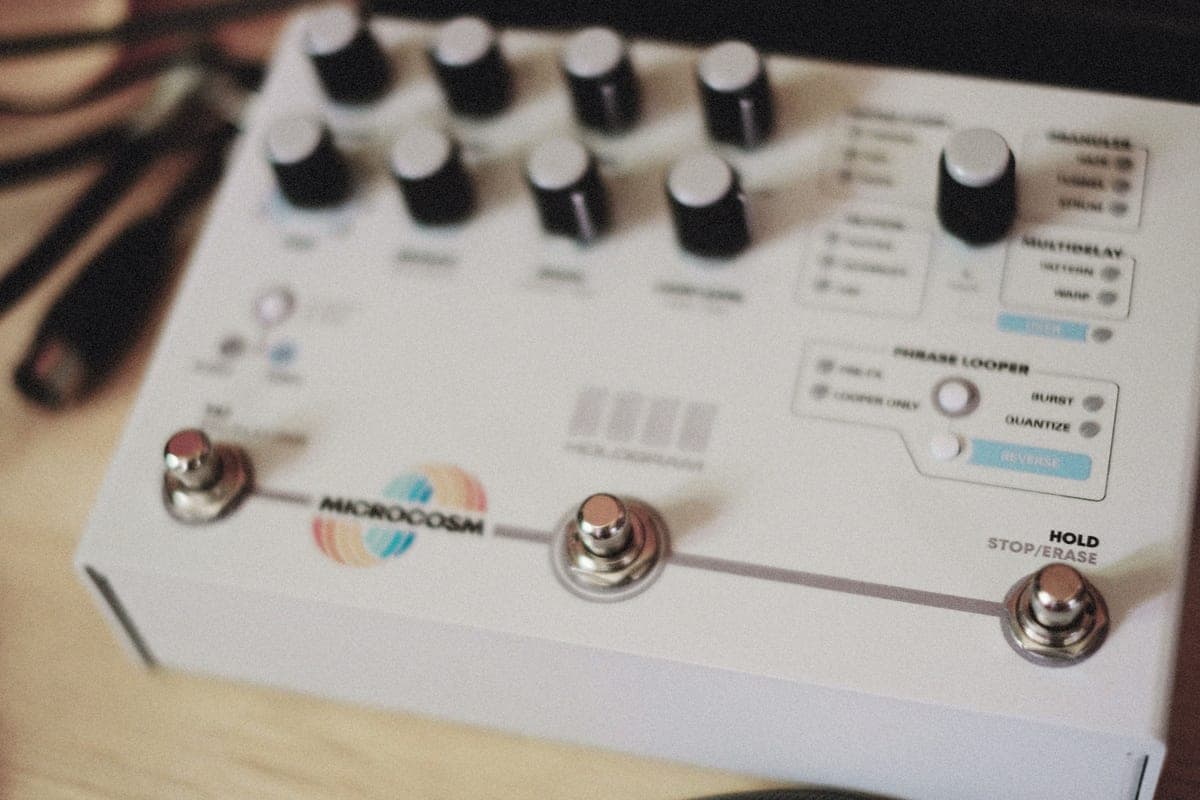
Pedal order: what changes and what does not
Two placements are load-bearing and the rest are preference. Which is which, and the impedance figures behind the first one.
Top pick: Dunlop Fuzz Face Mini Silicon
#ad How we’re funded · price as of October 17, 2026
Buffer vs true bypass
A trade-off, not an upgrade. What a buffer fixes, when it hurts, and a five-question rule for deciding.
Top pick: BOSS TU-3 Chromatic Tuner