Buffer vs true bypass
Marketed as a straight upgrade, and it is a trade-off with a clear rule for deciding which side you want.
Fret & Fuzz earns a commission when you buy through the links on this page. It costs you nothing and it does not decide what we rank. How we’re funded.
We have not played this gear. Every pick below is chosen from published manufacturer specifications and the arithmetic set out in how we research, which you can re-run yourself.
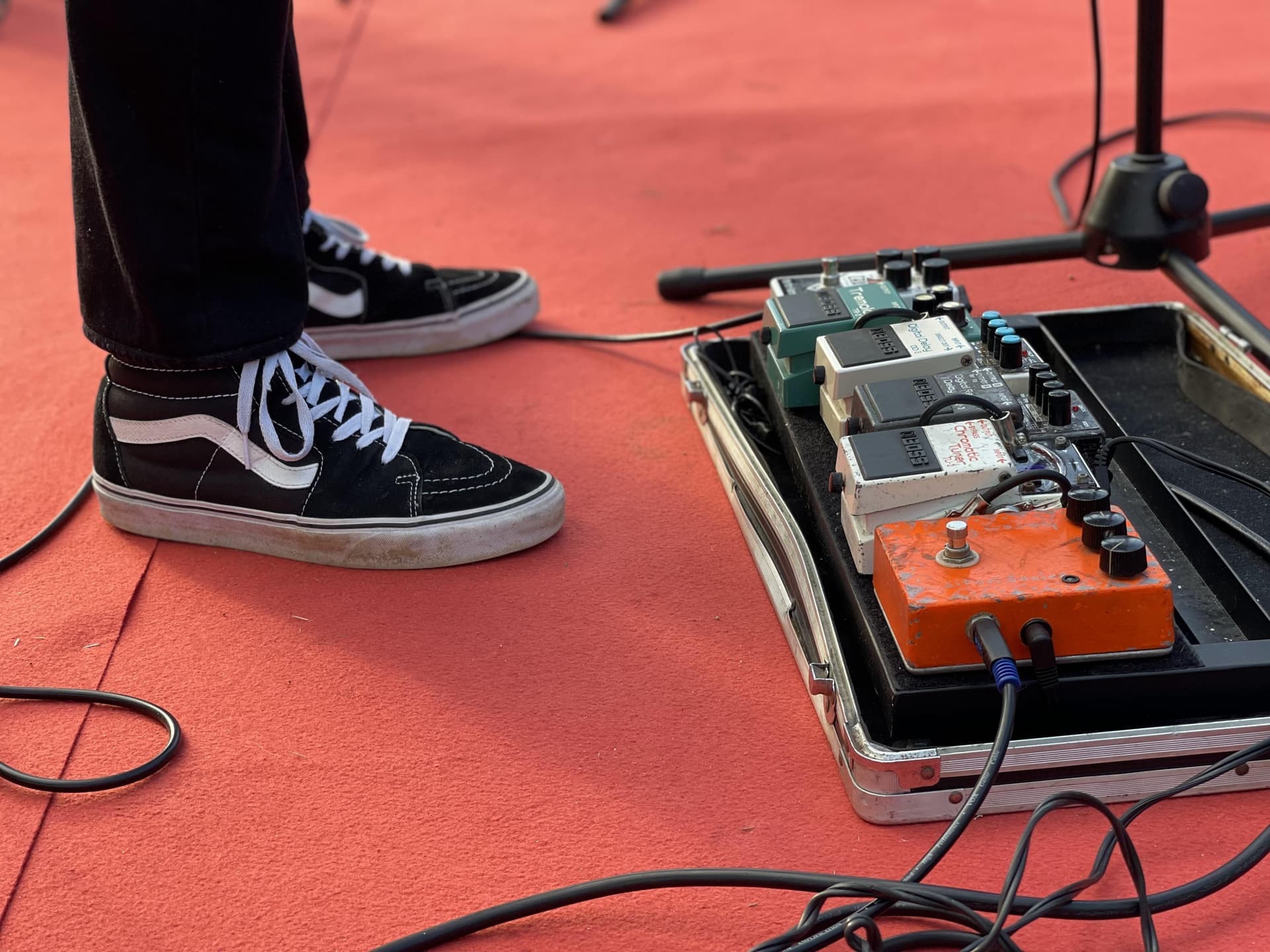
True bypass routes the signal around the circuit when the pedal is off, so the pedal is electrically absent. A buffer keeps a small always-on amplifier in the path that presents a high impedance to your guitar and a low impedance to everything downstream. Buffered is better for long cable runs and worse in front of a vintage fuzz. Most boards want at least one buffer, early.
True bypass is marketed as an upgrade and it is a trade. This page is about which side of that trade your board is on.
01What a buffer actually fixes
Guitar cable has capacitance — a few hundred picofarads per meter. That capacitance, combined with your pickup's inductance, forms a filter that rolls off high frequencies. The longer the cable, the more top end you lose, and the effect is entirely real and measurable.
A buffer's output impedance is low — TC Electronic publishes 100 ohms for the BONAFIDE buffer in the PolyTune 3 — which means it can drive that capacitance without the roll-off. Everything after the buffer is effectively immune to cable length.
A board full of true-bypass pedals adds all the patch cables plus both long cables into one continuous run, so the total capacitance is the sum of the lot. That is where a fully true-bypass board loses top end, and it is why the choice matters more as boards get bigger.
One of each, and how to choose
| # | Product | Best for | Price |
|---|---|---|---|
| 01 | 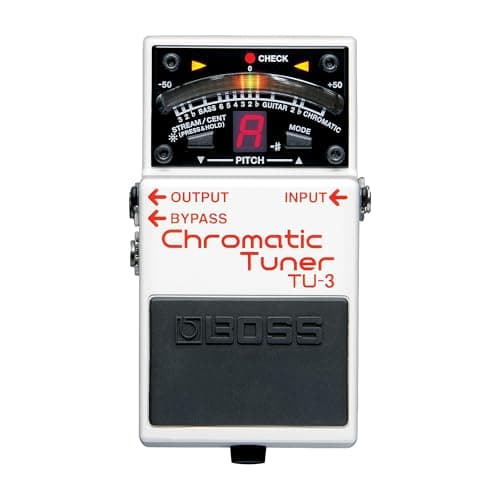 BOSS TU-3 Chromatic Tuner Buffered bypass at the front of the chain, driving everything downstream. | A buffer where a buffer belongs | |
| 02 | No photo Korg Pitchblack Chromatic Tuner +/- 1 cent accuracy with true bypass, so the tuner is out of the path when off. | True bypass where a buffer would break something | |
| 03 | 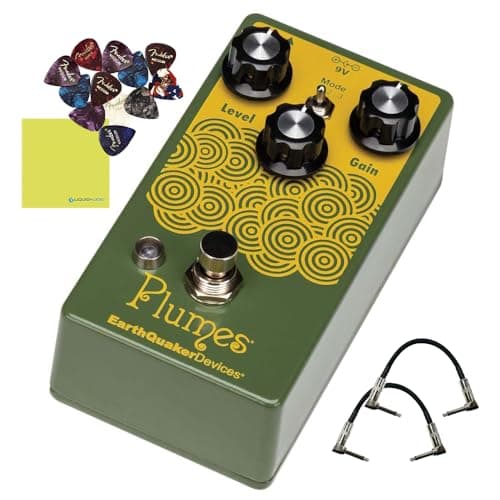 EarthQuaker Devices Plumes Relay-based switching that is true bypass without the mechanical switch's pop or wear. | Relay true bypass, which is the modern answer |
Rows link to the full write-up further down this page. Prices come from the live price layer only — where there is no live figure the button reads “Check price” rather than showing a remembered number.
03The comparison
| True bypass | Buffered | |
|---|---|---|
| When off | Pedal is electrically out of the path | Buffer stays in the path |
| Long cable runs | Top-end loss accumulates | Driven cleanly regardless of length |
| In front of a vintage fuzz | Fine | Breaks the pickup interaction |
| Switch noise | A mechanical switch can pop | Usually silent |
| Failure mode | A dead pedal kills the signal path | A dead pedal kills the signal path |
| Cost to implement | Cheaper | Requires a small always-on circuit |
True bypass being cheaper to implement is worth knowing: it is not automatically the premium option, and on budget pedals it is frequently the economical one.
BOSS TU-3 Chromatic Tuner
A buffer where a buffer belongs
The number20 mA normally, 80 mA in High Brightness mode. Buffered bypass, published by BOSS.
A buffer is most useful early in the chain, because everything after it benefits. A tuner is almost always first, which makes a buffered tuner the most efficient place to put one.
The TU-3 also has a DC OUT jack that powers a small number of other pedals, and a mute function that is the actual reason to own a pedal tuner rather than a clip-on.
It is the wrong pedal in front of a vintage fuzz, for exactly the reason this page exists. Fuzz and buffers covers that case.
| Tuning range | C0 (16.35 Hz) to C8 (4,186 Hz) |
|---|---|
| Accuracy | +/- 1 cent |
| Modes | Chromatic, Chromatic flat x2, Guitar, Guitar flat x2, Bass, Bass flat x3 |
| Bypass | Buffered bypass |
| Current draw | 20 mA; 80 mA with High Brightness mode on |
| Jacks | Output, Bypass, DC IN, DC OUT (powers other pedals) |
| Weight | 390 g including battery |
| What it does not do | +/- 1 cent is fine for a stage tuner and not enough for setting intonation — that is strobe territory. Turning on High Brightness quadruples the current draw, which matters on a shared supply. |
Specs from BOSS TU-3 specifications. We have not used this unit.
Korg Pitchblack Chromatic Tuner
True bypass where a buffer would break something
If you run a vintage-style fuzz and need the tuner first for its mute, this is the swap that fixes the conflict without rearranging the board.
Korg publishes +/- 1 cent accuracy, four meter styles including a strobe-style display, and a DC output for powering other pedals.
True bypass is not free: with no buffer anywhere and a long cable run, you will lose top end. That is the cost of the choice, not a fault of the pedal.
| Accuracy | +/- 1 cent |
|---|---|
| Display modes | Four meter styles including a strobe-style display |
| Bypass | True bypass |
| Power | 9 V battery or a 9 V DC supply; DC output for powering other pedals |
| What it does not do | No polyphonic mode. True bypass means no buffer, which is a feature if your chain already has one and a problem if it does not. |
Specs from Korg Pitchblack product page. We have not used this unit.
EarthQuaker Devices Plumes
Relay true bypass, which is the modern answer
The number10 M ohm in, 100 ohm out, 25 mA. Flexi-Switch relay bypass.
A mechanical 3PDT switch is what most true-bypass pedals use, and it is the part that wears out and the reason some pedals pop when switched.
Relay switching gets the same signal path with a quieter, longer-lived mechanism, and it makes momentary switching possible — hold for a phrase, tap for a section.
The 10 M ohm input impedance means it loads nothing in front of it, which is the other half of being genuinely transparent when engaged.
| Controls | Level, Gain, Tone (bass left, midrange center, treble right), 3-way clipping toggle |
|---|---|
| Clipping modes | Mode 1 symmetrical LED clipping, which EarthQuaker describes as more crunch and compression; mode 2 no clipping, a wide-open op-amp clean boost; mode 3 asymmetrical silicon diode clipping, described as more transparency with a looser feel |
| Circuit | EarthQuaker states it uses JFET op-amps rather than the traditional 4558 IC, with the 9 V supply internally converted to +/- 9 V for more headroom |
| Current draw | 25 mA |
| Input impedance | 10 M ohm |
| Output impedance | 100 ohm |
| Bypass | Flexi-Switch relay-based true bypass, momentary or latching |
| Size | 4.75 x 2.50 x 2.25 in (121 x 64 x 57 mm) with knobs |
| Power | 9 V DC, 2.1 mm center-negative barrel |
| What it does not do | No power supply included and no battery compartment. Mode 2 is a clean boost, not a second drive voicing — if you expected three flavors of dirt, one of them is not dirt. |
Specs from EarthQuaker Devices Plumes product page. We have not used this unit.
04The rule for deciding
- Do you run a vintage-style fuzz? If yes, nothing buffered goes in front of it. That constraint comes first and everything else works around it.
- Is your total cable run over roughly 6 meters? If yes, you want at least one buffer. Guitar to board plus board to amp adds up faster than people expect.
- Is your board mostly BOSS or Ibanez pedals? You already have buffers, several of them, and adding another achieves nothing.
- Is everything true bypass and the tone sounds dull? That is the capacitance roll-off. Add one buffer, early.
- Does a pedal pop when you switch it? That is a mechanical bypass switch. Irritating, not harmful, and a relay-bypass pedal avoids it.
05Where to put a buffer
Early, so the maximum length of chain benefits — but after any fuzz. The common arrangement is fuzz first, then a buffered pedal, then everything else. If you have no fuzz, first in the chain is the right place and a buffered tuner does the job for free.
A second buffer at the end of a long board is sometimes worth it if the run to the amp is long, but two buffers in a row achieve nothing extra. This is not a case where more is better. Wah pedals are the category where this choice is least consistent between models that look identical — best wah pedals has the bypass type for each. Tuners are the other category where it decides a purchase: TU-3 vs PolyTune 3 covers one buffer you can switch out and one you cannot. If what sent you here was noise rather than tone loss, the hum diagnostic is the faster route to the cause.
Frequently asked questions
+ Is true bypass better than buffered?
+ Do I need a buffer on my pedalboard?
+ Why do my true bypass pedals make my tone dull?
+ Where should a buffer go?
Sources
Related on Fret & Fuzz
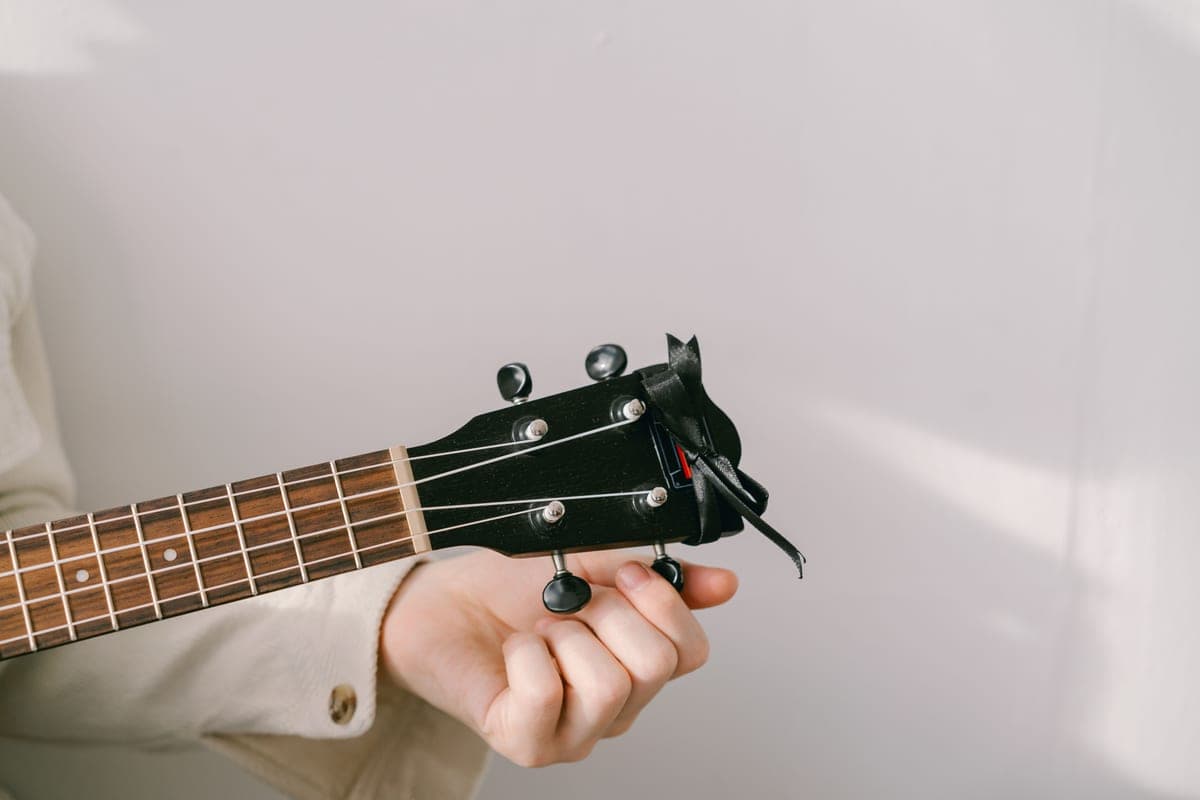
Pedal tuner vs clip-on tuner
BOSS publishes the same +/- 1 cent for both. So what does the pedal actually buy you, and when is it worth it?
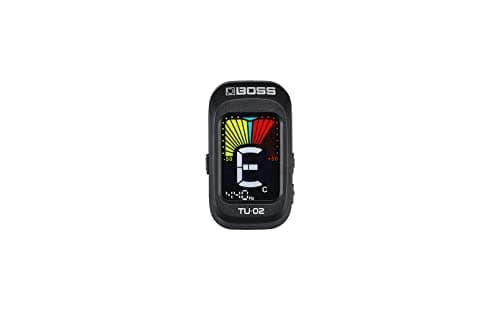
Top pick: BOSS TU-02 Clip-On Tuner
#ad How we’re funded · price as of October 18, 2026
Your pedalboard hums — which fix actually works
Five faults, one word. The two-minute diagnostic, then the one purchase that fixes the fault you actually have.
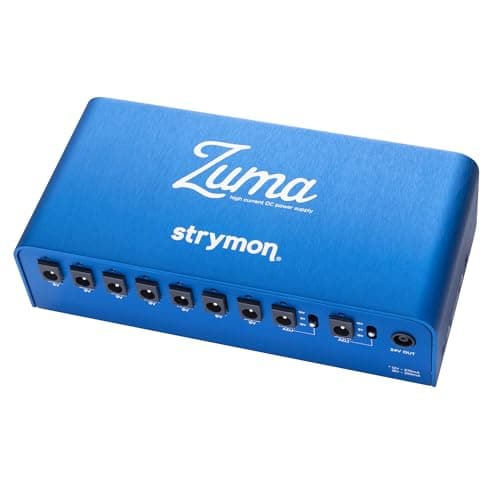
Top pick: Strymon Zuma
#ad How we’re funded · price as of October 18, 2026
BOSS TU-3 vs TC Electronic PolyTune 3
20 mA against 100 mA, and a buffer you can switch out against one you cannot. Neither difference is the accuracy figure.
Top pick: BOSS TU-3 Chromatic Tuner
Best wah pedals
Inductor, bypass and treadle length are what separate wahs — plus the fuzz problem that decides the purchase.
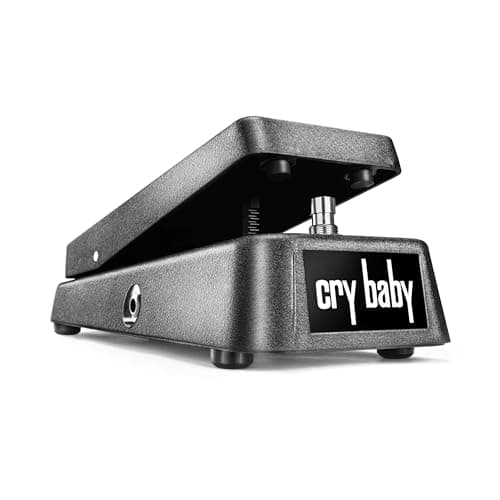
Best Wah pick: Dunlop Cry Baby Standard Wah GCB95
#ad How we’re funded · price as of October 18, 2026
Best tuner pedals
Published accuracy from +/- 1 cent to +/- 0.02 cent, the buffer trade-off, and the tuner that quietly draws 100 mA.
Best Tuner pick: TC Electronic PolyTune 3
Fuzz and buffers: why your fuzz sounds wrong
The most common fuzz complaint has one cause and a one-move fix. The mechanism, and which pedals are buffered.
Top pick: Korg Pitchblack Chromatic Tuner
Pedal order: what changes and what does not
Two placements are load-bearing and the rest are preference. Which is which, and the impedance figures behind the first one.
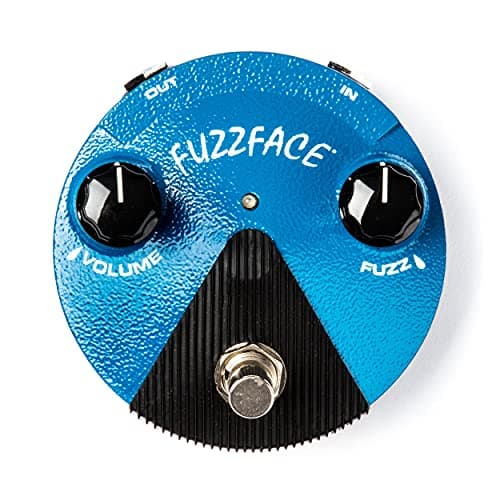
Top pick: Dunlop Fuzz Face Mini Silicon
#ad How we’re funded · price as of October 18, 2026
Best pedalboard patch cables
The cheapest item on a board and the most common cause of an intermittent fault. Which format fails and why.
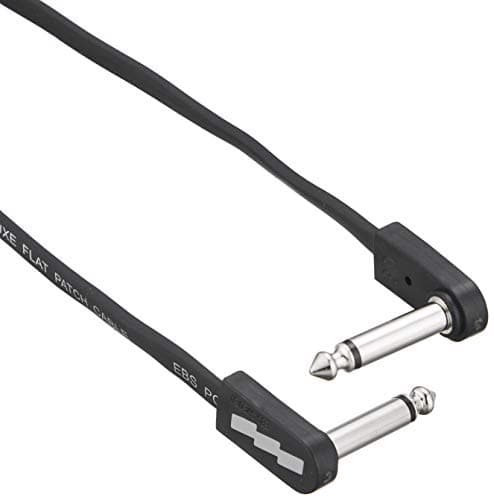
Best Patch Cables pick: EBS Flat patch cables
#ad How we’re funded · price as of October 18, 2026