9V vs 18V pedals
One of the few places in this hobby where doing the wrong thing has a physical consequence rather than a tonal one.
Fret & Fuzz earns a commission when you buy through the links on this page. It costs you nothing and it does not decide what we rank. How we’re funded.
We have not played this gear. Every pick below is chosen from published manufacturer specifications and the arithmetic set out in how we research, which you can re-run yourself.
Higher supply voltage raises the internal clipping ceiling, so a pedal rated for 18 V distorts less on loud transients and sounds cleaner and more open. It does not make the pedal louder by itself. Only run 18 V into a pedal the maker rates for it — putting 18 V into a 9 V-only pedal can destroy it, and unlike most mistakes in this hobby that one is not reversible.
This comes up when someone buys an MXR 10 Band EQ, plugs it into a 9 V brick and finds it does not work — then reads that higher voltage sounds better and starts wondering what else on the board might like it.
01What voltage actually changes
The supply voltage sets the ceiling the circuit's internal signal can swing up to. Hit that ceiling and the signal is clipped — flattened at the top — whether or not you wanted distortion.
Doubling the rail from 9 V to 18 V roughly doubles that available swing. On a pedal designed to take it, the result is more headroom before unintended clipping, which is heard as a cleaner, more open, slightly less compressed sound with a bit more perceived dynamic range.
- More headroom. The circuit clips later, so loud picking stays clean.
- Less compression. A circuit close to its ceiling squashes; one with room does not.
- Not more volume. The output level is set by the level control, not by the rail.
- Not more gain. On a drive pedal, higher voltage usually means less distortion at the same setting, not more.
02The rule that matters
The reverse — running an 18 V pedal at 9 V — is usually harmless and usually does not work properly. Expect it to be quiet, thin, distorted or simply dead. That is a symptom, not a fault.
What runs at 18 V, and what supplies it
| # | Product | Best for | Price |
|---|---|---|---|
| 01 | 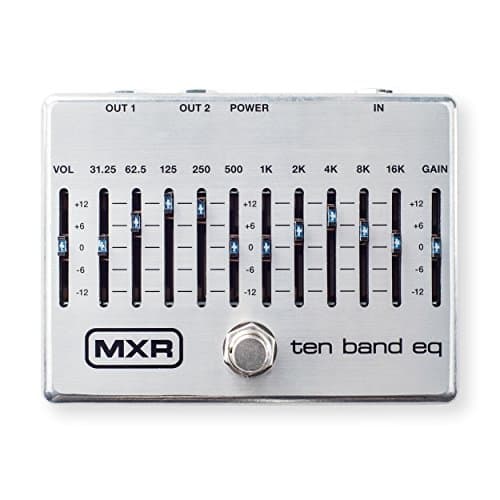 MXR 10 Band EQ Runs at 18 V, not 9 V — and the M108S includes the 18 V supply it needs. | The pedal that makes most people ask this question | $159.99 · Check price #ad How we’re funded · price as of October 20, 2026 |
| 02 | 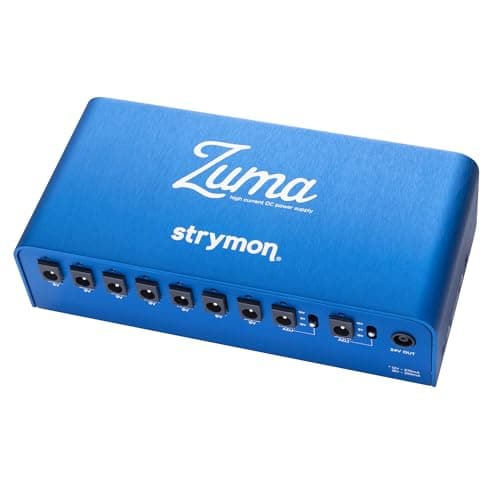 Strymon Zuma Two of the nine isolated outputs switch to 18 V at 250 mA. | 18 V without a doubler cable | $279.00 · Check price #ad How we’re funded · price as of October 20, 2026 |
| 03 | 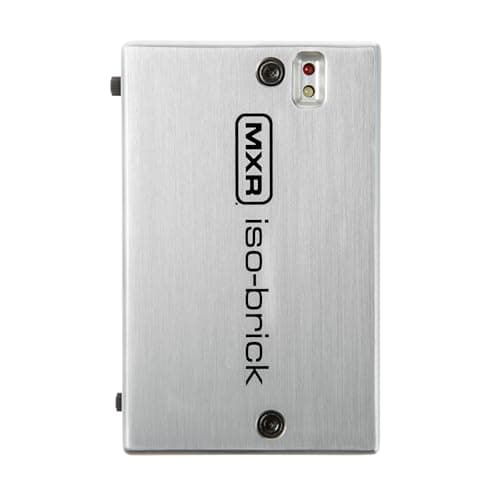 MXR Iso-Brick Power Supply Ten isolated outputs, two of them 18 V at 250 mA by design rather than by switch. | Two dedicated 18 V outputs and nothing to set | $179.99 · Check price #ad How we’re funded · price as of October 20, 2026 |
| ! | 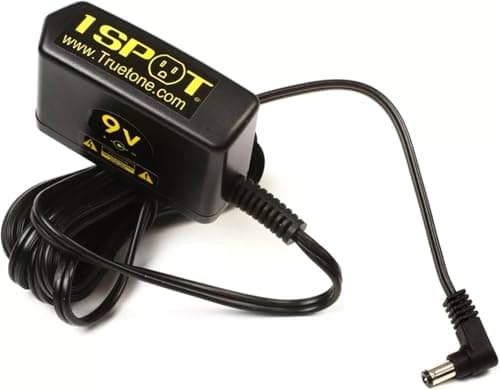 Truetone 1 SPOT A single non-isolated 9 V output. There is no 18 V here at any setting. Skip this one — see why below | Not this job — 9 V only, and it is what most people own | $27.99 · Check price #ad How we’re funded · price as of October 20, 2026 |
Rows link to the full write-up further down this page. Prices come from the live price layer only — where there is no live figure the button reads “Check price” rather than showing a remembered number.
04How to get 18 V
- The adaptor in the box. The MXR M108S includes an 18 V supply. If the pedal came with one, use it — that is the whole problem solved for free.
- A switchable output. The Strymon Zuma has two outputs that switch to 18 V at 250 mA. Cleanest option on a shared board.
- A dedicated 18 V output. The MXR Iso-Brick has two fixed 18 V / 250 mA outputs, which cannot be set to the wrong voltage because they do not move.
- A voltage doubler cable. The Voodoo Lab Pedal Power 2 PLUS reaches 18 V and 24 V through optional doubler cables, which put two isolated outputs in series.
A voltage doubler and a current doubler are different cables that look similar. A current doubler puts two outputs in parallel and sums the milliamps at the same voltage; a voltage doubler puts them in series and sums the volts. Plugging a voltage doubler into a 9 V pedal delivers 18 V to it. Label them.
MXR 10 Band EQ
The pedal that makes most people ask this question
The number10 bands from 31.25 Hz to 16 kHz, +/- 12 dB per band.
An EQ pedal is the clearest case for higher voltage there is. Boosting several bands by up to 12 dB each means the signal inside the pedal gets very large, and a 9 V rail would run out of room and clip before the output jack. MXR runs it at 18 V for exactly that reason.
Ten bands from 31.25 Hz to 16 kHz with Gain and Volume sliders, and two outputs for running to two amps, is a lot of control — it is the pedal we point at whenever a mid scoop needs correcting.
The con is the power, and MXR states it plainly. It runs at 18 V, not 9 V. If your board is a 9 V-only brick, this pedal needs its own supply or an 18 V output — MXR calls this the single most common power mistake made with it, and they are right. MXR publishes no current-draw figure.
| Bands | 10 bands from 31.25 Hz to 16 kHz |
|---|---|
| Range | +/- 12 dB per band, plus Gain and Volume sliders |
| Outputs | Two outputs for running to two amps |
| Power | 18 V DC supply (included with the M108S) |
| Electrical data | No current-draw or impedance figure is published for this pedal, so none is stated here. |
| What it does not do | It runs at 18 V, not 9 V. If your board is a 9 V-only brick this pedal needs its own supply or an 18 V output — this is the single most common power mistake made with it. |
Specs from MXR 10 Band EQ product page. We have not used this unit.
#ad How we’re funded · price as of October 20, 2026
Strymon Zuma
18 V without a doubler cable
The number500 mA at 9 V on every output; 375 mA at 12 V or 250 mA at 18 V on two of them.
Nine fully isolated outputs with a custom transformer per channel, and two of them switch to 12 V (375 mA) or 18 V (250 mA). That is the cleanest way to run an 18 V pedal on a shared board — a switch rather than a cable, so there is nothing to lose in a gig bag.
500 mA at 9 V on every other output means nothing else on the board needs planning around either.
The cons: a switchable output is a switch that can be in the wrong position, and 18 V into a 9 V-only pedal is the one power mistake with a physical consequence. Check it before you plug in, not only at setup.
| Outputs | 9, fully isolated, one custom transformer per channel |
|---|---|
| Current per output | 500 mA at 9 V DC on every output |
| Selectable outputs | 2 outputs switch to 12 V (375 mA) or 18 V (250 mA) |
| Total power | 48 W maximum |
| Mains input | 100-240 V, worldwide |
| Size / weight | 6.8 x 3.3 x 1.8 in (173 x 84 x 46 mm), 680 g |
| What it does not do | It does not include the courtesy outlets or the sag feature some rivals have, and 500 mA per output still will not run an HX Stomp, which asks for 3 A. |
Specs from Strymon Zuma product page. We have not used this unit.
#ad How we’re funded · price as of October 20, 2026
MXR Iso-Brick Power Supply
Two dedicated 18 V outputs and nothing to set
The numberTwo 9 V / 100 mA, two 9 V / 300 mA, two 9 V / 450 mA, two 18 V / 250 mA, two variable 6-15 V.
The mixed ratings are the reason to buy it. Two fixed 18 V outputs at 250 mA cannot be set wrong, because there is nothing to set — the risk of a switchable output finding its way to 18 V next to a 9 V pedal does not exist here.
The two variable 6-15 V outputs are the other unusual feature, and they cover starved-voltage sounds without a separate SAG-equipped supply.
The cons: ten outputs with five different ratings means you have to remember which is which, and the two 100 mA outputs are easy to over-subscribe. A variable output left set low will make a pedal behave oddly in a way that reads as a fault.
| Outputs | 10 isolated outputs |
|---|---|
| Mixed ratings | Two 9 V / 100 mA, two 9 V / 300 mA, two 9 V / 450 mA, two 18 V / 250 mA, and two variable 6-15 V outputs |
| Format | Under-board brick with a detachable IEC cable |
| Electrical data | Per-output ratings are published; total draw is not |
| What it does not do | The outputs are not interchangeable — you have to plan which pedal goes on which output. The two 100 mA outputs run out of headroom fast on a modern board. |
Specs from MXR Iso-Brick product page. We have not used this unit.
#ad How we’re funded · price as of October 20, 2026
Truetone 1 SPOT
Not this job — 9 V only, and it is what most people own
The number9 V DC, 1,700 mA from a single non-isolated output.
We are not recommending this for an 18 V pedal, and it is on the page because it is the supply most people already have when they buy their first one.
It is 9 V, full stop. 1,700 mA is a lot of current, and current is not the missing quantity — voltage is. No amount of headroom on a 9 V rail turns it into an 18 V one, and daisy-chaining fewer pedals off it does nothing to help.
As a supply for a small all-9 V analog board it is genuinely good, and we recommend it elsewhere. For this specific job you need a different supply or the pedal's own adaptor. Best power supplies covers the alternatives.
| Output | 9 V DC, 1,700 mA from a single non-isolated output |
|---|---|
| Isolation | None — this is a single supply intended for daisy-chaining |
| Mains input | 100-240 V AC, worldwide |
| Format | Single-space wall unit with a right-angle plug |
| What it does not do | No isolation at all. Every pedal on the chain shares a ground, which is exactly the condition that produces hum with a digital pedal in the mix. It is a great first supply and a bad final one. |
Specs from Truetone 1 SPOT product page. We have not used this unit.
05Which pedals benefit, and which do not
| Pedal type | Benefit from 18 V | Why |
|---|---|---|
| EQ and boost | Large — this is where it matters most | Boosting several bands by 12 dB needs internal room |
| Clean boost and buffer | Real | The whole job is not clipping |
| Compressor | Moderate | More room before the circuit squashes on its own |
| Transparent overdrive | Moderate | Cleaner, tighter, less compressed |
| High-gain distortion | Little, and often unwanted | You are asking it to clip; more headroom works against that |
| Vintage-style fuzz | None — and do not try | These circuits are voiced around a 9 V or lower rail |
| Digital delay and reverb | None | The rail feeds a regulator; the converters see a fixed voltage |
Only run 18 V into a pedal whose manufacturer rates it for 18 V, regardless of what this table says about the category.
06The current side of it
Voltage and current are separate quantities, and a supply has to satisfy both. A pedal rated 18 V at 200 mA needs an output that delivers 18 V and at least 200 mA — the Zuma's 18 V setting gives 250 mA, which covers it; a 100 mA output at the right voltage does not.
Note also that the current rating usually drops as the voltage rises on a switchable output: the Zuma gives 500 mA at 9 V, 375 mA at 12 V and 250 mA at 18 V. Budget with the figure for the voltage you are actually using. Power requirements explained has the full method, and powering an HX Stomp covers the pedal that breaks every brick.
Frequently asked questions
+ Can I run a 9V pedal at 18V?
+ Does 18V make a pedal louder?
+ What happens if I run an 18V pedal at 9V?
+ Which power supplies have an 18V output?
Sources
Related on Fret & Fuzz
Pedalboard power requirements explained
Two sums decide your power supply, and almost everyone only does the first. A worked example with real published figures.
Top pick: Strymon Zuma
#ad How we’re funded · price as of October 20, 2026
Best pedalboard power supplies
Compare on the highest single output, not total current. Five isolated supplies on their published per-output ratings.
Best Power Supply pick: Strymon Zuma
#ad How we’re funded · price as of October 20, 2026
Isolated power supply vs daisy chain
Two topologies, two failure modes. The mechanism behind the hum, and the point at which a daisy chain stops being enough.
Top pick: Truetone 1 SPOT
#ad How we’re funded · price as of October 20, 2026
Powering an HX Stomp from a pedalboard supply
Line 6 specifies 3 A. The most generous common brick output is 500 mA. The arithmetic, and what to do instead.
Top pick: Strymon Zuma
#ad How we’re funded · price as of October 20, 2026
Best EQ pedals
Bands, decibel range and supply voltage. Three EQs compared, plus the 18 V requirement that strands power plans.
Best EQ Pedal pick: MXR 10 Band EQ
#ad How we’re funded · price as of October 20, 2026