Powering an HX Stomp from a pedalboard supply
The most common power mistake on modern boards, and the one that produces a unit which boots, works, and then dies halfway through a set.
Fret & Fuzz earns a commission when you buy through the links on this page. It costs you nothing and it does not decide what we rank. How we’re funded.
We have not played this gear. Every pick below is chosen from published manufacturer specifications and the arithmetic set out in how we research, which you can re-run yourself.
Run the HX Stomp from the DC-3 supply Line 6 ships with it, and run everything else from your brick. Line 6 specifies 9 V DC center-negative at 3 A. No standard isolated pedalboard output supplies 3 A — the most generous common brick gives 500 mA per output, which is one sixth of it. There is no cable, splitter or adaptor that fixes this.
This is the most common power mistake on modern pedalboards, and it is common precisely because it half works. The unit boots. It passes signal. Then it reboots mid-set, or the display glitches, or it behaves differently once it warms up — symptoms that look like a faulty unit and are actually a supply that cannot deliver.
01Step 1 — the published figures
| Supply | Best single output at 9 V | Enough for an HX Stomp? |
|---|---|---|
| Line 6 DC-3 (included in the box) | 3 A | Yes — this is the specified supply |
| Strymon Zuma | 500 mA | No |
| Strymon Ojai | 500 mA | No |
| Truetone 1 SPOT Pro CS7 | 500 mA (outputs 6-7) | No |
| MXR Iso-Brick | 450 mA (two outputs) | No |
| Voodoo Lab Pedal Power 2 PLUS | 250 mA (outputs 5-6) | No |
| Truetone 1 SPOT | 1,700 mA total, not isolated | No |
Every figure is the manufacturer's published rating. The DC-3 row is the supply Line 6 includes with the pedal.
There is no premium brick further down the list that solves it. The gap between 500 mA and 3 A is not a matter of spending more — it is a different class of supply, and the correct one is already in the box.
02Step 2 — why doubler cables do not help
A current-doubler cable combines two outputs into one and sums their current at the same voltage. Two 500 mA outputs give you 1,000 mA. That is a real and useful trick for a pedal that needs 600 or 700 mA.
It does not get you to 3 A. You would need six 500 mA outputs combined, which no doubler cable does, and which would leave nothing for the rest of the board. The arithmetic closes the option rather than the manufacturer closing it.
What to power the rest of the board with
| # | Product | Best for | Price |
|---|---|---|---|
| 01 | 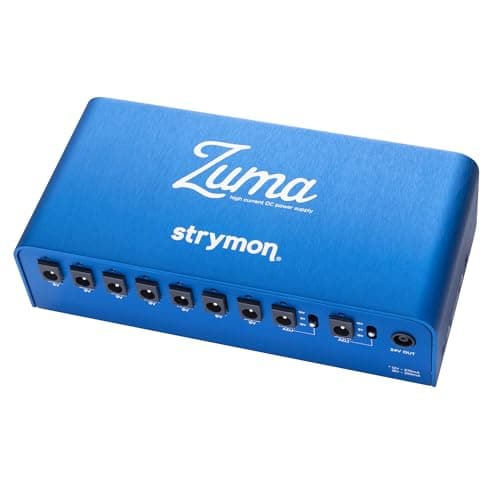 Strymon Zuma 500 mA at 9 V on every one of nine isolated outputs — and still not the 3 A Line 6 specifies. | The highest per-output current here | $279.00 · Check price #ad How we’re funded · price as of October 20, 2026 |
| 02 | 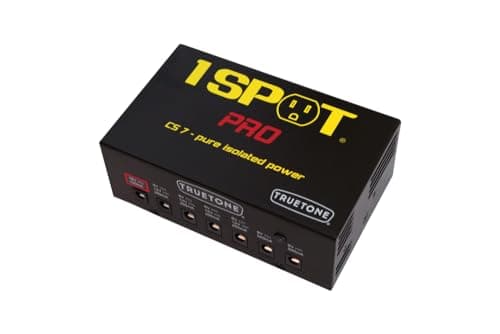 Truetone 1 SPOT Pro CS7 Seven isolated outputs with two rated 500 mA — enough for a second digital pedal, not for the Stomp. | Two high-current outputs at a lower price | $169.99 · Check price #ad How we’re funded · price as of October 20, 2026 |
| 03 | 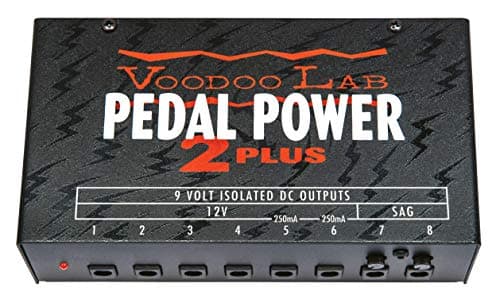 Voodoo Lab Pedal Power 2 PLUS Eight isolated sections, and the highest single output is 250 mA — the tightest supply here. | A board with no digital pedals on it | $199.99 · Check price #ad How we’re funded · price as of October 20, 2026 |
| ! | 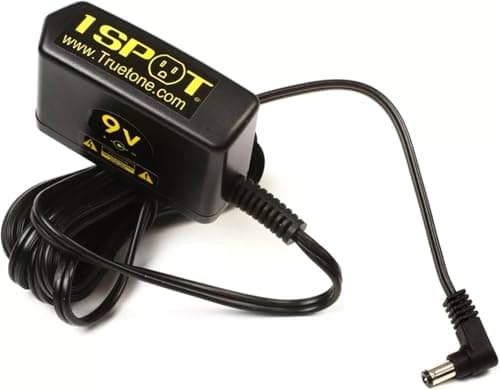 Truetone 1 SPOT 1,700 mA from a single non-isolated output — both figures are wrong for a Stomp. Skip this one — see why below | Not this job, and it is the thing people reach for | $27.99 · Check price #ad How we’re funded · price as of October 20, 2026 |
Rows link to the full write-up further down this page. Prices come from the live price layer only — where there is no live figure the button reads “Check price” rather than showing a remembered number.
04Step 3 — plan the rest of the board around the Stomp
Once the Stomp is on its own supply, the brick only has to cover the pedals around it. That is usually a tuner, a drive or two and possibly a wah — a total well inside any isolated supply on this page.
Worked example. A TU-3 at 20 mA, an SD-1 at 10 mA, a BD-2 at 20 mA and a TR-2 at 25 mA is 75 mA in total. Add 30% headroom and you need about 98 mA, so a single 100 mA output would technically cover the whole group through a daisy chain, and any of the isolated bricks above covers it several times over. The Stomp was never the problem for the brick; the brick was never the answer for the Stomp.
Strymon Zuma
The highest per-output current here
The number500 mA per output. The Stomp's included supply is rated at 3 A, six times that.
Nine fully isolated outputs with a custom transformer per channel, every one rated 500 mA at 9 V. That is the most generous per-output figure on this page, and it powers essentially any conventional pedal without thinking about it.
Two outputs switch to 12 V (375 mA) or 18 V (250 mA), which covers an 18 V pedal without a doubler cable. For a board where the Stomp runs off its own supply and everything else runs off a brick, this is the brick.
The con is the one this whole page is about: 500 mA is not 3 A. Nothing about a nine-output isolated brick changes that, and paying more does not fix it. You still need the DC-3 for the Stomp itself.
| Outputs | 9, fully isolated, one custom transformer per channel |
|---|---|
| Current per output | 500 mA at 9 V DC on every output |
| Selectable outputs | 2 outputs switch to 12 V (375 mA) or 18 V (250 mA) |
| Total power | 48 W maximum |
| Mains input | 100-240 V, worldwide |
| Size / weight | 6.8 x 3.3 x 1.8 in (173 x 84 x 46 mm), 680 g |
| What it does not do | It does not include the courtesy outlets or the sag feature some rivals have, and 500 mA per output still will not run an HX Stomp, which asks for 3 A. |
Specs from Strymon Zuma product page. We have not used this unit.
#ad How we’re funded · price as of October 20, 2026
Truetone 1 SPOT Pro CS7
Two high-current outputs at a lower price
The numberOutput 1 is 100 mA; outputs 2-5 are 200 mA; outputs 6-7 are 500 mA each.
The mixed ratings are the point. Output 1 at 100 mA suits an analog drive, outputs 2 to 5 at 200 mA cover a tuner and a couple of digital compacts, and outputs 6 and 7 at 500 mA each take a delay and a reverb.
For a typical board of one Stomp plus five or six pedals, this is enough supply for everything except the Stomp — which is the correct way to plan the purchase.
The cons: 100 mA on output 1 is easy to over-subscribe if you forget which output is which, and outputs 2 to 5 are switchable between 9 and 12 V, so a mis-set switch puts 12 V into a 9 V pedal.
| Outputs | 7, independently isolated and filtered |
|---|---|
| Output 1 | 9 V DC, 100 mA |
| Outputs 2-5 | 9 / 12 V DC switchable, 200 mA each |
| Outputs 6-7 | 9 V DC, 500 mA each |
| Mains input | 100-240 V AC, worldwide |
| Size / weight | 5.5 x 3.37 x 2 in (140 x 86 x 50 mm), 592 g |
| What it does not do | No 18 V output, so an MXR 10 Band EQ or anything else that needs 18 V is not covered. Output 1 is only 100 mA — that one is for a tuner or an analog dirt pedal, not a digital reverb. |
Specs from Truetone 1 SPOT Pro CS7 product page. We have not used this unit.
#ad How we’re funded · price as of October 20, 2026
Voodoo Lab Pedal Power 2 PLUS
A board with no digital pedals on it
The numberOutputs 1-4 and 7-8 are 100 mA; outputs 5-6 are 250 mA each.
Eight isolated sections and a long service record. Outputs 7 and 8 have a SAG control for starved-voltage sounds, which no other supply here offers, and 18 V and 24 V are available through optional doubler cables.
It is the right supply for an analog board, and it is worth knowing its limits before buying: 250 mA is the ceiling on any single output.
The cons are stated plainly by the numbers. A Strymon Flint asks for a minimum of 300 mA and will not run from one output here without a doubler cable. An HX Stomp is a different order of magnitude again. This supply predates the current generation of digital pedals and the ratings show it.
| Outputs | 8 isolated sections |
|---|---|
| Outputs 1-4 | 9 / 12 V, 100 mA each |
| Outputs 5-6 | 9 / 12 V, 250 mA each |
| Outputs 7-8 | 9 V, 100 mA each, with a SAG control for starved-voltage sounds |
| Higher voltages | 18 V and 24 V via optional doubler cables |
| Mains input | 120 V 50/60 Hz (North American model) |
| Size / weight | 6 x 3.4 x 1.8 in (152 x 86 x 44 mm), 907 g |
| What it does not do | The highest single output is 250 mA, so a Strymon pedal that wants 300 mA minimum will not run from one output — you need the doubler cable or a different supply. It is also a fixed-region mains unit, not a worldwide one. |
Specs from Voodoo Lab Pedal Power 2 PLUS product page. We have not used this unit.
#ad How we’re funded · price as of October 20, 2026
Truetone 1 SPOT
Not this job, and it is the thing people reach for
The number1,700 mA total, against 3 A specified. And no isolation at all.
We are not recommending this for an HX Stomp, and it is on the page because it is the supply most people already own and the one they try first.
Two problems, either of which is disqualifying. The total output is 1,700 mA, which is less than the 3 A Line 6 specifies — and that is the total for everything on the chain, not per pedal. And it is a single non-isolated output intended for daisy-chaining, so every pedal shares a ground with a digital processor.
As a supply for a small analog board it is a genuinely good product, and we recommend it elsewhere. Isolated vs daisy chain covers where the line is.
| Output | 9 V DC, 1,700 mA from a single non-isolated output |
|---|---|
| Isolation | None — this is a single supply intended for daisy-chaining |
| Mains input | 100-240 V AC, worldwide |
| Format | Single-space wall unit with a right-angle plug |
| What it does not do | No isolation at all. Every pedal on the chain shares a ground, which is exactly the condition that produces hum with a digital pedal in the mix. It is a great first supply and a bad final one. |
Specs from Truetone 1 SPOT product page. We have not used this unit.
05Step 4 — the two physical details that also catch people
- Polarity. Line 6 publishes 9 V DC center-negative for the HX Stomp, which is the standard for guitar pedals and the opposite of most consumer electronics. A center-positive supply of the right voltage and current will still not work.
- The plug itself. The DC-3 is a barrel connector like any other, so it fits a daisy-chain cable perfectly and gives you no warning that the supply behind it cannot deliver. Nothing about the connector tells you the rating — only the label does.
06What this means for board layout
Two supplies means two mains sockets, two wall-wart or IEC footprints, and a second thing to fasten underneath. Plan for it before you buy the board rather than after — a Pedaltrain Nano+ has nowhere to hide two supplies.
Best pedalboards covers the sizes, and best power supplies covers the bricks in full. The general arithmetic — how to add draws, and why 30% headroom — is in power requirements explained. Swap that TU-3 for a PolyTune 3 and the same board is at 155 mA, which is the kind of jump that decides a supply — TU-3 vs PolyTune 3 covers it.
Frequently asked questions
+ Can I power an HX Stomp from a Strymon Zuma?
+ Will a current doubler cable let my brick power an HX Stomp?
+ What happens if I underpower an HX Stomp?
+ What polarity does the HX Stomp use?
Sources
Related on Fret & Fuzz
Pedalboard power requirements explained
Two sums decide your power supply, and almost everyone only does the first. A worked example with real published figures.
Top pick: Strymon Zuma
#ad How we’re funded · price as of October 20, 2026
Best pedalboard power supplies
Compare on the highest single output, not total current. Five isolated supplies on their published per-output ratings.
Best Power Supply pick: Strymon Zuma
#ad How we’re funded · price as of October 20, 2026
Isolated power supply vs daisy chain
Two topologies, two failure modes. The mechanism behind the hum, and the point at which a daisy chain stops being enough.
Top pick: Truetone 1 SPOT
#ad How we’re funded · price as of October 20, 2026
Best multi-effects pedals
Block count, routing freedom and current draw decide this. Four current units compared, plus the one BOSS has discontinued.
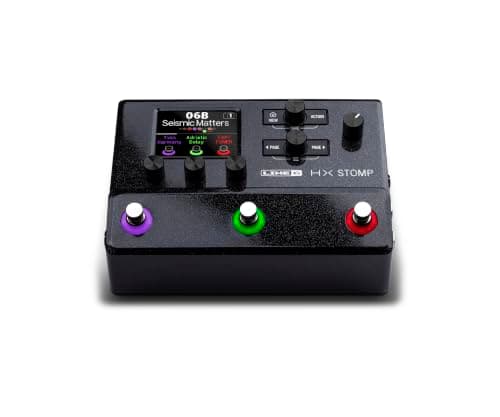
Best Multi-Effects pick: Line 6 HX Stomp
#ad How we’re funded · price as of October 20, 2026
9V vs 18V pedals
Voltage sets the clipping ceiling, not the volume. Which pedals want 18 V, which supplies deliver it, and the mistake that kills a pedal.
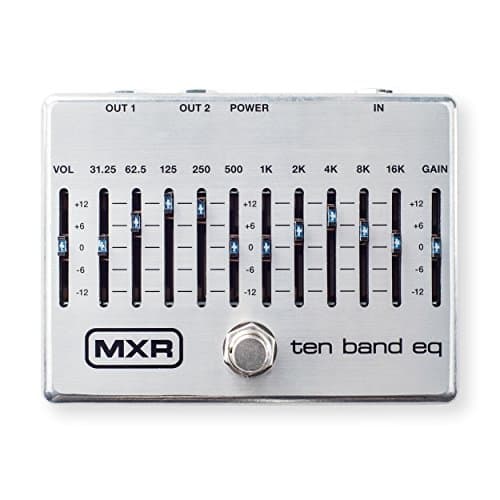
Top pick: MXR 10 Band EQ
#ad How we’re funded · price as of October 20, 2026