Can you use guitar pedals with an acoustic guitar?
A piezo pickup is not a magnetic pickup, and almost everything surprising about pedals on an acoustic follows from that one fact.
Fret & Fuzz earns a commission when you buy through the links on this page. It costs you nothing and it does not decide what we rank. How we’re funded.
We have not played this gear. Every pick below is chosen from published manufacturer specifications and the arithmetic set out in how we research, which you can re-run yourself.

Yes for reverb, chorus, delay, compression, EQ and tuning — those pass straight over from an electric with no modification. No for drive: distortion and overdrive on an under-saddle piezo pickup sound harsh rather than warm, and no setting fixes it. The one pedal to buy first is an acoustic preamp such as the Fishman AFX Pro EQ Mini, because its published 10 M ohm input impedance stops a 1 M ohm pedal or amp input from loading your piezo down — which is the real cause of most 'my acoustic sounds brittle plugged in' complaints, not the pedals that came after it.
We have not played these pedals through an acoustic, and this is not a tone review. What follows is what each maker publishes, why a piezo pickup changes the answer, and the order to buy in. How we research sets out the method.
01The criteria, before any product
Three published figures and one design question decide whether a pedal belongs in front of an acoustic.
- Input impedance. A piezo pickup is a high-impedance source. A published input impedance in the megohms — ideally 10 M ohm, not the usual 1 M ohm — is the difference between a full sound and a thin one. Most pedals do not publish it at all.
- Is there a dry or parallel path? A blend knob on a compressor, a mix on a reverb. An acoustic's transient detail is the first casualty of any processing, and a dry path preserves it.
- Does the tone control subtract or shape? A single scooping tone knob takes body away from a signal that has little to spare. A multi-band EQ, or a dedicated low cut, is a tool instead of a compromise.
- Is there a feedback answer? On a stage, an acoustic feeds back before anything else in the band. Phase inversion and a sweepable low cut are the two controls that address it, and only an acoustic preamp has them.
| Pedal | Published input impedance | Dry / mix path? | Current draw |
|---|---|---|---|
| Fishman AFX Pro EQ Mini | 10 M ohm | No — but a sweepable low cut and phase invert | 53 mA typical |
| BOSS RV-6 Reverb | Not published | Yes — E.Level sets the wet mix | 95 mA |
| Keeley Compressor Plus | Not published | Yes — Blend knob | 10 mA |
| BOSS CH-1 Super Chorus | Not published | Yes — E.Level sets the wet mix | Not published |
| BOSS DS-1 Distortion | 1 M ohm | No | 10 mA |
Manufacturer figures only. Three of these five makers publish no input impedance for the pedal in question, which is itself the useful finding: the one that does is the one built for this instrument.
Pedals worth putting in front of an acoustic
| # | Product | Best for | Price |
|---|---|---|---|
| 01 | 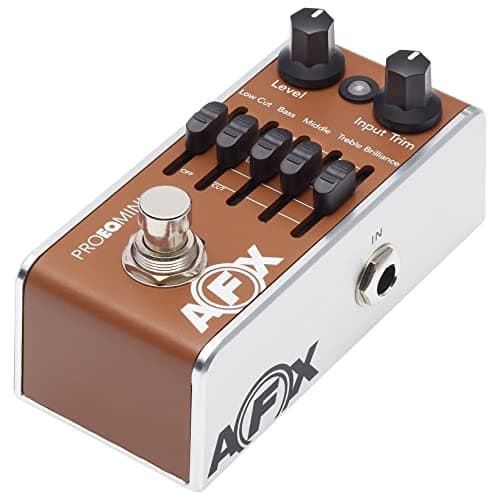 Fishman AFX Pro EQ Mini An acoustic preamp with a 10 M ohm input, a sweepable low cut and phase inversion — the three controls a piezo actually needs. | The first pedal to buy, because it fixes the pickup before anything else gets a chance to | $129.95 · Check price #ad How we’re funded · price as of November 2, 2026 |
| 02 | 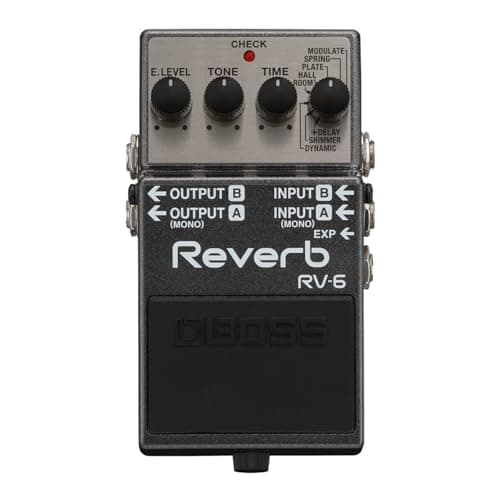 BOSS RV-6 Reverb Eight modes including a Dynamic setting, stereo in and out, and nothing in the circuit that fights a piezo. | Acoustic reverb, and the one effect that almost every acoustic player ends up using | |
| 03 | 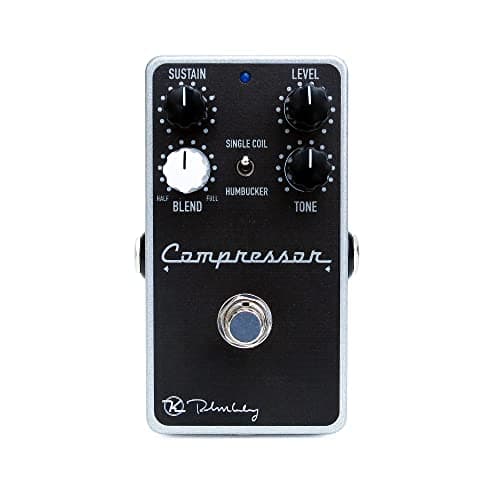 Keeley Compressor Plus A blend knob for parallel compression, which is the only kind of compression an acoustic tolerates. | Evening out fingerpicking and strumming in the same song, without killing the attack | $149.00 · Check price #ad How we’re funded · price as of November 2, 2026 |
| 04 | 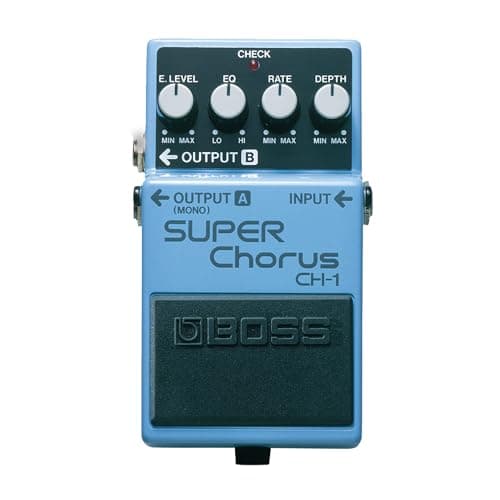 BOSS CH-1 Super Chorus A bright, clean chorus with stereo outputs, and the EQ knob is what makes it work on an acoustic. | A wide, obvious shimmer on a strummed acoustic, cheaply | |
| ! | 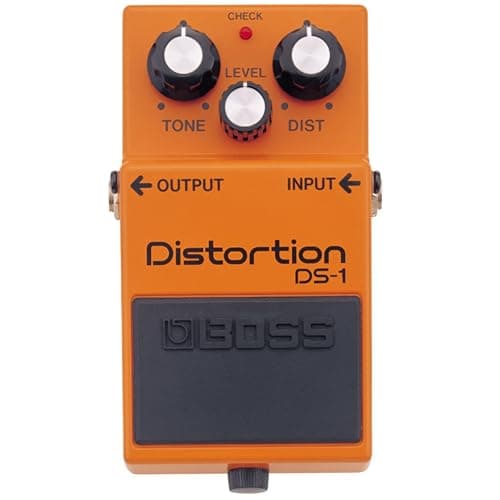 BOSS DS-1 Distortion A single scooping Tone knob and hard clipping, applied to a pickup with no low-mid body to spare. Skip this one — see why below | Nothing you want to do to an acoustic guitar |
Rows link to the full write-up further down this page. Prices come from the live price layer only — where there is no live figure the button reads “Check price” rather than showing a remembered number.
03Why a piezo changes the answer
Almost every surprise on this subject traces back to the pickup rather than the pedals. An electric guitar's magnetic pickup is a coil: a relatively low-impedance source that happily drives a 1 M ohm pedal input. An under-saddle piezo is a crystal: a very high-impedance source that behaves like a tiny capacitor.
Feed a high-impedance source into an input that is too low, and the result is a high-pass filter you did not ask for. You lose low end and the body of the sound, and what is left is the attack and the upper midrange — the brittle, quacking tone that gets blamed on cheap electronics. Nothing after that point repairs it. An EQ later can boost the bass that survived, but it cannot recreate what the mismatch filtered out.
That is the entire argument for putting a preamp with a published megohm-class input first in the chain, and it is also why the pedal order on an acoustic board is less negotiable than on an electric one. Buffer vs true bypass covers the related question of what a long cable run does to a high-impedance signal, which is the same mechanism in a different place.
Fishman AFX Pro EQ Mini
The first pedal to buy, because it fixes the pickup before anything else gets a chance to
The number10 M ohm input impedance, up to 20 dB gain, sweepable low cut, phase invert on a footswitch hold, 53 mA.
Fishman publishes a 10 M ohm input impedance on this pedal, and that figure is the reason it belongs first in the chain. A piezo (under-saddle) pickup is a high-impedance source, and feeding it into a normal pedal or amp input — typically 1 M ohm — loads it down and takes the top and the body out of the sound. That is the harsh, brittle, quacking tone people blame on their guitar. It is usually an impedance mismatch, and this is the published specification that solves it.
The rest of the control set is aimed at the same instrument. There is up to 20 dB of gain to bring a weak pickup to a usable level, a sweepable low cut for the boomy low-mid resonance that feedback starts in, and phase inversion on a footswitch hold — the single most effective trick against feedback on a loud stage, because reversing polarity moves the frequency at which the loop builds. Fishman also publishes true bypass with a buffered bypass option, 24-bit conversion, 53 mA draw and a -100 dB signal-to-noise figure.
The cons are specific and worth knowing before you buy. There is no XLR output — Fishman lists 1/4-inch TRS in and out only, so this is a preamp and EQ, not a DI box that hands an engineer a balanced output. It needs 9 V external power and has no battery compartment, and no supply is in the box. And Fishman's own page is inconsistent about its own product: the copy describes four tone bands, the feature list says five, and the spec table publishes no band frequencies at all — so the exact voicing of the EQ is not a documented number.
| Model | PRO-AFX-EQ2 |
|---|---|
| Function | Acoustic preamp and EQ with up to 20 dB of gain |
| EQ | Acoustic-voiced bass, mid, treble and brilliance, plus a sweepable low cut |
| Phase | Phase inversion on a footswitch hold, for feedback control |
| Input impedance | 10 M ohm — matches passive, active and magnetic pickups |
| Output impedance | 1 k ohm |
| Signal to noise | -100 dB, 100 dB dynamic range |
| Conversion | 24-bit AD and DA, 32-bit processing |
| Bypass | True bypass, with a buffered bypass option |
| Current draw | 53 mA typical |
| Power | 9 V external only, 5.5 mm OD / 2.1 mm ID barrel, center negative |
| Size / enclosure | 49 x 97 x 49 mm, aluminum |
| What it does not do | No XLR output — Fishman lists 1/4-inch TRS in and out only, so this is a preamp and EQ, not a DI box for a sound engineer's XLR snake. No power supply in the box and no battery compartment: 9 V external is required. Fishman's own page describes four tone bands in its copy and five in its feature list, and publishes no band frequencies on the spec table. |
Specs from Fishman AFX Pro EQ Mini product page. We have not used this unit.
#ad How we’re funded · price as of November 2, 2026
BOSS RV-6 Reverb
Acoustic reverb, and the one effect that almost every acoustic player ends up using
The number8 modes, stereo I/O, expression jack, 95 mA, approx. 3 hours alkaline.
Reverb is the effect an acoustic wants, because a plugged-in acoustic has had its room taken away from it — the pickup hears the string and the top, not the air around the instrument. The RV-6 publishes eight modes (Hall, Plate, Room, Spring, Modulate, +Delay, Shimmer and Dynamic), and the useful ones on an acoustic are the quiet end of that list rather than the dramatic end.
Dynamic is the mode worth knowing about: BOSS's description is a reverb that responds to playing level, which on a strummed acoustic keeps the reverb out of the way while you are playing and lets it bloom in the gaps. Stereo in and out plus an expression jack mean it also works as the last pedal before two amps or a stereo feed to a desk.
The downsides are the familiar BOSS compact ones. 95 mA is a real load and rules out sharing a daisy chain with other digital pedals, there is no way to save a setting so every mode change is a knob move mid-set, and the published three hours of alkaline life makes battery operation a non-plan. No adaptor in the box.
| Modes | 8 — Hall, Plate, Room, Spring, Modulate, +Delay, Shimmer, Dynamic |
|---|---|
| Controls | E.Level, Tone, Time, Mode, pedal switch |
| Current draw | 95 mA |
| Battery life | Approx. 3 hours on alkaline |
| I/O | Input A (mono) and B, Output A (mono) and B, expression jack |
| Weight | 450 g including battery |
| What it does not do | No adaptor included. 95 mA rules out a daisy chain shared with other digital pedals, and there is no way to save a setting — every mode change is a knob move. |
Specs from BOSS RV-6 specifications. We have not used this unit.
Keeley Compressor Plus
Evening out fingerpicking and strumming in the same song, without killing the attack
The numberSustain, Level, Blend, Tone, two-position Release switch, 10 mA, true bypass, all analog.
An acoustic has a wider dynamic range than an electric and a much sharper transient at the start of every note, especially with a pick. Compress it conventionally and you flatten exactly the detail that makes it sound like an acoustic guitar.
Blend is why this pedal survives the job: Keeley publishes it as a mix of compressed against dry signal, which is parallel compression. You can hold the quiet fingerpicked passage up to the level of the strummed chorus and still keep the pick attack, because the dry signal carrying that attack is never compressed. At 10 mA, all analog and true bypass, it costs almost nothing to have on the board.
What it does not have is an attack control, and the Release switch is a two-position switch described as tuned for single coils or humbuckers — magnetic guitar pickups. Neither position was voiced for a piezo, so you are choosing the one that sounds better rather than the correct one. Keeley publishes current draw but no impedance figures, which matters more than usual here: put a compressor before a preamp and you have put a 1 M ohm-class input in front of your piezo, which is the problem the preamp exists to solve.
| Controls | Sustain, Level, Blend and Tone knobs, plus a Release switch |
|---|---|
| Release switch | Two positions, which Keeley describes as tuned for single coils or humbuckers |
| Blend | Mixes the compressed signal against the dry signal for parallel compression |
| Current draw | 10 mA |
| Power | 9 V DC, center negative; Keeley also lists battery operation |
| Bypass | True bypass |
| Circuit | 100% analog |
| What it does not do | No attack knob, and release is a two-position switch set for pickup type rather than a continuous control — the blend knob is how you keep the transient, not a time constant. Keeley publishes the current draw but no impedance figures. |
Specs from Keeley Compressor Plus product page. We have not used this unit.
#ad How we’re funded · price as of November 2, 2026
BOSS CH-1 Super Chorus
A wide, obvious shimmer on a strummed acoustic, cheaply
The numberE.Level, EQ, Rate and Depth knobs, mono and stereo outputs.
Chorus on an acoustic is the effect that makes a single strummed guitar sound like a record rather than a person in a room, and the CH-1 is the cheap, durable way to get it. BOSS publishes four controls — E.Level, EQ, Rate and Depth — and mono plus stereo outputs.
The EQ knob is the one that earns it a place: chorus on an acoustic goes wrong by making the instrument sound glassy and synthetic, and being able to pull the top off the wet signal without dulling the dry one is how you avoid that. Stereo outputs into two amps, or into two channels at a desk, is where any chorus sounds best.
The cons: BOSS publishes no current-draw or impedance figure for this pedal, so you cannot budget it on a supply from published data. It is a bright, clearly digital-voiced chorus — if you want a warm analog bucket-brigade sound, that is the Small Clone, a different circuit. And no adaptor is in the box.
| Controls | E.Level, EQ, Rate, Depth |
|---|---|
| Outputs | Mono and stereo outputs |
| Power | 9 V battery or PSA-series adaptor |
| Electrical data | No current-draw or impedance figure is published for this pedal, so none is stated here. |
| What it does not do | No adaptor included. It is a bright, clearly digital-voiced chorus — if you are chasing a warm analog bucket-brigade sound, this is not that circuit. |
Specs from BOSS CH-1 product page. We have not used this unit.
BOSS DS-1 Distortion
Nothing you want to do to an acoustic guitar
The numberTone, Level, Dist, 1 M ohm input, 10 mA.
The entry to avoid, included because it is the mistake people make. A distortion pedal on an acoustic does not sound like a distorted acoustic — it sounds like a quacking piezo with hard clipping on top, and there are two reasons.
First, the pickup. An under-saddle piezo already emphasizes the attack and the upper midrange; clipping amplifies exactly that character. Second, the tone stack. The DS-1's single Tone knob scoops as it brightens, so the control you would reach for to tame the harshness removes what little body the signal had. Its 1 M ohm input is also a tenth of what a piezo wants, so the pedal is loading the pickup down before it does anything else.
If you actually want a dirty acoustic sound, the route is a magnetic soundhole pickup rather than a piezo, and then the normal electric-guitar rules apply. Overdrive vs distortion vs fuzz covers which category to reach for once you have a magnetic pickup feeding it.
| Controls | Tone, Level, Dist, pedal switch |
|---|---|
| Input impedance | 1 M ohm |
| Output impedance | 1 k ohm |
| Current draw | 10 mA |
| Power | 9 V battery (6F22 / 6LR61) or PSA-series adaptor |
| Size / weight | 73 x 129 x 59 mm, 360 g |
| What it does not do | No adaptor included, no true bypass. The single Tone knob scoops as it brightens, so a DS-1 into an already-scooped amp is the classic recipe for disappearing in a band mix. |
Specs from BOSS DS-1 specifications. We have not used this unit.
04The order to buy in, and why it is not the usual order
On an electric board people usually buy a drive first and add utility later. On an acoustic the order reverses, because the problems are different.
- Preamp or DI first. It fixes impedance, gives you gain, and hands you the two feedback controls. Everything else sounds better after it, and some things only sound right after it.
- Reverb second. It replaces the room the pickup cannot hear. This is the effect that makes a plugged-in acoustic stop sounding like a plugged-in acoustic.
- Compression third, with a blend knob. For a player who fingerpicks and strums in the same song. Skip it entirely if you play at one dynamic.
- Chorus or delay fourth, if at all. Taste rather than need. A little chorus on a strummed part is a record sound; a lot of it is a 1980s sound.
- A tuner whenever you like. An acoustic goes out of tune with temperature and humidity faster than an electric does, so this is not optional equipment, it is just not an interesting purchase.
05Feedback, which is the real enemy on a stage
A plugged-in acoustic is a resonant wooden box pointed at a loudspeaker. Above a certain volume it will feed back, and the frequency it chooses is usually the main air resonance of the body — a low-mid note somewhere around the bottom two strings.
Two controls address it, and both are on an acoustic preamp rather than on general-purpose pedals. A sweepable low cut lets you remove the specific region the loop is building in, rather than dulling the whole instrument with a tone knob. Phase inversion reverses the polarity of your signal, which changes where the loop can form at all — it is the control that most often turns an unusable stage volume into a usable one, and it costs nothing in tone when it works.
A soundhole cover is the other half of the answer and is not a pedal. If you are fighting feedback at volume, it is cheaper than anything on this page.
06Who should buy something else
Anyone who needs to hand a sound engineer a balanced output. Nothing here has an XLR socket — the Fishman publishes 1/4-inch TRS in and out only — so a player whose main requirement is a DI into a stage box wants an acoustic DI rather than an acoustic preamp pedal. They look similar and are not the same product.
Anyone chasing a distorted acoustic sound, for the reasons in the DS-1 entry above: fit a magnetic soundhole pickup and treat it as an electric. And anyone whose acoustic already has a working onboard preamp and who only wants reverb — buy the reverb and stop, because the expensive part of this page is solving a problem you do not have.
Frequently asked questions
+ Can you use electric guitar pedals with an acoustic guitar?
+ Why does my acoustic sound thin and brittle when I plug it in?
+ What is the first pedal to buy for an acoustic guitar?
+ Can you use a distortion pedal on an acoustic guitar?
+ Does an acoustic preamp pedal have an XLR output?
+ Which reverb setting works best on an acoustic?
Sources
Related on Fret & Fuzz

Guitar pedal types explained
Five families defined by what they do to the waveform, and the map that turns a hundred-brand problem into five decisions.
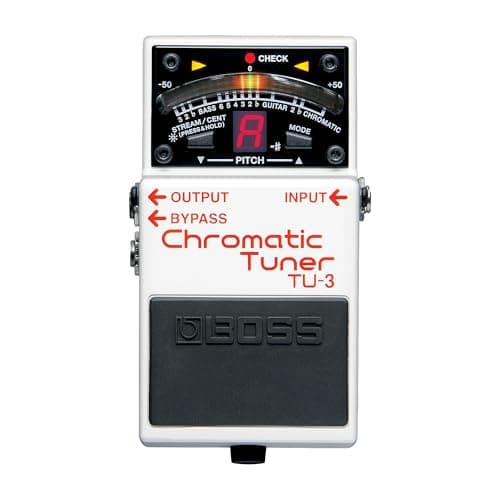
Top pick: BOSS TU-3 Chromatic Tuner

Best reverb pedals
Check your amp first. If you do need a reverb pedal, one multi-mode unit covers every type — here is what the modes actually differ on.
Best Reverb pick: BOSS RV-6 Reverb
Best compressor pedals
Blend is the control that decides whether a compressor squashes or supports. Three compressors compared on what they do and do not have.
Best Compressor pick: Keeley Compressor Plus
#ad How we’re funded · price as of November 2, 2026
Buffer vs true bypass
A trade-off, not an upgrade. What a buffer fixes, when it hurts, and a five-question rule for deciding.
Top pick: BOSS TU-3 Chromatic Tuner