Best compressor pedals
Every complaint about compressors squashing the life out of a signal is really a complaint about a missing blend control.
Fret & Fuzz earns a commission when you buy through the links on this page. It costs you nothing and it does not decide what we rank. How we’re funded.
We have not played this gear. Every pick below is chosen from published manufacturer specifications and the arithmetic set out in how we research, which you can re-run yourself.
Buy a compressor with a blend control. Blend mixes the compressed signal against your dry signal, so the pick attack survives while the compression adds sustain underneath it — which is the difference between a compressor you notice and one you only hear when you switch it off. A two-knob compressor without blend puts everything through the compressor, which is why it squashes.
Compression is the effect people most often buy, dislike, and abandon. Almost always the pedal was doing exactly what it was designed to do and the design did not include the control that would have made it usable.
Best compressor pedals
| # | Product | Best for | Price |
|---|---|---|---|
| 01 | 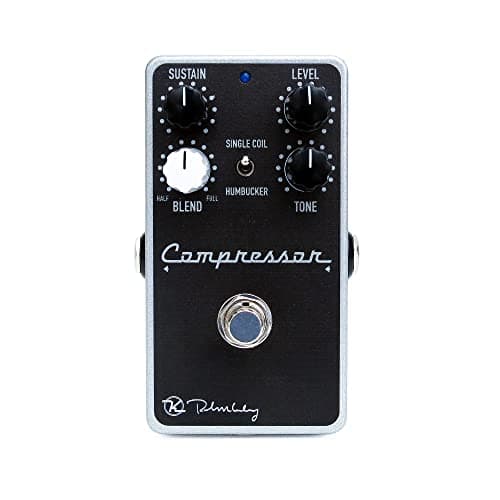 Keeley Compressor Plus The blend control keeps the dry transient while the compressed signal adds sustain underneath it. | Compression you notice only when it is off | $149.00 · Check price #ad How we’re funded · price as of October 18, 2026 |
| 02 | 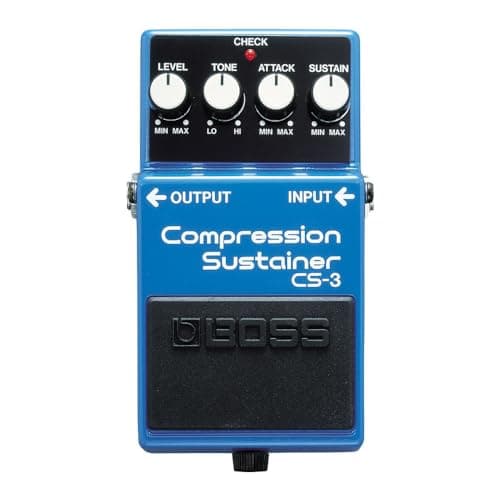 BOSS CS-3 Compression Sustainer VCA compression with Sustain, Attack, Tone and Level — no blend, but a real attack control. | Attack control at the lowest price with published specs | |
| 03 | 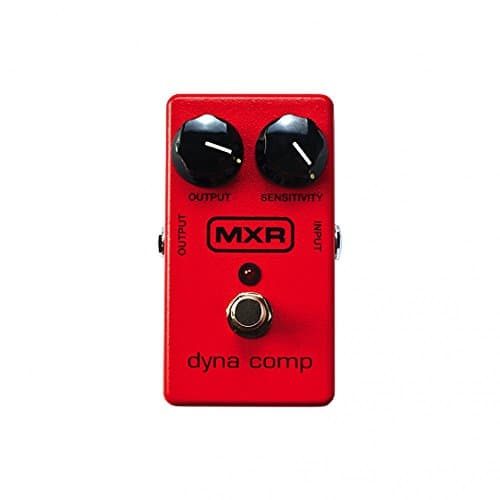 MXR Dyna Comp Compressor Two knobs and an OTA circuit that squashes in a way you can hear. That is the point of it. | Compression as an audible effect | $99.99 · Check price #ad How we’re funded · price as of October 18, 2026 |
| ! | 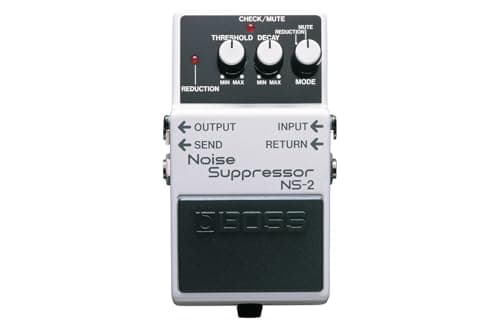 BOSS NS-2 Noise Suppressor If your complaint is noise rather than dynamics, a compressor makes it worse and a gate fixes it. Skip this one — see why below | Not a compressor, and the pedal people actually needed | $120.99 · Check price #ad How we’re funded · price as of October 18, 2026 |
Rows link to the full write-up further down this page. Prices come from the live price layer only — where there is no live figure the button reads “Check price” rather than showing a remembered number.
02What a compressor actually does
It reduces the difference between your loudest and quietest notes. Above a threshold, the gain is turned down; below it, it is not. Then the whole thing is turned back up, so the quiet notes end up louder relative to the loud ones.
That has two consequences people notice. Sustain increases, because a decaying note keeps getting turned up as it falls. And the noise floor rises, because hiss and hum are quiet signals getting the same treatment.
03The controls, and what their absence costs you
| Control | What it does | Cost of not having it |
|---|---|---|
| Sustain / Sensitivity | Sets how much gain reduction is applied | Every compressor has this |
| Level / Output | Makes up the volume lost to compression | Every compressor has this |
| Attack | How quickly the reduction arrives after a transient | Without it, the pick attack gets flattened |
| Release | How quickly it lets go | Without it, fast passages can pump audibly |
| Blend | Mixes compressed against dry | Without it, everything goes through the compressor |
| Ratio | How hard the reduction is above the threshold | Fixed ratio means one compression character |
The MXR Dyna Comp has Sustain and Output only. The BOSS CS-3 adds Attack and Tone. The Keeley Compressor Plus adds Blend.
Keeley Compressor Plus
Compression you notice only when it is off
Sustain, Level, Blend and Tone, plus a Release switch. The blend is the control that matters: it mixes the compressed signal against the dry one, so the pick attack survives at full strength while the compressed signal fills in behind it.
That is parallel compression, and it is what studio engineers do instead of squashing a signal flat. It is also why this pedal can be run at settings that would make a two-knob compressor unusable.
The Release switch matters more than it sounds like it should. Keeley tunes its two positions for single coils or humbuckers, and a humbucker's output is substantially hotter than a Strat's, so the same setting does not behave the same way on both guitars.
| Controls | Sustain, Level, Blend and Tone knobs, plus a Release switch |
|---|---|
| Release switch | Two positions, which Keeley describes as tuned for single coils or humbuckers |
| Blend | Mixes the compressed signal against the dry signal for parallel compression |
| Current draw | 10 mA |
| Power | 9 V DC, center negative; Keeley also lists battery operation |
| Bypass | True bypass |
| Circuit | 100% analog |
| What it does not do | No attack knob, and release is a two-position switch set for pickup type rather than a continuous control — the blend knob is how you keep the transient, not a time constant. Keeley publishes the current draw but no impedance figures. |
Specs from Keeley Compressor Plus product page. We have not used this unit.
#ad How we’re funded · price as of October 18, 2026
BOSS CS-3 Compression Sustainer
Attack control at the lowest price with published specs
The number20 mA, 1 M ohm in, 1 k ohm out. Published by BOSS.
BOSS publishes a VCA circuit, 20 mA draw, 1 M ohm input and 1 k ohm output. The Attack control is the differentiator against a two-knob compressor: it sets how quickly the compression clamps down, so you can let the initial transient through before the gain reduction arrives.
That is not the same as a blend — the whole signal is still going through the compressor — but it addresses the same complaint from a different direction.
The Tone control is a fixed treble tilt, present because compression dulls the top end. It is a corrective, not an EQ section.
| Controls | Sustain, Attack, Tone, Level, pedal switch |
|---|---|
| Circuit | VCA-based compression |
| Input impedance | 1 M ohm |
| Output impedance | 1 k ohm |
| Current draw | 20 mA |
| Battery life | Approx. 10.5 h carbon-zinc, approx. 26 h alkaline |
| Weight | 380 g |
| What it does not do | No blend control, so parallel compression is off the table. No adaptor included, and the Tone control is a fixed treble tilt rather than real EQ. |
Specs from BOSS CS-3 specifications. We have not used this unit.
MXR Dyna Comp Compressor
Compression as an audible effect
Output and Sensitivity, built around the CA3080 OTA chip. No attack, no release, no ratio, no blend. Everything goes through the compressor and the compression is meant to be heard.
For country and funk playing where the squash is part of the sound — chicken picking, tight staccato chords — that audibility is exactly right, and it is why this circuit has survived unchanged for so long.
For a player who wants dynamics evened out invisibly, it is the wrong tool. It also raises the noise floor at high Sensitivity, which Dunlop does not publish a figure for and everybody notices.
| Controls | Output, Sensitivity |
|---|---|
| Circuit | OTA compressor built around the CA3080 chip |
| Power | 9 V battery, Dunlop ECB003 adapter, or a DC Brick / Iso-Brick supply |
| Electrical data | No current-draw or impedance figure is published for this pedal, so none is stated here. |
| What it does not do | No attack, release, ratio or blend controls, and no way to defeat the noise it adds at high Sensitivity. It squashes audibly — that character is why people buy it and why some people cannot use it. |
Specs from MXR Dyna Comp product page. We have not used this unit.
#ad How we’re funded · price as of October 18, 2026
BOSS NS-2 Noise Suppressor
Not a compressor, and the pedal people actually needed
We are not picking this as a compressor, because it is not one. It is here because a meaningful share of compressor purchases are made to solve a noise problem, and a compressor is the worst possible pedal for that.
A compressor raises quiet signals toward the loud ones. Hiss and hum are quiet signals. Turn up the Sustain and you are amplifying exactly the thing you wanted less of.
If the problem is noise between phrases, you want a gate, and the NS-2's send/return loop is the configuration that works. The gate roundup covers it.
| Controls | Mode switch, Decay, Threshold, pedal switch |
|---|---|
| Jacks | Input, Output, Send, Return, DC IN, 9 V DC OUT |
| Send/Return loop | Lets the gate listen to the guitar directly while muting the output of the noisy pedals |
| Circuit | VCA with a high-speed envelope detector |
| Current draw | 25 mA |
| Weight | 415 g including battery |
| What it does not do | It suppresses noise, it does not remove it — a gate cannot clean up a hum you can hear through a held note. Used in the simple in/out configuration it also cuts your sustain, which is why the send/return loop exists. |
Specs from BOSS NS-2 specifications. We have not used this unit.
04Do you need one at all
If you play mostly with distortion, probably not. Distortion is already extreme compression — a hard-clipping circuit removes most of your dynamic range as a side effect of clipping — so a compressor in front of it adds noise for very little gain.
If you play clean, or you play with a lot of dynamic variation you want smoothed out, or you need long clean sustain, then yes. Those are the three cases, and they are all clean-tone cases.
05Where a compressor goes
Early — after tuner and fuzz, before your drives. Compressing first means the drive pedals see a consistent input level, which makes them behave predictably.
The exception is if you want the compressor to even out an already-distorted signal, in which case it goes after the drives. That is less common and it will raise the noise floor of everything before it, so plan for a gate. Clean arpeggiated playing under a vocal is the case where a blend control earns its price — best pedals for worship music covers that board in full. A compressor also earns its slot in front of a pitch tracker, because a steadier input level gives the tracker a steadier fundamental to follow — best octave pedals covers that interaction. Clean, exposed playing is where a compressor earns its price most obviously, which is why it is on the shortlist in best pedals for blues. Our Keeley Compressor Plus review covers the winner here in full. The two long-standing rivals underneath it are compared directly in MXR Dyna Comp vs BOSS CS-3, which turns on one pedal having an attack knob and the other publishing no figures at all.
Frequently asked questions
+ Do I need a compressor pedal?
+ What does a blend control do on a compressor?
+ Where does a compressor go in the chain?
+ Why is my compressor so noisy?
Sources
Related on Fret & Fuzz
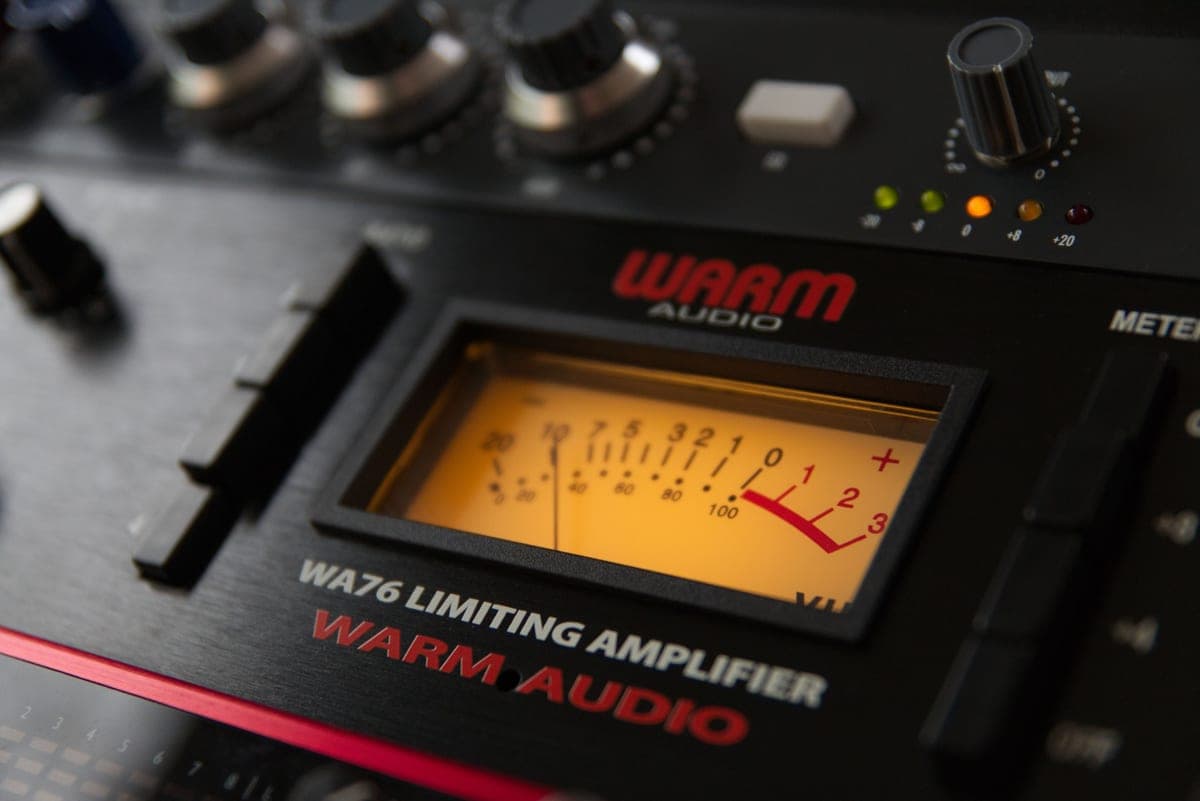
Keeley Compressor Plus review
The blend knob is the whole pedal, and the missing attack control is the reason it is easy to set. 10 mA, true bypass.
Top pick: Keeley Compressor Plus
#ad How we’re funded · price as of October 18, 2026

MXR Dyna Comp vs BOSS CS-3
Four knobs and an attack control against two knobs and a famous squash — and only one maker publishes any numbers.
Top pick: BOSS CS-3 Compression Sustainer
Compressor vs noise gate
One lifts the quiet parts, the other removes them. Buying the compressor for a noise problem makes the noise worse.
Top pick: Keeley Compressor Plus
#ad How we’re funded · price as of October 18, 2026

Best guitar pedals for blues
The one genre where the best pedal is the one you stop noticing. Five picks judged on how much dynamic range survives.
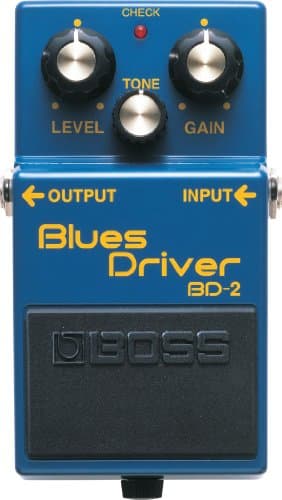
Best for Blues pick: BOSS BD-2 Blues Driver
#ad How we’re funded · price as of October 18, 2026
Best octave pedals
Chord tracking and a dry blend decide this category. Three picks on published specs, plus the harmonizer people buy by mistake.
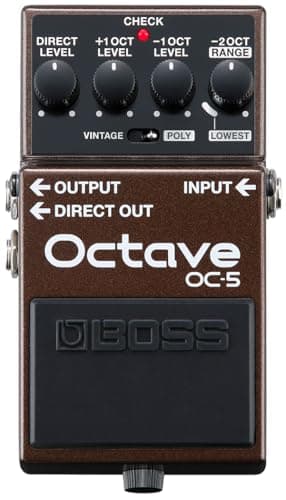
Best Octave Pedal pick: BOSS OC-5 Octave
#ad How we’re funded · price as of October 18, 2026

Best guitar pedals for worship music
Delay first, reverb second, gain last. Five picks judged on tap tempo, ducking reverb and blend — plus the pedal that gets bought for this and should not.
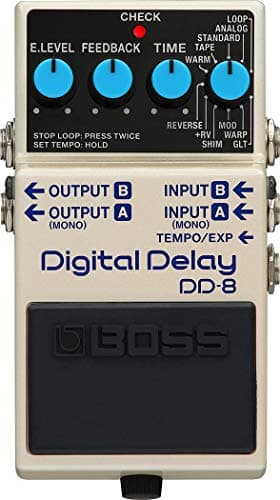
Best for Worship pick: BOSS DD-8 Digital Delay
Compressor vs boost
One narrows your dynamic range, the other shifts all of it up. Diagnose the problem first, because the common answer is neither.
Top pick: Keeley Compressor Plus
#ad How we’re funded · price as of October 18, 2026
Best noise gate pedals
Which signal the gate listens to is the entire specification. Three gates compared, and the wiring that makes one of them work.
Best Noise Gate pick: BOSS NS-2 Noise Suppressor
#ad How we’re funded · price as of October 18, 2026
Pedal order: what changes and what does not
Two placements are load-bearing and the rest are preference. Which is which, and the impedance figures behind the first one.
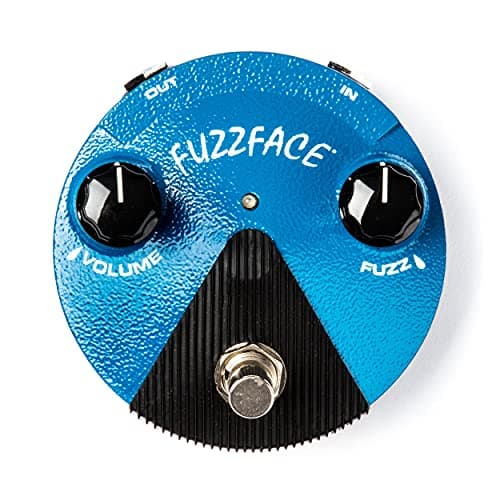
Top pick: Dunlop Fuzz Face Mini Silicon
#ad How we’re funded · price as of October 18, 2026
Best guitar pedals
One shortlist per job, chosen from published circuit and power specs. Every list names something we would not buy, and says why.