Line 6 HX Stomp vs POD Go
Two units built from the same Helix modeling, priced the same, and aimed at opposite kinds of player.
Fret & Fuzz earns a commission when you buy through the links on this page. It costs you nothing and it does not decide what we rank. How we’re funded.
We have not played this gear. Every pick below is chosen from published manufacturer specifications and the arithmetic set out in how we research, which you can re-run yourself.
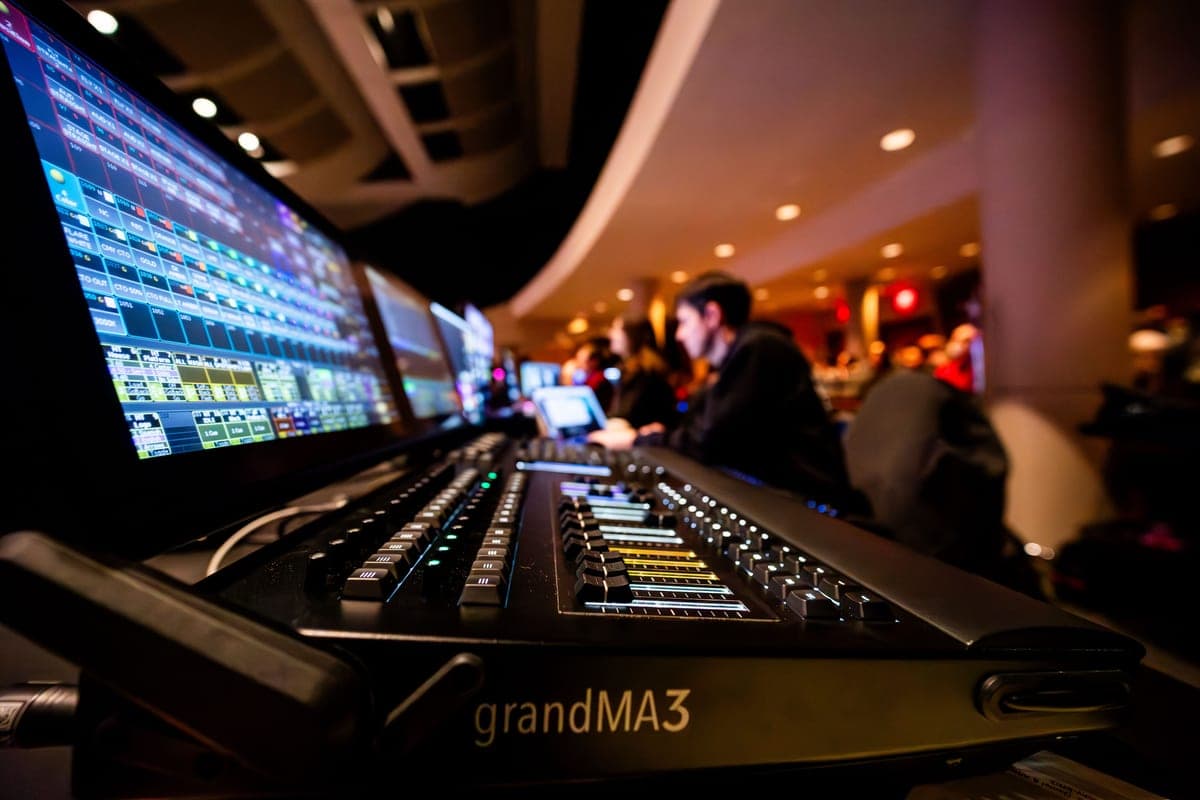
Buy the HX Stomp if you already have a pedalboard and want Helix modeling on it — six blocks you can place anywhere, stereo I/O, an effects loop and a USB interface. Buy the POD Go if you want one box that is the entire rig, because it includes an expression pedal and organises everything around snapshots. Both need their own supply rather than a pedalboard brick output. The real question is whether you are adding to a board or replacing one.
These two are built from the same modeling by the same company and frequently sell for the same money, which is why the comparison is confusing. The difference is not sound quality or model count. It is the shape of the thing.
01What Line 6 publishes
| Line 6 HX Stomp | Line 6 POD Go | |
|---|---|---|
| Format | Compact pedalboard unit | All-in-one floor unit |
| Expression pedal | Not included — external only | Built in |
| Signal chain | Up to six blocks, placed freely | Semi-fixed serial path with snapshots |
| Models | 300+ from the Helix family, with IR loading | HX-family models, with IR loading |
| Effects loop | Yes | Not published for the standard model |
| Stereo I/O | Yes | Not published in the same form |
| XLR outputs | Not published | None on the standard model |
| USB audio | 24-bit / 96 kHz, multi-channel | Not published in the same form |
| Display | 2.4" color LCD | Onboard display with dedicated knobs |
| Power | 9 V DC center-negative, DC-3 3 A supply included | External DC-3 supply included; Line 6 recommends only that supply |
Every figure is Line 6's own published specification. Where a row says not published, that is what the manufacturer states.
Which unit
| # | Product | Best for | Price |
|---|---|---|---|
| 01 | 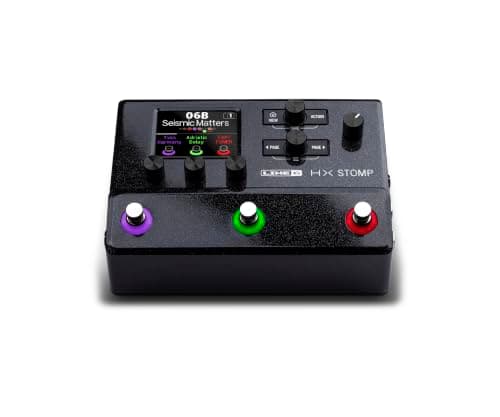 Line 6 HX Stomp Up to six blocks you can put anywhere, stereo I/O and an effects loop — in a compact enclosure that needs its own 3 A supply. | Adding Helix modeling to a pedalboard you already own | $599.99 · Check price #ad How we’re funded · price as of October 18, 2026 |
| 02 | 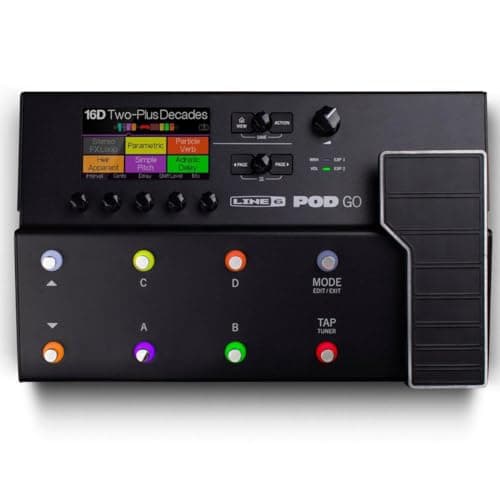 Line 6 POD Go A finished floor unit with an onboard expression pedal and snapshots — at the cost of a signal chain you cannot rearrange. | One box that is the whole rig, with an expression pedal built in | $599.99 · Check price #ad How we’re funded · price as of October 18, 2026 |
Rows link to the full write-up further down this page. Prices come from the live price layer only — where there is no live figure the button reads “Check price” rather than showing a remembered number.
03The six-block limit, and how fast you reach it
This is the single most useful thing to understand about the HX Stomp before buying one, because it is the constraint that shapes daily use.
A block is one thing in the chain: an amp model, a cab or IR, an overdrive, a delay, a reverb, a gate, a compressor. Six of them is the ceiling. A conventional full rig — gate, drive, amp, cab, delay, reverb — is exactly six, with nothing left for a wah, a modulation or a second drive. Players work around it constantly, usually by dropping the amp and cab blocks and running into a real amp, which frees four-ish blocks for effects and is how a lot of HX Stomps end up being used.
The POD Go has no equivalent limit because it does not offer the equivalent freedom: it has a slot for each category and you fill the slots. You cannot run two delays, but you also cannot run out of blocks. Which constraint you prefer is genuinely a matter of how you build rigs. Pedals vs multi-effects covers the broader trade before you commit either way.
Line 6 HX Stomp
Adding Helix modeling to a pedalboard you already own
The number6 simultaneous blocks, 300+ models, 24-bit/96 kHz USB audio, DC-3 3 A supply included.
The HX Stomp is the right buy if you have a pedalboard and want to add modeling to it rather than replace it. Line 6 publishes over 300 amp, cab and effect models from the Helix family with IR loading, up to six blocks running simultaneously, and — the part that matters on a board — stereo I/O and an effects loop, so it can sit alongside real pedals rather than instead of them. It is also a 24-bit / 96 kHz multi-channel USB audio interface, which makes it a recording rig on its own.
The freedom is the point. Six blocks placed anywhere in the chain means you can run an amp model with your own overdrive in front and your own delay after, or use it purely as an effects unit into a real amp. The 2.4-inch color LCD and three capacitive-touch footswitches with LED rings keep that manageable.
The cons are the block limit and the power. Six blocks sounds generous until an amp, a cab, a drive, a delay, a reverb and a noise gate have used all of them — this is the constraint owners hit first. And the power requirement is the trap: it asks for 3 A at 9 V, and no standard isolated pedalboard brick output supplies that. It needs its own DC-3 supply, which is included, but it means adding one to an existing board does not just cost a slot — it costs a mains socket too.
| Simultaneous blocks | Up to six simultaneously |
|---|---|
| Models | Over 300 amps, cabs and effects from the Helix family, with IR loading |
| Power | 9 V DC center-negative, DC-3 supply (3 A) included |
| Display / switches | 2.4" color LCD; three capacitive-touch footswitches with LED rings |
| Audio interface | 24-bit / 96 kHz multi-channel USB audio |
| Format | Compact pedalboard unit with stereo I/O and an effects loop |
| What it does not do | It asks for 3 A at 9 V. No standard isolated pedalboard brick output supplies that, so it needs its own supply — this is the mistake people make when they add one to an existing board. |
Specs from Line 6 HX Stomp owner's manual. We have not used this unit.
#ad How we’re funded · price as of October 18, 2026
Line 6 POD Go
One box that is the whole rig, with an expression pedal built in
The numberAll-in-one floor unit, built-in expression pedal, semi-fixed serial chain with snapshots, IR loading.
The POD Go answers a different question: what do you buy if you want to turn up with one thing? Line 6 publishes an all-in-one floor unit with a built-in expression pedal, HX-family amp, cab and effect models with IR loading, and a semi-fixed serial signal path with snapshots. The expression pedal alone is a real cost saving and a real space saving — on the HX Stomp, wah and volume mean buying and cabling a separate pedal.
Snapshots are the feature that makes the fixed chain workable. Rather than switching effects on and off one at a time, a snapshot recalls a whole state — different amp settings, different effects active, different levels — so one footswitch moves you from a clean verse to a lead sound. For playing songs rather than building rigs, that is the more useful model of operation.
The cons are the fixed chain and the outputs. Line 6 describes the path as semi-fixed: there is a slot for each kind of block and you cannot put anything anywhere, which is a genuine limitation next to a Helix or the HX Stomp's free routing. The standard model has no XLR outputs, so going straight to a PA means a DI box. Line 6 also specifies using only the supplied DC-3 supply, so like the HX Stomp it is not sharing a pedalboard brick.
| Format | All-in-one floor unit with a built-in expression pedal |
|---|---|
| Signal chain | Line 6 describes a semi-fixed serial signal path with snapshots |
| Models | HX-family amp, cab and effect models with IR loading |
| Power | External DC-3 supply included; Line 6 recommends using only that supply |
| What it does not do | The semi-fixed chain is a genuine limitation compared to a Helix — you cannot put anything anywhere. No XLR outputs on the standard model. |
Specs from Line 6 POD Go product page. We have not used this unit.
#ad How we’re funded · price as of October 18, 2026
04The expression pedal is worth more than it looks
On a spec sheet a built-in expression pedal reads like a minor convenience. On a board it is a wah, a volume pedal, a whammy control and a delay-mix control that you do not have to buy, cable or find space for.
Adding an expression pedal to an HX Stomp means an external unit, a TRS cable and a slot roughly the size of the HX Stomp itself — at which point the compact format the HX Stomp was chosen for has partly evaporated, and the POD Go's footprint starts looking efficient rather than large. If you know you want a wah or a volume pedal, factor that in before comparing prices, because it changes the answer.
05Snapshots against free routing
These represent two different beliefs about what a guitarist does with a multi-effects unit.
Free routing assumes you are building a rig: you want the compressor before the drive, the EQ after the amp, the delay in a particular place, and you will spend an evening getting it right. Snapshots assume you are playing songs: you want a verse sound and a chorus sound and one switch between them, and you do not care where the blocks sit as long as it works. The HX Stomp leans to the first and the POD Go to the second, though both can do some of the other.
Be honest with yourself about which you are. The most common regret with either unit is a player who wanted to play songs buying the one designed for building rigs, then spending their practice time in menus. Best multi-effects pedals compares the wider field, and our HX Stomp review covers that unit in depth.
06Recording changes the answer
If you record, the HX Stomp's published 24-bit / 96 kHz multi-channel USB audio interface is a significant point in its favor and one of the clearest specification differences between the two.
Multi-channel matters: it means you can capture the processed signal and a dry track at the same time, so you can re-amp or change the amp model afterwards rather than committing on the way in. That turns the unit into a complete recording front end and removes the need for a separate interface entirely. Practice amp vs audio interface covers the wider question of what you actually need to record a guitar.
Frequently asked questions
+ Is the HX Stomp or the POD Go better?
+ Can I power an HX Stomp from my pedalboard power supply?
+ How many effects can the HX Stomp run at once?
+ Does the POD Go have XLR outputs?
Sources
Related on Fret & Fuzz
Best multi-effects pedals
Block count, routing freedom and current draw decide this. Four current units compared, plus the one BOSS has discontinued.
Best Multi-Effects pick: Line 6 HX Stomp
#ad How we’re funded · price as of October 18, 2026
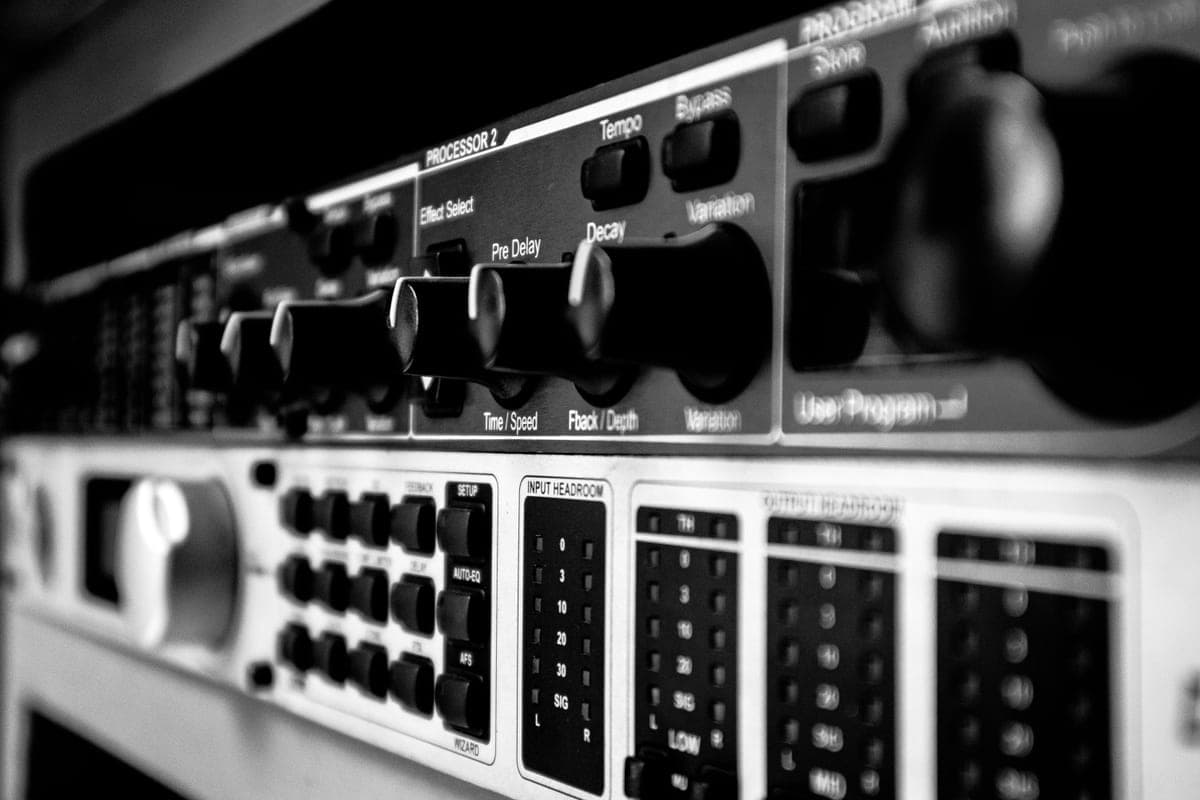
Line 6 HX Stomp review
Six simultaneous blocks and a 3 A supply requirement. Both are published, and both decide the purchase before tone does.
Top pick: Line 6 HX Stomp
#ad How we’re funded · price as of October 18, 2026
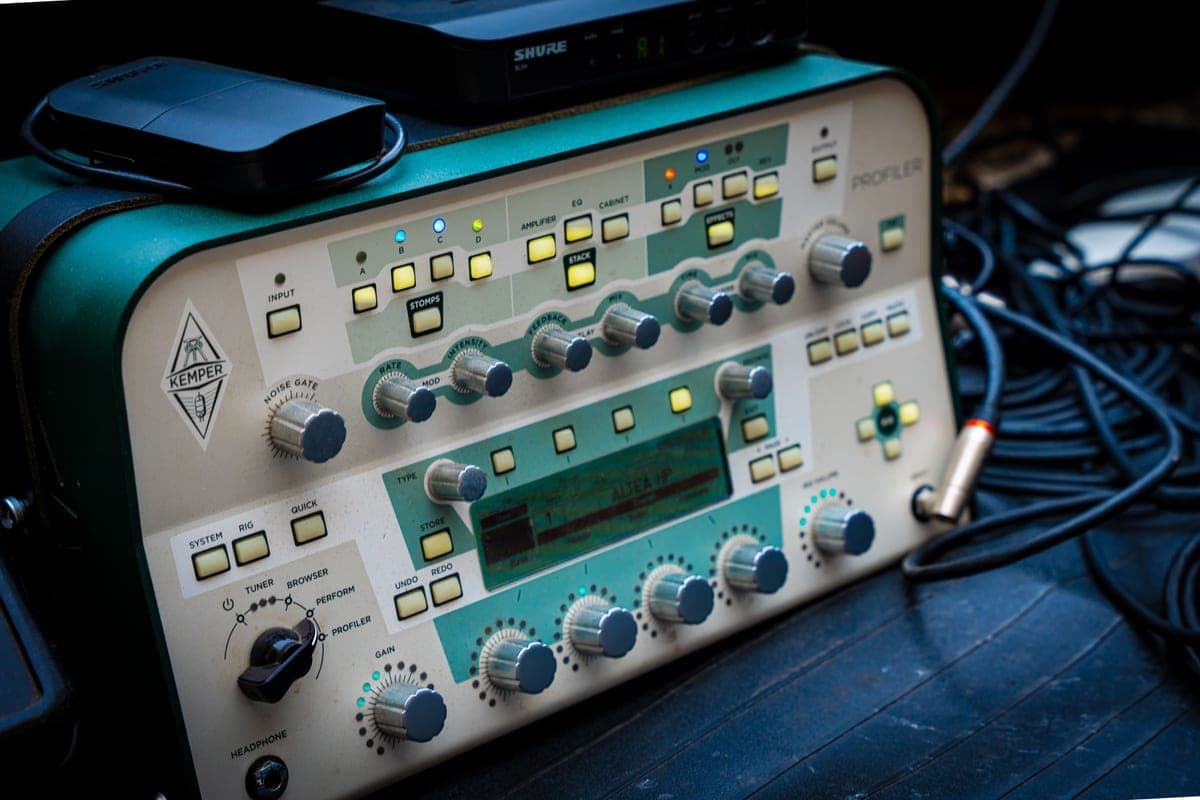
Pedals vs multi-effects
Power, interface and failure mode decide this, not tone. Including the 3 A requirement no pedalboard brick can meet.
Top pick: Line 6 HX Stomp
#ad How we’re funded · price as of October 18, 2026
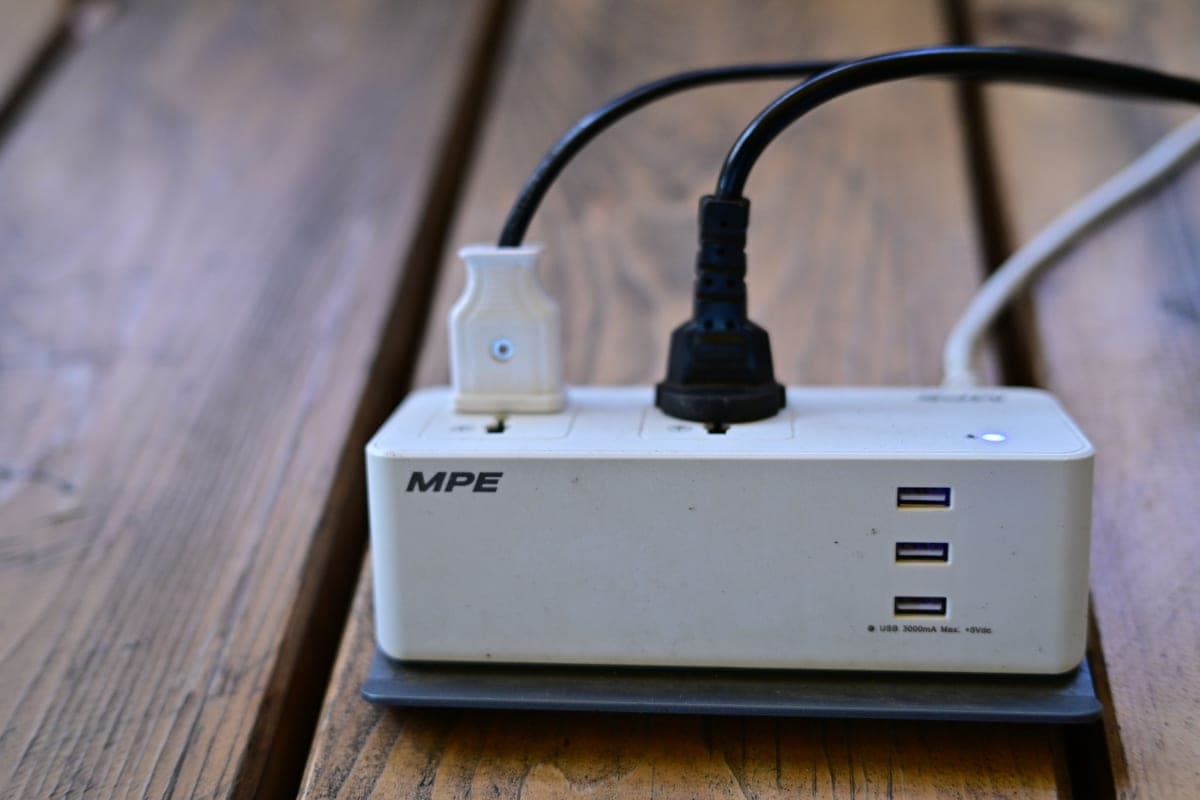
Powering an HX Stomp from a pedalboard supply
Line 6 specifies 3 A. The most generous common brick output is 500 mA. The arithmetic, and what to do instead.
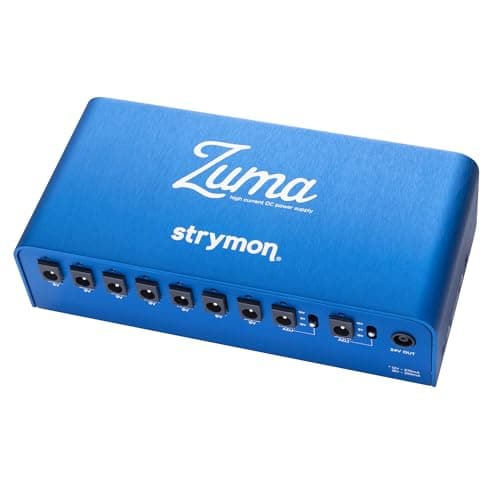
Top pick: Strymon Zuma
#ad How we’re funded · price as of October 18, 2026