Can you plug guitar pedals into an audio interface?
Nothing breaks and nothing is damaged. One category of pedal sounds wrong, for a reason you can read off a spec sheet.
Fret & Fuzz earns a commission when you buy through the links on this page. It costs you nothing and it does not decide what we rank. How we’re funded.
We have not played this gear. Every pick below is chosen from published manufacturer specifications and the arithmetic set out in how we research, which you can re-run yourself.
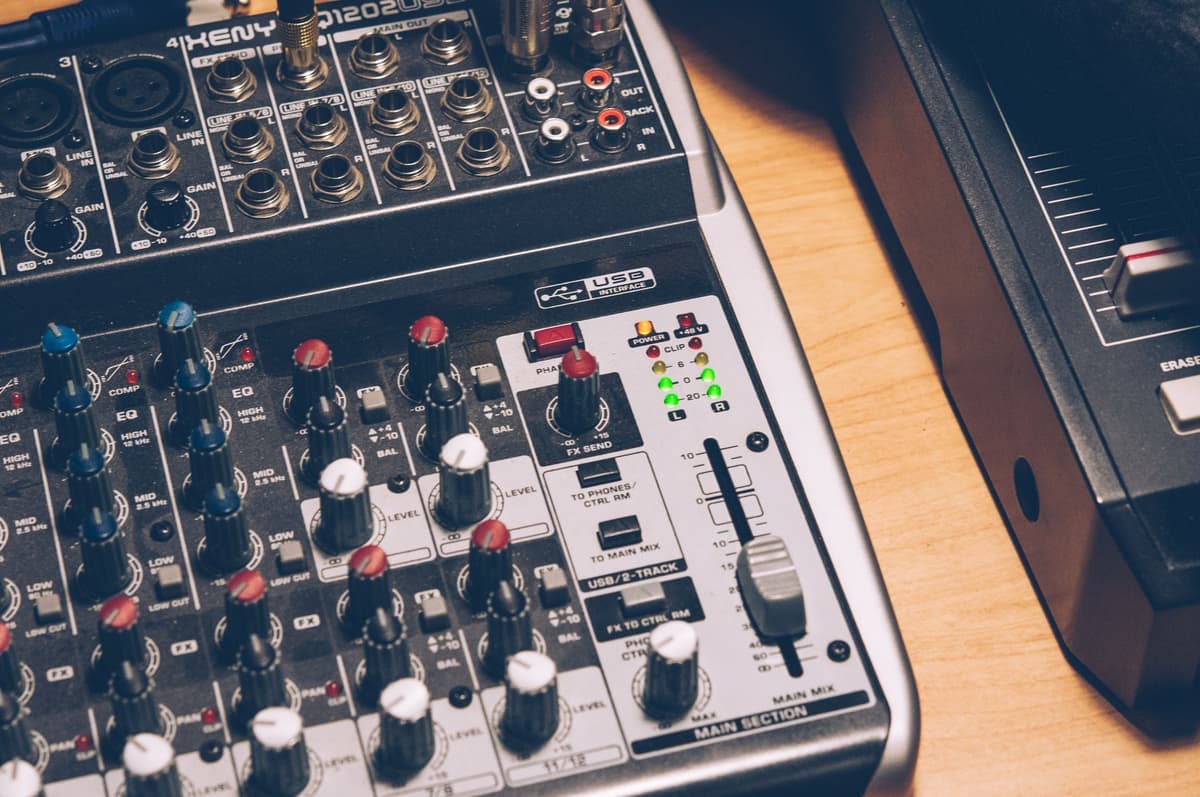
Yes — electrically it is completely safe, and nothing will be damaged in either direction. But a drive pedal plugged straight into an interface sounds harsh and fizzy, and the missing piece is cabinet simulation rather than a better interface or a better pedal. The fix is one box between the board and the interface: the BOSS IR-200 is the pick, because it has 1/4-inch jacks your existing pedalboard can feed, 154 preset impulse responses, 128 user IR slots and an effects loop, so the pedals you already own keep working. Time-based pedals — delay, reverb, chorus, compression — record fine with nothing added.
We have not used these units, and this is not a tone review. What follows is what each maker publishes, which figure decides each case, and the signal-chain order that makes it work. How we research sets out the method.
01The criteria, before any product
Four published figures decide this, and the price of the interface is not one of them.
- Is there cabinet simulation or IR loading? This is the whole problem. A published count of preset IRs, or support for loading your own, is what you are buying.
- Does it take a pedalboard's output? A published 1/4-inch input with a nominal level around -10 dBu and a megohm-class input impedance. An XLR mic input is the wrong socket for a pedal and a 1/4-inch 'instrument' input on a cheap interface may not have the headroom.
- Is there an effects loop? If yes, your delay and reverb can sit after the amp simulation, which is where they belong. If no, every time-based pedal is stuck in front of the distortion.
- Current draw. Anything with a processor in it draws far more than an analog pedal. 335 mA, 1.2 A and 3 A all appear below, and none of them shares a typical pedalboard supply output.
| Box | Cabinet simulation | Effects loop | Published draw |
|---|---|---|---|
| BOSS IR-200 | 154 preset IRs, 128 user slots, two at once | Yes — mono send, mono/stereo return | 335 mA, adaptor included |
| Line 6 HX Stomp | 300+ models with IR loading | Yes | 9 V at 3 A |
| BOSS GX-100 | Included in 170 effect types | Yes — send/return | 1.2 A, no battery option |
| Two Notes Torpedo Captor X | Speaker simulation on a stereo XLR DI | N/A — sits after the amp | Not published |
| BOSS MT-2 Metal Zone | None | No | Not published |
Manufacturer figures only. The MT-2 row is the control: it is a good pedal with none of the things this job requires.
What to put between your pedals and the interface
| # | Product | Best for | Price |
|---|---|---|---|
| 01 | 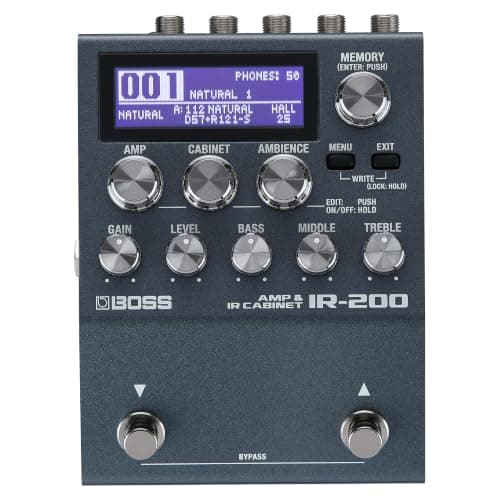 BOSS IR-200 Amp & IR Cabinet An amp simulator and IR cabinet loader with 1/4-inch jacks, so the board you own plugs straight into it. | The thing to buy if you want your existing pedalboard to record properly | |
| 02 | 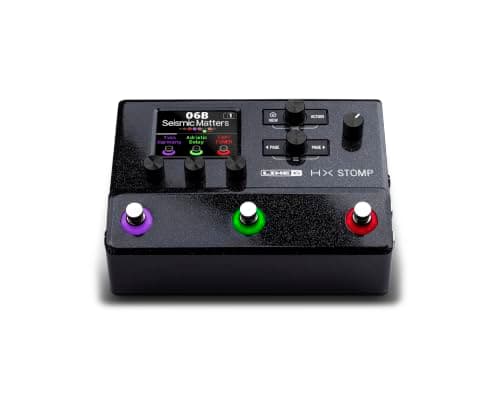 Line 6 HX Stomp The only pick here that is itself a 24-bit / 96 kHz USB interface, so the computer needs nothing else. | Replacing the chain rather than adding to it, and being the interface too | $599.99 · Check price #ad How we’re funded · price as of November 2, 2026 |
| 03 | 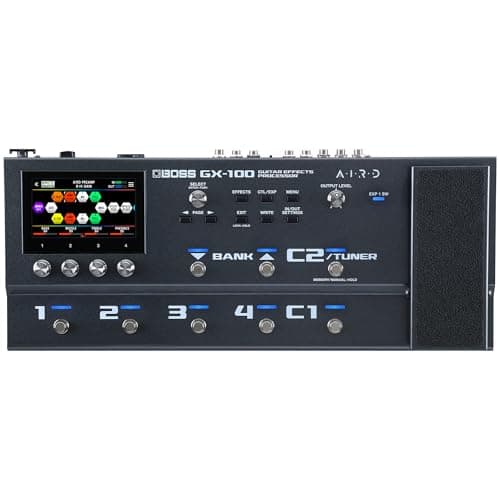 BOSS GX-100 Guitar Effects Processor 170 effect types and 15 simultaneous, with a send/return so your favorite pedals stay in the chain. | One box with a touchscreen, when editing on hardware matters more than board space | $659.99 · Check price #ad How we’re funded · price as of November 2, 2026 |
| 04 | No photo Two Notes Torpedo Captor X A reactive load box with speaker simulation and stereo XLR DI — the route for people who want their own amp. | Recording the real amp you already own, rather than simulating one | |
| ! | 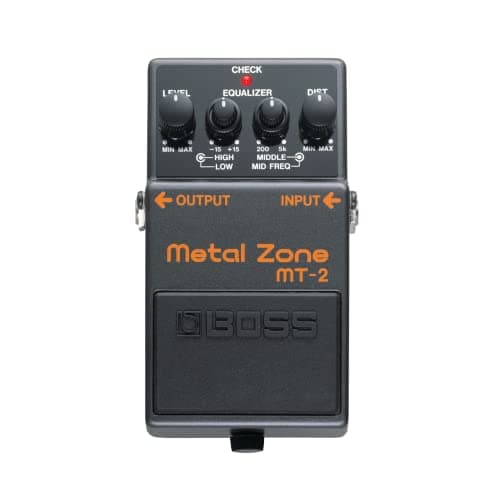 BOSS MT-2 Metal Zone A high-gain pedal into an interface with no cabinet simulation is the worst case of this whole problem. Skip this one — see why below | Nothing, if you plug it straight into the interface — and that is the point | $109.99 · Check price #ad How we’re funded · price as of November 2, 2026 |
Rows link to the full write-up further down this page. Prices come from the live price layer only — where there is no live figure the button reads “Check price” rather than showing a remembered number.
03What actually goes wrong, and why it is not the interface
The failure has one cause and it is the same one behind headphone practice sounding bad: a guitar speaker is a filter, and taking it out of the chain leaves the signal unfiltered.
A 12-inch guitar loudspeaker rolls off steeply somewhere in the upper midrange. Everything a distortion circuit generates above that point — and distortion generates a great deal — never reaches a listener in a normal rig, because the speaker will not reproduce it. An audio interface and a pair of monitors are built to be flat, so they reproduce all of it faithfully. The result is accurate and unlistenable.
This is why spending more on the interface changes nothing. A better converter captures the fizz more accurately. The only fix is to put the filter back, either as an impulse response measured from a real cabinet or as an analog speaker-simulation circuit. Analog vs digital pedals covers the broader question of where converters sit in a chain like this.
BOSS IR-200 Amp & IR Cabinet
The thing to buy if you want your existing pedalboard to record properly
The number8 guitar amp types, 154 preset IRs, 128 user IR slots, 96 kHz / 32-bit, 335 mA, effects loop, 660 g.
This is the pick because it solves the actual problem — missing cabinet simulation — without asking you to replace your pedals. BOSS publishes eight guitar amp types (Natural, JC-120, Twin Combo, Diamond, Tweed Combo, X-Hi Gain, British Stack and BGR UB Metal) plus three bass types, 154 preset IR cabinets, 128 user IR slots, and the ability to run up to two IRs at once in mono or stereo.
The processing figures are higher than most things in this price class: 96 kHz sampling, 32-bit AD and DA conversion, 32-bit floating-point processing, and IR support for files up to 500 ms at 44.1, 48 or 96 kHz in 16- or 24-bit linear or 32-bit float. There are 128 memories, two EQs per memory plus two global EQs, and an effects loop with mono send and mono or stereo return — which means time-based pedals can sit after the amp simulation rather than in front of it.
Published levels confirm it expects a pedalboard rather than a microphone: INPUT and RETURN at -10 dBu nominal, +7 dBu maximum, 1 M ohm input impedance, and Output A/MONO and B at -10 dBu, 1 k ohm out, 10 k ohms or greater recommended. An AC adaptor is included.
The cons matter for planning. No XLR output — the outputs are 1/4-inch, so this feeds an interface or a desk input, not a mic snake. Current draw is 335 mA, well beyond what a typical single pedalboard supply output provides, so budget a dedicated output or its own socket. The footswitches and expression pedal that make live memory switching work (FS-5U, FS-6, FS-7, EV-30) are sold separately, and there is no wireless of any kind.
| Function | Amp simulator and impulse-response cabinet loader in a pedal |
|---|---|
| Amp types | 8 guitar (Natural, JC-120, Twin Combo, Diamond, Tweed Combo, X-Hi Gain, British Stack, BGR UB Metal) and 3 bass |
| Cabinets | 154 preset IRs, 128 user IR slots, up to two IRs at once in mono or stereo |
| Memories | 128 |
| IR format | Mono or stereo, max 500 ms, 44.1 / 48 / 96 kHz, 16- or 24-bit linear or 32-bit float |
| Conversion | 96 kHz sampling, 32-bit AD and DA, 32-bit floating point processing |
| Jacks | Input, Send, Output A/MONO and B (1/4-inch), Return (1/4-inch TRS), AUX in, CTL/EXP, MIDI in and out, USB Micro-B |
| Levels | Input and output -10 dBu nominal, +7 dBu maximum; input impedance 1 M ohm |
| Headphone output | 44 ohm output impedance, 44 ohms or greater recommended |
| Current draw | 335 mA, AC adaptor supplied |
| Size / weight | 101 x 138 x 63 mm, 660 g excluding the adaptor |
| What it does not do | No XLR output — the outputs are 1/4-inch, so a desk or interface input is the destination, not a mic snake. No wireless, and the footswitches and expression pedal that unlock live memory switching are options sold separately. At 335 mA it is also well beyond what most single pedalboard supply outputs provide. |
Specs from BOSS IR-200 specifications. We have not used this unit.
Line 6 HX Stomp
Replacing the chain rather than adding to it, and being the interface too
The numberSix simultaneous blocks, 300+ models with IR loading, 24-bit / 96 kHz multi-channel USB audio, 9 V at 3 A.
If the goal is the fewest boxes, this is the answer: Line 6 publishes a 24-bit / 96 kHz multi-channel USB audio interface inside the unit, so it is simultaneously the amp simulation, the effects and the interface. Over 300 amp, cab and effect models with IR loading and up to six simultaneous blocks cover most of what a board does.
It also has a real effects loop, so pedals you want to keep — a particular fuzz, a specific drive — can live inside the signal chain in the right place rather than being stranded in front of everything.
The downside is the power requirement, and it is the mistake people make. Line 6 publishes 9 V DC at 3 A, supplied by the included DC-3 brick, and no standard isolated pedalboard supply output provides 3 A — adding one to an existing board means finding it a wall socket. Six blocks is also a real ceiling once an amp, a cab and an IR are using some of them.
| Simultaneous blocks | Up to six simultaneously |
|---|---|
| Models | Over 300 amps, cabs and effects from the Helix family, with IR loading |
| Power | 9 V DC center-negative, DC-3 supply (3 A) included |
| Display / switches | 2.4" color LCD; three capacitive-touch footswitches with LED rings |
| Audio interface | 24-bit / 96 kHz multi-channel USB audio |
| Format | Compact pedalboard unit with stereo I/O and an effects loop |
| What it does not do | It asks for 3 A at 9 V. No standard isolated pedalboard brick output supplies that, so it needs its own supply — this is the mistake people make when they add one to an existing board. |
Specs from Line 6 HX Stomp owner's manual. We have not used this unit.
#ad How we’re funded · price as of November 2, 2026
BOSS GX-100 Guitar Effects Processor
One box with a touchscreen, when editing on hardware matters more than board space
The number170 effect types, 15 simultaneous, send/return, touch screen, 1.2 A, 3.5 kg.
The argument for this one is the 480 x 272 color touch screen: you edit on the unit rather than on a laptop, which for a lot of people is the difference between a rig they adjust and a rig they leave alone. BOSS publishes 170 effect types with 15 simultaneous, plus a divider/mixer, a send/return loop and a phrase looper, and a built-in EXP1 expression pedal.
The connector list is generous for this job: input, stereo output, send/return, phones, CTL3/4 plus EXP2, AMP CTL1/2, MIDI in and out, USB-B and a Bluetooth adaptor connector.
Two published figures argue against it on a pedalboard. It draws 1.2 A — roughly twice an HX Stomp and more than twenty times a typical analog pedal — with no battery operation at all, so it is a mains device wherever it goes. And at 460 x 193 x 73 mm and 3.5 kg it is not something you add to a board; it is the board.
| Effects | 170 types |
|---|---|
| Simultaneous effects | 15, plus divider/mixer, send/return and phrase loop |
| Display | 480 x 272 color graphic LCD, touch screen |
| Expression pedal | Built-in EXP1 pedal |
| Connectors | Input, stereo output, send/return, phones, CTL3/4 + EXP2, AMP CTL1/2, MIDI in/out, USB-B, Bluetooth adaptor connector |
| Current draw | 1.2 A (AC adaptor only — no battery option) |
| Size / weight | 460 x 193 x 73 mm (94 mm max height), 3.5 kg |
| What it does not do | 1.2 A is roughly twice what an HX Stomp asks for and more than twenty times a typical analog pedal, so it will never share a pedalboard supply. There is no battery operation at all, and at 3.5 kg it is the heaviest unit here. |
Specs from BOSS GX-100 specifications. We have not used this unit.
#ad How we’re funded · price as of November 2, 2026
Two Notes Torpedo Captor X
Recording the real amp you already own, rather than simulating one
The numberFixed 8 ohm nominal load, 100 W RMS maximum, 0 / -20 / -38 dB attenuation, stereo XLR DI plus headphones.
This is the different answer to the same question. Instead of simulating an amp, you play your actual amp into a reactive load box that absorbs the power safely, and take a speaker-simulated stereo XLR DI output to the interface. Your pedals stay exactly where they are, in front of the amp they were chosen for.
Two Notes publishes a fixed 8 ohm nominal load (a 16 ohm version is a separate product), 100 W RMS maximum power handling, selectable 0 dB, -20 dB and -38 dB attenuation on the speaker output, and outputs covering speaker out, stereo XLR DI, headphones, plus USB and Bluetooth for editing. It is the only pick here with a balanced XLR output.
The cons are a different shape from the others. The attenuation is stepped — three positions, not a knob — and 100 W is the ceiling, so a 100 W head run flat out is at the limit rather than inside it. It is also the most expensive route by some distance once you account for already owning the amp, and we hold no live price for it, so the buy button reads Check price rather than showing a figure.
| Function | Reactive load box, attenuator, speaker simulator and DI in one unit |
|---|---|
| Load impedance | Fixed 8 ohm nominal (a 16 ohm version is sold separately) |
| Power handling | 100 W RMS maximum |
| Attenuation | Selectable 0 dB, -20 dB and -38 dB on the speaker output |
| Outputs | Speaker out, stereo XLR DI, headphone out, plus USB and Bluetooth for editing |
| What it does not do | The attenuation is stepped, not continuous — three positions, not a knob. 100 W is the ceiling, so a 100 W head run flat out is at the limit rather than comfortably inside it. |
Specs from Two Notes Torpedo Captor X product page. We have not used this unit.
BOSS MT-2 Metal Zone
Nothing, if you plug it straight into the interface — and that is the point
The numberThree-band EQ with a parametric mid, Level and Dist. No cab simulation of any kind.
The Metal Zone is here to demonstrate the failure, because high-gain distortion is where the missing-cabinet problem is at its most brutal. BOSS publishes a genuinely useful control set — Level, High, Low, Middle, a parametric Middle Freq and Dist, the most EQ on any BOSS compact dirt pedal — and none of it is cabinet simulation, because that is not what the pedal is for.
Plug it into an interface input and what reaches the recording is everything a guitar speaker would have removed: a dense, rasping band of energy above 5 kHz with no roll-off anywhere. The parametric mid can reshape the midrange, but there is no control on the pedal that applies a speaker's high-frequency roll-off, because no compact distortion pedal has one.
This is not a reason to avoid the pedal. It is a reason to put something after it. With an IR loader or an amp simulator between the pedal and the interface, the same MT-2 records fine — and the parametric mid becomes genuinely valuable, because you can find and fix the one frequency the simulation leaves harsh. Why does my Metal Zone sound bad in a band? covers the related tone-stack problem in a live rig.
| Controls | Level, High, Low, Middle, Middle Freq (parametric), Dist |
|---|---|
| EQ | Three-band with a sweepable mid frequency — the most EQ on any BOSS compact dirt pedal |
| Power | 9 V battery or PSA-series adaptor |
| Electrical data | No current-draw or impedance figure is published for this pedal, so none is stated here. |
| What it does not do | No adaptor included. The factory mid-scooped setting is the one everybody hears and nobody should use — the parametric mid is the reason to own it, not an extra. |
Specs from BOSS MT-2 product page. We have not used this unit.
04Signal chain order, which is the part people get wrong
Getting the box is half of it. Putting it in the right place is the other half, and the right place is not simply last.
- Drive, fuzz, boost, wah, compression go first, into the amp-simulation input, exactly as they would go into a real amp.
- Amp simulation and the cabinet IR go next. This is the box you bought.
- Delay and reverb go AFTER the simulation, in its effects loop if it has one. A reverb in front of a distortion sounds like a distorted reverb, which is almost never what anyone wants.
- The interface takes a 1/4-inch line-level output from the simulation box, into a line input rather than a mic input.
- Nothing goes between the simulation and the interface except a cable. No EQ 'to fix it', no second compressor — fix it in the box or in the recording software.
If your simulation box has no effects loop, the honest compromise is to leave delay and reverb off the board entirely and add them in software after recording. It sounds better than putting them in front of the distortion, and it costs nothing. Pedal order covers the general principle and what genuinely does and does not change when you move a pedal.
05Levels, and the one thing that can actually sound broken
Nothing here risks damage, but there are two level mistakes that produce a sound people mistake for a fault.
The first is using a microphone input. An XLR mic preamp is designed for a signal thousands of times smaller than a pedalboard output, and even with the gain at minimum it may be overloaded. Use the instrument or line input, and the published nominal figures tell you what the box expects: the IR-200, for example, publishes -10 dBu nominal and +7 dBu maximum on its input and return.
The second is stacking boosts. A buffered board with a boost on and an amp simulator set for a hot input can exceed the maximum input level of the next stage, which produces a thin, spitting distortion that appears before you turn any gain up. The fix is to turn something down, starting with the simulation box's input trim.
06Who should buy something else
Anyone who already owns an amp they like and wants that specific amp on the recording. Simulation is not the route for you — a reactive load box with speaker simulation is, and the Captor X entry above is that product. It is more expensive and it is the only one here with a balanced XLR output.
Anyone who would rather have a microphone in front of a real cabinet, which is still the best-sounding option in a room where it is possible. And anyone whose actual question is about practicing quietly rather than recording — the hardware overlaps but the right purchase does not. Can you practice guitar with headphones? covers that one, and Practice amp vs audio interface covers the spend decision between the two routes.
Frequently asked questions
+ Can you plug guitar pedals into an audio interface?
+ Why does my distortion pedal sound terrible recorded directly?
+ Do I need a DI box to record guitar pedals?
+ Should I use the mic input or the instrument input on my interface?
+ Where do delay and reverb go when recording direct?
+ Can I record my real amp instead of using a simulator?
Sources
Related on Fret & Fuzz
Practice amp vs audio interface
Sound in the room against sound in headphones. What each route publishes, and the one box that does both.
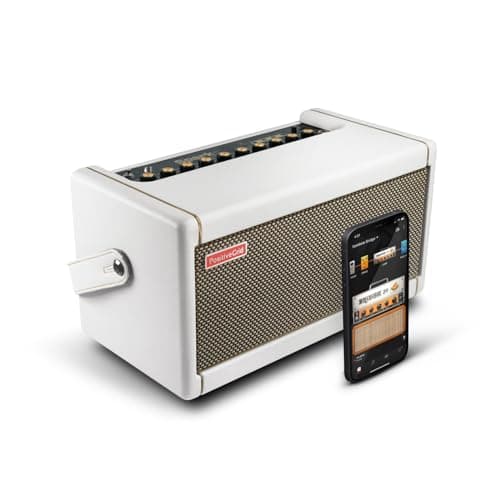
Top pick: Positive Grid Spark 40
Best multi-effects pedals
Block count, routing freedom and current draw decide this. Four current units compared, plus the one BOSS has discontinued.
Best Multi-Effects pick: Line 6 HX Stomp
#ad How we’re funded · price as of November 2, 2026
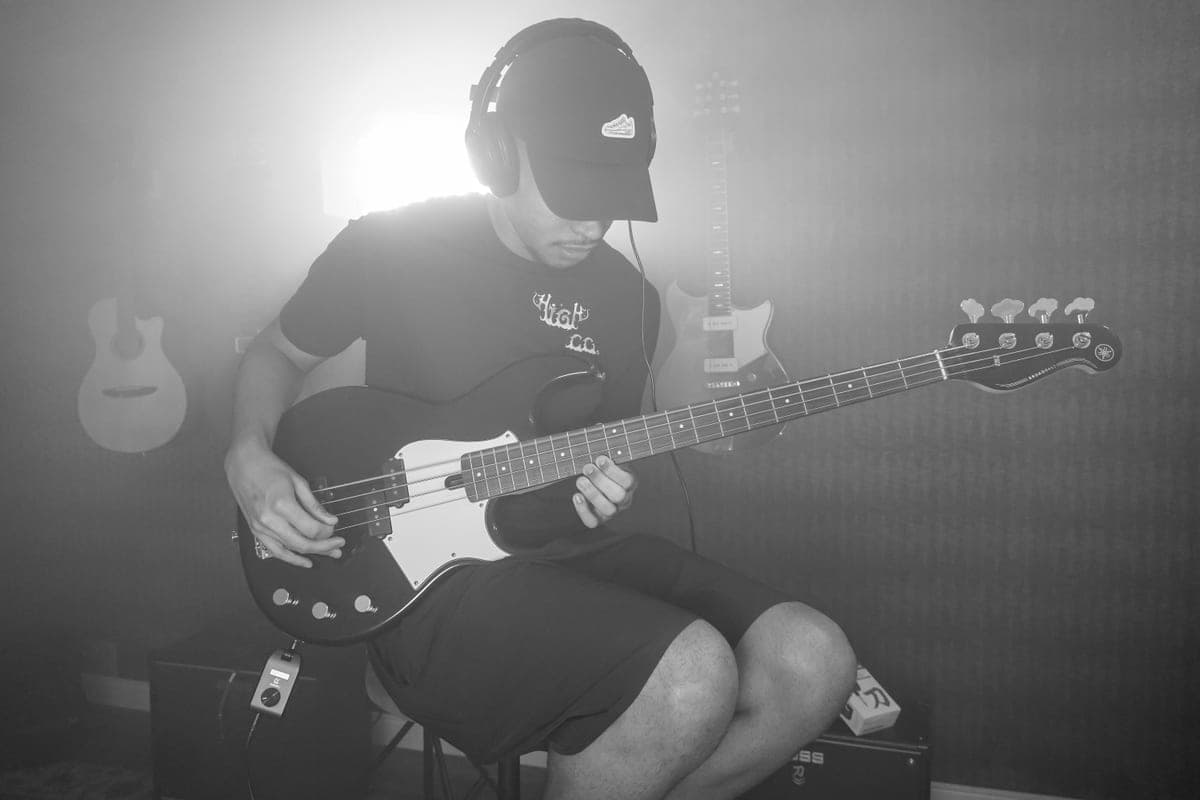
Can you practice guitar with headphones?
Yes, but only with speaker simulation. Four published routes to a usable silent practice rig.
Top pick: BOSS KATANA:GO
Pedal order: what changes and what does not
Two placements are load-bearing and the rest are preference. Which is which, and the impedance figures behind the first one.
Top pick: Dunlop Fuzz Face Mini Silicon
#ad How we’re funded · price as of November 2, 2026