BOSS DS-1 vs MXR Distortion+
Two of the oldest distortion circuits still in production, separated by one control that one of them does not have.
Fret & Fuzz earns a commission when you buy through the links on this page. It costs you nothing and it does not decide what we rank. How we’re funded.
We have not played this gear. Every pick below is chosen from published manufacturer specifications and the arithmetic set out in how we research, which you can re-run yourself.
The DS-1 has three knobs, hard clipping and a full published spec sheet; the Distortion+ has two knobs, a softer clipping character and no tone control whatsoever. Buy the DS-1 if you want a tone control and the ability to plan a power budget. Buy the Distortion+ if you want the older, simpler voice and are content to shape it with an EQ after the pedal, or not at all.
Both are survivors — designs old enough that most of their contemporaries are long gone — and they are cross-shopped because they occupy the same shelf at a similar price. The differences are larger than the shelf suggests.
Which classic distortion
| # | Product | Best for | Price |
|---|---|---|---|
| 01 | 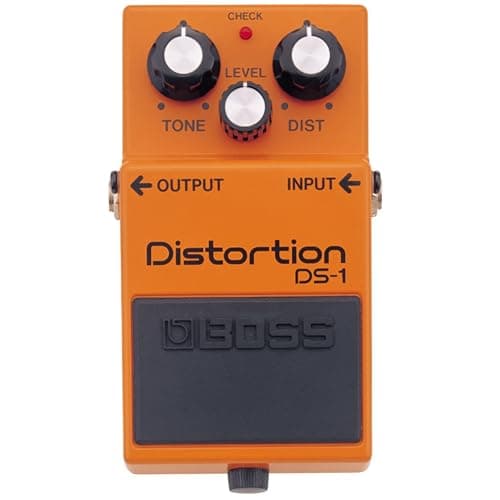 BOSS DS-1 Distortion Three knobs, hard clipping to ground, and the full electrical sheet BOSS publishes for everything. | A published spec sheet and a tone control | |
| 02 | 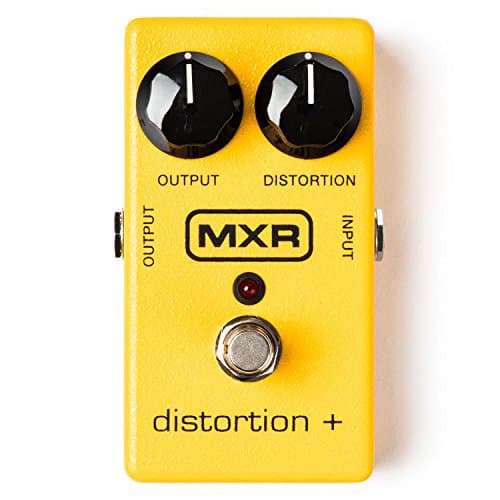 MXR Distortion+ Two knobs, Output and Distortion, and no tone control of any kind. | A simpler, softer-edged classic — if you can live without a tone control | $99.99 · Check price #ad How we’re funded · price as of October 17, 2026 |
Rows link to the full write-up further down this page. Prices come from the live price layer only — where there is no live figure the button reads “Check price” rather than showing a remembered number.
02What each maker publishes
| BOSS DS-1 | MXR Distortion+ | |
|---|---|---|
| Controls | Tone, Level, Dist | Output, Distortion |
| Tone control | Yes — one knob, cuts mids as it brightens | None at all |
| Input impedance | 1 M ohm | Not published |
| Output impedance | 1 k ohm | Not published |
| Current draw | 10 mA | Not published |
| Weight | 360 g | Not published |
| Bypass | Buffered | Not published |
| Power | 9 V battery or PSA adaptor | 9 V battery, ECB003 adapter, or a brick supply |
| Supply in the box | No | No |
Where a cell says not published, that is what the manufacturer states — MXR publishes almost no electrical data for this pedal and no figure has been substituted from elsewhere.
That documentation gap is a real practical difference rather than a debating point. If you are budgeting an isolated supply, the DS-1 can be planned exactly and the Distortion+ cannot — you either measure it or leave headroom. Power requirements explained covers the method.
03The missing tone control, and what it actually costs
A pedal with no tone control is not necessarily worse — it is a design that says the voicing is fixed and correct. The cost is that you cannot adapt it. If the Distortion+ sits wrong against your amp or your pickups, there is no knob to fix it with, and your only options are an EQ pedal after it or a different amp setting.
The DS-1's tone control is not straightforwardly better either, because of how it is wired: brightness and mid-cut move together, so the most attractive-sounding setting in a shop is frequently the one that disappears in a band. One pedal gives you no control; the other gives you a control that works against you if you use it carelessly. An EQ after either one solves both problems — best EQ pedals covers the options.
BOSS DS-1 Distortion
A published spec sheet and a tone control
The number10 mA, 1 M ohm in, 1 k ohm out, 360 g. All published by BOSS.
The DS-1 clips hard and consistently, the same way regardless of how hard you pick, which is what keeps a chord legible — the individual strings stay distinguishable in a way most higher-gain pedals do not manage.
It is by a distance the better-documented product. BOSS publishes 10 mA, a 1 M ohm input, a 1 k ohm output and a 360 g weight, so it can be planned onto a shared supply exactly. It is also the cheaper of the two.
The con is the Tone knob. Turning it up adds treble and cuts mids together, so the setting that sounds exciting alone is the setting that vanishes under a band. Keep it low, or put an EQ after it. No adaptor is included and it is buffered rather than true bypass.
| Controls | Tone, Level, Dist, pedal switch |
|---|---|
| Input impedance | 1 M ohm |
| Output impedance | 1 k ohm |
| Current draw | 10 mA |
| Power | 9 V battery (6F22 / 6LR61) or PSA-series adaptor |
| Size / weight | 73 x 129 x 59 mm, 360 g |
| What it does not do | No adaptor included, no true bypass. The single Tone knob scoops as it brightens, so a DS-1 into an already-scooped amp is the classic recipe for disappearing in a band mix. |
Specs from BOSS DS-1 specifications. We have not used this unit.
MXR Distortion+
A simpler, softer-edged classic — if you can live without a tone control
The Distortion+ is the older idea: two controls, a softer and more compressed clipping character than the DS-1's, and a circuit lineage that runs back to the early 1970s. It is the sound on a specific set of records and it is still in production, which is unusual for a design of that age.
Two knobs is genuinely a feature on a dark stage. There is one thing to set and one thing to get wrong, and the pedal has a narrow enough range that most settings are usable.
The cons are the same simplicity from the other side. There is no tone control at all, so whatever the pedal's voicing does to your midrange is what you get — you cannot correct it without an EQ after it. MXR publishes essentially no electrical data, so you cannot budget a supply output for it without measuring, and no power supply is included.
| Controls | Output, Distortion |
|---|---|
| Clipping | Germanium diode clipping to ground |
| Power | 9 V battery, Dunlop ECB003 adapter, or a DC Brick / Iso-Brick supply |
| Electrical data | No current-draw or impedance figure is published for this pedal, so none is stated here. |
| What it does not do | There is no tone control at all. What comes out is what the circuit does — you shape it at the amp or not at all. |
Specs from MXR Distortion+ product page. We have not used this unit.
#ad How we’re funded · price as of October 17, 2026
04Which one for which job
- Rhythm playing where chords must stay legible. DS-1. Hard clipping at one stage keeps the notes separate.
- You want the older, softer, more compressed voice. Distortion+.
- You need to plan a tight power supply. DS-1 — it is the one with published figures.
- You want as few decisions as possible on a dark stage. Distortion+. Two knobs.
- You already own an EQ pedal. Either; the EQ neutralizes the main weakness of both.
- You want modern high gain. Neither — both are older voicings. Best distortion pedals covers the category.
05Stacking them, and why not to
Both compress heavily, so running one into the other means the second is clipping a signal that has already lost most of its dynamic range. The result is more noise rather than more of anything useful, and two gain stages in series raise the noise floor noticeably.
As a two-pedal dirt rig they make more sense switched than stacked. If you do run either into a high-gain amp, work out what kind of noise you have before buying a gate — compressor vs noise gate covers which tool addresses which problem.
Frequently asked questions
+ Does the MXR Distortion+ have a tone control?
+ Which is better, the DS-1 or the Distortion+?
+ How much current does the MXR Distortion+ draw?
+ Can I use both together?
Sources
Related on Fret & Fuzz
Best distortion pedals
Hard clipping is predictable; the tone control is where these pedals differ. Four distortions compared, plus one that is mislabelled.
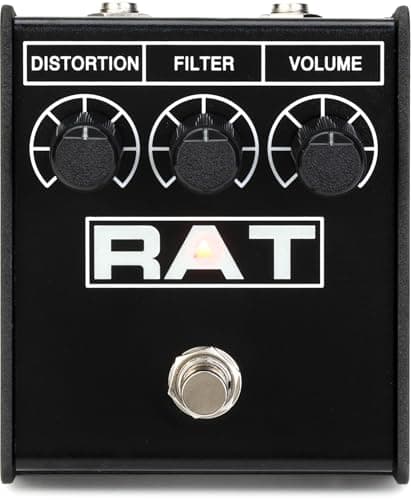
Best Distortion pick: Pro Co RAT 2
#ad How we’re funded · price as of October 17, 2026
BOSS DS-1 vs Pro Co RAT 2
Both clip hard. One control removes treble and one removes mids, and that is the whole difference in a band.
Top pick: Pro Co RAT 2
#ad How we’re funded · price as of October 17, 2026

BOSS DS-1 vs MT-2 Metal Zone
The same reputation problem and opposite amounts of control over it. One tone knob against a sweepable parametric mid.
Top pick: BOSS DS-1 Distortion
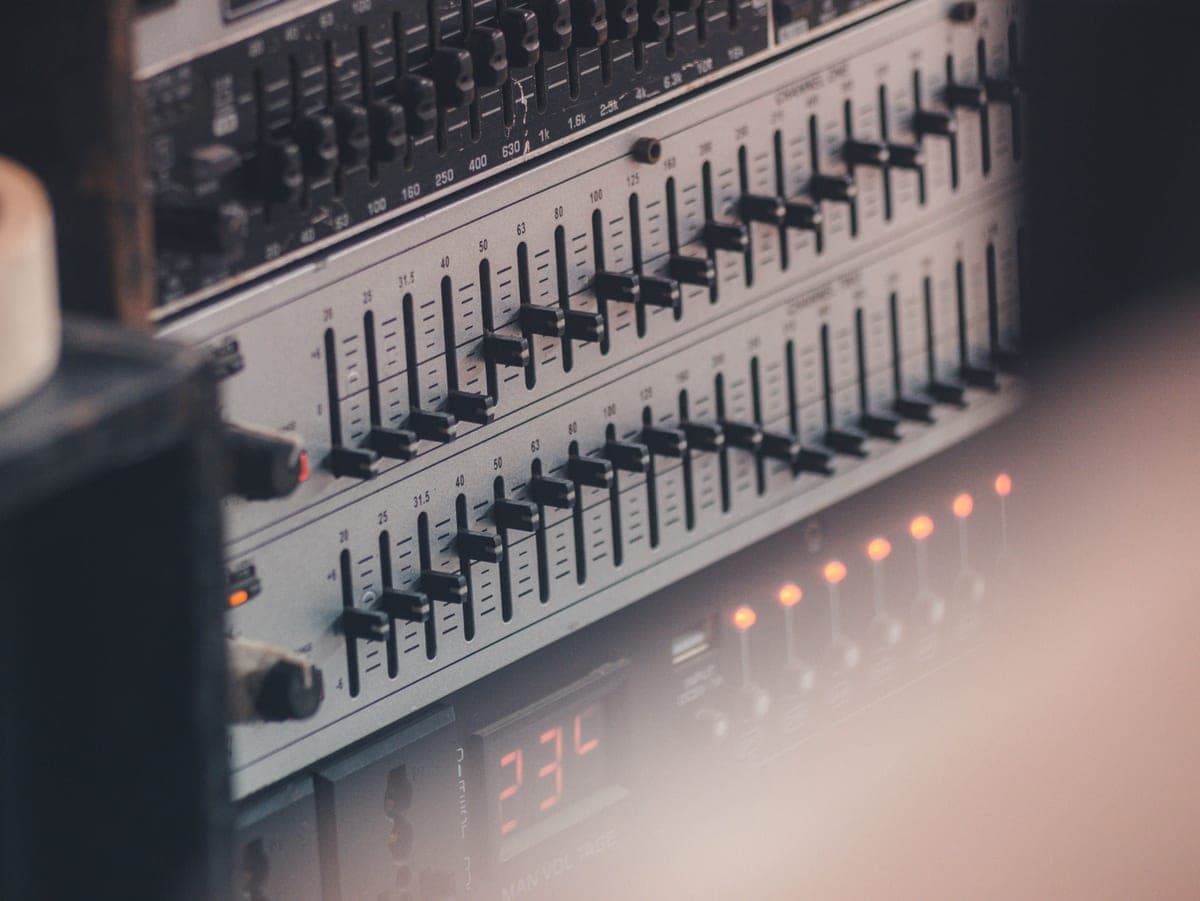
Best EQ pedals
Bands, decibel range and supply voltage. Three EQs compared, plus the 18 V requirement that strands power plans.
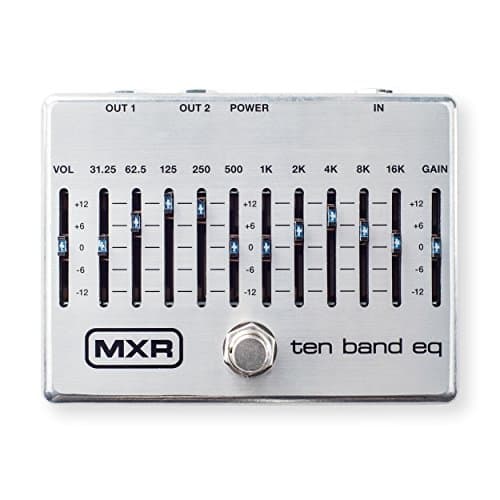
Best EQ Pedal pick: MXR 10 Band EQ
#ad How we’re funded · price as of October 17, 2026
Pedalboard power requirements explained
Two sums decide your power supply, and almost everyone only does the first. A worked example with real published figures.
Top pick: Strymon Zuma
#ad How we’re funded · price as of October 17, 2026