Fulltone OCD vs Pro Co RAT
Both of these sit further into distortion than their labels suggest, and they get there by different routes.
Fret & Fuzz earns a commission when you buy through the links on this page. It costs you nothing and it does not decide what we rank. How we’re funded.
We have not played this gear. Every pick below is chosen from published manufacturer specifications and the arithmetic set out in how we research, which you can re-run yourself.
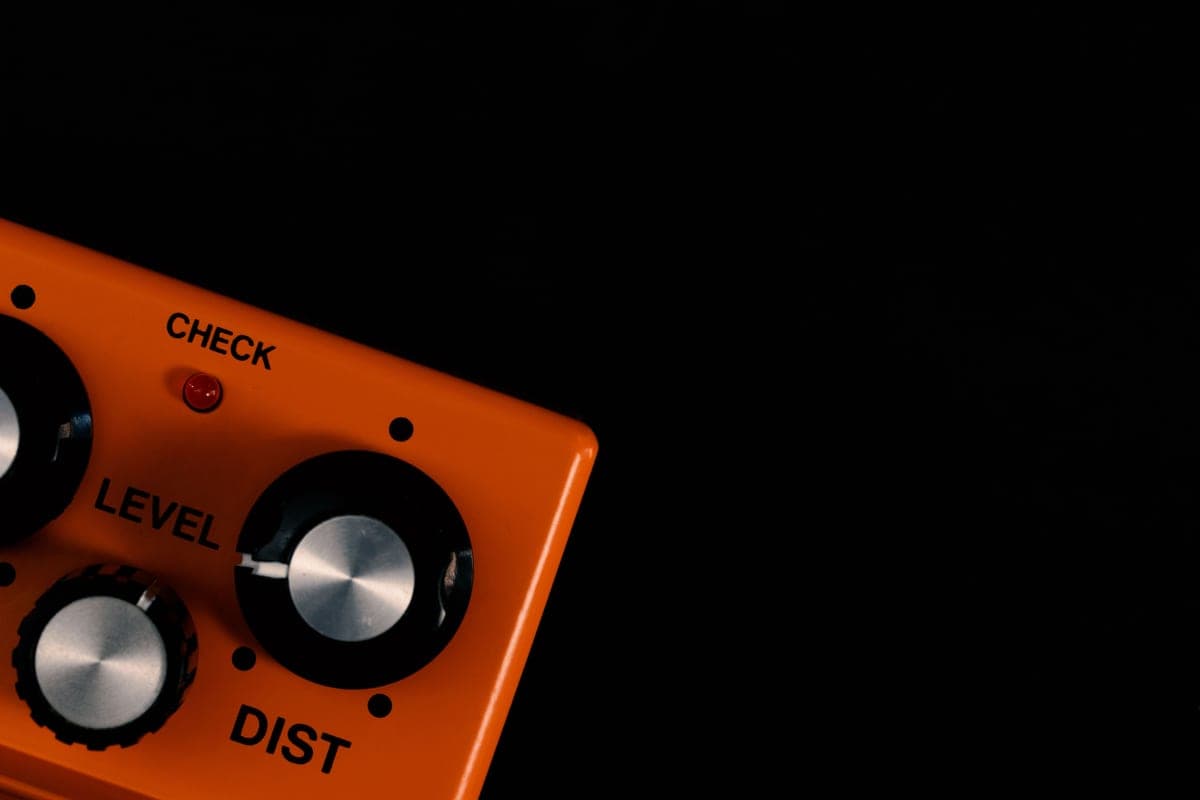
The OCD is an amp-voiced circuit with two selectable gain and EQ characters, and it crosses into distortion past about halfway. The RAT is a hard-clipping distortion whose Filter control removes treble as you turn it up rather than adding it. Choose the OCD if you want a pedal that behaves like a pushed amp; choose the RAT if you want a distinct, controllable distortion voice of its own.
Both are commonly shortlisted against each other and both are commonly mislabelled. The OCD is filed under overdrive and behaves like a distortion at high settings; the RAT is filed under distortion and is more articulate than that label suggests.
Which one belongs on your board
| # | Product | Best for | Price |
|---|---|---|---|
| 01 | 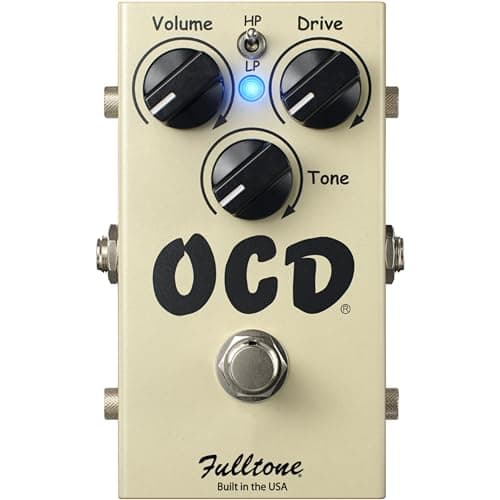 Fulltone OCD Obsessive Compulsive Drive The HP/LP switch is a real circuit change, not an EQ preset — it moves both the gain and the low-mid emphasis. | Amp-like breakup with two distinct voicings | |
| 02 | 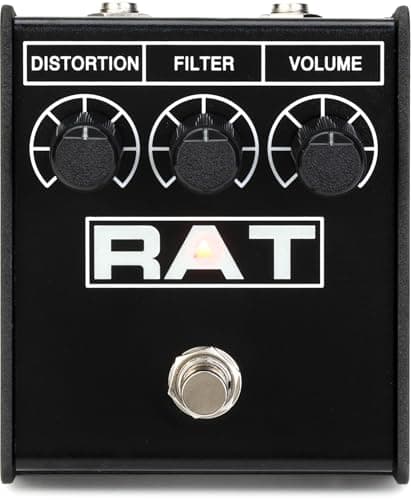 Pro Co RAT 2 Hard clipping to ground with a low-pass Filter — you choose how much top end survives, rather than boosting what is left. | Controlled, articulate distortion that sits between drive and fuzz | $86.00 · Check price #ad How we’re funded · price as of October 17, 2026 |
Rows link to the full write-up further down this page. Prices come from the live price layer only — where there is no live figure the button reads “Check price” rather than showing a remembered number.
02The clipping difference
The RAT clips hard, to ground. Diodes shunt everything above a threshold, which flattens the top of the waveform abruptly and generates a lot of harmonic content. That is why it sounds aggressive and why the low-pass Filter is a more sensible control here than a treble boost would be.
The OCD's HP/LP switch changes the circuit's gain structure and low-mid emphasis together rather than applying EQ at the output. That is why it reads as two amps rather than as two settings — the switch changes what is being clipped, not just what you hear afterwards.
03The Filter knob, explained once
| Filter position | What happens | When you want it |
|---|---|---|
| Fully counter-clockwise | Maximum treble passes through | Dark amp, or a bridge humbucker that needs bite |
| Around 9-11 o'clock | Most treble intact, harshest edge removed | The setting most players end up on |
| Around 1-3 o'clock | Noticeably darker, thicker | Bright single coils, or a mix with a lot of cymbal |
| Fully clockwise | Heavily rolled off | Specific effect, rarely a general-purpose setting |
This runs opposite to a normal tone control. Nothing is broken.
Fulltone OCD Obsessive Compulsive Drive
Amp-like breakup with two distinct voicings
The OCD's HP/LP toggle is the reason to buy it over a simpler pedal. LP has less low-mid emphasis and lower gain, which suits a bright amp; HP adds gain and upper-mid push, which suits a darker one. Most owners settle on one and never touch it again, which is fine — you are effectively choosing between two pedals at purchase.
It is sold as an overdrive and past about two o'clock on the Drive it is a distortion by any reasonable definition. If you were expecting a Tube Screamer-style push, the top half of the knob is not that.
Fulltone publishes very little in the way of electrical data, so power planning is by category rather than by figure: 9 V DC center-negative, no unusual demands.
| Controls | Volume, Drive, Tone, HP/LP toggle |
|---|---|
| HP/LP switch | Two voicings: LP with less low-mid emphasis, HP with more gain and upper-mid push |
| Input impedance | 1 M ohm on the v2, which Fulltone states was raised from 330 k on the previous version |
| Input section | Fulltone states a Class A configured discrete 2N5457 JFET input section |
| Bypass | An internal switch selects Fulltone's Enhanced Bypass or true bypass, which Fulltone states pops in neither mode; the v2 also adds an output buffer |
| Versions | Fulltone states that OCDs from serial 205811 upward are the newer, less compressed versions |
| Power | 9 V DC center-negative; Fulltone documents internal operation at a higher rail |
| Current draw | Not published by Fulltone |
| What it does not do | No power supply included, and Fulltone publishes no current-draw figure, so a shared supply output cannot be budgeted for it without measuring. It is not a subtle pedal at high Drive — past about two o'clock it behaves more like a distortion than an overdrive, and it will not clean up the way a Tube Screamer does. |
Specs from Fulltone OCDv2 product page. We have not used this unit.
Pro Co RAT 2
Controlled, articulate distortion that sits between drive and fuzz
The RAT's Filter knob is a low-pass filter: turn it up and it removes treble. Every other tone control on every other pedal works the other way, which is why everybody misuses it exactly once.
Functionally it is the more useful arrangement for a hard-clipping circuit. Hard clipping generates a lot of high-order harmonic content, and being able to roll it off progressively is more useful than being able to add more.
Character-wise it sits between an overdrive and a fuzz — harder and more compressed than a TS, far more articulate than a Muff. That middle ground is why it appears on records across genres that agree on nothing else.
| Controls | Distortion, Filter, Volume |
|---|---|
| Filter control | Runs backwards from a normal tone knob — turning it up removes treble |
| Power | 9 V battery or a 9 V DC supply (adapter sold separately) |
| Enclosure | Steel, with the battery compartment accessible without tools |
| Electrical data | No current-draw or impedance figure is published for this pedal, so none is stated here. |
| What it does not do | No power supply included. There is no clean-boost side to it — at low Distortion the RAT is still a distortion, and the Filter control confuses everyone exactly once. |
Specs from Pro Co RAT 2 product page. We have not used this unit.
#ad How we’re funded · price as of October 17, 2026
04Who each is wrong for
- The OCD is wrong if you wanted a low-gain transparent drive. Even in LP mode it has more character and more gain than that description implies.
- The OCD is wrong if you expected it to clean up on the volume knob the way a Tube Screamer does. It does not, in the same way.
- The RAT is wrong if you want your amp's own voice to dominate. It imposes a distinct character and that is the point of it.
- The RAT is wrong as a subtle boost. There is no low-gain setting where it stops being a distortion.
- Both are wrong if you are trying to fix a mid-scoop problem. That is an EQ job.
05Stacking, and what to expect
Neither of these stacks well with another high-gain pedal — you get compression on top of compression and lose articulation. Both stack well with a low-gain boost in front, which pushes them into more saturation without adding another clipping stage.
If your goal is high gain from a pedal into a clean amp, be aware of the limit: a single clipping point cannot reproduce what a whole distorting preamp does. Pedal gain vs amp gain covers what actually differs. If the pedal you are weighing the RAT against is a DS-1 rather than an OCD, DS-1 vs RAT is the closer comparison — two hard-clipping distortions separated by their tone controls. If the other pedal on your shortlist is a Blues Driver rather than a RAT, OCD vs Blues Driver runs the same comparison against a flat, dynamic circuit instead of a hard-clipping one. And if the guitar in question is a Strat, the single-coil shortlist is the more useful page. Our OCD review covers the pedal on its own terms, including what the v2 changed.
Frequently asked questions
+ Is the OCD an overdrive or a distortion?
+ Why does the RAT tone knob work backwards?
+ Which one is better for rhythm playing?
+ Can I use either as a boost for solos?
Sources
Related on Fret & Fuzz

Fulltone OCD review
Not a transparent drive, whatever the label says. A 1 M ohm input on the v2, and a serial number that tells you which voicing you are buying.
Top pick: Fulltone OCD Obsessive Compulsive Drive
BOSS DS-1 vs Pro Co RAT 2
Both clip hard. One control removes treble and one removes mids, and that is the whole difference in a band.
Top pick: Pro Co RAT 2
#ad How we’re funded · price as of October 17, 2026
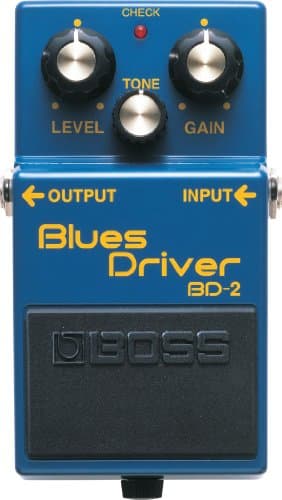
Fulltone OCD vs BOSS Blues Driver
A modifier against a source. One roughens an amp you like; the other supplies the whole tone on a clean one.
Top pick: BOSS BD-2 Blues Driver
#ad How we’re funded · price as of October 17, 2026
Best overdrive pedals
Six overdrives sorted by circuit family, with the published clipping topology and impedance figures that separate them.
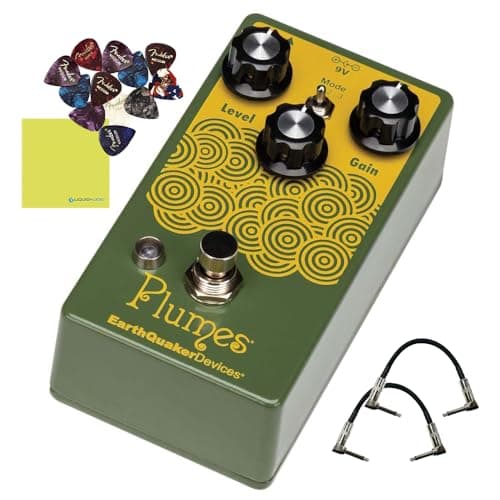
Best Overdrive pick: EarthQuaker Devices Plumes
Best distortion pedals
Hard clipping is predictable; the tone control is where these pedals differ. Four distortions compared, plus one that is mislabelled.
Best Distortion pick: Pro Co RAT 2
#ad How we’re funded · price as of October 17, 2026
Overdrive vs distortion vs fuzz
How hard, how symmetrically, and with what EQ around it. The real distinctions, and why the box labels are unreliable.
Top pick: BOSS BD-2 Blues Driver
#ad How we’re funded · price as of October 17, 2026
Pedal gain vs amp gain
One clipping point or several with filtering between them. Why that structural difference only shows at high gain.
Top pick: EVH 5150 Iconic Series 15W 1x10 combo
#ad How we’re funded · price as of October 17, 2026