Can you use guitar pedals on a bass?
The honest answer is a list rather than a yes or a no, and the thing that sorts the list is published on the spec sheet.
Fret & Fuzz earns a commission when you buy through the links on this page. It costs you nothing and it does not decide what we rank. How we’re funded.
We have not played this gear. Every pick below is chosen from published manufacturer specifications and the arithmetic set out in how we research, which you can re-run yourself.
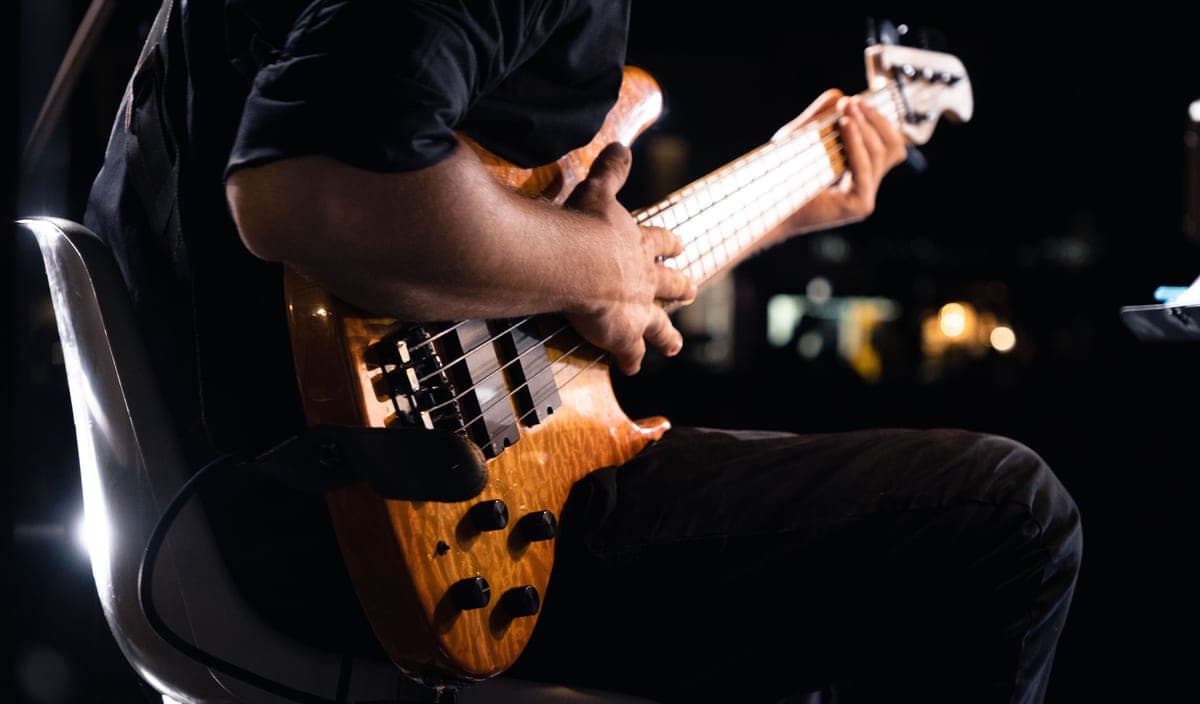
Yes — most guitar pedals work on a bass. Time-based and utility pedals (delay, reverb, chorus, tuner, compressor, noise gate) pass low frequency without complaint, and the BOSS OC-5 is the safest single purchase because BOSS publishes a GUITAR/BASS switch and a direct-level knob on it. The category that fails is drive: overdrives built around a mid-forward, bass-light tone stack, of which the Ibanez TS9 is the clearest example, remove the low end and have no control that gives it back. The test is simple — if a drive pedal has no bass control and no dry blend, assume it will thin out your bass.
We have not played these pedals on a bass, and this is not a tone review. What follows is what each maker publishes, what those figures mean for an instrument an octave below a guitar, and which pedals to leave out. How we research sets out the method.
01The criteria, before any product
Four questions sort guitar pedals into usable and not usable on a bass, and all four can be answered from published specifications rather than by plugging in.
- Does the maker publish a bass provision? A GUITAR/BASS switch, a bass tuning mode, a published frequency range that reaches below 40 Hz. Where it exists, the guesswork is over.
- Is there a dry path? A blend knob, a direct-level control, a parallel output. On a bass this is the single most valuable control on any pedal, because it means the effect is added to your fundamental rather than replacing it.
- What does the tone stack do to low frequency? A fixed mid hump with no bass control subtracts. A full three-band EQ, or no EQ at all, is neutral.
- Does it need headroom you are not giving it? A bass puts out more low-frequency energy than a guitar. A pedal with a published nominal input level and a stated maximum tells you whether you are inside its range; most compact pedals publish the nominal figure only.
| Pedal | Published bass provision | Dry path? | Current draw |
|---|---|---|---|
| BOSS OC-5 Octave | GUITAR/BASS switch; Range control for low notes | Yes — DIRECT LEVEL knob | 60 mA |
| EHX Big Muff Pi | None stated | No | Approx. 3 mA |
| Keeley Compressor Plus | None stated — Release switch is voiced for guitar pickups | Yes — Blend knob | 10 mA |
| BOSS TU-3 | Bass mode plus Bass flat x1, x2, x3; range from C0 (16.35 Hz) | N/A — tuner | 20 mA (80 mA bright) |
| Ibanez TS9 | None — no bass control at all | No | 8 mA |
Every figure is the manufacturer's own published specification. Where a maker publishes nothing, the cell says so rather than carrying a number from elsewhere.
Guitar pedals that work on a bass
| # | Product | Best for | Price |
|---|---|---|---|
| 01 | 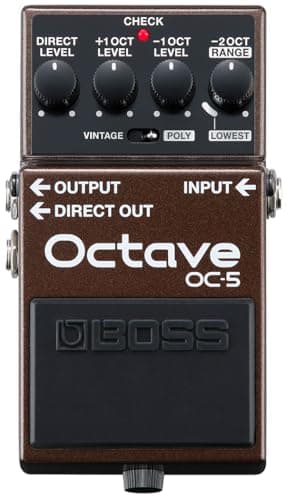 BOSS OC-5 Octave A guitar pedal with a published GUITAR/BASS switch and a direct-level knob — the two things a bass needs. | The first guitar pedal to put on a bass, because BOSS built the switch for it | $165.98 · Check price #ad How we’re funded · price as of November 2, 2026 |
| 02 | 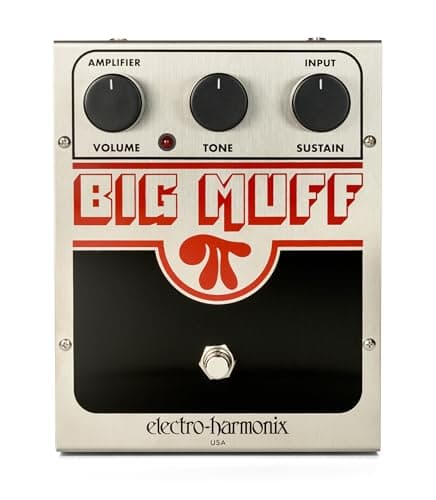 Electro-Harmonix Big Muff Pi The mid-scooped fuzz that sounds enormous alone on a bass and needs help to survive a band. | Bass fuzz, accepting that you will have to fight the mid scoop | $101.60 · Check price #ad How we’re funded · price as of November 2, 2026 |
| 03 | 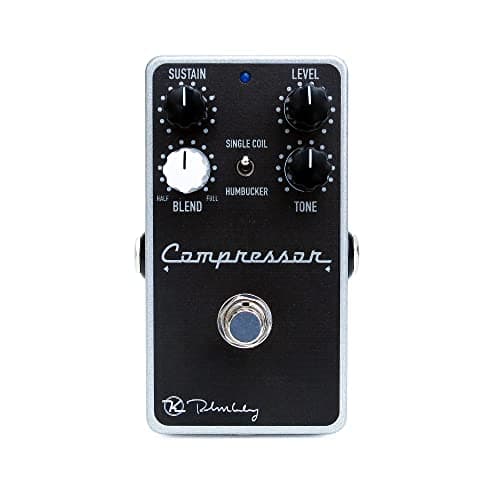 Keeley Compressor Plus A guitar compressor with a dry blend, which is what makes it usable on an instrument with this much low-end energy. | Bass compression, specifically because of the blend knob | $149.00 · Check price #ad How we’re funded · price as of November 2, 2026 |
| 04 | 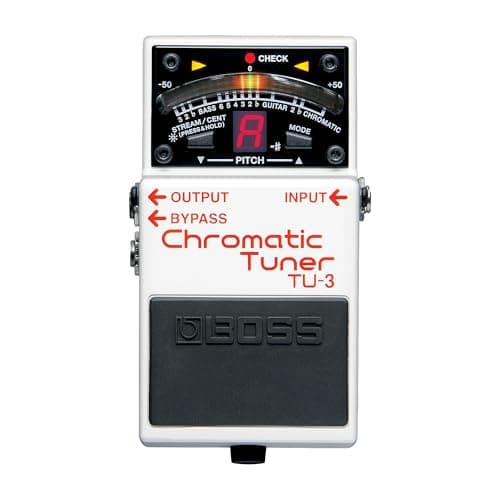 BOSS TU-3 Chromatic Tuner Published bass modes and a tuning range that goes well below the lowest string on a five-string. | Tuning a bass, with the range published rather than hoped for | |
| ! | 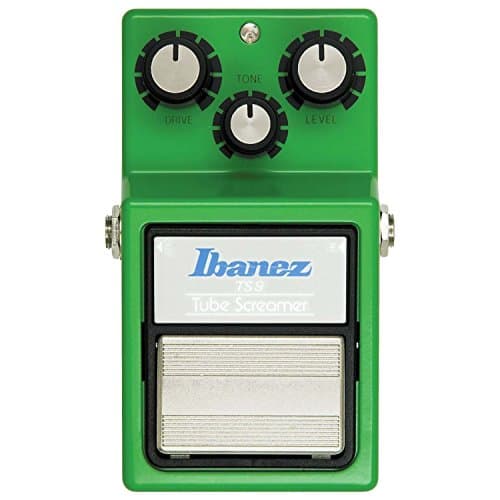 Ibanez TS9 Tube Screamer A fixed mid hump and no bass control. It does to a bass exactly what its tone stack was designed to do. Skip this one — see why below | Nothing on a bass — this is the pedal that demonstrates the rule | $99.99 · Check price #ad How we’re funded · price as of November 2, 2026 |
Rows link to the full write-up further down this page. Prices come from the live price layer only — where there is no live figure the button reads “Check price” rather than showing a remembered number.
03The one mechanism that decides almost every case
Guitar drive pedals are not neutral amplifiers with distortion added. Most of them filter the signal before the clipping stage, deliberately, because clipping a full-range signal with a lot of low-frequency energy in it sounds loose and undefined. Removing bass before the distortion is how a drive pedal stays tight and articulate on a guitar.
Run a bass through that same circuit and the filter is still there, still doing the job it was designed to do, and now it is removing the instrument instead of tidying it. Nothing downstream fixes it: an EQ pedal after the drive can boost the low end that survived, but it cannot recover what was filtered out before the clipping stage, because that information is gone.
BOSS OC-5 Octave
The first guitar pedal to put on a bass, because BOSS built the switch for it
The numberGUITAR/BASS switch, DIRECT LEVEL knob, 60 mA, 1 M ohm in / 1 k ohm out.
This is the cleanest answer to the question because BOSS removed the guesswork. The OC-5's control set, as BOSS publishes it, includes a GUITAR/BASS switch alongside the Vintage/Poly selector and separate +1OCT, -1OCT and -2OCT level knobs. You are not hoping a guitar pedal tracks a low B; the maker has stated there is a mode for it.
The DIRECT LEVEL knob matters more than the octave knobs on a bass. It sets how much of your unprocessed signal passes through, which means the fundamental of the note you played is never replaced by the effect — it is added to. That is the difference between an octave pedal that thickens a bass line and one that makes it sound like a synthesizer with the bottom missing.
The downsides are real. Vintage mode is BOSS's recreation of the mono OC-2, so it tracks one note at a time — chords and double-stops need Poly. There is no expression jack, so the octave blend cannot be swept with a foot. Current draw is 60 mA, which is not trivial on a shared supply, and BOSS publishes roughly five hours of alkaline battery life, so a battery is a backup rather than a plan. No adaptor is in the box.
| Modes | Vintage and Poly. BOSS describes Vintage as a recreation of the mono OC-2 from 1982, and Poly as the mode for chord playing |
|---|---|
| Controls | Pedal switch, GUITAR/BASS switch, VINTAGE/POLY switch, DIRECT LEVEL, +1OCT, -1OCT and -2OCT/RANGE knobs |
| Range control | In Poly mode, BOSS states the Range knob restricts the effect to the lower notes and at its lowest setting isolates the octave to the bottom note of a chord |
| Nominal input level | -20 dBu |
| Impedance | 1 M ohm input, 1 k ohm output |
| Current draw | 60 mA |
| Battery life | Approximately 5 hours on an alkaline 9 V |
| Size / weight | 73 x 129 x 59 mm, 440 g including battery |
| What it does not do | No adaptor in the box — the PSA supply is sold separately, and at roughly five hours of alkaline battery life batteries are not a plan for this pedal. There is no expression pedal jack, so the octave blend cannot be swept with a foot, and Vintage mode is a mono recreation, so chords need Poly. |
Specs from BOSS OC-5 Octave specifications. We have not used this unit.
#ad How we’re funded · price as of November 2, 2026
Electro-Harmonix Big Muff Pi
Bass fuzz, accepting that you will have to fight the mid scoop
The numberFour transistors, two cascaded clipping stages, approximately 3 mA at 9 V.
A Big Muff on a bass is one of the few cases where a guitar pedal's weakness becomes the point. EHX publishes a four-transistor design with two cascaded clipping stages between a boost stage and a recovery stage, and a tone stack with a fixed mid scoop with no way to defeat it. On a guitar that scoop is what makes a Muff sit oddly in a mix. On a bass it leaves the low fundamental and the high fizz and hollows out the middle, which is the sound people mean when they talk about fuzz bass.
It also passes low frequency happily, and at approximately 3 mA it is the least demanding pedal on this page by an order of magnitude — on a crowded supply it costs you nothing.
The honest problem is the same scoop. The frequencies a mix engineer uses to hear a bass through a guitar amp and a cymbal wash are exactly the ones this pedal removes, so a Muff on its own in a band disappears. The fix is a parallel dry path — a blend pedal, an amp with two channels, or a splitter — and that is an extra purchase the pedal does not include. There is also no clean-up on the guitar volume knob worth the name: rolling down gets quieter, not cleaner.
| Controls | Volume, Tone, Sustain |
|---|---|
| Current draw | Approximately 3 mA at 9 V DC |
| Power | 9 V battery or a 9 V DC center-negative supply |
| Circuit | Four-transistor design with two cascaded clipping stages between a boost stage and a recovery stage |
| What it does not do | The tone stack has a fixed mid scoop with no way to defeat it, and there is no gain-cleanup behavior — rolling your guitar volume down mostly just gets quieter, not cleaner. |
Specs from Electro-Harmonix Big Muff Pi manual (PDF). We have not used this unit.
#ad How we’re funded · price as of November 2, 2026
Keeley Compressor Plus
Bass compression, specifically because of the blend knob
The numberSustain, Level, Blend and Tone knobs, two-position Release switch, 10 mA, true bypass, all analog.
The control that makes this a bass-capable pedal is Blend, which Keeley publishes as a mix of the compressed signal against the dry signal — parallel compression. On a bass that is not a nicety. A compressor set hard enough to even out a plucked low E will also flatten the attack that makes the note audible, and the blend knob lets you keep the attack and the evenness at the same time instead of choosing.
It is all analog, true bypass, and draws 10 mA, so it is cheap to power and does not add a converter to your signal path.
What it is not is a bass compressor. Keeley's Release switch has two positions, described as tuned for single coils or humbuckers — guitar pickups, not bass ones, so neither position was voiced for this job and you are picking the one that sounds better rather than the correct one. There is no attack control at all, and Keeley publishes the current draw but no impedance figures, so how it loads a passive bass pickup is not a published number.
| Controls | Sustain, Level, Blend and Tone knobs, plus a Release switch |
|---|---|
| Release switch | Two positions, which Keeley describes as tuned for single coils or humbuckers |
| Blend | Mixes the compressed signal against the dry signal for parallel compression |
| Current draw | 10 mA |
| Power | 9 V DC, center negative; Keeley also lists battery operation |
| Bypass | True bypass |
| Circuit | 100% analog |
| What it does not do | No attack knob, and release is a two-position switch set for pickup type rather than a continuous control — the blend knob is how you keep the transient, not a time constant. Keeley publishes the current draw but no impedance figures. |
Specs from Keeley Compressor Plus product page. We have not used this unit.
#ad How we’re funded · price as of November 2, 2026
BOSS TU-3 Chromatic Tuner
Tuning a bass, with the range published rather than hoped for
The numberC0 (16.35 Hz) to C8 (4,186 Hz), +/- 1 cent, Bass and Bass-flat x3 modes, 20 mA.
This is the least glamorous entry here and the one with the least room for argument. BOSS publishes a tuning range of C0, 16.35 Hz, to C8, 4,186 Hz, and the mode list includes Bass and Bass flat x1, x2 and x3 alongside the guitar modes. The low B on a five-string bass sits around 31 Hz, so the published range covers it with an octave to spare — and the drop-tuning modes are there for the players who need them.
Accuracy is plus or minus 1 cent, and the pedal has a DC OUT jack that powers other pedals, which on a small bass board can be the whole power solution.
The limits are worth knowing. Plus or minus 1 cent is a stage tuner's accuracy, not an intonation tool — setting intonation properly is strobe territory. Turning on High Brightness mode takes the draw from 20 mA to 80 mA, which is a fourfold jump that matters on a shared supply. And the bypass is buffered, not true bypass, which is usually an advantage and occasionally not.
| Tuning range | C0 (16.35 Hz) to C8 (4,186 Hz) |
|---|---|
| Accuracy | +/- 1 cent |
| Modes | Chromatic, Chromatic flat x2, Guitar, Guitar flat x2, Bass, Bass flat x3 |
| Bypass | Buffered bypass |
| Current draw | 20 mA; 80 mA with High Brightness mode on |
| Jacks | Output, Bypass, DC IN, DC OUT (powers other pedals) |
| Weight | 390 g including battery |
| What it does not do | +/- 1 cent is fine for a stage tuner and not enough for setting intonation — that is strobe territory. Turning on High Brightness quadruples the current draw, which matters on a shared supply. |
Specs from BOSS TU-3 specifications. We have not used this unit.
Ibanez TS9 Tube Screamer
Nothing on a bass — this is the pedal that demonstrates the rule
The numberSingle treble-tilt Tone control over a fixed mid hump, no bass control, 8 mA.
We are including a pedal to avoid, because it explains the whole page better than another recommendation would. The Tube Screamer's tone stack, as it exists on the TS9, is a single treble-tilt Tone knob over a fixed mid hump. There is no bass control, and nothing on the pedal that can give back low end.
That voicing exists for a good reason on a guitar: pushing the midrange is how a Tube Screamer makes a solo cut through a band. Run a bass into it and the same circuit removes the part of the signal that was doing the work, and no setting on the pedal puts it back. This is not a quality problem — a TS9 is a well-made pedal at 8 mA that does its intended job — it is the wrong tool, and the spec sheet says so before you spend anything.
The general rule it illustrates: a drive pedal built around a mid-forward, bass-light tone stack will thin out a bass, and almost every classic guitar overdrive is built that way. If the pedal has no bass control, assume it takes bass away.
| Controls | Drive, Tone, Level |
|---|---|
| Current draw | 8 mA at 9 V |
| Power | One 9 V battery (006P) or a 9 V DC center-negative adapter |
| Jack layout | Input on the right side, output on the left |
| Impedance | Not published by Ibanez |
| What it does not do | No power supply in the box, no true bypass (the TS9 is buffered), and no bass control — the tone stack is a single treble-tilt knob over a fixed mid hump. |
Specs from Ibanez TS9 product page. We have not used this unit.
04Why a blend knob is worth more than a better pedal
If you take one thing from this page, take this: on a bass, the control that determines whether a pedal is usable is almost never the gain knob. It is whatever lets the dry signal through.
A bass in a band occupies a narrow, crowded, important part of the spectrum, and it is the only instrument holding the bottom of the arrangement. Any effect that replaces your signal instead of sitting alongside it takes the floor out of the song for as long as it is switched on. A blend knob, a direct-level control or a parallel dry channel means the fundamental is never interrupted, and the effect becomes a layer rather than a substitution.
That is why the OC-5's DIRECT LEVEL knob and the Keeley's Blend knob are the two specifications that earned those pedals their places here, and why the Big Muff — which has neither — comes with a caveat that costs money to solve. The same logic applies to compression generally: Compressor vs noise gate covers what each of those two actually does to a signal before you buy for the wrong problem.
05The pedals that need no discussion at all
Time-based and utility effects are the easy half of this question, and they are easy for a boring reason: they do not reshape your frequency response on the way through.
Delay, reverb, chorus, tremolo, tuners and noise gates work on a bass essentially as they do on a guitar. A BOSS DD-8 delays a low E as happily as a high one; an RV-6 reverberates it. The only practical caution is taste rather than engineering — reverb and long delays on a bass muddy an arrangement quickly, because the low frequencies that carry the note are also the ones that take longest to decay out of the way of the next one.
Noise gates deserve one specific warning. A gate set by ear on a guitar will clip the start and end of bass notes, because the threshold that opens cleanly for a 330 Hz signal behaves differently with a 41 Hz one. Expect to reset it rather than reuse your guitar setting, and read the send/return section of Compressor vs noise gate before wiring it in.
06Will it damage anything?
No. This is the version of the question that worries people most and it has the least interesting answer: a bass pickup puts out a signal in the same voltage range as a guitar pickup, and a pedal built for one is electrically fine with the other. You are not risking the pedal, the bass or the amp.
What you can run out of is headroom rather than safety. A bass with active electronics puts out a hotter signal than a passive guitar, and a compact pedal with a published nominal input level of around -20 dBu is being asked to work near the top of its range. The symptom is an unpleasant, uncontrolled distortion that appears before you have turned any gain up — not a fault, just the input stage running out of room. Turning the bass's output down fixes it.
07Who should buy a bass-specific pedal instead
Anyone whose main instrument is a bass and who wants drive. The pre-clipping filter argument above is not something you can work around with settings, and a bass drive pedal is the same money for a circuit that was designed for the job.
Anyone playing a five-string, where the bottom string's fundamental is low enough that the margin for error in any filter disappears. And anyone who needs one pedal to do a whole job on stage without a parallel dry path to rescue it — the blend knob you would be buying separately is built into most bass pedals.
Everyone else — a guitarist who also plays bass, someone recording a bass part at home, a player adding an octave or a compressor to a bass rig — can use what is on this page, provided the drive stays off the list. Guitar pedal types explained covers which category each pedal falls into if you are not sure what you already own.
Frequently asked questions
+ Can you use guitar pedals on a bass?
+ Will a guitar pedal damage my bass or my amp?
+ Why does my guitar distortion pedal make my bass sound thin?
+ Which single guitar pedal is safest to use on a bass?
+ Does a guitar tuner pedal work on a bass?
+ Do I need a blend pedal to use a guitar fuzz on a bass?
Sources
Related on Fret & Fuzz
Guitar pedal types explained
Five families defined by what they do to the waveform, and the map that turns a hundred-brand problem into five decisions.
Top pick: BOSS TU-3 Chromatic Tuner
Best octave pedals
Chord tracking and a dry blend decide this category. Three picks on published specs, plus the harmonizer people buy by mistake.
Best Octave Pedal pick: BOSS OC-5 Octave
#ad How we’re funded · price as of November 2, 2026
Best fuzz pedals
Input impedance predicts your fuzz experience better than any adjective. Five fuzzes compared on the published figures.
Best Fuzz pick: Electro-Harmonix Big Muff Pi
#ad How we’re funded · price as of November 2, 2026
Compressor vs noise gate
One lifts the quiet parts, the other removes them. Buying the compressor for a noise problem makes the noise worse.
Top pick: Keeley Compressor Plus
#ad How we’re funded · price as of November 2, 2026