BOSS DD-8 review
The default digital delay on more boards than any other pedal, and the two published numbers that decide whether it belongs on yours.
Fret & Fuzz earns a commission when you buy through the links on this page. It costs you nothing and it does not decide what we rank. How we’re funded.
We have not played this gear. Every pick below is chosen from published manufacturer specifications and the arithmetic set out in how we research, which you can re-run yourself.
Buy a DD-8 when you want one delay that covers everything and you have 100 mA to give it. Eleven modes, up to 10 seconds, tap tempo and a carryover switch make it the most capable compact delay BOSS has made. The two things it does not have are preset memories and a small power appetite — if your set needs instant recall between several delay sounds, you want a unit with presets instead.
We have not played this pedal, and this is not a tone review. What follows is what BOSS publishes, what those figures mean on a board, and who should buy something else. How we research sets out the method.
01What BOSS publishes
| Specification | Published figure | What it means in practice |
|---|---|---|
| Modes | 11: Analog, Standard, Tape, Warm, Reverse, +RV, Shimmer, Mod, Warp, GLT, Loop | One pedal covers slapback through ambient |
| Maximum delay | Up to 10 seconds with tap tempo input | Far longer than any musical delay needs; useful for loops |
| Tap tempo | Via the TEMPO/EXP jack (TRS) | Tempo-locked repeats without arithmetic |
| Carryover | Switch sets whether trails continue or stop on bypass | Tails survive a section change |
| I/O | INPUT-A (MONO)/INPUT-B, OUTPUT-A (MONO)/OUTPUT-B | True stereo in and out |
| Input impedance | 1 M ohm | Does not load a passive pickup |
| Output impedance | 1 k ohm | Drives what follows without trouble |
| Current draw | 100 mA | The figure that decides your supply |
| Battery life | Approx. 3.5 hours (alkaline) | Use a supply |
| Size / weight | 73 x 129 x 59 mm, 440 g | Standard BOSS compact footprint |
Every figure is BOSS's own published specification. We have not measured any of them.
The pedal
| # | Product | Best for | Price |
|---|---|---|---|
| 01 | 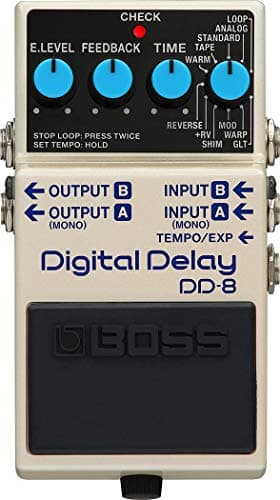 BOSS DD-8 Digital Delay Eleven modes and up to 10 seconds with tap tempo, true stereo I/O and repeat carryover — at 100 mA and with no presets. | One delay slot that has to cover every delay sound |
Rows link to the full write-up further down this page. Prices come from the live price layer only — where there is no live figure the button reads “Check price” rather than showing a remembered number.
03The 100 mA problem, with the arithmetic
One hundred milliamps sounds small until you put it next to what else is on a board. A TU-3 tuner draws 20 mA. A BD-2 draws 20 mA. An SD-1 draws 10 mA. The DD-8 on its own draws more than those three combined, and it is one pedal.
That matters because the standard advice is to total your published draws and add about 30% headroom. Tuner, two drives and a DD-8 is 150 mA, so you want roughly 195 mA of supply. Add a reverb at 95 mA and you are near 320 mA, which is past what a single 100 mA brick output or a modest daisy chain handles. Power requirements explained has the full method, and best power supplies compares bricks on published per-output current rather than output count.
BOSS DD-8 Digital Delay
One delay slot that has to cover every delay sound
The number100 mA, 1 M ohm in, 1 k ohm out, 440 g. All published by BOSS.
BOSS publishes eleven modes: Analog, Standard, Tape, Warm, Reverse, +RV (delay with reverb), Shimmer, Mod, Warp, GLT and Loop. That is a wider spread than most players will ever use, and the point of it is that one enclosure covers the slapback, the dotted-eighth, the ambient wash and the loop without a second purchase.
Two features matter more than the mode count. Tap tempo, via the TEMPO/EXP jack, is what makes a tempo-locked repeat usable in a set rather than something you dial in by ear. And the Carryover switch sets whether repeats continue or stop when you bypass the pedal — so a tail can ring out through a section change instead of being cut off mid-phrase.
The cons are both published. It draws 100 mA, which is one of the largest single draws on a typical board and the reason it is often the pedal that breaks a supply budget. And there are no preset memories — every mode or time change is a knob move, so a set needing three different delay sounds at three tempos means tapping between them rather than recalling them. Battery life is about 3.5 hours, so batteries are not a plan.
| Modes | 11 — Analog, Standard, Tape, Warm, Reverse, +RV, Shimmer, Mod, Warp, GLT, plus Loop |
|---|---|
| Maximum delay | Up to 10 seconds, with tap tempo |
| Controls | Mode, Time, Feedback, E.Level, Carryover switch, pedal switch |
| Current draw | 100 mA |
| Battery life | Approx. 3.5 hours on alkaline |
| I/O | True stereo in and out, with three selectable output modes |
| Weight | 440 g including battery |
| What it does not do | No adaptor included. At 100 mA it is not a pedal you daisy-chain casually, and the 3.5-hour battery figure means battery power is a backup, not a plan. |
Specs from BOSS DD-8 specifications. We have not used this unit.
04The carryover switch, which is the underrated feature
Most delay pedals cut the repeats dead the instant you bypass them. That is fine at the end of a song and wrong everywhere else — a tail chopped off mid-decay is an audible edit, and it is the thing that makes a delay sound switched rather than played.
BOSS publishes the Carryover switch as setting whether trails continue or stop on bypass. Set it to carry over and the repeats decay naturally after you step off, which is what you want when a delayed part hands over to a clean one. It is a small switch that changes how the pedal behaves in a song rather than how it sounds in a shop.
05Eleven modes, and the four you will actually use
- Standard — clean digital repeats. The default, and the right one for tempo-locked parts where clarity matters.
- Analog — a modeled bucket-brigade voice with repeats that darken as they decay. The one for slapback that sits behind the part rather than beside it.
- Tape — modeled wow and flutter. Character at the cost of precision; the opposite trade to Standard.
- +RV — delay with reverb in one block, which on a tight board can remove a second pedal entirely.
Shimmer, Reverse, Warp and GLT are effects rather than delays, and most players find one of them and ignore the rest. That is not a criticism — it is how a mode-rich pedal actually gets used, and it is worth knowing before you pay for eleven.
06Who should buy something else
- You need instant recall between delay sounds. There are no presets. A multi-effects unit or a preset-capable delay is the answer — best multi-effects covers the units.
- Your supply is tight. 100 mA is a lot. An analog delay draws a fraction of it, and analog vs digital delay covers what you give up.
- You only want slapback. You are paying for ten modes you will not use. A simple analog delay does that one job and costs less.
- You want the delay in an effects loop and your amp has none. That is an amp problem rather than a pedal one — pedal order covers the placement rules.
- You want a looper. The Loop mode exists, but a dedicated looper is a better tool — best looper pedals covers them.
07Who should buy it
Someone who wants one delay slot filled permanently and correctly. The combination of tap tempo, true stereo, carryover and eleven modes means you are unlikely to outgrow it, and BOSS's switch and enclosure mean it will outlast the board it is bolted to.
It is also the natural choice for tempo-locked playing, where the tap switch is the feature the whole style depends on. Delay time and tempo has the arithmetic for setting it without tapping, and best delay pedals covers the category against its rivals. Best tap tempo delay pedals compares it against the delays bought specifically for that switch.
Frequently asked questions
+ How much power does the BOSS DD-8 need?
+ Does the DD-8 have presets?
+ What does the DD-8 carryover switch do?
+ How long is the DD-8's maximum delay?
Sources
Related on Fret & Fuzz
Best tap tempo delay pedals
Tap tempo is useless without a subdivision switch. Three picks compared on published divisions, time and draw.
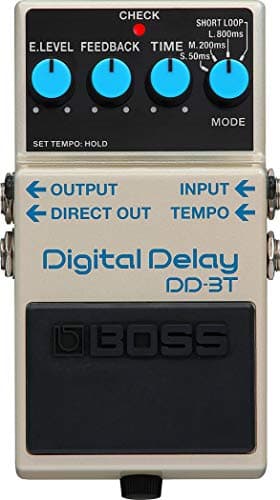
Best Tap Tempo Delay pick: BOSS DD-3T Digital Delay
Best delay pedals
Maximum delay time and current draw settle most of this category. Four delays on their published figures.
Best Delay pick: BOSS DD-8 Digital Delay
Analog vs digital delay
Why analog repeats darken, what the published time ceilings are, and which format your parts need.
Top pick: MXR Carbon Copy Analog Delay
#ad How we’re funded · price as of October 17, 2026
Delay time and tempo: the arithmetic
60,000 divided by the tempo. The full table for quarter, eighth, dotted-eighth and sixteenth notes.
Top pick: BOSS DD-8 Digital Delay
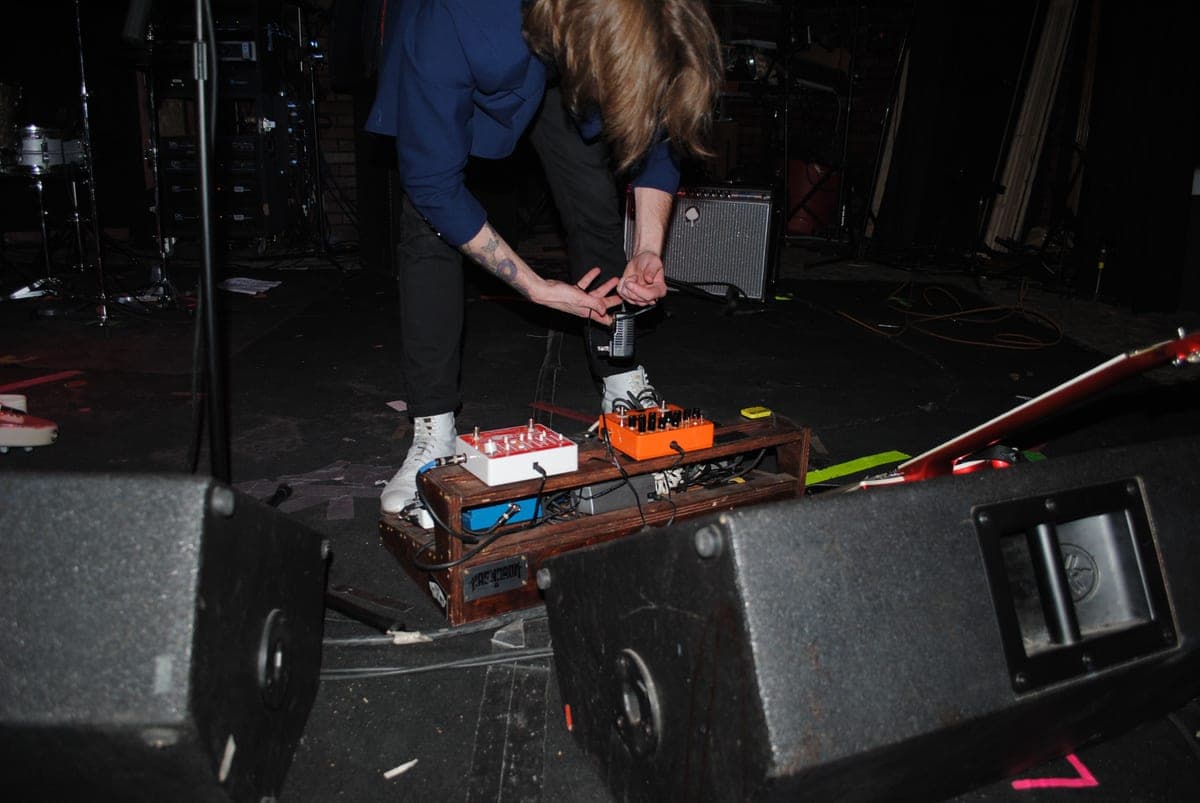
Pedalboard power requirements explained
Two sums decide your power supply, and almost everyone only does the first. A worked example with real published figures.
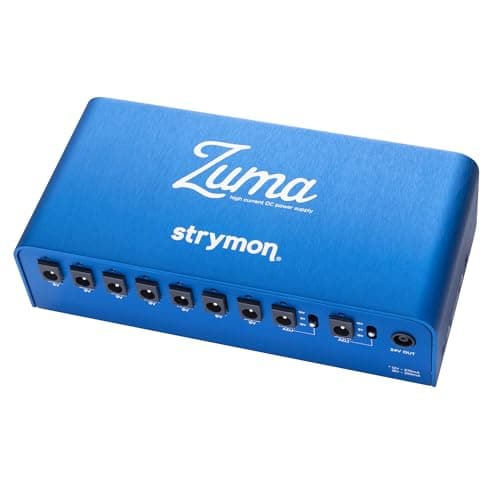
Top pick: Strymon Zuma
#ad How we’re funded · price as of October 17, 2026
Your pedalboard hums — which fix actually works
Five faults, one word. The two-minute diagnostic, then the one purchase that fixes the fault you actually have.
Top pick: Strymon Zuma
#ad How we’re funded · price as of October 17, 2026