Compressor vs boost
These get recommended interchangeably for the same problem and they do opposite things to your dynamic range.
Fret & Fuzz earns a commission when you buy through the links on this page. It costs you nothing and it does not decide what we rank. How we’re funded.
We have not played this gear. Every pick below is chosen from published manufacturer specifications and the arithmetic set out in how we research, which you can re-run yourself.
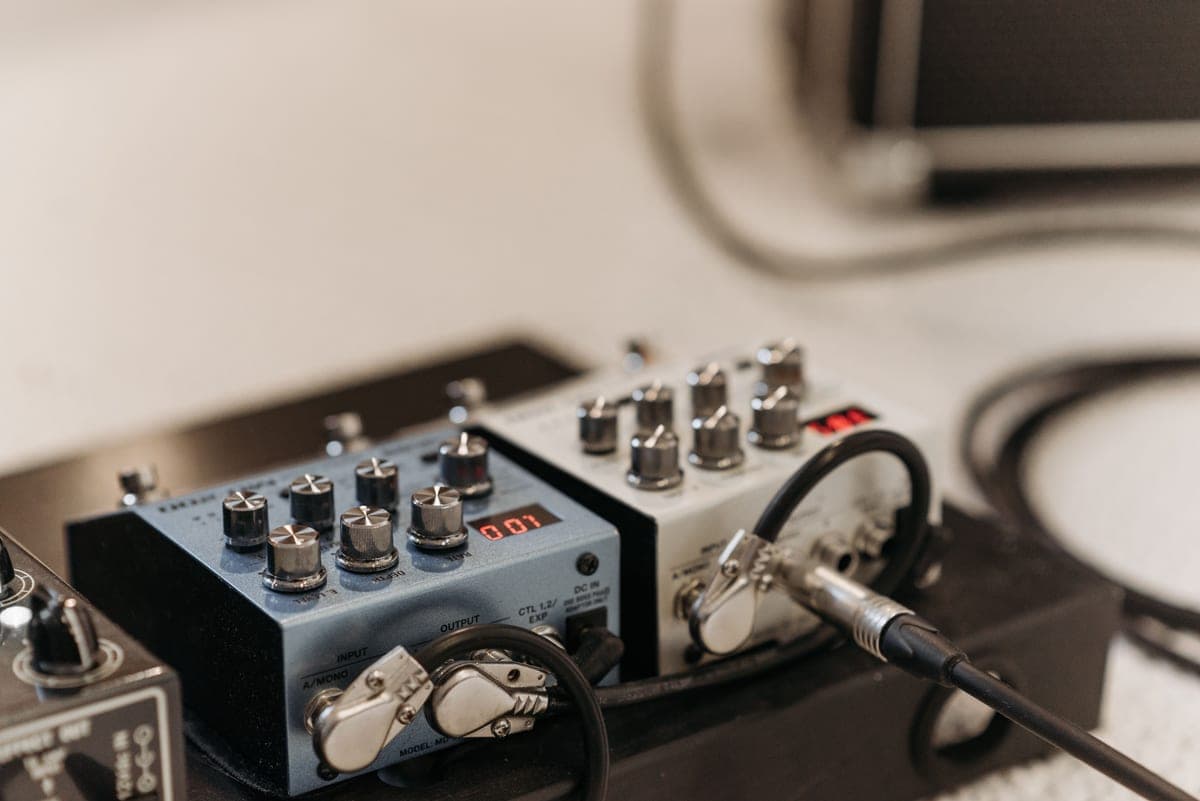
A compressor reduces the gap between your loudest and quietest notes. A boost raises everything by the same amount, leaving the gap intact. If your problem is uneven dynamics, you want a compressor. If your problem is that solos do not cut through a band, you want neither — you want an EQ change, which a mid-humped low-gain drive supplies better than either of these.
These two pedals get recommended for the same complaints and they are close to opposites. Getting the diagnosis right first saves buying the wrong one twice.
01What each one does to your dynamic range
| Compressor | Boost | |
|---|---|---|
| Loud notes | Turned down | Turned up |
| Quiet notes | Turned up relative to loud ones | Turned up by the same amount |
| Dynamic range | Reduced | Unchanged |
| Sustain | Increased — decaying notes get turned up | Unchanged |
| Noise floor | Raised | Raised |
| Effect on what follows | More consistent input level | Hotter input level |
Which one solves your problem
| # | Product | Best for | Price |
|---|---|---|---|
| 01 | 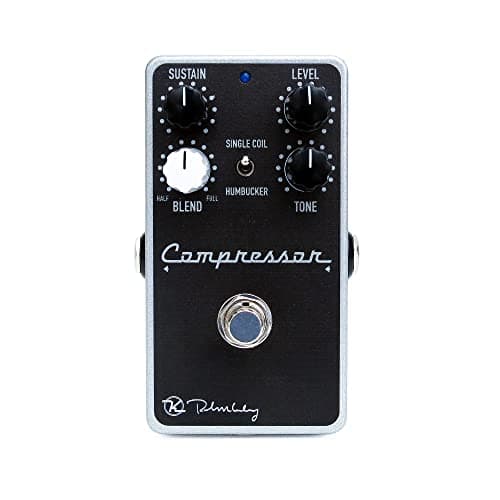 Keeley Compressor Plus Reduces the gap between your loudest and quietest notes, with a blend so the attack survives. | Uneven picking, or clean parts that need to sit still | $149.00 · Check price #ad How we’re funded · price as of October 17, 2026 |
| 02 | 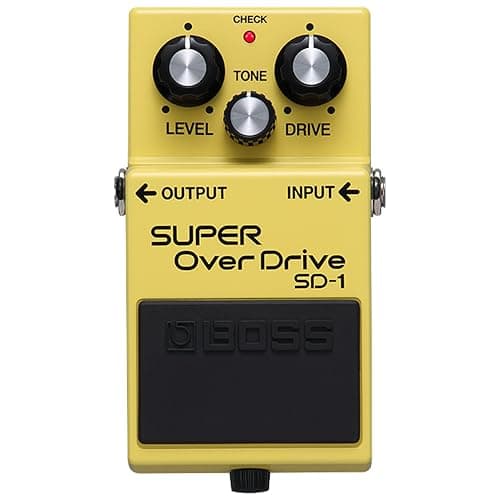 BOSS SD-1 Super Overdrive Mid-forward and lightly compressed — an EQ change is what makes you audible, not more volume. | A solo that needs to cut through a band | $69.99 · Check price #ad How we’re funded · price as of October 17, 2026 |
| ! | 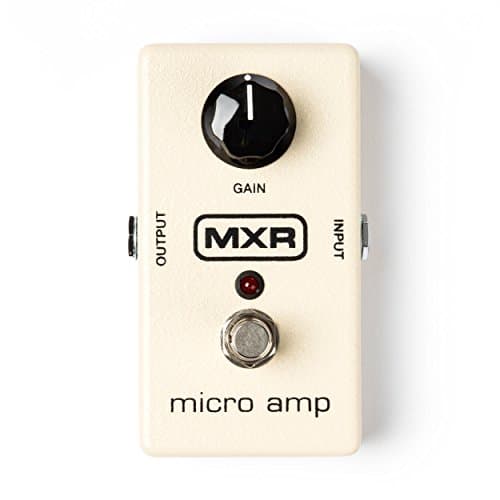 MXR Micro Amp Clean gain, no EQ, no compression — correct for a specific problem and wrong for the common one. Skip this one — see why below | The narrow case where flat gain is genuinely what you want | $105.99 · Check price #ad How we’re funded · price as of October 17, 2026 |
Rows link to the full write-up further down this page. Prices come from the live price layer only — where there is no live figure the button reads “Check price” rather than showing a remembered number.
03Diagnose the problem before you buy
- Some notes jump out, others vanish. That is dynamic range. A compressor.
- Clean arpeggios sound uneven. Dynamic range again, and the classic compressor use case.
- Notes do not sustain long enough. A compressor, because it turns a decaying note up as it falls.
- Solos do not cut through the band. An EQ problem, not a level problem. A mid-humped drive or an EQ pedal.
- The whole rig is too quiet. Amp volume. No pedal fixes an amp that is out of headroom.
- The amp needs pushing into breakup. A clean boost, and only if the amp is already close to its clipping point.
- Long cable run losing top end. A buffer, which many pedals already contain. Not a boost.
Keeley Compressor Plus
Uneven picking, or clean parts that need to sit still
If your problem is that some notes jump out and others disappear, that is a dynamic range problem and a compressor is the correct tool. A boost cannot help — it raises everything, so the gap stays exactly where it was.
The blend control is what makes this usable at settings that would flatten a two-knob compressor. Dry transient through, compressed sustain underneath.
It will raise your noise floor. That is inherent to compression, not a fault of this pedal — quiet signals get raised and hiss is a quiet signal.
| Controls | Sustain, Level, Blend and Tone knobs, plus a Release switch |
|---|---|
| Release switch | Two positions, which Keeley describes as tuned for single coils or humbuckers |
| Blend | Mixes the compressed signal against the dry signal for parallel compression |
| Current draw | 10 mA |
| Power | 9 V DC, center negative; Keeley also lists battery operation |
| Bypass | True bypass |
| Circuit | 100% analog |
| What it does not do | No attack knob, and release is a two-position switch set for pickup type rather than a continuous control — the blend knob is how you keep the transient, not a time constant. Keeley publishes the current draw but no impedance figures. |
Specs from Keeley Compressor Plus product page. We have not used this unit.
#ad How we’re funded · price as of October 17, 2026
BOSS SD-1 Super Overdrive
A solo that needs to cut through a band
The number10 mA. Cheapest reliable option on this page.
The most common reason people buy a boost is 'my solos do not cut through', and a flat boost is the wrong answer to that. Being audible in a mix is about occupying frequency space nothing else is using, which means mids.
A low-gain, mid-humped drive at a modest Drive setting is functionally an EQ-shaped level lift. That is what actually makes a lead jump forward.
10 mA, published specs, a five-year warranty. As a solo boost it is more effective and cheaper than most dedicated boost pedals.
| Controls | Drive, Tone, Level, pedal switch |
|---|---|
| Clipping | BOSS describes an asymmetrical clipping circuit |
| Input impedance | 1 M ohm |
| Output impedance | 1 k ohm |
| Current draw | 10 mA |
| Battery life | Approx. 60 h carbon-zinc, approx. 90 h alkaline |
| Size / weight | 73 x 129 x 59 mm, 360 g |
| What it does not do | No adaptor included and no true bypass. It is not a transparent overdrive — the mid hump is the whole point, so it will not sit invisibly under a clean amp. |
Specs from BOSS SD-1 specifications. We have not used this unit.
#ad How we’re funded · price as of October 17, 2026
MXR Micro Amp
The narrow case where flat gain is genuinely what you want
We are not picking this as a general answer. A flat clean boost solves a narrow set of problems: driving a long cable run, hitting a power amp harder, compensating for a low-output pickup, or pushing a valve amp already at the edge of breakup.
It does not make you cut through a mix, because cutting through is an EQ problem. It does not even out your dynamics, because it applies the same gain to loud and quiet notes alike.
If one of those four narrow cases is genuinely your case, this is a well-made pedal and it does exactly what it says. If you are not sure which case you are in, you probably want one of the two above.
| Controls | Single Gain control |
|---|---|
| Function | Clean gain boost with no tone shaping |
| Power | 9 V battery, Dunlop ECB003 adapter, or a DC Brick / Iso-Brick supply |
| Electrical data | No current-draw or impedance figure is published for this pedal, so none is stated here. |
| What it does not do | No EQ of any kind and no power supply included. A clean boost cannot fix a thin tone; it makes whatever follows it work harder. |
Specs from MXR Micro Amp product page. We have not used this unit.
04Why louder is not the same as audible
In a band, every instrument is competing for the same frequency space. A guitar that is not audible is usually not quiet — it is occupying a range that a keyboard, a second guitar or a vocal is also occupying, and the ear cannot separate them.
Raising the level of that guitar raises the whole clashing range together, which makes the mix louder without making the guitar clearer. Changing its EQ — pushing the mids so it sits where nothing else is — makes it audible at the same volume. That is why a Tube Screamer works as a lead boost and a flat boost does not, and it is covered properly in overdrive vs boost.
05Running both
Compressor early, boost later. The compressor evens out your input so everything downstream sees a consistent level; the boost is a moment-to-moment control you engage for a section.
One warning: a compressor in front of a boost in front of a distortion pedal is three stages each raising the noise floor. If you run that configuration you will want a gate, and you should check whether you actually need all three. Our Keeley Compressor Plus review covers the compressor side of that decision. If a compressor is the answer, MXR Dyna Comp vs BOSS CS-3 compares the two most often bought.
Frequently asked questions
+ Does a compressor make you louder?
+ Should I use a compressor or a boost for solos?
+ Can a boost pedal replace a compressor?
+ Where do they go in the chain?
Sources
Related on Fret & Fuzz
Keeley Compressor Plus review
The blend knob is the whole pedal, and the missing attack control is the reason it is easy to set. 10 mA, true bypass.
Top pick: Keeley Compressor Plus
#ad How we’re funded · price as of October 17, 2026
MXR Dyna Comp vs BOSS CS-3
Four knobs and an attack control against two knobs and a famous squash — and only one maker publishes any numbers.
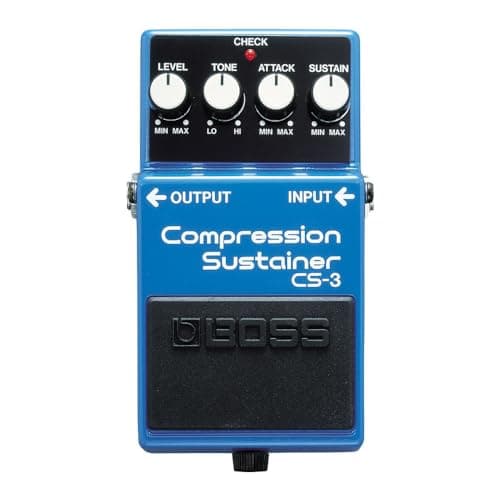
Top pick: BOSS CS-3 Compression Sustainer

Your solo disappears in a band — which pedal fixes it
Three different faults produce the same complaint. The diagnostic table first, then the pedal that fixes yours.
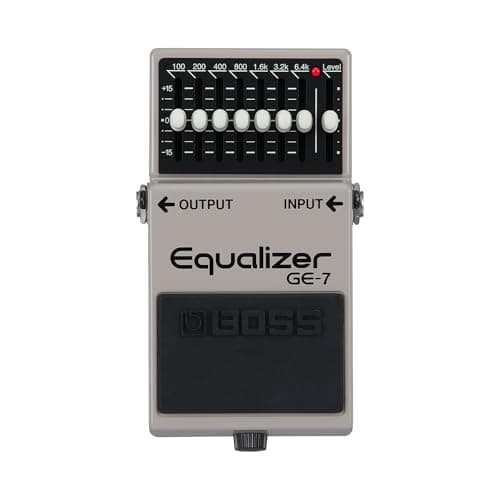
Top pick: BOSS GE-7 Equalizer
#ad How we’re funded · price as of October 17, 2026
Best compressor pedals
Blend is the control that decides whether a compressor squashes or supports. Three compressors compared on what they do and do not have.
Best Compressor pick: Keeley Compressor Plus
#ad How we’re funded · price as of October 17, 2026
Overdrive vs boost
A boost has three different results depending on what follows it. Work out which case you are in before you buy one.
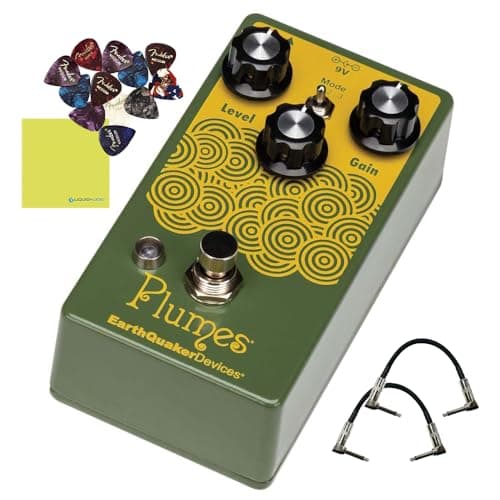
Top pick: EarthQuaker Devices Plumes
Pedal order: what changes and what does not
Two placements are load-bearing and the rest are preference. Which is which, and the impedance figures behind the first one.
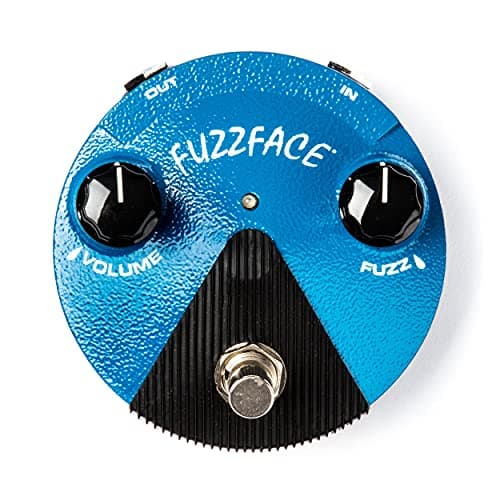
Top pick: Dunlop Fuzz Face Mini Silicon
#ad How we’re funded · price as of October 17, 2026
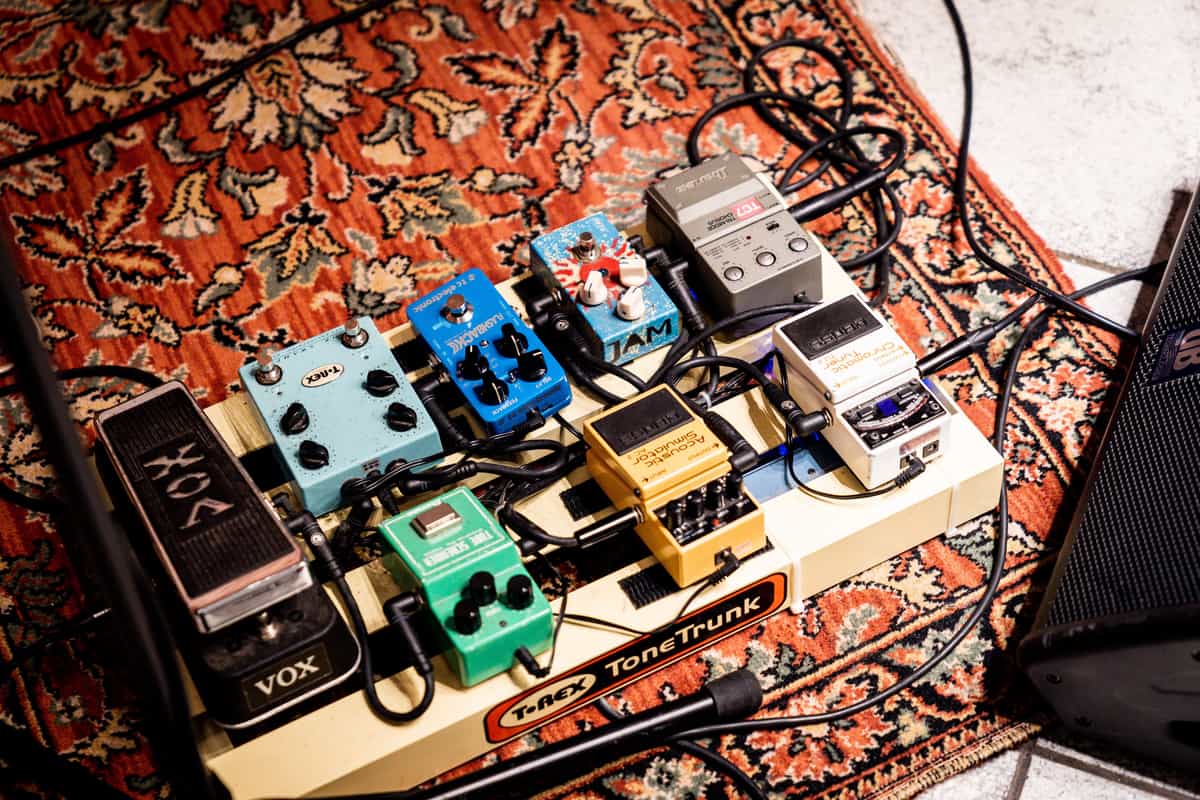
Best noise gate pedals
Which signal the gate listens to is the entire specification. Three gates compared, and the wiring that makes one of them work.
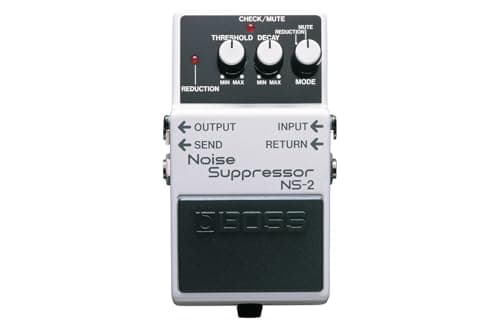
Best Noise Gate pick: BOSS NS-2 Noise Suppressor
#ad How we’re funded · price as of October 17, 2026