Best practice amps
A practice amp is judged on what it does at low volume and through headphones, which is not what any wattage figure tells you.
Fret & Fuzz earns a commission when you buy through the links on this page. It costs you nothing and it does not decide what we rank. How we’re funded.
We have not played this gear. Every pick below is chosen from published manufacturer specifications and the arithmetic set out in how we research, which you can re-run yourself.
A practice amp is judged on three things a wattage figure does not describe: how it sounds at low volume, whether the headphone output is usable, and whether it makes you practice more. Speaker size sets the ceiling on the first, speaker emulation decides the second, and features like Bluetooth audio and USB recording decide the third.
The wattage race at this end of the market is nearly meaningless. Every amp here is louder than a bedroom needs, and none of them can compete with a drummer.
Best practice amps
| # | Product | Best for | Price |
|---|---|---|---|
| 01 | 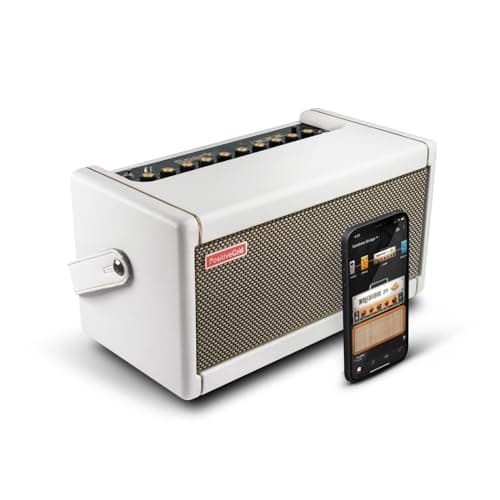 Positive Grid Spark 40 Bluetooth audio, a USB recording interface, 33 amp models and 43 effects in a 5.2 kg box. | Practicing with backing, at a desk | |
| 02 | 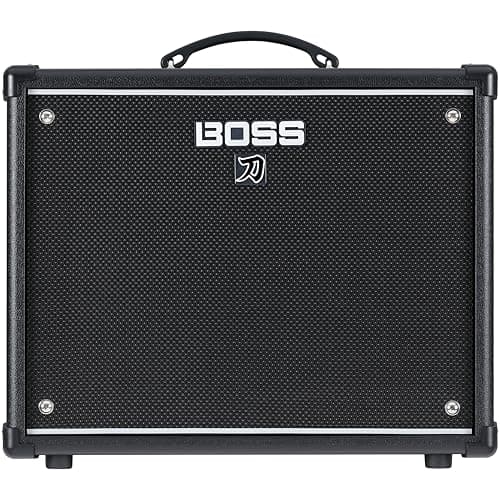 BOSS KATANA-50 GEN 3 A Power Control that steps to 0.5 W means 50 W and a 12-inch speaker can also be a bedroom amp. | A practice amp that also works with a band | |
| 03 | 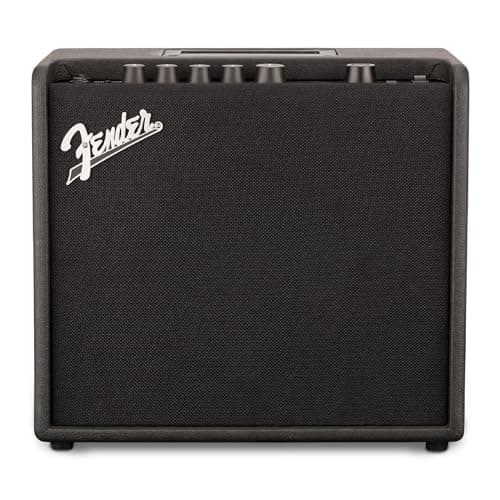 Fender Mustang LT25 30 user presets with a color display, editable from the front panel rather than through software. | Editable presets at the lowest price | |
| 04 | 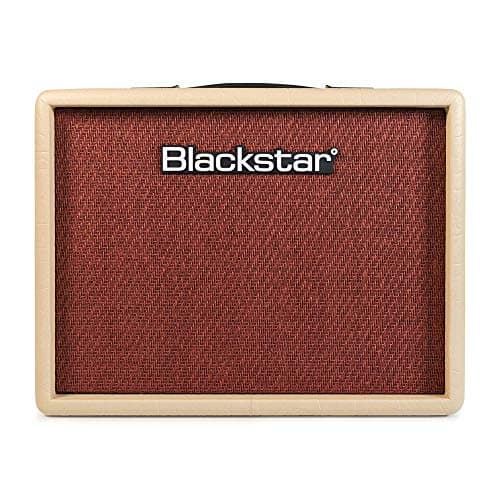 Blackstar Debut 15E 15 W with ISF tone shaping and a speaker-emulated line out for headphones or recording. | The smallest sensible amp with a usable line output | $139.95 · Check price #ad How we’re funded · price as of October 17, 2026 |
| ! | No photo Fender Champion 20 A capable and simple amp that is outgunned on features by everything else on this page. Skip this one — see why below | Not the best value at this price any more |
Rows link to the full write-up further down this page. Prices come from the live price layer only — where there is no live figure the button reads “Check price” rather than showing a remembered number.
02Published specs, side by side
| Amp | Power | Speakers | Headphone out | Recording | Weight |
|---|---|---|---|---|---|
| Positive Grid Spark 40 | 40 W class D | 2 x 4" | Yes, 1/8" | USB interface | 5.2 kg |
| BOSS KATANA-50 GEN 3 | 50 W | 1 x 12" | Stereo Phones | USB-C | 11.6 kg |
| Fender Mustang LT25 | 25 W | 1 x 8" | Yes | USB audio | Not published here |
| Blackstar Debut 15E | 15 W | 2 x 3" | Speaker-emulated line out | Line out | Not published here |
| Fender Champion 20 | 20 W | 1 x 8" | Yes | None | Not published here |
Where a weight is not shown, the manufacturer does not publish one in the material we could access.
03The speaker sets the ceiling
A 4-inch driver cannot reproduce low frequencies at any useful level, and no amount of amplifier power changes that. Two 4-inch drivers in the Spark move more air than one, and both together move less than a single 8, which moves far less than a 12.
This is why a 40 W class-D practice amp and a 15 W valve combo are not comparable products. The valve amp's 12-inch speaker is doing something the practice amp physically cannot. It is also why headphones are frequently the better practice output — through headphones you hear the modeling rather than the cabinet's limitations.
Positive Grid Spark 40
Practicing with backing, at a desk
The number40 W class D, 2 x 4" speakers, 350 x 180 x 190 mm, 5.2 kg.
Positive Grid publishes 40 W class D into two 4-inch speakers, 33 amp models, 43 effects, Bluetooth audio streaming and USB recording.
The Bluetooth audio is the feature that changes how much you practice. Playing along to a track through the same box you are playing through removes a step, and the amp doubles as a desk speaker.
Two 4-inch drivers is the ceiling on how big this can sound. It is a desk amp and it does not pretend to be a rehearsal amp.
| Power | 40 W class D |
|---|---|
| Speakers | 2 x 4" custom designed |
| Amp models | 33 |
| Effects | 43 — noise gate, compressor, distortion, modulation/EQ, delay, reverb |
| Connectivity | 1/4" guitar input, 1/8" aux in, 1/8" headphone, Bluetooth audio, USB recording interface |
| Size / weight | 350 x 180 x 190 mm, 5.2 kg |
| What it does not do | No effects loop and no external speaker output. The 4" drivers cannot move air the way a 12" can — this is a desk and sofa amp, not a rehearsal-room one. |
Specs from Positive Grid Spark 40 product page. We have not used this unit.
BOSS KATANA-50 GEN 3
A practice amp that also works with a band
The number50 W with Power Control at Standby / 0.5 W / Half / Max, 12-inch speaker, Stereo Phones jack.
This is the amp that solves the practice-amp problem by not being one. The Power Control is a four-position output-stage control — Standby, 0.5 W, Half and Max — so the amp behaves the same way at bedroom volume as it does at rehearsal, and the 12-inch speaker means it scales up later. A published 0.5 W setting is a far more useful figure than a vague promise of reduced output.
The Stereo Phones jack covers silent practice, and there is a USB-C port to a computer plus a slot for BOSS's Bluetooth adaptor.
The cons: it is 11.6 kg and considerably larger than anything else here, so if it genuinely never leaves a desk that is wasted capability and weight. There is no line or Rec Out on the 50 — phones or USB-C are the only ways off it — and the footswitch, expression pedal and Bluetooth adaptor are all sold separately.
| Rated power output | 50 W |
|---|---|
| Speaker | 30 cm (12") x 1 |
| Amp characters | Six — Acoustic, Clean, Pushed, Crunch, Lead and Brown — each with one selectable variation, which BOSS counts as 12 tones |
| Effects | Five simultaneous sections — Booster, Mod, FX, Delay and Reverb — with three variations each |
| Power Control | Standby, 0.5 W, Half and Max |
| Input impedance | INPUT -10 dBu (1 M ohm); AUX IN -10 dBu (20 k ohm) |
| Connectors | Input, Power Amp In, Stereo Phones, CTL CH1/CH2 SOLO (TRS), Exp Pedal (TRS), Aux In, USB-C and a Bluetooth adaptor slot |
| Power consumption | 47 W |
| Size / weight | 470 x 238 x 398 mm, 11.6 kg (25 lb 10 oz) |
| What it does not do | No effects loop and no line or Rec Out — the KATANA-100 GEN 3 has both, and on the 50 the only way off the amp is the Stereo Phones jack or USB-C. Nothing but the manual and a power cord is in the box: the FS-5L, FS-6 and FS-7 footswitches, the expression pedals and the BT-DUAL Bluetooth adaptor are all sold separately. |
Specs from BOSS KATANA-50 GEN 3 specifications. We have not used this unit.
Fender Mustang LT25
Editable presets at the lowest price
The number25 W solid state, 8" speaker, USB audio, 30 presets.
Fender publishes 25 W into an 8-inch speaker with 30 user-editable presets and a color display. The front-panel editing is the practical differentiator — most amps at this price require a computer.
USB audio for recording, headphone out and aux in cover the practice-room requirements.
No effects loop, no Bluetooth. The 8-inch speaker is the honest limitation: the modeling is better than the box it comes out of, which is an argument for using headphones.
| Power | 25 W, solid state |
|---|---|
| Speaker | 8" |
| Presets | 30 user-editable presets with a color display |
| Models | Amp models and effects editable from the front panel or over USB |
| Connectivity | USB audio for recording, headphone out, aux in |
| What it does not do | No effects loop and no Bluetooth. The onboard speaker is the weak link — the modeling is better than the box it comes in, which is an argument for headphones. |
Specs from Fender Mustang LT25 product page. We have not used this unit.
Blackstar Debut 15E
The smallest sensible amp with a usable line output
Blackstar's ISF control sweeps continuously between an American and a British tone character, which is more useful on a two-voice amp than a conventional mid control would be.
The line out is speaker-emulated, so headphone practice does not sound like a buzzsaw and recording direct is viable.
Two 3-inch speakers is small even in this company. It is a bedroom amp and a very portable one.
| Power | 15 W, solid state |
|---|---|
| Speakers | 2 x 3" |
| Voices | Clean and Overdrive with Blackstar's ISF tone control |
| Extras | Tape delay effect, headphone/line out with speaker emulation, aux in |
| What it does not do | The 3" speakers are small even by practice-amp standards. There is no effects loop and no USB. |
Specs from Blackstar Debut 15E product page. We have not used this unit.
#ad How we’re funded · price as of October 17, 2026
Fender Champion 20
Not the best value at this price any more
We are not picking this one, and it is a perfectly good amp. Fender publishes 20 W into an 8-inch speaker with a voice selector and built-in reverb, delay, chorus, vibratone and tremolo.
The problem is what the same money buys elsewhere. It has no USB recording, no Bluetooth, no editable presets and no speaker-emulated output, all of which are available at or near this price.
If you want the simplest possible amp with no menus at all, that simplicity is a genuine feature and this delivers it. If you want practice tools, everything above does more.
| Power | 20 W, solid state |
|---|---|
| Speaker | 8" Fender Special Design |
| Voices | Amp voice selector with a set of Fender and modern voicings |
| Effects | Built-in reverb, delay, chorus, vibratone, tremolo |
| Outputs | Headphone out, auxiliary in |
| What it does not do | No effects loop, no USB recording, no XLR. The 8" speaker is the ceiling on how big this can ever sound. |
Specs from Fender Champion 20 product page. We have not used this unit.
04The feature that actually matters
Whatever makes you pick the guitar up. That is not a soft consideration — a practice amp's entire value is the practicing it enables, and the features that reduce friction do more for your playing than any tonal difference at this price.
- Bluetooth audio — playing along with a track through the same box, with no extra setup.
- A usable headphone output with speaker emulation — practice at any hour without it sounding harsh.
- USB recording — hearing yourself back is the fastest way to find what needs work.
- Front-panel preset editing — an amp that needs a laptop to change a sound gets its sounds changed less.
- Low weight — an amp that moves between rooms gets played in more of them.
05Should you buy a valve practice amp
Probably not. A 5 W valve amp is still far too loud to run its power section at a level where the valves are doing anything interesting, in any room where someone else lives. You end up with a quiet amp that is not doing the thing you bought valves for.
If you want valve character at bedroom volume, the honest options are an attenuator or a load box, and both cost more than the amps on this page. Attenuator vs master volume has the arithmetic. If most of your playing will end up in headphones or a DAW anyway, the prior question is whether you want an amp at all — practice amp vs audio interface works through it. The winner of this page also has a review of its own: Positive Grid Spark 40. The runner-up does too: our Katana-50 Gen 3 review.
Frequently asked questions
+ What is the best practice amp?
+ How many watts do I need for a practice amp?
+ Are tube practice amps worth it?
+ Can I use a practice amp for a gig?
Sources
Related on Fret & Fuzz
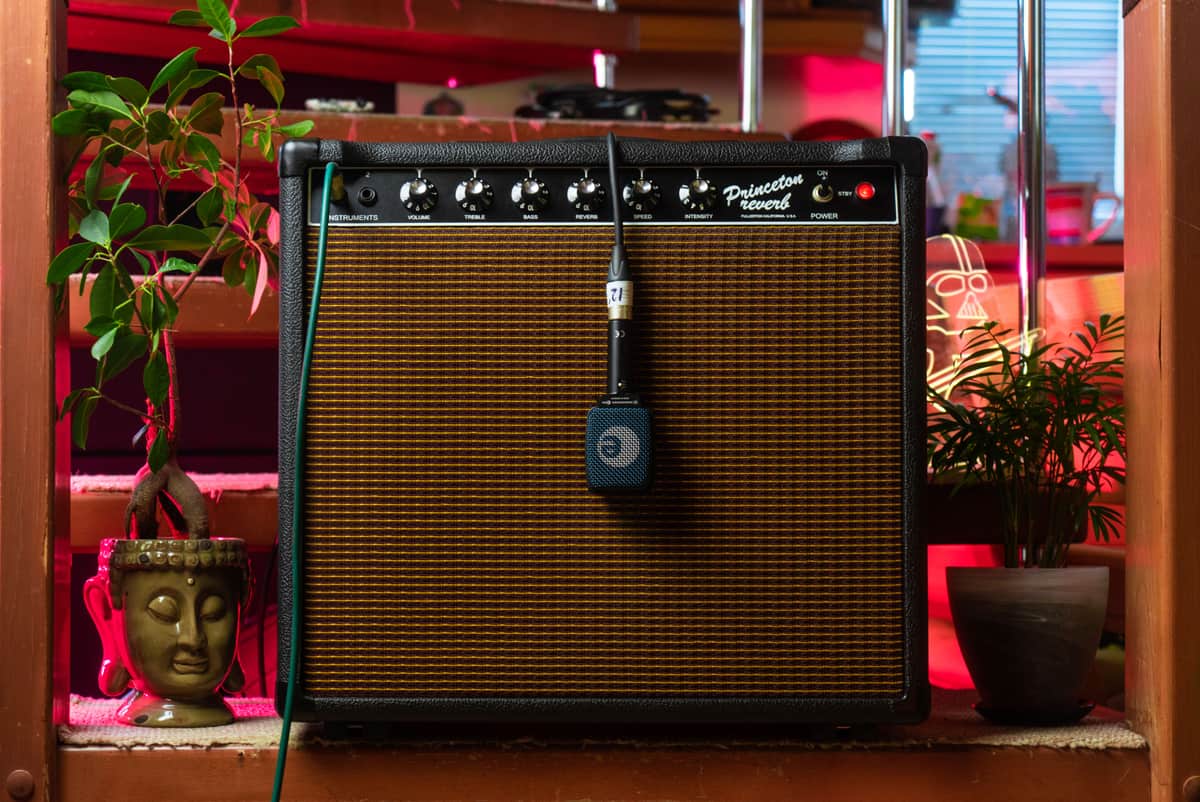
BOSS Katana-50 Gen 3 review
A published 0.5 W position and a 12-inch speaker, against no effects loop and no line out at all.
Top pick: BOSS KATANA-50 GEN 3
Positive Grid Spark 40 review
33 models, Bluetooth and a USB interface in a 5.2 kg box. Two 4-inch drivers decide everything it can and cannot do.
Top pick: Positive Grid Spark 40
Practice amp vs audio interface
Sound in the room against sound in headphones. What each route publishes, and the one box that does both.
Top pick: Positive Grid Spark 40
Best guitar amps
Wattage, speaker, tubes and power reduction — the four published figures that decide an amp, with five amps compared on them.
Best Amp Overall pick: BOSS KATANA-50 GEN 3
Tube vs solid state amps
Reframed as a question about where the distortion happens, this argument has a clear answer for any given player.
Top pick: BOSS KATANA-50 GEN 3
Attenuator vs master volume
Halving power costs 3 dB. That one fact explains why a low-wattage amp is not a quiet amp, with the full table.
Top pick: Two Notes Torpedo Captor X
Pedals vs multi-effects
Power, interface and failure mode decide this, not tone. Including the 3 A requirement no pedalboard brick can meet.
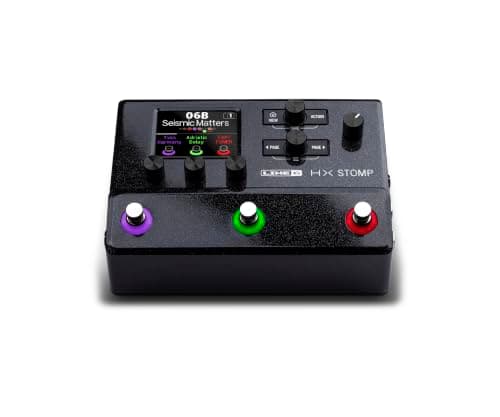
Top pick: Line 6 HX Stomp
#ad How we’re funded · price as of October 17, 2026