Best guitar pedals for blues
The only genre on this site where the highest compliment a pedal can earn is that you stop noticing it.
Fret & Fuzz earns a commission when you buy through the links on this page. It costs you nothing and it does not decide what we rank. How we’re funded.
We have not played this gear. Every pick below is chosen from published manufacturer specifications and the arithmetic set out in how we research, which you can re-run yourself.

Judge a blues pedal on one thing: how much of your dynamic range survives it. Buy the BOSS BD-2 if you want grit without an EQ curve, the Ibanez TS9 if your amp is already breaking up and needs tightening, a compressor with a blend control before you buy a second drive, and a short analog delay for slapback. Skip anything that will not clean up when you roll your guitar volume back.
Every other genre cut on this site is about adding something. This one is mostly about subtraction, and that changes which specifications matter.
01The criteria, before any product
| Criterion | Why blues specifically | What to look for |
|---|---|---|
| Cleans up on the volume knob | The volume knob is the main expressive control in this style | Discrete gain stages; low to moderate maximum gain |
| Flat mids, or a deliberate hump | One gets out of the amp's way, the other pushes a solo — know which you want | Published tone-stack behavior, not a marketing adjective |
| Low maximum gain | High gain compresses away the dynamics the idiom runs on | A drive that stops at crunch rather than reaching distortion |
| Compression with a blend | Clean playing exposes uneven picking; sustain has to survive a long bend | A blend or mix control, not just sustain and level |
| Short delay | Slapback thickens a lead; a long wash buries it | 600 ms is plenty — tap tempo is not needed here |
| True bypass or a known buffer | Vintage fuzz and wah are common on these boards and both are placement-sensitive | Published bypass type |
Nothing in that table is about how a pedal sounds in isolation, because in this style almost nothing is used in isolation — it is used at three different guitar-volume settings inside the same song.
Best pedals for blues
| # | Product | Best for | Price |
|---|---|---|---|
| 01 | 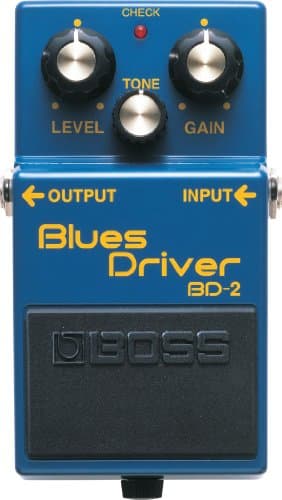 BOSS BD-2 Blues Driver Discrete gain stages rather than diodes in a feedback loop — flat mids, and it genuinely cleans up on the volume knob. | The drive that does the least, on purpose | $109.99 · Check price #ad How we’re funded · price as of September 13, 2026 |
| 02 | 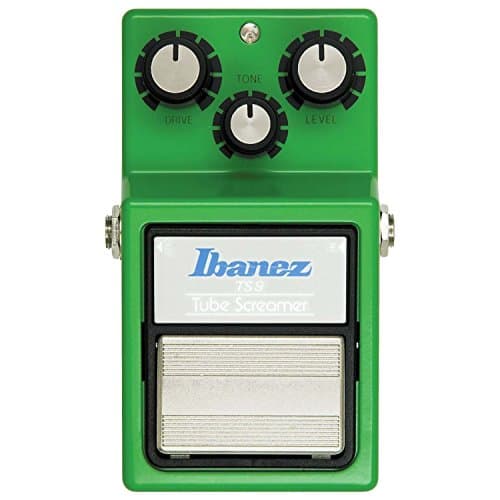 Ibanez TS9 Tube Screamer The mid hump and the bass rolloff are the point — it tightens a loose amp rather than adding a voice. | Pushing an amp that is already breaking up | $99.99 · Check price #ad How we’re funded · price as of September 13, 2026 |
| 03 | 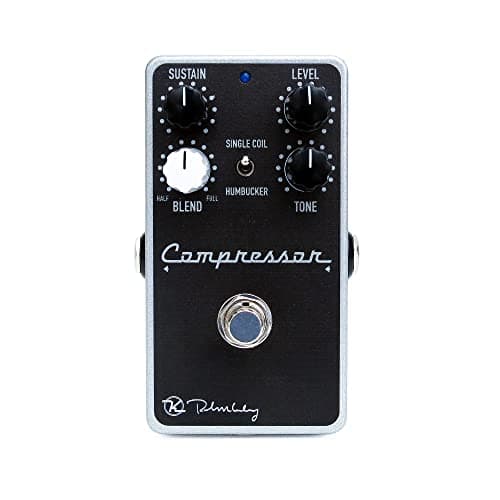 Keeley Compressor Plus A blend control, so the pick attack survives while the sustain comes up. | The pedal that fixes the thing you actually notice | $149.00 · Check price #ad How we’re funded · price as of September 13, 2026 |
| 04 | 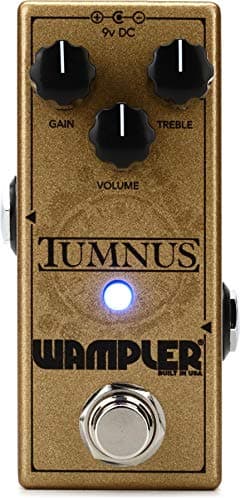 Wampler Tumnus A clean path running parallel to the clipped one, so the amp's own character survives the boost. | Lifting a solo without changing the tone | $149.38 · Check price #ad How we’re funded · price as of September 13, 2026 |
| 05 | 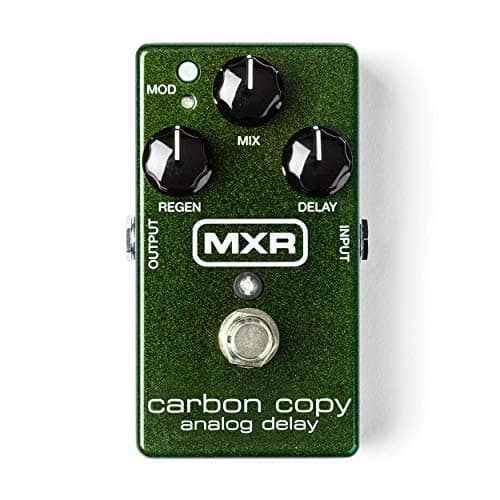 MXR Carbon Copy Analog Delay All-analog bucket-brigade delay with a 600 ms ceiling and repeats that darken by design. | Slapback, and nothing more ambitious | $159.99 · Check price #ad How we’re funded · price as of September 13, 2026 |
| ! | 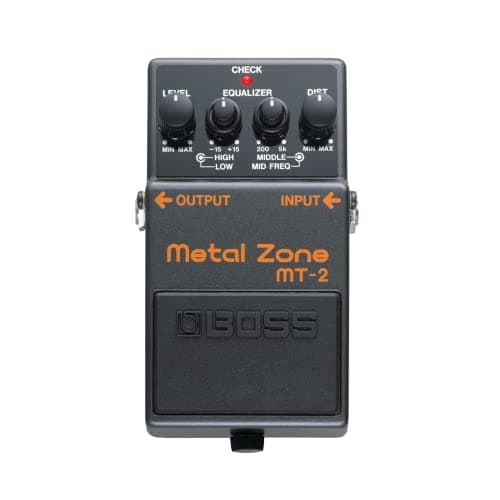 BOSS MT-2 Metal Zone A high-gain parametric-EQ distortion, on a board that needs almost no gain at all. Skip this one — see why below | Not this style, and it gets bought for it anyway | $107.20 · Check price #ad How we’re funded · price as of September 13, 2026 |
Rows link to the full write-up further down this page. Prices come from the live price layer only — where there is no live figure the button reads “Check price” rather than showing a remembered number.
03The two drive traditions, and which one you want
There are only two real answers to the blues drive question and they are opposites. A transparent drive like the Blues Driver adds grit while leaving your amp's frequency response alone. A mid-humped drive like the Tube Screamer imposes a curve: less bass, more mids, more compression.
Which one is right depends entirely on what your amp is already doing. If the amp has a clean tone you like, you want the transparent one — you are adding, not correcting. If the amp is already overdriven and sounds loose or flubby, you want the Tube Screamer, because cutting bass before the amp's input is what tightens it. Buying the wrong one of those two is the most common mistake in this category, and it is not a quality difference. Tube Screamer vs Blues Driver puts the two side by side properly.
BOSS BD-2 Blues Driver
The drive that does the least, on purpose
The number1 M ohm in, 1 k ohm out, 20 mA. All published by BOSS.
Blues playing lives on the guitar volume knob. You roll back for a verse and forward for a solo, and the pedal has to follow that rather than flatten it. The Blues Driver does, because its gain comes from discrete stages rather than from clipping diodes inside an op-amp's feedback loop — the frequency response stays flat through the mids and a great deal of dynamic range survives.
That flatness is the feature here. It adds grit to an amp you already like without imposing an EQ curve on top, which is exactly the brief in this style and exactly the wrong brief for metal.
The cons, and one of them is specific to this page. BOSS publishes no mid control, and the pedal is deliberately flat — so if your problem is a solo that vanishes under a band, this is the wrong tool and the EQ further down is the right one. No adaptor in the box, and it is buffered rather than true bypass, which matters if a vintage fuzz is going in front of it.
| Controls | Gain, Tone, Level, pedal switch |
|---|---|
| Input impedance | 1 M ohm |
| Output impedance | 1 k ohm |
| Current draw | 20 mA |
| Power | 9 V battery (6F22 / 6LR61) or PSA-series adaptor |
| Size / weight | 73 x 129 x 59 mm, 360 g |
| What it does not do | No adaptor in the box, no true bypass, and no mid control. The BD-2 is deliberately flat through the mids — if you want a mid hump to push a solo, this is the wrong pedal. |
Specs from BOSS BD-2 specifications. We have not used this unit.
#ad How we’re funded · price as of September 13, 2026
Ibanez TS9 Tube Screamer
Pushing an amp that is already breaking up
The number8 mA at 9 V — the lowest draw on this page.
The other half of the blues drive tradition. A Tube Screamer cuts bass, humps the mids and compresses, and into a cranked amp that combination tightens the low end and pushes the midrange forward where a solo can be heard. It is the sound on a very large number of records and it is not subtle about being a specific EQ curve.
At 8 mA it is the cheapest pedal here to power, and Ibanez publishes that figure, which not every maker does.
The cons: the mid hump is not defeatable, so on a clean amp it sounds honky rather than transparent — this is a pedal for pushing an amp, not for being the amp. The tone stack is a single treble-tilt knob over a fixed mid hump, there is no bass control, Ibanez publishes no impedance figures, and the TS9 is buffered rather than true bypass with no supply in the box.
| Controls | Drive, Tone, Level |
|---|---|
| Current draw | 8 mA at 9 V |
| Power | One 9 V battery (006P) or a 9 V DC center-negative adapter |
| Jack layout | Input on the right side, output on the left |
| Impedance | Not published by Ibanez |
| What it does not do | No power supply in the box, no true bypass (the TS9 is buffered), and no bass control — the tone stack is a single treble-tilt knob over a fixed mid hump. |
Specs from Ibanez TS9 product page. We have not used this unit.
#ad How we’re funded · price as of September 13, 2026
Keeley Compressor Plus
The pedal that fixes the thing you actually notice
Clean blues playing exposes uneven picking in a way distortion hides, and a held bend that dies before the phrase ends is the most common complaint in this style. Both are compressor problems.
The blend knob is what makes this usable at settings that would flatten a two-knob compressor: the dry transient passes at full strength while the compressed signal fills in behind it, so you keep the attack that makes a note sound picked. The single-coil / humbucker switch matters too, because a compressor set for a Strat over-compresses a Les Paul.
The cons: no attack or release control — the blend knob is how you preserve the transient, not a time constant. No battery compartment, no supply in the box, and Keeley publishes no electrical figures, so you cannot budget a shared supply output for it without measuring.
| Controls | Sustain, Level, Blend, Tone, single-coil / humbucker switch |
|---|---|
| Blend | Mixes the compressed signal against the dry signal for parallel compression |
| Power | 9 V DC center-negative |
| Electrical data | No current-draw or impedance figure is published for this pedal, so none is stated here. |
| What it does not do | No battery compartment and no power supply included. There is no attack or release control — the blend knob is how you keep the transient, not a time constant. |
Specs from Keeley Compressor Plus product page. We have not used this unit.
#ad How we’re funded · price as of September 13, 2026
Wampler Tumnus
Lifting a solo without changing the tone
The number20 mA at 9 V, buffered bypass, no battery connection.
A Klon-style circuit mixes a clean path alongside the clipping path, so what you add sits on top of your amp rather than replacing it. At low Gain it is a treble-forward clean boost, which is the setting most blues players actually use it at, and it stacks in front of a driven amp without turning the whole thing to mud.
It is the least dramatic pedal on this page and the one most likely to stay on.
The cons: one tone control rather than an EQ section, no battery option at all, and it is buffered — fine here, and worth knowing if a vintage fuzz ever joins the board. It also cannot make a dark amp bright on its own; it lifts treble and mids around what is already there.
| Controls | Level, Gain, Treble |
|---|---|
| Current draw | 20 mA at 9 V |
| Power | 9 V DC jack only — no battery connection |
| Bypass | 3PDT buffered bypass |
| Size | 1.5 x 3.5 x 1.5 in (38.1 x 88.9 x 38.1 mm), excluding knobs |
| What it does not do | One tone control, not a full EQ, and no battery option. It cannot make a dark amp bright on its own — it lifts treble and mids around what is already there. |
Specs from Wampler Tumnus product page. We have not used this unit.
#ad How we’re funded · price as of September 13, 2026
MXR Carbon Copy Analog Delay
Slapback, and nothing more ambitious
The number600 ms maximum delay, true bypass.
The delay this style wants is short, dark and nearly subliminal — a slapback that thickens a lead line without anyone identifying it as an effect. That is precisely what a bucket-brigade delay does well, because each repeat loses top end and sits further back than the one before it.
MXR publishes an all-analog signal path, true bypass and two internal trim pots for modulation width and rate, so you can add a little wobble to the repeats without a second pedal.
The cons are the ceiling and the controls. 600 ms is the limit, there is no tap tempo and no presets, so a long ambient wash is not available at any setting. The repeats darken by design and cannot be made bright. Dunlop publishes no current-draw figure, which is the usual gap with this maker.
| Maximum delay | 600 ms |
|---|---|
| Controls | Delay, Mix, Regen, plus a modulation footswitch |
| Modulation | Two internal trim pots set modulation width and rate |
| Signal path | All-analog bucket-brigade delay |
| Bypass | True bypass |
| Power | 9 V battery, Dunlop ECB003 adapter, or a DC Brick / Iso-Brick supply |
| Current draw | Not published by Dunlop |
| What it does not do | 600 ms is the ceiling — there is no tap tempo, no presets, and no way to get a long ambient wash out of it. Repeats darken by design and cannot be made bright. |
Specs from MXR Carbon Copy product page. We have not used this unit.
#ad How we’re funded · price as of September 13, 2026
BOSS MT-2 Metal Zone
Not this style, and it gets bought for it anyway
We are not picking this one, and it is not a bad pedal. The MT-2 has more tone-shaping than any other BOSS compact dirt pedal — three bands plus a sweepable mid frequency — and the parametric mid is a genuinely useful control.
It is here because it is what gets bought when a player decides their blues lead does not stand out. In this style it almost never is a gain problem. More gain compresses away the dynamic range that the whole idiom is built on, and a pedal that will not clean up on the volume knob takes your main expressive control away.
What actually makes a blues lead audible is a midrange lift and a little more level — the Tumnus above, or an EQ. If you want a genuine high-gain sound, the distortion roundup is the right page and this pedal is on it.
| Controls | Level, High, Low, Middle, Middle Freq (parametric), Dist |
|---|---|
| EQ | Three-band with a sweepable mid frequency — the most EQ on any BOSS compact dirt pedal |
| Power | 9 V battery or PSA-series adaptor |
| Electrical data | No current-draw or impedance figure is published for this pedal, so none is stated here. |
| What it does not do | No adaptor included. The factory mid-scooped setting is the one everybody hears and nobody should use — the parametric mid is the reason to own it, not an extra. |
Specs from BOSS MT-2 product page. We have not used this unit.
04Order, and the one placement that matters
Compressor, then drive, then delay is the conventional order and it is the right one here. The compressor evens out what the drive then clips, so the drive behaves consistently; putting it after the drive mostly raises the noise floor.
The placement that actually catches people is the buffer. Three of the five picks above are buffered rather than true bypass, which is fine on a board of drives and delays and a problem the moment a vintage-style fuzz or a wah joins it — both expect to see your pickups directly. If you add a Fuzz Face to this board and it stops cleaning up, that is why. Fuzz and buffers covers the mechanism and pedal order covers the rest of the chain.
05What this board does not need
- A second drive pedal. One drive plus a clean boost covers the whole range this style asks for. Two drives mostly compound each other's compression.
- High gain. Covered above and worth repeating, because it is the single most common wrong purchase here.
- A long delay. Slapback thickens; a half-second wash competes with the phrase you just played.
- Reverb, usually. Most amps in this idiom already have spring reverb, and it is the right kind. Reverb types explained covers when it is not.
- A noise gate. At these gain levels there is very little noise to gate, and a gate would clip the tail of every bend.
06The amp matters more here than the pedals
This is the genre where that is most true. The pedals above are all modifiers of an amp's own breakup, so an amp that never breaks up at a usable volume limits every one of them. If your amp stays clean at every volume you can actually play at, the honest recommendation is to fix that first.
Pedal or amp? works through that decision with the arithmetic, and best tube amps under $1,000 covers the amps most likely to suit this style if the answer turns out to be the amp.
Frequently asked questions
+ What pedals do I need for blues?
+ Tube Screamer or Blues Driver for blues?
+ Do I need a compressor for blues?
+ Why does my blues lead disappear in a band?
Sources
Related on Fret & Fuzz
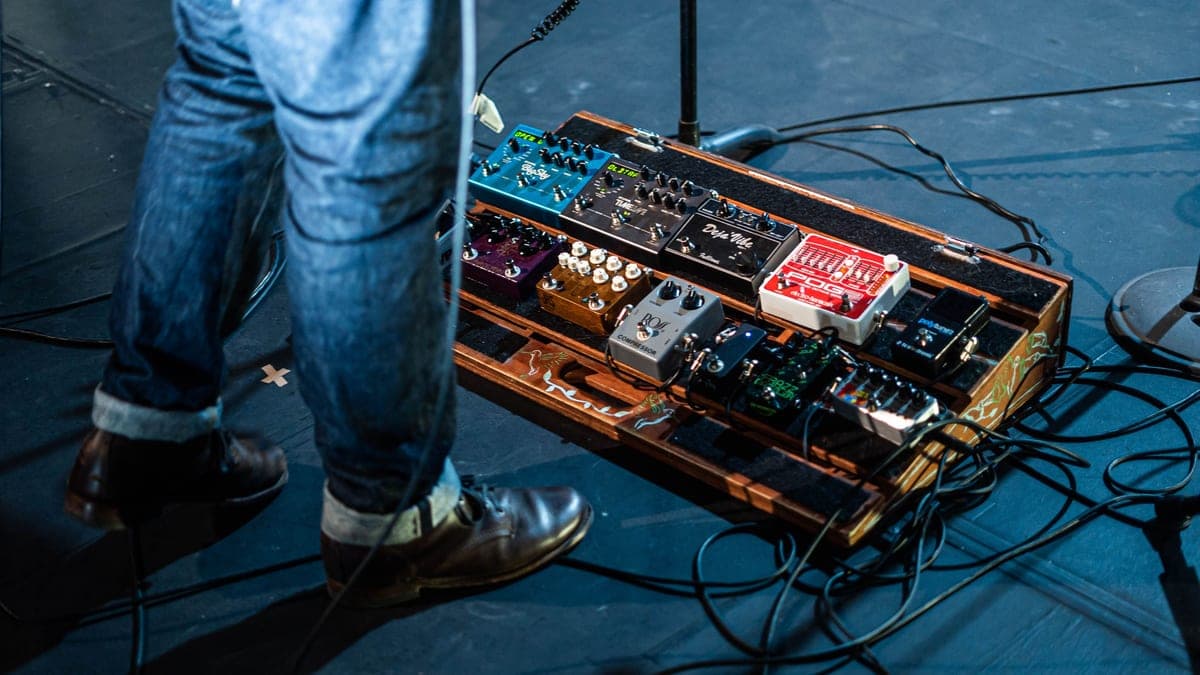
Tube Screamer vs Blues Driver
Mid hump versus flat response, with both spec sheets side by side and a straight answer about which your amp wants.
Top pick: BOSS BD-2 Blues Driver
#ad How we’re funded · price as of September 13, 2026
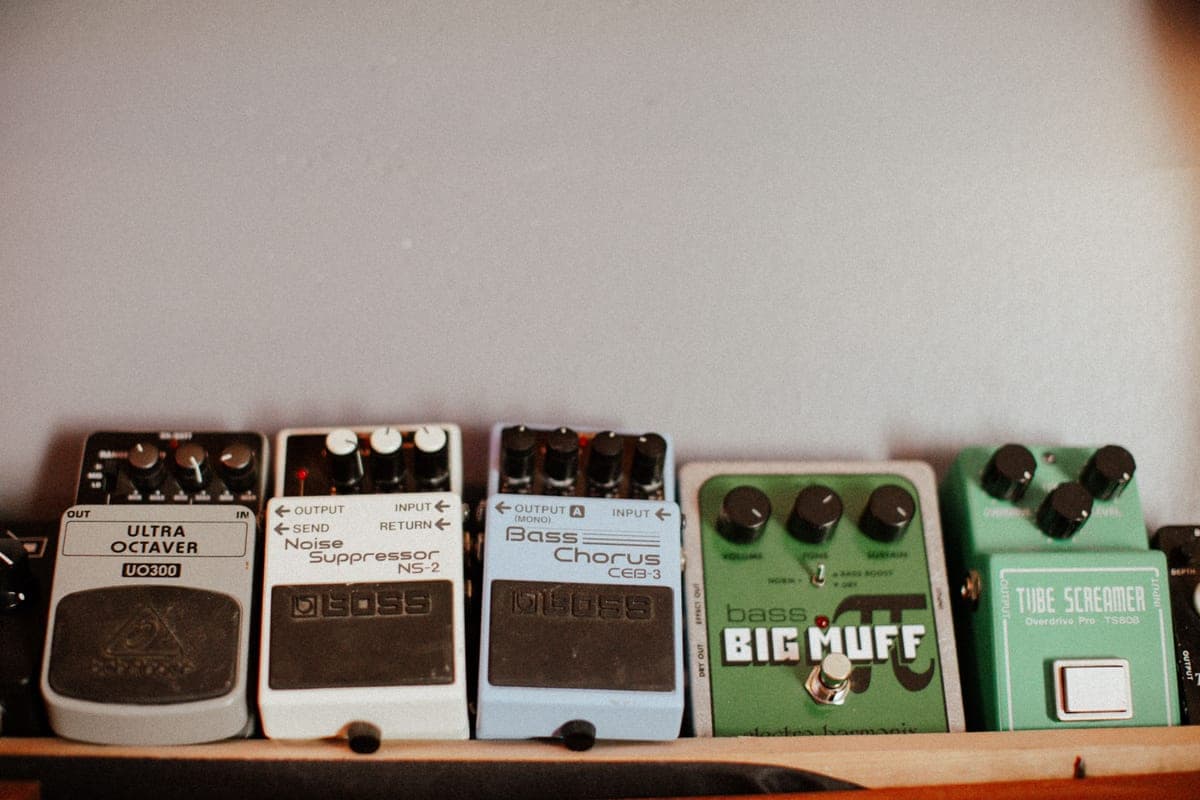
Best overdrive pedals
Six overdrives sorted by circuit family, with the published clipping topology and impedance figures that separate them.
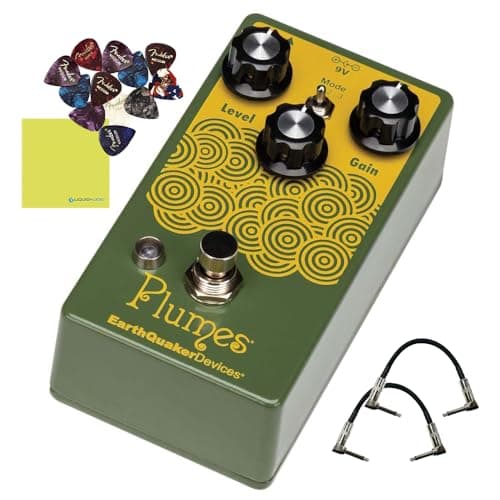
Best Overdrive pick: EarthQuaker Devices Plumes
#ad How we’re funded · price as of September 13, 2026
Best compressor pedals
Blend is the control that decides whether a compressor squashes or supports. Three compressors compared on what they do and do not have.
Best Compressor pick: Keeley Compressor Plus
#ad How we’re funded · price as of September 13, 2026
Analog vs digital delay
Why analog repeats darken, what the published time ceilings are, and which format your parts need.
Top pick: MXR Carbon Copy Analog Delay
#ad How we’re funded · price as of September 13, 2026
Should you upgrade the pedal or the amp?
One five-minute test with the pedals switched off decides it. Plus the cost comparison nobody totals up.
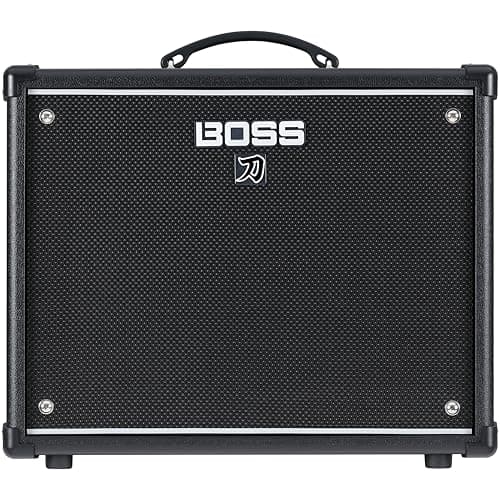
Top pick: BOSS KATANA-50 GEN 3
#ad How we’re funded · price as of September 13, 2026