Your pedalboard hums — which fix actually works
Five different faults produce the same noise, and the pedal most people buy for it treats the symptom of only one.
Fret & Fuzz earns a commission when you buy through the links on this page. It costs you nothing and it does not decide what we rank. How we’re funded.
We have not played this gear. Every pick below is chosen from published manufacturer specifications and the arithmetic set out in how we research, which you can re-run yourself.
Diagnose before you buy. A hum that appears when you add a digital pedal to a daisy chain is a ground loop and needs an isolated supply. Hiss between phrases at high gain is a gate's job. A buzz that changes when you touch a cable is a failing patch cable. A hum that gets quieter when you turn away from your amp is single-coil pickup noise, and no pedal on earth fixes it.
Noise is the one pedalboard problem where the wrong purchase is almost guaranteed, because five unrelated faults produce a sound most players describe with the same word. The gate is the pedal people buy first and it only addresses one of them.
01Step 1 — the two-minute diagnostic
| What you observe | What it is | What fixes it |
|---|---|---|
| Hum appeared when you added a digital pedal to a daisy chain | Ground loop through the shared supply | An isolated power supply |
| Hiss between phrases, worse with more gain | Noise floor amplified by gain stages | A noise gate, ideally using its send/return loop |
| Buzz changes or crackles when you touch or move a cable | A failing patch cable or jack | Replace the cable — the cheapest fix here |
| Hum gets quieter when you turn your body away from the amp | Single-coil pickup picking up magnetic fields | Nothing on your board. Move, or change pickups |
| Buzz stops when you touch the strings | Grounding through you — normal, or a wiring fault | Usually normal; persistent cases are a guitar wiring job |
| Noise persists with the board entirely unplugged from it | The amp, the room or the mains supply | Not a pedalboard problem at all |
Run that list before spending anything. The last two rows in particular save money: if the noise is still there with the pedalboard disconnected, nothing you buy for the board will change it.
What to buy once you know which fault you have
| # | Product | Best for | Price |
|---|---|---|---|
| 01 | 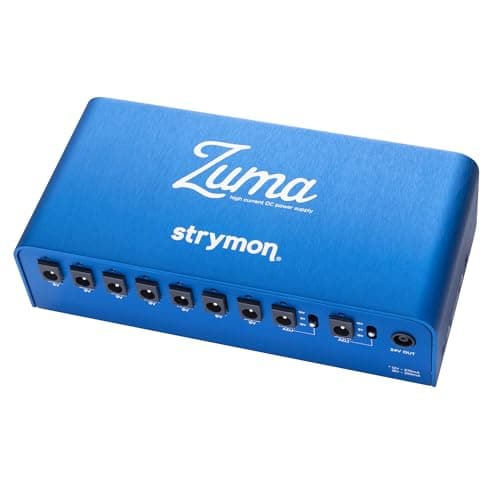 Strymon Zuma Nine outputs, each on its own transformer, so no two pedals share a ground path. | Ground-loop hum, which is the most common cause | $279.00 · Check price #ad How we’re funded · price as of September 13, 2026 |
| 02 | 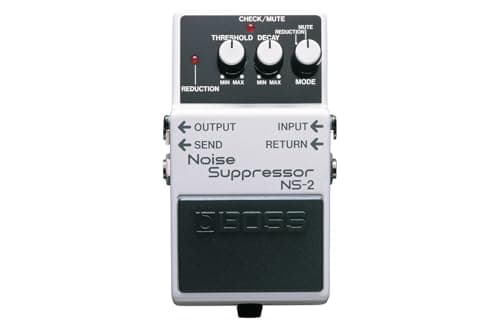 BOSS NS-2 Noise Suppressor A send/return loop that lets the gate watch your guitar while muting the noisy pedal's output. | High-gain hiss, using the loop that most people ignore | $116.50 · Check price #ad How we’re funded · price as of September 13, 2026 |
| 03 | 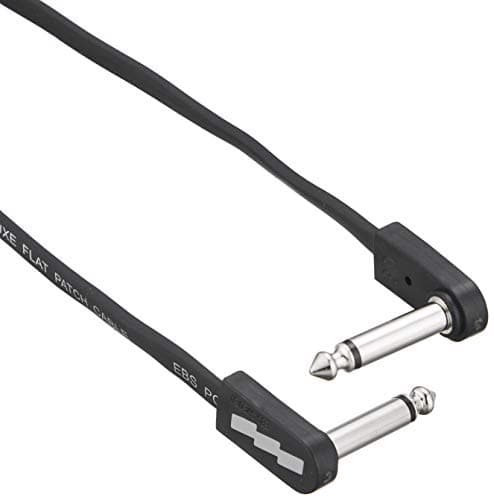 EBS Flat patch cables Molded flat plugs — the cheapest fix on this page, and the most likely actual cause. | Intermittent buzz that moves when you touch a cable | $15.36 · Check price #ad How we’re funded · price as of September 13, 2026 |
| 04 | No photo ISP Technologies Decimator II Noise Reduction Envelope-tracking rather than a fixed threshold, so it closes without chopping the tail of a note. | The quietest gate, if you accept one knob | |
| ! | 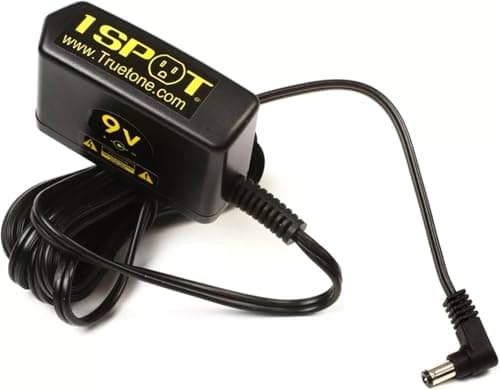 Truetone 1 SPOT A single non-isolated output splitting one rail across every pedal — the classic ground-loop source. Skip this one — see why below | Not the fix, and it is what most boards already have | $27.99 · Check price #ad How we’re funded · price as of September 13, 2026 |
Rows link to the full write-up further down this page. Prices come from the live price layer only — where there is no live figure the button reads “Check price” rather than showing a remembered number.
03Step 2 — why a gate is not a hum fix
A gate is a switch with a threshold. Above the threshold your signal passes; below it, the output mutes. That is genuinely useful for hiss in the gaps between phrases at high gain, which is why gates live on metal boards.
It does nothing about noise that is present *while you are playing*. A ground-loop hum sits underneath every note, and the gate is open during every note, so the hum passes through with your signal. Buying a gate for a ground loop produces silence between phrases and exactly the same hum whenever you touch the guitar, which is the most expensive way to learn this.
Strymon Zuma
Ground-loop hum, which is the most common cause
The number500 mA at 9 V on every one of nine isolated outputs; 48 W total.
If the hum appears when you add a digital pedal to a daisy chain, or changes when you unplug one pedal's power, you have a ground loop. The only real fix is galvanic isolation, and that means a supply with a separate transformer winding per output rather than one rail split many ways.
Strymon publishes one custom transformer per channel across nine outputs, every one rated 500 mA at 9 V, with two switchable to 12 V or 18 V. That is enough current per output that you never have to think about which pedal goes where, which removes a second class of problem.
The cons: it is the most expensive item on this page by some margin, it has no courtesy outlets or sag feature that some rivals offer, and 500 mA per output still will not run an HX Stomp, which asks for 3 A. If that unit is on your board it needs its own supply regardless — powering an HX Stomp covers that.
| Outputs | 9, fully isolated, one custom transformer per channel |
|---|---|
| Current per output | 500 mA at 9 V DC on every output |
| Selectable outputs | 2 outputs switch to 12 V (375 mA) or 18 V (250 mA) |
| Total power | 48 W maximum |
| Mains input | 100-240 V, worldwide |
| Size / weight | 6.8 x 3.3 x 1.8 in (173 x 84 x 46 mm), 680 g |
| What it does not do | It does not include the courtesy outlets or the sag feature some rivals have, and 500 mA per output still will not run an HX Stomp, which asks for 3 A. |
Specs from Strymon Zuma product page. We have not used this unit.
#ad How we’re funded · price as of September 13, 2026
BOSS NS-2 Noise Suppressor
High-gain hiss, using the loop that most people ignore
The number25 mA, with Input, Output, Send, Return, DC IN and a 9 V DC OUT.
A gate does not remove noise. It mutes your signal when you are not playing, which is a genuine fix for high-gain hiss between phrases and no fix at all for a hum you can hear underneath a held note. Knowing which of those you have is the whole point of the diagnostic above.
The send/return loop is the feature worth buying this for and the one most owners never wire up. Put your dirt pedals inside the loop and the gate listens to your clean guitar signal to decide when you are playing, while muting the output of the noisy chain. Used as a simple in/out pedal instead, it has to make that decision from an already-distorted signal, which is why it then chops your sustain.
The cons: BOSS is explicit that it suppresses rather than removes, so a constant hum survives it. The simple configuration audibly cuts sustain. And it is one more box plus two more patch cables in a chain you are already trying to quieten.
| Controls | Mode switch, Decay, Threshold, pedal switch |
|---|---|
| Jacks | Input, Output, Send, Return, DC IN, 9 V DC OUT |
| Send/Return loop | Lets the gate listen to the guitar directly while muting the output of the noisy pedals |
| Circuit | VCA with a high-speed envelope detector |
| Current draw | 25 mA |
| Weight | 415 g including battery |
| What it does not do | It suppresses noise, it does not remove it — a gate cannot clean up a hum you can hear through a held note. Used in the simple in/out configuration it also cuts your sustain, which is why the send/return loop exists. |
Specs from BOSS NS-2 specifications. We have not used this unit.
#ad How we’re funded · price as of September 13, 2026
EBS Flat patch cables
Intermittent buzz that moves when you touch a cable
Before you buy a power supply, swap the patch cables. A failing solder joint or a cracked plug produces crackle, intermittent buzz and noise that changes when you nudge a pedal, and it is far more common than a genuine ground loop because patch cables are the most-flexed, cheapest part of the board.
Molded plugs have no solder joint to fail, and the flat right-angle profile sits close to the pedal so you save depth between rows. On a tightly packed board that is a practical gain as well as an electrical one.
The cons: fixed lengths mean you buy a set and live with the spacing it gives you, and there is no field repair — a molded plug that fails is a dead cable rather than something you resolder at a gig. Solderless kits solve the length problem and introduce a new failure mode; best patch cables is blunt about that trade.
| Format | Molded flat right-angle plugs at both ends |
|---|---|
| Lengths | Sold in fixed lengths, typically from about 10 cm upward |
| Profile | The flat plug sits close to the pedal, saving depth between rows |
| What it does not do | Fixed lengths mean you buy a set and live with the spacing. There is no field-repair option — a failed molded plug is a dead cable. |
Specs from EBS flat patch cable range. We have not used this unit.
#ad How we’re funded · price as of September 13, 2026
ISP Technologies Decimator II Noise Reduction
The quietest gate, if you accept one knob
The complaint about cheap gates is that they cut the end of every sustained note. ISP's approach tracks the envelope of the note rather than comparing it to a fixed level, so the gate follows the decay down instead of slamming shut at a threshold.
One Threshold knob is the entire interface, which on a dark stage is a feature rather than a limitation.
The cons: the base model has no send/return loop, so the detector listens to the already-distorted signal — the two-unit G String version is the one to buy if you want it watching your clean guitar. ISP publishes no current-draw or impedance data at all, so you cannot budget a supply output for it without measuring.
| Controls | Single Threshold control |
|---|---|
| Method | Time-vector processing that tracks the envelope of the note rather than a fixed gate threshold |
| Power | 9 V DC |
| Electrical data | No current-draw or impedance figure is published for this pedal, so none is stated here. |
| What it does not do | One knob and no send/return loop on the base model — the two-unit G String version is what you need if you want the detector to listen to the guitar rather than the distorted signal. |
Specs from ISP Technologies Decimator II product page. We have not used this unit.
Truetone 1 SPOT
Not the fix, and it is what most boards already have
We are not recommending this as a hum fix, and it is a genuinely good product that we recommend elsewhere for small analog boards.
Truetone publishes exactly what it is: 9 V DC, 1,700 mA, from a single non-isolated output intended for daisy-chaining. That is a lot of current and it is fine when every pedal on the chain is analog and low-draw. Add one digital delay or reverb and every pedal on the chain now shares a ground with a digital circuit, which is the textbook way to manufacture the hum this page is about.
If your board is all-analog and quiet, keep it. If you added a digital pedal and the hum arrived at the same moment, the supply is the cause and no gate will fix it. Isolated vs daisy chain covers exactly where that line sits.
| Output | 9 V DC, 1,700 mA from a single non-isolated output |
|---|---|
| Isolation | None — this is a single supply intended for daisy-chaining |
| Mains input | 100-240 V AC, worldwide |
| Format | Single-space wall unit with a right-angle plug |
| What it does not do | No isolation at all. Every pedal on the chain shares a ground, which is exactly the condition that produces hum with a digital pedal in the mix. It is a great first supply and a bad final one. |
Specs from Truetone 1 SPOT product page. We have not used this unit.
04Step 3 — the order to spend money in
- Swap the patch cables first. Cheapest, and a genuinely common cause. If the noise moves when you wiggle a cable, stop here.
- Check what is plugged into what. An amp and a board on different mains circuits is a classic loop; try the same outlet before buying anything.
- Isolated supply next. This fixes the largest category of real pedalboard hum and nothing else does.
- Gate last, and only for hiss. It is a legitimate purchase for a high-gain board and a waste of money for hum.
- Pickups, if the diagnostic pointed there. A different guitar or a set of noiseless pickups, not a pedal.
05The two mistakes that cost the most
The first is buying a gate for a hum, covered above. The second is buying a more expensive supply without checking whether it is actually isolated. Several supplies advertise multiple outputs and filtering while sharing one transformer between them — filtered is not isolated, and only isolation breaks a ground loop. The specification to look for is a transformer or winding per output, stated as such.
Isolated vs daisy chain covers the distinction in full, and best power supplies compares the units on published per-output current rather than on output count.
Frequently asked questions
+ Will a noise gate stop my pedalboard humming?
+ Why did my board start humming when I added a delay pedal?
+ Why does the hum change when I turn around?
+ Is a filtered power supply the same as an isolated one?
Sources
Related on Fret & Fuzz
Isolated power supply vs daisy chain
Two topologies, two failure modes. The mechanism behind the hum, and the point at which a daisy chain stops being enough.
Top pick: Truetone 1 SPOT
#ad How we’re funded · price as of September 13, 2026
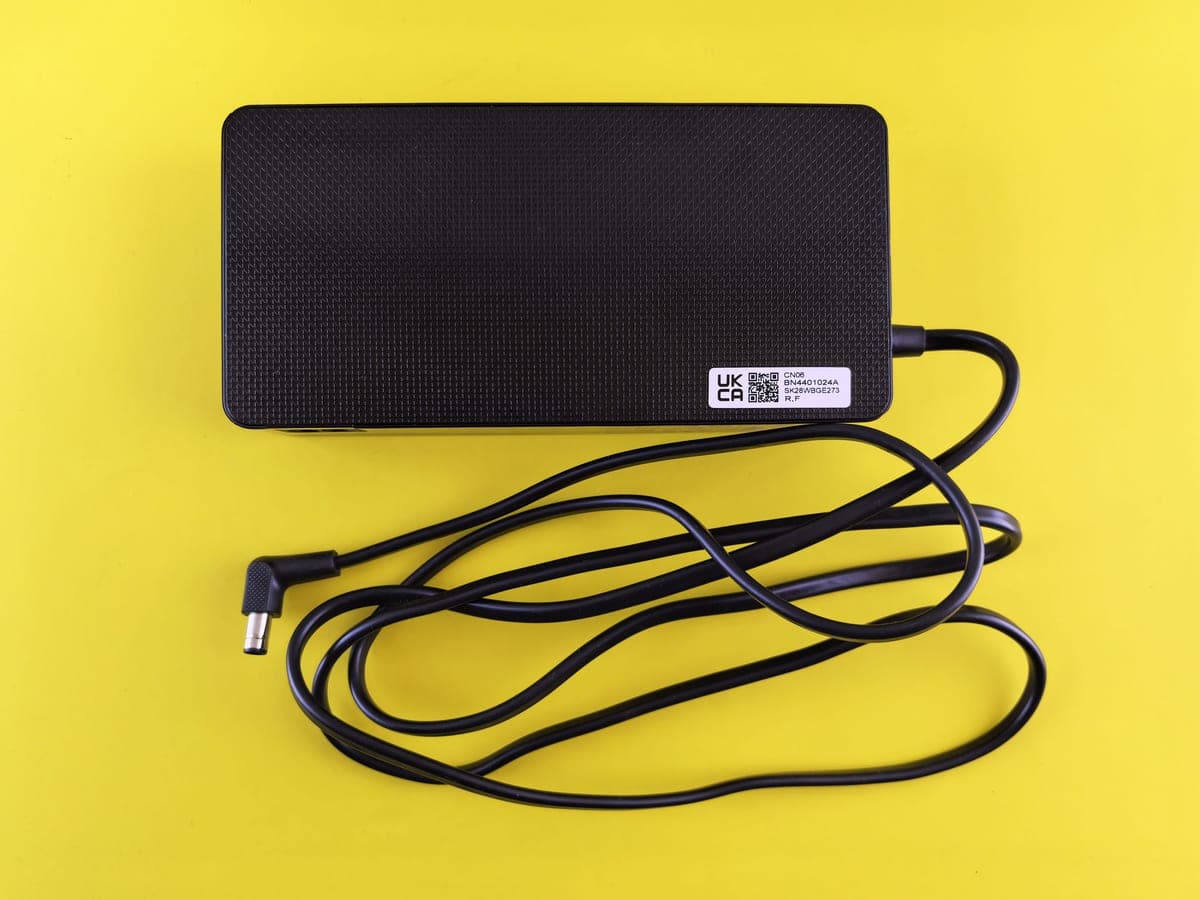
Best pedalboard power supplies
Compare on the highest single output, not total current. Five isolated supplies on their published per-output ratings.
Best Power Supply pick: Strymon Zuma
#ad How we’re funded · price as of September 13, 2026

Best noise gate pedals
Which signal the gate listens to is the entire specification. Three gates compared, and the wiring that makes one of them work.
Best Noise Gate pick: BOSS NS-2 Noise Suppressor
#ad How we’re funded · price as of September 13, 2026
Best pedalboard patch cables
The cheapest item on a board and the most common cause of an intermittent fault. Which format fails and why.
Best Patch Cables pick: EBS Flat patch cables
#ad How we’re funded · price as of September 13, 2026

Pedalboard power requirements explained
Two sums decide your power supply, and almost everyone only does the first. A worked example with real published figures.
Top pick: Strymon Zuma
#ad How we’re funded · price as of September 13, 2026