Flanger vs phaser
They are described with the same words and built from different mechanisms, and the mechanism is what you can actually hear.
Fret & Fuzz earns a commission when you buy through the links on this page. It costs you nothing and it does not decide what we rank. How we’re funded.
We have not played this gear. Every pick below is chosen from published manufacturer specifications and the arithmetic set out in how we research, which you can re-run yourself.
Buy the phaser if you want a subtle, liquid movement you can leave switched on, and the MXR Phase 90 is the reference — one Speed knob, 9 V, and it runs from any pedalboard supply. Buy the flanger if you want the dramatic metallic sweep, or if you want to park the effect as a fixed hollow filter, which only a flanger can do; the MXR M117R is the standard one, and it needs 18 V, so check your power supply before you buy it. The underlying difference is the mechanism: a flanger mixes your signal with a very short delayed copy of itself, which produces a series of evenly spaced notches, and a phaser shifts phase without delaying, which produces a few unevenly spaced ones. That is why a flanger sounds metallic and a phaser sounds smooth.
We have not played these pedals, and this is not a tone review. What follows is what each maker publishes, the mechanical difference that produces the difference you hear, and the power trap on one of them. How we research sets out the method.
01The mechanisms, which is where the difference comes from
Both effects work by combining your signal with an altered copy of itself so that some frequencies cancel. Both sweep that cancellation around. The difference is how the copy is made, and it is audible rather than academic.
A flanger delays the copy by a very short time — short enough that you hear it as coloration rather than as an echo. When a signal is added to a slightly delayed version of itself, the cancellation happens at a frequency and at every whole-number multiple of it. The result is a comb filter: a long series of evenly spaced notches across the whole spectrum. Sweep the delay time and all those notches move together, and that dense, harmonically related set of notches is what gives a flanger its metallic, jet-engine character.
A phaser does not delay anything. It passes the copy through a chain of all-pass filter stages, which shift phase by different amounts at different frequencies without delaying the signal. Recombined, that produces a much smaller number of notches — typically two or four, depending on how many stages the circuit has — and they are not evenly spaced. Fewer notches, unevenly placed, is why a phaser sounds smoother, rounder and less obviously electronic.
| Flanger | Phaser | |
|---|---|---|
| Mechanism | Mixes in a very short delayed copy | Phase-shifts a copy through all-pass stages, no delay |
| Notches produced | Many, evenly spaced (a comb filter) | Few, unevenly spaced |
| Character | Metallic, dramatic, obviously an effect | Smooth, liquid, can sit under a part unnoticed |
| Can it hold still? | Yes — Width at zero parks it as a fixed filter | No |
| Published controls (examples here) | MXR M117R: Manual, Width, Speed, Regen | MXR Phase 90: Speed |
| Published power | MXR M117R: 18 V — two 9 V batteries or an 18 V adapter | MXR Phase 90: 9 V battery or adapter |
Control and power figures are each maker's own published specification. Dunlop publishes no current draw, impedance, dimensions or weight for either of these pedals.
Which modulation effect
| # | Product | Best for | Price |
|---|---|---|---|
| 01 | 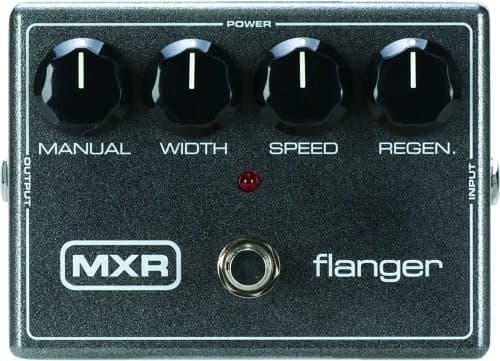 MXR Flanger Four controls including a Manual knob that parks the effect anywhere, and an 18 V power requirement. | The dramatic, metallic sweep — and the one that can also sit still as a fixed filter | $199.99 · Check price #ad How we’re funded · price as of November 2, 2026 |
| 02 | 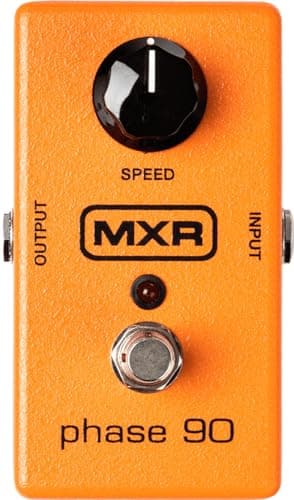 MXR Phase 90 One knob, one sound, and the sound is the reference point every other phaser is described against. | The subtle, liquid version of the same idea, from a board with only 9 V available | $99.99 · Check price #ad How we’re funded · price as of November 2, 2026 |
| 03 | 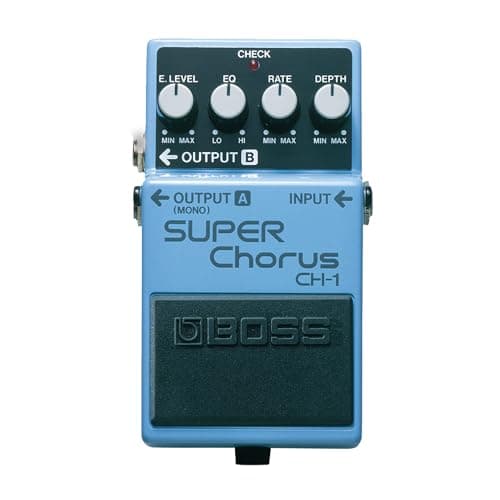 BOSS CH-1 Super Chorus Four controls and a stereo output, for the lush thickening that most people mean by modulation. | The player who actually wants a chorus and has been reading about the wrong two effects |
Rows link to the full write-up further down this page. Prices come from the live price layer only — where there is no live figure the button reads “Check price” rather than showing a remembered number.
03Which one for what you are trying to do
The mechanism above translates into a fairly short set of practical answers.
- A movement you can leave on for a whole song: phaser. Its small number of notches means it colors without announcing itself, which is why it survives being switched on under a clean rhythm part.
- A moment that the listener notices: flanger. The comb filter is dense enough that it is an event, not a texture.
- A fixed, hollow, vowel-like tone that does not move: flanger with Width at zero. Nothing else on a pedalboard does this, and it is the most underused setting in modulation.
- Something to sit behind an already busy high-gain sound: phaser. A flanger's notches and a lot of distortion together tend to turn into noise.
- Width and shimmer rather than a sweep: neither — that is a chorus. See the CH-1 entry above, and Chorus vs phaser for that pair directly.
MXR Flanger
The dramatic, metallic sweep — and the one that can also sit still as a fixed filter
The numberM117R. Manual, Width, Speed and Regen. Needs 18 V — two 9 V batteries or an 18 V adapter.
The flanger is the more extreme of the two effects and this is the standard one. Dunlop publishes four controls — Manual, Width, Speed and Regen — and two behaviors worth knowing about: the Manual knob places the effect anywhere along the frequency spectrum, and backing Width off to zero disengages the auto-sweep entirely.
That second point is the feature people miss. With Width at zero the pedal stops sweeping and becomes a fixed comb filter parked wherever Manual is set — a static, hollow, vowel-like coloration rather than a moving effect. No phaser on the market does that, and it is a legitimate reason to choose a flanger even if you never want the jet-plane sound. Dunlop also states it works with guitar, bass, keyboards or vocals.
The power requirement is the buying decision and it is easy to miss. Dunlop publishes 18 V operation: two 9 V batteries, an 18 V adapter, or a DC Brick, Iso-Brick or Mini Iso-Brick supply. A standard 9 V pedalboard output will not run it, so there is a power purchase attached to this pedal unless your supply already has an 18 V tap. Beyond that, Dunlop publishes no current draw, no impedance, no dimensions and no weight on the product page, there is no tap tempo, no presets and no stereo output.
| Model | M117R |
|---|---|
| Controls | Manual, Width, Speed and Regen |
| Manual knob | Places the effect anywhere along the frequency spectrum |
| Width at zero | Disengages the auto-sweep, leaving a fixed comb filter |
| Power | 18 V — two 9 V batteries, an 18 V adapter, or the DC Brick, Iso-Brick or Mini Iso-Brick |
| Electrical data | No current-draw or impedance figure is published for this pedal, so none is stated here. |
| What it does not do | It is an 18 V pedal, so a standard 9 V pedalboard output will not run it — that is a power-supply purchase on top of the pedal. No tap tempo, no presets, no stereo output, and Dunlop publishes no current draw, impedance, dimensions or weight on the product page. |
Specs from MXR Flanger (M117R) product page. We have not used this unit.
#ad How we’re funded · price as of November 2, 2026
MXR Phase 90
The subtle, liquid version of the same idea, from a board with only 9 V available
The numberA single Speed knob. 9 V battery, ECB003 adapter, or a DC Brick / Iso-Brick supply.
The phaser is the gentler effect and this is the canonical one. Dunlop publishes exactly one control — Speed — and power from a 9 V battery, the ECB003 adapter, or a DC Brick / Iso-Brick supply. That is the entire specification, which is unusual and also rather the point: there is one sound here and the only decision is how fast it moves.
For most players this is the right starting purchase of the two. It is 9 V so it runs from any board, it is physically small, and the effect is subtle enough to leave switched on under a chord progression without dominating it — which is not true of a flanger at most settings.
The cons are the one-knob design. There is no depth control and no mix control, so you get the Phase 90 amount of phasing or none at all; a subtler setting is not available. Dunlop publishes no current draw and no impedance figures. And there is no tap tempo, no stereo, and no way to park the sweep the way the flanger's Manual and Width controls allow.
| Controls | One Speed knob |
|---|---|
| Power | 9 V battery, Dunlop ECB003 adapter, or a DC Brick / Iso-Brick supply |
| Electrical data | No current-draw or impedance figure is published for this pedal, so none is stated here. |
| What it does not do | One knob means no depth control and no mix control. If you want a subtle phase you cannot dial it — you get the Phase 90 amount or nothing. |
Specs from MXR Phase 90 product page. We have not used this unit.
#ad How we’re funded · price as of November 2, 2026
BOSS CH-1 Super Chorus
The player who actually wants a chorus and has been reading about the wrong two effects
The numberE.Level, EQ, Rate and Depth. Mono and stereo outputs. 9 V battery or PSA adaptor.
Including this because the honest answer to 'flanger or phaser' is frequently 'neither'. If what you want is a wide, shimmering thickening rather than a sweep you can follow with your ear, that is a chorus, and both of the pedals above will disappoint you.
BOSS publishes E.Level, EQ, Rate and Depth controls plus mono and stereo outputs. The EQ knob is the one that earns it a place next to the other two: it lets you take the top off the modulated signal, which is the difference between a chorus that sounds lush and one that sounds glassy. Stereo out into two amps or two desk channels is where any modulation sounds best.
The cons: BOSS publishes no current-draw or impedance figure for this pedal, so you cannot budget it on a supply from published data, and no adaptor is in the box. It is also a bright, clearly digital-voiced chorus — if you want a warm analog bucket-brigade sound, that is a different circuit and the Small Clone is the usual answer.
| Controls | E.Level, EQ, Rate, Depth |
|---|---|
| Outputs | Mono and stereo outputs |
| Power | 9 V battery or PSA-series adaptor |
| Electrical data | No current-draw or impedance figure is published for this pedal, so none is stated here. |
| What it does not do | No adaptor included. It is a bright, clearly digital-voiced chorus — if you are chasing a warm analog bucket-brigade sound, this is not that circuit. |
Specs from BOSS CH-1 product page. We have not used this unit.
04The 18 volt problem, which is the real buying decision
If you take one practical thing from this page rather than one conceptual one, take this: the MXR Flanger runs on 18 V, and most pedalboard supplies are 9 V only.
Dunlop publishes the options as two 9 V batteries, an 18 V adapter, or a DC Brick, Iso-Brick or Mini Iso-Brick supply. Plugging it into a standard 9 V output does not damage anything and does not work properly either. So the real price of this pedal, on a board with a 9 V-only brick, includes either a second supply or an upgrade — and that can easily exceed the difference in price between the flanger and the phaser.
This is not unique to the flanger. The MXR 10 Band EQ has the same requirement, and it is the single most common power mistake made with that pedal too. 9V vs 18V pedals covers what the higher voltage is actually doing and why some circuits need it, and Pedalboard power requirements explained covers how to plan a supply around one.
05Where they go in the chain
Both belong in the same place, and it is the conventional one: after drive and compression, before delay and reverb.
After drive, because modulating a distorted signal is the sound everyone is familiar with — putting a flanger in front of a high-gain amp means the amp distorts the notches, which smears the effect into a general unevenness rather than a sweep. Before delay and reverb, because you want the repeats and the tail to carry the modulated sound rather than modulating the tail itself.
If your amp makes the distortion rather than a pedal, that means the modulation wants to be in the amp's effects loop — which is the same conclusion by a different route. Which pedals go in the amp's effects loop? covers that placement, including a warning worth reading here: a parallel loop can cause phase cancellation with anything that delays the signal slightly, and a flanger is exactly that. If a flanger sounds hollow and weak in your loop, a parallel loop is the first suspect.
06How much is too much
Modulation is the effect category most often set too high at home and too high on stage, and the two mistakes have different causes.
At home, alone, a strong sweep is interesting and a subtle one sounds like nothing is happening, so people turn it up. In a band the same setting fights the other instruments for attention and the sweep stops reading as a sweep — it reads as an unstable, slightly out-of-tune guitar. The setting that sounds exciting in a bedroom is usually twice what works in a mix.
The useful discipline is to set modulation with a backing track or a band playing, not alone, and to set it until you can only just hear it. On the Phase 90 that means a slower Speed than feels right; on the flanger it means less Width and less Regen. Best modulation pedals covers the wider category and where each effect belongs.
Frequently asked questions
+ What is the difference between a flanger and a phaser?
+ Should I buy a flanger or a phaser first?
+ Does a flanger need 18 volts?
+ Can a flanger sound like a chorus?
+ What does the Manual knob on a flanger do?
+ Where do a flanger and a phaser go in the signal chain?
Sources
Related on Fret & Fuzz
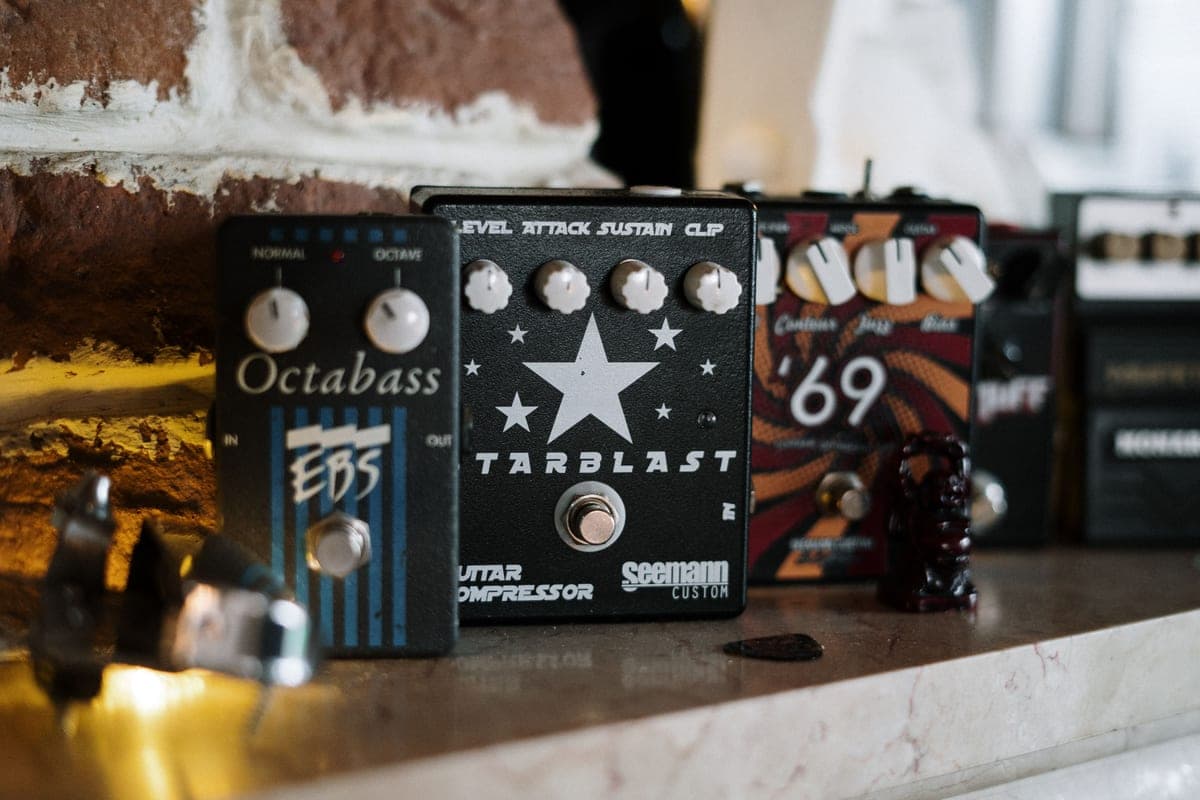
Best modulation pedals
Four mechanisms that get shelved together and share almost nothing. Pick the mechanism and the pedal follows.
Best Modulation pick: MXR Phase 90
#ad How we’re funded · price as of November 2, 2026
Chorus vs phaser
One adds a detuned second voice; the other sweeps notches through the one you have. The control layout gives it away.
Top pick: BOSS CH-1 Super Chorus
9V vs 18V pedals
Voltage sets the clipping ceiling, not the volume. Which pedals want 18 V, which supplies deliver it, and the mistake that kills a pedal.
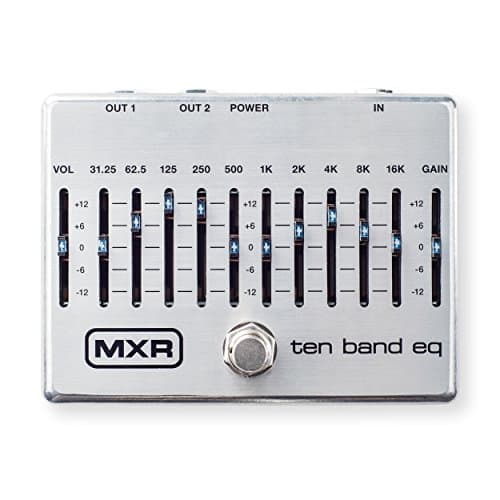
Top pick: MXR 10 Band EQ
#ad How we’re funded · price as of November 2, 2026

Which pedals go in the amp's effects loop?
Processors in the loop, generators in front. The figure that decides it is nominal operating level.
Top pick: BOSS DD-8 Digital Delay