Which pedals go in the amp's effects loop?
There is a right answer, it is short, and the reason behind it is a level mismatch rather than a matter of taste.
Fret & Fuzz earns a commission when you buy through the links on this page. It costs you nothing and it does not decide what we rank. How we’re funded.
We have not played this gear. Every pick below is chosen from published manufacturer specifications and the arithmetic set out in how we research, which you can re-run yourself.
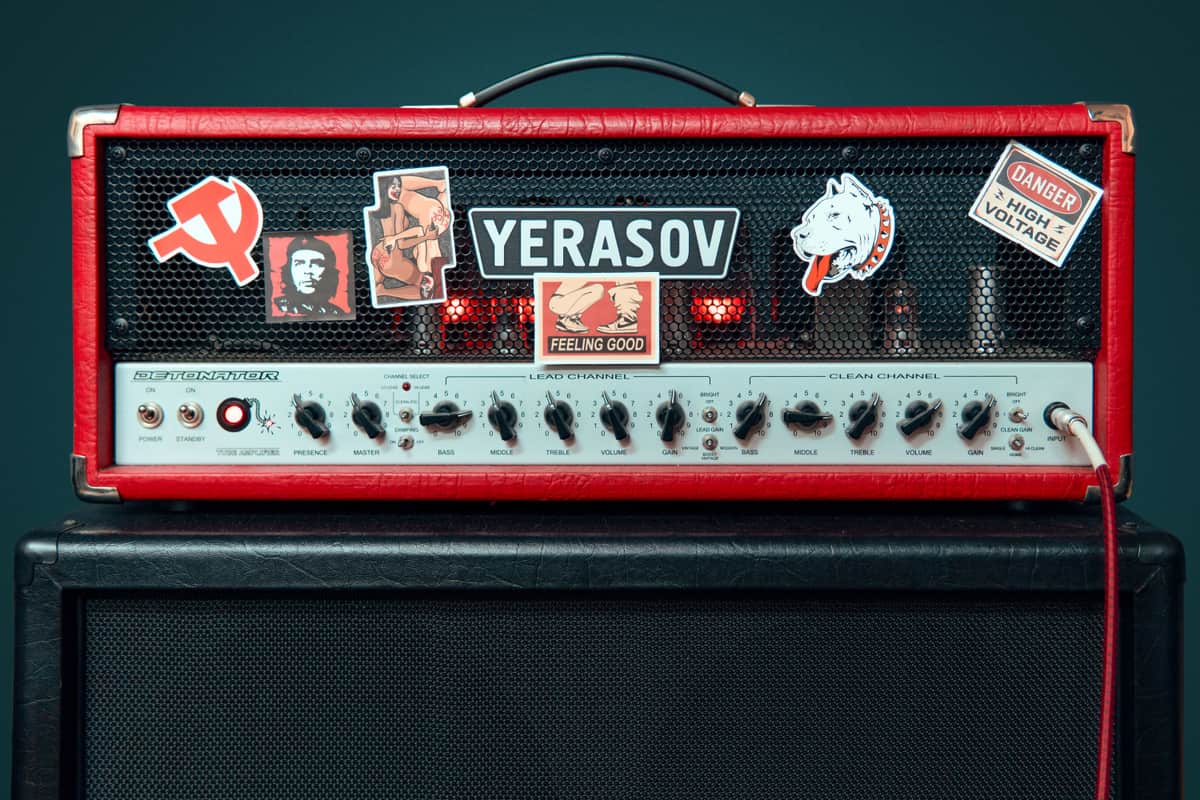
Time-based and corrective pedals go in the loop: delay, reverb, modulation, EQ, and a volume pedal when you want it to control the amp's output rather than its input gain. Everything whose job is to generate or feed distortion goes in front: overdrive, distortion, fuzz, boost, wah, compression. The reason is not taste — it is that a loop sits after the preamp, so anything in it processes a sound that is already distorted, and anything in front changes what gets distorted. The one figure that decides whether a given pedal will actually work in your loop is nominal operating level: most compact pedals publish -20 dBu, which is instrument level, and a line-level loop expects something much hotter.
We have not tested these in a loop, and this is not a tone review. What follows is what each maker publishes, the level mismatch that explains most loop complaints, and what to do when your amp has no loop at all. How we research sets out the method.
01The criteria, before any product
Three questions, in this order. The first sorts the pedals, the second tells you whether it will work, the third tells you whether you have a loop worth using.
- Does this pedal generate distortion or process it? Generators go in front. Processors go in the loop. That single question gets the answer right for almost every pedal ever made.
- What nominal operating level does it publish? A compact pedal publishing -20 dBu is an instrument-level device. If your amp's loop runs at line level and has no level control, the mismatch below is what you will hear.
- Is the loop series or parallel, and does it have a mix control? A series loop passes everything through the pedal. A parallel loop blends a wet path against the dry, which is more forgiving of level mismatch and worse for anything that needs to see the whole signal.
| Pedal | Front or loop | Published nominal level | Published draw |
|---|---|---|---|
| BOSS DD-8 Digital Delay | Loop | Not published | 100 mA |
| TC Electronic Hall of Fame 2 | Loop | Not published | Not published |
| BOSS GE-7 Equalizer | Either — different job each side | -20 dBu in and out | 30 mA |
| EHX Big Muff Pi | Front, always | Not published | Approx. 3 mA |
| BOSS KATANA-100 GEN 3 | N/A — the amp with the loop | Not published for Send/Return | 77 W consumption |
Manufacturer figures only. Note how few makers publish an operating level for a compact pedal: the GE-7's -20 dBu is the exception, and it is the figure that tells you the most about loop compatibility.
Pedals and amps for a working effects loop
| # | Product | Best for | Price |
|---|---|---|---|
| 01 | 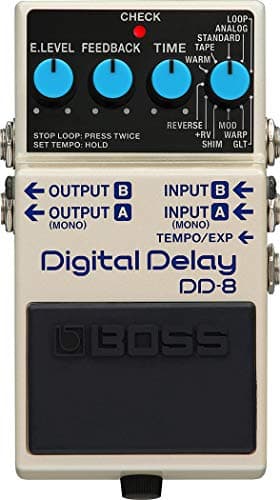 BOSS DD-8 Digital Delay Delay after the distortion is the single biggest improvement a loop makes, and this is the delay to do it with. | The pedal with the strongest case for being in the loop rather than in front | |
| 02 | 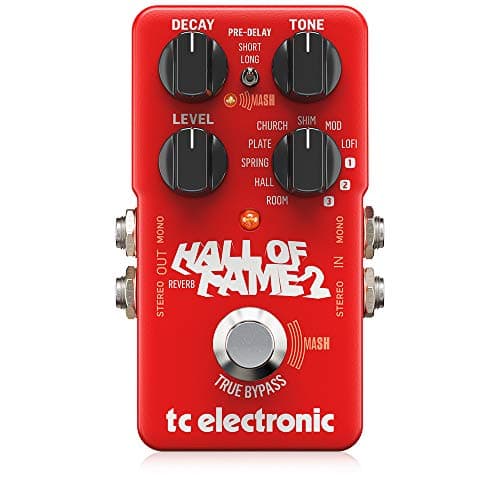 TC Electronic Hall of Fame 2 Reverb A reverb with a pressure-sensitive footswitch, placed where the amp's distortion happens before it rather than after. | Reverb in the loop, where reverb nearly always belongs | $129.00 · Check price #ad How we’re funded · price as of November 2, 2026 |
| 03 | 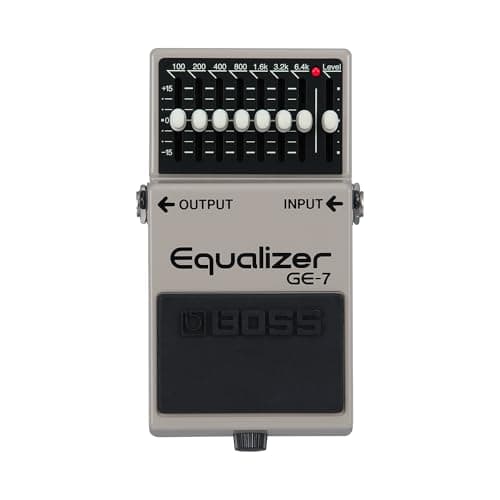 BOSS GE-7 Equalizer Seven bands at plus or minus 15 dB — in front it shapes what distorts, in the loop it fixes the amp's voice. | The one pedal that does a completely different job depending on which side it is on | $129.50 · Check price #ad How we’re funded · price as of November 2, 2026 |
| 04 | 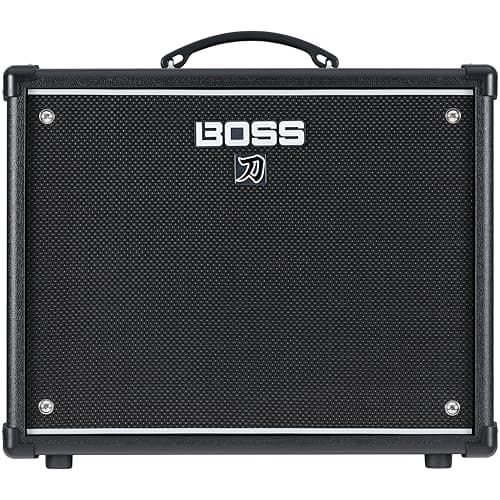 BOSS KATANA-100 GEN 3 Published Send and Return jacks plus a Power Amp In, which is more routing than most amps at the price. | Buying an amp that has a loop, when the one you own does not | $449.99 · Check price #ad How we’re funded · price as of November 2, 2026 |
| ! | 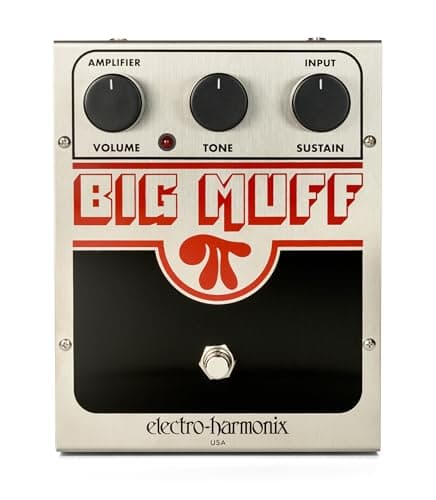 Electro-Harmonix Big Muff Pi A fuzz needs to see a guitar pickup. A preamp's send is not one, and the pedal tells you immediately. Skip this one — see why below | Nothing in a loop — this is the pedal that proves where drive belongs | $101.60 · Check price #ad How we’re funded · price as of November 2, 2026 |
Rows link to the full write-up further down this page. Prices come from the live price layer only — where there is no live figure the button reads “Check price” rather than showing a remembered number.
03What an effects loop actually is
An amplifier is two amplifiers in a box. The preamp takes your guitar signal, shapes it and — on a drive channel — distorts it. The power amp takes that finished signal and makes it loud enough to move a speaker.
An effects loop is a pair of jacks that interrupt the path between those two stages. Send is the preamp's output. Return goes to the power amp's input. A pedal patched across them processes the preamp's finished, distorted sound before the power amp amplifies it — which is the same position a studio engineer puts a delay in, and the reason records sound the way they do.
That is the whole concept, and it immediately explains the rule. If your distortion comes from a pedal into a clean amp, the loop is much less interesting: your signal is already finished by the time it reaches the amp, so putting delay in the loop and putting it after the drive pedal on the floor amount to almost the same thing. If your distortion comes from the amp, the loop is the only place where a delay can sit after it.
BOSS DD-8 Digital Delay
The pedal with the strongest case for being in the loop rather than in front
The number11 modes, up to 10 seconds of delay, true stereo in and out with three output modes, 100 mA.
If your amp makes the distortion, this is the pedal to move first. A delay in front of a driven preamp has each repeat distorted along with the note, which turns clean echoes into a wash. In the loop, the repeats are of the already-distorted sound, which is what records sound like.
BOSS publishes 11 modes (Analog, Standard, Tape, Warm, Reverse, +RV, Shimmer, Mod, Warp, GLT and Loop), up to 10 seconds of delay time with tap tempo, a Carryover switch so trails continue when you bypass, and true stereo in and out with three selectable output modes. That last specification is what makes it work in a loop that may be mono or stereo depending on the amp.
The cons are power and nothing else. 100 mA is not a pedal to daisy-chain casually, published battery life is approximately 3.5 hours on alkaline so batteries are a backup rather than a plan, and no adaptor is in the box. There is also no way to save a setting, which in a loop is more annoying than in front, because the loop is where you tend to want two very different delay settings in one set.
| Modes | 11 — Analog, Standard, Tape, Warm, Reverse, +RV, Shimmer, Mod, Warp, GLT, plus Loop |
|---|---|
| Maximum delay | Up to 10 seconds, with tap tempo |
| Controls | Mode, Time, Feedback, E.Level, Carryover switch, pedal switch |
| Current draw | 100 mA |
| Battery life | Approx. 3.5 hours on alkaline |
| I/O | True stereo in and out, with three selectable output modes |
| Weight | 440 g including battery |
| What it does not do | No adaptor included. At 100 mA it is not a pedal you daisy-chain casually, and the 3.5-hour battery figure means battery power is a backup, not a plan. |
Specs from BOSS DD-8 specifications. We have not used this unit.
TC Electronic Hall of Fame 2 Reverb
Reverb in the loop, where reverb nearly always belongs
The numberDecay, Tone, Level, reverb-type and pre-delay selectors, MASH footswitch, TonePrint over USB.
Reverb has the least ambiguous answer of any pedal on this page: it goes after distortion, which on an amp that makes its own distortion means it goes in the loop. Reverb in front of a driven amp sounds like a distorted room, which is a specific effect rather than a reverb.
TC publishes Decay, Tone and Level knobs with reverb-type and pre-delay selectors, a MASH pressure-sensitive footswitch that controls a chosen parameter under your foot, and a TonePrint slot loadable over USB for a setting you cannot reach from the front panel.
The cons: no power supply is included, TC publishes no current-draw or impedance figure, and the MASH switch is genuinely novel and also the feature most owners never use — if you want a set-and-forget hall, you are paying for it regardless. In a loop specifically, the absence of a published operating-level figure means you are setting the mix by ear rather than by specification.
| Controls | Decay, Tone, Level, reverb-type selector, pre-delay selector |
|---|---|
| Switching | MASH pressure-sensitive footswitch controls a chosen parameter under foot |
| Presets | TonePrint slot loadable over USB |
| Power | 9 V DC center-negative |
| Electrical data | No current-draw or impedance figure is published for this pedal, so none is stated here. |
| What it does not do | No power supply included. The MASH switch is a genuinely different way to play reverb and it is also the part most people never use — if you only want a set-and-forget hall, you are paying for it anyway. |
Specs from TC Electronic Hall of Fame 2 product page. We have not used this unit.
#ad How we’re funded · price as of November 2, 2026
BOSS GE-7 Equalizer
The one pedal that does a completely different job depending on which side it is on
The number100 Hz to 6.4 kHz in seven bands, +/- 15 dB each plus Level, 30 mA, -20 dBu nominal in and out.
An EQ is the clearest demonstration of what a loop is for. In front of the amp, it changes what the preamp distorts — a mid boost there pushes the amp harder in that region and changes the character of the breakup. In the loop, it shapes a sound that has already been distorted, which is the right place to fix a frequency problem in the amp itself rather than to change how it breaks up.
BOSS publishes seven bands at 100 Hz, 200 Hz, 400 Hz, 800 Hz, 1.6 kHz, 3.2 kHz and 6.4 kHz, each at plus or minus 15 dB, with a Level slider over the same range. The first six are peaking filters and the 6.4 kHz slider is a shelf. Draw is 30 mA, impedances are 1 M ohm in and 1 k ohm out.
One published figure is the warning for loop use: the nominal operating level is -20 dBu in and out — instrument level, not line level. In a tube amp's series loop running near instrument level that is fine; in a line-level loop it is the mismatch described below, and the symptoms are noise or a volume jump. The GE-7 also has no band below 100 Hz, which sits above the 82 Hz fundamental of a guitar's low E, and a reputation for noise at high boost settings.
| Bands | 7 bands: 100 Hz, 200 Hz, 400 Hz, 800 Hz, 1.6 kHz, 3.2 kHz, 6.4 kHz |
|---|---|
| Filter type | The first six bands are peaking filters; the 6.4 kHz slider is a shelving filter |
| Range | +/- 15 dB per band, plus a Level slider with the same +/- 15 dB range |
| Input impedance | 1 M ohm |
| Output impedance | 1 k ohm, recommended load 10 k ohms or greater |
| Current draw | 30 mA |
| Battery life | Approx. 9 hours carbon-zinc, approx. 19.5 hours alkaline |
| Size / weight | 73 x 129 x 59 mm, 400 g including battery |
| What it does not do | No adaptor included and no low band below 100 Hz. The stock unit has a reputation for noise at high boost settings, which is why the modification market for it exists. |
Specs from BOSS GE-7 product page. We have not used this unit.
#ad How we’re funded · price as of November 2, 2026
BOSS KATANA-100 GEN 3
Buying an amp that has a loop, when the one you own does not
The number100 W, 12-inch speaker, effects loop Send/Return plus Power Amp In, Line Out, Power Control to 0.5 W.
The honest answer to "which pedals go in my loop" is sometimes "you do not have one". If that is the case and you want one, this is a straightforward route: BOSS publishes an effects loop with Send and Return jacks, plus a Power Amp In jack, alongside a Line Out, stereo Phones and USB-C.
The rest of the specification is a working gigging amp: 100 W into a 30 cm (12-inch) speaker, six amp characters each with a variation, five independent effects sections, and a Power Control switch offering Standby, 0.5 W, Half and Max — which is how a 100 W amp becomes usable in a small room.
The cons are real and specific. No XLR output — the Line Out is a 1/4-inch jack, so an engineer needs a DI box to take it. No built-in IR loading. And the GA-FC footswitch that unlocks channel and effects switching is sold separately, which is the purchase people forget. Note also what the smaller model does NOT have: the KATANA-50 GEN 3 publishes no effects loop and no line out at all, so if a loop is why you are buying, the 50 is the wrong one.
| Rated power output | 100 W |
|---|---|
| Speaker | 30 cm (12") x 1 |
| Amp characters | Six — Acoustic, Clean, Pushed, Crunch, Lead and Brown — each with one selectable variation, which BOSS counts as 12 tones |
| Effects | Five independent sections — Booster, Mod, FX, Delay and Reverb — with three variations each |
| Power Control | Standby, 0.5 W, Half and Max |
| Effects loop | Send and Return jacks, plus a Power Amp In jack |
| Outputs | Line Out, stereo Phones, USB-C to a computer |
| Control jacks | Expression pedal (TRS) and GA-FC / CTL CH1 / CH2 SOLO (TRS) |
| Power consumption | 77 W |
| Weight | 14.8 kg (32 lb 11 oz) |
| What it does not do | No XLR output — the Line Out is a 1/4-inch jack, so a sound engineer needs a DI box to take it. No built-in IR loading. The GA-FC footswitch that unlocks channel and effects switching is sold separately, which is the purchase people forget when they buy this to gig with. |
Specs from BOSS KATANA-100 GEN 3 specifications. We have not used this unit.
#ad How we’re funded · price as of November 2, 2026
Electro-Harmonix Big Muff Pi
Nothing in a loop — this is the pedal that proves where drive belongs
The numberFour transistors, two cascaded clipping stages, approximately 3 mA. No level matching of any kind.
Putting a fuzz in an effects loop is the clearest way to hear why the front of the amp exists. Two things go wrong at once.
First, level. EHX publishes a four-transistor design with two cascaded clipping stages, built around an input expecting a guitar pickup. Feed it a preamp's send — which may be several times hotter — and the pedal is distorting before any of its controls do anything, with no input trim to pull it back.
Second, impedance. A Big Muff's input interacts with what it sees, which is why fuzz pedals famously behave differently after a buffer. A preamp send is a low-impedance line driver, not a pickup, and the pedal's character changes accordingly. Fuzz and buffers: why your fuzz sounds wrong covers that mechanism in detail.
The rule it illustrates: anything whose job is to generate distortion goes in front of the amp. Anything whose job is to process an already-finished sound goes in the loop. Fuzz is emphatically the first kind.
| Controls | Volume, Tone, Sustain |
|---|---|
| Current draw | Approximately 3 mA at 9 V DC |
| Power | 9 V battery or a 9 V DC center-negative supply |
| Circuit | Four-transistor design with two cascaded clipping stages between a boost stage and a recovery stage |
| What it does not do | The tone stack has a fixed mid scoop with no way to defeat it, and there is no gain-cleanup behavior — rolling your guitar volume down mostly just gets quieter, not cleaner. |
Specs from Electro-Harmonix Big Muff Pi manual (PDF). We have not used this unit.
04The level mismatch, which causes most loop complaints
If a pedal that sounds fine in front of your amp sounds noisy, quiet or weirdly loud in the loop, this is almost always why, and it is a published-figure problem rather than a faulty pedal.
A guitar pedal is designed around instrument level. BOSS publishes -20 dBu nominal for the GE-7, and most compact pedals that publish anything publish something similar. A tube amp's series loop is often close to that, which is why a compact pedal in a Marshall-style loop usually just works. Many solid-state and modeling amps, though, run their loops at or near line level, which is around 20 dB hotter. Send that into a pedal expecting instrument level and the pedal's input stage runs out of room: you get a thin, spitting distortion that was not there before.
The mismatch also runs the other way. A pedal returning instrument level into a line-level return produces a thin, quiet signal that you compensate for with volume, which raises the noise floor of everything. Either way the symptom gets blamed on the pedal.
The fixes, in order of preference: use the loop level switch if your amp has one (many do, marked -10 dB / +4 dBu or similar); use a pedal with its own output level control; or accept the front of the amp instead. What does not work is turning things down to compensate — that lowers the signal and leaves the noise where it is.
05Series or parallel, and why you should find out
Amp makers publish this and players rarely read it, and it changes which pedals are usable.
A series loop breaks the signal path: everything goes through your pedal and comes back. That is what you want for an EQ, a volume pedal or anything that must see the whole signal, and it means a dead pedal or an unplugged cable silences the amp.
A parallel loop splits the signal, sends a copy to your pedal, and mixes the return back against the untouched dry path, usually with a blend control. That is forgiving of level mismatch and good for reverb. It is bad for an EQ — you are blending an EQ'd copy against an un-EQ'd original, which is not what an EQ is for — and it can cause phase cancellation with anything that delays the signal slightly. If a chorus or a flanger sounds hollow in your loop, a parallel loop is the first suspect.
06If your amp has no loop at all
A great many amps do not have one, including some good ones. The KATANA-50 GEN 3 publishes no effects loop and no line out; the VOX AC10C1 publishes one input and one external speaker jack and nothing else.
There are three honest options. Use the amp clean and let pedals make the distortion, so floor order does the loop's job. Buy an amp with a published loop, which is the Katana-100 entry above. Or put the time-based pedals in front anyway and accept the result — it is not unusable, it is just a different, washier sound, and plenty of records were made that way before loops were common.
What is not an option is adding a loop to an amp that does not have one. That is an internal modification to a mains-powered device, and it is not something to attempt on the strength of a web page.
07The four-cable method, briefly
If you own a multi-effects unit with its own send and return, you will run into this term. The idea is to use both the amp's loop and the unit's loop so that the unit's drive and filter blocks sit in front of the amp's preamp while its delay and reverb blocks sit in the amp's loop — four cables instead of two, and both halves of the unit in the right place.
It works, it is fiddly, and it only pays off if you want the amp's own preamp distortion rather than the unit's models. If you are happy using the unit's amp models, two cables into the power amp return is simpler and sounds the same. The HX Stomp and GX-100 both publish the send/return jacks it requires.
Frequently asked questions
+ Which pedals go in the effects loop?
+ Should an EQ pedal go in the effects loop or in front?
+ Why does my pedal sound noisy or quiet in the effects loop?
+ Can I put a distortion pedal in the effects loop?
+ What is the difference between a series and a parallel effects loop?
+ What is the four-cable method?
Sources
Related on Fret & Fuzz
Pedal order: what changes and what does not
Two placements are load-bearing and the rest are preference. Which is which, and the impedance figures behind the first one.
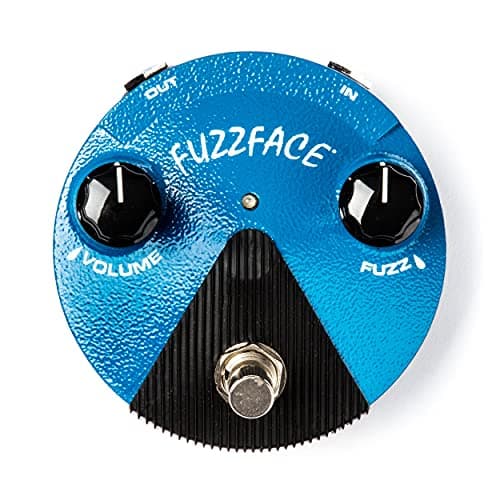
Top pick: Dunlop Fuzz Face Mini Silicon
#ad How we’re funded · price as of November 2, 2026

Best pedal platform amps
Headroom, not gain. Why solid state is genuinely competitive here, and which amps have the jacks that matter.
Best Pedal Platform pick: BOSS KATANA-50 GEN 3
Best delay pedals
Maximum delay time and current draw settle most of this category. Four delays on their published figures.
Best Delay pick: BOSS DD-8 Digital Delay
Can you plug guitar pedals into an audio interface?
Safe, and one category sounds wrong. The missing piece is cabinet simulation, not a better interface.
Top pick: BOSS IR-200 Amp & IR Cabinet