Fulltone OCD vs BOSS Blues Driver
A genuinely useful comparison, because the two pedals sit at opposite ends of the question every drive purchase turns on: how much should the pedal impose?
Fret & Fuzz earns a commission when you buy through the links on this page. It costs you nothing and it does not decide what we rank. How we’re funded.
We have not played this gear. Every pick below is chosen from published manufacturer specifications and the arithmetic set out in how we research, which you can re-run yourself.
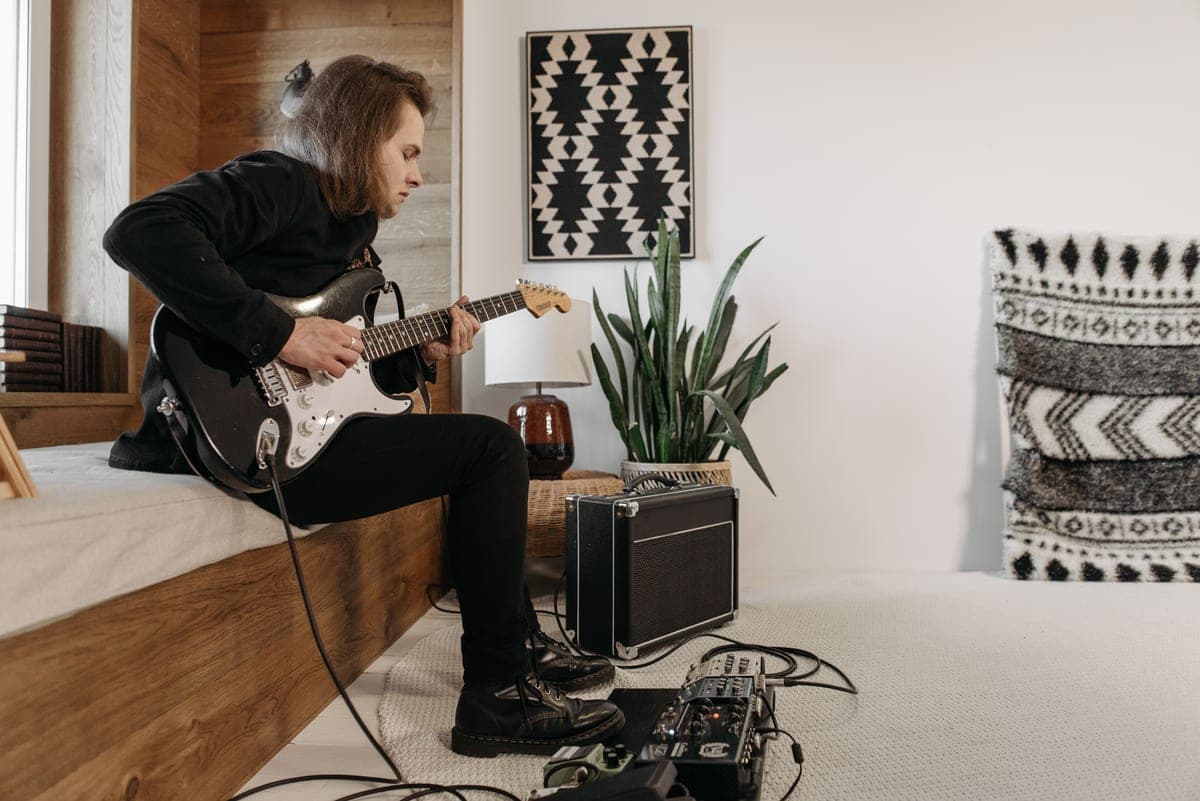
The Blues Driver stays flat and gets out of the way — buy it when you like your amp's clean tone and want it roughened. The OCD imposes a character and crosses into distortion past about halfway — buy it when your amp stays clean and you need the pedal to be the sound. They are not competing for the same job, which is why so many boards end up with both.
This pairing comes up constantly on shortlists and the two pedals are more different than the shared "overdrive" label suggests. One is a modifier; the other is a source.
How much should the pedal impose?
| # | Product | Best for | Price |
|---|---|---|---|
| 01 | 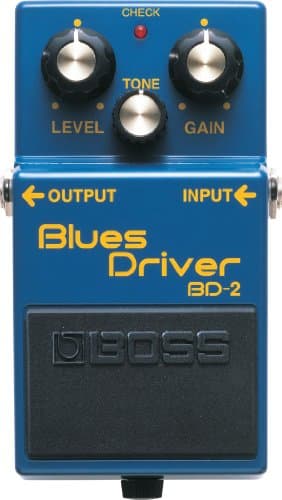 BOSS BD-2 Blues Driver Flat through the mids, open at the top, and the most dynamic of the two by a clear margin. | Roughening an amp you already like | $109.99 · Check price #ad How we’re funded · price as of October 20, 2026 |
| 02 | 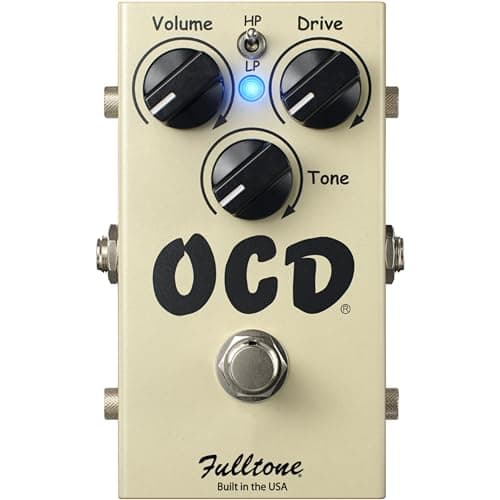 Fulltone OCD Obsessive Compulsive Drive Two selectable gain and EQ characters, and it crosses into distortion past about halfway. | An amp that stays clean and needs a voice | $155.95 · Check price #ad How we’re funded · price as of October 20, 2026 |
Rows link to the full write-up further down this page. Prices come from the live price layer only — where there is no live figure the button reads “Check price” rather than showing a remembered number.
02The structural difference
The BD-2 gets its gain from discrete stages. There is no diode clipping stage inside an op-amp feedback loop shaping the EQ on the way through, so the frequency response stays broadly flat and a great deal of dynamic range survives.
The OCD's HP/LP switch changes the circuit's gain structure and low-mid emphasis together rather than applying an EQ at the output. That is why it reads as two different amps rather than two settings, and why the character persists across the whole gain range instead of only appearing when you turn it up.
| BOSS BD-2 | Fulltone OCD | |
|---|---|---|
| Gain structure | Discrete gain stages | Amp-voiced circuit with two switchable characters |
| Maximum gain | Light to moderate crunch | High — distortion territory past halfway |
| Mid response | Flat | Shifted by the HP/LP switch |
| Response to picking | High | Moderate |
| Cleans up on guitar volume | Yes, substantially | Less so |
| Into a clean amp | Subtle — you may want more | Full-range and usable as the only dirt |
| Into a driven amp | Adds grit without reshaping | Can get woolly — gain on gain |
| Published electrical data | Impedance, draw, dimensions, weight | None |
BOSS BD-2 Blues Driver
Roughening an amp you already like
The number1 M ohm in, 1 k ohm out, 20 mA — all published by BOSS.
The Blues Driver's gain comes from discrete stages rather than from diodes clipping inside an op-amp's feedback loop. That keeps the frequency response flat and the dynamic range wide, which is why it responds to picking strength and cleans up genuinely — not just quietly — when you roll the guitar volume back.
It is the right pedal when the amp is doing the work and you want a little more grit on top without changing what the amp sounds like.
The cons: it does not have a heavy setting. Past about two o'clock on the Gain it is still recognisably a light overdrive, and if you were hoping it would eventually become a distortion it will not. No adaptor included, and it is buffered rather than true bypass.
| Controls | Gain, Tone, Level, pedal switch |
|---|---|
| Input impedance | 1 M ohm |
| Output impedance | 1 k ohm |
| Current draw | 20 mA |
| Power | 9 V battery (6F22 / 6LR61) or PSA-series adaptor |
| Size / weight | 73 x 129 x 59 mm, 360 g |
| What it does not do | No adaptor in the box, no true bypass, and no mid control. The BD-2 is deliberately flat through the mids — if you want a mid hump to push a solo, this is the wrong pedal. |
Specs from BOSS BD-2 specifications. We have not used this unit.
#ad How we’re funded · price as of October 20, 2026
Fulltone OCD Obsessive Compulsive Drive
An amp that stays clean and needs a voice
The OCD supplies its own character rather than amplifying the amp's. The HP/LP toggle changes gain and low-mid emphasis together — LP with less low-mid content and lower gain for a bright amp, HP with more of both for a darker one — so it is closer to two pedals than to one pedal with an EQ switch.
Into a clean solid-state amp it produces a full-range distorted tone on its own, which the Blues Driver cannot do. That is the single clearest reason to choose it.
The cons: past about two o'clock on the Drive it behaves like a distortion rather than an overdrive, so if you wanted a subtle push the top half of the knob is not it. It does not clean up on the volume knob the way the BD-2 does, and while Fulltone publishes a 1 M ohm input impedance for the v2, it publishes no current-draw figure, so you still cannot plan a shared supply output around it without measuring.
| Controls | Volume, Drive, Tone, HP/LP toggle |
|---|---|
| HP/LP switch | Two voicings: LP with less low-mid emphasis, HP with more gain and upper-mid push |
| Input impedance | 1 M ohm on the v2, which Fulltone states was raised from 330 k on the previous version |
| Input section | Fulltone states a Class A configured discrete 2N5457 JFET input section |
| Bypass | An internal switch selects Fulltone's Enhanced Bypass or true bypass, which Fulltone states pops in neither mode; the v2 also adds an output buffer |
| Versions | Fulltone states that OCDs from serial 205811 upward are the newer, less compressed versions |
| Power | 9 V DC center-negative; Fulltone documents internal operation at a higher rail |
| Current draw | Not published by Fulltone |
| What it does not do | No power supply included, and Fulltone publishes no current-draw figure, so a shared supply output cannot be budgeted for it without measuring. It is not a subtle pedal at high Drive — past about two o'clock it behaves more like a distortion than an overdrive, and it will not clean up the way a Tube Screamer does. |
Specs from Fulltone OCDv2 product page. We have not used this unit.
#ad How we’re funded · price as of October 20, 2026
03Who each one is wrong for
- The BD-2 is wrong if you wanted the pedal to supply a heavy distorted tone. It has no such setting.
- The BD-2 is wrong as a lead boost in a band, because flat is the opposite of what cutting through a mix needs.
- The OCD is wrong if you wanted a low-gain transparent drive. Even in LP mode it has more character and more gain than that description implies.
- The OCD is wrong in front of an already-high-gain amp channel, where it compounds rather than tightens.
- Both are wrong if the amp itself is the problem. Pedal or amp is the page for that question.
04Running both
BD-2 into OCD is the order that works. The Blues Driver adds a full-range dirty signal and a level lift into the OCD's higher-gain stage, which pushes it without imposing a second tone stack. The reverse gives the BD-2 an already-distorted, already-compressed signal and mostly just adds volume.
If you own one and are considering the other, the honest question is which half of the job is missing. If your amp sounds good and the pedal just needs to add grit, you want the BD-2. If your amp is a clean platform and the pedal has to be the whole tone, you want the OCD. Best overdrive pedals covers the four circuit families this sits inside. Our OCD review covers it on its own, including the version differences that matter when buying used.
Frequently asked questions
+ Is the OCD an overdrive or a distortion?
+ Which is better for a clean amp?
+ Which cleans up better on the guitar volume knob?
+ What does the OCD's HP/LP switch do?
Sources
Related on Fret & Fuzz

Fulltone OCD review
Not a transparent drive, whatever the label says. A 1 M ohm input on the v2, and a serial number that tells you which voicing you are buying.
Top pick: Fulltone OCD Obsessive Compulsive Drive
#ad How we’re funded · price as of October 20, 2026
Fulltone OCD vs Pro Co RAT
Two pedals that are both further into distortion than their labels admit, and the backwards tone control that confuses everyone once.
Top pick: Fulltone OCD Obsessive Compulsive Drive
#ad How we’re funded · price as of October 20, 2026
Tube Screamer vs Blues Driver
Mid hump versus flat response, with both spec sheets side by side and a straight answer about which your amp wants.
Top pick: BOSS BD-2 Blues Driver
#ad How we’re funded · price as of October 20, 2026
Best overdrive pedals
Six overdrives sorted by circuit family, with the published clipping topology and impedance figures that separate them.
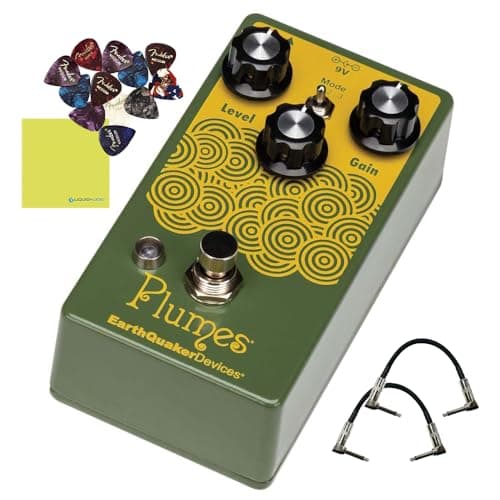
Best Overdrive pick: EarthQuaker Devices Plumes
BOSS overdrive compared: BD-2 vs SD-1 vs OD-3
Three circuits, not three price points. What BOSS publishes for each, and which one your amp actually wants.
Best BOSS Overdrive pick: BOSS BD-2 Blues Driver
#ad How we’re funded · price as of October 20, 2026
Pedal gain vs amp gain
One clipping point or several with filtering between them. Why that structural difference only shows at high gain.
Top pick: EVH 5150 Iconic Series 15W 1x10 combo