Fulltone OCD review
The overdrive most often described as transparent, which it is not — and the one where knowing the version number matters more than knowing the tone control.
Fret & Fuzz earns a commission when you buy through the links on this page. It costs you nothing and it does not decide what we rank. How we’re funded.
We have not played this gear. Every pick below is chosen from published manufacturer specifications and the arithmetic set out in how we research, which you can re-run yourself.

Buy an OCD when your amp stays clean and you want the pedal to supply the whole character, and use the HP/LP switch as two voices rather than a bright switch. Do not buy it expecting a transparent drive that cleans up on the volume knob — it is a high-gain, opinionated circuit that crosses into distortion past about halfway. If you buy used, check the serial: Fulltone states units from 205811 upward are the newer, less compressed versions.
We have not played this pedal, and this is not a tone review. What follows is what Fulltone publishes, what those figures mean on a board, and who should buy something else — the only kind of review this site writes. How we research sets out the method.
01What Fulltone publishes
| Specification | Published figure | What it means in practice |
|---|---|---|
| Controls | Volume, Drive, Tone, HP/LP toggle | Three knobs and a switch that changes the circuit, not the EQ |
| HP/LP switch | LP with less low-mid emphasis and lower gain; HP with more of both | Two voicings, closer to two pedals than two settings |
| Input impedance (v2) | 1 M ohm, raised from 330 k | The v2 loads a passive pickup far less than the version before it |
| Input section (v2) | Class A configured discrete 2N5457 JFET | Fulltone's stated reason the v2 responds differently |
| Output buffer (v2) | Added | Aimed at consistent behavior in a longer chain |
| Bypass | Internal switch: Enhanced Bypass or true bypass, no popping in either | You choose; most pedals do not let you |
| Versions | Serial 205811 and up are the newer, less compressed versions | The single most useful fact when buying used |
| Current draw | Not published | Budget a supply output conservatively, or measure |
| Output impedance | Not published | — |
Every figure is Fulltone's own published specification for the OCDv2. Where a row says not published, that is what the manufacturer states — no number has been substituted from elsewhere.
The pedal
| # | Product | Best for | Price |
|---|---|---|---|
| 01 | 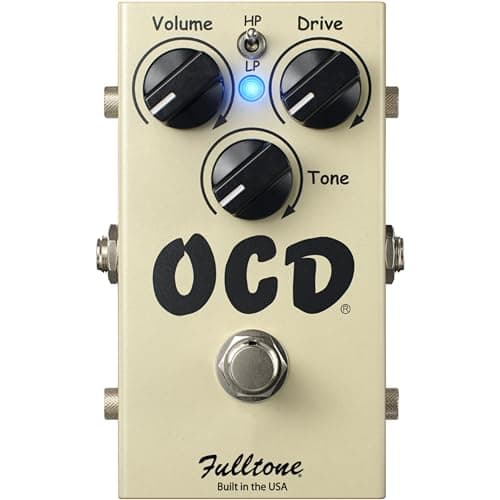 Fulltone OCD Obsessive Compulsive Drive Two switchable voicings and a 1 M ohm input on the v2 — and it crosses into distortion well before the knob runs out. | A clean amp that needs the pedal to supply the character |
Rows link to the full write-up further down this page. Prices come from the live price layer only — where there is no live figure the button reads “Check price” rather than showing a remembered number.
03The word transparent, and why it does not apply
The OCD gets filed under transparent overdrive constantly, and it is the wrong label. A transparent drive leaves your amp's frequency response broadly alone and preserves enough dynamic range that rolling the guitar volume back genuinely cleans it up. The OCD does neither by design: the HP/LP switch is an imposed voicing, and past roughly two o'clock on the Drive you are in distortion territory.
That is a description rather than a complaint. Into a clean solid-state amp the OCD produces a full-range distorted tone on its own, which a genuinely transparent pedal cannot do — and that is the single clearest reason to choose it. If what you actually want is the flat, dynamic kind, transparent overdrives compared covers pedals built for that job, and OCD vs Blues Driver is the cleanest illustration of the two philosophies side by side.
04The version question, which matters more than usual
The OCD has been revised repeatedly since 2004, and the revisions are not cosmetic. Fulltone publishes the most useful marker itself: units with serial 205811 and higher are the newer, less compressed versions. That single number is worth more than any forum thread when you are looking at a used pedal.
The v2 is the current standard version and the one whose figures are in the table above. Fulltone also sells an OCD-Ge Germanium variant through its Custom Shop at a higher price, which is a different circuit rather than a finish option. If you are buying new, you are buying the v2; if you are buying used, the serial is the thing to ask for before the photos.
Fulltone OCD Obsessive Compulsive Drive
A clean amp that needs the pedal to supply the character
The number1 M ohm input impedance on the v2, raised from 330 k. Current draw not published.
The OCD's job is to be the sound rather than to get out of the way. The HP/LP toggle changes gain and low-mid emphasis together rather than applying an EQ at the output, so the two positions read as two different amps rather than two settings of one — LP with less low-mid content and lower gain, HP with more of both.
The v2 revision is where Fulltone put the published detail. It states a Class A configured discrete 2N5457 JFET input section, an output buffer for consistent behavior in a longer chain, and an input impedance raised to 1 M ohm from 330 k on the previous version. There is also an internal switch that selects between Fulltone's Enhanced Bypass and true bypass, which Fulltone says pops in neither mode.
The cons are real and one of them is a buying trap. Past about two o'clock on the Drive it behaves like a distortion rather than an overdrive, and it does not clean up on the guitar volume knob the way a Tube Screamer does — so if you wanted a subtle push, the top half of that knob is not for you. Fulltone publishes no current-draw figure, so you cannot budget a shared supply output without measuring. And the version question below is a genuine hazard on the used market.
| Controls | Volume, Drive, Tone, HP/LP toggle |
|---|---|
| HP/LP switch | Two voicings: LP with less low-mid emphasis, HP with more gain and upper-mid push |
| Input impedance | 1 M ohm on the v2, which Fulltone states was raised from 330 k on the previous version |
| Input section | Fulltone states a Class A configured discrete 2N5457 JFET input section |
| Bypass | An internal switch selects Fulltone's Enhanced Bypass or true bypass, which Fulltone states pops in neither mode; the v2 also adds an output buffer |
| Versions | Fulltone states that OCDs from serial 205811 upward are the newer, less compressed versions |
| Power | 9 V DC center-negative; Fulltone documents internal operation at a higher rail |
| Current draw | Not published by Fulltone |
| What it does not do | No power supply included, and Fulltone publishes no current-draw figure, so a shared supply output cannot be budgeted for it without measuring. It is not a subtle pedal at high Drive — past about two o'clock it behaves more like a distortion than an overdrive, and it will not clean up the way a Tube Screamer does. |
Specs from Fulltone OCDv2 product page. We have not used this unit.
05The bypass switch nobody uses
Fulltone puts an internal switch inside the pedal that chooses between true bypass and its Enhanced Bypass, and states that neither mode pops. That is unusual — most pedals make the choice for you, and the argument between the two camps is one of the longest-running on any pedalboard.
It is worth knowing the switch is there, because the right answer depends on the rest of your board rather than on the pedal. True bypass keeps the OCD completely out of your signal when it is off, which is what you want in front of a vintage-style fuzz. A buffered path drives a long cable run without losing top end. Buffer vs true bypass covers which one your board wants, and fuzz and buffers covers the one case where it is not a matter of taste.
06Who should buy something else
- You want a drive that cleans up on the volume knob. That is the BOSS BD-2's defining behavior and it is not this pedal's — OCD vs Blues Driver sets the two against each other.
- Your amp is already overdriven. Stacking a high-gain pedal into a driven amp compounds rather than tightens. A Tube Screamer's bass cut is the tool for that job.
- You need to plan a tight power budget. Fulltone publishes no current draw, so you are measuring or leaving headroom.
- You want one pedal with several clipping voices. The HP/LP switch gives you two, and our Plumes review covers a pedal that publishes three including a clean boost.
- You are buying used and cannot see the serial. Walk away, or price it as the older, more compressed version.
07Who should buy it
Someone with a clean amp who wants one pedal to be the whole distorted sound, and who wants two usable voices from one enclosure rather than a single fixed curve. On a solid-state or modeling platform in particular, the OCD supplies the character the amp deliberately does not.
It is also a reasonable pick for a player who runs long cables and a busy board, because the v2's output buffer and switchable bypass are aimed at exactly that. Best overdrive pedals covers the four circuit families this sits among, and OCD vs RAT covers the comparison people make when they have decided they want something with an opinion.
Frequently asked questions
+ Is the Fulltone OCD a transparent overdrive?
+ What is the difference between the OCD v1 and v2?
+ How do I tell which OCD version I have?
+ What does the HP/LP switch do?
Sources
Related on Fret & Fuzz

Fulltone OCD vs BOSS Blues Driver
A modifier against a source. One roughens an amp you like; the other supplies the whole tone on a clean one.
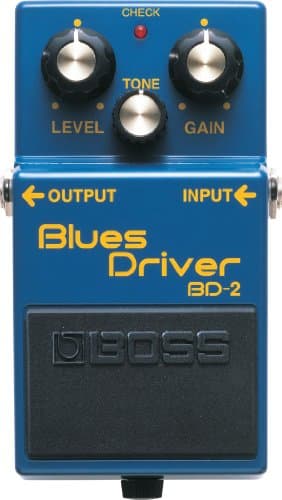
Top pick: BOSS BD-2 Blues Driver
#ad How we’re funded · price as of October 17, 2026
Fulltone OCD vs Pro Co RAT
Two pedals that are both further into distortion than their labels admit, and the backwards tone control that confuses everyone once.
Top pick: Fulltone OCD Obsessive Compulsive Drive
Best overdrive pedals
Six overdrives sorted by circuit family, with the published clipping topology and impedance figures that separate them.
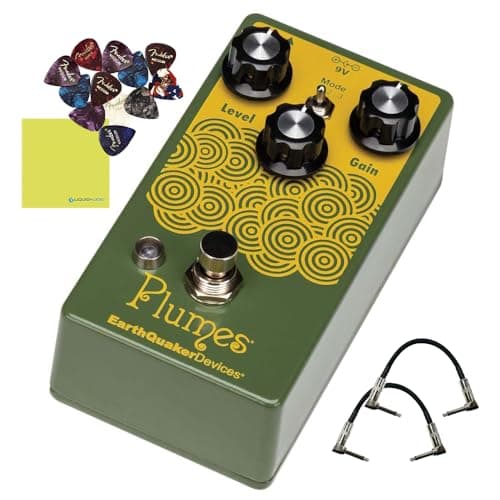
Best Overdrive pick: EarthQuaker Devices Plumes

Transparent overdrives compared
Four drives sold as transparent, and the two different mechanisms they use to get there.
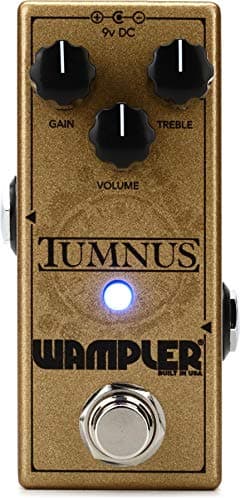
Top pick: Wampler Tumnus
#ad How we’re funded · price as of October 17, 2026

EarthQuaker Devices Plumes review
Three clipping modes the maker actually documents, a 10 M ohm input, and a relay bypass that fails silent without power.
Top pick: EarthQuaker Devices Plumes