Line 6 HX Stomp review
The most-bought compact modeler on the market, and two of its published specifications decide whether it fits your board before any tone question arises.
Fret & Fuzz earns a commission when you buy through the links on this page. It costs you nothing and it does not decide what we rank. How we’re funded.
We have not played this gear. Every pick below is chosen from published manufacturer specifications and the arithmetic set out in how we research, which you can re-run yourself.
Buy an HX Stomp if you want a full amp-and-effects rig in one pedalboard-sized box and you can live inside six simultaneous blocks. Two published numbers decide this before tone does: it needs its own 3 A supply, which no pedalboard brick provides, and six blocks is the hard ceiling on how complex a patch can get. If either is a problem, the answer is a different unit rather than a workaround.
We have not played this unit and this is not a tone review. What follows is what Line 6 publishes, what those figures mean on a real board, and who should buy something else instead — which is the only kind of review this site writes. How we research is the full statement of that method.
01What Line 6 publishes
| Specification | Published figure | What it means in practice |
|---|---|---|
| Simultaneous blocks | Up to six | An amp + cab + IR can use half your budget before any effect |
| Models | Over 300 amps, cabs and effects from the Helix family | The same model set as the flagship, not a reduced one |
| IR loading | Yes | Third-party cab captures load directly; no separate IR pedal |
| Power | 9 V DC center-negative, 3 A, DC-3 supply included | Needs its own supply — see the power section below |
| Audio interface | 24-bit / 96 kHz multi-channel USB | It is also your recording interface |
| I/O | Stereo in and out, plus an effects loop | Runs in four-cable mode with a real amp |
| Display and switches | 2.4" color LCD, three capacitive-touch footswitches with LED rings | Three switches is few for a unit this capable |
Every figure is Line 6's own published specification. We have not measured any of them.
The unit
| # | Product | Best for | Price |
|---|---|---|---|
| 01 | 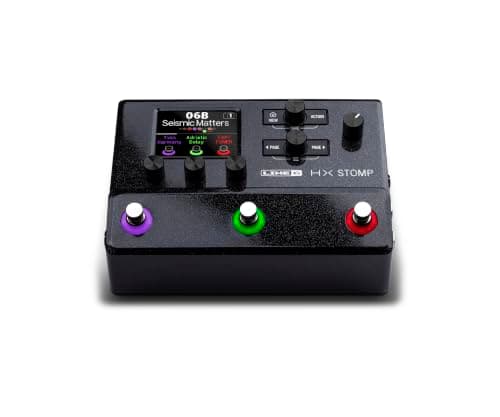 Line 6 HX Stomp Over 300 Helix models with IR loading, stereo I/O and an effects loop — and a 3 A power requirement no brick meets. | A whole rig in one slot, if six blocks is enough | $599.99 · Check price #ad How we’re funded · price as of September 13, 2026 |
Rows link to the full write-up further down this page. Prices come from the live price layer only — where there is no live figure the button reads “Check price” rather than showing a remembered number.
03The six-block ceiling, worked through
Six blocks sounds generous until you build a patch. A typical rock preset is amp, cab, overdrive, delay, reverb and a noise gate — that is six exactly, with nothing left for a boost, a compressor or a modulation effect.
Swap the cab block for an IR and you are still at six. Add a second amp for a clean-to-dirty switch and you are over. This is not a criticism so much as the defining constraint of the product: it is a Helix with a block budget, and the budget is the price of the size.
Line 6 HX Stomp
A whole rig in one slot, if six blocks is enough
The numberSix simultaneous blocks; 9 V DC center-negative at 3 A; 24-bit/96 kHz USB audio.
Line 6 publishes over 300 amps, cabs and effects drawn from the Helix family, impulse-response loading, stereo input and output, an effects loop and a 2.4-inch color display with three capacitive-touch footswitches. As a specification list at this size, nothing else is close.
The 24-bit/96 kHz multi-channel USB audio interface is the feature that quietly changes what the unit is for. It means the same box that sits on your board is also the thing you record through, with no second purchase and no re-amping.
The two cons are both published numbers, and both are why people return it. It asks for 3 A at 9 V, which no standard isolated pedalboard output supplies — the most generous common brick gives 500 mA per output. And six simultaneous blocks is a real ceiling: an amp, a cab and an IR can consume half of it before you have added a single effect.
| Simultaneous blocks | Up to six simultaneously |
|---|---|
| Models | Over 300 amps, cabs and effects from the Helix family, with IR loading |
| Power | 9 V DC center-negative, DC-3 supply (3 A) included |
| Display / switches | 2.4" color LCD; three capacitive-touch footswitches with LED rings |
| Audio interface | 24-bit / 96 kHz multi-channel USB audio |
| Format | Compact pedalboard unit with stereo I/O and an effects loop |
| What it does not do | It asks for 3 A at 9 V. No standard isolated pedalboard brick output supplies that, so it needs its own supply — this is the mistake people make when they add one to an existing board. |
Specs from Line 6 HX Stomp owner's manual. We have not used this unit.
#ad How we’re funded · price as of September 13, 2026
04The power problem, which is not optional
Line 6 specifies 9 V DC center-negative at 3 A and includes a DC-3 supply that delivers it. Every common isolated pedalboard brick tops out far below that: 500 mA per output on a Strymon Zuma or the high outputs of a Truetone CS7, 250 mA on a Voodoo Lab Pedal Power 2 PLUS. Five hundred milliamps is one sixth of 3 A.
There is no cable that fixes it. A current-doubler cable sums two outputs at the same voltage, so two 500 mA outputs give you 1,000 mA — useful for a pedal that wants 600 mA, and nowhere near 3 A. You would need six outputs combined, which no doubler does and which would leave nothing for the rest of the board.
So the HX Stomp runs from its own supply and the rest of your board runs from your brick, which means two mains sockets and two things to fasten under the board. Plan for that before you buy the board, not after. Powering an HX Stomp has the full arithmetic and the supply-by-supply table.
05Underpowering it looks like a fault
This is worth stating plainly because it wastes a lot of people's time. An underpowered HX Stomp usually still boots and still passes signal. Then it reboots partway through a set, or the display glitches, or it behaves differently once it has warmed up.
Those symptoms read as a defective unit, which is why the actual cause gets missed and why units get returned as faulty when the supply was the problem. If yours is doing any of that, put it on the DC-3 before you contact anybody.
06Who should buy something else
- You want a wah. There are three footswitches and no treadle. Making the modeled wah usable means buying an expression pedal and a TRS cable, at which point you have spent wah money on something that is not a wah — best wah pedals covers the alternative.
- Your patches need more than six blocks. Count first. A larger unit is cheaper than buying this twice.
- You only want effects, not amp modeling. You are paying for the amp and cab models either way, and dedicated pedals will be easier to adjust with your hands.
- You have no room for a second power supply. A Pedaltrain Nano+ has nowhere to hide two bricks.
- You want it to be your only amp at home. It makes no sound on its own. Budget for headphones or monitors — practice amp vs audio interface covers that decision.
07Who should buy it
Someone who is carrying a board to gigs and is tired of carrying an amp as well. The stereo outputs go straight to a desk, the model set is the same one in the flagship Helix, and the whole rig sounds identical in every room because the room is no longer part of the signal path.
Also someone who records. The USB interface removes a separate purchase and a whole class of problems, and at 24-bit/96 kHz it is not a token feature. If you are weighing a board of pedals against one unit, pedals vs multi-effects is the honest version of that comparison.
Frequently asked questions
+ Can I power an HX Stomp from my pedalboard supply?
+ How many blocks does the HX Stomp have?
+ Why does my HX Stomp keep rebooting?
+ Is the HX Stomp good for recording?
Sources
Related on Fret & Fuzz
Powering an HX Stomp from a pedalboard supply
Line 6 specifies 3 A. The most generous common brick output is 500 mA. The arithmetic, and what to do instead.
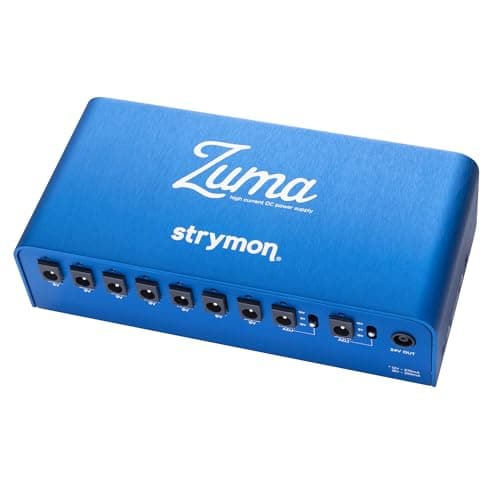
Top pick: Strymon Zuma
#ad How we’re funded · price as of September 13, 2026

Best multi-effects pedals
Block count, routing freedom and current draw decide this. Four current units compared, plus the one BOSS has discontinued.
Best Multi-Effects pick: Line 6 HX Stomp
#ad How we’re funded · price as of September 13, 2026
Pedals vs multi-effects
Power, interface and failure mode decide this, not tone. Including the 3 A requirement no pedalboard brick can meet.
Top pick: Line 6 HX Stomp
#ad How we’re funded · price as of September 13, 2026
Practice amp vs audio interface
Sound in the room against sound in headphones. What each route publishes, and the one box that does both.
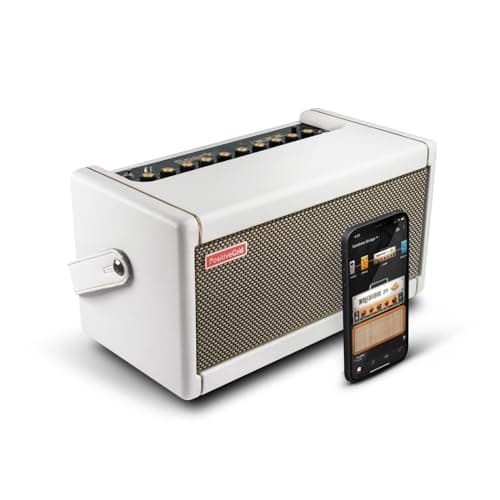
Top pick: Positive Grid Spark 40
#ad How we’re funded · price as of September 13, 2026