MXR Dyna Comp vs BOSS CS-3
The two compressors that have been on shortlists for decades, and the control one of them has that the other does not.
Fret & Fuzz earns a commission when you buy through the links on this page. It costs you nothing and it does not decide what we rank. How we’re funded.
We have not played this gear. Every pick below is chosen from published manufacturer specifications and the arithmetic set out in how we research, which you can re-run yourself.

Buy the BOSS CS-3 if you want a compressor that does a job — its Attack knob lets the pick transient through, which is the difference between compression you can use on everything and compression you can only use sometimes. It also publishes 20 mA of draw and full impedance figures. Buy the MXR Dyna Comp if you specifically want its squashed, percussive OTA character for clean country and funk, and accept two knobs and no published electrical data.
Compressor comparisons usually collapse into which one is more transparent. Neither of these is transparent, and that is fine — the question is which kind of non-transparency you want, and whether you want a control over it.
01What each maker publishes
| BOSS CS-3 | MXR Dyna Comp | |
|---|---|---|
| Controls | Sustain, Attack, Tone, Level | Output, Sensitivity |
| Attack control | Yes | No |
| Blend control | No | No |
| Circuit | VCA-based compression | OTA, built around the CA3080 |
| Input impedance | 1 M ohm | Not published |
| Output impedance | 1 k ohm | Not published |
| Current draw | 20 mA | Not published |
| Battery life | Approx. 10.5 h carbon-zinc, 26 h alkaline | Not published |
| Weight | 380 g | Not published |
| Power | 9 V battery or PSA-series adaptor | 9 V battery, ECB003 adapter, or DC Brick / Iso-Brick |
Every figure is the manufacturer's own published specification. Where a row says not published, that is what the maker states — or does not.
Which compressor
| # | Product | Best for | Price |
|---|---|---|---|
| 01 | 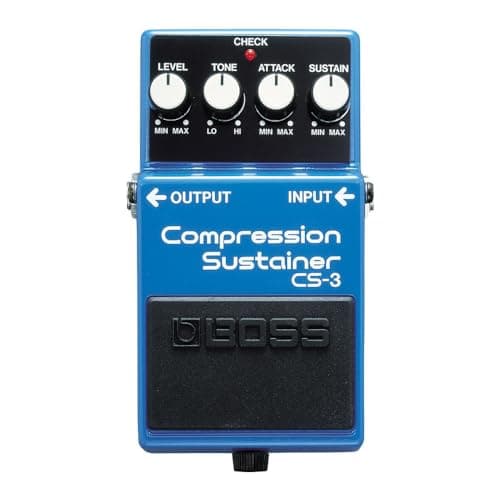 BOSS CS-3 Compression Sustainer Sustain, Attack, Tone and Level, with published impedances and a 20 mA draw. | Most players, because it has an attack knob | |
| 02 | 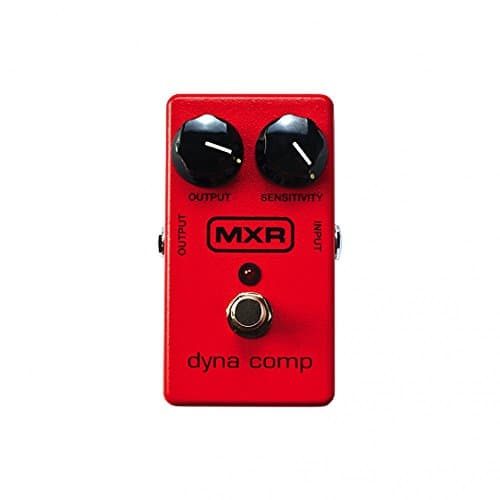 MXR Dyna Comp Compressor Two knobs and an OTA circuit whose character is the reason to buy it — and MXR publishes no electrical data at all. | The squashed, percussive country and funk sound, on purpose | $99.99 · Check price #ad How we’re funded · price as of October 17, 2026 |
Rows link to the full write-up further down this page. Prices come from the live price layer only — where there is no live figure the button reads “Check price” rather than showing a remembered number.
03Why the attack knob is the whole argument
A compressor reduces the difference between your loudest and quietest notes. How fast it starts doing that, after a note begins, is the attack time — and it is the single setting that decides whether the result sounds natural.
The sharp click at the very start of a picked note is what makes it sound picked rather than faded in. A fast attack catches that transient and flattens it, which is why heavily compressed guitar can sound soft-edged and lifeless. A slower attack lets the transient pass at full strength and only then clamps down on the body of the note, so you keep the percussive edge and gain the sustain. The CS-3 gives you that control. The Dyna Comp fixes it for you at the value its circuit implies.
There is a third option neither of these offers, and it is worth knowing about before you buy either: a blend control, which mixes the compressed signal against your untouched dry signal so the attack survives by definition. Our Keeley Compressor Plus review covers what that changes, and it is the reason a lot of players who bounced off compressors entirely get on with that one.
BOSS CS-3 Compression Sustainer
Most players, because it has an attack knob
The number20 mA, 1 M ohm in, 1 k ohm out, 380 g, approx. 26 h alkaline. All published by BOSS.
The CS-3 is the more useful pedal for more people, and the reason is one control. BOSS publishes Sustain, Attack, Tone and Level — four knobs against the Dyna Comp's two — and the Attack control is the one that decides whether a compressor sounds like a tool or like a blanket. Slow the attack and the pick transient gets through before the compression clamps down, so the note still sounds struck; speed it up and you get the flattened, sustained character.
BOSS also publishes the electrical picture in full: 1 M ohm input, 1 k ohm output, 20 mA of draw, roughly 26 hours of alkaline battery life, 380 g. The circuit is VCA-based. None of that is glamorous and all of it is the information you need to put the pedal on a board and know what it will do to the signal around it.
The cons: there is no blend control, so parallel compression — keeping your dry attack alongside the compressed signal — is not available. The Tone control is a fixed treble tilt rather than real EQ, there to claw back the high end compression dulls. And no adaptor is included.
| Controls | Sustain, Attack, Tone, Level, pedal switch |
|---|---|
| Circuit | VCA-based compression |
| Input impedance | 1 M ohm |
| Output impedance | 1 k ohm |
| Current draw | 20 mA |
| Battery life | Approx. 10.5 h carbon-zinc, approx. 26 h alkaline |
| Weight | 380 g |
| What it does not do | No blend control, so parallel compression is off the table. No adaptor included, and the Tone control is a fixed treble tilt rather than real EQ. |
Specs from BOSS CS-3 specifications. We have not used this unit.
MXR Dyna Comp Compressor
The squashed, percussive country and funk sound, on purpose
The numberOutput and Sensitivity only. CA3080 OTA circuit. No current draw or impedance published.
The Dyna Comp is not really competing on features and was never meant to. MXR publishes Output and Sensitivity — two knobs — and an OTA compressor circuit built around the CA3080 chip. That circuit has a sound: a firm, obvious squash with a pronounced attack bloom, which is the backbone of a lot of clean country and funk playing and the reason this pedal has survived fifty years of more capable rivals.
Buying it is buying that character. If you have heard a clean chicken-pickin' tone where every note arrives at exactly the same level with a little swell behind it, you have heard this pedal, and no amount of Attack-knob subtlety on another compressor gets you there. Two knobs also means you cannot get it wrong, which has its own value.
The cons are substantial and worth stating plainly. There is no attack, release, ratio or blend control — you get the circuit's own time constants and that is all. MXR publishes no current draw and no impedance figures, so you cannot budget a supply output or predict how it will sit next to a fuzz without measuring it. And it audibly raises the noise floor at high Sensitivity with no way to defeat that. It squashes noticeably; that is the point, and it is also why some players cannot use it at all.
| Controls | Output, Sensitivity |
|---|---|
| Circuit | OTA compressor built around the CA3080 chip |
| Power | 9 V battery, Dunlop ECB003 adapter, or a DC Brick / Iso-Brick supply |
| Electrical data | No current-draw or impedance figure is published for this pedal, so none is stated here. |
| What it does not do | No attack, release, ratio or blend controls, and no way to defeat the noise it adds at high Sensitivity. It squashes audibly — that character is why people buy it and why some people cannot use it. |
Specs from MXR Dyna Comp product page. We have not used this unit.
#ad How we’re funded · price as of October 17, 2026
04The missing numbers on the Dyna Comp
This site's standard is that a specification exists when the manufacturer publishes it. On the Dyna Comp, very little is published, and pretending otherwise would be inventing the comparison.
MXR states the controls, the circuit type and the power options. It does not state current draw, input impedance, output impedance, weight or battery life. Two of those have practical consequences: without a current figure you cannot size a supply output for it — you either measure it or leave generous headroom — and without an input impedance figure you cannot predict how it will interact with a vintage-style fuzz placed after it, which is the classic pedalboard interaction problem. Fuzz and buffers covers why that matters more than it sounds.
None of that makes it a bad pedal. It makes it a pedal you buy for its sound rather than for its specification, and it is worth being clear which of those two purchases you are making.
05Both of these raise your noise floor
It is in the nature of the effect rather than a flaw in either pedal. A compressor lifts quiet signals; hiss is a quiet signal; so hiss comes up with everything else.
The Dyna Comp is the more noticeable of the two at high settings and has no facility for dealing with it. On a high-gain board this is the reason a compressor and a noise gate often get bought together — though they are frequently confused, and buying the wrong one for the problem is common. Compressor vs noise gate separates them.
06Where a compressor goes in the chain
Early — usually first or just after the tuner and wah, before any drive. A compressor works on dynamics, and once a distortion pedal has already flattened your dynamics there is much less for it to do.
The exception is using one as a level control into a solo, which belongs later in the chain. If that is your goal, a clean boost is usually the better and cheaper tool — compressor vs boost covers which problem each one actually solves, and best compressor pedals compares the wider field.
Frequently asked questions
+ Is the BOSS CS-3 better than the MXR Dyna Comp?
+ How much current does the MXR Dyna Comp draw?
+ Do either of these have a blend control for parallel compression?
+ Will a compressor make my board noisier?
Sources
Related on Fret & Fuzz
Best compressor pedals
Blend is the control that decides whether a compressor squashes or supports. Three compressors compared on what they do and do not have.
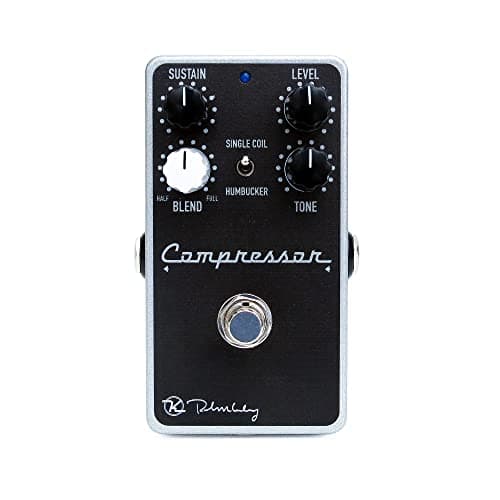
Best Compressor pick: Keeley Compressor Plus
#ad How we’re funded · price as of October 17, 2026
Keeley Compressor Plus review
The blend knob is the whole pedal, and the missing attack control is the reason it is easy to set. 10 mA, true bypass.
Top pick: Keeley Compressor Plus
#ad How we’re funded · price as of October 17, 2026
Compressor vs boost
One narrows your dynamic range, the other shifts all of it up. Diagnose the problem first, because the common answer is neither.
Top pick: Keeley Compressor Plus
#ad How we’re funded · price as of October 17, 2026

Compressor vs noise gate
One lifts the quiet parts, the other removes them. Buying the compressor for a noise problem makes the noise worse.
Top pick: Keeley Compressor Plus
#ad How we’re funded · price as of October 17, 2026