Keeley Compressor Plus review
The compressor most often recommended to people who have decided compressors are not for them, and the one control that changes their mind.
Fret & Fuzz earns a commission when you buy through the links on this page. It costs you nothing and it does not decide what we rank. How we’re funded.
We have not played this gear. Every pick below is chosen from published manufacturer specifications and the arithmetic set out in how we research, which you can re-run yourself.
Buy a Compressor Plus if your picking is uneven, your clean parts will not sit still, or your bends die before the phrase ends. The blend control is the reason to choose it over a two-knob compressor: it keeps the attack that makes a note sound picked while the compressed signal adds the sustain underneath. There is no attack knob and release is a two-position switch, which is a real limitation and the reason the pedal is as easy to set as it is.
We have not played this pedal, and this is not a tone review. What follows is Keeley's published specification, what it means in practice, and who should buy something else. How we research sets out the method.
01What Keeley publishes
| Specification | Published figure | What it means in practice |
|---|---|---|
| Controls | Sustain, Level, Blend and Tone knobs, plus a Release switch | Four knobs and a switch — no attack control |
| Blend | Mixes compressed against dry signal | Parallel compression; the reason to buy it |
| Release switch | Two positions, tuned for single coils or humbuckers | Set it for the guitar you are playing |
| Tone | Keeley says it emphasizes harmonics lost in compression | Compensates for the dulling compression causes |
| Current draw | 10 mA | Trivial on any supply |
| Power | 9 V DC, center negative; battery operation also listed | Standard pedal supply |
| Bypass | True bypass | Out of your signal path when off |
| Circuit | 100% analog | No conversion in the path |
| Impedance | Not published | — |
Every figure is Keeley's own published specification. Where a row says not published, that is what the manufacturer states.
The pedal
| # | Product | Best for | Price |
|---|---|---|---|
| 01 | 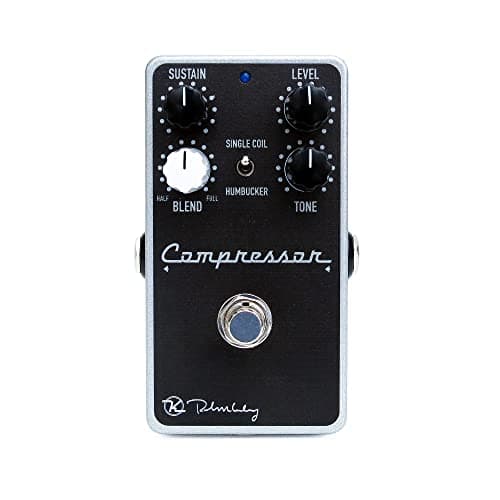 Keeley Compressor Plus A blend control for parallel compression, a Release switch tuned for pickup type, and 10 mA of draw. | Compression you notice only when you switch it off | $149.00 · Check price #ad How we’re funded · price as of October 17, 2026 |
Rows link to the full write-up further down this page. Prices come from the live price layer only — where there is no live figure the button reads “Check price” rather than showing a remembered number.
03Why a blend control changes the argument about compressors
The standard complaint about compressor pedals is that they flatten your playing — the attack goes soft, the dynamics disappear, and the guitar starts to sound like it is behind glass. That complaint is usually accurate, and it is a complaint about compressors without a blend control.
A two-knob compressor puts your entire signal through the compression circuit, so whatever it does to the sustain it also does to the attack. A blend control splits that: the dry path carries the transient through untouched while the compressed path supplies the sustain. You hear a note that is still picked, sitting on top of a tail that no longer dies early. That is a different effect from turning the sustain down, and it is why this pedal converts people who had written the category off.
Keeley Compressor Plus
Compression you notice only when you switch it off
The number10 mA, 9 V DC center negative, true bypass, 100% analog. All published by Keeley.
The blend knob is the pedal. It mixes the compressed signal against your dry signal, so the pick attack passes through at full strength while the compressed signal fills in behind it and holds the sustain up. That is parallel compression — what a studio engineer does instead of squashing a signal flat — and it is why this pedal can be run at settings that would make a two-knob compressor unusable.
Keeley publishes the rest plainly: a Release switch with two positions tuned for single coils or humbuckers, a Tone control that Keeley says emphasizes the harmonics most easily lost in compression, 10 mA of current draw, true bypass, and a 100% analog signal path. It also lists battery operation as an alternative to a supply.
The cons: there is no attack knob, and release is that two-position switch rather than a continuous control — so the blend knob is your shaping tool, not a time constant. Keeley publishes no impedance figures. And the general truth about compressors applies: it raises the noise floor of everything in front of it, because quiet signals get lifted and hiss is a quiet signal.
| Controls | Sustain, Level, Blend and Tone knobs, plus a Release switch |
|---|---|
| Release switch | Two positions, which Keeley describes as tuned for single coils or humbuckers |
| Blend | Mixes the compressed signal against the dry signal for parallel compression |
| Current draw | 10 mA |
| Power | 9 V DC, center negative; Keeley also lists battery operation |
| Bypass | True bypass |
| Circuit | 100% analog |
| What it does not do | No attack knob, and release is a two-position switch set for pickup type rather than a continuous control — the blend knob is how you keep the transient, not a time constant. Keeley publishes the current draw but no impedance figures. |
Specs from Keeley Compressor Plus product page. We have not used this unit.
#ad How we’re funded · price as of October 17, 2026
04The Release switch, and why pickup type matters
Keeley names the switch a Release switch and states its two positions are tuned for single coils or humbuckers. A humbucker's output is substantially hotter than a single coil's, so the same release behavior does not suit both — the circuit is being driven harder by one than the other.
Practically, set it for the guitar you actually play most and leave it. It is a two-position switch, not a knob, so there is nothing to optimize and no setting to get subtly wrong. If you switch between a Strat and a Les Paul mid-set, this is one of the few pedal settings genuinely worth reaching down for.
05Where it goes, and what it does to your noise floor
Conventionally first, or close to it — before the drives — so it evens out what they then clip. Put it after a distortion and you are compressing an already-compressed signal, which mostly raises noise.
That noise point is worth stating plainly because it is inherent rather than a fault. A compressor lifts quiet signals, and hiss is a quiet signal, so anything noisy in front of it gets louder. On a clean, exposed part that is audible. It is not a reason to avoid the pedal; it is a reason to put your noisy pedal after it, or to work out what kind of noise you have before buying a gate — your pedalboard hums covers the five faults that all get called the same thing.
06Who should buy something else
- You play mostly with distortion. Distortion already compresses heavily. A compressor in front adds noise for very little audible benefit.
- You want attack and release control. This has neither as continuous controls. A studio-style compressor pedal does.
- You want the obvious squash. The MXR Dyna Comp's audible pumping is a sound people buy on purpose, and this pedal is designed not to do it — best compressor pedals covers both philosophies.
- You are not sure you need one at all. Compressor vs boost diagnoses which of the two you actually want, and the answer is sometimes neither.
- You need a noise gate. Different tool, opposite job — compressor vs noise gate covers why.
07Who should buy it
Anyone whose playing is exposed. Clean arpeggios, fingerstyle, country double-stops, worship parts under a vocal — all of them are cases where uneven picking is audible because there is no distortion to hide it, and all of them benefit from sustain that holds without the attack going soft.
It is also a sensible first compressor precisely because it is hard to set badly. Four knobs, one switch, and the blend control means that even a heavy-handed setting stays usable. Best pedals for blues and best pedals for worship music both put it on the board for exactly that reason. For the two cheaper classics it is usually shortlisted against, MXR Dyna Comp vs BOSS CS-3 covers what you give up by not having a blend control.
Frequently asked questions
+ What does the blend knob on the Keeley Compressor Plus do?
+ Does the Keeley Compressor Plus have an attack control?
+ How much power does it need?
+ Will a compressor make my rig noisier?
Sources
Related on Fret & Fuzz
Best compressor pedals
Blend is the control that decides whether a compressor squashes or supports. Three compressors compared on what they do and do not have.
Best Compressor pick: Keeley Compressor Plus
#ad How we’re funded · price as of October 17, 2026

MXR Dyna Comp vs BOSS CS-3
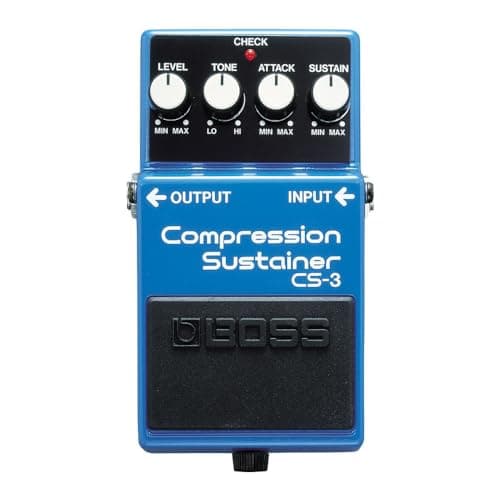
Four knobs and an attack control against two knobs and a famous squash — and only one maker publishes any numbers.
Top pick: BOSS CS-3 Compression Sustainer
Compressor vs boost
One narrows your dynamic range, the other shifts all of it up. Diagnose the problem first, because the common answer is neither.
Top pick: Keeley Compressor Plus
#ad How we’re funded · price as of October 17, 2026
Compressor vs noise gate
One lifts the quiet parts, the other removes them. Buying the compressor for a noise problem makes the noise worse.
Top pick: Keeley Compressor Plus
#ad How we’re funded · price as of October 17, 2026

Best guitar pedals for blues
The one genre where the best pedal is the one you stop noticing. Five picks judged on how much dynamic range survives.
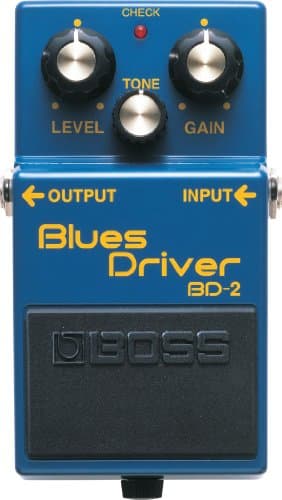
Best for Blues pick: BOSS BD-2 Blues Driver
#ad How we’re funded · price as of October 17, 2026

Your solo disappears in a band — which pedal fixes it
Three different faults produce the same complaint. The diagnostic table first, then the pedal that fixes yours.
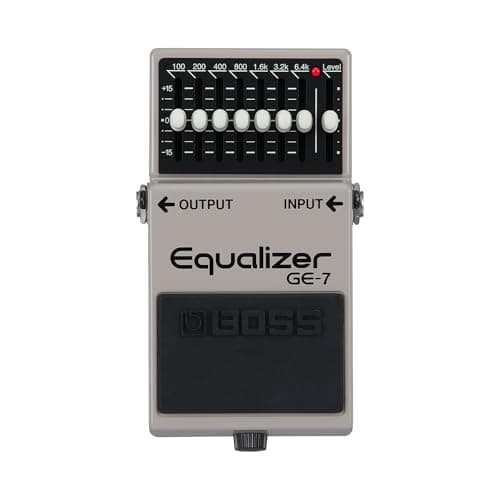
Top pick: BOSS GE-7 Equalizer
#ad How we’re funded · price as of October 17, 2026