Your first pedalboard
Not a list of the best pedals. A list of what to buy first, second and third, and why that order is the order.
Fret & Fuzz earns a commission when you buy through the links on this page. It costs you nothing and it does not decide what we rank. How we’re funded.
We have not played this gear. Every pick below is chosen from published manufacturer specifications and the arithmetic set out in how we research, which you can re-run yourself.
Buy in this order: tuner, one drive pedal chosen against your amp, then a delay — and buy the power supply at the same time as the delay, because that is the purchase that ends the free-power phase. Buy the board last, once you know how many pedals you actually have. That sequence gets you a complete rig for less than the cost of one boutique pedal.
Most first-board advice is a list of good pedals. The order matters more than the list, because each purchase changes what the next one needs to be.
The first board, in buying order
| # | Product | Best for | Price |
|---|---|---|---|
| 01 | 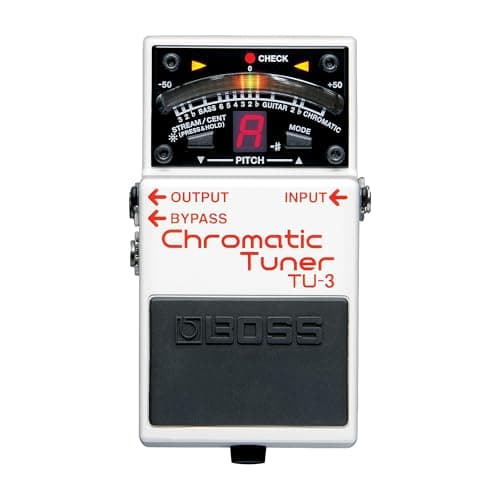 BOSS TU-3 Chromatic Tuner The only pedal that improves every performance rather than some of them. | Buy this first | |
| 02 | 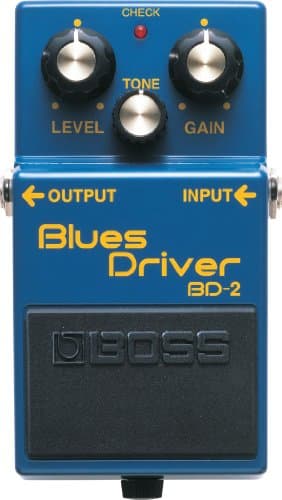 BOSS BD-2 Blues Driver Adds grit without imposing a voice, and cleans up on the guitar volume knob. | Buy this second, if your amp has a clean tone you like | $109.99 · Check price #ad How we’re funded · price as of October 17, 2026 |
| 03 | 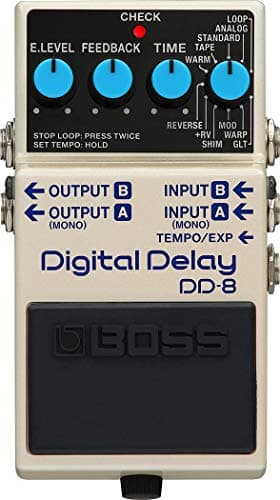 BOSS DD-8 Digital Delay Eleven modes and up to 10 seconds, which is every delay sound you will need for years. | Buy this third, and budget for a power supply with it | |
| 04 | 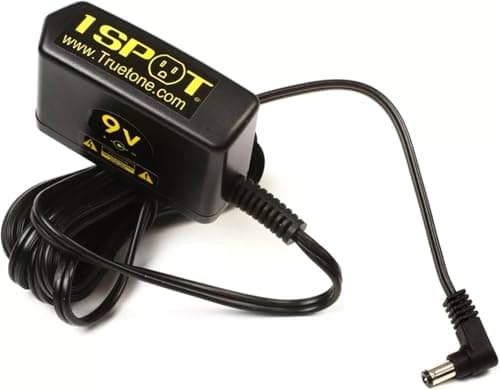 Truetone 1 SPOT 1,700 mA from one output at a fraction of the price of an isolated brick. | Buy this with the third pedal, not before | $27.99 · Check price #ad How we’re funded · price as of October 17, 2026 |
| 05 | 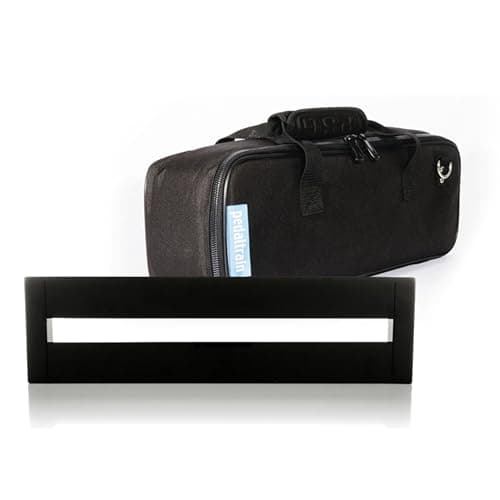 Pedaltrain Nano+ pedalboard Two rails, 18 by 5.5 inches, and effectively no under-board space. | Buy the board last | $89.99 · Check price #ad How we’re funded · price as of October 17, 2026 |
| ! | 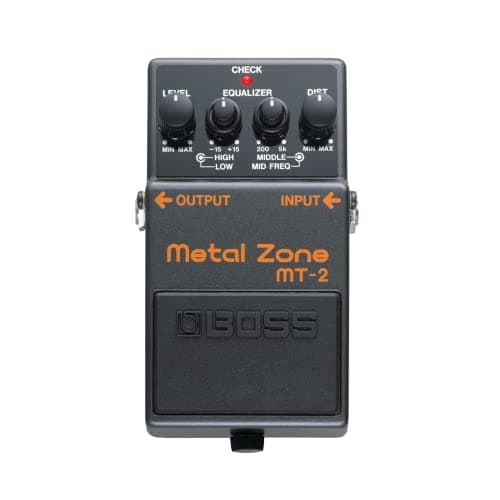 BOSS MT-2 Metal Zone A capable parametric-EQ distortion, and the wrong first dirt pedal for almost everybody. Skip this one — see why below | Not a first-board pedal | $108.99 · Check price #ad How we’re funded · price as of October 17, 2026 |
Rows link to the full write-up further down this page. Prices come from the live price layer only — where there is no live figure the button reads “Check price” rather than showing a remembered number.
02Why this order
- Tuner first because it improves every performance, it is cheap, and its DC OUT may power the next two pedals for free.
- Drive second because it is the biggest change to your sound, and because which drive you want depends on your amp — a question you can only answer with the amp in front of you.
- Delay third because it adds a capability rather than a variation, and because it is the pedal that makes a simple part sound finished.
- Power supply with the delay because a digital delay draws around 100 mA and that exceeds what a tuner's DC OUT can comfortably supply.
- Board last because until you own the pedals you are guessing at the size, and a board bought too small is bought twice.
03What the whole thing costs to power
| Pedal | Published draw | Running total |
|---|---|---|
| BOSS TU-3 | 20 mA | 20 mA |
| BOSS BD-2 | 20 mA | 40 mA |
| BOSS DD-8 | 100 mA | 140 mA |
| Plus 30% headroom | — | 182 mA |
A Truetone 1 SPOT supplies 1,700 mA. This board uses about a tenth of it, which is why a daisy chain is the correct purchase at this stage.
BOSS TU-3 Chromatic Tuner
Buy this first
The number20 mA, +/- 1 cent, and a DC OUT that will power the next two pedals.
It mutes your output, so you can tune silently between songs. That is the reason a pedal tuner beats a clip-on and it is why this is purchase number one rather than an afterthought.
The DC OUT jack is the part that saves you money: it will power a small number of other pedals, which on a three-pedal board removes the need for a separate supply entirely.
Buffered bypass, which is helpful on a long cable run and a problem only if you later add a vintage-style fuzz — see fuzz and buffers.
| Tuning range | C0 (16.35 Hz) to C8 (4,186 Hz) |
|---|---|
| Accuracy | +/- 1 cent |
| Modes | Chromatic, Chromatic flat x2, Guitar, Guitar flat x2, Bass, Bass flat x3 |
| Bypass | Buffered bypass |
| Current draw | 20 mA; 80 mA with High Brightness mode on |
| Jacks | Output, Bypass, DC IN, DC OUT (powers other pedals) |
| Weight | 390 g including battery |
| What it does not do | +/- 1 cent is fine for a stage tuner and not enough for setting intonation — that is strobe territory. Turning on High Brightness quadruples the current draw, which matters on a shared supply. |
Specs from BOSS TU-3 specifications. We have not used this unit.
BOSS BD-2 Blues Driver
Buy this second, if your amp has a clean tone you like
The number1 M ohm in, 1 k ohm out, 20 mA. All published by BOSS.
The second purchase should be a drive chosen against your amp rather than against a review. If the amp's clean tone is one you like, you want something that roughens it rather than replacing it.
The BD-2 does that: flat mids, open top end, and enough dynamic range that your picking and volume knob still do something.
If your amp stays clean and you want the pedal to be the sound instead, buy a pedal with its own voice — best overdrive pedals covers the choice.
| Controls | Gain, Tone, Level, pedal switch |
|---|---|
| Input impedance | 1 M ohm |
| Output impedance | 1 k ohm |
| Current draw | 20 mA |
| Power | 9 V battery (6F22 / 6LR61) or PSA-series adaptor |
| Size / weight | 73 x 129 x 59 mm, 360 g |
| What it does not do | No adaptor in the box, no true bypass, and no mid control. The BD-2 is deliberately flat through the mids — if you want a mid hump to push a solo, this is the wrong pedal. |
Specs from BOSS BD-2 specifications. We have not used this unit.
#ad How we’re funded · price as of October 17, 2026
BOSS DD-8 Digital Delay
Buy this third, and budget for a power supply with it
The number100 mA — the purchase that ends the free-power phase of a board.
A delay is the third pedal because it adds a capability rather than a flavor: repeats can be a musical part in a way another drive pedal cannot.
It is also the purchase that changes your power situation. At 100 mA it exceeds what a tuner's DC OUT will comfortably supply, so buy it and a supply together rather than discovering the problem afterwards.
If you only want short slapback, an analog delay does that on a fraction of the current and costs less.
| Modes | 11 — Analog, Standard, Tape, Warm, Reverse, +RV, Shimmer, Mod, Warp, GLT, plus Loop |
|---|---|
| Maximum delay | Up to 10 seconds, with tap tempo |
| Controls | Mode, Time, Feedback, E.Level, Carryover switch, pedal switch |
| Current draw | 100 mA |
| Battery life | Approx. 3.5 hours on alkaline |
| I/O | True stereo in and out, with three selectable output modes |
| Weight | 440 g including battery |
| What it does not do | No adaptor included. At 100 mA it is not a pedal you daisy-chain casually, and the 3.5-hour battery figure means battery power is a backup, not a plan. |
Specs from BOSS DD-8 specifications. We have not used this unit.
Truetone 1 SPOT
Buy this with the third pedal, not before
The number1,700 mA total, zero isolation. Both halves matter.
For a board of three or four pedals with one digital unit, a daisy chain is genuinely the right answer and costs less than a single pedal.
Worldwide 100-240 V mains input and a right-angle plug that does not block the adjacent socket.
Zero isolation. If you later add a second digital pedal and hear hum, that is the shared ground and you have outgrown it — isolated vs daisy chain covers the upgrade.
| Output | 9 V DC, 1,700 mA from a single non-isolated output |
|---|---|
| Isolation | None — this is a single supply intended for daisy-chaining |
| Mains input | 100-240 V AC, worldwide |
| Format | Single-space wall unit with a right-angle plug |
| What it does not do | No isolation at all. Every pedal on the chain shares a ground, which is exactly the condition that produces hum with a digital pedal in the mix. It is a great first supply and a bad final one. |
Specs from Truetone 1 SPOT product page. We have not used this unit.
#ad How we’re funded · price as of October 17, 2026
Pedaltrain Nano+ pedalboard
Buy the board last
The number18 x 5.5 in (45.7 x 14 cm), four to five compacts in a single row.
The board is the last purchase, not the first, because until you own the pedals you do not know what size you need. Buying it first is how people end up with a board that is the wrong shape.
For four compact pedals in a row this is the right size and it fits in a gig bag pocket. The soft case is included.
There is no usable under-board space, so plan on a wall-mounted supply rather than a brick. If you already know you want more than five pedals, buy a Classic JR instead and skip a step.
| Size | 18 x 5.5 in (45.7 x 14 cm) |
|---|---|
| Rails | 2 rails, flat |
| Capacity | Roughly four to five compact pedals in a single row |
| Case | Soft case included |
| What it does not do | There is no under-board space worth the name. Plan on a 1 SPOT-style wall supply or a very small brick sitting beside the board. |
Specs from Pedaltrain pedalboard range. We have not used this unit.
#ad How we’re funded · price as of October 17, 2026
BOSS MT-2 Metal Zone
Not a first-board pedal
We are not picking this for a first board. The MT-2 has more EQ than any other BOSS compact dirt pedal, and used properly it is versatile.
Used the way a first-time buyer uses it — mids scooped, gain high, straight into a clean amp — it is the pedal that vanishes the moment a bass player starts, and it teaches the wrong lesson about what dirt pedals do.
Learn what an EQ curve does to a mix first. If you still want a high-gain pedal after that, the distortion roundup is the right page.
| Controls | Level, High, Low, Middle, Middle Freq (parametric), Dist |
|---|---|
| EQ | Three-band with a sweepable mid frequency — the most EQ on any BOSS compact dirt pedal |
| Power | 9 V battery or PSA-series adaptor |
| Electrical data | No current-draw or impedance figure is published for this pedal, so none is stated here. |
| What it does not do | No adaptor included. The factory mid-scooped setting is the one everybody hears and nobody should use — the parametric mid is the reason to own it, not an extra. |
Specs from BOSS MT-2 product page. We have not used this unit.
04What to leave until later
- A compressor. Useful, and only if you play clean and your dynamics are uneven. The compressor roundup covers when it earns a slot.
- A reverb. Check your amp first — most have one, and if yours is adequate the money does more elsewhere.
- A fuzz. A specific texture rather than a general-purpose sound, and it brings placement constraints your first board does not need.
- A second drive pedal. Ask what it does that the first one does not. If you cannot answer, it is a variation rather than a capability.
- An isolated power supply. Only once you have two digital pedals and can hear hum. Before that it is money spent on a problem you do not have.
05The order the pedals go in
Tuner, drive, delay — which happens to be the buying order too. That is not a coincidence: the chain order follows the same logic, with utility first and time-based effects last. Pedal order covers what changes when you add more. Pedal tuner vs clip-on is the honest version of that argument, including when the clip-on is the right answer.
Frequently asked questions
+ What pedals do I need for a first pedalboard?
+ Do I need a power supply for three pedals?
+ What size pedalboard should I buy first?
+ Should I buy a multi-effects unit instead?
Sources
Related on Fret & Fuzz
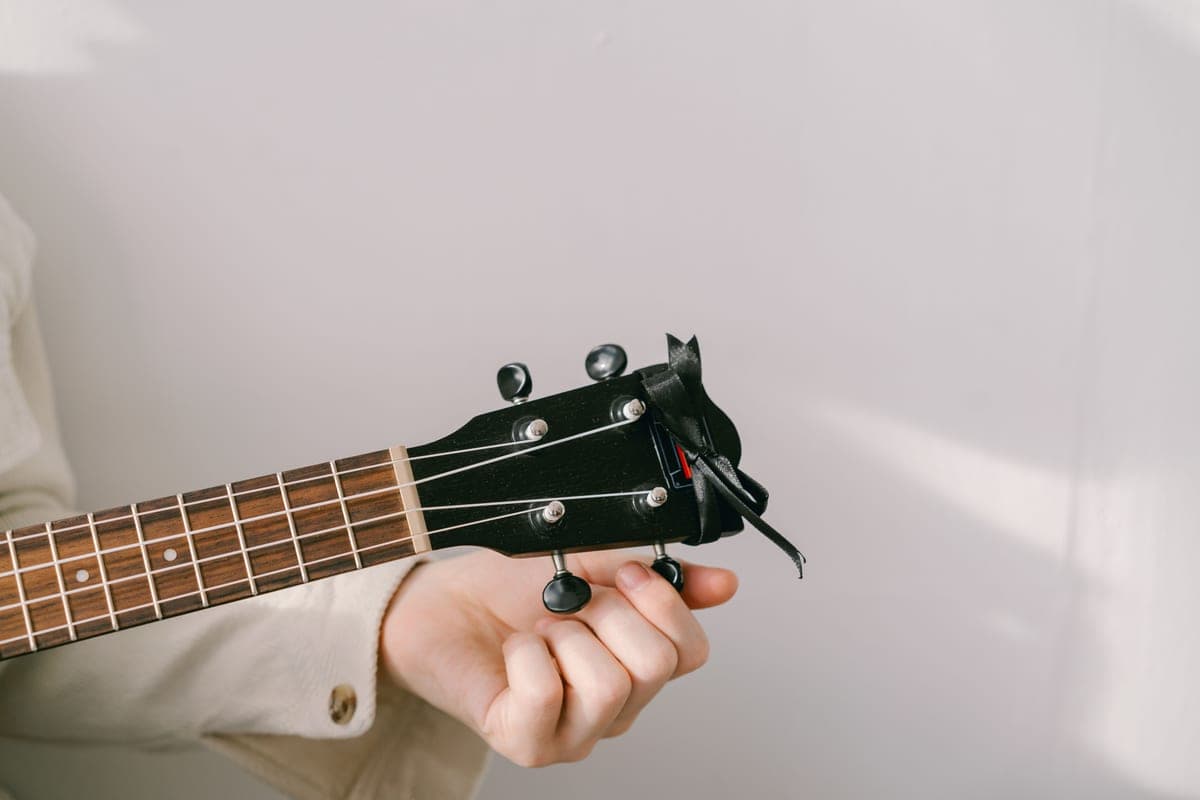
Pedal tuner vs clip-on tuner
BOSS publishes the same +/- 1 cent for both. So what does the pedal actually buy you, and when is it worth it?
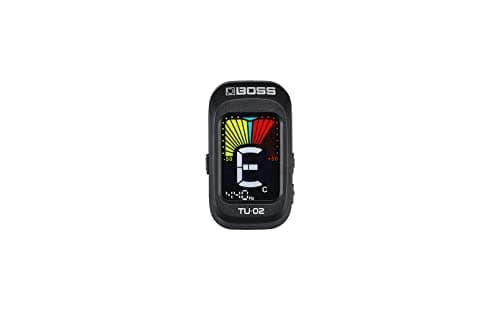
Top pick: BOSS TU-02 Clip-On Tuner
#ad How we’re funded · price as of October 17, 2026
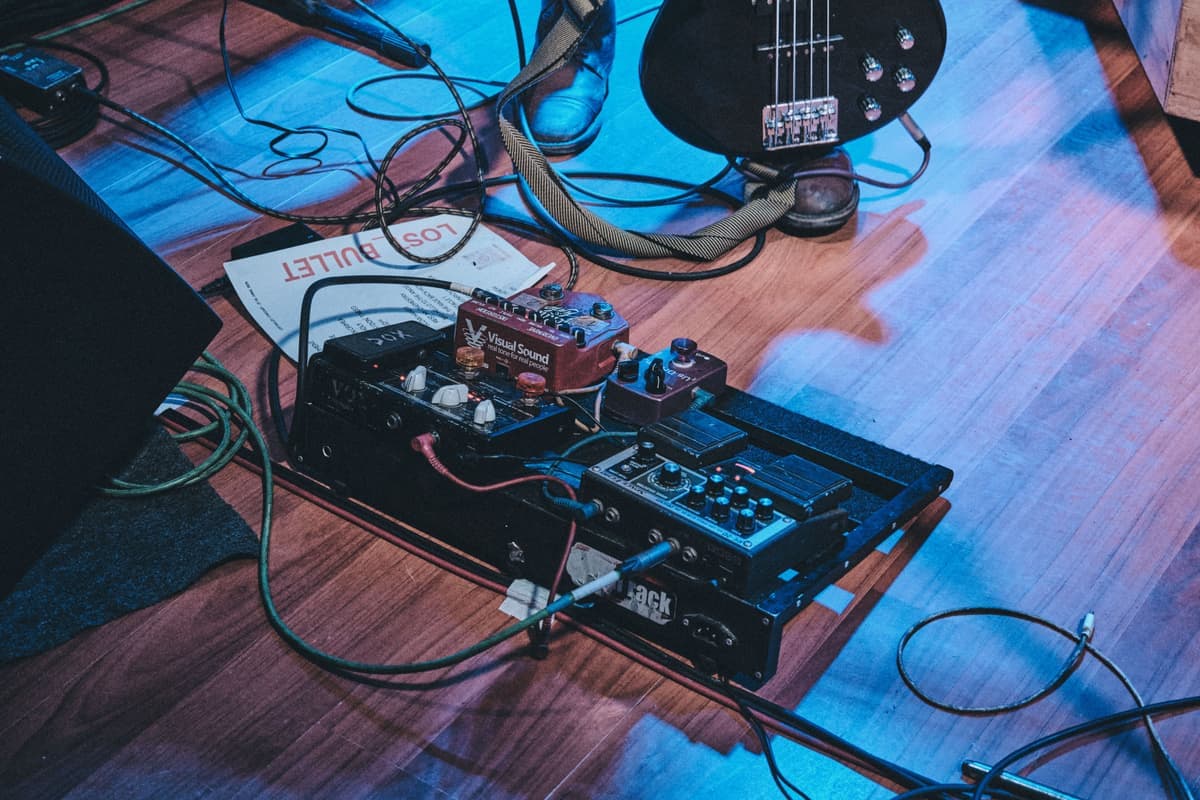
Best guitar pedals
One shortlist per job, chosen from published circuit and power specs. Every list names something we would not buy, and says why.
Pedal order: what changes and what does not
Two placements are load-bearing and the rest are preference. Which is which, and the impedance figures behind the first one.
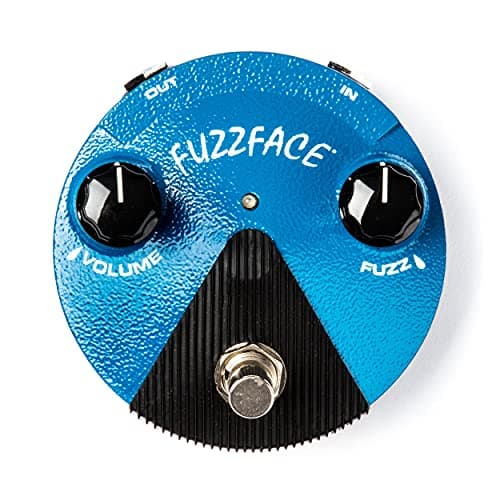
Top pick: Dunlop Fuzz Face Mini Silicon
#ad How we’re funded · price as of October 17, 2026
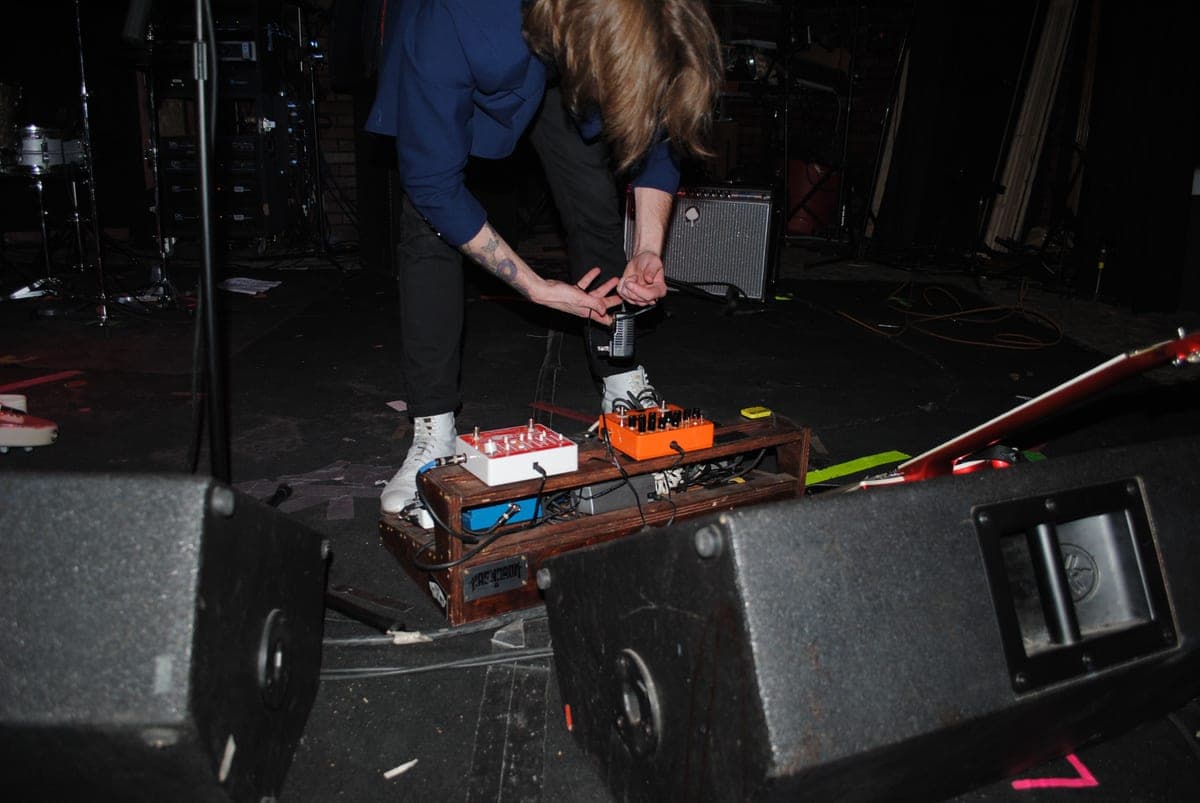
Pedalboard power requirements explained
Two sums decide your power supply, and almost everyone only does the first. A worked example with real published figures.
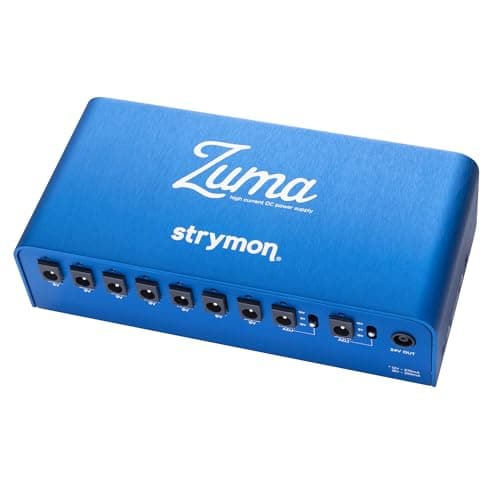
Top pick: Strymon Zuma
#ad How we’re funded · price as of October 17, 2026
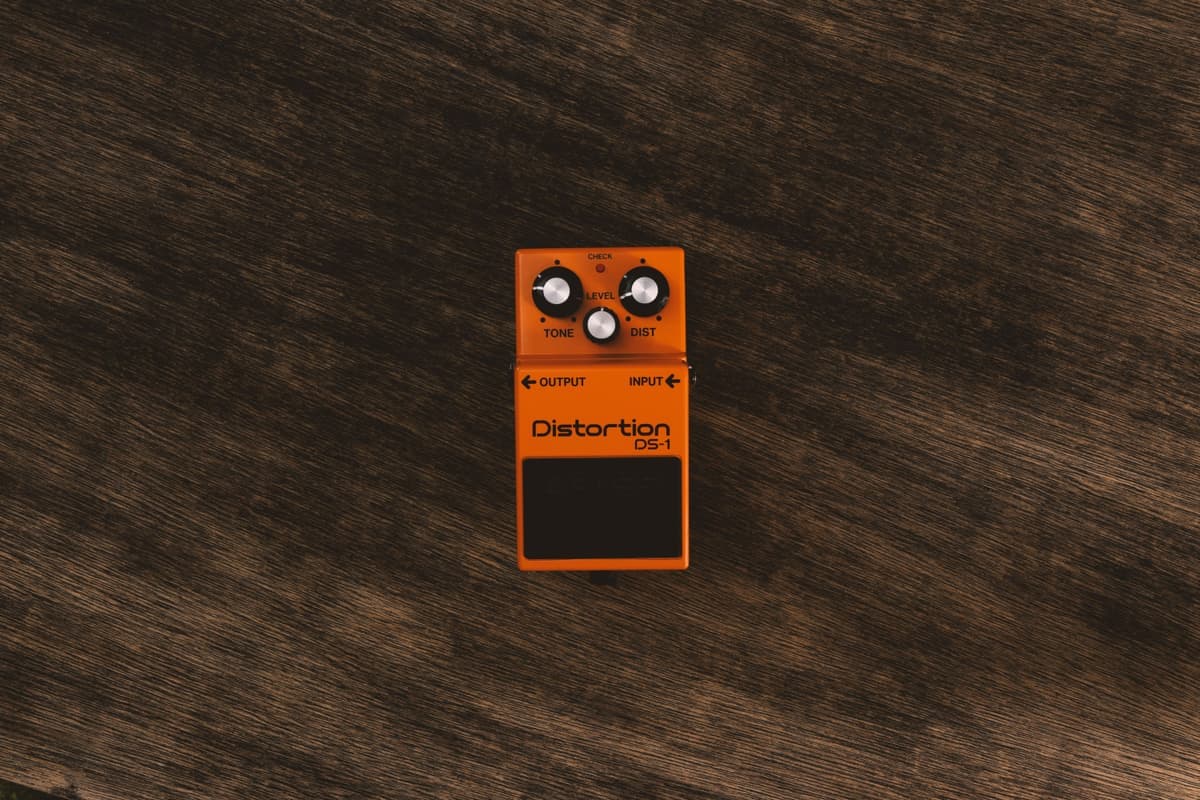
Best guitar pedals under $100
Budget pedals do not save money on the circuit — they save it on the switches and jacks. Here is exactly where, and what that costs you.
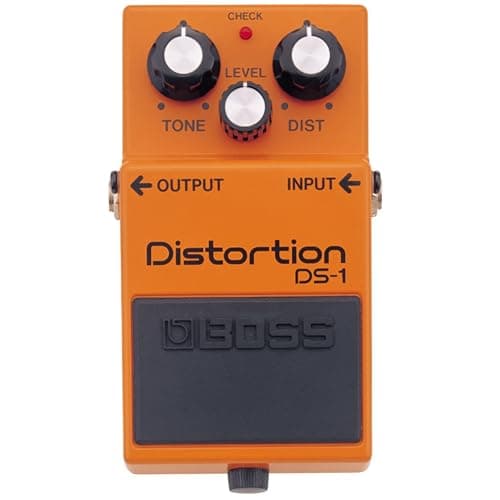
Best Under $100 pick: BOSS DS-1 Distortion